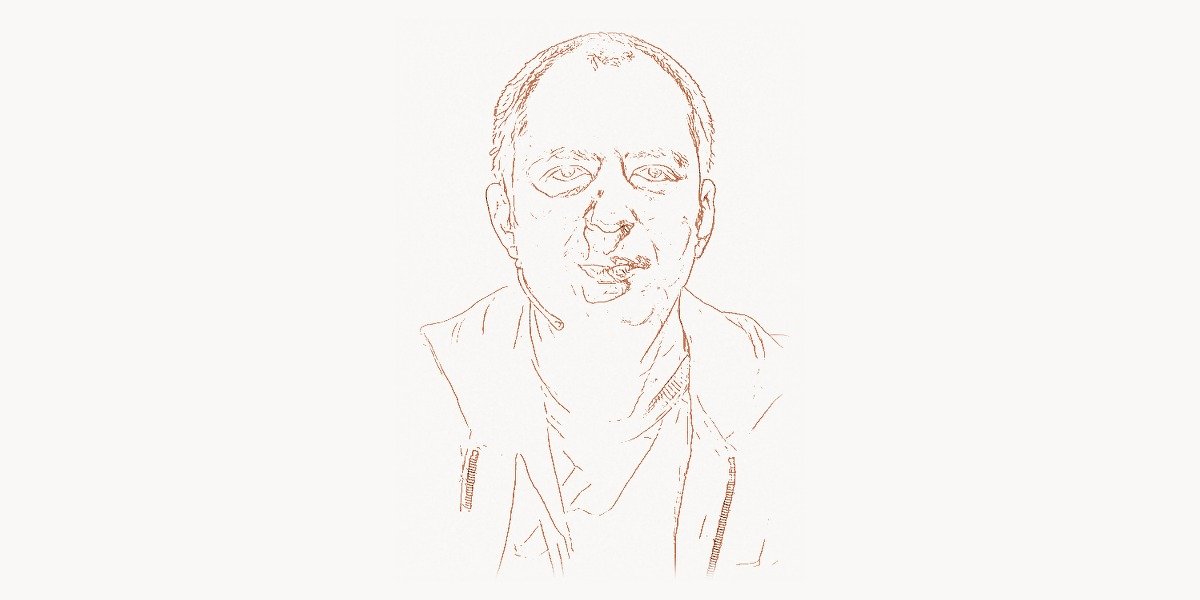
In January 2014, a man who had once swept floors to help pay rent signed a deal worth nineteen billion dollars. Jan Koum, a Ukrainian immigrant who arrived in Mountain View at sixteen with almost nothing, had built WhatsApp into a communications platform used by nearly half a billion people. But the staggering valuation was never really the point. Koum built WhatsApp because he understood something deeply personal: private communication is not a luxury. It is a necessity. Growing up in Soviet Ukraine, where the state listened to phone calls and read letters, he experienced firsthand the consequences of living without privacy. WhatsApp was his answer — a messaging service that simply worked, refused to sell ads, and eventually deployed end-to-end encryption for over a billion users. His story is one of the most remarkable immigrant narratives in Silicon Valley history, and the technology he championed reshaped how the entire world communicates.
Early Life in Ukraine and Immigration to America
Jan Koum was born on February 24, 1976, in Kyiv, Ukraine, then part of the Soviet Union. He grew up in a small village outside the capital, in a home without hot water and where phone service was unreliable. His mother was a homemaker and his father managed construction projects. The family was Jewish, which carried additional social pressures in the Soviet system. Government surveillance was not an abstraction for the Koum family — it was woven into daily life. Authorities could listen to phone conversations, neighbors might report political dissent, and self-censorship was a survival mechanism.
In 1992, when Koum was sixteen, he emigrated with his mother and grandmother to Mountain View, California. His father intended to follow but never made it — he passed away in Ukraine before he could join them. The family relied on government food assistance, and his mother took up babysitting while battling cancer. Koum swept the floor at a grocery store to help cover rent. The transition was brutal, but Mountain View happened to sit in the heart of what would become the world’s most consequential technology corridor.
Koum taught himself computer networking from manuals he bought at a used bookstore and then returned after reading them. He enrolled at San Jose State University and simultaneously landed a job as an infrastructure engineer at Yahoo in 1997. At Yahoo he met Brian Acton, a senior engineer who would become his longtime collaborator and eventual WhatsApp co-founder. Both men were deeply pragmatic engineers who valued clean architecture over corporate politics — a shared philosophy that would define everything they built together.
The Yahoo Years and Finding a Purpose
Koum spent nearly a decade at Yahoo, working on infrastructure and advertising platforms. He gained deep expertise in scalable systems, data centers, and the operational reality of running services for hundreds of millions of users. But he grew increasingly disillusioned with the advertising business model. The idea that companies would collect vast amounts of user data to sell targeted ads felt fundamentally wrong to someone who had grown up under state surveillance.
In 2007, both Koum and Acton left Yahoo. They applied to Facebook and were rejected — a fact that has become one of tech history’s most ironic footnotes. Without corporate roles to fill their time, they traveled, took a break, and began thinking about what they actually wanted to build. When Apple launched the App Store in 2008, Koum saw an inflection point. He bought an iPhone, studied the new ecosystem, and realized that the combination of push notifications and a global address book created an opportunity to reinvent messaging from the ground up.
The Birth of WhatsApp
In early 2009, Koum incorporated WhatsApp Inc. The original concept was not even a messaging app — it was a status update service. Users could set their status (at the gym, at work, battery low), and their contacts would see it. The concept was modest but the engineering foundation was serious. Koum chose Erlang, a language originally developed at Ericsson for telecom switching systems, as the backbone for WhatsApp’s server infrastructure. It was an unconventional choice for a startup in 2009, when most Silicon Valley companies defaulted to Python, Ruby, or Java.
The decision proved prescient. Erlang’s concurrency model, built on lightweight processes and message passing, was ideal for a messaging platform that would eventually handle millions of simultaneous connections per server. The WhatsApp engineering team remained absurdly small — at times fewer than fifty engineers serving hundreds of millions of users — precisely because Erlang’s architecture was designed for exactly this kind of workload.
Here is a simplified illustration of how Erlang’s concurrency model handles parallel message routing, the kind of pattern that gave WhatsApp its legendary efficiency:
%% Simplified WhatsApp-style message router in Erlang
%% Each user session runs as a lightweight process

-module(msg_router).
-export([start/0, register_user/2, send_message/3]).

start() ->
    register(router, spawn(fun() -> loop(#{}) end)).

loop(Sessions) ->
    receive
        {register, UserId, Pid} ->
            loop(Sessions#{UserId => Pid});
        {send, FromId, ToId, Message} ->
            case maps:find(ToId, Sessions) of
                {ok, Pid} ->
                    Pid ! {incoming, FromId, Message},
                    ok;
                error ->
                    store_offline(ToId, FromId, Message)
            end,
            loop(Sessions);
        {unregister, UserId} ->
            loop(maps:remove(UserId, Sessions))
    end.

register_user(UserId, Pid) ->
    router ! {register, UserId, Pid}.

send_message(FromId, ToId, Message) ->
    router ! {send, FromId, ToId, Message}.
This pattern — one lightweight process per connected user, with message passing as the coordination primitive — allowed WhatsApp to achieve extraordinary density. A single server reportedly handled up to two million concurrent connections during peak periods. For comparison, most traditional web servers of that era topped out at tens of thousands.
When Apple introduced push notifications, Koum’s simple status app transformed into something far more powerful. Users started sending messages through the status field, treating it like a texting system. Koum quickly pivoted to build full messaging capabilities, and WhatsApp 2.0 became a true instant messenger. Growth was explosive and almost entirely organic — there was no marketing budget, no advertising, no growth-hacking team. The app spread through word of mouth, particularly in countries where SMS was expensive.
Engineering Philosophy: Simplicity as Discipline
WhatsApp’s technical culture was an extension of Koum’s personality: no-nonsense, privacy-first, and allergic to feature bloat. The team famously kept a note on a desk that read “No Ads! No Games! No Gimmicks!” Every engineering decision was filtered through a single question: does this help people communicate? If the answer was no, it did not get built.
The architecture choices reflected this minimalism. WhatsApp used a modified version of the XMPP protocol for its messaging layer, customized heavily for mobile constraints like intermittent connectivity, battery efficiency, and low-bandwidth environments. Messages were stored on the server only until delivered, then deleted. This transient storage model was both a privacy feature and an engineering simplification — it meant WhatsApp never needed to build the massive, permanent data warehouses that companies like Facebook operated.
The team’s approach to infrastructure was similarly distinctive. Rather than chasing the latest distributed systems trends, WhatsApp ran on FreeBSD, a Unix variant known for its stability and network performance. While most startups in the 2010s were building on Linux, Koum’s team preferred FreeBSD’s mature networking stack and its deterministic behavior under load. Combined with Erlang’s process model, this stack allowed a team of fewer than fifty engineers to run a global messaging network serving over a billion users — one of the most impressive engineering efficiency ratios in the history of software.
The Facebook Acquisition and the Privacy Paradox
In February 2014, Facebook acquired WhatsApp for approximately nineteen billion dollars in cash and stock. At the time, WhatsApp had around 450 million monthly active users and was growing by a million new users per day. Mark Zuckerberg reportedly assured Koum that WhatsApp would operate independently, with its own culture and privacy principles intact.
For a time, the arrangement worked. In 2016, WhatsApp completed the rollout of end-to-end encryption for all messages, voice calls, photos, and videos, powered by the Signal Protocol developed by Moxie Marlinspike and Open Whisper Systems. This was a landmark moment in consumer privacy — overnight, more than a billion people gained access to military-grade encryption by default, without needing to understand cryptography or change any settings. The implementation was technically elegant: each device generated its own encryption keys, and WhatsApp’s servers never had access to the plaintext content of any message.
Here is a conceptual overview of the Double Ratchet Algorithm pattern used in the Signal Protocol that WhatsApp adopted, illustrating how forward secrecy is maintained by deriving new keys for each message:
// Conceptual Double Ratchet key derivation (simplified)
// Each message uses a unique key — compromising one
// does not reveal past or future messages

class DoubleRatchet {
  constructor(sharedSecret) {
    this.rootKey = sharedSecret;
    this.chainKey = null;
    this.messageNumber = 0;
  }

  // Derive new chain key and message key using HKDF
  deriveMessageKey() {
    const input = this.chainKey || this.rootKey;
    // HKDF-based key derivation
    const derived = hkdf(input, 'message-key', 64);
    this.chainKey = derived.slice(0, 32);   // next chain key
    const messageKey = derived.slice(32, 64); // current msg key
    this.messageNumber++;
    return messageKey;
  }

  // DH ratchet step when receiving new public key
  dhRatchetStep(peerPublicKey, ownKeyPair) {
    const dhOutput = diffieHellman(ownKeyPair, peerPublicKey);
    const derived = hkdf(
      this.rootKey, dhOutput, 64
    );
    this.rootKey = derived.slice(0, 32);
    this.chainKey = derived.slice(32, 64);
    this.messageNumber = 0;
  }

  encrypt(plaintext) {
    const key = this.deriveMessageKey();
    return aesGcmEncrypt(plaintext, key);
  }

  decrypt(ciphertext) {
    const key = this.deriveMessageKey();
    return aesGcmDecrypt(ciphertext, key);
  }
}
This forward secrecy mechanism ensures that even if an attacker gains access to current encryption keys, they cannot decrypt previously intercepted messages. It was a direct technological response to the kind of surveillance Koum had experienced as a child — and scaling it to billions of users was an engineering achievement that required deep collaboration between WhatsApp’s infrastructure team and Marlinspike’s cryptography expertise.
But the tension between WhatsApp’s privacy principles and Facebook’s data-driven business model proved irreconcilable. By 2017, Facebook began pushing plans to share WhatsApp user data — phone numbers, usage patterns, and contact metadata — with the broader Facebook advertising ecosystem. Koum resisted. He had joined Facebook with explicit assurances that WhatsApp’s data practices would remain independent. When it became clear that those assurances would not hold, Koum made his decision.
In April 2018, Koum announced his departure from Facebook. He reportedly left approximately 400 million dollars in unvested stock on the table rather than stay and compromise on the principles he had built WhatsApp around. Brian Acton had already left the previous year, going so far as to tweet “It is time. #deletefacebook” — an extraordinary public statement from a co-founder of a Facebook subsidiary. Acton donated fifty million dollars to the Signal Foundation, effectively funding the independent future of the very encryption protocol that WhatsApp used.
Technical Contributions Beyond Messaging
WhatsApp’s influence extends well beyond the messaging category. The engineering team’s work demonstrated several principles that have since become industry orthodoxy. First, Erlang’s viability for web-scale consumer applications was largely proven by WhatsApp. Before WhatsApp’s success, Erlang was considered a niche language primarily used in telecommunications. After WhatsApp, a new generation of developers began exploring Erlang and its successor Elixir for building highly concurrent, fault-tolerant systems. The idea that a team of fifty engineers could serve a billion users was a direct challenge to the prevailing Silicon Valley assumption that scaling required ever-larger engineering organizations.
Second, WhatsApp’s deployment of the Signal Protocol at consumer scale proved that strong encryption could be implemented without destroying user experience. Privacy advocates and cryptographers had argued for decades that encryption should be default and invisible — WhatsApp made that argument real for a billion people. This success influenced other platforms: Google Messages adopted the Signal Protocol for RCS messaging, and Facebook Messenger eventually implemented end-to-end encryption as well. The idea that a messaging platform could be both effortlessly simple and cryptographically secure became an expectation rather than an aspiration.
Third, WhatsApp’s business model — a small annual subscription fee with no advertising — offered a genuine alternative to the surveillance capitalism that dominated the tech industry. Although Facebook eventually eliminated the subscription fee after the acquisition, WhatsApp demonstrated that hundreds of millions of people would willingly pay for a service that respected their privacy. This idea continues to influence the design philosophy of modern productivity tools and digital agency platforms that prioritize user trust over data monetization.
Privacy as a Design Principle
Koum’s approach to privacy was not ideological theater — it was deeply engineered into WhatsApp’s architecture. Messages were stored on servers only until delivered. The app collected minimal metadata by design. There were no read receipts at launch (they were added later as an optional feature after significant user demand). WhatsApp did not store message history on its servers, meaning there was nothing to hand over even if governments demanded it.
This stance put WhatsApp at the center of the global encryption debate. Governments from the United States to Brazil to the United Kingdom demanded backdoor access to encrypted messages, arguing that end-to-end encryption enabled criminals and terrorists to communicate beyond the reach of law enforcement. Koum and his team held firm, arguing that any backdoor for governments was also a backdoor for hackers, authoritarian regimes, and bad actors. The debate echoed the same principles championed by cryptography pioneers like Whitfield Diffie, who had fought similar battles over public key cryptography in the 1970s.
The WhatsApp encryption debate also intersected with a broader transformation in how software teams think about security. Modern development practices increasingly treat security not as a feature to be added at the end but as a fundamental architectural decision made at the foundation. Organizations building communication tools — from enterprise collaboration platforms to internal REST API architectures — now routinely evaluate encryption-by-default as a baseline requirement, a shift that WhatsApp’s example significantly accelerated.
Legacy and Continuing Influence
Jan Koum’s legacy operates on multiple levels. Most visibly, WhatsApp became the dominant messaging platform globally, with over two billion users across 180 countries. In many parts of the world — India, Brazil, Indonesia, much of Africa and the Middle East — WhatsApp is not just a messaging app but the primary interface to the internet itself. Small businesses run entirely through WhatsApp. Government agencies use it for citizen communication. Families separated by borders depend on it for daily contact. The platform’s reach in developing economies, where SMS costs were prohibitive and mobile data was metered, was transformative in a way that Silicon Valley products rarely achieve.
On an engineering level, WhatsApp demonstrated that extreme technical efficiency is a competitive advantage, not merely an academic virtue. While competitors hired thousands of engineers and built sprawling microservices architectures, WhatsApp served a larger user base with a fraction of the staff by choosing the right tools — Erlang, FreeBSD, a minimalist feature set — and refusing to accumulate technical debt through feature creep. This lesson has influenced how a new generation of startups thinks about team size, infrastructure choices, and the relationship between engineering complexity and product quality.
The security and privacy dimension of Koum’s work may be his most enduring contribution. By deploying end-to-end encryption to a billion users, WhatsApp moved the Overton window on digital privacy. Encrypted messaging is now the expected standard, not the exception. The Signal Protocol has become a de facto standard, integrated into platforms ranging from Skype to Facebook Messenger. And the debate that WhatsApp ignited — about whether ordinary citizens have the right to communicate beyond the reach of surveillance — remains one of the defining political questions of the digital age.
Koum’s personal story also resonates as a uniquely American immigrant narrative. A teenager from Soviet Ukraine, surviving on food stamps in Mountain View, teaching himself networking from secondhand books, eventually building one of the most valuable communication platforms ever created — and then walking away from hundreds of millions of dollars because the company that bought it tried to compromise the privacy principles he had embedded from day one. It is a story about what happens when technical skill meets moral conviction, and it is a reminder that the most important technology decisions are often the ones that say no.
Since leaving Facebook, Koum has maintained a characteristically low profile. He has focused on philanthropic efforts, particularly supporting immigrant communities and organizations advocating for digital privacy rights. He remains one of the wealthiest people in the world, but colleagues describe him as unchanged from the quiet, focused engineer who once swept grocery store floors. In an industry addicted to self-promotion, Koum’s reticence is itself a statement: the work should speak for itself.
Frequently Asked Questions
What programming language does WhatsApp use for its backend?
WhatsApp’s server infrastructure is primarily built on Erlang, a functional programming language originally developed at Ericsson for telecommunications systems. Erlang’s lightweight process model and built-in support for concurrency and fault tolerance allowed WhatsApp to handle millions of simultaneous connections per server with an extraordinarily small engineering team. The client applications are built with platform-native technologies for iOS and Android.
Why did Jan Koum leave Facebook?
Koum left Facebook in April 2018 due to disagreements over user privacy and data practices. Facebook began pushing to integrate WhatsApp user data — including phone numbers and usage metadata — into its broader advertising ecosystem. This directly contradicted the privacy principles Koum had built WhatsApp around and the assurances he received when he agreed to the acquisition. He reportedly forfeited approximately 400 million dollars in unvested stock by leaving.
How does WhatsApp end-to-end encryption work?
WhatsApp uses the Signal Protocol, developed by Moxie Marlinspike and Open Whisper Systems. Each device generates its own pair of encryption keys. When two users communicate, their devices perform a key exchange so that only the sender and recipient can read the messages. WhatsApp’s servers relay the encrypted data but never have access to the decryption keys. The protocol employs a Double Ratchet Algorithm that generates new encryption keys for each message, providing forward secrecy.
How did WhatsApp grow so quickly without advertising?
WhatsApp grew almost entirely through word of mouth and organic network effects. In many countries, SMS was expensive while mobile data was relatively affordable, making WhatsApp a dramatically cheaper alternative for text messaging, photo sharing, and voice calls. The app’s simplicity — no account creation beyond a phone number, no ads, no algorithmic feeds — reduced friction to near zero. Each new user who joined made the platform more valuable for their entire contact list, creating a powerful viral growth loop without any marketing spend.
What operating system did WhatsApp’s servers run on?
WhatsApp famously ran its server infrastructure on FreeBSD rather than the Linux distributions favored by most Silicon Valley startups. The team chose FreeBSD for its mature networking stack, deterministic performance characteristics under heavy load, and the team’s deep familiarity with its tuning capabilities. Combined with Erlang’s concurrency model, this allowed a team of fewer than fifty engineers to operate a global messaging network serving over a billion users.
What was WhatsApp’s original business model?
WhatsApp originally charged a one-time download fee of 0.99 dollars, later switching to a model where the first year was free and subsequent years cost 0.99 dollars annually. The team explicitly rejected advertising as a revenue source. Koum believed that ads corrupted the user experience and required invasive data collection. After the Facebook acquisition, the annual fee was eliminated, and WhatsApp has since explored business-facing services — such as the WhatsApp Business API — as its primary monetization strategy.
How many engineers did WhatsApp have when it was acquired by Facebook?
At the time of the Facebook acquisition in February 2014, WhatsApp had approximately fifty-five engineers serving around 450 million monthly active users. This ratio of roughly eight million users per engineer remains one of the most remarkable efficiency metrics in the history of consumer software. The small team size was made possible by architectural choices — Erlang’s concurrency, FreeBSD’s stability, and a minimalist feature philosophy — that prioritized operational simplicity over feature proliferation.