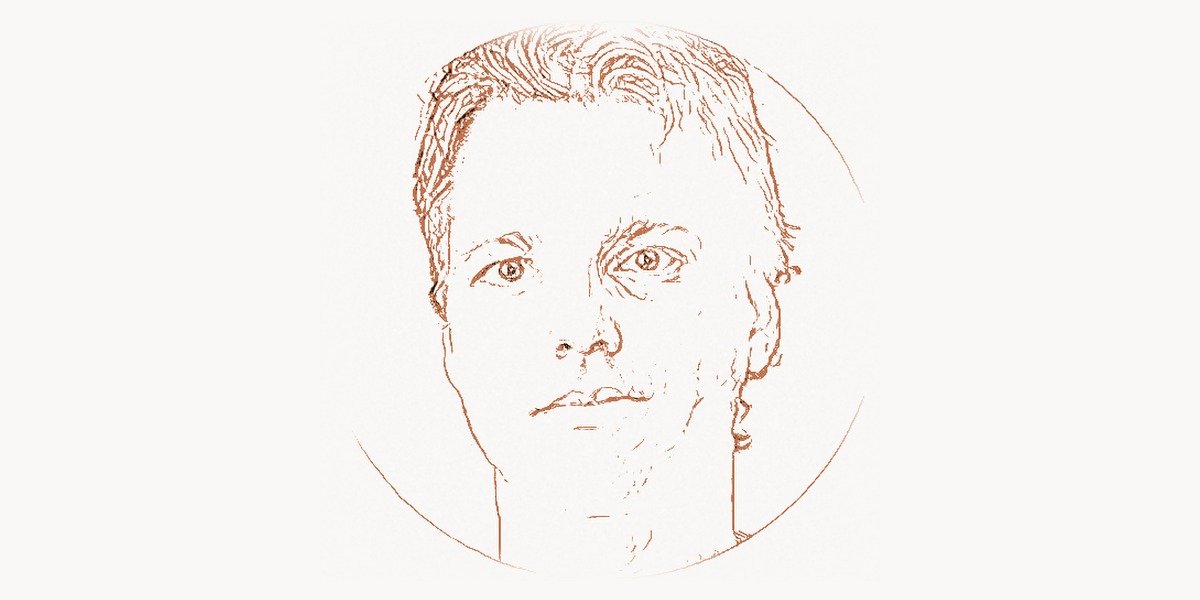
In June 1976, a boy was born in the Danish city of Copenhagen who would grow up to reshape global communication without ever finishing high school. By his late twenties, Janus Friis had co-created Kazaa — the most downloaded software in history — and co-founded Skype, the application that made free international voice calls a reality for hundreds of millions of people. Before Skype, calling a relative in another country cost dollars per minute and required navigating incomprehensible telecom pricing structures. After Skype, it cost nothing. That shift was not incremental — it was a phase transition in human connectivity, and Friis was at its center. What makes his story particularly compelling is the path he took: no university degree, no Silicon Valley connections, just relentless self-education and an instinct for applying peer-to-peer architecture to dismantle industries built on centralized control.
Early Life and Self-Education
Janus Friis was born on June 26, 1976, in Copenhagen, Denmark, and grew up in the city of Aalborg in the northern part of the country. Unlike many tech pioneers who followed conventional academic paths through elite universities, Friis dropped out of high school as a teenager. This was not a lack of ambition but rather a redirection of it — Friis was drawn to computers and the emerging internet with an intensity that formal education could not contain.
He landed a job on the customer help desk at Cybercity, one of Denmark’s earliest internet service providers. Working at an ISP in the mid-1990s was an extraordinary education in itself: Friis gained firsthand experience with TCP/IP networking, DNS resolution, modem connectivity, and the practical challenges of delivering internet service to consumers. He taught himself programming, networking protocols, and system administration while troubleshooting connectivity problems for Cybercity’s customers. This hands-on technical foundation — learned through solving real problems rather than studying theory — would define his approach to technology throughout his career.
In 1997, Niklas Zennstrom, a Swedish entrepreneur running the Danish branch of the telecommunications company Tele2, hired Friis to manage customer service operations. The two quickly recognized complementary strengths: Zennstrom had business strategy acumen and an MBA from Uppsala University, while Friis brought raw technical intuition and a deep understanding of how users actually interacted with technology. They launched their first joint ventures — the ISP Get2Net and a web portal called Everyday.com — before setting their sights on something far more ambitious.
Kazaa and the FastTrack Protocol
Building a Decentralized File-Sharing Network
In 2000, Friis and Zennstrom created Kazaa, a peer-to-peer file-sharing application that would become the successor to Napster. The critical difference was architectural. Napster relied on a centralized index server — when courts ordered that server shut down, the entire network collapsed. Friis and Zennstrom understood that centralization was both a technical weakness and a legal vulnerability. They needed a fundamentally different approach.
Working with Estonian programmers Ahti Heinla, Priit Kasesalu, and Jaan Tallinn, the team developed the FastTrack protocol. This was a hybrid peer-to-peer system using a supernode architecture: nodes with sufficient bandwidth and uptime were dynamically promoted to serve as distributed index servers. Search queries propagated across this mesh of supernodes rather than hitting a single central server. The result was a network that could not be shut down by targeting any single point of infrastructure — a property that made Kazaa extraordinarily resilient.
# Simplified model of FastTrack's supernode election
# The architecture that powered Kazaa and later informed Skype

import time
import hashlib

class FastTrackNode:
    """Represents a peer in the FastTrack P2P network.
    Every node evaluates whether it should become a supernode
    based on real-time network conditions."""

    def __init__(self, node_id, bandwidth_kbps, nat_type, uptime_sec):
        self.node_id = node_id
        self.bandwidth = bandwidth_kbps
        self.nat_type = nat_type          # 'public', 'full_cone', 'symmetric'
        self.uptime = uptime_sec
        self.is_supernode = False
        self.local_index = {}             # Files shared by connected peers
        self.peer_supernodes = []         # Neighboring supernodes in mesh

    def evaluate_promotion(self):
        """Determine if this node qualifies as a supernode.
        Supernodes maintain partial indexes of the global file
        catalog and route search queries through the mesh."""
        score = 0
        if self.nat_type == 'public':
            score += 50                   # Publicly reachable — critical
        if self.bandwidth > 512:
            score += 30                   # High bandwidth for serving queries
        if self.uptime > 3600:
            score += 20                   # Stable — won't disappear mid-search
        if score >= 80:
            self.is_supernode = True
            self.begin_indexing()
        return self.is_supernode

    def begin_indexing(self):
        """Once promoted, a supernode collects file metadata
        from ordinary nodes that connect to it. This creates
        a distributed catalog across thousands of supernodes."""
        self.accepting_registrations = True
        self.max_ordinary_peers = 150     # Each supernode serves ~150 peers
        self.query_cache = {}             # Cache recent search results

    def search(self, query, ttl=7):
        """Search propagates through the supernode mesh.
        Each supernode checks its local index, then forwards
        to neighbors. TTL prevents infinite propagation."""
        results = []
        # Check local index first
        for file_hash, metadata in self.local_index.items():
            if query.lower() in metadata['filename'].lower():
                results.append(metadata)
        # Forward to neighboring supernodes if TTL allows
        if ttl > 0 and len(results) < 50:
            for peer_sn in self.peer_supernodes:
                remote_results = peer_sn.search(query, ttl - 1)
                results.extend(remote_results)
        return results[:200]              # Cap results per query


class FastTrackNetwork:
    """The global FastTrack network — self-organizing,
    resilient, and impossible to shut down by targeting
    any single node or set of nodes."""

    def __init__(self):
        self.all_nodes = []
        self.supernodes = []

    def join(self, node):
        """New node joins the network by connecting to a
        bootstrap supernode and evaluating its own eligibility."""
        self.all_nodes.append(node)
        if node.evaluate_promotion():
            self.supernodes.append(node)
            # Integrate into the supernode mesh
            for existing_sn in self.supernodes[-10:]:
                node.peer_supernodes.append(existing_sn)
                existing_sn.peer_supernodes.append(node)
        else:
            # Connect to nearest supernode as ordinary peer
            nearest_sn = self.find_nearest_supernode(node)
            nearest_sn.register_ordinary_peer(node)
At its peak in 2003, Kazaa had been installed on over 230 million computers worldwide, making it the most downloaded piece of software in internet history at that time. The FastTrack network generated more traffic than any other internet application. The technical achievement was remarkable — Friis and his collaborators had built a system that scaled to hundreds of millions of users without centralized infrastructure, a feat that major technology companies with enormous server budgets struggled to replicate.
The legal consequences were equally dramatic. The Recording Industry Association of America and major record labels sued Kazaa's parent company across multiple jurisdictions. Friis and Zennstrom had structured the business across several countries — developed in Estonia, registered in Vanuatu, operated from various European locations — demonstrating early sophistication in international business architecture. Kazaa ultimately settled with the music industry for over $100 million in 2006. But by then, the technology and the team had already moved to a far larger stage.
From File Sharing to Voice Communication
The critical insight connecting Kazaa to Skype was architectural: if a peer-to-peer network could efficiently locate and transfer files across millions of nodes behind firewalls, the same infrastructure could route real-time voice data. Friis recognized that the distributed systems expertise accumulated during Kazaa was directly applicable to disrupting telecommunications. This led to the founding of Joltid, a peer-to-peer licensing company, and ultimately to Skype.
Skype: Democratizing Global Communication
Technical Architecture and Innovation
Skype launched in August 2003 with an audacious premise: free voice calls between any two computers in the world, with audio quality matching or exceeding traditional telephone calls. The technical barriers were formidable. Voice communication demands real-time delivery with latency under 200 milliseconds — any higher and conversations become stilted. Audio must remain clear despite packet loss, variable bandwidth, and network jitter. And the system had to work transparently behind corporate firewalls and consumer routers performing Network Address Translation, which blocked most incoming connections.
Friis and his team adapted the Kazaa supernode architecture for real-time communication. Instead of indexing files, supernodes maintained a distributed directory of online users. When a caller initiated a call, their client contacted a local supernode, which queried the mesh to locate the callee. Once both parties were found, the system established a direct peer-to-peer connection for voice data — bypassing central servers entirely. The voice codec, SILK, operated at 6 to 40 kilobits per second and adapted dynamically to network conditions, reducing bitrate and adding forward error correction during periods of packet loss, then increasing to wideband quality when conditions improved.
Perhaps the most significant technical achievement was NAT traversal. By the early 2000s, the vast majority of internet users sat behind NAT devices — their computers had private IP addresses unreachable from the outside internet. Skype implemented a combination of STUN discovery (to determine each user's public IP and NAT type), simultaneous UDP hole punching (where both endpoints sent packets to each other's discovered addresses at the same time, creating temporary port mappings), and supernode-based relay as a fallback for the most restrictive NAT configurations. This allowed Skype to connect users who were both behind firewalls, in situations where traditional VoIP tools simply failed. These techniques were later standardized as the ICE framework and became foundational to modern web communication technologies including WebRTC.
Growth and Market Impact
Skype's growth validated the technology. Within a year, it reached one million concurrent users. By 2005, over 50 million had registered. By 2012, Skype carried approximately 33 percent of all international telephone traffic. International calling revenues, priced at dollars per minute, collapsed as users migrated to free Skype-to-Skype calls.
In September 2005, eBay acquired Skype for $2.6 billion, with performance-based payments potentially reaching $4.1 billion. The acquisition made both Friis and Zennstrom wealthy, but the relationship with eBay grew contentious. In 2007, Friis and Zennstrom left their operational roles. A legal dispute over ownership of the core P2P technology — held by Joltid, which Friis and Zennstrom controlled — was resolved in 2009 when Silver Lake Partners led a $1.9 billion acquisition of 65 percent of Skype. Microsoft's subsequent $8.5 billion acquisition in 2011 confirmed the transformative value of what Friis had helped build.
Post-Skype Ventures
Joost and the Streaming Video Experiment
Even before the Skype saga fully concluded, Friis and Zennstrom had begun work on Joost, an internet television service launched in 2006. The concept applied peer-to-peer distribution to video streaming — using the same distributed architecture that powered Kazaa and Skype to deliver television content without massive server infrastructure. Joost attempted to secure licensing deals with major content providers, positioning itself as a legitimate alternative to piracy. While technically impressive, Joost failed to gain sufficient traction in a market that was rapidly being reshaped by YouTube and later Netflix. The service's assets were sold to Adconion Media Group in 2009. Joost's failure provided Friis with critical lessons about the difference between technical innovation and market timing — a distinction that would influence his future ventures.
Rdio: Challenging Spotify in Music Streaming
In 2010, Friis and Zennstrom launched Rdio, a music streaming service that competed directly with Spotify. Rdio was widely praised for its design and user experience — its clean interface and social features were considered superior by many critics. However, Rdio could not match Spotify's aggressive growth strategy and massive investment in acquiring users. The service filed for bankruptcy in November 2015, and its assets were sold to Pandora Radio for $75 million. Rdio's story illustrates a recurring theme in technology entrepreneurship: superior product design does not guarantee market success when competitors have deeper capital reserves and more aggressive distribution strategies.
Wire: End-to-End Encrypted Communication
In 2012, Friis co-founded Wire, a secure communication and collaboration platform built on end-to-end encryption. Wire represented a philosophical evolution from Skype. Where Skype had been about making communication free and accessible, Wire was about making it private and secure. The platform used the Proteus protocol (based on the Signal Protocol concepts developed by Moxie Marlinspike) to ensure that messages, voice calls, and file transfers were encrypted on the sender's device and decrypted only on the recipient's device — with no ability for Wire's servers or any third party to access the content in transit.
Wire found its niche in enterprise communication, where businesses needed secure collaboration tools that complied with European data protection regulations including GDPR. The platform positioned itself as a European alternative to American communication tools, with servers hosted in the European Union and a commitment to transparency. For organizations managing complex digital projects with security requirements, platforms like Wire work alongside Taskee to provide the secure communication and structured task management that modern distributed teams need.
Starship Technologies: Autonomous Delivery Robots
In 2014, Friis co-founded Starship Technologies with Ahti Heinla, one of the original Skype engineers. Starship builds small autonomous delivery robots designed to carry groceries, packages, and food orders over short distances in urban and suburban environments. The robots navigate sidewalks using a combination of cameras, ultrasonic sensors, GPS, and computer vision — a dramatic departure from Friis's previous software-focused ventures into physical hardware and robotics.
Starship has completed millions of autonomous deliveries across the United States, United Kingdom, and Estonia, operating on university campuses and in residential neighborhoods. For Friis, Starship represents distributed systems thinking applied to physical logistics — the robots operate as autonomous agents making independent routing decisions while coordinating through a dispatch system. The parallels to peer-to-peer architecture are not accidental.
Atomico Ventures and Investment Philosophy
In 2006, Friis and Zennstrom co-founded Atomico, a London-based venture capital firm focused on technology companies outside Silicon Valley. While Zennstrom has taken the lead operational role, Friis's involvement as co-founder reflects his commitment to the European tech ecosystem. Atomico has grown into one of Europe's most prominent firms with over $5 billion under management and a portfolio including Klarna and Supercell. The thesis — that world-class technology companies can be built anywhere — has been validated repeatedly, fostering the growth of digital agencies across Europe, including firms like Toimi that deliver sophisticated digital solutions from European bases to global clients.
Technical Philosophy and Engineering Legacy
The Self-Taught Advantage
Friis's career challenges the assumption that formal education is a prerequisite for technology innovation. His technical skills were entirely self-taught, developed through practical problem-solving at Cybercity and refined through building real products used by hundreds of millions of people. This background gave him an unusual perspective: he understood technology from the user's point of view first, and from the engineering perspective second. Where formally trained engineers might design systems optimized for technical elegance, Friis consistently pushed for systems optimized for user experience — Skype's ability to work transparently behind firewalls was as much a product design decision as a technical one.
This user-first approach is reflected in modern software frameworks and development tools that prioritize developer experience alongside performance. The principle that complex infrastructure should be invisible to the end user — established by products like Skype — has become a foundational design philosophy across the technology industry.
Peer-to-Peer as a Worldview
Across Kazaa, Skype, and even Starship Technologies, Friis has consistently applied a decentralized architecture to problems traditionally solved by centralized systems. File distribution, telecommunications, and last-mile delivery were all industries dominated by centralized intermediaries who controlled infrastructure and extracted rent. In each case, Friis and his collaborators demonstrated that distributed systems could deliver equivalent or superior service at a fraction of the cost. This pattern reveals not just a technical preference but a philosophical conviction: that decentralized systems are more resilient, more efficient, and ultimately more equitable than their centralized counterparts.
# Conceptual model: Friis's pattern of decentralized disruption
# Applied across Kazaa, Skype, Wire, and Starship Technologies

class CentralizedSystem:
    """The incumbent model Friis repeatedly disrupted.
    Single point of control, single point of failure,
    rent-seeking through gatekeeping."""

    def __init__(self, industry, gatekeeper, cost_per_unit):
        self.industry = industry
        self.gatekeeper = gatekeeper
        self.cost = cost_per_unit         # User-facing cost
        self.margin = cost_per_unit * 0.6 # Gatekeeper's margin
        self.single_point_failure = True
        self.censorship_possible = True

    def process(self, request):
        # All traffic flows through central authority
        self.gatekeeper.authorize(request)
        self.gatekeeper.charge(request, self.cost)
        return self.gatekeeper.route(request)


class DecentralizedAlternative:
    """Friis's consistent architectural response:
    remove the gatekeeper, distribute the infrastructure
    across the participants themselves."""

    def __init__(self, industry, protocol, peers):
        self.industry = industry
        self.protocol = protocol
        self.peers = peers
        self.cost = 0                     # Marginal cost approaches zero
        self.resilient = True             # No single point of failure
        self.censorship_resistant = True

    def process(self, request):
        # Locate target through distributed discovery
        target = self.protocol.discover(request.destination)
        # Establish direct peer-to-peer connection
        connection = self.protocol.connect(
            request.origin,
            target,
            fallback='relay_through_supernode'
        )
        return connection.transfer(request.payload)


# The pattern across Friis's career:
disruptions = [
    {
        'year': 2000,
        'product': 'Kazaa',
        'centralized': CentralizedSystem(
            'Music Distribution', 'Record Labels', 15.99),
        'decentralized': DecentralizedAlternative(
            'Music Distribution', 'FastTrack', '230M users'),
    },
    {
        'year': 2003,
        'product': 'Skype',
        'centralized': CentralizedSystem(
            'Telecommunications', 'Telecom Carriers', 1.50),
        'decentralized': DecentralizedAlternative(
            'Telecommunications', 'Skype P2P/SILK', '660M users'),
    },
    {
        'year': 2012,
        'product': 'Wire',
        'centralized': CentralizedSystem(
            'Enterprise Messaging', 'Cloud Providers', 12.00),
        'decentralized': DecentralizedAlternative(
            'Enterprise Messaging', 'Proteus/E2E', 'Enterprise'),
    },
    {
        'year': 2014,
        'product': 'Starship',
        'centralized': CentralizedSystem(
            'Last-Mile Delivery', 'Delivery Services', 8.00),
        'decentralized': DecentralizedAlternative(
            'Last-Mile Delivery', 'Autonomous Agents', '5M+ deliveries'),
    },
]
The code model above illustrates the structural pattern that Friis applied throughout his career: identify a centralized system extracting rent through gatekeeping, then build a distributed alternative that routes around the gatekeeper entirely. This is not just an engineering pattern — it is a theory of how technology creates value by removing unnecessary intermediaries and returning control to end users.
Legacy and Continuing Influence
Janus Friis's contributions to technology extend far beyond any single product. The peer-to-peer architecture he helped develop for Kazaa became the foundation for Skype, which in turn influenced the entire trajectory of real-time internet communication. The SILK codec developed for Skype was donated to open source and became the basis for the Opus codec — now the standard audio codec for WebRTC, Discord, Zoom, and virtually every modern voice and video application. The NAT traversal techniques pioneered in Skype were standardized as the ICE framework, which powers every WebRTC implementation in modern browsers.
On a cultural level, Friis demonstrated that transformative companies could emerge from Scandinavia and the Baltics rather than exclusively from Silicon Valley. The Kazaa and Skype teams spanned Denmark, Sweden, and Estonia, proving that geographical distribution was compatible with technical excellence. This lesson has informed how modern project management approaches distributed team coordination and helped pave the way for today's European tech ecosystem.
Friis's trajectory from high school dropout to billionaire also challenges assumptions about the relationship between formal credentials and innovation capacity. His self-taught foundation produced results that rivaled those of conventionally educated engineers. The products he built — Kazaa, Skype, Wire, Starship — each applied the same core insight: that distributed systems, properly designed, will outperform centralized ones.
At 49, Friis continues to invest in and develop technology ventures from his base in Europe. From a help desk in Aalborg to the creation of software used by hundreds of millions, his career is a testament to the power of self-education, architectural thinking, and the persistent application of decentralized design to problems that the world assumed required centralized control. The technology pioneers who shaped the modern internet each contributed a piece of the puzzle — Friis contributed the insight that the network itself, properly architected, could replace the infrastructure that incumbents spent billions building.
Key Facts
- Born: June 26, 1976, Copenhagen, Denmark
- Known for: Co-founding Skype, Kazaa, Wire, and Starship Technologies
- Key projects: Kazaa (2000), Skype (2003), Joost (2006), Rdio (2010), Wire (2012), Starship Technologies (2014)
- Major exits: Kazaa settlement ($100M, 2006), Skype to eBay ($2.6B, 2005), Skype to Microsoft ($8.5B, 2011), Rdio to Pandora ($75M, 2015)
- Education: Self-taught (high school dropout)
- Career: Cybercity helpdesk (mid-1990s), Tele2 (1997), Kazaa/Skype co-founder (2000–2007), Wire co-founder (2012), Starship Technologies co-founder (2014)
- Recognition: Time 100 Most Influential People (2006, with Zennstrom)
Frequently Asked Questions
Who is Janus Friis and what is he known for?
Janus Friis is a Danish entrepreneur born in 1976, best known for co-founding Skype and Kazaa with Niklas Zennstrom. Despite being a high school dropout, Friis built peer-to-peer technologies that disrupted the music industry (Kazaa, 230 million installations) and the telecommunications industry (Skype, acquired by Microsoft for $8.5 billion). He also co-founded Wire (secure messaging), Starship Technologies (autonomous delivery robots), and Rdio (music streaming).
How did Janus Friis contribute to Skype's development?
Friis co-conceived Skype's core idea: applying peer-to-peer architecture from Kazaa to voice communication, eliminating the need for expensive telecom infrastructure. He co-developed the business strategy and product vision, while the Estonian engineering team (Ahti Heinla, Priit Kasesalu, Jaan Tallinn) implemented the protocol. Friis's user-first approach — shaped by years on ISP help desks — ensured Skype worked transparently behind firewalls, a critical factor in its mass adoption.
What happened to Skype after Friis and Zennstrom left?
eBay acquired Skype in 2005 for $2.6 billion, but the expected synergies never materialized, and eBay wrote down $1.4 billion. Friis and Zennstrom departed in 2007 and fought a legal battle over the core P2P technology. In 2009, Silver Lake Partners led a $1.9 billion buyout of 65 percent of Skype. Microsoft acquired Skype for $8.5 billion in 2011, eventually integrating its functionality into Microsoft Teams. Microsoft announced the retirement of the consumer Skype application in 2025.
What is Starship Technologies and what does it do?
Starship Technologies, co-founded by Friis and Skype engineer Ahti Heinla in 2014, builds small autonomous robots that deliver groceries, packages, and food over short distances. The robots navigate sidewalks using cameras, ultrasonic sensors, and computer vision. Starship has completed millions of deliveries across the United States, United Kingdom, and Estonia, operating primarily on university campuses and in residential areas.
What is Wire and how does it relate to Skype?
Wire is a secure communication platform co-founded by Friis in 2012 that uses end-to-end encryption for all messages, calls, and file transfers. While Skype made communication free and accessible, Wire made it private and secure — a philosophical evolution reflecting growing concerns about digital surveillance. Wire targets enterprise customers who need secure collaboration tools compliant with European data protection regulations including GDPR, positioning itself as a privacy-focused European alternative to American platforms.