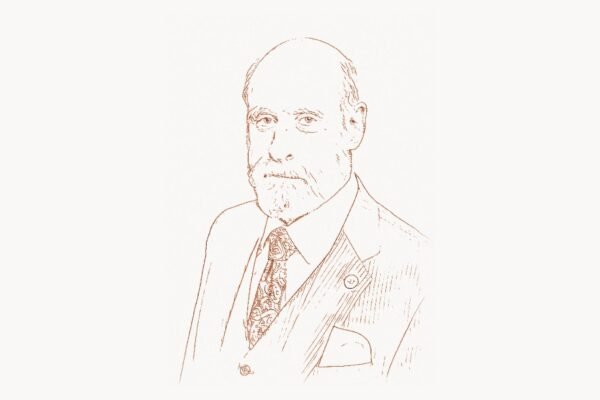
In the landscape of artificial intelligence, certain researchers quietly redefine what machines can do with language and memory. Jason Weston is one of those rare figures whose work sits at the intersection of machine learning theory and practical breakthroughs: from pioneering memory-augmented neural networks that gave models the ability to reason over stored knowledge, to building open-domain dialogue systems that pushed conversational AI beyond scripted chatbots. His contributions at Meta AI (formerly Facebook AI Research) have shaped the trajectory of modern natural language processing, influencing everything from question-answering systems to the large language models we interact with today. To understand where NLP is headed, you need to understand what Jason Weston built and why it mattered.
Early Life and Education
Jason Weston grew up in an era when artificial intelligence was still considered a niche academic pursuit, far from the mainstream technology powerhouse it would eventually become. He developed an early fascination with mathematics and computer science, drawn to the elegance of algorithms and the challenge of making machines perform tasks that seemed inherently human.
Weston pursued his undergraduate studies in mathematics and computer science, where he gained a rigorous foundation in optimization, statistics, and computational theory. His natural inclination toward research led him to graduate studies at Royal Holloway, University of London, where he earned his PhD under the supervision of prominent machine learning researchers. His doctoral work focused on kernel methods and support vector machines (SVMs), a then-dominant paradigm in machine learning that emphasized mathematical guarantees and generalization bounds.
During his PhD, Weston made significant contributions to multi-task learning and feature selection using SVMs, publishing papers that would accumulate thousands of citations. His thesis work explored how learning multiple related tasks simultaneously could improve performance on each individual task, a concept that would prove prescient as the field moved toward large-scale transfer learning decades later. This early research established him as a rigorous thinker who valued both theoretical soundness and practical applicability, qualities that would define his entire career.
After completing his doctorate, Weston pursued postdoctoral research at the Max Planck Institute for Biological Cybernetics in Germany, working alongside Geoffrey Hinton and other leading figures in the nascent deep learning community. This experience exposed him to neural network approaches at a time when most of the machine learning community remained skeptical of their potential. The combination of his strong mathematical foundations from kernel methods and his growing appreciation for neural approaches would prove to be an extraordinarily productive intellectual synthesis.
Career and Memory Networks
Jason Weston’s career trajectory took him through some of the most influential AI labs in the world. After his postdoctoral work, he joined NEC Labs America, where he continued research in large-scale machine learning and natural language processing. In 2014, he moved to Facebook AI Research (FAIR, now Meta AI), where he would produce his most impactful work. At FAIR, Weston joined a team that included Yann LeCun, Antoine Bordes, and other top researchers, creating an environment where ambitious ideas about machine reasoning could flourish.
The central problem that motivated Weston’s most famous contribution was deceptively simple: how do you build a neural network that can read a passage of text, store relevant information, and then answer questions about it? Traditional neural networks processed inputs in a single forward pass, with no explicit mechanism for storing and retrieving facts. Recurrent neural networks like LSTMs, as developed by Sepp Hochreiter, could handle sequences but struggled with long-range dependencies and explicit fact retrieval.
Technical Innovation
In 2014 and 2015, Weston and his collaborators introduced Memory Networks, a class of models that combined neural network learning with an explicit external memory component. The core idea was elegant: instead of forcing all knowledge to be compressed into fixed-size hidden states, the model could write facts to a memory bank and then read from it using an attention mechanism when answering queries.
The architecture worked in four phases: Input (converting text to internal representations), Generalization (updating the memory with new information), Output (reading from memory using the query to find relevant facts), and Response (generating the final answer). This IGOR framework gave neural networks something they had never formally possessed: the ability to explicitly store, index, and retrieve discrete pieces of information.
import numpy as np

class SimpleMemoryNetwork:
    """
    Simplified Memory Network demonstrating the core IGOR architecture.
    Input -> Generalization -> Output -> Response
    """
    def __init__(self, embedding_dim=128, memory_size=100):
        self.embedding_dim = embedding_dim
        self.memory_size = memory_size
        # External memory bank: stores encoded facts
        self.memory = np.zeros((memory_size, embedding_dim))
        self.memory_ptr = 0
        # Learnable scoring function parameters
        self.W_query = np.random.randn(embedding_dim, embedding_dim) * 0.01
        self.W_memory = np.random.randn(embedding_dim, embedding_dim) * 0.01

    def store_fact(self, encoded_fact):
        """Generalization step: write a fact into external memory."""
        self.memory[self.memory_ptr % self.memory_size] = encoded_fact
        self.memory_ptr += 1

    def retrieve(self, query_embedding, top_k=3):
        """Output step: attend over memory to find relevant facts."""
        # Compute attention scores: dot-product between query and memories
        q_proj = query_embedding @ self.W_query
        m_proj = self.memory @ self.W_memory.T
        scores = m_proj @ q_proj  # shape: (memory_size,)

        # Softmax to get attention weights
        exp_scores = np.exp(scores - np.max(scores))
        attention = exp_scores / exp_scores.sum()

        # Return top-k memory indices and weighted representation
        top_indices = np.argsort(attention)[-top_k:]
        weighted_memory = attention[top_indices, None] * self.memory[top_indices]
        return weighted_memory.sum(axis=0), top_indices

    def respond(self, query_embedding):
        """Full pipeline: retrieve from memory, combine with query."""
        retrieved, indices = self.retrieve(query_embedding)
        # Combine query with retrieved memory for response generation
        response_vector = query_embedding + retrieved
        return response_vector, indices
The follow-up work on End-to-End Memory Networks (2015), co-authored with Sainbayar Sukhbaatar and others, made the architecture fully differentiable, enabling training with standard backpropagation. This was a crucial step: the original Memory Networks required a supervision signal for the memory retrieval step, but the end-to-end version learned to retrieve relevant memories purely from the final answer signal. The model used multiple computational hops over memory, where each hop refined the query representation, allowing for multi-step reasoning.
Why It Mattered
Memory Networks represented a fundamental shift in how the AI community thought about neural network architectures. Before Weston’s work, the dominant approach to question answering and reading comprehension relied on information retrieval pipelines that were separate from the language understanding model. Memory Networks unified these into a single trainable system.
The impact was both immediate and long-lasting. The attention mechanism over external memory in Weston’s work directly influenced the development of the Transformer architecture, which would later power models like GPT and BERT. The idea that a model could learn where to look in a body of stored knowledge, rather than having all information implicitly encoded in parameters, became a central theme in AI research. Retrieval-Augmented Generation (RAG), now a standard technique in production AI systems that companies like Toimi integrate into modern web solutions, traces its intellectual lineage directly to the principles Weston established with Memory Networks.
Additionally, to rigorously test these models, Weston and his team created the bAbI benchmark, a set of 20 question-answering tasks designed to probe different aspects of reasoning: spatial reasoning, counting, path-finding, deduction, and induction. The bAbI tasks became one of the most widely used benchmarks in NLP research, providing a clear and interpretable way to measure whether a model could perform specific types of logical reasoning.
Other Major Contributions
While Memory Networks defined his legacy, Jason Weston’s research portfolio extends far beyond a single architecture. His work spans multiple domains within machine learning and NLP, each contribution building on and reinforcing the others.
Open-Domain Dialogue Systems. Weston became one of the leading figures in building conversational AI systems that could engage in open-ended dialogue. His team at Meta AI developed ParlAI, an open-source platform for training and evaluating dialogue agents. ParlAI provided a unified framework for researchers to compare different approaches to conversation, integrating datasets, models, and evaluation tools into a single ecosystem. This work addressed a critical gap: dialogue research had been fragmented across incompatible codebases and evaluation protocols, making it difficult to measure progress.
Building on ParlAI, Weston’s group created BlenderBot, one of the first large-scale open-domain chatbots that could blend multiple conversational skills: maintaining personality consistency, showing empathy, demonstrating knowledge, and sustaining engaging long-form conversations. BlenderBot demonstrated that combining multiple specialized training signals could produce far more natural conversations than any single approach. This work directly influenced the approaches used in modern conversational AI systems.
Embedding Methods and Representation Learning. Earlier in his career, Weston made foundational contributions to learning distributed representations. His work on the StarSpace model (2017) provided a general-purpose embedding framework that could learn representations for entities of different types: words, sentences, documents, and user profiles. StarSpace showed that a simple architecture with the right training objective could rival or outperform more complex approaches across multiple tasks.
Weston also contributed significantly to the development of word embedding techniques alongside Tomas Mikolov. His work on large-scale text classification with fastText-related methods showed how efficient embedding-based approaches could handle practical NLP tasks at scale, processing millions of examples with minimal computational resources.
Reinforcement Learning for Language. Weston explored how reinforcement learning could improve dialogue systems, developing methods where conversational agents could learn from user feedback rather than relying solely on pre-collected training data. His work on reward learning and self-improvement in dialogue systems anticipated many of the techniques now used in reinforcement learning from human feedback (RLHF), which became central to training systems like ChatGPT. The connection between dialogue improvement and alignment research was one that Weston recognized early, well before it became a dominant industry concern.
import torch
import torch.nn as nn
import torch.nn.functional as F

class EndToEndMemoryHop(nn.Module):
    """
    A single-layer End-to-End Memory Network with multiple hops.
    Demonstrates the fully differentiable attention over external memory
    that enabled training with standard backpropagation.
    """
    def __init__(self, vocab_size, embed_dim, num_hops=3, memory_slots=128):
        super().__init__()
        self.num_hops = num_hops
        self.embed_dim = embed_dim

        # Separate embeddings for memory input (A) and output (C) per hop
        self.A_embeddings = nn.ModuleList([
            nn.Embedding(vocab_size, embed_dim) for _ in range(num_hops)
        ])
        self.C_embeddings = nn.ModuleList([
            nn.Embedding(vocab_size, embed_dim) for _ in range(num_hops)
        ])
        # Query embedding (B)
        self.B_embedding = nn.Embedding(vocab_size, embed_dim)
        # Final answer prediction layer
        self.answer_layer = nn.Linear(embed_dim, vocab_size)

    def forward(self, query_tokens, memory_tokens):
        """
        query_tokens: (batch, query_len) — encoded question
        memory_tokens: (batch, num_memories, sent_len) — stored facts
        """
        batch_size = query_tokens.size(0)

        # Encode query: sum of embeddings (bag-of-words)
        u = self.B_embedding(query_tokens).sum(dim=1)  # (batch, embed_dim)

        for hop in range(self.num_hops):
            # Encode memory sentences with input embedding A
            m_A = self.A_embeddings[hop](memory_tokens).sum(dim=2)
            # Encode memory sentences with output embedding C
            m_C = self.C_embeddings[hop](memory_tokens).sum(dim=2)

            # Attention: softmax over dot product of query with each memory
            scores = torch.bmm(m_A, u.unsqueeze(2)).squeeze(2)
            attention = F.softmax(scores, dim=1)  # (batch, num_memories)

            # Weighted sum of output memory representations
            o = torch.bmm(attention.unsqueeze(1), m_C).squeeze(1)

            # Update query representation for next hop
            u = u + o  # residual connection

        # Predict answer from final query representation
        logits = self.answer_layer(u)
        return logits
Large-Scale Learning and Kernel Methods. Before his deep learning work, Weston made substantial contributions to kernel-based machine learning. His research on transductive SVMs, multi-task learning, and feature selection helped establish best practices in the field during the 2000s. Several of his papers from this era remain among the most cited in machine learning, reflecting their lasting influence on methodology and thinking.
Philosophy and Approach
Jason Weston’s research philosophy reflects a distinctive blend of mathematical rigor and practical ambition. Unlike researchers who focus purely on benchmark performance or purely on theoretical elegance, Weston has consistently sought the intersection where clean mathematical ideas produce real-world impact.
Key Principles
- Build testable benchmarks alongside architectures. Weston believes that progress in AI requires clear measurement. His creation of the bAbI tasks exemplified this: rather than claiming that Memory Networks could reason, he built specific tests for each type of reasoning and published the results transparently. This benchmark-driven approach influenced how the entire field evaluates language understanding.
- Make research reproducible and accessible. Weston has been a consistent advocate for open-source research. ParlAI, his dialogue research platform, was designed from the ground up to be a public resource. His team regularly released models, datasets, and training code, lowering barriers for researchers worldwide. This openness accelerated progress across the entire dialogue systems community.
- Bridge the gap between learning and reasoning. A recurring theme in Weston’s work is the belief that pure pattern matching is insufficient for intelligent systems. Memory Networks, multi-hop reasoning, and structured memory are all attempts to give neural networks capabilities that go beyond statistical correlation toward something more like logical inference. This perspective anticipated the current industry focus on reasoning capabilities in large language models.
- Design simple architectures that scale. Weston favors approaches that are conceptually clean and computationally efficient. StarSpace, for instance, achieved competitive performance across multiple tasks using a straightforward embedding framework. This preference for simplicity aligns with the practical needs of project management in AI-driven development, where maintainable and scalable solutions outperform brittle complexity.
- Learn from interaction, not just static data. Weston’s work on reinforcement learning for dialogue reflects his conviction that language systems should improve through use. Static datasets capture a snapshot of language, but real communication is dynamic. By developing methods for learning from conversational feedback, Weston pushed the field toward systems that adapt and improve over time.
- Tackle real problems at scale. Despite his theoretical sophistication, Weston has always oriented his research toward problems that matter at production scale. His work at Meta AI consistently addressed challenges involving billions of parameters, millions of users, and real-world deployment constraints.
Legacy and Impact
Jason Weston’s influence on modern AI extends across multiple dimensions: architectural innovations, research methodology, benchmark design, and community building. His work has shaped how the field thinks about the relationship between memory, attention, and reasoning in neural systems.
Memory Networks and their end-to-end variants established a research direction that continues to produce results. The core insight that neural networks benefit from explicit external memory has been validated repeatedly, from Neural Turing Machines (developed in parallel by researchers at DeepMind) to modern retrieval-augmented generation systems. Every time a production AI system looks up information in a knowledge base before generating a response, it is, in some sense, implementing the principle that Weston formalized.
His dialogue research has had similarly broad impact. The techniques developed for BlenderBot, including methods for maintaining consistency, managing knowledge, and showing empathy, have become standard components in conversational AI systems. ParlAI continues to serve as a research platform, and many of the evaluation protocols Weston’s team established remain in active use.
Weston’s influence also extends through the researchers he has mentored and collaborated with. Working at Meta AI alongside pioneers like Ilya Sutskever (at earlier stages) and contemporaries pushing the boundaries of NLP, Weston contributed to a research culture that valued both ambition and rigor. His collaborations with Aidan Gomez, Kaiming He, and other FAIR colleagues produced cross-pollination between computer vision, NLP, and reinforcement learning that strengthened all three fields.
In the broader trajectory of AI, Weston occupies a crucial position as a bridge between the kernel methods era and the deep learning era, and now between the deep learning era and the emerging era of reasoning systems. His career demonstrates that the most impactful research often comes not from following trends, but from identifying fundamental limitations in current approaches and designing elegant solutions. The question of how machines should store, retrieve, and reason over knowledge remains one of the central challenges in AI, and Jason Weston’s work provides foundational answers that will guide the field for decades to come.
Key Facts
- Full name: Jason Edward Weston
- Education: PhD from Royal Holloway, University of London; postdoctoral research at Max Planck Institute
- Known for: Memory Networks, End-to-End Memory Networks, ParlAI, BlenderBot, bAbI benchmark
- Current role: Research Scientist at Meta AI (formerly Facebook AI Research)
- Citations: Over 100,000 across his published works, making him one of the most-cited researchers in machine learning
- Key papers: “Memory Networks” (2014), “End-to-End Memory Networks” (2015), “Recipes for Building an Open-Domain Chatbot” (2020)
- Open-source contributions: ParlAI, StarSpace, fastText (contributor)
- Research areas: Memory-augmented neural networks, open-domain dialogue, representation learning, large-scale machine learning
- Awards: Multiple best paper awards at top AI venues including NeurIPS and ICML
- Previous positions: NEC Labs America, Max Planck Institute for Biological Cybernetics
FAQ
What are Memory Networks and why were they a breakthrough?
Memory Networks are a class of neural network architectures that Jason Weston introduced in 2014 to solve a fundamental limitation of existing models: the inability to explicitly store and retrieve factual information. Traditional neural networks compressed all knowledge into fixed-size weight matrices, making it impossible to reliably recall specific facts from a passage of text. Memory Networks added an external memory component that the model could read from and write to, using learned attention mechanisms to find relevant stored facts for a given query. This was groundbreaking because it unified the previously separate processes of information storage and neural language understanding into a single trainable system, directly influencing the development of attention mechanisms and later Transformer architectures that power modern large language models.
How did Jason Weston’s work influence modern conversational AI?
Weston’s contributions to conversational AI, primarily through the ParlAI platform and the BlenderBot series, established foundational techniques for building open-domain dialogue systems. His research showed that effective chatbots require blending multiple skills: knowledge retrieval, personality consistency, empathy, and conversational engagement. The methods his team developed for training dialogue agents using multiple objectives and learning from human feedback anticipated the reinforcement learning from human feedback (RLHF) techniques that later became central to training systems like ChatGPT. ParlAI also standardized how dialogue research is conducted, providing a common platform that enabled direct comparison of different approaches and accelerated progress across the entire field, much as John Resig’s jQuery standardized web development practices.
What is the bAbI benchmark and why is it important?
The bAbI benchmark is a set of 20 carefully designed question-answering tasks created by Weston and his collaborators to test specific reasoning capabilities of AI systems. Each task isolates a particular type of reasoning, such as single supporting fact retrieval, two-fact inference, counting, spatial reasoning, path finding, and temporal ordering. The importance of bAbI lies in its diagnostic nature: unlike large-scale benchmarks where it is difficult to determine why a model fails, bAbI tasks provide clear signals about which specific reasoning abilities a model possesses or lacks. This benchmark-driven approach to evaluating language understanding influenced the design of subsequent benchmarks like SQuAD and SuperGLUE, establishing a methodology that remains central to measuring progress in natural language processing research.
How does Jason Weston’s early work on kernel methods connect to his later deep learning research?
Weston’s PhD research focused on support vector machines and kernel methods, which emphasize mathematical rigor, generalization theory, and optimization guarantees. While these methods differ fundamentally from deep neural networks in architecture, the intellectual habits Weston developed studying them, particularly the focus on principled optimization, multi-task learning, and understanding generalization, directly informed his later work. His multi-task learning research with SVMs foreshadowed the transfer learning approaches that became dominant in deep learning. Similarly, his understanding of feature spaces and representation quality from kernel methods gave him unique insight into designing neural architectures like Memory Networks and StarSpace, where the quality of learned representations is paramount. This cross-paradigm perspective allowed Weston to bring mathematical discipline to deep learning research at a time when much of the field was driven primarily by empirical experimentation, combining the best aspects of both traditions.