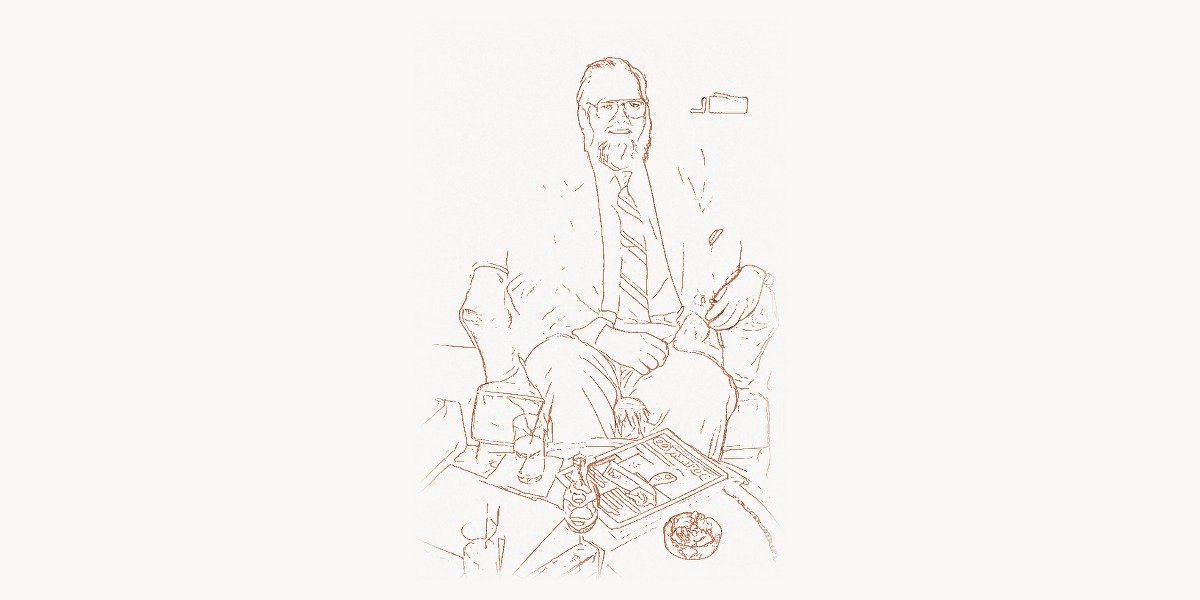
In 1985, while most personal computer companies were competing to build faster business machines, Jay Miner unveiled a computer that could display 4,096 colors, play four channels of stereo sound, and multitask — all at the same time. The Commodore Amiga 1000 was not merely a computer; it was a statement that personal computing could be creative, expressive, and years ahead of its time. Behind this machine stood a quiet, unassuming engineer with a pet cockatoo named Mitchy and a stubborn belief that hardware should empower artists, musicians, and dreamers. Jay Miner, the “Father of the Amiga,” changed the trajectory of personal computing in ways that still echo through modern technology.
Early Life and Education
Jay Glenn Miner was born on May 31, 1932, in Prescott, Arizona. Growing up in the American Southwest during the Great Depression and World War II, he developed an early fascination with electronics — the kind of curiosity that turned radio kits and surplus military components into weekend projects. His path into engineering was shaped by this hands-on tinkering, a trait that would define his entire career.
Miner studied electrical engineering at the University of California, Berkeley, one of the premier technical institutions in the country. At Berkeley, he gained a strong foundation in circuit design and semiconductor physics during an era when the field of integrated circuits was still in its infancy. After graduating, he served briefly in the U.S. Coast Guard before entering the private sector. His early professional years were spent at companies like Synertek and General Instrument, where he honed his skills designing microprocessor support chips. These formative experiences gave him deep expertise in custom silicon design — knowledge that would prove essential when he later set out to build entirely new computing architectures from scratch.
Career and the Amiga Revolution
Jay Miner’s career arc is one of the most remarkable in computing history. He moved from designing the chips inside the Atari 2600 — the console that launched the home video game industry — to architecting the Amiga, a machine that pioneered multimedia computing a full decade before the term “multimedia” became a marketing buzzword.
Technical Innovation: Custom Chipsets That Changed Everything
What made Miner’s approach revolutionary was his insistence on custom hardware. At Atari, where Nolan Bushnell had launched the gaming revolution, Miner designed the TIA (Television Interface Adapter) chip for the Atari 2600, a remarkably efficient piece of silicon that could generate graphics and sound on the fly with almost no memory. He later designed the ANTIC and CTIA/GTIA chips for the Atari 8-bit computer line, which gave those machines graphics capabilities far beyond their competitors.
But Miner felt constrained at Atari. After Warner Communications acquired the company, the culture shifted from engineering innovation to cost-cutting. Miner left and, after a brief stint at Zimast (a company making pacemaker chips — a reflection of his broader engineering talents), he was recruited by Larry Kaplan and others to join a secretive startup called Hi-Toro, later renamed Amiga Corporation.
At Amiga Corporation, Miner was given something rare: the freedom to design a personal computer from the ground up with no legacy constraints. He assembled a small, brilliant team and set about creating three custom chips that would form the heart of the Amiga:
- Agnus (Address Generator Unit) — managed DMA channels and memory access, allowing multiple subsystems to share memory without CPU intervention
- Denise (Display Encoder) — handled all video output, supporting resolutions up to 640×400 in 4,096 colors with hardware sprites and a “hold and modify” (HAM) mode
- Paula — managed four-channel 8-bit PCM stereo audio and I/O, including floppy disk and serial port control
These chips worked in concert through a shared bus architecture that Miner called the “copper” and “blitter” — coprocessors embedded in the chipset that could independently perform graphics operations. The Copper was a programmable display coprocessor that could change hardware registers mid-scanline, enabling effects like gradient backgrounds and split-screen displays without any CPU load. The Blitter could copy and combine rectangular blocks of memory at speeds the main CPU could never match, making scrolling, animation, and window management remarkably fluid.
To illustrate the Copper’s elegance, consider how it could create a smooth rainbow gradient across the screen with a simple instruction list:
; Amiga Copper list — gradient background
; Each WAIT/MOVE pair changes the background color at a specific scanline
    dc.w $2c01,$fffe    ; Wait for line $2c (44), any horizontal position
    dc.w $0180,$0200    ; Set COLOR00 (background) to dark red
    dc.w $3c01,$fffe    ; Wait for line $3c (60)
    dc.w $0180,$0400    ; COLOR00 = medium red
    dc.w $4c01,$fffe    ; Wait for line $4c (76)
    dc.w $0180,$0620    ; COLOR00 = orange
    dc.w $5c01,$fffe    ; Wait for line $5c (92)
    dc.w $0180,$0850    ; COLOR00 = warm yellow
    dc.w $6c01,$fffe    ; Wait for line $6c (108)
    dc.w $0180,$0a80    ; COLOR00 = yellow-green
    dc.w $ffff,$fffe    ; End of Copper list (wait forever)
This tiny sequence, running entirely on the Copper coprocessor, produced smooth color transitions without the Motorola 68000 CPU executing a single instruction. It was this kind of hardware-level efficiency that made the Amiga so astonishing for its era. The machine could play back animations, generate music, and run a windowed multitasking operating system — simultaneously — on a 7.16 MHz processor with 256 KB of RAM.
Why It Mattered: Multimedia Before Multimedia Existed
The Amiga arrived in 1985 at a time when the IBM PC displayed four colors (with CGA), the Apple Macintosh was monochrome, and the Commodore 64 was the reigning home computer king. In that context, the Amiga 1000 was not merely an incremental improvement — it was a generational leap. The machine demonstrated that personal computers could be genuine creative tools, not just business appliances or gaming devices.
This vision attracted an extraordinary community. Video producers used the Amiga’s Video Toaster (developed by NewTek) to create broadcast-quality graphics on a budget. The Babylon 5 TV series famously used Amiga-based systems for its groundbreaking CGI. Musicians composed with tracker software, spawning the entire demoscene and MOD music culture. Alan Kay’s vision of personal computing as a creative medium found one of its purest expressions in the Amiga platform.
The Amiga’s preemptive multitasking operating system, written largely by Carl Sassenrath, was equally ahead of its time. While Microsoft’s Windows would not achieve stable preemptive multitasking until Windows NT in 1993, and consumer versions waited until Windows 95, AmigaOS delivered it in 1985. The OS was remarkably lean — the entire Kickstart ROM fit in 256 KB — and its message-passing architecture influenced operating system design for decades.
The following C snippet demonstrates how AmigaOS handled message-passing between tasks — a pattern that feels remarkably modern even today:
/* AmigaOS-style inter-task messaging pattern */
#include <exec/types.h>
#include <exec/ports.h>
#include <exec/memory.h>

struct AppMessage {
    struct Message msg;      /* Standard Exec message header */
    ULONG  command;          /* Application-defined command */
    APTR   payload;          /* Pointer to data payload */
};

/* Create a message port and wait for incoming messages */
struct MsgPort *port = CreateMsgPort();
if (port) {
    /* Signal-based wait — CPU sleeps until message arrives */
    ULONG signals = Wait(1L << port->mp_SigBit);

    struct AppMessage *amsg;
    while ((amsg = (struct AppMessage *)GetMsg(port))) {
        /* Process the message based on command type */
        switch (amsg->command) {
            case CMD_RENDER:
                /* Dispatch to blitter for hardware-accelerated copy */
                break;
            case CMD_AUDIO:
                /* Queue sample to Paula chip DMA channel */
                break;
        }
        ReplyMsg((struct Message *)amsg);  /* Return message to sender */
    }
    DeleteMsgPort(port);
}
This signal-and-message architecture meant the CPU literally slept when there was nothing to do — a design principle that modern mobile operating systems would rediscover decades later in their quest for battery efficiency. Dave Cutler’s later work on Windows NT would explore similar message-passing concepts, though in a very different architectural context.
Other Contributions
While the Amiga remains Miner’s defining achievement, his earlier work at Atari was foundational to the entire video game industry. The TIA chip he designed for the Atari 2600 was a masterwork of minimalism — it generated video output on the fly, line by line, with programmers having to “race the beam” to update registers before each scanline was drawn. This chip powered roughly 30 million consoles sold worldwide and established the template for dedicated gaming hardware.
His work on the Atari 8-bit computers (400/800 series) introduced concepts like display list interrupts, player/missile graphics, and hardware scrolling that were years ahead of competing platforms. These machines, powered by Miner’s ANTIC chip, were the first home computers with a dedicated GPU-like coprocessor — a concept that wouldn’t become standard on PCs until the rise of dedicated graphics cards in the 1990s, a revolution later championed by companies like NVIDIA under Jensen Huang.
Miner’s brief work on pacemaker chips at Zimast also deserves mention. It demonstrated his versatility and his fundamental belief that good engineering should serve human needs — whether that meant entertaining people with games, empowering them with creative tools, or keeping their hearts beating. This breadth of application was unusual for chip designers of his era and reflected a deeply humanistic approach to technology.
Beyond his technical contributions, Miner was instrumental in fostering a collaborative engineering culture at Amiga Corporation. He attracted and mentored talented engineers like Dave Needle and Glenn Keller, creating a small-team environment where radical ideas could flourish. This approach to engineering management — small teams with high autonomy and a shared vision — would later become the standard model for technology startups, championed by organizations like Taskee that emphasize focused team collaboration in modern project workflows.
Philosophy and Approach to Engineering
Jay Miner’s engineering philosophy was distinctive in an industry increasingly driven by market research and cost optimization. He believed that the best technology emerged from a deep understanding of what users could do with it, not from asking them what they wanted. His approach combined several principles that together formed a coherent design philosophy.
Key Principles
- Custom silicon over commodity parts. Miner consistently argued that the best performance came from hardware designed specifically for its purpose. Rather than building computers from off-the-shelf components, he invested enormous effort in creating custom chipsets that worked together as an integrated system. This philosophy anticipated the modern trend toward system-on-chip (SoC) designs like Apple’s M-series processors.
- Hardware should offload the CPU. The Amiga’s Copper, Blitter, and Paula chips all operated independently of the main processor, performing specialized tasks in parallel. This principle of dedicated coprocessors is now fundamental to modern computing — from GPUs to neural processing units — but in 1985, it was radical.
- Design for creators, not consumers. Miner always envisioned the Amiga as a tool for creative expression, not just a business machine. He wanted artists, musicians, and video producers to have affordable access to capabilities previously locked behind expensive professional equipment. This democratization of creative tools prefigured movements like the open-source software ethos of Richard Stallman.
- Elegance matters. Miner was known for his insistence on clean, efficient designs. He believed that elegant hardware was not a luxury but a necessity — that complexity bred bugs, increased costs, and limited performance. The Amiga’s chipset achieved extraordinary capabilities with remarkably little silicon.
- Small teams build better products. Throughout his career, Miner favored small, tight-knit engineering teams over large development organizations. The core Amiga chipset was designed by fewer than a dozen engineers, working in intense collaboration. Modern web agencies like Toimi continue this tradition of lean, focused teams delivering outsized results.
- Never let business politics override engineering excellence. Miner left Atari specifically because corporate management was undermining engineering quality. His willingness to walk away from security in pursuit of better work set an example that resonated throughout Silicon Valley.
Legacy and Lasting Impact
Jay Miner passed away on June 20, 1994, at the age of 62, after a long battle with kidney disease. His pet cockatoo Mitchy, who famously attended engineering meetings at Amiga Corporation and even signed the Amiga 1000’s case (along with the entire design team), became a beloved symbol of the machine’s unconventional origins. Miner was buried with Mitchy’s body, who had passed shortly before him — a poignant ending that reflected the deeply personal nature of his work.
The Amiga itself suffered a turbulent corporate history. Commodore’s acquisition of Amiga Corporation in 1984 gave the machine the manufacturing and distribution muscle to reach the market, but Commodore’s mismanagement eventually drove the company to bankruptcy in 1994. The Amiga brand passed through multiple owners, and while the community kept the platform alive through emulators and compatible hardware, the machine never regained mainstream relevance.
But Miner’s technical legacy is enormous and extends far beyond a single platform. The concept of dedicated coprocessors handling graphics, audio, and I/O independently of the main CPU is now the foundational architecture of every modern computer, smartphone, and gaming console. The Amiga’s DMA-driven architecture, where specialized hardware accessed memory directly without CPU intervention, anticipated modern bus architectures. Its preemptive multitasking OS influenced generations of operating system designers.
The creative communities that formed around the Amiga left lasting cultural marks. The demoscene — a digital art subculture devoted to creating impressive audiovisual demonstrations within extreme technical constraints — was born largely on the Amiga. Tracker music software, originating on the Amiga, evolved into the digital audio workstation paradigm used by producers worldwide. Video production workflows pioneered on the Amiga’s Video Toaster became the template for desktop video editing — a lineage that runs directly to modern tools like Final Cut Pro and DaVinci Resolve.
Federico Faggin’s invention of the microprocessor made personal computing possible, but Jay Miner showed what personal computing could become when hardware was designed with creative vision rather than mere specification checklists. In an industry that often celebrates software visionaries, Miner stands as a reminder that transformative hardware design can be equally revolutionary.
Key Facts
- Full name: Jay Glenn Miner
- Born: May 31, 1932, Prescott, Arizona, USA
- Died: June 20, 1994 (age 62), Mountain View, California, USA
- Known for: Designing the Amiga custom chipset (Agnus, Denise, Paula), Atari 2600 TIA chip, Atari 8-bit ANTIC chip
- Education: University of California, Berkeley (Electrical Engineering)
- Key employers: Synertek, Atari, Zimast, Amiga Corporation, Commodore
- Signature creation: Commodore Amiga 1000 (1985)
- Notable trait: Brought his cockatoo Mitchy to engineering meetings; Mitchy’s pawprint is on the Amiga 1000 case
- Nickname: “Father of the Amiga”
- Legacy: Pioneered multimedia personal computing, custom coprocessor architectures, and hardware-accelerated graphics
Frequently Asked Questions
Why is Jay Miner called the “Father of the Amiga”?
Jay Miner earned this title because he was the principal architect and driving force behind the Amiga’s custom chipset — the three chips (Agnus, Denise, and Paula) that gave the machine its extraordinary multimedia capabilities. While the Amiga was a team effort involving brilliant engineers like Dave Needle, RJ Mical, and Carl Sassenrath, Miner was the technical leader who defined the overall hardware architecture and recruited the team that built it. His previous experience designing custom chips at Atari gave him the unique expertise needed to envision and execute such an ambitious project. Without Miner’s leadership and chip design vision, the Amiga as we know it would not have existed.
How did the Amiga influence modern computing?
The Amiga’s influence runs through several foundational aspects of modern computing. Its dedicated coprocessor architecture — where specialized chips handled graphics, audio, and memory management independently — is the direct ancestor of the GPU-centric computing model used in every modern device. The Amiga’s preemptive multitasking OS, delivered eight years before Windows NT, proved that responsive multitasking was achievable even on modest hardware. Its DMA architecture, where hardware subsystems accessed memory without CPU involvement, anticipated modern bus designs like PCIe. And the creative communities it fostered — particularly the demoscene and tracker music scene — laid groundwork for digital art and music production workflows used worldwide today. Steve Wozniak’s approach to elegant hardware design at Apple shared many similarities with Miner’s philosophy.
What happened to the Amiga after Jay Miner’s death?
The Amiga’s corporate history is a cautionary tale in technology business management. Commodore, which acquired Amiga Corporation in 1984 and brought the machine to market, went bankrupt in April 1994 — just two months before Miner’s death. The brand and intellectual property passed through a series of owners including Escom, Gateway 2000, and eventually Amiga, Inc. Various attempts to revive the platform — including AmigaOS 4 running on PowerPC hardware and AROS (an open-source reimplementation) — have maintained a dedicated but small community. The Amiga’s largest legacy lives on not through its brand but through its technical DNA: the architectural principles Miner pioneered are now so fundamental to computing that they’re simply taken for granted.
What was unique about Jay Miner’s engineering approach compared to other chip designers?
Miner’s approach was distinctive in three key ways. First, he designed entire systems rather than individual chips — his custom chipsets were conceived as tightly integrated ensembles where each component complemented the others, much like instruments in an orchestra. Second, he always designed with end users in mind, particularly creative professionals, rather than optimizing for benchmark performance or cost reduction. Third, he valued simplicity and elegance over brute-force complexity, achieving remarkable capabilities with minimal transistor counts. While contemporaries like the integrated circuit pioneers focused on making chips smaller and faster, Miner focused on making them smarter — offloading work from the CPU to purpose-built coprocessors. This systems-level thinking was rare among hardware engineers of his generation and remarkably prescient.