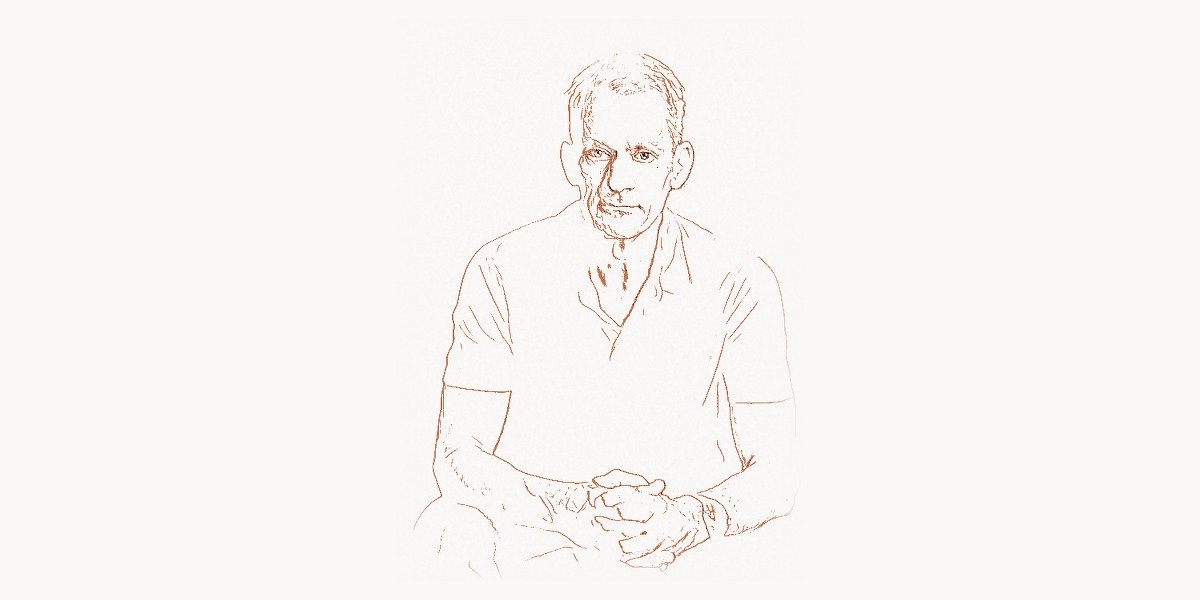
In 2000, Google had an existential problem. The company had indexed over a billion web pages, and the index was growing faster than any single machine could process it. The existing systems for crawling, indexing, and serving search results were breaking under their own weight. Failures were constant. The hardware was cheap and unreliable by design — commodity servers purchased in bulk, each one expected to die eventually. The engineering challenge was not how to avoid failure, but how to build systems that continued to work despite it. Jeff Dean, a quiet systems engineer who had joined Google in 1999 as employee number 20, took on this challenge and produced a series of solutions that fundamentally changed how the world processes data. MapReduce, the Google File System, Bigtable, TensorFlow, TPU chips — each one of these would be a career-defining achievement for any engineer. Dean built all of them, often as the primary architect, over the course of two decades. He did not just scale Google; he created the conceptual frameworks that the entire industry adopted to handle data at planetary scale. Today, as Google’s Chief Scientist overseeing all AI efforts, he continues to work at the intersection of systems engineering and machine intelligence — a combination that has defined his career from the start.
Early Life and Education
Jeffrey Adgate Dean was born on July 23, 1968, in Honolulu, Hawaii. His father was a tropical disease researcher, and the family moved frequently during Dean’s childhood — they lived in Somalia, Uganda, and several other countries where his father’s work took them. This itinerant upbringing exposed Dean to different cultures and environments, but it also gave him early experience with systems that had to work under constrained and unreliable conditions — a theme that would come to define his engineering career.
Dean studied computer science and economics at the University of Minnesota, graduating summa cum laude in 1990. He then entered the Ph.D. program in computer science at the University of Washington, where he studied under Craig Chambers. His doctoral research focused on compilers and profile-guided optimization — techniques for making software run faster by using data about how programs actually behave in practice rather than relying on static analysis alone. This work in compiler optimization shaped Dean’s engineering instincts: he learned to think about performance not as an abstract property of algorithms, but as a concrete, measurable characteristic of real systems running on real hardware.
After completing his Ph.D. in 1996, Dean joined Digital Equipment Corporation’s Western Research Laboratory, where he worked on profiling tools and systems software. In 1999, when Google was still a startup operating out of a garage-turned-office in Menlo Park, Dean joined the company. He was one of the first twenty employees — arriving at a moment when the fundamental systems challenges of web-scale search were just beginning to emerge.
The MapReduce and GFS Breakthrough
Technical Innovation
By 2002, Google was processing datasets so large that no conventional approach could handle them. Crawling the entire web, building an inverted index, computing PageRank, analyzing click logs — each of these tasks required processing terabytes or petabytes of data, and they had to be done regularly, often daily. The engineering teams were writing custom distributed programs for each task, and every one of those programs had to solve the same hard problems: partitioning data across machines, handling network failures, restarting crashed workers, and aggregating partial results. It was wasteful, error-prone, and unsustainable.
Dean, working with Sanjay Ghemawat — his longtime collaborator and perhaps the most effective engineering partnership in the history of the software industry — designed two systems that solved these problems in a general, reusable way. The first was the Google File System (GFS), published in 2003. GFS was designed from the ground up for a world where hardware failure was the norm, not the exception. It stored data in large chunks (64 MB each), replicated each chunk across multiple machines, and used a single master server to manage metadata while distributing the actual data across thousands of commodity machines. The key insight was to optimize for throughput rather than latency — GFS was designed for batch processing of enormous files, not for fast random access to small pieces of data.
The second system was MapReduce, published in 2004. MapReduce provided a simple programming model that allowed engineers to process massive datasets without thinking about the mechanics of distribution. The programmer wrote two functions: a Map function that processed individual input records and emitted intermediate key-value pairs, and a Reduce function that aggregated all intermediate values associated with the same key. The framework handled everything else — partitioning the input data, scheduling Map tasks across thousands of machines, shuffling intermediate data, handling failures, and collecting the final output.
# Conceptual MapReduce: counting word frequencies across billions of documents
# This simplified example illustrates the core pattern Jeff Dean and
# Sanjay Ghemawat described in their 2004 paper

def map_function(document_id, document_text):
    """
    Map phase: process one document, emit (word, 1) pairs.
    In production at Google, this ran on thousands of machines
    simultaneously, each processing a shard of the web.
    """
    results = []
    for word in document_text.lower().split():
        word = word.strip(".,!?;:'\"()[]{}")
        if word:
            results.append((word, 1))
    return results

def reduce_function(word, counts):
    """
    Reduce phase: aggregate all counts for a single word.
    The framework guarantees that ALL values for a given key
    arrive at the same reducer — this is the shuffle step.
    """
    return (word, sum(counts))

# --- Simulating the MapReduce execution flow ---
documents = {
    "doc1": "distributed systems handle failure gracefully",
    "doc2": "failure is the norm in distributed computing",
    "doc3": "systems at scale must expect and handle failure",
}

# MAP PHASE: each document processed independently (parallelizable)
intermediate = []
for doc_id, text in documents.items():
    intermediate.extend(map_function(doc_id, text))

# SHUFFLE PHASE (handled by the framework): group by key
from collections import defaultdict
grouped = defaultdict(list)
for key, value in intermediate:
    grouped[key].append(value)

# REDUCE PHASE: aggregate each group (parallelizable)
final_results = {}
for word, counts in grouped.items():
    _, total = reduce_function(word, counts)
    final_results[word] = total

# Top words by frequency
for word, count in sorted(final_results.items(), key=lambda x: -x[1])[:5]:
    print(f"  {word}: {count}")
# Output: failure: 3, distributed: 2, systems: 2, handle: 2, ...
The elegance of MapReduce was in its constraints. By limiting the programmer to just two functions with well-defined inputs and outputs, the framework could make strong guarantees about parallelism, fault tolerance, and data locality. If a worker machine crashed during a Map task, the framework simply re-executed that task on another machine. The programmer never had to think about failure handling, network protocols, or data distribution — they just wrote a Map function and a Reduce function, and the framework did the rest.
Why It Mattered
MapReduce and GFS did not just solve Google’s internal engineering problems — they created a new paradigm for processing large-scale data. When the papers were published (GFS in 2003, MapReduce in 2004), they triggered an earthquake in the systems research community. Within two years, the open-source Apache Hadoop project had created implementations of both systems, making Google-scale data processing available to anyone. The entire big data industry — Hadoop, Spark, Hive, Pig, and the ecosystem of tools built around them — traces its intellectual lineage directly to Dean and Ghemawat’s papers.
The impact was not limited to data processing. The architectural principles behind GFS and MapReduce — designing for failure, using commodity hardware, separating computation from storage, and providing simple programming abstractions over complex distributed systems — became the foundational principles of cloud computing. When Amazon launched AWS, when Microsoft built Azure, when every major technology company built its infrastructure, they were building on ideas that Dean and Ghemawat had articulated and proven at Google.
For engineers building modern applications — whether using Python for data processing, deploying infrastructure on cloud platforms, or managing projects with tools like Taskee — the influence of MapReduce is inescapable. Every distributed data pipeline, every batch processing system, every large-scale analytics platform owes a conceptual debt to the framework Dean designed.
Beyond MapReduce: Other Major Contributions
MapReduce and GFS would be enough to secure any engineer’s place in history. But Dean’s contributions at Google extend far beyond those two systems. He has been a central architect of at least half a dozen systems that each, independently, changed the trajectory of the technology industry.
Bigtable (published 2006) was a distributed storage system for structured data that could scale to petabytes across thousands of machines. It provided a sparse, distributed, persistent multidimensional sorted map — essentially, a way to store and retrieve enormous amounts of structured data with low latency. Bigtable became the foundation of Google’s most important products, including Search, Gmail, Google Maps, and YouTube. The open-source community responded with Apache HBase and Apache Cassandra, and the entire NoSQL database movement drew heavily on Bigtable’s design principles.
Spanner (published 2012) took the ideas of Bigtable further by providing globally distributed, strongly consistent database transactions — something that many distributed systems researchers had considered impractical at global scale. Spanner used GPS receivers and atomic clocks to synchronize time across data centers, enabling it to provide external consistency (a property stronger than serializability) for transactions spanning the entire globe. This was a genuinely novel contribution to distributed systems theory and practice.
TensorFlow (released 2015) was Google’s open-source machine learning framework, and Dean was one of its primary architects. TensorFlow provided a flexible, production-ready platform for building and deploying machine learning models at scale. It became the most widely used ML framework in the world, adopted by researchers, startups, and enterprises alike. TensorFlow democratized deep learning in the same way that MapReduce had democratized large-scale data processing — by providing a simple, reusable abstraction over immensely complex underlying systems. The work of researchers like Geoffrey Hinton, who spent years at Google Brain, was amplified enormously by having TensorFlow as a platform for experimentation and deployment.
TPU chips (Tensor Processing Units, first deployed 2015) were custom silicon designed specifically for machine learning workloads. Dean was a key advocate and co-designer of the TPU project. The first-generation TPU was designed to accelerate inference (running trained models), and subsequent generations (TPU v2, v3, v4, v5) added training capabilities. TPUs provided order-of-magnitude improvements in performance-per-watt for ML workloads compared to general-purpose GPUs — an approach that paralleled Jensen Huang’s work at NVIDIA in building specialized hardware for AI computation. The TPU project demonstrated that the future of ML performance lay not just in better algorithms but in co-designing hardware and software together.
Google Brain and Gemini. Dean co-founded the Google Brain team in 2011 (along with Andrew Ng and Greg Corrado), which became one of the most productive AI research labs in the world. Google Brain produced foundational work on large-scale neural networks, including the famous “cat neuron” experiment that demonstrated unsupervised feature learning from YouTube videos. In 2023, Dean oversaw the merger of Google Brain with DeepMind to form Google DeepMind, and he played a guiding role in the development of the Gemini family of multimodal AI models. For teams building AI-powered products or working with agencies like Toimi on technology strategy, understanding the infrastructure decisions Dean championed provides essential context for how modern AI systems are designed and deployed.
# Simplified illustration of how TensorFlow abstracts distributed ML training
# This conceptual example shows the pattern Dean's team designed:
# define computation as a graph, then execute across devices

import tensorflow as tf

# The core TensorFlow insight: separate graph definition from execution.
# This allows the same model code to run on CPUs, GPUs, or TPUs
# across multiple machines — the runtime handles distribution.

# Define a simple neural network layer (computation graph)
class SimpleLayer(tf.Module):
    def __init__(self, input_dim, output_dim, name="layer"):
        super().__init__(name=name)
        # Weights initialized once, distributed across devices by the runtime
        self.weights = tf.Variable(
            tf.random.normal([input_dim, output_dim], stddev=0.1),
            name="weights"
        )
        self.bias = tf.Variable(
            tf.zeros([output_dim]),
            name="bias"
        )

    @tf.function  # Compiled to a graph — can run on CPU, GPU, or TPU
    def __call__(self, x):
        return tf.nn.relu(tf.matmul(x, self.weights) + self.bias)

# In practice, TensorFlow's distribution strategy handles
# partitioning data and synchronizing gradients across devices:
#
# strategy = tf.distribute.TPUStrategy(resolver)
# with strategy.scope():
#     model = build_model()      # Replicated across TPU cores
#     model.fit(dataset)         # Data automatically sharded
#
# This abstraction — write once, run on any hardware at any scale —
# is the same design philosophy as MapReduce applied to ML.
Engineering Philosophy
Key Principles
Dean’s engineering philosophy is built on several principles that have shaped Google’s infrastructure culture and, by extension, the broader software engineering profession.
Design for failure. Dean’s systems assume that hardware will fail. Machines crash, disks corrupt, networks partition — these are not exceptional events but routine occurrences at scale. Every system Dean has designed — GFS, MapReduce, Bigtable, Spanner — treats failure as a first-class concern, building redundancy and recovery into the core architecture rather than bolting it on as an afterthought. This philosophy, now standard in cloud-native engineering, was radical when Dean first applied it at Google in the early 2000s.
Simple abstractions over complex systems. MapReduce reduced distributed data processing to two functions. TensorFlow reduced distributed ML training to a computation graph. In each case, Dean’s approach was to find the simplest possible interface that captured the essential structure of the problem, then build the complex distributed machinery behind that interface. This is the same instinct that drove Linus Torvalds when designing Git’s object model or Ritchie and Thompson when designing the Unix file interface — the belief that the right abstraction, once found, makes previously intractable problems manageable.
Co-design hardware and software. The TPU project exemplifies Dean’s belief that the greatest performance gains come from designing hardware and software together. Rather than accepting existing hardware and optimizing software around its constraints, Dean pushed for custom chips designed specifically for the workloads Google needed to run. This holistic approach — thinking about the entire stack from transistors to user-facing APIs — is characteristic of the most impactful systems engineers.
Measure everything. Dean’s background in compiler optimization, where every decision is guided by profiling data, pervades all his work. His famous document “Numbers Every Programmer Should Know” — listing latencies for common operations from L1 cache references to disk seeks to round-trip network calls — became one of the most widely shared resources in systems engineering. It embodied his conviction that good engineering requires quantitative reasoning about performance at every level of the stack.
Move between layers. One of Dean’s most distinctive traits as an engineer is his willingness and ability to work at every level of the computing stack. In a single career, he has written compilers, designed distributed systems, architected machine learning frameworks, co-designed custom silicon, and led the development of frontier AI models. This range is extraordinarily rare and has allowed him to identify opportunities — like the TPU project — that would be invisible to someone confined to a single layer.
Legacy and Modern Relevance
Jeff Dean’s legacy is not just in the systems he built but in the paradigms he established. Before MapReduce, large-scale data processing was an ad hoc, specialized skill practiced by a handful of companies with the resources to build custom solutions. After MapReduce, it became a standardized, accessible capability available to any organization through open-source tools like Hadoop and Spark. Before TensorFlow, training deep learning models at scale required deep expertise in distributed computing and custom infrastructure. After TensorFlow, researchers and engineers worldwide could build and train models using a common, well-documented framework.
The pattern is consistent across Dean’s career: identify a problem that requires specialized, brittle, custom solutions; design a general, robust abstraction that captures the essential structure of that problem; implement it at Google scale; and then, in many cases, release it to the world. This pattern — from internal tool to open-source standard — has become the template for how Google (and many other large technology companies) share infrastructure innovations with the broader engineering community.
Dean’s influence extends through the people he has mentored and the culture he has shaped. Google’s infrastructure engineering culture — its emphasis on code review, design documents, reliability engineering, and quantitative thinking about performance — bears Dean’s fingerprints throughout. Many of the engineers who worked with Dean have gone on to lead infrastructure efforts at other companies, carrying these principles with them.
The ACM recognized Dean’s contributions by awarding him (jointly with Sanjay Ghemawat) the 2012 ACM-Infosys Foundation Award in the Computing Sciences. Dean is a member of the National Academy of Engineering and a Fellow of the ACM. Within Google, he holds the title of Senior Fellow — the only Level 11 engineer in the company’s history, in a system where most senior engineers top out at Level 8 or 9. It is the engineering equivalent of a four-star general’s rank: a level created specifically because the existing hierarchy could not adequately represent his impact.
Today, as Google’s Chief Scientist, Dean is focused on the intersection of large-scale systems and artificial intelligence — the same intersection that has defined his entire career. From MapReduce to TensorFlow to TPUs to Gemini, the thread is consistent: building the infrastructure that allows intelligence — whether human or artificial — to operate at scales that were previously unimaginable. For anyone working in systems engineering, distributed computing, machine learning, or AI — or using modern development tools built on these foundations — Jeff Dean’s work is not just historically significant. It is the ground beneath their feet.
Key Facts
- Full name: Jeffrey Adgate Dean
- Born: July 23, 1968, Honolulu, Hawaii, USA
- Known for: Co-creating MapReduce, GFS, Bigtable, Spanner, TensorFlow; co-designing TPU chips; co-founding Google Brain; leading Google AI as Chief Scientist
- Key projects: Google File System (2003), MapReduce (2004), Bigtable (2006), Spanner (2012), TensorFlow (2015), TPU (2015-present), Gemini (2023-present)
- Education: B.S. in Computer Science and Economics, University of Minnesota (1990); Ph.D. in Computer Science, University of Washington (1996)
- Awards: ACM-Infosys Foundation Award (2012), Member of the National Academy of Engineering, ACM Fellow, Google Senior Fellow (Level 11 — the only person to hold this rank)
- Current role: Chief Scientist, Google DeepMind
Frequently Asked Questions
Who is Jeff Dean?
Jeff Dean is a computer scientist and software engineer who has been at Google since 1999, when he joined as one of the company’s first twenty employees. He is the co-creator of several foundational systems — MapReduce, the Google File System, Bigtable, and TensorFlow — that transformed how the technology industry processes data and trains machine learning models. He co-designed Google’s Tensor Processing Unit (TPU) chips and co-founded Google Brain. He currently serves as Google’s Chief Scientist, overseeing all AI research and development at Google DeepMind. Dean is widely regarded as one of the most influential software engineers in history.
What is MapReduce and why did Jeff Dean create it?
MapReduce is a programming model and framework for processing large datasets in parallel across thousands of machines. Dean created it (with Sanjay Ghemawat) in 2003-2004 to solve a practical problem at Google: engineers were writing custom distributed programs for every large-scale data processing task, and each program had to independently handle data partitioning, fault tolerance, and result aggregation. MapReduce provided a simple abstraction — write a Map function and a Reduce function, and the framework handles everything else. The 2004 MapReduce paper inspired the open-source Apache Hadoop project, which made large-scale data processing accessible to the entire industry and launched the big data era.
How did Jeff Dean contribute to the development of AI at Google?
Dean has been central to Google’s AI efforts at every level. He co-founded Google Brain in 2011, which became one of the world’s leading AI research labs. He was a primary architect of TensorFlow (released 2015), which became the most widely used machine learning framework globally. He championed and co-designed the TPU chip program, providing custom hardware for ML training and inference. He oversaw the merger of Google Brain with DeepMind in 2023 to form Google DeepMind, and he has played a guiding role in the development of Google’s Gemini multimodal AI models. His career represents a unique arc from systems infrastructure to AI — building first the plumbing (MapReduce, GFS) and then the frameworks (TensorFlow, TPUs) that made modern large-Scale AI possible.