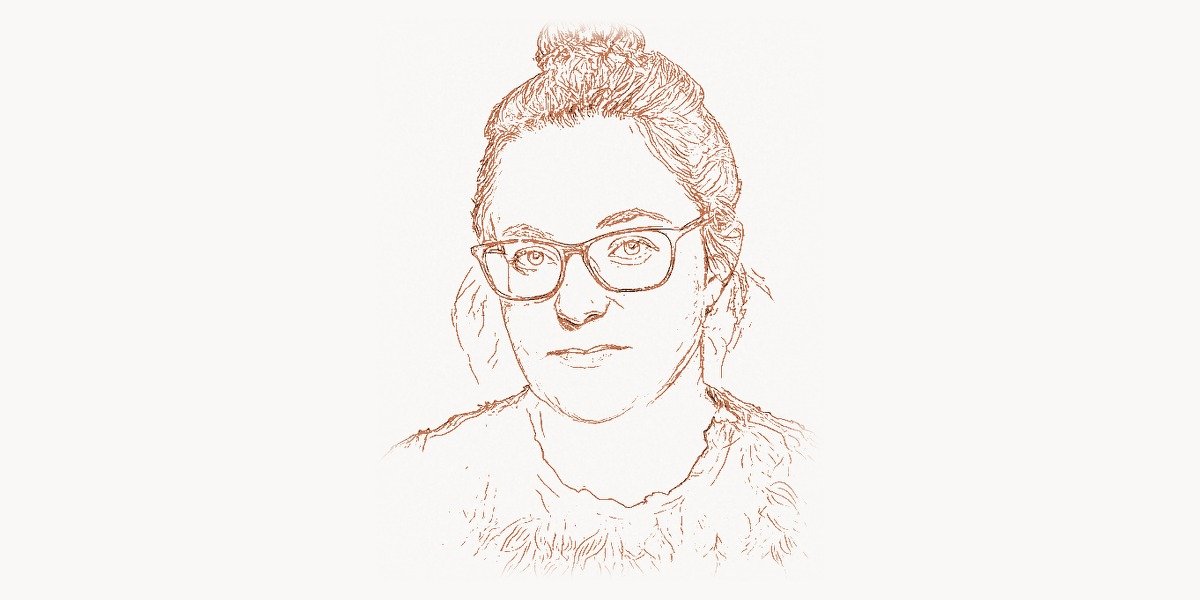
In 2015, a Docker engineer walked on stage at DockerCon and demonstrated something that made the audience laugh, then think, then fundamentally reconsider what containers were for. Jessie Frazelle was running graphical desktop applications — Chrome, Spotify, even a Nintendo emulator — inside Docker containers on her Linux laptop. It was part performance art, part technical proof-of-concept, and entirely characteristic of a person who has spent her career pushing container technology far beyond the boundaries that its creators originally imagined. From rewriting Docker’s security subsystem to co-founding a hardware company that builds rack-scale cloud computers from scratch, Frazelle has carved a unique trajectory through the infrastructure world — one that connects the low-level mechanics of Linux kernel security to the high-level architecture of modern cloud computing.
From Finance to Systems Programming
Jessie Frazelle’s path into technology was not the typical computer-science-degree pipeline. She began her university education at NYU Stern School of Business studying finance in 2007, then transferred to the University of Arizona where she pursued mathematics from 2008 to 2011. The transition from finance to systems programming might seem abrupt, but the analytical rigor of mathematical thinking — the ability to reason about complex systems from first principles — would prove essential to her later work on container security, where a single misconfigured syscall filter can be the difference between an isolated process and a full host compromise.
Before joining Docker, Frazelle worked across a range of environments — startups, design agencies, and various companies that gave her hands-on experience with the messy reality of production systems. This breadth of exposure shaped her practical, no-nonsense approach to infrastructure. She was not an academic theorist; she was someone who had wrestled with deployment pipelines, server configurations, and the thousand small failures that plague real-world systems. When she encountered Docker in its early days, she recognized both its enormous potential and its glaring security gaps — and she decided to fix them.
The Docker Years: Securing the Container Revolution
Rewriting the Security Foundation
Frazelle joined Docker in 2014, during the explosive early growth of the container ecosystem. Solomon Hykes had created Docker in 2013, and the technology was spreading through the developer community at remarkable speed. But Docker’s security story was incomplete. Containers relied on Linux kernel features — namespaces, cgroups, capabilities — that provided isolation, but the default configurations left significant attack surface exposed. A container that could invoke arbitrary system calls against the host kernel was not truly isolated; it was a process with a thin wrapper of separation that a determined attacker could pierce.
Frazelle became one of the top contributors to the Docker project and took ownership of the security subsystems. Her most significant contribution was designing and implementing the default seccomp (secure computing mode) profile for Docker containers. Seccomp is a Linux kernel feature that allows a process to restrict which system calls it can make. Before Frazelle’s work, Docker containers had unrestricted access to the full system call interface — over 300 syscalls, many of which a typical containerized application would never need but which an attacker could exploit.
The default seccomp profile that Frazelle wrote blocked approximately 44 dangerous system calls while keeping the remaining ones available for normal application workloads. The design required careful balancing: block too many syscalls and legitimate applications break; block too few and the security benefit is negligible. Here is a simplified representation of the kind of seccomp profile structure she pioneered:
{
  "defaultAction": "SCMP_ACT_ERRNO",
  "archMap": [
    { "architecture": "SCMP_ARCH_X86_64", "subArchitectures": ["SCMP_ARCH_X86"] }
  ],
  "syscalls": [
    {
      "names": ["accept", "bind", "clone", "close", "connect",
                "execve", "exit", "fcntl", "fstat", "getpid",
                "listen", "mmap", "open", "read", "recvmsg",
                "sendmsg", "socket", "write"],
      "action": "SCMP_ACT_ALLOW",
      "comment": "Allow common syscalls needed by most applications"
    },
    {
      "names": ["add_key", "keyctl", "request_key"],
      "action": "SCMP_ACT_ERRNO",
      "comment": "Block kernel keyring access from containers"
    },
    {
      "names": ["unshare"],
      "action": "SCMP_ACT_ERRNO",
      "comment": "Prevent creating new namespaces inside containers"
    },
    {
      "names": ["kexec_load", "kexec_file_load"],
      "action": "SCMP_ACT_ERRNO",
      "comment": "Prevent loading new kernel from inside container"
    }
  ]
}
Among the most critical decisions was blocking the unshare system call, which prevents processes inside a container from creating new Linux namespaces. This was specifically targeted at user namespaces, which had become notorious as entry points for kernel privilege escalation vulnerabilities. Frazelle also blocked access to the kernel keyring (add_key, keyctl, request_key) and prevented containers from loading new kernels via kexec_load. These choices reflected deep understanding of real attack patterns — not theoretical threat models, but actual exploits that had been used against containerized environments in the wild.
Beyond seccomp, Frazelle maintained the AppArmor and SELinux integration layers in Docker, creating a defense-in-depth approach where multiple security mechanisms worked together. A container was not protected by a single wall but by concentric rings of restriction: Linux capabilities limited root powers, seccomp filtered system calls, AppArmor or SELinux enforced mandatory access control policies, and namespaces provided resource isolation. This layered model became the standard approach to container security across the industry.
Desktop Containers and the Art of Pushing Limits
While her security work was her most consequential contribution, Frazelle became widely known in the developer community for a more flamboyant project: running graphical desktop applications inside Docker containers. Her GitHub repository of Dockerfiles contained configurations for running Chrome, Firefox, Spotify, GIMP, LibreOffice, Tor Browser, and dozens of other GUI applications in isolated containers. The technique involved mounting the host’s X11 socket and sound devices into the container:
#!/bin/bash
# Running a containerized Chrome browser with GPU and sound
# Technique popularized by Jessie Frazelle (jessfraz/chrome)

docker run -d \
  --name chrome \
  --security-opt seccomp=chrome.json \
  --net host \
  --cpuset-cpus 0 \
  --memory 512mb \
  -v /tmp/.X11-unix:/tmp/.X11-unix \
  -e "DISPLAY=unix${DISPLAY}" \
  -v "${HOME}/Downloads:/home/chrome/Downloads" \
  --device /dev/snd \
  --device /dev/dri \
  --group-add audio \
  --group-add video \
  jess/chrome --user-data-dir=/data \
              --force-device-scale-factor=1
This was more than a party trick. By containerizing desktop applications, Frazelle demonstrated a security model where each application ran in its own isolated environment — if Chrome was compromised, the attacker gained access only to the container’s filesystem and the explicitly mounted resources, not to the entire desktop. The approach anticipated the sandboxing models that would later become standard in modern operating systems and browsers. It also demonstrated the versatility of container technology to audiences who had only thought of containers as server-side deployment tools.
Her DockerCon presentations on this topic became legendary in the container community. She showed a Nintendo emulator running The Legend of Zelda inside a container, demonstrating that even applications requiring complex graphics and audio could be containerized with the right device mappings. These demonstrations made the abstract concepts of namespaces, cgroups, and seccomp profiles tangible and entertaining — and they inspired countless developers to explore container technology more deeply.
Google, Microsoft, and the Kubernetes Ecosystem
After leaving Docker in 2016, Frazelle joined Google, where she worked on Kubernetes and the Go programming language. The move from Docker to Google placed her at the intersection of the two most important container technologies of the decade: Docker, which had standardized the container image format and runtime, and Kubernetes, which was rapidly becoming the dominant system for orchestrating containers at scale. Her security expertise was directly applicable — Kubernetes needed the same kind of defense-in-depth thinking that she had applied to Docker, but at the orchestration layer rather than the runtime layer.
From 2017 to 2019, Frazelle moved to GitHub and Microsoft. At GitHub, she worked on infrastructure that supported one of the world’s largest developer platforms — a system serving millions of repositories and the CI/CD pipelines that build and deploy software from them. Her experience across Docker, Google, and Microsoft gave her a panoramic view of the container ecosystem that few engineers possessed: she had worked on the container runtime, the orchestration layer, and the development platforms that developers used to build containerized applications.
During this period, Frazelle also became increasingly involved in the broader open-source community. In 2017, she founded Maintainerati, a conference specifically for open-source maintainers — the often-burned-out, under-appreciated people who keep critical infrastructure projects running. The conference addressed the human side of open source: burnout, funding models, community management, and the emotional labor of maintaining projects that millions of people depend on but few contribute to. Maintainerati was later taken over by GitHub, reflecting its importance to the ecosystem. This initiative showed a side of Frazelle that went beyond pure technical expertise — an awareness that sustainable technology requires sustainable communities, and that the people maintaining open-source infrastructure deserve support and recognition.
Oxide Computer Company: Rethinking the Server Rack
In September 2019, Frazelle co-founded Oxide Computer Company alongside Bryan Cantrill (CTO) and Steve Tuck (CEO). The premise of Oxide was radical: the cloud experience that developers enjoyed on AWS, Azure, and GCP should be available on-premises, but the hardware industry had failed to deliver it. Existing server hardware was designed for a world where humans rack individual machines, install operating systems by hand, and manage firmware through clunky out-of-band management interfaces. Oxide set out to build a rack-scale computer — an integrated system where hardware, firmware, and software were designed together from the ground up, much like how Apple designs its products or how cloud providers design their custom servers.
As Chief Product Officer, Frazelle brought her deep understanding of the software-hardware boundary to Oxide’s product vision. Her experience with container security had taught her that many security vulnerabilities originate not in application code but in the layers below — the firmware, the baseboard management controller (BMC), the BIOS, the bootloader. These components are typically proprietary black boxes running code that nobody outside the vendor has audited. Oxide took the opposite approach: open-source firmware, a custom operating system based on illumos (a descendant of Sun Solaris), and end-to-end transparency from the boot ROM to the application layer.
Frazelle’s technical writing during the Oxide period, including her ACM Queue column “Commit to Memory,” explored these themes in depth. She wrote about open-source firmware, the security implications of baseboard management controllers, the boot process, and the fundamental challenges of building trustworthy computing systems when the hardware itself cannot be verified. These articles reflected a maturation of her security thinking — from application-level container isolation to the much deeper question of whether you can trust the hardware that your containers run on. For teams managing complex infrastructure projects using tools like Toimi, this kind of full-stack security awareness is increasingly essential.
Zoo: From Infrastructure to Hardware Design
In July 2022, Frazelle departed Oxide to co-found Zoo (originally named KittyCAD), where she serves as CEO. Zoo is a CAD design platform that uses AI and a purpose-built geometry engine to transform how hardware products are designed and manufactured. The company represents another leap in Frazelle’s career — from securing software infrastructure to building tools that help engineers design physical objects.
At first glance, Zoo might seem disconnected from Frazelle’s container security background. But the through-line is clear: she has always been interested in the foundational layers that everything else depends on. At Docker, the foundational layer was the Linux kernel security interface. At Oxide, it was the server hardware and firmware. At Zoo, it is the design tools that determine what physical products can be built and how efficiently they can be manufactured. In each case, Frazelle identified a layer where existing tools were inadequate, opaque, or poorly secured — and built something better.
Zoo’s engineering stack is built in Rust, reflecting Frazelle’s emphasis on security and correctness. The choice of Rust — a language that prevents entire categories of memory-safety vulnerabilities at compile time — is consistent with the defense-in-depth philosophy she applied to Docker’s security architecture. When the tool that engineers use to design hardware is itself built on a foundation that eliminates common software bugs, the entire chain of production becomes more reliable.
Technical Philosophy: Security as a Design Principle
Across all of her work, Frazelle has consistently advocated for security as a first-class design principle rather than an afterthought bolted on after the fact. Her blog post “Containers, Security, and Echo Chambers” challenged the container community to take security seriously rather than dismissing concerns as FUD (fear, uncertainty, and doubt). She argued that containers, properly configured with seccomp profiles, AppArmor policies, and minimal capabilities, can be more secure than traditional virtual machines — but only if the security layers are actually implemented and maintained. The default configurations matter enormously because most users never change them.
This philosophy extends to her views on usability and security. In her post “A Rant on Usable Security,” Frazelle argued that security measures that are too difficult to use will simply be disabled by frustrated engineers. The best security is invisible security — defaults that protect without requiring expertise, configurations that are secure out of the box, and tools that make the secure path the easiest path. This user-centric approach to security design influenced how the cloud-native ecosystem thinks about default security configurations.
Her approach resonates with modern development workflows where teams use Taskee and similar platforms to track security hardening tasks alongside feature development — ensuring that security work is not deferred to a mythical future sprint but is integrated into everyday engineering processes.
Impact on the Container Ecosystem
Frazelle’s contributions to Docker and the broader container ecosystem are deeply embedded in the infrastructure that millions of developers use daily. The default seccomp profile she designed is still the foundation for container security across Docker, Podman, and other container runtimes. Every time a developer runs docker run without specifying a custom seccomp profile, they benefit from the security boundaries she defined. The profile has been adapted and extended by other projects, but its fundamental design — a whitelist approach that blocks dangerous syscalls while allowing normal application behavior — remains the standard.
Her work on AppArmor and SELinux integration established the pattern of layered security that container platforms now take for granted. Modern CI/CD systems that run builds inside containers rely on these security layers to ensure that a compromised build step cannot affect the host system or other builds. The Kubernetes pod security standards that define restricted, baseline, and privileged security contexts are direct descendants of the security model that Frazelle helped establish at the Docker level.
Beyond technical contributions, Frazelle’s career has served as an important example in the container and Linux communities. Her visibility at major conferences, her prolific technical blogging, and her leadership roles at multiple companies have demonstrated that deep systems expertise can lead to diverse and impactful career paths — from individual contributor to conference founder to startup CEO.
Key Facts
- Education: NYU Stern School of Business (Finance, 2007), University of Arizona (Mathematics, 2008-2011)
- Docker (2014-2016): Core team member; designed the default seccomp profile; maintained AppArmor, SELinux, and security subsystems
- Google (2016-2017): Worked on Kubernetes and the Go programming language
- GitHub/Microsoft (2017-2019): Infrastructure engineering on the GitHub platform
- Oxide Computer Company (2019-2022): Co-Founder and Chief Product Officer; built rack-scale cloud computers with open-source firmware
- Zoo (2022-present): Co-Founder and CEO; AI-powered CAD platform for hardware design, built in Rust
- Community: Founded Maintainerati (2017); ACM Queue editorial board member; “Commit to Memory” columnist
- Known for: Docker default seccomp profile, desktop containers, container security architecture, open-source firmware advocacy
Frequently Asked Questions
Who is Jessie Frazelle?
Jessie Frazelle is a software engineer, security researcher, and entrepreneur who has been a key figure in the container technology ecosystem. She was a core contributor to Docker, where she designed the default seccomp security profile that protects millions of containers worldwide. She has worked at Google on Kubernetes, at Microsoft and GitHub on platform infrastructure, and co-founded both Oxide Computer Company (rack-scale cloud hardware) and Zoo (AI-powered CAD platform). She is known for her deep expertise in Linux kernel security, container isolation, and systems programming.
What is Docker’s seccomp profile and why does it matter?
Docker’s default seccomp profile is a security filter that restricts which Linux system calls a container can make. Designed originally by Jessie Frazelle, the profile blocks approximately 44 dangerous syscalls — such as those that could create new kernel namespaces, access the kernel keyring, or load new kernels — while allowing the roughly 270 syscalls that normal applications need. This profile is applied automatically to every Docker container that does not specify a custom security configuration, making it one of the most widely deployed security policies in computing. It forms the baseline defense layer that prevents containerized processes from attacking the host system.
What is Oxide Computer Company?
Oxide Computer Company is a hardware startup co-founded in 2019 by Jessie Frazelle, Bryan Cantrill, and Steve Tuck. The company builds integrated rack-scale cloud computers designed for on-premises deployment. Unlike traditional servers that are assembled from commodity components and managed through proprietary firmware, Oxide systems are designed as complete units with open-source firmware, a custom operating system based on illumos, and software that provides a cloud-like experience (API-driven provisioning, automated management) without requiring public cloud infrastructure. Frazelle served as Chief Product Officer until 2022.
What is Zoo and what does Jessie Frazelle do there?
Zoo, formerly known as KittyCAD, is a CAD (Computer-Aided Design) platform co-founded by Jessie Frazelle in 2022, where she serves as CEO. The company builds AI-powered tools for hardware design and manufacturing, including a purpose-built geometry engine and text-to-CAD capabilities. Zoo’s engineering stack is built in Rust, reflecting Frazelle’s emphasis on memory safety and security. The platform aims to modernize the hardware design workflow by replacing legacy CAD tools with a programmable, API-driven design environment.
How did Jessie Frazelle contribute to container security?
Frazelle’s container security contributions span multiple layers. At the application level, she designed Docker’s default seccomp profile and maintained the AppArmor and SELinux integration. She advocated for a defense-in-depth approach combining Linux capabilities, seccomp filtering, mandatory access control, and namespace isolation. At the firmware level, through her work at Oxide Computer Company and her ACM Queue writing, she highlighted the security risks in baseboard management controllers, proprietary firmware, and the boot process. Her philosophy — that security must be a default, not an option — shaped how the entire container ecosystem approaches security configuration.
What is Maintainerati?
Maintainerati is a conference for open-source software maintainers that Jessie Frazelle founded in 2017. The event focuses on the human challenges of maintaining open-source projects: burnout, sustainability, funding, community management, and the emotional labor involved in supporting software that millions of people depend on. The conference was later taken over by GitHub. Maintainerati helped bring attention to the often-invisible work of open-source maintainers and contributed to broader industry conversations about sustainable open-source development.