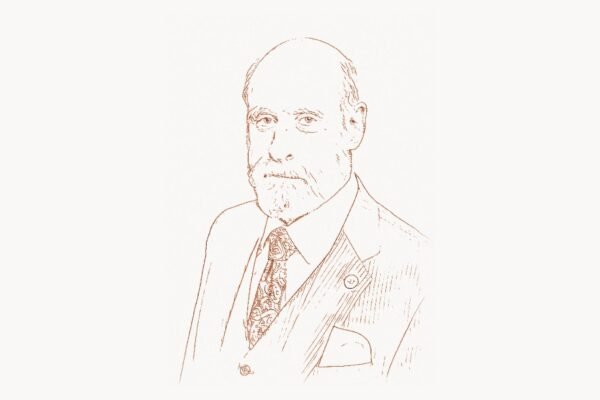
In the summer of 2013, Joe Beda sat in a conference room at Google’s Seattle office and typed the first lines of code for what would become Kubernetes. He was not starting from scratch — Google had been running containers at scale for over a decade using an internal system called Borg, and Beda, along with colleagues Brendan Burns and Craig McLuckie, wanted to bring that same power to the rest of the world. The problem was that nobody outside Google had the tooling to orchestrate thousands of containers across a fleet of machines. Docker had just launched a few months earlier, giving developers a simple way to package applications into containers, but there was no open standard for managing those containers at scale in production. Beda wrote the first prototype of what was then called “Project Seven” — a nod to Star Trek’s Seven of Nine, a character liberated from the Borg collective. By June 2014, Google released Kubernetes as open source. Within three years, it had become the dominant container orchestration platform on the planet, reshaping how every major technology company deploys software and giving rise to an entire cloud-native ecosystem worth billions of dollars.
Early Life and Education
Joseph Beda grew up in the Pacific Northwest with an early fascination for computers and engineering. He attended Harvey Mudd College in Claremont, California, one of the top science and engineering schools in the United States, where he earned a Bachelor of Science in computer science. Harvey Mudd’s emphasis on hands-on engineering and cross-disciplinary thinking shaped Beda’s approach to building systems — he learned to think not just about algorithms but about how real people use technology in production environments.
After graduating, Beda joined Microsoft, where he spent nearly a decade working on some of the company’s most visible products. He was a key engineer on Internet Explorer, working on the browser’s rendering engine during the era when IE held over 90% market share. He then moved to the Windows Presentation Foundation (WPF) team, where he contributed to the XAML-based UI framework that powered Windows Vista and later versions. His work on rendering pipelines and declarative UI systems gave him deep experience with the kind of infrastructure-level engineering that would define his later career.
The Google Years and the Birth of Kubernetes
Inside Google’s Borg System
Beda joined Google in 2004 and spent the next decade working on infrastructure systems at a scale few engineers ever encounter. He contributed to Google Ads and worked on projects within Google’s cloud division. But the system that would most profoundly shape his thinking was Borg — Google’s internal cluster management system that scheduled and ran virtually every application inside the company, from Search to Gmail to MapReduce jobs.
Borg treated an entire data center as a single computer. Engineers did not deploy code to specific machines. Instead, they wrote a configuration describing what they wanted — how many instances, how much CPU and memory, what network policies — and Borg figured out where to place those workloads across thousands of machines. If a machine failed, Borg automatically rescheduled the affected workloads elsewhere. This declarative, self-healing model was years ahead of anything available outside Google, and it gave Google a massive operational advantage. One site reliability engineer could manage thousands of machines because Borg automated the tedious parts of infrastructure management.
Beda saw firsthand how Borg’s declarative model transformed the way engineers thought about deployment. Instead of writing imperative scripts that said “log into server X, copy file Y, restart process Z,” engineers declared the desired state and let the system reconcile reality with intent. This insight — that infrastructure should be managed through declarations of desired state rather than sequences of commands — became the philosophical foundation of Kubernetes.
Creating Kubernetes
By 2013, Docker’s emergence had proven that Linux containers were ready for mainstream adoption. Containers provided isolation and portability, but running containers in production at scale required orchestration — scheduling, networking, service discovery, load balancing, health checking, and automatic recovery from failures. Beda, Burns, and McLuckie recognized that Google’s decade of experience with Borg gave them unique insight into how to solve this problem.
The three engineers proposed building an open-source container orchestration system inspired by Borg but designed from the start for the broader developer community. This was a radical proposition — Google had never open-sourced anything close to its core infrastructure technology. Beda wrote the first commit of what became Kubernetes, establishing the project’s foundational architecture: a control plane with an API server, a scheduler, and controller managers that continuously reconcile desired state with actual state.
The core abstraction that Beda and his colleagues designed was the Pod — a group of one or more containers that share networking and storage and are always co-scheduled on the same machine. Pods solved a practical problem that raw containers could not: many real applications need sidecar processes (logging agents, proxy servers, configuration watchers) running alongside the main application container. Rather than forcing everything into a single container, Kubernetes let engineers compose applications from multiple cooperating containers. Here is a fundamental Kubernetes Pod definition that demonstrates this declarative approach:
apiVersion: v1
kind: Pod
metadata:
  name: web-application
  labels:
    app: frontend
    version: v2.1.0
spec:
  containers:
    - name: app
      image: myregistry/webapp:2.1.0
      ports:
        - containerPort: 8080
      resources:
        requests:
          memory: "128Mi"
          cpu: "250m"
        limits:
          memory: "256Mi"
          cpu: "500m"
      livenessProbe:
        httpGet:
          path: /healthz
          port: 8080
        initialDelaySeconds: 10
        periodSeconds: 15
      readinessProbe:
        httpGet:
          path: /ready
          port: 8080
        initialDelaySeconds: 5
        periodSeconds: 10
    - name: log-collector
      image: myregistry/fluentd-sidecar:1.4
      volumeMounts:
        - name: app-logs
          mountPath: /var/log/app
  volumes:
    - name: app-logs
      emptyDir: {}
This YAML manifest captures what made Kubernetes transformative: an engineer declares what they want (a pod with two containers, resource limits, health checks, shared storage), and Kubernetes handles the how — selecting a node, pulling images, configuring networking, monitoring health, and restarting failed containers. The same manifest runs identically on a laptop with Minikube, a private data center, or any of the major cloud providers.
Heptio and the Enterprise Cloud-Native Movement
In November 2016, Beda and McLuckie left Google to co-found Heptio, a company dedicated to making Kubernetes accessible and production-ready for enterprises. The name “Heptio” was derived from the Greek word for “seven,” continuing the Star Trek Borg reference that had been part of Kubernetes’ origin story. The company’s mission reflected Beda’s conviction that Kubernetes was powerful enough to transform enterprise IT but too complex for most organizations to adopt without expert guidance and better tooling.
Heptio built several important open-source tools that addressed real gaps in the Kubernetes ecosystem. The most significant was Velero (originally called Ark), a backup and disaster recovery tool for Kubernetes clusters. Before Velero, there was no standard way to back up the state of a Kubernetes cluster — including all its resource definitions, persistent volumes, and configurations — and restore it in a different environment. Velero solved this by providing a declarative backup system that could snapshot an entire cluster’s state and restore it elsewhere, which was essential for enterprises that needed disaster recovery capabilities before adopting Kubernetes for production workloads.
Heptio also created Contour, a high-performance ingress controller built on the Envoy proxy, and Sonobuoy, a diagnostic tool for validating that Kubernetes clusters met conformance standards. These tools reflected Beda’s engineering philosophy: identify a painful gap in the ecosystem, build a focused tool that solves it well, and open-source it to benefit the community. Together, the Heptio tools helped hundreds of enterprises move from evaluating Kubernetes to running it in production.
In November 2018, VMware acquired Heptio for a reported $550 million, validating the business model of building enterprise services around open-source Kubernetes. At VMware, Beda became a Principal Engineer and continued his work on Kubernetes and the broader cloud-native ecosystem. The acquisition signaled to the enterprise world that Kubernetes was not a passing trend but the new standard for infrastructure management — major enough for VMware, a $60 billion company built on virtual machines, to bet its future on containers.
Technical Contributions and Architecture Philosophy
The Declarative Model
Beda’s most lasting technical contribution is not any single line of code but the architectural pattern he helped establish: infrastructure as a set of declarative desired-state documents reconciled by control loops. This pattern, which Beda and his colleagues extracted from Google’s Borg experience, became the foundation not just of Kubernetes but of an entire ecosystem of tools built on the same principle. Terraform, Flux, Argo CD, and dozens of other infrastructure tools adopted the same declarative reconciliation approach that Kubernetes popularized.
The controller pattern in Kubernetes works through a simple loop: observe the current state of the system, compare it to the desired state declared by the user, and take action to make the current state match the desired state. Beda has described this as “level-triggered” rather than “edge-triggered” — the system does not react to individual events but continuously reconciles toward the declared goal. This makes Kubernetes inherently self-healing: if a node fails, the controller notices that the actual number of running pods does not match the desired number and schedules new pods to restore the target state.
This principle extends naturally to the operator pattern — custom controllers that encode domain-specific operational knowledge into software. An operator for a database, for example, knows how to initialize replicas, perform failovers, take backups, and handle upgrades, all expressed as reconciliation loops that drive the system toward a declared desired state. Beda recognized early that this pattern would allow Kubernetes to manage not just stateless web servers but complex stateful applications like databases, message queues, and machine learning pipelines. Here is an example of a Kubernetes Deployment that demonstrates the reconciliation concept at work:
apiVersion: apps/v1
kind: Deployment
metadata:
  name: api-service
  labels:
    app: api-service
spec:
  replicas: 3
  strategy:
    type: RollingUpdate
    rollingUpdate:
      maxSurge: 1
      maxUnavailable: 0
  selector:
    matchLabels:
      app: api-service
  template:
    metadata:
      labels:
        app: api-service
    spec:
      containers:
        - name: api
          image: myregistry/api-service:3.8.1
          ports:
            - containerPort: 3000
          env:
            - name: DATABASE_URL
              valueFrom:
                secretKeyRef:
                  name: db-credentials
                  key: connection-string
            - name: CACHE_TTL
              value: "300"
          resources:
            requests:
              memory: "256Mi"
              cpu: "500m"
            limits:
              memory: "512Mi"
              cpu: "1000m"
---
apiVersion: v1
kind: Service
metadata:
  name: api-service
spec:
  selector:
    app: api-service
  ports:
    - protocol: TCP
      port: 80
      targetPort: 3000
  type: ClusterIP
When this manifest is applied, Kubernetes creates exactly three replicas of the API service, distributes them across available nodes, configures a ClusterIP Service for internal load balancing, and continuously monitors their health. If a pod crashes, the Deployment controller recreates it. If you update the image tag, Kubernetes performs a rolling update — creating new pods with the new version one at a time and draining traffic from old pods — with zero downtime. The entire operational workflow is encoded in two declarative documents, replacing hundreds of lines of deployment scripts and manual runbooks.
Extensibility as a Core Value
One of Beda’s key design decisions was making Kubernetes extensible through Custom Resource Definitions (CRDs). Rather than building every possible feature into the core, Kubernetes provides a framework for extending its API with new resource types. CRDs allow third-party developers to teach Kubernetes about new concepts — a Certificate, a VirtualService, a PostgresCluster — and build controllers that manage those resources using the same reconciliation pattern as built-in resources. This decision kept the core of Kubernetes relatively small while enabling a massive ecosystem of extensions and operators.
The Cloud Native Computing Foundation (CNCF), which became the steward of Kubernetes after Google donated the project in 2015, now hosts over 180 projects. The vast majority interact with Kubernetes through its extensible API, building specialized functionality on top of the platform Beda helped create. Service meshes like Istio and Linkerd, GitOps tools like Flux and Argo CD, security platforms like Falco and OPA Gatekeeper — all extend Kubernetes through CRDs and custom controllers, validating the extensibility-first approach that Beda championed.
Philosophy and Engineering Principles
Beda’s engineering philosophy centers on the belief that the best infrastructure is invisible. Engineers should spend their time building features that matter to users, not wrestling with deployment pipelines, server provisioning, or failure recovery. Kubernetes was designed to automate the undifferentiated heavy lifting of running distributed systems so that development teams could focus on their actual applications. This aligns with the broader cloud computing vision of abstracting infrastructure into services, but Kubernetes does it at the orchestration layer rather than the hardware layer.
Beda has consistently advocated for open-source as the right model for infrastructure software. His argument is pragmatic rather than ideological: infrastructure is too important to be controlled by a single vendor, and open-source governance ensures that no single company can hold the ecosystem hostage. This conviction led him to push for Kubernetes’ donation to the CNCF, which operates under the Linux Foundation and provides vendor-neutral governance. It also informed Heptio’s strategy of building commercial services around open-source tools rather than creating proprietary alternatives.
Another principle that runs through Beda’s work is the importance of developer experience. Kubernetes is often criticized for its complexity — the learning curve is steep, the YAML configurations are verbose, and the number of concepts (Pods, Services, Deployments, StatefulSets, DaemonSets, Ingresses, ConfigMaps, Secrets, PersistentVolumeClaims) can overwhelm newcomers. Beda acknowledges this complexity but argues that it reflects the genuine complexity of distributed systems. Effective project management and good tooling can help teams navigate this complexity. The solution, in his view, is better abstractions and tooling on top of Kubernetes, not simplifying the platform at the cost of removing capabilities that production systems need.
For teams adopting cloud-native infrastructure, choosing the right task management platform becomes critical as the operational complexity grows. Coordinating container deployments, managing rollback procedures, and tracking infrastructure changes across multiple clusters requires structured workflows that general-purpose tools cannot provide.
Legacy and Impact on Modern Computing
By 2026, Kubernetes runs in production at virtually every major technology company and most Fortune 500 enterprises. The CNCF’s annual survey consistently shows Kubernetes adoption above 90% among organizations using containers. Every major cloud provider — Amazon Web Services, Google Cloud, and Microsoft Azure — offers a managed Kubernetes service, making it a de facto standard for container orchestration. Beda’s original vision of bringing Google’s infrastructure patterns to the broader world has been realized on a scale that exceeded even the founders’ expectations.
Kubernetes has also spawned an entire industry. Companies like Red Hat (OpenShift), Rancher Labs (acquired by SUSE), D2iQ, and Platform9 built businesses around Kubernetes distributions and management platforms. The service mesh category, the GitOps category, the cloud-native security category — entire market segments exist because Kubernetes created a common platform that needed additional tooling and services. The CNCF ecosystem represents billions of dollars in collective market value, all built on the foundation that Beda, Burns, and McLuckie laid in that Seattle conference room in 2013.
The cultural impact has been equally significant. Kubernetes popularized practices like infrastructure as code, declarative configuration, immutable infrastructure, and GitOps workflows. It shifted the industry conversation from “how do we manage servers” to “how do we declare desired state and let the platform handle the rest.” This philosophical shift — from imperative to declarative, from manual to automated, from pet servers to cattle — represents a fundamental change in how software engineers think about operations. Agencies managing complex deployments across multiple clients find that a structured web development workflow built on these cloud-native principles significantly reduces delivery time and operational risk.
Beda’s work on Go-based infrastructure tooling at Google, his leadership in creating Kubernetes, his entrepreneurial work at Heptio, and his continued advocacy for open-source cloud-native computing have collectively influenced a generation of infrastructure engineers. The declarative reconciliation pattern he helped bring from Google’s internal systems to the open-source world is now the default approach to managing infrastructure at any scale, from a single developer’s laptop to clusters spanning multiple continents.
Key Facts
- Full name: Joseph Beda
- Education: B.S. Computer Science, Harvey Mudd College
- Known for: Co-creating Kubernetes, co-founding Heptio, cloud-native infrastructure
- Career: Microsoft (Internet Explorer, WPF) → Google (Ads, Infrastructure, Kubernetes) → Heptio (CEO) → VMware (Principal Engineer)
- Key projects: Kubernetes (2013–present), Heptio Velero, Heptio Contour, Sonobuoy
- Company founded: Heptio (2016), acquired by VMware for ~$550M (2018)
- Impact: Kubernetes adopted by 90%+ of container-using organizations globally
Frequently Asked Questions
Who is Joe Beda?
Joe Beda is an American software engineer and entrepreneur who co-created Kubernetes, the open-source container orchestration platform that has become the industry standard for deploying and managing applications at scale. He co-founded Heptio with Craig McLuckie to bring enterprise Kubernetes services to market, and the company was acquired by VMware in 2018. Before Kubernetes, Beda worked at Microsoft on Internet Explorer and the Windows Presentation Foundation, and at Google on infrastructure systems including the Borg cluster manager that inspired Kubernetes.
What is Kubernetes and why does it matter?
Kubernetes is an open-source platform for automating the deployment, scaling, and management of containerized applications. It matters because it solved the problem of running containers reliably at scale in production — scheduling workloads across clusters of machines, handling failures automatically, performing zero-downtime deployments, and providing service discovery and load balancing. Before Kubernetes, organizations had to build custom solutions for these problems or rely on proprietary vendor platforms. Kubernetes provided a vendor-neutral, open-source standard that every major cloud provider now supports.
What was Heptio and why was it significant?
Heptio was a company co-founded by Joe Beda and Craig McLuckie in 2016 to help enterprises adopt Kubernetes. Heptio built important open-source tools including Velero (cluster backup and restore), Contour (ingress controller), and Sonobuoy (cluster conformance testing). VMware acquired Heptio in 2018 for approximately $550 million, which validated the enterprise market for Kubernetes services and signaled VMware’s strategic shift from virtual machines to containers.
How did Google’s Borg system influence Kubernetes?
Borg was Google’s internal cluster management system that ran virtually every workload inside the company for over a decade. Kubernetes inherited several core concepts from Borg: declarative desired-state configuration, controller-based reconciliation loops, labels for organizing resources, and the Pod abstraction (similar to Borg’s “alloc” concept). However, Kubernetes was not a direct port of Borg — it was a ground-up redesign that incorporated lessons learned from both Borg and its successor Omega, with a focus on open-source community adoption and extensibility through APIs and custom resource definitions.
What is the declarative model in Kubernetes?
The declarative model means that users describe the desired state of their system (for example, “I want three replicas of this container running behind a load balancer”) rather than writing step-by-step instructions for achieving that state. Kubernetes controllers continuously compare the actual state of the cluster with the declared desired state and take corrective actions to reconcile any differences. This approach makes the system self-healing — if a node fails or a pod crashes, Kubernetes automatically restores the desired state without human intervention.
What is Joe Beda doing now?
After the VMware acquisition of Heptio, Beda served as a Principal Engineer at VMware, continuing to work on Kubernetes and cloud-native technologies. He remains active in the cloud-native community as a speaker, advisor, and advocate for open-source infrastructure. His influence continues through the Kubernetes project itself, the tools Heptio created, and the broader ecosystem of declarative infrastructure management that his work helped establish.