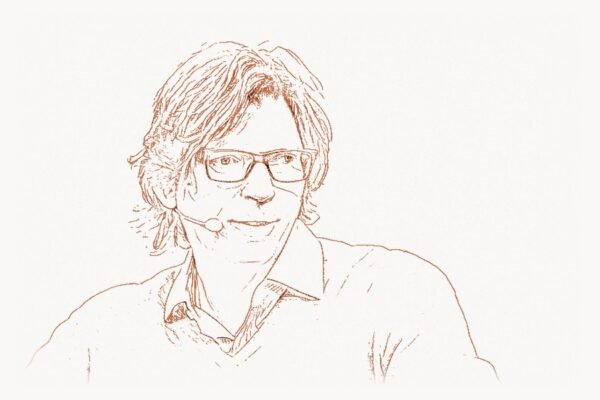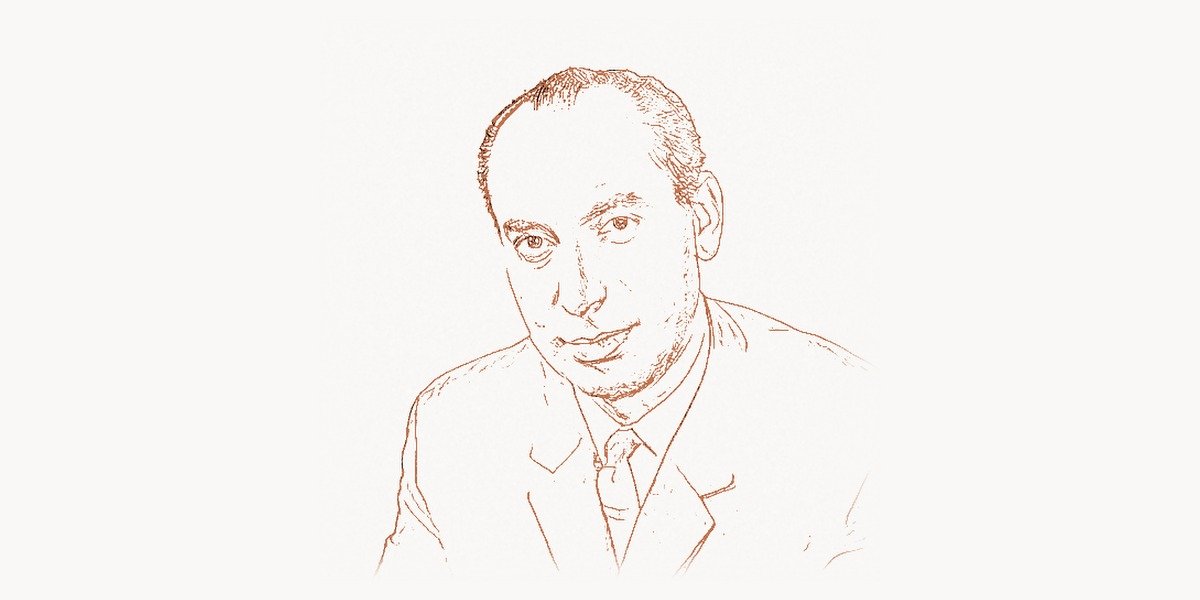
On May 1, 1964, at 4:00 a.m., a Dartmouth College student sat down at a teletype terminal in the basement of College Hall and typed a simple command. Within seconds, the computer responded. The program — written in a new language called BASIC — had executed correctly on the first try. At that moment, two mathematics professors upstairs, John Kemeny and Thomas Kurtz, confirmed what they had spent years working toward: ordinary college students, with no engineering background, no understanding of machine code, and no special training, could write and run their own computer programs. It was not merely a technical milestone. It was the beginning of computing for everyone. Before that morning, programming a computer required specialized knowledge — fluency in Fortran, COBOL, or assembly language, access to expensive mainframes through batch processing, and the patience to submit stacks of punched cards and wait hours or days for results. After that morning, computing would begin its slow transformation from an elite priesthood to a universal skill. John George Kemeny — Hungarian refugee, Einstein’s research assistant, Dartmouth College president, and co-creator of BASIC — was the driving force behind that transformation. His conviction that computing should belong to everyone, not just specialists, shaped the personal computer revolution two decades before it happened.
Early Life and Path to Technology
John George Kemeny was born on May 31, 1926, in Budapest, Hungary, into a Jewish family. Budapest in the 1920s and 1930s was an extraordinary incubator of scientific talent — John von Neumann, Leo Szilard, Edward Teller, and Eugene Wigner all came from the same city and the same generation. Hungary’s rigorous mathematical education system and its vibrant intellectual culture produced a disproportionate number of the 20th century’s leading scientists. Kemeny was a product of this tradition, showing exceptional mathematical ability from an early age.
But the intellectual paradise of interwar Budapest was built on unstable ground. As Nazi Germany’s influence spread across Europe, Hungary’s Jewish community faced growing persecution. In 1940, when Kemeny was 14, his family fled Hungary for the United States, escaping the Holocaust that would later claim the lives of many of their relatives and nearly all of Hungary’s Jewish population. The family settled in New York City, where Kemeny attended George Washington High School — the same school that had educated Henry Kissinger a few years earlier.
Kemeny’s mathematical gifts were immediately evident in America. He enrolled at Princeton University, where he studied mathematics and came under the influence of some of the greatest minds of the century. Princeton in the 1940s was an intellectual powerhouse: Alan Turing had completed his PhD there just a few years before, and the Institute for Advanced Study, located adjacent to the campus, housed Albert Einstein, Kurt Gödel, and John von Neumann. The young Hungarian immigrant had landed in the epicenter of 20th-century mathematics and physics.
Kemeny’s education was interrupted by World War II. In 1945, at the age of 19, he was drafted into the U.S. Army and assigned to the Manhattan Project at Los Alamos, New Mexico. There, he worked as a mathematician on the calculations required for developing the atomic bomb. The experience exposed him to large-scale computation — Los Alamos used some of the most advanced calculating equipment available, including IBM punched-card machines — and gave him a firsthand understanding of both the power and the difficulty of computation. After the war, he returned to Princeton to complete his studies.
Einstein’s Assistant and the Princeton Years
In 1948, while still a graduate student at Princeton, Kemeny was appointed as a research assistant to Albert Einstein at the Institute for Advanced Study. He was just 22 years old. Einstein, then 69, was working on his unified field theory — an attempt to reconcile gravity and electromagnetism into a single theoretical framework. Kemeny’s role was to assist with the mathematical formalism of this work, performing complex calculations and helping to develop the tensor equations that Einstein’s theory required.
Working with Einstein left a profound impression on Kemeny. Einstein’s approach to science — his insistence on clarity, his belief that the deepest truths should be expressible in simple terms, his conviction that science belongs to everyone and not just specialists — shaped Kemeny’s own philosophy. Years later, Kemeny would describe Einstein as the greatest mind he had ever encountered, but what struck him most was not Einstein’s genius but his humility and his commitment to making complex ideas accessible. This principle — that powerful ideas should be democratized, not hoarded — became the animating philosophy of Kemeny’s career.
Kemeny completed his PhD in mathematics at Princeton in 1949 under the supervision of Alonzo Church — the same logician who had supervised Turing’s PhD thesis a decade earlier. Church’s work on the lambda calculus was foundational to theoretical computer science and would later influence the design of Lisp and functional programming languages. Kemeny’s dissertation dealt with the theory of mathematical logic, but his interests were already broader than pure mathematics. He was fascinated by the idea of computation as a general-purpose intellectual tool.
The Breakthrough: BASIC and the Dartmouth Time-Sharing System
The Problem of Access
In 1953, Kemeny joined the faculty of Dartmouth College in Hanover, New Hampshire, as a professor of mathematics. He quickly rose through the ranks, becoming chairman of the mathematics department in 1955 at just 29 years old. But it was his growing conviction about computing education that would define his most important work.
By the late 1950s, Kemeny had become deeply troubled by the state of computing in higher education. Computers were enormously expensive — a single mainframe could cost millions of dollars — and access was tightly controlled. At most universities, only science and engineering students could use computers, and even they had to work through a frustrating process. A student would write a program on paper, punch it onto cards, submit the card deck to a computer operator, and then wait — sometimes hours, sometimes a full day — for the results. If the program had a single error (a misplaced comma, a missing semicolon), the entire batch would fail, and the student would have to correct the error and resubmit. Learning to program under these conditions required extraordinary patience and tolerance for frustration.
Kemeny believed this was fundamentally wrong. He saw computing not as a specialty for engineers but as a universal intellectual tool — as essential to education as reading and writing. He wanted every Dartmouth student, whether studying English literature, history, philosophy, or physics, to be able to use a computer. But the existing programming languages and computing infrastructure made this impossible. Fortran, the dominant scientific language, was designed for professional programmers and scientists. Its syntax was cryptic, its error messages incomprehensible, and its batch-processing workflow hostile to beginners. Something fundamentally different was needed.
The Technical Innovation
Working with his colleague Thomas Kurtz, Kemeny developed a two-pronged solution: a new programming language and a new computing system. The language was BASIC — Beginner’s All-purpose Symbolic Instruction Code. The system was DTSS — the Dartmouth Time-Sharing System. Together, they would revolutionize how humans interacted with computers.
BASIC was designed with a set of principles that were radical for 1964. First, it had to be easy for non-specialists to learn. The syntax was based on simple English words — PRINT, INPUT, IF, THEN, GOTO, FOR, NEXT, END — rather than the mathematical notation of Fortran or the bureaucratic verbosity of COBOL. Second, error messages had to be clear and helpful, not cryptic codes that required a manual to decipher. Third, the language had to be general-purpose: students should be able to use it for mathematical calculations, text processing, simulations, games, or anything else they could imagine. Fourth, and critically, it had to provide instant feedback. No more submitting punched cards and waiting hours for results.
10 REM *** DARTMOUTH BASIC DEMONSTRATION ***
20 REM John Kemeny & Thomas Kurtz, 1964
30 REM This shows the simplicity that made BASIC revolutionary
40 PRINT "WELCOME TO DARTMOUTH BASIC"
50 PRINT
60 PRINT "WHAT IS YOUR NAME";
70 INPUT N$
80 PRINT "HELLO, "; N$; "!"
90 PRINT
100 PRINT "LET'S DO SOME MATH."
110 PRINT "ENTER A NUMBER";
120 INPUT X
130 LET S = X * X
140 LET C = X * X * X
150 PRINT X; " SQUARED ="; S
160 PRINT X; " CUBED   ="; C
170 PRINT
180 PRINT "SHALL WE TRY ANOTHER? (1=YES, 0=NO)";
190 INPUT A
200 IF A = 1 THEN GOTO 110
210 PRINT
220 PRINT "THANK YOU, "; N$; ". GOODBYE!"
230 END
The Dartmouth Time-Sharing System was equally revolutionary. Before DTSS, computers operated in batch mode: one program at a time, one user at a time. Kemeny and Kurtz, working with a team of undergraduate students, developed a system that allowed multiple users to interact with a single computer simultaneously, each through their own teletype terminal. When a student typed a BASIC program and pressed RUN, the system would compile and execute it within seconds, returning results immediately to the student’s terminal. If the program had an error, the student could fix it and run it again — instantly. This interactivity transformed computing from a distant, impersonal process into a direct, conversational experience.
The DTSS ran on a General Electric GE-225 computer. It could support up to 20 simultaneous users — a remarkable achievement for 1964. The system used a technique called time-slicing: the computer rapidly switched between users, giving each one a small slice of processing time. Because the computer was so much faster than human typing, each user experienced the illusion of having the machine all to themselves. This concept, pioneered at MIT by Fernando Corbató with CTSS, was brought to fruition at Dartmouth in a way that put interactive computing directly into the hands of ordinary students.
On May 1, 1964, at 4:00 a.m., the system went live. Two BASIC programs ran simultaneously on the DTSS — the first time the language was used on a time-sharing system. The system worked. Within months, Dartmouth students across all departments were writing BASIC programs. Philosophy students modeled logical arguments. History students analyzed census data. English majors generated poetry. The vision of universal computing had become reality, at least within the confines of one New Hampshire college.
Why It Mattered
BASIC’s impact extended far beyond Dartmouth. General Electric, which had provided the GE-225 computer, recognized the commercial potential and began offering BASIC on its time-sharing services. Other universities adopted the language. By the late 1960s, BASIC was being taught at hundreds of institutions. Its simplicity made it the default choice for introducing students to programming — a role it would hold for decades.
But the true explosion came in the mid-1970s, with the arrival of personal computers. When the Altair 8800 appeared in 1975, two young programmers — Bill Gates and Paul Allen — wrote a BASIC interpreter for it. Their company, Micro-Soft (later Microsoft), was founded on that single product. Nearly every personal computer of the late 1970s and 1980s shipped with a BASIC interpreter built into ROM: the Apple II had Applesoft BASIC, the Commodore 64 had Commodore BASIC, the TRS-80 had Level I BASIC, the IBM PC had BASICA and later GW-BASIC. For an entire generation, turning on a computer meant seeing a BASIC prompt. A blinking cursor and the word READY. The language that Kemeny and Kurtz designed for Dartmouth undergraduates had become the universal entry point to personal computing.
Beyond BASIC: Dartmouth Presidency and Public Service
In 1970, Kemeny was appointed the 13th President of Dartmouth College — the first person born in a non-English-speaking country to lead an Ivy League institution. His presidency, which lasted until 1981, was transformative. He oversaw the coeducation of Dartmouth (the college began admitting women in 1972), expanded the college’s computing infrastructure, and championed the integration of computing across all academic disciplines.
Under Kemeny’s leadership, Dartmouth became a model for computing in liberal arts education. Every student had access to computer terminals. Computing was not siloed in the science departments — it was woven into the fabric of the entire curriculum. Kemeny believed, decades before it became conventional wisdom, that computer literacy was as fundamental as traditional literacy. His vision anticipated the modern world, where coding is taught alongside reading and mathematics in elementary schools, and where tools like Taskee help teams manage complex digital projects that would have been unimaginable in the 1960s.
In 1979, following the partial meltdown at the Three Mile Island nuclear power plant in Pennsylvania — the worst nuclear accident in U.S. history at that time — President Jimmy Carter appointed Kemeny to chair the President’s Commission on the Accident at Three Mile Island. The Kemeny Commission, as it became known, conducted a thorough investigation and produced a landmark report that fundamentally changed nuclear safety regulation in the United States. The commission found that the accident was caused not by a single equipment failure but by a combination of human error, inadequate training, poor communication, and organizational failures. Its recommendations led to sweeping reforms in the nuclear industry, including the creation of the Institute of Nuclear Power Operations (INPO) and significant changes to Nuclear Regulatory Commission procedures.
The commission’s work reflected Kemeny’s characteristic approach: rigorous analysis, clear communication, and a focus on systemic rather than individual failures. He brought the same clarity to nuclear safety that he had brought to programming language design — the conviction that complex systems should be made comprehensible to the people who use them, and that failures are usually failures of design, not failures of individuals.
Philosophy and Engineering Approach
Key Principles
Kemeny’s philosophy of computing was built on a few core principles that distinguished him from most computer scientists of his era. The most fundamental was democratization: the conviction that computing should be accessible to everyone, not just technical specialists. This was not merely an educational preference — it was an ethical position. Kemeny believed that a society in which only experts could use computers was a society headed toward dangerous inequality. As computers became more powerful and more central to decision-making, citizens needed to understand them. Otherwise, they would be governed by machines they could not comprehend, operated by a priesthood they could not challenge.
His second principle was simplicity. Kemeny had no patience for unnecessary complexity. He had seen how Fortran’s cryptic syntax and batch-processing workflow excluded non-specialists, and he was determined that BASIC would be different. Every design decision in BASIC prioritized the beginner’s experience. Line numbers provided a simple, visible structure for programs. Keywords were English words. Variables were intuitive. The language sacrificed power and efficiency for accessibility — a trade-off that professional programmers often criticized but that proved exactly right for its purpose.
Third, Kemeny believed in immediate feedback. The batch-processing model — write, submit, wait, debug, resubmit — was not just inconvenient; it was pedagogically destructive. Students learn by experimenting, by trying things and seeing what happens. The DTSS gave them that ability. Type a program, run it, see the result, fix the error, run it again. This tight feedback loop — which modern developers take for granted in every IDE and every REPL — was a deliberate design choice rooted in Kemeny’s understanding of how people learn.
These principles — democratization, simplicity, and immediate feedback — were not just design guidelines for BASIC. They were a vision for the future of computing. Decades later, they would be echoed in the design philosophy behind Python, in the accessibility focus of web technologies, and in the modern movement to teach coding in schools. Every no-code platform, every visual programming environment, every effort to make technology accessible to non-technical users is building on the foundation that Kemeny laid. Organizations seeking to build effective digital strategies still grapple with the same fundamental challenge Kemeny identified: how to make powerful technology accessible to the people who need to use it.
10 REM *** MONTE CARLO ESTIMATION OF PI ***
20 REM Kemeny used simulations like this to show
30 REM non-science students the power of computing
40 PRINT "MONTE CARLO PI ESTIMATION"
50 PRINT "HOW MANY RANDOM POINTS TO USE";
60 INPUT N
70 LET H = 0
80 FOR I = 1 TO N
90   LET X = RND(1)
100  LET Y = RND(1)
110  IF X*X + Y*Y <= 1 THEN LET H = H + 1
120 NEXT I
130 LET P = 4 * H / N
140 PRINT
150 PRINT "POINTS INSIDE CIRCLE:"; H
160 PRINT "TOTAL POINTS:        "; N
170 PRINT "ESTIMATED PI:        "; P
180 PRINT "ACTUAL PI:            3.14159265"
190 PRINT "ERROR:               "; ABS(P - 3.14159265)
200 END
The Kemeny-Kurtz Partnership
The collaboration between Kemeny and Kurtz was one of the most productive partnerships in computing history. Kemeny provided the vision and the institutional leadership — his position as department chair and later college president gave the project the resources and support it needed. Kurtz contributed deep technical expertise in compiler design and system programming. Together, they complemented each other in the way that the best collaborations do: Kemeny saw where computing needed to go, and Kurtz figured out how to get there.
Their partnership continued long after the initial creation of BASIC. In the 1980s, alarmed by the proliferation of incompatible BASIC dialects (Microsoft BASIC, Applesoft BASIC, and dozens of others had diverged significantly from the original Dartmouth design), Kemeny and Kurtz developed True BASIC — a structured, portable version of the language that incorporated modern programming concepts such as structured control flow (replacing GOTO with proper loops and conditionals), named subroutines, and strong data types. True BASIC was an attempt to bring the language into the modern era while preserving its core philosophy of accessibility. While it never achieved the commercial dominance of Microsoft’s Visual Basic, it remained true to the original vision of computing for everyone.
Legacy and Modern Relevance
John Kemeny died on December 26, 1992, at the age of 66, in Lebanon, New Hampshire. He had continued working at Dartmouth until shortly before his death, teaching mathematics and advocating for computing education. His passing was mourned throughout the academic and computing communities, but his influence had long since outgrown any single institution.
The legacy of BASIC is impossible to overstate. The language, in its various dialects, introduced tens of millions of people to programming. An entire generation of software developers — including many who went on to create the personal computer revolution — wrote their first programs in BASIC. Bill Gates and Paul Allen built Microsoft on a BASIC interpreter. Steve Wozniak included BASIC in the Apple II. John Carmack, who would later create Doom and revolutionize 3D gaming, started with BASIC. Millions of children in the 1980s typed BASIC programs from magazines, learning the fundamentals of logic, variables, loops, and conditional execution without any formal instruction. The language was, as Kemeny intended, the gateway to computing for people who would never have become programmers otherwise.
Critics have long noted BASIC’s limitations. Edsger Dijkstra famously wrote that “it is practically impossible to teach good programming to students that have had a prior exposure to BASIC: as potential programmers they are mentally mutilated beyond hope of regeneration.” This criticism, while harsh, reflected a real concern about BASIC’s reliance on GOTO statements and its lack of structured programming constructs. But it missed the point. BASIC was never designed to produce professional programmers. It was designed to introduce non-specialists to the concept of computing — and at that goal, it succeeded beyond anything Dijkstra or anyone else could have imagined.
The direct descendants of BASIC include Visual Basic (released by Microsoft in 1991), which became one of the most widely used programming languages in the world for business applications, and Visual Basic for Applications (VBA), which is embedded in Microsoft Office and remains in widespread use for spreadsheet automation and business workflows. The spirit of BASIC — making programming accessible to non-specialists — lives on in modern educational languages like Scratch, in JavaScript’s role as the universal language of the web, and in Python’s emergence as the default first programming language at universities worldwide.
Kemeny’s vision of universal computing has been thoroughly vindicated. He predicted, in the 1970s, that the day would come when every student would need to understand computing. That day arrived decades ago. He predicted that computers would become personal — that individuals, not institutions, would own and operate them. The smartphone in every pocket confirms this. He predicted that the barrier between users and programmers would blur — that ordinary people would customize and control their own computing environments. The modern world of apps, automation, and no-code tools is exactly what he envisioned.
Beyond BASIC, Kemeny’s contributions to computing education, his leadership of Dartmouth’s transformation into a model of computing-integrated liberal arts education, and his public service on the Three Mile Island commission demonstrate a career defined by the conviction that knowledge and power should be shared, not concentrated. He was a refugee who became one of America’s most influential educators, a mathematician who worked with Einstein and then devoted his career to making complex ideas accessible to beginners, a college president who championed coeducation and diversity, and a public servant who brought clarity and rigor to one of the most challenging technical crises of his era.
In the history of computing, Kemeny occupies a unique position. He was not the most brilliant theorist — that distinction belongs to Turing and Gödel. He was not the most prolific engineer — that belongs to people like Niklaus Wirth, who designed multiple programming languages. He was not the most commercially successful — that belongs to the entrepreneurs who built empires on his ideas. What Kemeny was, more than any other figure in computing history, was the great democratizer. He took a technology that belonged to a priesthood of specialists and gave it to everyone. That is his legacy, and it is visible every time a child writes their first line of code, every time a humanities student uses a computer to analyze data, every time anyone who is not a professional programmer uses computing to solve a problem or express an idea.
Key Facts
- Born: May 31, 1926, Budapest, Hungary
- Died: December 26, 1992, Lebanon, New Hampshire, United States
- Known for: Co-creating BASIC programming language, co-developing the Dartmouth Time-Sharing System (DTSS)
- Key collaborator: Thomas Kurtz (co-creator of BASIC and DTSS)
- Education: Princeton University (PhD in Mathematics, 1949; advisor: Alonzo Church)
- Career: Research assistant to Albert Einstein (1948), Professor of Mathematics at Dartmouth College (1953–1992), President of Dartmouth College (1970–1981)
- Public service: Chairman of the President’s Commission on the Accident at Three Mile Island (1979)
- Legacy: BASIC introduced tens of millions of people to programming and was built into nearly every personal computer of the 1970s and 1980s
Frequently Asked Questions
Who was John Kemeny?
John George Kemeny (1926–1992) was a Hungarian-American mathematician, computer scientist, and educator who co-created the BASIC programming language with Thomas Kurtz at Dartmouth College in 1964. Born in Budapest, he fled Nazi persecution with his family in 1940, studied mathematics at Princeton, worked as a research assistant to Albert Einstein, and earned his PhD under Alonzo Church. He served as President of Dartmouth College from 1970 to 1981, where he championed coeducation and universal computing education. He also chaired the presidential commission investigating the Three Mile Island nuclear accident in 1979.
What is BASIC and why was it important?
BASIC (Beginner’s All-purpose Symbolic Instruction Code) is a programming language designed in 1964 by John Kemeny and Thomas Kurtz at Dartmouth College. It was specifically created to make computing accessible to non-specialist students — those studying humanities, social sciences, and other non-technical fields. BASIC used simple English keywords (PRINT, INPUT, IF/THEN, GOTO), provided clear error messages, and was designed to work with the Dartmouth Time-Sharing System for instant feedback. The language became enormously influential when personal computers arrived in the 1970s and 1980s: nearly every home computer shipped with BASIC built in, and Microsoft was founded on a BASIC interpreter for the Altair 8800.
What was the Dartmouth Time-Sharing System?
The Dartmouth Time-Sharing System (DTSS) was a computing system developed by John Kemeny and Thomas Kurtz, with the help of Dartmouth undergraduate students, in the early 1960s. It allowed multiple users to interact with a single computer simultaneously through individual teletype terminals. Before DTSS, computers operated in batch mode — users submitted programs on punched cards and waited hours for results. DTSS used time-slicing to give each user a small portion of processing time, creating the illusion of dedicated access. Combined with BASIC, it transformed computing from a batch-oriented, specialist activity into an interactive, accessible experience. The system went live on May 1, 1964.
How did John Kemeny influence modern programming?
Kemeny’s influence on modern programming is primarily through the principles he established rather than through BASIC’s syntax. His insistence on accessibility, simplicity, and immediate feedback directly influenced the design of Python, JavaScript, and other modern languages that prioritize ease of learning. Visual Basic, a direct descendant of BASIC, became one of the world’s most popular business programming languages. The educational programming movement — from Logo to Scratch to modern coding bootcamps — builds on Kemeny’s conviction that everyone, not just specialists, should be able to program. His vision of universal computer literacy, once considered radical, is now mainstream educational policy worldwide.