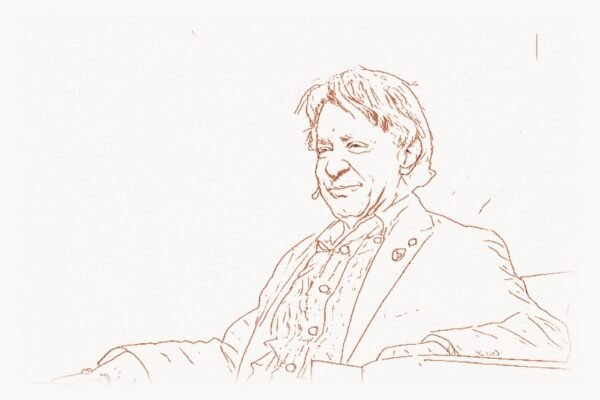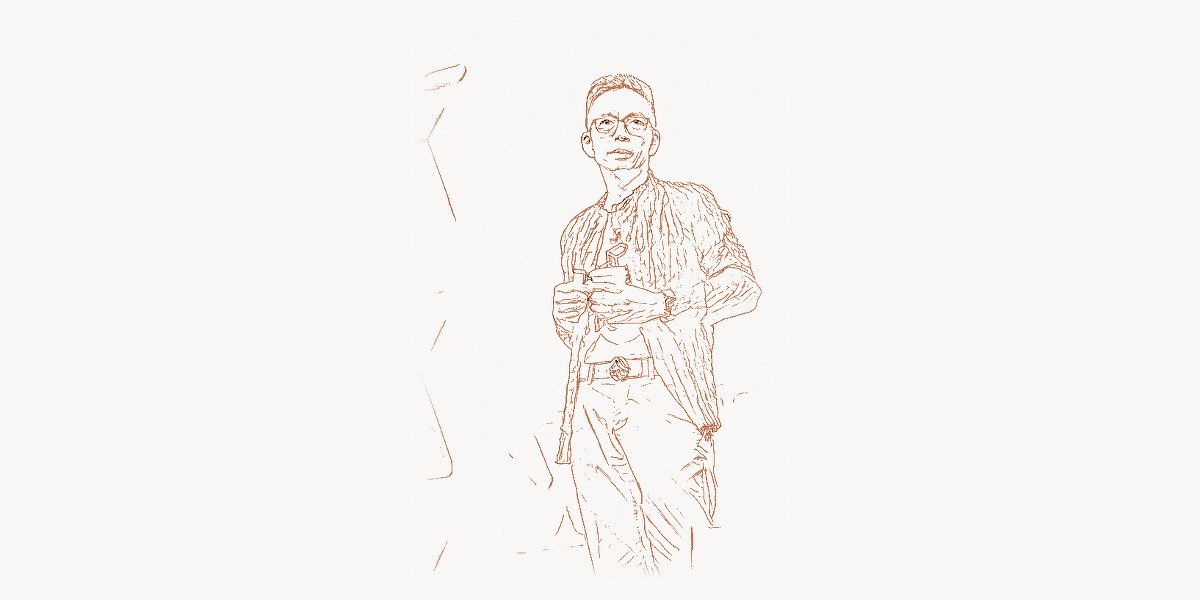
In a world where technology relentlessly adds features, menus, and complexity, one person spent decades arguing that the greatest innovation is knowing what to take away. John Maeda — graphic designer, computer scientist, educator, venture capitalist, and author — occupies a singular position at the intersection of art, technology, and design. His career has been a restless experiment in proving that code can be poetic, that design can be computational, and that the future belongs to people who speak both languages fluently. From the MIT Media Lab to the presidency of the Rhode Island School of Design, from Kleiner Perkins to Automattic, Maeda has championed a vision where engineers think like artists and artists think like engineers.
Early Life and the Collision of Two Cultures
John Maeda was born in 1966 in Seattle, Washington, to parents who ran a tofu factory. Growing up in a working-class Japanese-American household, he experienced firsthand the tension between manual craft and industrial efficiency. His father’s meticulous attention to the physical process of making tofu — the temperature of the water, the texture of the curd, the timing of each step — would later inform Maeda’s philosophy that great design is inseparable from deep understanding of materials and process.
Maeda showed an early aptitude for both art and mathematics, a combination that his teachers found unusual. He enrolled at the Massachusetts Institute of Technology, where he earned a bachelor’s and master’s degree in electrical engineering and computer science. But MIT alone did not satisfy his creative hunger. He traveled to Japan to study at Tsukuba University’s Institute of Art and Design, earning a PhD in design. This dual education — rigorous engineering at MIT and visual arts training in Japan — became the foundation for everything that followed.
The experience of straddling two intellectual worlds gave Maeda an unusual perspective. He saw that engineers often dismissed aesthetics as superficial decoration, while designers frequently treated technology as a black box they could not open. Both sides, he believed, were impoverished by their isolation. His life’s work would become an ongoing effort to bridge that gap, creating tools, institutions, and frameworks that forced the two cultures to engage with each other. Much like Alan Kay, who envisioned computers as instruments of creative expression, Maeda saw computation as an artistic medium waiting to be explored.
The MIT Media Lab Years: Code as Canvas
In 1996, Maeda returned to MIT as a faculty member at the legendary Media Lab. He established the Aesthetics and Computation Group, a research lab dedicated to exploring how computation could serve as a medium for visual expression. This was a radical idea in the mid-1990s. The web was still in its infancy, graphic design was dominated by tools like Adobe Photoshop and Illustrator, and the idea that a designer should write code was considered eccentric at best.
Maeda’s group produced a series of groundbreaking projects that demonstrated what was possible when artistic sensibility met computational thinking. His Reactive Books series — interactive digital artworks published on CD-ROM — explored how typography, motion, and user interaction could create experiences impossible in print. These were not utilitarian software applications. They were visual poems written in code, exploring concepts like time, decay, and organic growth through algorithmic processes.
One of Maeda’s most influential contributions during this period was the creation of Design By Numbers (DBN), a programming language specifically designed to teach visual artists how to code. DBN stripped away the complexity of languages like C++ and Java, offering a minimal environment where students could draw on a 100-by-100 pixel canvas using simple commands. The philosophy was radical: instead of making design software more powerful, make programming more accessible to designers.
Here is a creative coding example inspired by Maeda’s generative art philosophy — a piece that creates an organic, flowing pattern from simple mathematical rules, reminiscent of his Reactive Books experiments:
// Generative Harmony — inspired by John Maeda's computational aesthetics
// A Processing-style sketch that creates organic flowing forms

int numParticles = 200;
float[] px, py, vx, vy;
float noiseScale = 0.005;
float time = 0;

void setup() {
  size(800, 800);
  background(249, 248, 246);  // warm paper white

  px = new float[numParticles];
  py = new float[numParticles];
  vx = new float[numParticles];
  vy = new float[numParticles];

  // Scatter particles in a circular formation
  for (int i = 0; i < numParticles; i++) {
    float angle = map(i, 0, numParticles, 0, TWO_PI);
    float radius = random(50, 300);
    px[i] = width / 2 + cos(angle) * radius;
    py[i] = height / 2 + sin(angle) * radius;
    vx[i] = 0;
    vy[i] = 0;
  }
}

void draw() {
  // No background clear — trails accumulate like ink on paper
  for (int i = 0; i < numParticles; i++) {
    // Perlin noise drives each particle's trajectory
    float noiseVal = noise(px[i] * noiseScale, py[i] * noiseScale, time);
    float angle = noiseVal * TWO_PI * 4;

    vx[i] = cos(angle) * 1.5;
    vy[i] = sin(angle) * 1.5;
    px[i] += vx[i];
    py[i] += vy[i];

    // Terracotta ink with low opacity for layered depth
    float alpha = map(noiseVal, 0, 1, 5, 25);
    stroke(194, 114, 78, alpha);  // #c2724e with transparency
    strokeWeight(0.8);
    point(px[i], py[i]);

    // Wrap particles at canvas edges
    if (px[i] < 0) px[i] = width;
    if (px[i] > width) px[i] = 0;
    if (py[i] < 0) py[i] = height;
    if (py[i] > height) py[i] = 0;
  }
  time += 0.003;
}
This sketch embodies Maeda’s core insight: complex, beautiful visual output can emerge from simple rules applied iteratively. Each particle follows a path determined by Perlin noise — a mathematical function that produces smooth, organic-looking randomness — and the accumulated traces create flowing patterns that look hand-drawn despite being entirely algorithmic.
DBN eventually inspired one of the most important creative coding tools ever made: Processing, created by Maeda’s students Casey Reas and Ben Fry. Processing took DBN’s philosophy of accessible, visual programming and expanded it into a full-fledged creative coding environment that has been used by millions of artists, designers, and educators worldwide. The lineage from Maeda’s classroom experiments to Processing to modern creative coding frameworks like p5.js represents one of the most significant contributions to the intersection of design and technology in the past three decades.
The Laws of Simplicity
In 2006, Maeda published The Laws of Simplicity, a slim, elegant book that distilled his thinking about design, technology, and human experience into ten principles. The book argued that as technology becomes more complex, the most valuable design skill is the ability to reduce, organize, and clarify. It became required reading in design programs worldwide and established Maeda as a leading voice in the conversation about how technology should serve human needs.
The ten laws — Reduce, Organize, Time, Learn, Differences, Context, Emotion, Trust, Failure, and The One (simplicity is about subtracting the obvious and adding the meaningful) — provided a vocabulary for discussing something that designers had always felt intuitively but struggled to articulate. Why does a product with fewer features sometimes feel more powerful? Why does removing an option sometimes make a tool easier to use? How do you decide what to keep and what to discard?
Maeda’s framework resonated because it addressed a genuine problem in the technology industry. As software products accumulated features in response to competitive pressure and user requests, interfaces became increasingly cluttered and confusing. Maeda offered a principled counterargument: that restraint, not accumulation, was the path to great design. This philosophy echoes through the work of designers like Matias Duarte, whose Material Design system for Android emphasizes clarity, hierarchy, and purposeful motion — principles that align closely with Maeda’s laws of simplicity.
The book’s influence extended beyond product design. Educators used it to teach design thinking. Business leaders referenced it when discussing strategy. Architects cited it in discussions of spatial design. The simplicity framework became a lens through which any complex system — technological or otherwise — could be examined and improved. Modern design systems, from Google’s Material Design to Apple’s Human Interface Guidelines, reflect the principles Maeda articulated, even when they do not cite him directly. Teams building design systems for consistent UI continue to grapple with the same tension between comprehensiveness and simplicity that Maeda identified.
RISD: Redesigning Design Education
In 2008, Maeda made a move that surprised the technology world: he left MIT to become the 16th president of the Rhode Island School of Design (RISD), one of the most prestigious art and design schools in the United States. For someone who had spent his career arguing that designers needed to understand technology, this seemed like a retreat from the digital frontier into the world of traditional craft.
But Maeda’s presidency at RISD was anything but traditional. He launched a campaign to add Art to the STEM acronym (Science, Technology, Engineering, Mathematics), creating STEAM. The initiative argued that innovation requires not just technical skills but also the creative thinking, empathy, and aesthetic sensibility that art and design education provide. The STEAM movement gained significant traction in education policy circles and influenced curriculum development at schools and universities worldwide.
At RISD, Maeda also championed the integration of digital tools and computational thinking into the art school curriculum. He pushed for courses that taught artists and designers to code, to work with data, and to understand the technological systems that increasingly shape the visual landscape. This was controversial among some faculty who valued traditional craft skills, but Maeda argued that understanding technology was not a replacement for craft — it was an extension of it.
His tenure at RISD demonstrated something important about leadership in creative institutions: that a technologist could lead an art school not by replacing its values but by expanding them. The experience also deepened Maeda’s understanding of the cultural barriers between technology and art — barriers that were not merely intellectual but also institutional, economic, and emotional. It reinforced his conviction that the most important work in design was not creating beautiful objects but building bridges between disciplines.
Design in Tech: The Annual Reports
After leaving RISD in 2013, Maeda joined the venture capital firm Kleiner Perkins as a Design Partner. This was yet another unlikely career move — a designer and artist embedded in one of Silicon Valley’s most powerful investment firms. But Maeda used the position to produce something genuinely valuable: the annual Design in Tech Report, a comprehensive analysis of how design was reshaping the technology industry.
Published from 2015 to 2019, these reports tracked the growing influence of design thinking in Silicon Valley, documenting trends like the rise of computational design, the increasing importance of inclusive design, and the emergence of AI as a design tool. The reports were presented as beautifully designed slide decks — themselves examples of the design-technology synthesis Maeda advocated — and were viewed millions of times.
The Design in Tech Reports made several important arguments. First, that design-led companies outperformed their peers financially, providing data to support what designers had long claimed intuitively. Second, that the definition of design was expanding from visual aesthetics to include systems thinking, data analysis, and strategic decision-making. Third, that inclusion and accessibility were not just ethical imperatives but design opportunities that opened new markets and improved products for everyone.
These reports helped legitimize design as a strategic discipline within the technology industry. They gave designers language and data to advocate for their work in boardrooms and executive meetings. And they influenced a generation of technology leaders to take design seriously as a competitive advantage — not merely as a coat of paint applied after the engineering was complete. The emphasis on inclusive, human-centered technology resonates with the work of pioneers like Don Norman, who spent decades arguing that technology should adapt to humans, not the other way around.
Computational Design and the Creative Coding Legacy
Beyond his institutional and thought leadership contributions, Maeda’s technical work in computational design established principles that continue to influence creative technologists. His approach to programming as a visual medium — treating code not as a means to an end but as an expressive tool in its own right — laid the groundwork for an entire field.
Here is a more advanced example showing how Maeda’s philosophy of computational simplicity can produce sophisticated visual results — a typographic experiment that deconstructs letterforms into geometric elements, inspired by his Morisawa poster series:
// Typographic Deconstruction — after John Maeda's Morisawa posters
// Transforms text into geometric rhythm using simple transformations

const canvas = document.createElement('canvas');
canvas.width = 900;
canvas.height = 600;
document.body.appendChild(canvas);
const ctx = canvas.getContext('2d');

const text = 'SIMPLICITY';
const fontSize = 120;
const cols = text.length;
const cellWidth = canvas.width / cols;

function deconstructLetter(char, x, y, t) {
  ctx.save();
  ctx.translate(x + cellWidth / 2, y);

  // Each letter gets a unique phase based on its char code
  const phase = char.charCodeAt(0) * 0.1;
  const wave = Math.sin(t * 0.02 + phase);
  const scale = 0.6 + wave * 0.3;

  // Layer 1: geometric shadow (warm gray)
  ctx.fillStyle = 'rgba(41, 37, 36, 0.08)';
  ctx.font = `700 ${fontSize * scale}px "Space Grotesk", sans-serif`;
  ctx.textAlign = 'center';
  ctx.textBaseline = 'middle';
  ctx.fillText(char, wave * 15, canvas.height / 2 + wave * 20);

  // Layer 2: terracotta stroke — the skeleton of the letter
  ctx.strokeStyle = `rgba(194, 114, 78, ${0.4 + wave * 0.3})`;
  ctx.lineWidth = 1.5;
  ctx.font = `500 ${fontSize}px "Space Grotesk", sans-serif`;
  ctx.strokeText(char, 0, canvas.height / 2);

  // Layer 3: solid fill, slightly offset — creates depth
  const offsetX = Math.cos(t * 0.015 + phase) * 4;
  const offsetY = Math.sin(t * 0.018 + phase) * 3;
  ctx.fillStyle = '#1c1917';
  ctx.font = `600 ${fontSize}px "Space Grotesk", sans-serif`;
  ctx.fillText(char, offsetX, canvas.height / 2 + offsetY);

  // Layer 4: accent dot — a rhythmic punctuation mark
  const dotRadius = 3 + wave * 4;
  ctx.beginPath();
  ctx.arc(wave * 30, canvas.height / 2 - fontSize / 2 - 20, dotRadius, 0, Math.PI * 2);
  ctx.fillStyle = '#c2724e';
  ctx.fill();

  ctx.restore();
}

let frame = 0;
function animate() {
  ctx.fillStyle = '#f9f8f6';
  ctx.fillRect(0, 0, canvas.width, canvas.height);

  for (let i = 0; i < text.length; i++) {
    deconstructLetter(text[i], i * cellWidth, 0, frame + i * 12);
  }

  frame++;
  requestAnimationFrame(animate);
}

animate();
This code takes the word “SIMPLICITY” and treats each letter as an independent element with its own rhythmic movement — shadow, skeleton, solid form, and accent mark layered to create typographic depth. The approach mirrors Maeda’s Morisawa posters, where he deconstructed Japanese and Latin letterforms into geometric compositions that explored the boundary between readable text and abstract art.
Maeda’s influence on creative coding extends through a clear lineage. His Design By Numbers begat Processing, which begat modern web animation techniques and frameworks like p5.js, openFrameworks, and TouchDesigner. Today, when a developer uses generative algorithms to create visual experiences — whether in data visualization, interactive installations, or web design — they are working within a tradition that Maeda helped establish.
From Automattic to the AI Era
In 2019, Maeda joined Automattic — the company behind WordPress, WooCommerce, and Tumblr — as Chief Experience Officer. This move reflected his belief that design excellence should not be limited to premium products but should be accessible to everyone. WordPress powers a substantial portion of the web, and Maeda saw an opportunity to improve the design quality of the internet at massive scale.
At Automattic, Maeda worked on improving the WordPress editing experience, advocating for more intuitive, design-forward tools that would empower non-technical users to create professional-quality websites. This was, in many ways, a return to the philosophy behind Design By Numbers: the belief that powerful creative tools should be accessible to people without specialized technical training. For teams building web projects today, choosing the right tools — whether evaluating design paradigms or selecting frameworks — remains a challenge that Maeda’s simplicity principles directly address.
More recently, Maeda has turned his attention to artificial intelligence and its implications for design. He has been vocal about both the opportunities and risks of AI-powered design tools, arguing that AI should augment human creativity rather than replace it. His perspective is characteristically nuanced: he sees AI as potentially liberating designers from repetitive tasks while raising profound questions about authorship, originality, and the role of human judgment in the creative process.
Maeda’s engagement with AI connects to a broader theme in his career: the relationship between human creativity and computational power. From Design By Numbers to the Laws of Simplicity to his work on AI, the central question has remained the same: how do we harness technology in service of human expression without letting technology dictate the terms? It is the same question that has driven many pioneers in computational design, and it becomes more urgent as AI capabilities accelerate. Companies building the next generation of creative tools can draw valuable lessons from Maeda’s principle that technology should reduce complexity, not multiply it — a philosophy embraced by platforms like Toimi, which approaches web development with the same commitment to clarity and purposeful design that Maeda advocates.
Philosophy and Lasting Influence
John Maeda’s influence is difficult to quantify because it operates at the level of culture rather than products. He did not create a billion-dollar company or a ubiquitous piece of software. Instead, he changed how an entire industry thinks about the relationship between design and technology. His contributions fall into several categories:
Educational innovation. By creating Design By Numbers and championing computational thinking in art education, Maeda helped establish creative coding as a legitimate discipline. The millions of people worldwide who use Processing, p5.js, and similar tools are benefiting from an educational philosophy he pioneered.
Intellectual frameworks. The Laws of Simplicity gave the design world a shared vocabulary for discussing complexity and restraint. The STEAM movement expanded the conversation about education beyond technical skills to include creativity and design thinking.
Institutional bridge-building. By moving between MIT, RISD, Kleiner Perkins, and Automattic, Maeda demonstrated that a career could span technology and art, academia and industry, creation and investment. He showed a generation of designers and engineers that they did not have to choose one world or the other.
Data-driven advocacy. The Design in Tech Reports provided empirical evidence for the business value of design, helping legitimize design as a strategic discipline within the technology industry. This work benefited every designer who has ever had to justify their role to skeptical executives.
Maeda’s vision of a world where designers code and engineers design has become increasingly mainstream. The rise of design engineering as a discipline, the popularity of tools like Figma that blur the boundary between design and development, and the growing expectation that product designers understand systems thinking — all of these trends trace back, in part, to arguments Maeda has been making since the 1990s. For teams managing complex projects that require both technical precision and creative excellence, platforms like Taskee offer the kind of structured, design-aware project management workflow that reflects Maeda’s insistence on reducing friction between disciplines.
Today, as AI reshapes the creative landscape, Maeda’s core message remains as relevant as ever: technology is most powerful not when it overwhelms us with capability but when it gets out of our way and lets us create. Simplicity, he has always insisted, is not about having less. It is about making room for what matters.
Frequently Asked Questions
What is John Maeda best known for?
John Maeda is best known for his work bridging design and technology. His most widely recognized contributions include the book The Laws of Simplicity, the Design By Numbers programming language for visual artists, the annual Design in Tech Reports published during his time at Kleiner Perkins, and his advocacy for the STEAM education movement (adding Art to STEM). He also served as president of the Rhode Island School of Design and held faculty positions at the MIT Media Lab.
How did John Maeda influence the creation of Processing?
Maeda created Design By Numbers (DBN) at the MIT Media Lab in the late 1990s as a simple programming language to teach visual artists computational thinking. Two of his graduate students, Casey Reas and Ben Fry, were deeply influenced by DBN’s philosophy of making programming accessible to creative practitioners. They went on to create Processing, which expanded DBN’s concepts into a full-featured creative coding environment. Processing has since been used by millions of artists, designers, and educators and inspired further tools like p5.js for web-based creative coding.
What are the Laws of Simplicity?
The Laws of Simplicity are ten principles outlined in Maeda’s 2006 book of the same name: Reduce, Organize, Time, Learn, Differences, Context, Emotion, Trust, Failure, and The One. The tenth law summarizes the others: simplicity is about subtracting the obvious and adding the meaningful. The framework provides a structured approach to managing complexity in design, technology, business, and life, and has been widely adopted in design education and practice worldwide.
What is the STEAM movement and why did Maeda start it?
STEAM is an educational framework that adds Art and Design to the traditional STEM disciplines (Science, Technology, Engineering, Mathematics). Maeda championed STEAM during his presidency of RISD (2008-2013), arguing that innovation requires not only technical skills but also creative thinking, empathy, and aesthetic sensibility. The movement influenced education policy discussions and curriculum development at schools and universities globally, helping to legitimize art and design as essential components of a well-rounded education in the innovation economy.
How has John Maeda’s work influenced modern web design and development?
Maeda’s influence on modern web design operates through several channels. His simplicity principles inform the responsive, user-centered design practices that dominate contemporary web development. His creation of Design By Numbers led directly to Processing and p5.js, tools that brought creative coding to the web. His Design in Tech Reports helped establish design as a strategic business function, leading companies to invest more seriously in user experience. And his advocacy for designers learning to code — and engineers learning to design — anticipated the modern design engineering movement, where professionals are increasingly expected to work fluently across both disciplines.