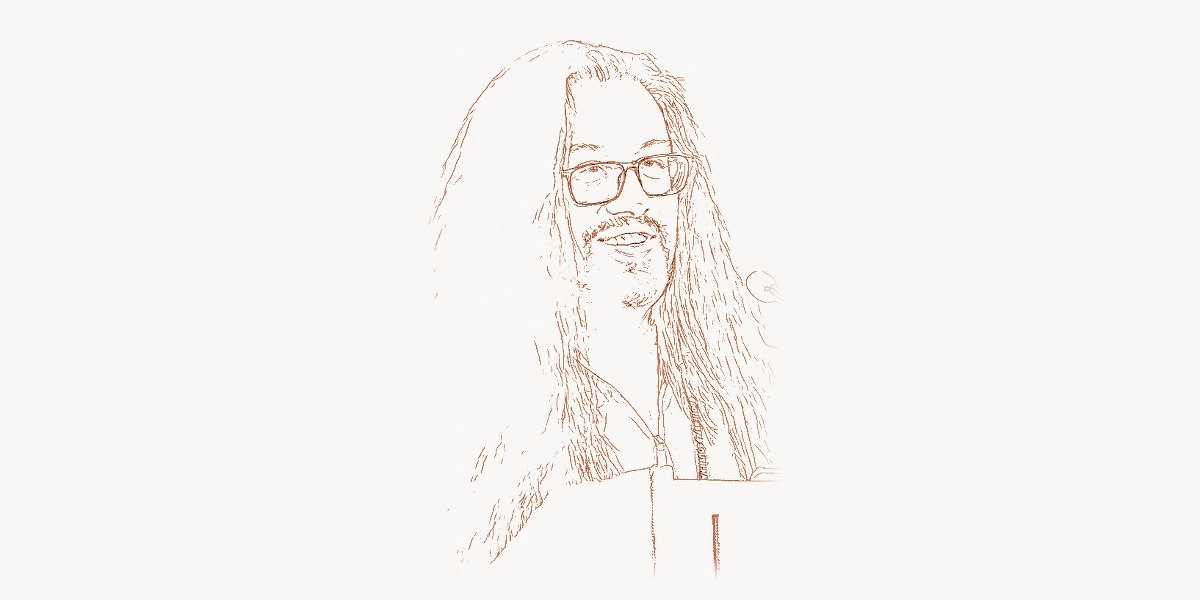
Before John Romero helped create Doom in 1993, the idea of a fast-paced, immersive, first-person shooter running smoothly on a standard IBM PC seemed far-fetched. Yet Romero — alongside his legendary programming partner John Carmack — did exactly that, launching a genre that would become the most commercially dominant category in gaming history. From his earliest Apple II experiments as a teenager to co-founding id Software and defining the shareware distribution model, Romero’s career is a masterclass in how game design vision, technical fearlessness, and entrepreneurial instinct can converge to reshape an entire industry. His fingerprints remain on everything from modern multiplayer shooters to the very business models that drive digital game distribution today.
Early Life & Education
Alfonso John Romero was born on October 28, 1967, in Colorado Springs, Colorado. His early childhood was marked by frequent relocations — his family moved across several states before settling in Rocklin, California. Romero discovered programming at age 11 when he first encountered an Apple II at a local computer store. The machine captivated him instantly, and within weeks he was spending every available hour learning Applesoft BASIC, typing in programs from magazines, and modifying them to see what would happen.
By the time he was 14, Romero had already submitted his first game to a magazine — a text-based adventure written in BASIC. His earliest published game, Scout Search, appeared in the InCider magazine in 1984 when he was just 16. Throughout high school, he continued to refine his craft, learning 6502 assembly language to push the Apple II hardware further than BASIC could manage. He enrolled at the University of Wisconsin–Madison but left before completing his degree, drawn irresistibly toward the emerging professional game development industry.
Romero’s self-taught path through low-level programming gave him an unusually deep understanding of hardware constraints — a skill that would prove essential when he began designing games that needed to squeeze maximum performance from limited IBM PC hardware. His teenage years produced over a dozen published games across Apple II magazines, a prolific output that few professional developers could match.
Career & Technical Contributions
Romero’s professional career began at Origin Systems in 1987, where he worked briefly before moving to Softdisk Publishing in Shreveport, Louisiana. It was at Softdisk that he met the people who would change his life: John Carmack, Tom Hall, and Adrian Carmack (no relation to John). Together, they moonlighted on a side project that would become Commander Keen — a side-scrolling platformer that demonstrated John Carmack’s breakthrough smooth-scrolling technique on the PC, previously thought impossible outside of Nintendo hardware.
In February 1991, the four left Softdisk to officially found id Software. Their first major release as an independent studio was Wolfenstein 3D (1992), a fast-paced first-person shooter set in a World War II castle. Romero served as lead designer and co-programmer, crafting the level layouts, pacing, and enemy placement that made the game addictive despite its relatively simple raycasting engine. Wolfenstein 3D sold over 200,000 copies through shareware alone, proving both the genre and the distribution model.
Then came Doom. Released on December 10, 1993, Doom was a quantum leap in every dimension. Romero designed the majority of levels in the original game, creating the labyrinthine, trap-filled spaces that defined the Doom experience. His level design philosophy was radical: rather than creating realistic architecture, he prioritized gameplay flow — the rhythm of combat, the tension of exploration, the satisfaction of finding secrets. This approach would become the foundational principle of FPS level design for decades to come.
Technical Innovation
While Carmack built the engine, Romero pushed the boundaries of what that engine could express through design. One of his most influential contributions was establishing the WAD file format — the archive structure Doom used to store all its game data separately from the executable. This seemingly simple architectural decision had enormous consequences. By keeping maps, textures, sounds, and sprites in external files, Romero made it trivially easy for anyone to create custom content.
Here is the fundamental structure of the WAD format that Romero co-designed, which became the blueprint for mod-friendly game architectures:
// WAD file header structure (Doom, 1993)
// This format enabled the entire modding revolution
typedef struct {
    char    identification[4];  // "IWAD" or "PWAD"
    int32_t numlumps;           // number of data entries
    int32_t infotableofs;       // offset to the directory
} wadinfo_t;

// Each lump (data entry) in the directory
typedef struct {
    int32_t filepos;    // offset to the data in the file
    int32_t size;       // length of the data
    char    name[8];    // name of the lump (e.g., "E1M1", "FLOOR4_8")
} filelump_t;

// A level like E1M1 contains sequential lumps:
// THINGS   - monster/item placements (Romero's design data)
// LINEDEFS - wall definitions and triggers
// SIDEDEFS - wall texture assignments
// VERTEXES - map geometry coordinates
// SEGS     - BSP rendering segments
// SSECTORS - sub-sectors for BSP tree
// NODES    - BSP tree nodes (Carmack's renderer)
// SECTORS  - floor/ceiling heights, lighting
// REJECT   - visibility optimization table
// BLOCKMAP - collision detection grid
Romero also championed the inclusion of multiplayer deathmatch in Doom. While networked gaming existed before Doom, the concept of a dedicated competitive mode where players hunted each other in fast-paced arenas was Romero’s vision. He coined the term “deathmatch” and designed specific map areas with multiplayer flow in mind. The feature was initially implemented over IPX networks in offices and university labs, and it became so popular that it is widely credited with driving early corporate network infrastructure adoption — and also with causing enough productivity loss that many companies banned it on their networks.
For Quake (1996), Romero continued pushing design boundaries, helping establish the transition from 2.5D to full 3D environments. His work on Quake’s early levels explored the possibilities of true vertical combat, rooms above rooms, and complex three-dimensional spaces that were impossible in the Doom engine. The id Tech 2 engine that powered Quake used a client-server architecture for multiplayer that is still foundational in modern online games:
# Quake dedicated server configuration (1996)
# This client-server model became the standard for online FPS games
# and influenced virtually every multiplayer game that followed

# Launch a Quake dedicated server
quake -dedicated 16 +map dm4

# Key server configuration variables (server.cfg)
hostname "Romero's House of Pain"
maxplayers 16
timelimit 20
fraglimit 50
sv_gravity 800          # Standard gravity
sv_friction 4           # Ground friction
sv_maxspeed 320         # Player max speed (units/sec)
sv_accelerate 10        # Player acceleration
sv_aim 0.93             # Auto-aim threshold

# Network settings - revolutionary for 1996
sv_maxrate 10000        # Max bytes/sec per client
sv_minrate 2500         # Min bytes/sec per client
sys_ticrate 72          # Server tick rate (fps)

# The client-server model allowed:
# - Authoritative server prevents cheating
# - Client-side prediction for smooth gameplay
# - Lag compensation ("netcode")
# - Spectator mode and server-side demos
Why It Mattered
The combination of Romero’s design philosophy and Carmack’s technical breakthroughs created something that transcended gaming. Doom popularized the shareware distribution model for games — releasing the first episode for free while charging for the remaining two. This approach, which Romero strongly championed, generated an estimated $100,000 per day in revenue during Doom’s peak. The model presaged the free-to-play and freemium strategies that would dominate digital distribution two decades later.
Romero’s insistence on modability created an entire ecosystem. The Doom modding community grew to tens of thousands of creators, producing total conversions, new campaigns, and experimental game modes. Tools like DEU (Doom Editing Utility) and later DoomBuilder enabled people with no programming experience to create and share content. Many professional game developers — including several who went on to lead major studios — trace their careers back to making Doom WADs. The concept of user-generated content as a pillar of game longevity, now standard across the industry, has deep roots in the decisions Romero and id Software made in 1993.
The competitive deathmatch format Romero pioneered evolved into the entire esports movement. Quake tournaments in the late 1990s — including the legendary Red Annihilation event in 1997 where Dennis “Thresh” Fong won John Carmack’s Ferrari — were among the first organized competitive gaming events with real prizes. Modern esports, a multi-billion dollar industry, can draw a direct lineage back to the deathmatch mode Romero insisted on including in Doom.
Other Notable Contributions
After departing id Software in 1996, Romero co-founded Ion Storm in Dallas, Texas. The studio’s first project, Daikatana, became one of the most infamous cautionary tales in game development history. Announced in 1997 with massive ambitions and aggressive marketing — including an ad campaign with the notorious tagline that gaming culture has never forgotten — the game suffered from repeated delays, engine switches, and scope creep before finally releasing in 2000 to poor reviews. While Daikatana is often cited as a failure, Ion Storm’s Dallas office also produced Anachronox, a cult-favorite RPG, and the Austin branch of Ion Storm created Deus Ex under Warren Spector — one of the most acclaimed games ever made.
Following Ion Storm, Romero continued to design and ship games across multiple platforms. He co-founded Gazillion Entertainment and worked on massively multiplayer projects. He later moved to Galway, Ireland, with his wife and fellow game designer Brenda Romero (née Brathwaite), a legendary designer in her own right. Together they founded Romero Games, which released Empire of Sin (2020), a strategy game set in 1920s Prohibition-era Chicago. The game combined turn-based tactical combat with empire management mechanics, demonstrating Romero’s continued willingness to explore genres beyond the FPS.
Romero has also been a vocal advocate for game preservation and education. He has delivered keynotes at GDC, DICE, and dozens of other industry conferences, sharing hard-won lessons about game design, team dynamics, and the importance of shipping. His talks on the making of Doom and the early days of id Software are considered essential viewing for aspiring game developers. In 2023, he released SIGIL II, a free megawad for Doom II, proving that his passion for the game he helped create remains undiminished three decades later. Managing projects of this scope — from coordinating level design to community releases — is a challenge that modern project management tools like Taskee are designed to address, enabling creative teams to ship ambitious work efficiently.
Philosophy & Key Principles
Romero’s design philosophy can be distilled into several core principles that have influenced generations of game makers. He has articulated many of these in talks, interviews, and his planning documents from the id Software years.
Gameplay over realism. Romero consistently prioritized how a space played over how it looked. His Doom levels were deliberately unrealistic — rooms floated over lava, corridors twisted in impossible geometries, and secret passages rewarded curiosity over logic. This principle freed level designers from the constraint of architectural plausibility and allowed them to focus on the player’s emotional experience: tension, surprise, power, and discovery.
Speed is a feature. From Wolfenstein 3D through Quake, Romero championed fast movement, instant weapon switching, and aggressive enemy behavior. He believed that the visceral thrill of speed was central to the FPS experience and resisted any design decision that slowed the player down. This philosophy directly influenced games from Unreal Tournament to modern “boomer shooters” that intentionally recapture the speed of 1990s id Software titles.
Give players the tools to create. Romero understood early that players who could create content for a game would form a community around it, extending its lifespan and cultural impact far beyond what any studio could achieve alone. His advocacy for modding-friendly architectures was not just technical generosity — it was a strategic insight about how games achieve lasting cultural relevance.
Ship it. Despite the Daikatana experience, Romero’s early career at id Software was defined by extraordinary productivity. id released Wolfenstein 3D, Doom, Doom II, and Quake in a span of roughly four years — a pace that remains almost unheard of for titles of their quality and ambition. Romero has spoken repeatedly about the importance of momentum, iteration, and the willingness to cut features to hit a release date. For teams looking to maintain that kind of velocity on complex projects, establishing solid workflows with digital agency tools such as Toimi can help maintain alignment between design vision and delivery timelines.
Legacy & Impact
John Romero’s impact on the gaming industry and broader technology culture is difficult to overstate. The first-person shooter genre he co-created generates tens of billions of dollars in annual revenue. Games like Call of Duty, Halo, Counter-Strike, Overwatch, and Valorant all descend, directly or indirectly, from the template established by Wolfenstein 3D, Doom, and Quake. The design language Romero helped invent — health pickups, weapon hierarchies, keycard progression, secret areas, deathmatch arenas — has become the shared vocabulary of an entire medium.
The shareware model that Romero championed at id Software anticipated the digital distribution revolution by nearly two decades. When Valve launched Steam, when Epic launched the Epic Games Store, when free-to-play became the dominant mobile model — all of these developments echoed the core insight that giving away part of your game for free could be the most powerful marketing strategy imaginable. Gabe Newell, who built Steam into the dominant PC gaming platform, has cited id Software’s shareware approach as a direct influence.
The modding culture Romero fostered at id Software created an entire pipeline for game development talent. Tim Sweeney and the Unreal Engine team adopted modding-friendly architectures partly inspired by id’s approach. The Source engine’s modding community produced games like Counter-Strike and Team Fortress, both of which began as community mods. The level design tools Romero helped inspire evolved into the user-generated content platforms that power games like Fortnite Creative and Roblox.
In competitive gaming, Romero’s deathmatch concept evolved into the entire esports ecosystem. The journey from Doom LAN parties to $40 million Dota 2 prize pools passes directly through the competitive culture Romero helped create. His influence extends to game designers like Sid Meier and Will Wright, who similarly prioritized player agency and emergent gameplay in their own genres.
Beyond gaming, Romero’s work influenced broader software culture. The open WAD format anticipated the API-first, extensible software architectures that define modern development. The idea that users should be able to modify and extend the software they use — a principle Romero helped popularize through Doom modding — resonates through open-source culture, plugin ecosystems, and the modern emphasis on developer experience. Even the early days of internet culture were shaped by Doom: the game’s multiplayer drove network infrastructure adoption and helped establish the LAN party as a social institution that predated modern online communities.
Romero’s career also offers one of the most instructive cautionary tales in tech history. The Daikatana experience demonstrated the dangers of overpromising, scope creep, and losing focus — lessons that remain painfully relevant in an industry still plagued by crunch, delays, and mismanaged expectations. That Romero himself has spoken openly about these failures, integrating them into his teaching and mentorship, only adds to his value as a figure in game development history. The pioneers of gaming — from Nolan Bushnell who built Atari, to Shigeru Miyamoto who defined Nintendo’s creative identity — each contributed a layer to the medium. Romero’s layer is the visceral, competitive, community-driven experience that defines how millions of people play today.
Key Facts
| Detail | Information |
|---|---|
| Full Name | Alfonso John Romero |
| Born | October 28, 1967, Colorado Springs, Colorado, USA |
| Known For | Co-creating Doom, Quake, Wolfenstein 3D, Commander Keen; co-founding id Software |
| Key Companies | id Software (1991–1996), Ion Storm (1996–2001), Romero Games (2015–present) |
| Signature Games | Commander Keen, Wolfenstein 3D, Doom, Doom II, Quake, Daikatana, Empire of Sin |
| Technical Contributions | WAD file format, deathmatch multiplayer, shareware game distribution, FPS level design principles |
| Notable Awards | BAFTA Special Award (2023, with John Carmack), Game Developers Choice Pioneer Award (2001, id Software) |
| Current Residence | Galway, Ireland |
| Spouse | Brenda Romero (game designer, Hall of Fame inductee) |
Frequently Asked Questions
What was John Romero’s specific role in creating Doom?
While John Carmack built Doom’s revolutionary 3D engine, John Romero served as lead designer and level architect. He created the majority of the original Doom levels, designed the gameplay flow and pacing, championed the inclusion of deathmatch multiplayer, and co-designed the WAD file format that enabled the modding community. Romero also contributed to the game’s programming, particularly in tools development and game logic. His design decisions — the non-linear level layouts, secret areas, weapon balancing, and enemy placement — defined what a first-person shooter felt like to play, establishing conventions the genre still follows today.
How did the shareware model work for Doom, and why was it revolutionary?
The shareware model that id Software used for Doom involved releasing the first episode (Knee-Deep in the Dead, with nine levels) completely free. Players could copy it, share it with friends, upload it to BBSs — distribution was encouraged. The remaining two episodes required payment. This approach was revolutionary because it eliminated the marketing problem facing small studios: getting players to try the game. With zero advertising budget, Doom reached an estimated 10–15 million players within two years, and the paid episodes generated massive revenue. This model directly influenced later free-to-play and freemium strategies across the entire software industry, not just gaming.
What happened with Daikatana, and what lessons did it teach the industry?
After leaving id Software in 1996, Romero co-founded Ion Storm and announced Daikatana as an ambitious FPS spanning multiple time periods. The project suffered from an engine switch (from Quake to Quake II technology mid-development), feature creep, team turnover, and management challenges. Originally planned for a 1998 release, it finally shipped in April 2000 to poor critical reception. The Daikatana story became a widely studied case in game development about the dangers of overpromising, the importance of scope management, and the need for disciplined production processes. Romero himself has been candid about the experience, using it as a teaching tool at conferences and in mentoring.
Is John Romero still making games today?
Yes. Romero continues to actively design and ship games. He and his wife Brenda Romero run Romero Games in Galway, Ireland, which released Empire of Sin in 2020 — a strategy game published by Paradox Interactive. He has also created several free Doom megawads, including SIGIL (2019) and SIGIL II (2023), which are new episode-length level packs for the original Doom and Doom II. He regularly speaks at industry events, mentors young developers, and remains one of the most recognized and active figures in the game development community. His continued engagement with the Doom community — a game he helped create over 30 years ago — speaks to both his enduring passion for design and the lasting cultural impact of the world he helped build.