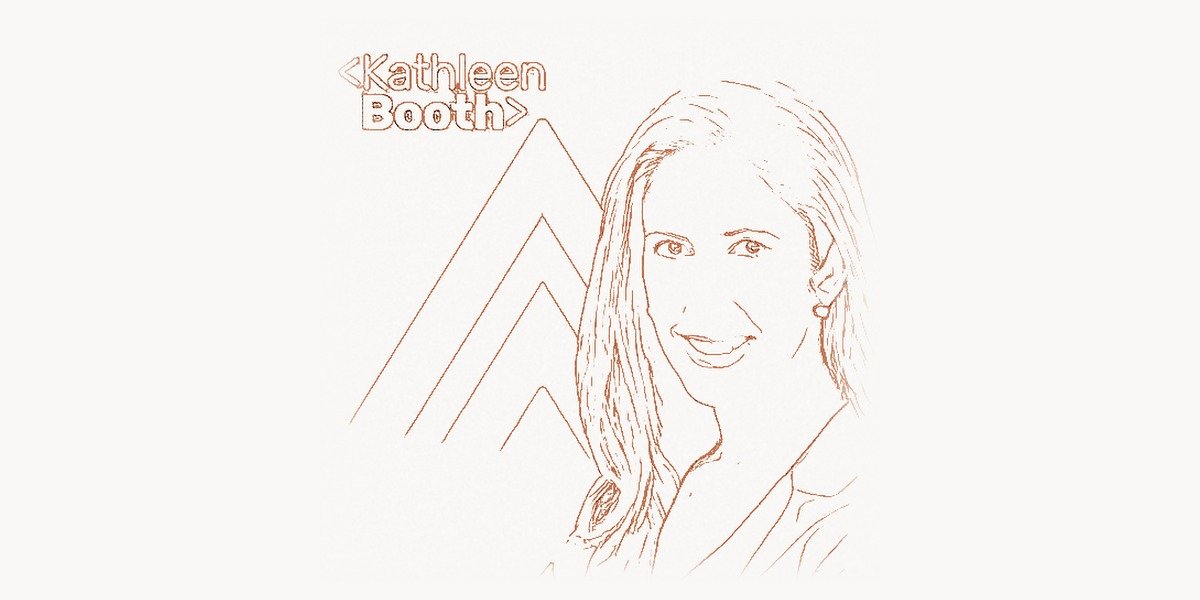
In 1947, a 25-year-old English mathematician sat in a laboratory at Birkbeck College, London, staring at a problem that would shape the future of computing. The machine in front of her — the ARC, the Automatic Relay Computer — could perform calculations, but programming it was an exercise in raw tedium. Every instruction had to be written as a sequence of binary numbers, each one corresponding to a specific operation the hardware could perform. A single misplaced digit meant the entire program failed. There was no error message, no debugger, no compiler. You wrote binary, or you did not write at all. Kathleen Britten, soon to be Kathleen Booth, decided this was unacceptable. She created a system of mnemonic codes — short, human-readable abbreviations that represented machine operations — and a method for translating those mnemonics into the binary sequences the ARC understood. It was one of the first assembly languages ever written. The concept she pioneered — that programmers should write in symbolic notation and let the machine handle the translation to binary — became the foundational layer of every programming system that followed. Before Grace Hopper built the first compiler in 1952, before John Backus created FORTRAN in 1957, before any high-level language existed, there was assembly language. And one of the first people to create it was Kathleen Booth.
Early Life and Path to Technology
Kathleen Hylda Valerie Britten was born on July 9, 1922, in Stourbridge, Worcestershire, England — an industrial town in the West Midlands known for its glass-making heritage, not for producing computing pioneers. She grew up in a country that was still recovering from the First World War and would soon be engulfed by the Second. Her early education followed the standard English pattern, but she showed an exceptional aptitude for mathematics — a subject that, in the 1930s and 1940s, was overwhelmingly dominated by men.
Booth studied mathematics at Royal Holloway, University of London, one of the few institutions in Britain that had a strong tradition of educating women in the sciences. Royal Holloway had been founded in 1879 specifically as a college for women, and its mathematics department provided rigorous training. She earned her bachelor’s degree and then continued to a doctorate, completing her Ph.D. in applied mathematics. Her mathematical training would prove essential — not for performing calculations, but for understanding the logical structure of machines at a level deep enough to redesign how humans communicated with them.
After completing her studies, Booth joined the research team led by Andrew Donald Booth at Birkbeck College, University of London. Andrew Booth was designing some of the earliest computers in Britain, and Kathleen became a core member of the project. Their collaboration was both professional and personal — they married, forming one of the most productive partnerships in early computing history. Together, they would design multiple computers, write foundational texts, and push the boundaries of what machines could do.
In 1947, Kathleen Booth visited the Institute for Advanced Study in Princeton, New Jersey, where she studied the design of John von Neumann’s computer. This visit was transformative. She observed how American researchers were approaching machine design and programming, and she brought those insights back to Birkbeck. The experience at Princeton, combined with her mathematical training and her daily frustration with binary programming, set the stage for her most important contribution.
The Breakthrough: Creating Assembly Language for the ARC
The Technical Innovation
The ARC (Automatic Relay Computer) was a relay-based machine that Andrew Booth had been designing at Birkbeck College. Like all computers of its era, the ARC understood only one language: binary. Every instruction was a pattern of ones and zeros. To add two numbers, you wrote a specific binary code. To store a result in memory, you wrote a different binary code. To jump to a different part of the program, yet another code. There were no variable names, no labels, no comments. The programmer had to remember what each binary pattern meant, track memory addresses manually, and ensure that every single bit was correct.
This was the reality of programming in the late 1940s. Alan Turing had established the theoretical foundations of computation a decade earlier, proving that universal machines were possible. But the practical experience of using those machines was brutal. Programming in raw binary was slow, error-prone, and cognitively exhausting. A program that performed a simple calculation might require hundreds of binary instructions, each one a potential point of failure.
Kathleen Booth’s solution was elegantly simple in concept and revolutionary in practice. She designed a notation system in which each machine operation was represented by a short mnemonic — a human-readable abbreviation that described what the operation did. Instead of writing a binary pattern like 0110 to represent an addition operation, the programmer would write ADD. Instead of a binary code for loading data from memory, the programmer would write LOAD. Memory addresses could be referenced symbolically rather than as raw numbers.
; Kathleen Booth's ARC Assembly Language (1947)
; One of the first assembly languages ever created
; Birkbeck College, University of London

; Before assembly language — raw binary for the ARC:
;   0110 0001 0101    (add contents of address 21 to accumulator)
;   0010 0001 0110    (store accumulator to address 22)
;   1001 0001 0111    (jump to address 23 if accumulator is zero)

; After Booth's assembly notation — human-readable mnemonics:
;   ADD   21          ; Add contents of memory location 21 to accumulator
;   STORE 22          ; Store accumulator value to memory location 22
;   JZ    23          ; Jump to location 23 if accumulator is zero

; Example: Computing the sum of numbers stored in memory locations 10-15
; This demonstrates the kind of program Booth could now write
; in minutes rather than hours:

        LOAD  10       ; Load first value into accumulator
        ADD   11       ; Add second value
        ADD   12       ; Add third value
        ADD   13       ; Add fourth value
        ADD   14       ; Add fifth value
        ADD   15       ; Add sixth value
        STORE 20       ; Store the result in location 20
        HALT           ; Stop execution

; The assembly notation made the program's intent clear.
; Binary made it opaque. This was Booth's insight:
; the machine does not care about readability,
; but the programmer does.
She then wrote a translation procedure — a process by which the mnemonic notation could be converted back into the binary codes the ARC hardware required. This was, in essence, an assembler: a system that took human-readable symbolic code and produced machine-executable binary. The concept was deceptively simple, but it represented a fundamental shift in how humans interacted with computers. For the first time, the programmer could think about what the program was supposed to do, rather than spending most of their mental effort on remembering binary encodings.
Booth documented this work in her 1947 report “Coding for A.R.C.” — one of the earliest written descriptions of an assembly language and its use. This document was not a theoretical proposal. It was a practical manual, written by someone who was actively using the system to program a real machine. It described the mnemonic codes, explained how to use them, and provided examples of programs written in the notation.
Why It Mattered
Assembly language occupies a unique position in the history of computing. It is the thinnest possible abstraction over raw hardware — each assembly instruction typically corresponds to exactly one machine instruction. Yet that thin layer of abstraction made an enormous difference. It transformed programming from an exercise in binary memorization into something that resembled logical reasoning. It allowed programmers to focus on algorithms and data flow rather than bit patterns.
Every abstraction layer that followed — compilers, interpreters, high-level languages, virtual machines, managed runtimes — was built on top of assembly language. When Grace Hopper created her A-0 compiler in 1952, the compiler’s output was assembly code (or its equivalent). When John Backus’s FORTRAN compiler generated code for the IBM 704 in 1957, it generated assembly. When the C programming language was developed at Bell Labs in the 1970s, it was designed to be “close to the metal” — one step above assembly. Even today, when a modern compiler like LLVM transforms high-level code into executable binaries, it passes through an intermediate representation that is fundamentally assembly-like in structure.
Booth’s contribution was not just the specific notation she created for the ARC. It was the concept itself: that symbolic representation of machine operations was possible, practical, and desirable. This concept — that there should be a human-readable layer between the programmer and the hardware — is the foundational principle of software engineering. Without it, programming would have remained an activity accessible only to those who could think in binary.
Beyond Assembly: Computer Design and Foundational Texts
Kathleen Booth’s contributions extended far beyond assembly language. Working alongside Andrew Booth at Birkbeck, she was directly involved in the design and construction of several pioneering computers. After the ARC, the team built the SEC (Simple Electronic Computer) and later the APE(X)C (All Purpose Electronic X Computer) — each one more advanced than the last. Kathleen was not merely a programmer for these machines; she was a co-designer, involved in both the hardware architecture and the software systems that made them usable.
The APE(X)C was particularly significant. It was a small, relatively affordable computer designed with the explicit goal of being accessible to a wider range of users — universities, research laboratories, and small organizations that could not afford the massive machines being built at places like Manchester and Cambridge. Several copies of the APE(X)C were built and used at institutions across the United Kingdom and beyond. The design philosophy behind it — that computers should be practical, affordable, and accessible — was ahead of its time by decades.
In 1953, Kathleen and Andrew Booth co-authored “Automatic Digital Calculators,” one of the first textbooks on computer science. This book covered the design and programming of digital computers at a level that was both rigorous and accessible. It described hardware architecture, instruction sets, programming techniques, and numerical methods. For many researchers and students in the 1950s, this book was their introduction to computing. It went through multiple editions and was translated into several languages, spreading the Booths’ ideas and approaches internationally.
From "Automatic Digital Calculators" by Andrew D. Booth and
Kathleen H.V. Booth (1953) — one of the first CS textbooks.

The book introduced readers to concepts like:

1. NUMBER SYSTEMS AND MACHINE REPRESENTATION
   - Binary encoding of integers and fractions
   - Fixed-point and floating-point representation
   - Negative numbers via complement notation

2. INSTRUCTION FORMAT AND ADDRESSING
   - Operation code (opcode) + operand address
   - Single-address vs. multi-address machines
   - Index registers and address modification

3. PROGRAMMING METHODOLOGY
   - Breaking problems into sequential operations
   - Subroutine design and reuse
   - Debugging and verification techniques

4. SAMPLE PROGRAM STRUCTURE (simplified):

   Step  Opcode  Address   Comment
   ---   ------  -------   --------------------------
   001   LOAD    100       ; Read first data value
   002   ADD     101       ; Accumulate second value
   003   TEST    NEG       ; Check if result is negative
   004   JUMP    010       ; Branch if negative
   005   STORE   200       ; Save positive result
   006   JUMP    012       ; Skip to next section
   ...

This systematic approach to programming instruction
was groundbreaking in an era when most knowledge about
computing was transmitted orally or through informal notes.
Kathleen Booth also wrote “Coding for A.R.C.” (1947), which documented her assembly language work, and contributed to numerous technical reports and papers on computer design, programming methods, and numerical analysis. Her writing was characterized by clarity and precision — she had the ability to explain complex technical concepts in terms that were rigorous but not unnecessarily obscure. This skill made her an exceptionally effective communicator of new ideas in a field where many practitioners struggled to articulate their methods.
Later Career: Natural Language Processing and Neural Networks
In the 1960s and 1970s, Kathleen Booth turned her attention to two areas that would not become mainstream for decades: natural language processing (NLP) and neural networks. At a time when most computer scientists were focused on numerical computation, operating systems, and programming languages, Booth was exploring how machines could understand human language and how computational models could mimic biological neural processes.
Her work on natural language processing explored the fundamental challenges of getting computers to parse and understand English text. These challenges — ambiguity, context-dependence, the gap between syntax and semantics — remain central problems in NLP today. The large language models that power modern AI assistants are, in a sense, the latest attempt to solve the problems Booth was investigating half a century ago. The scale and approach have changed (modern systems use statistical learning on massive datasets, whereas Booth worked with rule-based approaches on limited hardware), but the core question — how can a machine process and respond to human language? — is the same one she was asking.
Her interest in neural networks was equally prescient. In the 1950s and 1960s, a small number of researchers were exploring computational models inspired by biological neurons. This work fell out of fashion during the “AI winter” of the 1970s and 1980s, when neural network research was widely dismissed as a dead end. It was not until the 2010s, with the advent of deep learning and modern GPU hardware, that neural networks achieved the breakthroughs — in image recognition, language modeling, game playing, and more — that vindicated the early researchers’ intuitions. Booth was among those early researchers, working on neural network concepts decades before they became the dominant paradigm in artificial intelligence.
In the 1960s, the Booths moved to Canada, where Kathleen joined the faculty at Lakehead University in Thunder Bay, Ontario. She continued her research and teaching there, introducing generations of Canadian students to computer science. The move to Canada, far from the main centers of computing research in London, Cambridge, and the American East Coast, meant that some of Booth’s later work received less attention than it deserved. But the students she taught and the ideas she developed continued to influence the field through the networks of researchers she helped train.
Philosophy and Engineering Approach
Key Principles
Kathleen Booth’s approach to computing was defined by a conviction that machines should serve human needs, not the other way around. Her creation of assembly language was not a theoretical exercise — it was a practical response to the daily pain of binary programming. She saw that the gap between human thinking and machine execution was the fundamental bottleneck in computing, and she set about narrowing it.
This human-centered philosophy connected her to a lineage of computing pioneers who prioritized accessibility. Ada Lovelace had recognized in 1843 that computing machines could process more than numbers. Grace Hopper would insist in the 1950s that programming should use English-like notation. Adele Goldberg would later help bring object-oriented programming and graphical interfaces to wider audiences through Smalltalk. Booth was part of this tradition — a tradition that understood technology’s value is determined not by its raw capability but by its usability.
Booth was also a pragmatist. The ARC was not a theoretical machine — it was a real, physical device with real limitations. Her assembly language had to work within those constraints. It had to produce correct binary output. It had to be learnable by other researchers on the team. It had to handle the specific instruction set of the ARC hardware. This grounding in practical reality — the insistence that solutions must work, not just look elegant on paper — characterized all of her work, from computer design to textbook writing to later research on NLP and neural networks.
Her collaborative approach was also distinctive. The partnership with Andrew Booth was genuinely collaborative — they co-designed hardware, co-wrote books, and co-managed research teams. In an era when women in computing were often relegated to subordinate roles (programming was sometimes dismissed as “clerical work” unworthy of senior researchers), Kathleen Booth was a full intellectual partner in the design of multiple computers and the development of foundational ideas. Modern software development, with its emphasis on team collaboration and pair programming — practices supported by tools like Taskee for managing collaborative projects — echoes the kind of close partnership the Booths demonstrated.
Her willingness to explore unfashionable research areas — NLP and neural networks at a time when most of the field was focused elsewhere — showed intellectual independence. She followed the questions that interested her rather than the topics that were popular. This independence is a recurring trait among the most impactful computing pioneers: Dijkstra championed structured programming when the industry resisted it, Knuth spent decades on a multi-volume analysis of algorithms when quick publications were the path to academic advancement, and Margaret Hamilton insisted on software engineering rigor when no one else thought software could be engineered at all.
Legacy and Modern Relevance
Kathleen Booth lived to the age of 100, passing away on September 29, 2022. She witnessed the entire arc of modern computing — from the relay-based machines of the 1940s to the smartphones and cloud computing platforms of the 2020s. Every layer of that technological stack rests on the concept she helped pioneer: that programmers should write in symbolic notation that humans can read, and machines should handle the translation to binary.
Assembly language remains in active use today, seven decades after Booth created one of its first forms. Operating system kernels, device drivers, embedded systems, cryptographic libraries, and performance-critical code are still written in or optimized with assembly. When a game engine developer needs to squeeze maximum performance from a processor, they write assembly. When a security researcher analyzes malware, they read assembly. When a compiler generates executable code, it produces assembly (or its binary equivalent) as the final step. The x86, ARM, RISC-V, and other instruction set architectures that power modern devices all have corresponding assembly languages that are direct descendants of the concept Booth pioneered.
The broader principle she established — that abstraction layers between humans and machines are essential — is the organizing principle of all modern software engineering. High-level programming languages abstract over assembly. Frameworks abstract over languages. APIs abstract over frameworks. Every web development agency building modern applications works within a tower of abstractions, each one designed to let humans express intent at a higher level while machines handle the lower-level details. That tower begins with assembly language — the first abstraction over raw hardware — and Kathleen Booth was one of the first people to build it.
Her work on computer design also had lasting impact. The APE(X)C’s philosophy of building smaller, more affordable, more accessible computers anticipated the minicomputer revolution of the 1960s, the microcomputer revolution of the 1970s, and the personal computer revolution of the 1980s. The idea that computing power should be distributed widely, not concentrated in a few large installations, is now so deeply embedded in our technological culture that it seems obvious. In the 1950s, it was a radical design choice.
Her textbook “Automatic Digital Calculators” helped establish computer science as a teachable discipline. Before books like the Booths’, computing knowledge was transmitted through apprenticeship — you learned by working alongside someone who already knew. Formal textbooks made it possible for anyone with sufficient mathematical background to learn computing concepts independently. This democratization of knowledge accelerated the growth of the field enormously and set the pattern for the textbook-driven CS education that continues today.
Kathleen Booth’s story also matters for what it reveals about the role of women in early computing. She was not an anomaly. The 1940s and 1950s were a period when women made outsized contributions to computing: Lovelace had laid the conceptual groundwork, Hopper invented the compiler, Hamilton would pioneer software engineering at NASA, and Booth created one of the first assembly languages. These women were not peripheral figures. They were central to the development of the field. Recognizing their contributions is not a matter of historical correction — it is a matter of accuracy.
Booth’s century-long life encompassed the entire history of practical computing. She was born four years after Turing, wrote one of the first assembly languages before the concept of “software” existed as a distinct discipline, explored AI and neural networks decades before they became mainstream, and lived to see a world in which computers are ubiquitous and the abstractions she helped pioneer are invisible precisely because they work so well. Her contribution was foundational: she helped build the first rung of the ladder that separates human thought from machine execution, and every programmer who has ever written a line of code has climbed that ladder without knowing who built it.
Key Facts
- Born: July 9, 1922, Stourbridge, Worcestershire, England
- Died: September 29, 2022, Stourbridge, England (aged 100)
- Known for: Creating one of the first assembly languages, co-designing early British computers (ARC, SEC, APE(X)C), co-authoring foundational computing textbooks
- Key works: “Coding for A.R.C.” (1947), “Automatic Digital Calculators” (1953, with Andrew D. Booth)
- Education: B.Sc. and Ph.D. in Mathematics, Royal Holloway, University of London
- Family: Married Andrew Donald Booth (computer scientist and engineer)
- Institutions: Birkbeck College, University of London; Lakehead University, Canada
- Later research: Natural language processing, neural networks
Frequently Asked Questions
Who is Kathleen Booth?
Kathleen Hylda Valerie Booth (nee Britten, 1922-2022) was a British mathematician and computer scientist who created one of the first assembly languages in 1947 for the ARC (Automatic Relay Computer) at Birkbeck College, London. She was also a co-designer of several pioneering British computers, including the ARC, SEC, and APE(X)C. With her husband Andrew Donald Booth, she co-authored “Automatic Digital Calculators” (1953), one of the first textbooks on computer science. She later made contributions to natural language processing and neural networks, and taught at Lakehead University in Canada.
What did Kathleen Booth create?
Booth created one of the first assembly languages — a system of mnemonic codes that allowed programmers to write machine instructions in human-readable symbolic notation rather than raw binary. She developed this system in 1947 for the ARC at Birkbeck College and documented it in “Coding for A.R.C.” She also co-designed the ARC, SEC, and APE(X)C computers, co-authored one of the first computing textbooks, and later contributed to research in natural language processing and neural networks.
Why is Kathleen Booth important to computer science?
Booth is important because she pioneered the concept of assembly language — the first abstraction layer between human programmers and machine hardware. Before assembly language, programming meant writing raw binary codes. Booth’s innovation of using mnemonic symbols to represent machine operations made programming faster, more reliable, and more accessible. This concept is the foundation of all subsequent programming abstractions, from compilers and high-level languages to modern development frameworks. Every programming language ultimately compiles down to assembly-like instructions, making Booth’s contribution a permanent part of computing’s infrastructure.
What is assembly language and why does it matter?
Assembly language is a low-level programming language that uses mnemonic codes (like ADD, LOAD, STORE, JUMP) to represent the binary instructions that a computer’s processor executes. Each assembly instruction typically corresponds to one machine instruction. Assembly language matters because it was the first step in making computers programmable by humans rather than only by specialists who could think in binary. It remains in use today for operating system kernels, device drivers, embedded systems, and performance-critical applications. Kathleen Booth created one of the earliest assembly languages in 1947, establishing the concept that would underpin all future programming systems.