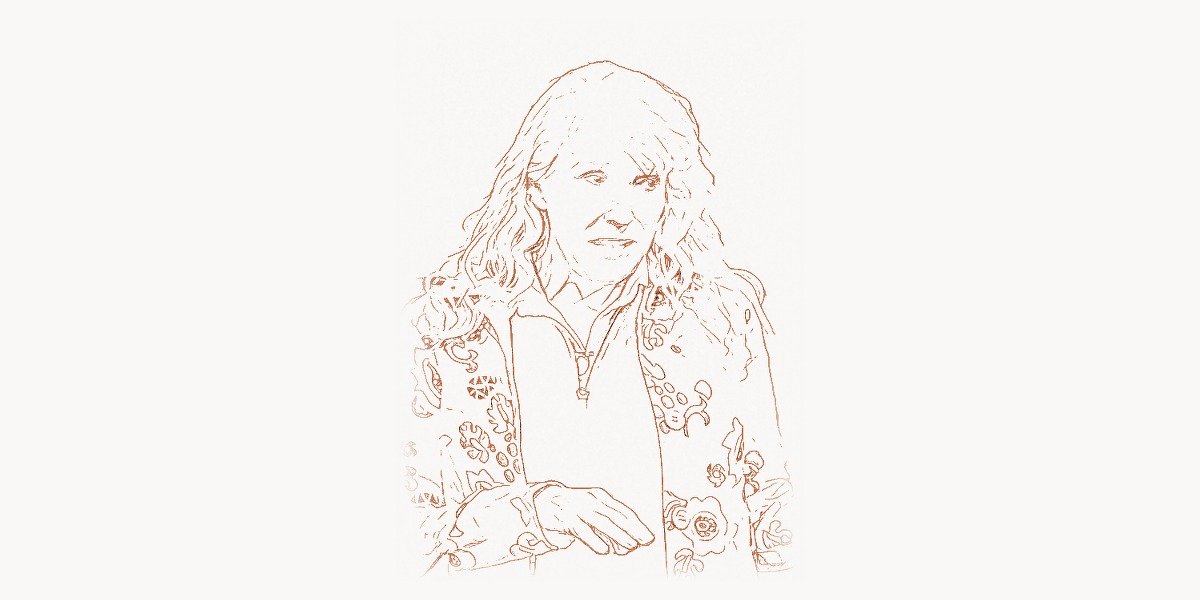
In the early 2000s, a generation of Java developers picked up a programming book that looked nothing like anything they had encountered before. Instead of walls of dry, monotone text and sterile UML diagrams, they found cartoons, puzzles, visual metaphors, and writing that spoke directly to their brains — literally. That book was Head First Java, and the person who conceived its revolutionary pedagogical approach was Kathy Sierra. Her insight was deceptively simple yet profoundly radical: if you want people to actually learn something, you have to make their brains care. That principle — rooted in cognitive science, neuroscience, and a fierce empathy for the learner — reshaped how an entire industry thinks about technical education, user experience design, and the moral obligations of software creators toward the people who use their products.
From Neuroscience to New Riders: The Origins of a Vision
Kathy Sierra’s path to tech education was unconventional. Before she became one of the most influential voices in developer education, she studied neuroscience and worked as a game developer in the late 1980s and early 1990s. That combination — understanding how the brain processes, retains, and recalls information, paired with an intuition for what makes interactive experiences engaging — became the intellectual foundation for everything she would later build.
In the mid-1990s, Sierra became a master Java trainer for Sun Microsystems, the company that created Java. She was responsible for teaching developers how to use a language that was rapidly becoming the lingua franca of enterprise software. It was during these training sessions that she began to notice a pattern: the existing instructional materials were failing learners. People would sit through multi-day courses, nod along, pass quizzes, and then forget nearly everything within weeks. The problem was not the learners. The problem was that the materials were designed for reference, not for learning. They were optimized for completeness and accuracy at the expense of comprehension and retention.
Sierra started experimenting with alternative approaches. She incorporated visual storytelling, conversational tone, redundancy through variation, and spaced repetition into her curricula. The results were dramatic. Her students retained more, applied concepts faster, and — perhaps most importantly — reported actually enjoying the learning process. These experiments planted the seed for what would become the Head First series.
Head First Java: The Book That Changed Technical Publishing
In 2003, Kathy Sierra and her collaborator Bert Bates published Head First Java through O’Reilly Media. The book was a calculated rebellion against every convention of technical publishing. Where traditional programming books presented information linearly and formally, Head First Java used a multi-sensory, brain-friendly format that drew on research in metacognition, constructivism, and dual coding theory.
The core principles behind the Head First approach included conversational language that engaged the reader as a participant rather than a passive recipient, visuals placed near related text to reduce cognitive split-attention effect, unexpected content such as humor and novelty to trigger the brain’s attention mechanisms, multiple representations of the same concept through code, diagrams, analogies, and exercises, and activities that forced the reader to actively process information rather than simply reading it.
Consider how Head First Java introduced the concept of object-oriented programming. Rather than starting with an abstract definition, it placed the reader in a scenario:
// Head First approach: start with something concrete and relatable
// "Think of a class as a blueprint for a dog"

class Dog {
    String name;
    int size;

    void bark() {
        if (size > 60) {
            System.out.println("Woof! Woof!");
        } else if (size > 25) {
            System.out.println("Ruff! Ruff!");
        } else {
            System.out.println("Yip! Yip!");
        }
    }
}

// Now create actual Dog objects — each one is unique
public class DogTestDrive {
    public static void main(String[] args) {
        Dog rex = new Dog();
        rex.name = "Rex";
        rex.size = 70;

        Dog fifi = new Dog();
        fifi.name = "Fifi";
        fifi.size = 8;

        rex.bark();   // Woof! Woof!
        fifi.bark();  // Yip! Yip!
    }
}
This was not merely a stylistic choice. It was grounded in research showing that the brain processes concrete examples before abstract principles, that emotional engagement (even mild amusement at a barking dog) increases memory encoding, and that immediate application through runnable code strengthens neural pathways. Sierra did not just write a book about Java. She engineered a learning experience based on how human cognition actually works.
The book became a massive bestseller. It won a Jolt Award and spawned an entire series covering topics from design patterns and servlets to HTML, CSS, and even physics. The Head First series eventually encompassed over two dozen titles and sold millions of copies worldwide. More importantly, it fundamentally shifted expectations in technical publishing. After Head First, publishers and authors across the industry began adopting visual, conversational, and learner-centered approaches. The influence can be seen in modern resources from interactive coding platforms to video tutorial styles that prioritize engagement over encyclopedic completeness.
The Sun Certified Programmer and the Java Community
Sierra’s impact on the Java ecosystem extended well beyond the Head First series. She co-authored the definitive study guide for the Sun Certified Java Programmer (SCJP) exam, which became the standard preparation resource for a certification that hundreds of thousands of developers pursued. The SCJP guide applied the same brain-friendly principles, transforming what could have been a tedious memorization exercise into a genuine learning tool.
She was also the creator of the javaranch.com website (later renamed CodeRanch), one of the earliest and most welcoming online communities for Java developers. At a time when many programming forums were notoriously hostile to beginners — where asking a basic question could invite contempt — JavaRanch enforced a culture of kindness and patience. Sierra established the “Be Nice” policy and the famous “no-jerks” rule, creating a space where newcomers felt safe to ask questions and learn. This was not a trivial contribution. Research in educational psychology consistently shows that psychological safety is a prerequisite for effective learning, and Sierra instinctively understood this years before the concept became mainstream in tech culture discussions.
Her work on JavaRanch paralleled the community-building philosophy seen in other influential tech communities. Just as Brendan Eich’s creation of JavaScript spawned a vibrant ecosystem of developers helping each other, Sierra’s JavaRanch demonstrated that a welcoming community could accelerate learning far beyond what any book or course could achieve alone.
Creating Passionate Users: The Blog That Defined UX Thinking
In 2004, Sierra launched the blog Creating Passionate Users, which quickly became one of the most widely read and cited resources in the UX and product design world. The blog’s central thesis was radical in its simplicity: the goal of product design should not be to create a great product, but to create a great user. The distinction matters enormously. A product-centered view asks “how do we make this feature better?” A user-centered view asks “how do we help the user become better at what they care about?”
Sierra articulated this through what she called the “user’s kick-ass curve” — a framework for understanding that users do not fall in love with products; they fall in love with the version of themselves that the product enables. A camera company should not be in the business of making great cameras; it should be in the business of making great photographers. A project management tool should not just organize tasks efficiently — it should make its users feel like more capable, effective professionals. This philosophy resonates deeply with modern approaches to product design, including those practiced by teams at Taskee, where the focus is on empowering users to achieve their goals rather than simply providing features.
This perspective influenced a generation of product designers, startup founders, and UX professionals. It anticipated many of the ideas that would later be formalized in frameworks like Jobs To Be Done and outcome-driven innovation. Sierra was thinking about user empowerment and emotional design years before these became industry buzzwords.
The Neuroscience of Learning: Sierra’s Theoretical Framework
What distinguished Sierra from other education reformers was the rigor of her cognitive science foundation. She did not simply advocate for “making learning fun” — a superficial interpretation that she actively pushed back against. Instead, she articulated a detailed model of how the brain acquires and retains complex technical skills.
Her framework incorporated several key principles from neuroscience and cognitive psychology. The first was the attention filter: the brain’s reticular activating system constantly screens incoming information for relevance and novelty. Traditional textbooks fail this filter because they present information in a uniform, predictable format. Head First materials used visual surprise, humor, and conversational tone to pass through this filter. The second was cognitive load theory: working memory can hold only a limited amount of new information at once. Sierra designed her materials to manage cognitive load by chunking information, using progressive disclosure, and providing scaffolding that gradually increased complexity. The third was dual coding: information encoded both verbally and visually is retained significantly better than information encoded in only one modality, which is why every Head First page combined text with meaningful images. The fourth was the generation effect: actively producing an answer strengthens memory far more than passively reading one, which is why Head First books were filled with exercises, puzzles, and “Sharpen Your Pencil” activities.
These principles were not original to Sierra, but she was among the first to systematically apply them to technical education at scale. Her synthesis of cognitive science and instructional design created a template that educators across disciplines continue to follow.
Design Patterns and Software Craftsmanship
One of the most acclaimed books in the Head First series was Head First Design Patterns (2004), co-authored with Eric Freeman, Elisabeth Robson, and Bert Bates. This book took the notoriously abstract topic of software design patterns — originally codified by the Gang of Four in their dense 1994 classic — and made it genuinely accessible to working developers.
The book demonstrated how patterns like Observer, Strategy, and Decorator solve real problems through scenarios that readers could immediately relate to. Here is an example of how it introduced the Strategy pattern, showing how behavior can be composed rather than inherited:
// The Strategy Pattern: define a family of algorithms,
// encapsulate each one, and make them interchangeable

// Instead of hardcoding behavior in subclasses...
interface FlyBehavior {
    void fly();
}

class FlyWithWings implements FlyBehavior {
    public void fly() {
        System.out.println("Soaring through the sky!");
    }
}

class FlyNoWay implements FlyBehavior {
    public void fly() {
        System.out.println("I can't fly.");
    }
}

class FlyWithRocket implements FlyBehavior {
    public void fly() {
        System.out.println("Flying with a rocket! Whoosh!");
    }
}

// Compose behavior at runtime
abstract class Duck {
    FlyBehavior flyBehavior;

    void performFly() {
        flyBehavior.fly();
    }

    // Swap behavior dynamically
    void setFlyBehavior(FlyBehavior fb) {
        this.flyBehavior = fb;
    }
}

class MallardDuck extends Duck {
    public MallardDuck() {
        flyBehavior = new FlyWithWings();
    }
}

// At runtime, even a mallard can get a rocket upgrade
// MallardDuck mallard = new MallardDuck();
// mallard.performFly();  → "Soaring through the sky!"
// mallard.setFlyBehavior(new FlyWithRocket());
// mallard.performFly();  → "Flying with a rocket! Whoosh!"
By grounding abstract architectural concepts in concrete, memorable scenarios, the book helped thousands of developers internalize patterns they could then apply in their own codebases. The pedagogical approach echoed the work of other pioneers who made complex systems approachable — much as Douglas Crockford distilled JavaScript’s good parts into a clear, opinionated guide, Sierra distilled the Gang of Four’s patterns into something developers could actually remember and use.
Badass: Making Users Awesome
In 2015, Sierra published Badass: Making Users Awesome, which crystallized decades of her thinking about learning, UX, and product design into a single, potent framework. The book argued that the key to building successful products was not better marketing, not more features, and not even better usability in the traditional sense — it was helping users achieve compelling results in the domain they cared about.
Sierra introduced the concept of the “desirable difficulty” curve, showing how products should be designed to help users progress through the frustrating gap between beginner and competent practitioner. She drew on research in expert performance, deliberate practice, and motivation to outline specific strategies for keeping users on the path to mastery. The book was widely praised by product managers, designers, and educators, and its ideas have been incorporated into product strategy frameworks at companies across the tech industry.
The concept of “making users awesome” also has implications for how development agencies approach their work. When a digital product agency like Toimi designs and builds software, the Sierra framework suggests that success should be measured not by the elegance of the code or the comprehensiveness of the feature set, but by whether users become measurably more capable at their goals.
Influence on Modern Technical Education
Sierra’s influence extends far beyond the Head First series and her own publications. Her principles have been absorbed into the DNA of modern technical education. Interactive coding platforms that provide immediate feedback on exercises, video tutorials that use conversational narration and visual demonstrations, documentation that prioritizes getting-started guides over comprehensive API references — all of these reflect ideas that Sierra championed and popularized.
Her emphasis on cognitive science in education influenced other pioneers of developer experience. The movement toward developer experience (DX) as a design discipline owes a significant debt to Sierra’s insistence that the ease with which someone can learn and use a tool is not a secondary concern but a primary measure of the tool’s quality. When Mitchell Hashimoto designed Vagrant and Terraform with clean, intuitive interfaces, or when modern frameworks emphasize “zero-config” setups, they are acting on principles that Sierra articulated: reduce the distance between wanting to do something and being able to do it.
Her work also anticipated the current emphasis on inclusive design in tech. By insisting that hostile communities, impenetrable documentation, and steep learning curves were not merely inconveniences but active barriers that excluded entire categories of potential contributors, Sierra laid intellectual groundwork for the diversity and inclusion initiatives that the tech industry would later embrace. The parallel to Grace Hopper’s vision of making programming accessible through human-readable languages is striking — both women understood that the greatest barrier to participation in computing was not talent but unnecessary complexity.
The Human Cost of Online Visibility
Sierra’s story also contains a deeply troubling chapter that the tech industry must reckon with. In 2007, at the height of her influence, she became the target of a sustained campaign of online harassment that included graphic threats of violence. The harassment was severe enough that she canceled a keynote appearance at a major conference and withdrew from public life for an extended period.
The incident became one of the earliest high-profile cases of online harassment in the tech community and sparked important conversations about the safety of public figures, particularly women, in technology. Sierra’s experience foreshadowed the harassment campaigns that would become distressingly common in subsequent years and highlighted the urgent need for platforms and communities to take responsibility for protecting their members.
Sierra eventually returned to public discourse, but her experience served as a sobering reminder that the tech industry’s celebration of openness and free expression must be balanced with genuine accountability for the harm that unmoderated spaces can enable. Her earlier work building the welcoming JavaRanch community took on additional significance in this context — she had already demonstrated that it was possible to create spaces for vigorous technical discussion without tolerating abuse.
Legacy and Continuing Influence
Kathy Sierra’s contributions to technology education and user experience design are woven into the fabric of how the industry operates today. The Head First series remains in print and continues to be recommended as a starting point for developers learning new technologies. Her blog posts from Creating Passionate Users are still widely shared and cited. The frameworks she developed for thinking about user empowerment, learning design, and product strategy continue to influence how products are built and how developers are trained.
Perhaps most importantly, Sierra demonstrated that empathy — genuine, deep, research-informed empathy for the human beings who use technology and try to learn it — is not a soft skill or a nice-to-have. It is a rigorous discipline that, when applied systematically, produces measurably better outcomes. In an industry that often fetishizes technical complexity and dismisses accessibility as dumbing down, Sierra proved that the hardest and most valuable intellectual work is making complex things genuinely understandable.
Her influence can be traced through the work of educators, designers, and community builders across the industry. From Paul Graham’s emphasis on clear technical writing at Y Combinator to John Carmack’s detailed technical explanations in game development, the standard for how technical knowledge is shared has been permanently elevated by Sierra’s contributions. Every developer who has ever been grateful for a well-written tutorial, an intuitive API, or a welcoming community has benefited, directly or indirectly, from the principles Kathy Sierra spent her career developing and defending.
In an era where artificial intelligence is transforming how people learn and interact with software, Sierra’s core insight remains more relevant than ever: technology succeeds when it makes humans more capable, more confident, and more creative. The measure of a tool is not what it can do, but what its users can do with it.
Frequently Asked Questions
What is the Head First book series and why was it revolutionary?
The Head First series is a collection of technical books published by O’Reilly Media that use a visually rich, brain-friendly format based on cognitive science and neuroscience research. Created by Kathy Sierra and Bert Bates, the series was revolutionary because it rejected the traditional dry, text-heavy approach to technical education in favor of conversational writing, visual metaphors, puzzles, and activities designed to engage the brain’s natural learning mechanisms. The first title, Head First Java, was published in 2003 and the series eventually grew to cover over two dozen topics including design patterns, HTML, CSS, Python, and software architecture.
How did Kathy Sierra apply neuroscience to technical education?
Sierra drew on research in cognitive psychology and neuroscience to design learning materials that work with the brain rather than against it. Her approach incorporated principles including the attention filter (using novelty and surprise to engage the reticular activating system), cognitive load management (chunking information and using progressive disclosure), dual coding (combining text with meaningful visuals for stronger memory encoding), and the generation effect (using exercises and puzzles to force active processing). This systematic application of brain science to technical education was unprecedented in the programming book market and produced measurably better learning outcomes.
What is the “Making Users Awesome” framework?
The “Making Users Awesome” framework, detailed in Sierra’s 2015 book Badass: Making Users Awesome, argues that successful products are those that help users achieve compelling results in their domain of interest. Rather than focusing on product features or traditional usability metrics, the framework emphasizes helping users progress through the gap between beginner and competent practitioner. It draws on research in expert performance and deliberate practice to outline strategies for product design that keeps users motivated and progressing toward mastery. The framework has been widely adopted by product managers and UX designers across the tech industry.
What was JavaRanch and why did it matter for the developer community?
JavaRanch (now CodeRanch) was an online community for Java developers created by Kathy Sierra. It distinguished itself from other programming forums through its strict “Be Nice” policy and welcoming culture that encouraged beginners to ask questions without fear of ridicule. At a time when many technical forums were notoriously hostile to newcomers, JavaRanch demonstrated that a community could maintain high technical standards while being genuinely inclusive. The community grew to hundreds of thousands of members and proved that psychological safety — a concept that would later become central to discussions about effective teams — was essential for learning environments.
How has Kathy Sierra’s work influenced modern developer experience and UX design?
Sierra’s influence on modern developer experience (DX) and UX design is pervasive. Her principle that products should be evaluated by how capable they make their users — rather than by feature counts or technical sophistication — anticipated frameworks like Jobs To Be Done and outcome-driven innovation. Her insistence on reducing the distance between intention and capability influenced the “zero-config” and “convention over configuration” movements in software frameworks. Interactive coding platforms, visual documentation, and the entire concept of developer experience as a design discipline all reflect ideas she championed. Her work on inclusive communities also laid groundwork for the industry’s later focus on diversity and welcoming onboarding experiences for new developers.