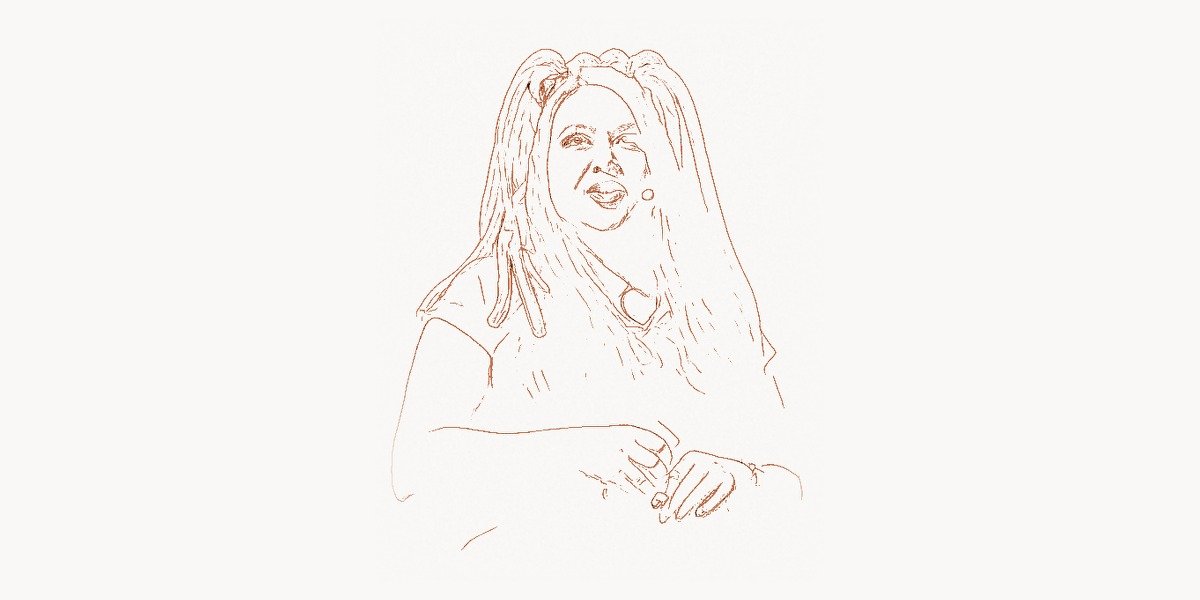
In 2013, when Katie Moussouris stood before a room of Microsoft executives to propose something unprecedented — paying hackers to find security flaws in their software — the idea was met with skepticism bordering on alarm. Why would one of the world’s largest software companies deliberately invite attackers to probe their defenses? The answer, as Moussouris had spent years articulating, was deceptively simple: because those attackers were already probing, and the only question was whether Microsoft would learn about the vulnerabilities before or after they were exploited. That single insight, backed by relentless advocacy and deep technical knowledge, would reshape how the entire technology industry approaches security. Today, bug bounty programs are a multi-billion-dollar ecosystem, and Katie Moussouris is widely credited as the person who made it happen.
Early Life and Education
Katie Moussouris grew up with an insatiable curiosity about how systems work — and, critically, how they break. She developed an early interest in computing during the 1980s and 1990s, a period when personal computers were becoming household items and the internet was just beginning to connect the world. Unlike many of her peers, Moussouris was drawn not to building applications but to understanding their weak points, a fascination that would define her career.
She pursued a degree in political science at MIT (Massachusetts Institute of Technology), an unconventional choice for someone heading into cybersecurity. But the interdisciplinary thinking it fostered — combining policy, law, human behavior, and technical systems — proved to be her greatest asset. MIT’s environment also exposed her to the hacker culture of the late 1990s, where the ethos of responsible disclosure was being debated in real time. Moussouris absorbed both the technical skills and the philosophical frameworks that would later guide her approach to vulnerability coordination.
Before entering the corporate world, Moussouris spent time working as a penetration tester, gaining firsthand experience breaking into systems. This hands-on background gave her credibility that few policy advocates in cybersecurity could claim — she wasn’t just theorizing about vulnerabilities, she had found and exploited them herself.
Career and Technical Contributions
Katie Moussouris’s career spans three distinct phases: her foundational work at Symantec and @stake, her transformative tenure at Microsoft, and her groundbreaking contributions to HackerOne and Luta Security. Each phase built upon the last, creating a cumulative impact that fundamentally altered the cybersecurity landscape.
Technical Innovation: The Microsoft Bug Bounty Program
When Moussouris joined Microsoft’s Security Response Center (MSRC) in 2007, the company’s relationship with security researchers was adversarial at best. Independent researchers who found vulnerabilities often faced legal threats rather than gratitude. The prevailing corporate mindset treated vulnerability disclosure as a public relations problem, not a security opportunity.
Moussouris spent years building the internal case for change. She understood that the challenge wasn’t purely technical — it was organizational and cultural. She had to convince lawyers, executives, and engineering teams that paying outsiders to find bugs wasn’t an admission of failure but a sophisticated security strategy. Her approach combined economic analysis (showing that bug bounties were cheaper than incident response), competitive intelligence (demonstrating that attackers already had financial incentives through the black market), and risk modeling.
In June 2013, Microsoft launched its first bug bounty programs, initially offering up to $100,000 for novel exploitation techniques targeting its mitigation technologies. This wasn’t just another bug bounty — it was strategically designed to incentivize research into defensive bypass techniques, making the entire Windows ecosystem more resilient. The program architecture reflected Moussouris’s sophisticated understanding of incentive design:
# Conceptual model of Microsoft's tiered bug bounty structure (2013)
# Designed by Moussouris to incentivize defense-focused research

bounty_program:
  name: "Microsoft Mitigation Bypass Bounty"
  launched: 2013-06-26
  tiers:
    - category: "Mitigation Bypass"
      description: "Novel techniques that bypass platform-level security"
      reward_range: "$50,000 - $100,000"
      focus: "DEP, ASLR, and other exploit mitigations"
      strategic_goal: "Harden defenses before attackers find weaknesses"

    - category: "BlueHat Bonus for Defense"
      description: "Defensive ideas paired with bypass submissions"
      reward_range: "Up to $50,000 additional"
      focus: "Not just finding bugs, but proposing fixes"
      strategic_goal: "Convert attackers into defenders"

  design_principles:
    - reward_defense_research_over_individual_bugs
    - align_incentives_with_ecosystem_security
    - build_trust_through_transparent_rules
    - treat_researchers_as_partners_not_adversaries
This design philosophy was revolutionary. Rather than simply paying for individual bugs (which could create a perverse incentive to hoard vulnerabilities), Moussouris’s program rewarded systemic improvements. A researcher who found a way to bypass Address Space Layout Randomization (ASLR) and also proposed a fix would earn significantly more than one who just reported the bypass. This structure aligned the financial incentives of researchers with the security goals of the company, a principle that Moussouris would continue to refine throughout her career.
The program’s success was immediate and measurable. Within the first year, Microsoft received high-quality submissions that would have cost millions to discover through internal testing alone. More importantly, the program shifted the relationship between Microsoft and the security research community from adversarial to collaborative. This was the cultural transformation Moussouris had been working toward for years, and it mirrored the kind of systemic security thinking that Bruce Schneier had long advocated in his writings on applied cryptography.
Why It Mattered: Redefining Vulnerability Economics
To understand why Moussouris’s work was so significant, you need to understand the vulnerability market that existed before widespread bug bounties. In the early 2000s, a researcher who discovered a critical flaw in a major software product had limited options: report it to the vendor (often receiving nothing in return and sometimes facing legal action), publish it publicly (risking exploitation before a patch existed), or sell it on the gray or black market to governments or criminal organizations.
This created a deeply dysfunctional market. The most talented security researchers had financial incentives to work against the interests of software users. Exploit brokers like Vupen and later Zerodium offered hundreds of thousands of dollars for zero-day vulnerabilities, with no questions asked about how they would be used. Meanwhile, vendors offered nothing — or worse, threatened lawsuits.
Moussouris recognized that this market failure couldn’t be solved by moral appeals alone. Researchers needed to eat, and many were freelancers without steady corporate salaries. The solution had to be economic: create a legitimate market that competed with the gray market on price, while offering additional benefits like public recognition, legal safety, and the satisfaction of improving security for millions of users. The approach was not unlike how Dan Kaminsky coordinated the massive DNS vulnerability disclosure in 2008 — requiring both technical depth and a keen understanding of how to align competing interests.
After proving the concept at Microsoft, Moussouris co-founded HackerOne in 2013, creating a platform that would democratize bug bounties. HackerOne allowed any organization — not just tech giants — to launch and manage vulnerability disclosure programs. The platform handled the complex logistics of intake, triage, communication, and payment that had previously made bug bounties impractical for smaller companies.
Other Notable Contributions
Luta Security and Vulnerability Disclosure Policy
In 2016, Moussouris founded Luta Security, a consultancy focused on helping organizations build vulnerability disclosure and bug bounty programs. The name “Luta” comes from the Portuguese word for “fight” — a fitting choice for someone who had spent her career battling institutional resistance to better security practices.
Luta Security’s client list quickly grew to include the U.S. Department of Defense, which engaged Moussouris to help design “Hack the Pentagon,” the first-ever bug bounty program run by the federal government. Launched in 2016, Hack the Pentagon invited vetted security researchers to probe the Department’s public-facing websites. The program discovered 138 valid vulnerabilities in its first iteration and demonstrated that even the most security-conscious organizations could benefit from external testing. The initiative required navigating security clearance requirements, legal frameworks, and cultural resistance that made Microsoft’s internal politics look simple by comparison.
ISO Standards for Vulnerability Disclosure
Perhaps Moussouris’s most enduring contribution is her work on international standards for vulnerability handling. She was a key contributor to ISO/IEC 29147 (Vulnerability Disclosure) and ISO/IEC 30111 (Vulnerability Handling Processes), which establish global frameworks for how organizations should receive, process, and communicate about security vulnerabilities.
These standards are significant because they move vulnerability disclosure from an informal practice dependent on individual relationships to a codified, repeatable process. An organization following ISO 29147 commits to maintaining a public channel for receiving vulnerability reports, acknowledging reports within a defined timeframe, and coordinating with reporters on disclosure timelines. ISO 30111 covers the internal side: how to triage, remediate, and verify fixes. Together, the standards represent the formalization of principles Moussouris had been advocating for over a decade. They echo the kind of standardization work that Daniel J. Bernstein pushed for in cryptographic implementations, where clear, repeatable processes replace ad hoc approaches.
# Simplified implementation of ISO 29147 / ISO 30111 vulnerability handling workflow
# Illustrating the standardized process Moussouris helped codify

class VulnerabilityReport:
    """A structured vulnerability report following ISO/IEC 29147."""

    SEVERITY_LEVELS = {
        "critical": {"sla_hours": 24, "escalation": "executive"},
        "high":     {"sla_hours": 72, "escalation": "security_lead"},
        "medium":   {"sla_hours": 168, "escalation": "team_lead"},
        "low":      {"sla_hours": 720, "escalation": "standard"},
    }

    def __init__(self, reporter, product, description, severity="medium"):
        self.reporter = reporter
        self.product = product
        self.description = description
        self.severity = severity
        self.status = "received"
        self.timeline = []
        self._log_event("Report received via coordinated disclosure channel")

    def acknowledge(self):
        """ISO 29147 requires timely acknowledgment to the reporter."""
        self.status = "acknowledged"
        self._log_event("Acknowledgment sent to reporter")
        sla = self.SEVERITY_LEVELS[self.severity]["sla_hours"]
        self._log_event(f"Triage SLA set: {sla} hours (severity: {self.severity})")

    def triage(self, is_valid, analyst_notes=""):
        """ISO 30111 internal handling: validate and assess impact."""
        if is_valid:
            self.status = "confirmed"
            self._log_event(f"Vulnerability confirmed. Notes: {analyst_notes}")
        else:
            self.status = "not_applicable"
            self._log_event(f"Report assessed as non-issue. Notes: {analyst_notes}")

    def remediate(self, patch_version):
        """Develop, test, and deploy the fix per ISO 30111."""
        self.status = "remediated"
        self._log_event(f"Fix deployed in version {patch_version}")

    def disclose(self, cve_id, credit_reporter=True):
        """Coordinated public disclosure per ISO 29147."""
        self.status = "disclosed"
        credit = f"Credit: {self.reporter}" if credit_reporter else ""
        self._log_event(f"Public advisory published. CVE: {cve_id}. {credit}")

    def _log_event(self, message):
        from datetime import datetime
        self.timeline.append({"time": datetime.utcnow().isoformat(), "event": message})
Advocacy Against Vulnerability Hoarding
Moussouris has been one of the most vocal critics of government vulnerability hoarding — the practice where intelligence agencies stockpile zero-day exploits for offensive use rather than reporting them to vendors for patching. After the 2017 WannaCry ransomware attack, which leveraged an NSA exploit (EternalBlue) that had been stolen and leaked, Moussouris argued publicly that the Vulnerabilities Equities Process (VEP) used by the U.S. government to decide which vulnerabilities to disclose needed fundamental reform.
Her position was nuanced: she acknowledged that governments have legitimate intelligence needs but argued that the current balance tilted too heavily toward offense at the expense of defense. When a stockpiled vulnerability leaks — as EternalBlue did — the damage affects hospitals, infrastructure, and ordinary citizens. Moussouris advocated for a stronger presumption in favor of disclosure, shorter retention periods for offensive exploits, and greater transparency about the VEP process itself. This perspective aligned with the broader cybersecurity principle articulated by pioneers like Adi Shamir and Whitfield Diffie: that security through obscurity ultimately weakens everyone.
Philosophy and Key Principles
At the core of Moussouris’s philosophy is the belief that security is a collaborative enterprise, not a zero-sum game. This might sound obvious in 2025, but when she began advocating for bug bounties in the mid-2000s, the prevailing corporate attitude was fundamentally adversarial: researchers were threats to be managed, not allies to be empowered.
Several principles consistently appear in her public talks, writings, and program designs:
Incentive alignment over enforcement. Rather than relying on legal threats or moral arguments to control researcher behavior, Moussouris designs systems where doing the right thing is also the most profitable thing. Her bug bounty programs make legitimate disclosure more attractive than black-market sales — not through appeals to ethics, but through competitive pricing, public recognition, and legal protection.
Systems thinking over individual fixes. Moussouris has consistently pushed for bounty programs that reward systemic improvements over individual bug reports. Her mitigation bypass bounties at Microsoft exemplified this: rather than paying for one buffer overflow, she paid for techniques that could find entire classes of vulnerabilities. This approach uses limited resources to maximum effect, channeling researcher creativity toward the highest-value targets.
Policy as infrastructure. Through her ISO standards work and government consulting, Moussouris treats vulnerability disclosure policy as critical infrastructure — as important as firewalls or encryption. A well-designed policy reduces friction, sets expectations, and creates a predictable environment where researchers and vendors can cooperate efficiently. Without clear policy, even well-intentioned parties can end up in conflict due to mismatched expectations about timelines, credit, and communication. This mirrors how effective teams coordinate complex project workflows through structured task management rather than relying on ad hoc communication.
Diversity strengthens security. Moussouris has been an outspoken advocate for diversity in cybersecurity, arguing that homogeneous teams produce homogeneous threat models. If the people designing security systems all share the same background and assumptions, they will systematically miss threats that don’t fit their mental models. Her advocacy extends beyond gender diversity to include neurodiversity, cultural background, and professional discipline — reflecting her own unconventional path from political science to penetration testing. Much like Barbara Liskov’s pioneering presence in computer science, Moussouris has demonstrated that diverse perspectives produce stronger technical outcomes.
Legacy and Impact
The bug bounty industry that Katie Moussouris helped create is now valued at over $1 billion annually. Platforms like HackerOne, Bugcrowd, and Synack connect hundreds of thousands of researchers with thousands of organizations worldwide. Major technology companies — Google, Apple, Facebook, Amazon — all run bug bounty programs, and it would be considered a serious security failing for any large software vendor not to have one.
But Moussouris’s impact extends well beyond the bounty platforms themselves. Her work on ISO standards has created a global framework that organizations of any size can follow. Her advocacy for government vulnerability disclosure programs has opened the door for “Hack the Pentagon” and similar initiatives in the UK, the EU, and Singapore. Her criticism of vulnerability hoarding has shifted the public debate and influenced reform of the Vulnerabilities Equities Process.
Perhaps most importantly, Moussouris changed the cultural relationship between the technology industry and the hacker community. Before her work, “hacker” was a pejorative in corporate boardrooms. Today, top security researchers are celebrated, well-compensated, and actively courted by the organizations whose software they scrutinize. This transformation didn’t happen by accident — it was the result of a decade of advocacy, program design, and policy work by Moussouris and a small group of allies.
The economic model she pioneered at Microsoft — paying for defensive research rather than just individual bugs — continues to influence program design today. Google’s Project Zero, while not a traditional bug bounty, embodies the same philosophy of investing in systemic security research. The idea that defense can be profitable, that finding vulnerabilities can be a legitimate career, and that cooperation between researchers and vendors produces better outcomes than conflict — these are now industry orthodoxy, and Moussouris deserves significant credit for making them so.
Her influence also resonates in how organizations think about security workforce development. By creating viable career paths in ethical hacking and vulnerability research, she helped address one dimension of the cybersecurity talent shortage that continues to challenge the industry. Companies building modern security operations now naturally incorporate external researcher programs as a standard practice, guided by the strategic approach to building resilient digital infrastructure that Moussouris championed.
Key Facts
| Detail | Information |
|---|---|
| Full Name | Katie Moussouris |
| Education | MIT (Massachusetts Institute of Technology) |
| Known For | Pioneering bug bounty programs, co-founding HackerOne, founding Luta Security |
| Key Role at Microsoft | Senior Security Strategist, Microsoft Security Response Center (2007–2014) |
| Company Founded | Luta Security (2016) |
| Standards Contributions | ISO/IEC 29147 (Vulnerability Disclosure), ISO/IEC 30111 (Vulnerability Handling) |
| Government Work | Helped design “Hack the Pentagon” bug bounty program |
| HackerOne Role | Co-founder and Chief Policy Officer |
| Notable Advocacy | Government vulnerability hoarding reform, Vulnerabilities Equities Process transparency |
| Awards & Recognition | SC Media Women in IT Security, Forbes list of cybersecurity leaders |
Frequently Asked Questions
What is a bug bounty program, and why did Katie Moussouris pioneer it?
A bug bounty program is a structured initiative where organizations pay independent security researchers to find and responsibly report software vulnerabilities. Katie Moussouris pioneered the concept at enterprise scale by designing Microsoft’s first bug bounty program in 2013. Before her work, most software companies either ignored external vulnerability reports or threatened legal action against researchers. Moussouris demonstrated that creating economic incentives for responsible disclosure was both more effective and cheaper than purely defensive security measures. Her innovation was not just launching a bounty program, but designing its structure to reward systemic security improvements — such as mitigation bypass techniques — rather than individual bug reports, which aligned researcher incentives with the company’s long-term security goals.
How did Katie Moussouris contribute to the “Hack the Pentagon” program?
Through her company Luta Security, Moussouris served as a key advisor in designing and implementing the U.S. Department of Defense’s “Hack the Pentagon” initiative, launched in April 2016. This was the first bug bounty program operated by the federal government, and it required navigating challenges unique to the military context: security clearance considerations, legal frameworks governing who could test government systems, and deep institutional resistance to the idea of inviting external hackers to probe defense infrastructure. The program’s success — 138 valid vulnerabilities found in its first iteration — proved that even the most security-sensitive organizations could benefit from coordinated external testing, and it paved the way for similar programs across other government agencies and allied nations.
What are ISO 29147 and ISO 30111, and why do they matter?
ISO/IEC 29147 and ISO/IEC 30111 are international standards that define how organizations should handle security vulnerability reports. ISO 29147 covers the external-facing process: how to receive reports, communicate with researchers, and publish advisories. ISO 30111 covers the internal process: how to triage, remediate, and verify fixes for reported vulnerabilities. Moussouris was a key contributor to both standards, which matter because they transform vulnerability disclosure from an informal practice into a codified, repeatable process. Organizations following these standards commit to specific timelines, communication protocols, and handling procedures, which reduces friction between researchers and vendors and ultimately leads to faster patching of security flaws that affect users worldwide.
What is Moussouris’s position on government vulnerability hoarding?
Katie Moussouris is a prominent critic of the practice where government intelligence agencies stockpile zero-day exploits for offensive operations instead of disclosing them to vendors for patching. Her position became particularly prominent after the 2017 WannaCry ransomware attack, which used a leaked NSA exploit called EternalBlue to cause billions of dollars in damage worldwide. Moussouris advocates for reforming the U.S. Vulnerabilities Equities Process (VEP) to create a stronger presumption in favor of disclosure, arguing that the risks of stockpiled exploits being stolen or leaked — as happened with EternalBlue — outweigh their intelligence value in most cases. She acknowledges legitimate intelligence needs but argues that the current system prioritizes offense at the expense of the security of hospitals, infrastructure, and ordinary citizens who depend on the software left unpatched.