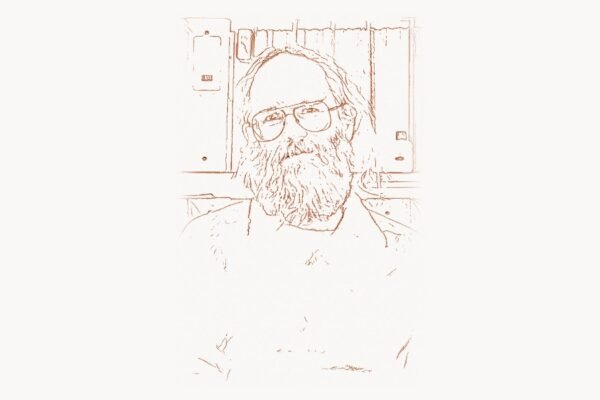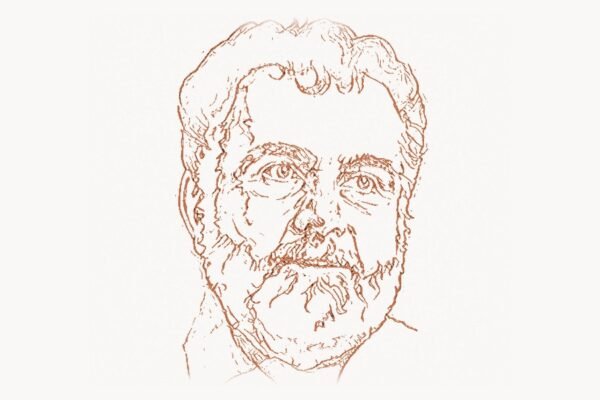
In the annals of computing history, certain names surface repeatedly whenever the conversation turns to open-source software and the foundational operating systems that power the modern internet. Keith Bostic is one of those names. As a central figure in the development of BSD Unix at the University of California, Berkeley, and the creator of Berkeley DB — one of the most widely deployed embedded database engines ever built — Bostic’s work sits at the intersection of systems programming, database engineering, and the open-source movement. His contributions did not just advance technology; they helped define how software could be freely shared, extended, and improved by communities of developers across the globe. The code he wrote and the legal battles he helped navigate shaped the trajectory of operating systems, databases, and the very concept of open-source licensing.
Early Life and Education
Keith Bostic grew up during the formative decades of personal computing, an era when the boundaries between academic research and commercial software were only beginning to crystallize. He studied at the University of California, Berkeley, where he would eventually become embedded in one of the most consequential software projects of the twentieth century: the Berkeley Software Distribution, or BSD.
Berkeley in the late 1970s and early 1980s was a cauldron of innovation. The Computer Systems Research Group (CSRG) at UC Berkeley had become one of the most important hubs for Unix development outside of AT&T’s Bell Labs, where Dennis Ritchie and Ken Thompson had originally created Unix. The university’s culture of open inquiry and collaborative development provided the perfect environment for someone with Bostic’s talents. He joined the CSRG and quickly became one of the group’s most prolific contributors, working alongside luminaries like Bill Joy, Kirk McKusick, and Sam Leffler.
His education at Berkeley was not merely academic — it was deeply practical. The CSRG operated at the bleeding edge of systems software, shipping code that ran on real machines in production environments at universities, government agencies, and research institutions worldwide. This hands-on approach to learning and development would shape Bostic’s entire career, instilling in him a conviction that software should be tested under real-world conditions and made available to the widest possible audience.
Career and the BSD Unix Revolution
Keith Bostic’s career is inseparable from the story of BSD Unix. When he joined the CSRG at Berkeley, BSD was already a significant fork of the original AT&T Unix, incorporating important innovations like the virtual memory system, the fast filesystem (FFS), and the TCP/IP networking stack that would become the backbone of the internet. But BSD still contained substantial amounts of AT&T proprietary code, which meant it could not be freely redistributed. Bostic recognized that this limitation was a fundamental barrier to the software’s potential impact, and he set about changing it.
Technical Innovation
Bostic’s most consequential technical effort at CSRG was leading the initiative to create a version of BSD that was entirely free of AT&T code. This was not a trivial undertaking. The original BSD distribution was deeply intertwined with AT&T’s System V Unix at the source level. Every utility, every library function, every system call implementation had to be examined, and any code derived from AT&T sources had to be rewritten from scratch.
Bostic organized and led this rewriting effort with extraordinary discipline. He systematically catalogued every file in the BSD distribution, identified which ones contained AT&T-derived code, and coordinated a massive community effort to produce clean-room replacements. The approach was methodical: volunteers would write new implementations of standard Unix utilities based solely on publicly available specifications and documentation, without ever looking at the AT&T source code. This ensured that the resulting code was legally unencumbered.
The fruits of this labor were the Networking Release 1 (Net/1) in 1989 and the far more comprehensive Networking Release 2 (Net/2) in 1991. Net/2 was a nearly complete operating system — it contained everything needed to run a Unix-like system except for a handful of kernel files. This release was a watershed moment in computing history, as it demonstrated that a fully functional Unix-compatible operating system could exist outside the control of any single corporation.
The technical quality of the rewritten code was remarkable. Consider the approach to reimplementing core Unix utilities. Each utility had to match the documented behavior exactly while being entirely original in implementation:
/*
 * BSD-style reimplementation pattern for text utilities.
 * The CSRG rewrites followed strict POSIX specifications
 * while adding BSD-specific enhancements through option flags.
 *
 * Pattern used in utilities like sort, grep, and cut
 * that Bostic's team reimplemented from scratch.
 */
#include <sys/types.h>
#include <stdio.h>
#include <stdlib.h>
#include <string.h>
#include <unistd.h>
#include <err.h>

/* BSD err(3) library — one of Bostic's contributions
 * that simplified error handling across all utilities */
static void
process_stream(FILE *fp, const char *filename, int flags)
{
    char *line = NULL;
    size_t linesize = 0;
    ssize_t linelen;

    while ((linelen = getline(&line, &linesize, fp)) != -1) {
        /* Process according to POSIX specification
         * with BSD extensions when -B flag is set */
        if (flags & FLAG_BSD_COMPAT)
            line[strcspn(line, "\r\n")] = '\0';
        (void)fprintf(stdout, "%s\n", line);
    }
    free(line);
    if (ferror(fp))
        err(1, "%s", filename);
}
This pattern of careful, specification-driven reimplementation was applied across hundreds of utilities and library functions. The result was a codebase that was not only legally clean but often technically superior to the originals, incorporating lessons learned from years of real-world deployment.
Why It Mattered
The significance of Bostic’s work on freeing BSD from AT&T code cannot be overstated. The Net/2 release directly led to the creation of several free operating systems, most notably FreeBSD, NetBSD, and OpenBSD. These systems, in turn, became the foundation for an enormous amount of modern infrastructure. FreeBSD powers Netflix’s content delivery network, parts of Sony’s PlayStation platform, and has influenced the design of Apple’s macOS and iOS through its Darwin kernel. NetBSD’s extreme portability made it the system of choice for embedded devices and research platforms. OpenBSD became the gold standard for secure operating systems and produced OpenSSH, which secures virtually every remote connection on the internet today.
The legal dimension was equally important. AT&T’s Unix System Laboratories (USL) sued Berkeley Software Design, Inc. (BSDi) and the University of California in 1992, claiming that Net/2 still contained proprietary code. This lawsuit, USL v. BSDi, was one of the most significant intellectual property cases in software history. Bostic’s meticulous documentation of the rewriting process proved invaluable during the litigation. The case was eventually settled in 1994, with the court finding that only a small number of files out of the approximately 18,000 in Net/2 needed modification — a testament to the thoroughness of Bostic’s effort. The settlement cleared the way for the free distribution of BSD and established important legal precedents for open-source software.
Had Bostic not undertaken this work, the landscape of free and open-source operating systems would look profoundly different. The legal uncertainty surrounding Unix-derived code might have persisted for years, potentially delaying or preventing the rise of free operating systems. While Linux emerged during the same period and ultimately gained greater market share, the BSD family’s contributions to networking, security, and systems programming remain indispensable. As Edsger Dijkstra once argued for elegance and rigor in programming, Bostic brought that same discipline to the task of building a free operating system.
Other Major Contributions
Beyond his work on BSD Unix, Keith Bostic made another contribution that would have a lasting impact on the software industry: Berkeley DB. Originally developed as part of the BSD project to replace the older dbm and ndbm database libraries, Berkeley DB evolved into one of the most widely deployed software libraries in history.
Berkeley DB was designed as an embedded database engine — a library that applications could link against directly, without requiring a separate database server process. This architectural decision made it extraordinarily lightweight and fast, suitable for applications ranging from email servers and LDAP directories to web browsers and operating system components. The library supported multiple access methods including B-tree, hash, queue, and recno, giving developers flexibility in how they stored and retrieved data.
/*
 * Berkeley DB basic key-value storage pattern.
 * The embedded database approach Bostic pioneered:
 * no server, no SQL — direct in-process data access.
 */
#include <db.h>
#include <string.h>
#include <stdio.h>

int
store_and_retrieve(const char *dbfile)
{
    DB *dbp;
    DBT key, data;
    int ret;

    /* Create and open the database — no server needed */
    if ((ret = db_create(&dbp, NULL, 0)) != 0) {
        fprintf(stderr, "db_create: %s\n", db_strerror(ret));
        return (ret);
    }

    if ((ret = dbp->open(dbp, NULL, dbfile,
        NULL, DB_BTREE, DB_CREATE, 0664)) != 0) {
        dbp->err(dbp, ret, "%s", dbfile);
        return (ret);
    }

    /* Zero-copy key/data pair insertion */
    memset(&key, 0, sizeof(DBT));
    memset(&data, 0, sizeof(DBT));

    key.data = "hostname";
    key.size = strlen("hostname") + 1;
    data.data = "bsd.berkeley.edu";
    data.size = strlen("bsd.berkeley.edu") + 1;

    /* Atomic put operation with built-in locking */
    if ((ret = dbp->put(dbp, NULL, &key, &data, 0)) != 0) {
        dbp->err(dbp, ret, "DB->put");
        return (ret);
    }

    /* Retrieve it back */
    memset(&data, 0, sizeof(DBT));
    if ((ret = dbp->get(dbp, NULL, &key, &data, 0)) == 0)
        printf("Retrieved: %s = %s\n",
            (char *)key.data, (char *)data.data);

    dbp->close(dbp, 0);
    return (0);
}
The design philosophy behind Berkeley DB reflected Bostic’s broader engineering principles: simplicity, reliability, and performance. The library was designed to be ACID-compliant (supporting Atomicity, Consistency, Isolation, and Durability) while maintaining the minimal footprint appropriate for an embedded system. It could handle databases ranging from a few kilobytes to terabytes in size, making it suitable for an extraordinary range of applications.
Berkeley DB’s adoption was staggering. It was incorporated into virtually every Unix-like operating system, including Linux, Solaris, and the BSD variants. It powered the backend storage for Subversion version control, OpenLDAP, and the RPM package manager used across Red Hat and Fedora systems. Major technology companies including Google, Amazon, and Cisco built critical infrastructure on top of Berkeley DB. When Michael “Monty” Widenius was building MySQL, Berkeley DB served as one of the available storage engines, demonstrating how Bostic’s embedded database technology complemented even full-featured relational database systems.
Sleepycat Software, the company Bostic co-founded to provide commercial support and licensing for Berkeley DB, pioneered an innovative dual-licensing model. The software was available under an open-source license for projects that would also be open source, while commercial applications could obtain a proprietary license. This model influenced an entire generation of open-source business strategies and was later adopted by companies like MySQL AB. Oracle acquired Sleepycat Software in 2006, bringing Berkeley DB into its product portfolio — a recognition of the technology’s enduring value. Modern tools for project and task management owe a conceptual debt to the embedded database patterns that Berkeley DB popularized, where lightweight, reliable data storage became a building block rather than a bottleneck.
Bostic also made significant contributions to the vi text editor. He wrote nvi, a reimplementation of the original vi editor that was free of AT&T code, making it distributable as part of the free BSD releases. This work was part of the larger BSD rewriting effort, but it deserves special mention because vi was (and remains) one of the most heavily used Unix tools. Nvi maintained faithful compatibility with the original while adding improvements, and it became the default vi implementation on several BSD systems. This echoes the work of Bram Moolenaar, who took the vi concept even further with Vim, creating one of the most beloved text editors in programming history.
Philosophy and Approach
Keith Bostic’s work reveals a coherent engineering philosophy that guided his most important decisions. His approach combined pragmatic systems engineering with a deep commitment to software freedom and community collaboration. In an era when debates about software licensing often became ideological, Bostic charted a course that was both principled and practical.
His philosophy resonates with the engineering culture that Jeff Dean would later exemplify at Google — the conviction that systems software must be designed for reliability and scale from the ground up, with clean interfaces and predictable behavior under all conditions. The teams behind effective digital solutions and web development continue to apply these same principles when architecting modern systems.
Key Principles
- Software freedom as an engineering imperative: Bostic believed that software could only reach its full potential when developers were free to study, modify, and redistribute it. His work on freeing BSD from AT&T code was driven not by ideology alone but by the practical observation that open code produces better software through broader review and more diverse use cases.
- Clean-room discipline: The BSD rewriting effort demonstrated Bostic’s commitment to doing things correctly, even when shortcuts were tempting. By insisting on clean-room reimplementation, he ensured that the resulting code was both legally sound and technically excellent.
- Specification-driven development: Rather than reverse-engineering existing implementations, Bostic’s team wrote code based on published standards and specifications. This produced software that was often more correct and portable than the originals, establishing a methodology that modern software development continues to follow.
- Simplicity and reliability over features: Berkeley DB’s design reflected a preference for doing a few things extremely well rather than attempting to be everything to everyone. The library’s minimal API and focused functionality made it both easier to use and more reliable than more complex alternatives.
- Sustainable open source: Through Sleepycat Software’s dual-licensing model, Bostic demonstrated that open-source software could be commercially viable without compromising the principles of software freedom. This pragmatic approach influenced countless subsequent open-source business strategies.
- Community coordination at scale: The BSD rewriting effort required coordinating contributions from dozens of volunteers worldwide. Bostic’s ability to manage this distributed effort — long before modern tools like GitHub existed — showed that community-driven development could produce professional-quality software when guided by clear standards and rigorous review.
- Documentation and process as first-class concerns: Bostic’s meticulous documentation of the rewriting process not only helped win the USL lawsuit but also established best practices for managing intellectual property in open-source projects. His example demonstrated that careful record-keeping is not overhead but a critical safeguard.
Legacy and Impact
Keith Bostic’s legacy is woven into the fabric of modern computing in ways that are both pervasive and often invisible. The operating systems, databases, and development practices he helped create continue to power critical infrastructure around the world.
The BSD operating system family, liberated by Bostic’s rewriting effort, has had an outsized impact relative to its market share. FreeBSD’s networking stack is considered one of the best in the industry, and its code has been incorporated into commercial products by companies including Apple, Sony, Juniper Networks, and Netflix. The permissive BSD license, which allows code to be used in both open-source and proprietary projects, has been adopted by numerous other projects and remains one of the most popular open-source licenses. Much like Bob Metcalfe’s work on Ethernet created the physical layer for networked computing, Bostic’s work on BSD created much of the software layer that runs on top of those networks.
Berkeley DB’s influence extends far beyond its direct usage. The concept of the embedded database — a high-performance, transactional data store that lives within the application process — inspired an entire category of software. Modern embedded databases like SQLite, LevelDB (created by Sanjay Ghemawat and Jeff Dean at Google), and RocksDB all owe a conceptual debt to Berkeley DB’s pioneering design. The idea that a database could be a library rather than a server fundamentally changed how developers thought about data storage.
The legal precedents set during the USL v. BSDi lawsuit, supported by Bostic’s careful documentation, helped establish the legal framework within which open-source software operates today. The lawsuit’s resolution demonstrated that clean-room reimplementation of proprietary software was legally defensible, a principle that has been relied upon by countless subsequent open-source projects.
Bostic’s influence on open-source business models through Sleepycat Software’s dual licensing approach created a template that has been used by companies across the industry. This model proved that it was possible to build a sustainable business around open-source software while maintaining the community’s trust — a balance that many companies still struggle to achieve.
Perhaps most importantly, Bostic’s work demonstrated that individual determination and technical excellence could shift the entire trajectory of an industry. At a time when the future of free Unix was uncertain, his systematic effort to create a legally unencumbered operating system helped ensure that open-source software would have a viable path forward. The modern open-source ecosystem — from Linux distributions to cloud computing platforms — exists in part because Bostic and his colleagues at CSRG proved that it was possible to build world-class software outside the walls of any single corporation.
Like Martin Hellman’s work on public-key cryptography, which enabled secure communication across untrusted networks, Bostic’s work on BSD and Berkeley DB enabled a different kind of trust: the trust that software could be shared freely without legal encumbrance, and that open collaboration could produce results that rivaled or exceeded those of proprietary development. As Claude Shannon laid the mathematical foundations for the digital age, Bostic helped lay the legal and technical foundations for the open-source age.
Key Facts
- Full name: Keith Bostic
- Known for: BSD Unix development, creating Berkeley DB, nvi text editor, leading the BSD code liberation effort
- Key role: Staff member of the Computer Systems Research Group (CSRG) at UC Berkeley
- Major releases: Net/1 (1989), Net/2 (1991), 4.4BSD-Lite (1994)
- Created: Berkeley DB — an embedded database engine used in hundreds of millions of installations worldwide
- Founded: Sleepycat Software (co-founder) — pioneered the dual-licensing model for open-source software
- Wrote: nvi — the free reimplementation of the vi text editor distributed with BSD
- Acquisition: Sleepycat Software was acquired by Oracle Corporation in 2006
- Legal significance: His meticulous documentation was instrumental in the USL v. BSDi lawsuit settlement (1994)
- Influenced: FreeBSD, NetBSD, OpenBSD, macOS/iOS (Darwin kernel), embedded database design patterns
FAQ
What is Keith Bostic best known for?
Keith Bostic is best known for two major contributions to computing. First, he led the effort to rewrite BSD Unix to remove all AT&T proprietary code, resulting in the Networking Release 2 (Net/2) distribution that spawned the free BSD operating systems including FreeBSD, NetBSD, and OpenBSD. Second, he created Berkeley DB, one of the most widely deployed embedded database engines in history. Berkeley DB was used in operating systems, web browsers, email servers, LDAP directories, and countless other applications, with hundreds of millions of copies deployed worldwide. He also co-founded Sleepycat Software to commercialize Berkeley DB, pioneering the dual-licensing business model that many open-source companies later adopted.
How did the BSD code liberation effort impact modern operating systems?
The BSD code liberation effort led by Bostic had far-reaching consequences for the software industry. By creating a version of Unix free from proprietary encumbrances, the project directly enabled the creation of FreeBSD, NetBSD, and OpenBSD — operating systems that continue to power critical infrastructure today. FreeBSD’s code forms part of Apple’s macOS and iOS through the Darwin kernel, Netflix uses FreeBSD for its content delivery network, and OpenBSD produced OpenSSH, which secures the vast majority of remote server connections worldwide. The effort also established important legal precedents for clean-room reimplementation and helped pave the way for the broader open-source movement that followed.
What made Berkeley DB different from other databases?
Berkeley DB was fundamentally different from traditional relational database management systems because it was an embedded database — a library that applications linked against directly rather than a separate server process. This architecture eliminated the overhead of inter-process communication and network protocols, making Berkeley DB extremely fast and lightweight. It supported multiple access methods including B-tree, hash, queue, and recno, and provided full ACID transaction support with crash recovery capabilities. Its minimal API and embeddable design made it ideal for applications that needed reliable data storage without the complexity of running a full database server, influencing the entire embedded database category that followed.
What was Sleepycat Software’s dual-licensing model and why was it influential?
Sleepycat Software, co-founded by Keith Bostic, pioneered a dual-licensing approach for Berkeley DB that became a template for the open-source software industry. Under this model, Berkeley DB was available under an open-source license (the Sleepycat License) for projects that would also distribute their source code. Commercial applications that wanted to keep their code proprietary could purchase a separate commercial license. This approach balanced the ideals of software freedom with commercial sustainability, demonstrating that open-source projects could generate revenue without abandoning their community roots. The model was later adopted by companies including MySQL AB and influenced how many subsequent open-source businesses structured their licensing and revenue strategies.