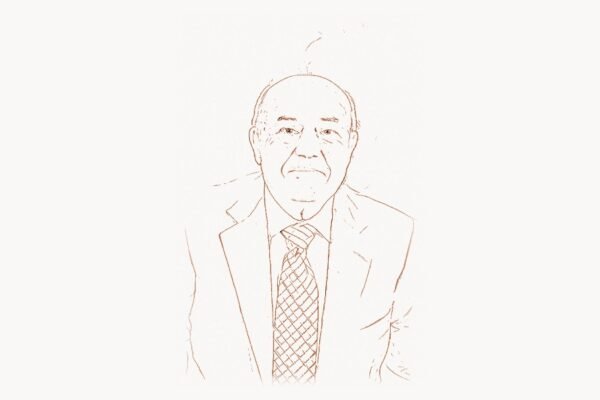
For more than three decades, every time a Linux user opens a web browser, launches an application, or simply moves a mouse cursor across the screen, they are silently relying on code written or maintained by Keith Packard. As the principal architect behind critical components of the X Window System, the driving force behind the X.Org Foundation, and a pioneer in embedded Linux graphics, Packard has arguably done more to make graphical computing on open-source platforms viable than any other single individual. His work sits at the boundary between kernel-level systems programming and the pixel-perfect rendering that users take for granted — an area of computing that demands both extraordinary depth and relentless pragmatism.
Early Life and the Path into Computing
Keith Packard grew up during the personal computing revolution of the late 1970s and early 1980s, a period when access to hardware and willingness to tinker separated future systems programmers from casual users. He developed an early fascination with how computers manage visual output — the mechanics of framebuffers, rasterization, and the intricate dance between hardware and software that produces images on a screen.
Packard studied at the Massachusetts Institute of Technology (MIT), where he became deeply involved with the X Window System project at the MIT X Consortium. This was not a casual academic exercise. The X Window System, conceived in the mid-1980s, was one of the most ambitious attempts to build a network-transparent windowing protocol that could work across heterogeneous hardware. For a young engineer drawn to low-level graphics, it was the perfect proving ground.
At MIT, Packard worked alongside some of the foremost systems researchers of the era, absorbing lessons about protocol design, backward compatibility, and the tension between clean abstractions and real-world hardware constraints. These formative experiences would shape his engineering philosophy for decades: build systems that are correct, performant, and maintainable — in that order.
The X Window System: Foundation of Linux Graphics
The X Window System (commonly called X11 or simply X) provides the fundamental graphical infrastructure for Unix-like operating systems. Understanding its significance requires appreciating a key architectural decision: X separates the display server from the client applications. This means a program running on one machine can render its graphical output on another machine over a network — a concept that was revolutionary in the 1980s and remains remarkably useful today.
Packard’s contributions to X span nearly every layer of the stack. He worked on the X server itself, the libraries that client applications use to communicate with it, the rendering extensions that enable modern visual effects, and the configuration systems that allow X to work across thousands of different hardware configurations. His role evolved from contributor to principal maintainer, and eventually to one of the key architects steering the entire project’s technical direction.
Among his most impactful contributions to the X ecosystem is the XRender extension, which introduced hardware-accelerated anti-aliased rendering to X11. Before XRender, text on Linux desktops looked noticeably rougher than on competing platforms. The extension provided compositing operations, sub-pixel rendering, and alpha blending capabilities that transformed the visual quality of Linux desktops. This work directly influenced how projects like KDE and GNOME could deliver polished user experiences.
Fontconfig and FreeType Integration
Packard also created fontconfig, the font configuration and management library that replaced the old X11 font system. The original X font mechanism was rigid, limited to bitmap fonts, and poorly suited to the demands of modern typography. Fontconfig provided a flexible, XML-based configuration system that could discover fonts, match them against application requests, and integrate with the FreeType rendering engine for high-quality output.
A typical fontconfig configuration demonstrates the system’s declarative approach to font management:
<?xml version="1.0"?>
<!DOCTYPE fontconfig SYSTEM "fonts.dtd">
<fontconfig>
  <!-- Prefer specific fonts for generic families -->
  <alias>
    <family>sans-serif</family>
    <prefer>
      <family>Noto Sans</family>
      <family>DejaVu Sans</family>
    </prefer>
  </alias>

  <!-- Enable sub-pixel rendering for LCD screens -->
  <match target="font">
    <edit name="rgba" mode="assign">
      <const>rgb</const>
    </edit>
    <edit name="lcdfilter" mode="assign">
      <const>lcddefault</const>
    </edit>
    <edit name="hinting" mode="assign">
      <bool>true</bool>
    </edit>
    <edit name="hintstyle" mode="assign">
      <const>hintslight</const>
    </edit>
  </match>
</fontconfig>
This kind of declarative font configuration, commonplace on every modern Linux distribution, exists because Packard recognized that the old system was fundamentally broken and built a replacement from scratch. Every Linux distribution ships fontconfig today, and most users never realize it is there — which is exactly how good infrastructure should work.
From XFree86 to X.Org: The Fork That Saved Linux Graphics
By the early 2000s, the X Window System faced a crisis. The XFree86 project, which had become the dominant X server implementation, was governed by an increasingly restrictive group of maintainers. In 2004, XFree86 changed its license to include an advertising clause that was incompatible with the GPL, threatening to fracture the Linux graphics ecosystem.
Packard was instrumental in the formation of the X.Org Foundation, which forked XFree86 and established a vendor-neutral, community-governed home for X development. This was not merely an organizational maneuver — it required migrating an enormous codebase, establishing new governance structures, and convincing hardware vendors, Linux distributions, and independent developers to rally behind the new project. The success of X.Org ensured that open-source graphics development could continue without licensing encumbrances, and Packard served on the X.Org Foundation board, providing both technical leadership and institutional continuity.
The X.Org fork also catalyzed a broader modernization effort. Under the new governance model, the X server was modularized, build systems were overhauled, and a more transparent development process was adopted. This openness attracted new contributors and allowed Linux graphics to evolve much more rapidly than it had under XFree86’s stewardship. The parallels to how Ian Murdock’s Debian project demonstrated the power of community-driven governance are striking.
XCB, Glamor, and the Modernization of X
Packard’s work did not stop at maintaining existing systems — he consistently pushed X forward with new technical innovations. He was a key contributor to XCB (X C Binding), a replacement for the venerable Xlib that provided a more efficient, asynchronous interface to the X protocol. XCB reduced latency for applications making many X protocol requests and provided a cleaner, more maintainable codebase for library consumers.
He also led the development of Glamor, an OpenGL-based rendering acceleration architecture for the X server. Instead of writing hardware-specific 2D acceleration drivers for every GPU, Glamor uses OpenGL to perform 2D rendering operations. This dramatically reduced the driver maintenance burden and leveraged the extensive work that GPU vendors had already invested in their OpenGL implementations.
The Present Extension and Compositing
Another significant Packard contribution is the Present extension, which provides a mechanism for direct rendering to the screen with proper synchronization. This extension enables tear-free presentation of rendered frames, which is essential for video playback, gaming, and smooth desktop compositing. Combined with the DRI3 (Direct Rendering Infrastructure 3) extension — also heavily influenced by Packard — it created a modern rendering path that could compete with proprietary display systems.
These technical layers may seem esoteric, but they directly impact every user’s experience. When a developer uses modern development tools on Linux, the smooth scrolling, anti-aliased fonts, and tear-free window management they enjoy trace back to Packard’s architectural decisions.
Embedded Linux and the Altus Metrum Project
Beyond desktop graphics, Packard has been a significant contributor to embedded Linux systems. His experience with low-level hardware programming and resource-constrained environments led him to co-found Altus Metrum, an open-source hardware and software project focused on high-power rocketry electronics.
Altus Metrum produces flight computers for amateur and research rockets, and the entire stack — hardware schematics, firmware, and ground station software — is open source. The flight computers run on ARM microcontrollers with custom real-time operating systems, and Packard wrote much of the firmware in C, applying the same rigor to embedded avionics that he brought to X Window System development.
An example of how Packard’s embedded work interfaces with hardware demonstrates his approach to clean, portable systems code:
/* AltOS — Altus Metrum flight computer operating system
 * Task scheduling and timer management for ARM Cortex-M */

#include <ao.h>
#include <ao_task.h>

/* Lightweight cooperative scheduler for resource-constrained
 * flight hardware — typically 32KB RAM, 256KB flash */
static struct ao_task *ao_tasks[AO_NUM_TASKS];
static uint8_t ao_num_tasks;
static uint8_t ao_cur_task_index;

void ao_add_task(struct ao_task *task, void (*start)(void),
                 const char *name) {
    uint8_t task_id;

    task_id = ao_num_tasks;
    ao_tasks[task_id] = task;
    task->task_id = task_id;
    task->name = name;
    task->alarm = 0;

    /* Initialize stack with entry point for context switch */
    ao_arch_init_stack(task, start);
    ao_num_tasks++;
}

/* Timer-driven preemption for flight-critical tasks */
void ao_yield(void) {
    ao_arch_save_regs();
    ao_arch_switch(&ao_tasks[ao_cur_task_index]->sp,
                   ao_tasks[ao_next_task_index]->sp);
    ao_arch_restore_regs();
}
This embedded work showcases a recurring pattern in Packard’s career: the belief that open-source principles apply not just to desktop software but to every layer of the computing stack, including hardware. His approach to building reliable, open systems resonates with the broader free software philosophy championed by Richard Stallman, though Packard’s focus has always been more pragmatic and engineering-driven.
Debian Developer and Community Contributions
Packard has been a long-time Debian developer, maintaining packages related to X and graphics. His involvement with Debian reflects a broader commitment to the distribution model of open-source software — the idea that individual components must be packaged, tested, and integrated into coherent systems that end users can actually install and run.
This distribution-level perspective has informed his approach to X development. Unlike engineers who focus solely on the elegance of their own component, Packard has consistently thought about how X interacts with the kernel, with drivers, with compositor frameworks, and with the packaging systems that deliver updates to millions of machines. This systems-level thinking is what separates a good programmer from a great systems architect.
His contributions to Debian also connected him to the broader community of open-source maintainers who keep the Linux ecosystem running. Effective task management across distributed volunteer teams is one of the perennial challenges of open-source development, and Packard’s ability to coordinate work across X.Org, Debian, and hardware vendors demonstrates exceptional organizational skill.
Technical Philosophy: Correctness, Then Performance
Packard’s engineering philosophy can be distilled into several key principles that have guided his work across decades of systems programming.
Protocol Stability Matters
The X11 protocol, defined in 1987, still works today. Applications compiled against X11 in the 1990s can still run on modern X servers. This extreme backward compatibility is not accidental — it reflects a deliberate design philosophy that network protocols and system interfaces should be stable. Packard has consistently advocated for extending X through new extensions rather than breaking existing interfaces, even when the temptation to start fresh was strong.
Hardware Abstraction Done Right
One of Packard’s recurring contributions has been building proper hardware abstraction layers. Whether through XRender, Glamor, or the RandR (Resize, Rotate, and Reflect) extension that he co-authored, his approach has been to define clean interfaces that hide hardware complexity from application developers while still enabling high performance. This philosophy of abstraction is fundamental to modern web frameworks and systems programming alike.
Open Governance Enables Better Software
The XFree86-to-X.Org transition demonstrated Packard’s belief that open governance produces better technical outcomes. When a small group of maintainers controlled XFree86, innovation stalled. When X.Org adopted transparent decision-making and inclusive contribution policies, development accelerated. This lesson has been validated repeatedly across the open-source world and reflects the same principles that make collaborative project management effective in both open-source and commercial contexts.
Legacy and Ongoing Impact
Keith Packard’s legacy is woven into the fabric of modern Linux computing. His contributions fall into several categories of lasting impact:
Infrastructure that everyone uses but nobody sees. Fontconfig, XRender, XCB, RandR — these are not glamorous technologies. They are plumbing. But without them, the Linux desktop as we know it could not exist. Every distribution from Ubuntu to Arch, every desktop environment from GNOME to KDE, and every application from Firefox to LibreOffice depends on systems that Packard built or substantially improved.
Institutional continuity. By helping found X.Org and serving on its board, Packard ensured that the governance of Linux graphics infrastructure remained open and vendor-neutral. This institutional work is less visible than writing code but arguably more important for the long-term health of the ecosystem.
The bridge to Wayland. While Packard spent decades improving X, he has also been pragmatic about its limitations. He has supported the development of Wayland, the next-generation display protocol designed to replace X11, and has contributed to ensuring a smooth transition path. His deep knowledge of X’s architecture makes him uniquely qualified to identify what Wayland must do differently and what lessons from X should be preserved.
Embedded open source. Through Altus Metrum and his work on embedded systems, Packard has demonstrated that open-source principles can extend to hardware and firmware. His flight computers have been used in hundreds of rocket launches, proving that open-source avionics can be both reliable and accessible.
Packard’s career offers a masterclass in how sustained, focused contribution to critical infrastructure creates outsized impact. He did not chase trends or build flashy consumer products. Instead, he dedicated himself to the layers of software that make everything else possible — the kind of work that Andrew Tanenbaum championed in operating system design and that continues to define the best traditions of systems engineering.
Frequently Asked Questions
What is Keith Packard best known for?
Keith Packard is best known for his foundational work on the X Window System, the graphical infrastructure underlying most Linux and Unix desktops. He created key components including XRender, fontconfig, XCB, and Glamor, and was instrumental in founding the X.Org Foundation to ensure open governance of X development.
What is the X Window System and why does it matter?
The X Window System (X11) is a network-transparent windowing protocol that provides the graphical display infrastructure for Unix-like operating systems. Created at MIT in 1984, it allows applications to render graphics on local or remote displays. X11 has been the foundation of Linux desktop graphics for decades and is only now being gradually replaced by Wayland.
What is fontconfig?
Fontconfig is a library created by Keith Packard for configuring and managing fonts on Linux and other Unix-like systems. It replaced the older, more rigid X11 font system with a flexible, XML-based configuration approach that supports modern font features including anti-aliasing, sub-pixel rendering, and automatic font discovery.
What role did Packard play in the X.Org Foundation?
Packard was one of the key figures behind the creation of the X.Org Foundation in 2004, which was formed after the XFree86 project adopted a restrictive license change. He helped establish X.Org as a vendor-neutral, community-governed organization, served on its board, and provided technical leadership that attracted developers and hardware vendors to the new project.
What is Altus Metrum?
Altus Metrum is an open-source hardware and software project co-founded by Packard that builds flight computers for high-power rocketry. The project produces avionics boards with ARM microcontrollers running custom firmware, and the entire stack — from PCB schematics to operating system code — is released under open-source licenses.
Is Keith Packard involved with Wayland?
Yes. While Packard spent most of his career improving X11, he has been supportive of Wayland as the next-generation display protocol. His deep understanding of X11’s architectural limitations has informed discussions about what Wayland needs to do differently, and he has contributed to transition planning that allows the ecosystem to move forward without breaking existing applications.
How does Packard’s work affect everyday Linux users?
Packard’s work affects every Linux desktop user, even though most are unaware of it. The anti-aliased fonts on screen rely on fontconfig and XRender. Multi-monitor setups use RandR, which he co-authored. The smooth rendering in applications leverages Glamor and DRI3. Essentially, the visual quality and stability of the Linux desktop experience traces directly to infrastructure Packard built or maintained.