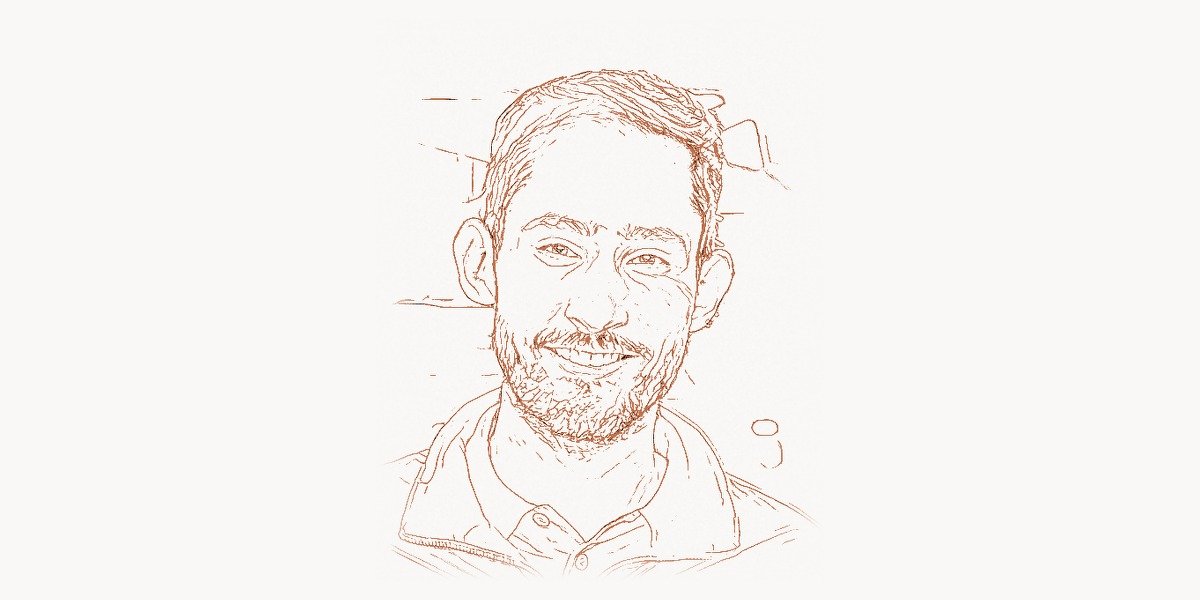
In 2010, a 27-year-old Stanford graduate named Kevin Systrom sat in a small South of Market office in San Francisco and made a decision that would reshape how a billion people see the world. He stripped down a location-based app called Burbn to its single most compelling feature — photo sharing — added a set of filters that turned mediocre smartphone snapshots into something that felt like art, and released it as Instagram. Within two hours, the servers were overwhelmed. Within 24 hours, 25,000 people had signed up. Within two years, Facebook acquired the company for one billion dollars — a figure that seemed absurd at the time and, in retrospect, was one of the greatest bargains in technology history. Systrom did not invent photography, mobile apps, or social networking. What he did was more subtle and arguably more influential: he understood that the camera phone had created a new visual language waiting to be born, and he built the tool that let ordinary people speak it fluently. In doing so, he created the template for mobile-first product design, launched the creator economy, and permanently altered the relationship between images and culture.
Early Life and Education
Kevin Systrom was born on December 30, 1983, in Holliston, Massachusetts, a small town about 25 miles southwest of Boston. He grew up in an environment that blended technology with creativity from an early age. His mother, Diane, worked in marketing at Zipcar and later at TJX Companies, while his father, Doug, worked in human resources at TJX. Neither parent was an engineer, but Systrom developed an early fascination with computers. By the time he was in middle school, he was teaching himself to program, writing small applications and exploring the early internet with the kind of obsessive curiosity that often signals a future founder.
Systrom attended Middlesex School, a prestigious boarding school in Concord, Massachusetts, where he developed interests in both computer science and photography. He was an avid user of early internet platforms and spent hours on AOL Instant Messenger — a communication tool that, like his future creation, understood that digital interaction could be more immediate and intimate than what came before it. During high school, he also became interested in the music scene, DJing at local events, which gave him an intuitive understanding of how culture, technology, and community intersect.
In 2002, Systrom enrolled at Stanford University, where he declared a major in Management Science and Engineering — a program that sits at the intersection of computer science, economics, and systems thinking. Stanford in the early 2000s was the epicenter of the Web 2.0 revolution. Mark Zuckerberg launched Facebook from Harvard in 2004, but it was Stanford’s campus that served as its earliest proving ground outside Harvard. Systrom was at Stanford during exactly this period, and he was reportedly offered a role at Facebook during its earliest days but chose to stay and finish his degree — a decision that shows the disciplined, long-term thinking that would characterize his career.
At Stanford, Systrom took classes in computer science and learned to code more formally, though he remained largely self-taught in programming. More importantly, he studied product design, user behavior, and the principles of building systems that people actually want to use. He spent a quarter studying abroad in Florence, Italy, where a photography professor introduced him to the Holga camera — a cheap, plastic-bodied medium-format camera known for its light leaks, vignetting, and dreamy, imperfect images. The aesthetic of the Holga would directly inspire Instagram’s filters. Systrom later described this experience as transformative: the idea that a tool’s constraints and imperfections could become its most compelling features would become a founding principle of Instagram.
From Google to Burbn: The Path to Instagram
Corporate Experience and Entrepreneurial Spark
After graduating from Stanford in 2006, Systrom joined Google as an associate product marketing manager. At Google, he worked on products including Gmail, Google Calendar, and Google Docs. The experience was formative in ways that went beyond learning how a large technology company operates. Google’s culture of data-driven product development — the relentless A/B testing, the focus on user behavior metrics, the insistence on measurable outcomes — gave Systrom a framework for thinking about products that would serve him well as a founder. He also worked briefly on corporate development deals, which exposed him to the business mechanics of acquisitions and partnerships in the technology industry.
However, Systrom’s real education during the Google years was happening on evenings and weekends. He taught himself more advanced programming, working through tutorials and building small projects. He was particularly drawn to web application development, learning Python and its web frameworks. He also became an increasingly serious photographer, posting images online and paying close attention to the emerging ecosystem of photo-sharing platforms. Flickr, launched in 2004, had demonstrated that there was a massive audience for sharing photographs online, but it was a desktop-first experience built around professional and semi-professional photographers. Systrom sensed that the smartphone revolution — the iPhone had launched in 2007, during his time at Google — would create an entirely different kind of photographic culture.
In 2009, Systrom left Google to join Nextstop, a travel recommendation startup, as a product manager. The move represented a conscious step toward the startup world. Nextstop was eventually acquired by Facebook in 2010, but by then Systrom had already moved on. He had begun working on his own project at night: a location-based social app called Burbn, named after his fondness for bourbon whiskey.
The Pivot That Changed Everything
Burbn was built as an HTML5 web application — a mobile-first check-in app that combined elements of Foursquare (location sharing), Mafia Wars (gamification), and photo sharing. Systrom built the initial prototype himself, drawing on the JavaScript and Python skills he had developed over years of self-teaching. The app attracted the attention of Baseline Ventures and Andreessen Horowitz, and in March 2010, Systrom raised $500,000 in seed funding. This allowed him to quit his job and work on Burbn full-time.
He brought on Mike Krieger, a Brazilian-born Stanford classmate with a background in human-computer interaction and a deep understanding of user experience design, as co-founder and CTO. Together, they analyzed Burbn’s usage data and noticed something striking: users were largely ignoring the check-in and gaming features, but they were obsessively using the photo-sharing component. People were uploading photos, applying the rudimentary filters Systrom had included, and engaging with each other’s images far more than with any other feature.
Systrom and Krieger made the critical decision to strip Burbn down to its core: photos, filters, and social interaction. They rebuilt the app from scratch as a native iOS application, optimizing every aspect of the experience for the iPhone’s camera and touchscreen. Systrom personally coded the first set of image filters, drawing on his experience with the Holga camera and his study of analog photography techniques. The result was a set of filters that transformed the typically flat, washed-out images produced by the iPhone’s camera into warm, contrasty, atmospheric photographs that evoked the look of vintage film.
# Simplified demonstration of Instagram-style photo filter principles
# Kevin Systrom built the original filters in Objective-C
# Here's the conceptual logic behind filter transformations

import numpy as np
from PIL import Image, ImageEnhance, ImageFilter

def apply_warmth(image, intensity=1.3):
    """
    Shift color temperature toward warm tones.
    Instagram's early filters like 'Rise' and 'Valencia'
    used warm color grading inspired by analog film stocks
    """
    pixels = np.array(image, dtype=np.float32)
    # Boost red channel, slightly reduce blue
    pixels[:, :, 0] = np.clip(pixels[:, :, 0] * intensity, 0, 255)
    pixels[:, :, 2] = np.clip(pixels[:, :, 2] * (2 - intensity), 0, 255)
    return Image.fromarray(pixels.astype(np.uint8))

def apply_vignette(image, strength=0.6):
    """
    Add edge darkening — a signature of Holga/toy cameras
    that Systrom studied in Florence. The vignette draws
    the viewer's eye to the center of the frame.
    """
    width, height = image.size
    pixels = np.array(image, dtype=np.float32)

    # Create radial gradient mask
    Y, X = np.ogrid[:height, :width]
    cx, cy = width / 2, height / 2
    max_dist = np.sqrt(cx**2 + cy**2)
    dist = np.sqrt((X - cx)**2 + (Y - cy)**2)

    # Normalize and invert for vignette falloff
    mask = 1 - strength * (dist / max_dist) ** 2
    mask = np.clip(mask, 0, 1)

    for channel in range(3):
        pixels[:, :, channel] *= mask

    return Image.fromarray(np.clip(pixels, 0, 255).astype(np.uint8))

def apply_contrast_curve(image, shadows=0.9, highlights=1.1):
    """
    Apply S-curve contrast — the look of analog film processing.
    This was the foundation of filters like 'X-Pro II',
    mimicking cross-processed slide film (E-6 in C-41 chemistry)
    """
    enhancer = ImageEnhance.Contrast(image)
    image = enhancer.enhance(highlights)
    enhancer = ImageEnhance.Brightness(image)
    return enhancer.enhance(shadows)

def instagram_filter_demo(image_path, filter_name="earlybird"):
    """
    Demonstrate the layered approach Instagram used.
    Each filter combined multiple transformations —
    color shifts, contrast curves, vignetting, grain —
    to create a distinctive look.
    """
    img = Image.open(image_path)

    if filter_name == "earlybird":
        # Warm, faded, vignetted — nostalgic Polaroid feel
        img = apply_warmth(img, intensity=1.4)
        img = apply_contrast_curve(img, shadows=0.85, highlights=1.15)
        img = apply_vignette(img, strength=0.7)

    elif filter_name == "xpro":
        # Cross-processed: heavy contrast, color shifts
        img = apply_contrast_curve(img, shadows=0.8, highlights=1.3)
        img = apply_warmth(img, intensity=1.2)
        img = apply_vignette(img, strength=0.4)

    return img
The name “Instagram” was a portmanteau of “instant camera” and “telegram” — capturing the product’s dual promise of immediacy and communication. Instagram launched on October 6, 2010, exclusively on iOS. The response was immediate and overwhelming. The app reached 100,000 users in its first week and one million users within two months. By April 2012, when Instagram launched on Android (gaining one million downloads in its first 24 hours on the new platform), it had 30 million users on iOS alone.
Technical and Product Contributions
Mobile-First Architecture
Instagram’s technical architecture was as innovative as its user experience. Systrom and Krieger built a system that needed to handle massive photo uploads, real-time feeds, and social graph operations — all on a startup budget. The initial stack ran on Amazon Web Services, using Django (the Python web framework) for the backend, PostgreSQL for the database, Redis for caching, and a custom image processing pipeline. At its peak before the Facebook acquisition, Instagram served over 30 million users with a team of just 13 engineers — a ratio that was unprecedented in the industry and became a case study in efficient engineering.
The decision to build native iOS rather than HTML5 was critical. In 2010, the conventional wisdom in Silicon Valley was moving toward web-based mobile apps, largely because Steve Jobs had initially promoted HTML5 as the development model for iPhone apps. Systrom and Krieger bet against this trend, recognizing that the camera integration, image processing performance, and fluid touch interactions they needed could only be achieved with native code. This decision validated the native mobile app approach and influenced a generation of mobile developers to prioritize native performance over cross-platform convenience.
The Filter as Interface Innovation
Systrom’s photo filters were more than cosmetic effects — they were a fundamental interface innovation. Before Instagram, editing photographs required specialized software like Adobe Photoshop, technical knowledge of concepts like curves, levels, and color balance, and significant time investment. Systrom compressed this entire workflow into a single tap. A user could take a photograph, apply a filter, and share it with the world in under 30 seconds. The filters served multiple functions simultaneously: they improved the technical quality of smartphone photos (which in 2010 were genuinely poor), they gave images a consistent aesthetic that felt curated and intentional, and they lowered the psychological barrier to sharing by making every photo feel “good enough.” This insight — that the tool should make the user feel like an artist, not just a documentarian — was Systrom’s most important product design contribution.
The square photo format, borrowed from Polaroid and medium-format film cameras, was another deliberate design constraint. By limiting photos to a square aspect ratio, Instagram created visual consistency in feeds and eliminated the landscape-versus-portrait decision that added friction to the sharing process. It also reinforced the app’s identity: an Instagram photo was instantly recognizable as an Instagram photo, even outside the app. This kind of product-level branding through constraints was a masterclass in design thinking that influenced countless subsequent apps and platforms.
The Facebook Acquisition and Beyond
On April 9, 2012, Facebook announced it had agreed to acquire Instagram for approximately $1 billion in cash and stock — the largest acquisition in Facebook’s history at that time. Instagram had 30 million users, 13 employees, zero revenue, and had been a company for less than two years. The acquisition shocked the technology industry. Many observers called it reckless overspending. Marc Andreessen, the venture capitalist whose firm had invested in Instagram, defended the deal, arguing that Instagram represented a fundamental shift in how people communicate online — from text-based to visual communication.
The skeptics were wrong. Under Systrom’s continued leadership as CEO, Instagram grew from 30 million to over one billion monthly active users. It became Facebook’s most important strategic asset outside its core social network and WhatsApp. Instagram introduced Stories (inspired by Snapchat), IGTV for long-form video, Shopping for e-commerce, Reels for short-form video, and became the primary platform for influencer marketing — an industry that grew from effectively nothing in 2012 to over $16 billion by 2022. Managing a product through this kind of hypergrowth — from startup to one of the most-used applications on Earth — required constant reinvention while maintaining the core identity that made the product beloved in the first place.
Systrom and Krieger departed Instagram in September 2018, reportedly due to growing tensions with Facebook’s leadership over the degree of independence Instagram would maintain. The departures were widely seen as a loss for both Instagram and the broader technology industry. Systrom had been one of the few founder-CEOs who successfully managed a product through acquisition, hypergrowth, and platform evolution while maintaining a consistent product vision and relatively positive public reputation.
Philosophy and Design Principles
Simplicity as Strategy
Systrom’s product philosophy centered on radical simplicity. He believed that the most powerful products are those that do one thing exceptionally well rather than many things adequately. Instagram at launch had exactly three core functions: take a photo, apply a filter, share it. There was no messaging, no video, no stories, no shopping — just the irreducible essence of visual communication. This discipline — the willingness to say “no” to features that would dilute the core experience — is what allowed Instagram to achieve the kind of product clarity that turns casual users into daily habituals.
In discussions about product development and project management, Systrom frequently emphasized the importance of taste. He argued that the best products are not designed by committee or by data alone — they emerge when someone with strong aesthetic judgment makes opinionated decisions about what to build and how to build it. The filters were a perfect example: Systrom did not A/B test his way to the “Earlybird” filter. He chose the aesthetic because he knew, from years of studying photography and design, that it would resonate with people. Data informed his decisions, but taste drove them.
Community-Centered Design
Systrom also believed deeply in the concept of community-centered design — building products that foster genuine human connection rather than mere engagement metrics. Early Instagram was notable for its positive, supportive culture. Users complimented each other’s photographs, discovered new perspectives on familiar places, and built genuine relationships through visual storytelling. This was not accidental: Systrom and Krieger made deliberate design decisions to encourage positive interaction, including the decision to limit feedback to “likes” (a positive-only signal) and comments, rather than including downvotes or negative reactions.
The emphasis on quality over quantity was another hallmark of Systrom’s approach. Instagram’s algorithmic feed, introduced in 2016, was designed to surface the best content rather than the most recent — a controversial decision that prioritized experience quality over chronological completeness. Systrom argued that as the platform grew, users would follow too many accounts to see everything, and showing people the content they were most likely to enjoy was a better experience than an unfiltered firehose. Whether one agrees with this decision or not, it reflected a consistent philosophy: the product should serve the user’s experience, even when that means making unpopular structural changes.
// Instagram's early API design reflected Systrom's simplicity philosophy
// The v1 API was clean, RESTful, and remarkably straightforward
// This influenced a generation of mobile-first API design patterns

// Core endpoints — elegantly minimal:
// GET /users/{user-id}              → User profile
// GET /users/{user-id}/media/recent → User's photos
// GET /media/{media-id}             → Single photo
// GET /media/{media-id}/comments    → Photo comments
// GET /media/{media-id}/likes       → Photo likes
// GET /tags/{tag-name}/media/recent → Photos by hashtag
// GET /locations/{location-id}/media/recent → Photos by place

// Example: Fetching a user's recent media
// The response structure prioritized the image and social signals

/*
{
  "data": [{
    "id": "1234567890",
    "type": "image",
    "images": {
      "thumbnail":          { "url": "...", "width": 150, "height": 150 },
      "low_resolution":     { "url": "...", "width": 306, "height": 306 },
      "standard_resolution": { "url": "...", "width": 640, "height": 640 }
    },
    "filter": "Earlybird",
    "caption": {
      "text": "Golden Gate at sunset",
      "created_time": "1296710327"
    },
    "likes": { "count": 42 },
    "comments": { "count": 7 },
    "user": {
      "username": "kevin",
      "full_name": "Kevin Systrom",
      "profile_picture": "..."
    },
    "location": {
      "name": "Golden Gate Bridge",
      "latitude": 37.8199,
      "longitude": -122.4783
    }
  }]
}
*/

// Key design decisions visible in this API:
// 1. Square images at fixed resolutions — consistency over flexibility
// 2. Filter name stored as metadata — the filter was identity, not just effect
// 3. Location as first-class data — geo was core to the product vision
// 4. Social signals (likes, comments) co-located with media — always contextual
// 5. No "dislike" or negative signal endpoint — positivity by architecture
Legacy and Lasting Impact
The Visual Internet
Kevin Systrom’s most lasting contribution is the visual internet itself. Before Instagram, the internet was fundamentally text-based. Social networks were built around status updates, wall posts, and messages. Websites were organized around written content. Search engines indexed text. Instagram demonstrated that images could be the primary unit of communication — not illustrations accompanying text, but standalone expressions that carried meaning, emotion, and narrative on their own. This shift catalyzed a broader transformation: Snapchat, Pinterest, TikTok, and the visual-first redesigns of Facebook, Twitter, and LinkedIn all followed the path Instagram blazed. Today, it is difficult to find a major social platform that does not treat visual content as primary. This is Systrom’s internet.
The creator economy — the ecosystem of influencers, content creators, visual artists, and small businesses that sustain themselves through social media platforms — is in large part an Instagram creation. Before Instagram, “influencer” was not a career category. The platform’s combination of visual storytelling, discoverability through hashtags and the Explore page, and direct connection between creators and audiences created an entirely new economic model. By some estimates, the creator economy is now worth over $100 billion globally, and Instagram remains its primary infrastructure. When modern project management tools include features for managing content calendars and social media workflows, they are responding to an industry that Systrom’s product created.
Mobile-First Product Design
Instagram’s success validated the mobile-first approach to product development at a critical moment. In 2010, many technology companies still treated mobile as a secondary channel — a smaller, limited version of their desktop experience. Systrom built Instagram as a mobile-only product, not because of resource constraints (though those existed), but because he believed the mobile phone’s camera and always-connected nature made it a fundamentally different computing platform that deserved products designed specifically for its strengths. This conviction — that mobile was not a shrunken desktop but a new medium — influenced how an entire generation of entrepreneurs and product designers approached their work. The rise of mobile-first companies in every sector, from fintech to healthcare to digital agency services, owes a debt to the proof of concept that Instagram provided.
The Startup Mythology
The Instagram story also reshaped startup culture. The narrative of two founders, thirteen engineers, thirty million users, and a billion-dollar exit in eighteen months became the archetypal Silicon Valley success story of the 2010s. It reinforced the idea that small, focused teams with clear product vision could achieve results that large corporations with thousands of engineers could not. This narrative, for better and for worse, influenced how venture capitalists evaluated startups, how founders structured their companies, and how engineers thought about career choices. The Instagram model — small team, mobile-first, consumer social, rapid growth — became the template that thousands of startups tried to replicate in the decade that followed.
Post-Instagram Ventures
After leaving Instagram, Systrom has remained active in the technology world, though with a lower profile. He co-founded Artifact in 2022 with Mike Krieger — a news discovery app that used machine learning to personalize content recommendations. While Artifact was well-regarded for its technology and user experience, it shut down in early 2024, with Systrom citing an insufficiently large market. The willingness to shut down a product that was technically excellent but strategically limited, rather than pivoting endlessly, reflected the same disciplined product thinking that characterized his work at Instagram. Systrom has also been active as an investor, backing early-stage technology companies and serving on the board of Walmart.
Systrom’s influence extends beyond any single product. He demonstrated that taste, simplicity, and deep understanding of human behavior are as important as technical innovation in building products that change the world. In an industry that often fetishizes complexity — more features, more data, more algorithms — Systrom showed that the most powerful thing you can do is find the one thing people truly want and remove every obstacle between them and that experience. The next time you open your phone, tap a camera icon, and share a moment with someone you care about, you are living in the world Kevin Systrom built.
Frequently Asked Questions
What did Kevin Systrom study at Stanford?
Systrom studied Management Science and Engineering at Stanford University, graduating in 2006. The program combines computer science, economics, and systems design. While at Stanford, he also took computer science courses and studied abroad in Florence, Italy, where a photography class with Holga cameras directly inspired Instagram’s signature filters. His interdisciplinary education — spanning engineering, business, and design — shaped his approach to product development throughout his career.
Why did Kevin Systrom pivot from Burbn to Instagram?
Burbn was a location-based check-in app with gaming and photo-sharing features. When Systrom and co-founder Mike Krieger analyzed user behavior data, they discovered that users were largely ignoring the check-in and gamification features but were heavily using photo sharing and filters. Rather than adding more features to increase engagement across the app, they made the counterintuitive decision to strip Burbn down to its most popular feature and rebuild it as a dedicated photo-sharing application. This pivot, driven by user data and product discipline, transformed a struggling multi-feature app into one of the most successful products in technology history.
How did Instagram’s photo filters work technically?
Instagram’s original filters were image processing algorithms written in Objective-C that applied layered transformations to photographs. Each filter combined multiple operations — color channel manipulation (adjusting red, green, and blue values independently), contrast curve adjustments (mimicking the tonal response of different film stocks), vignetting (darkening edges to draw attention to the center), saturation changes, and sometimes simulated grain or light leaks. The filters were designed to emulate the look of specific analog photography processes: cross-processing (developing slide film in print chemistry), Polaroid instant film, Holga toy camera effects, and various vintage film stocks. Systrom personally coded many of the original filters based on his study of analog photography.
Why did Kevin Systrom leave Instagram?
Systrom and Mike Krieger resigned from Instagram in September 2018, approximately six years after Facebook acquired the company. While neither founder has publicly detailed the specific reasons, reporting from multiple outlets indicated growing tensions with Mark Zuckerberg and Facebook leadership over Instagram’s strategic direction and degree of operational independence. Facebook was reportedly pushing for tighter integration between Instagram and the Facebook platform, including unified messaging infrastructure and cross-platform features, which conflicted with Systrom’s vision of Instagram as a distinct product with its own identity and direction.
What was Artifact, Kevin Systrom’s post-Instagram startup?
Artifact was a personalized news discovery app that Systrom co-founded with Mike Krieger in 2022. The app used machine learning algorithms to recommend news articles and other content based on user reading behavior, similar to how TikTok’s algorithm recommends short-form videos. Artifact was praised for its technical sophistication and user experience, but Systrom announced its shutdown in early 2024, citing the conclusion that the text-based news market was not large enough to sustain a standalone consumer app. The decision to close a well-functioning product rather than chase growth through endless pivots reflected Systrom’s philosophy of disciplined product thinking.
How many employees did Instagram have when Facebook acquired it?
Instagram had just 13 employees when Facebook acquired the company for approximately $1 billion in April 2012. At that point, the app had approximately 30 million registered users on iOS alone. This extraordinary ratio of users to employees — roughly 2.3 million users per engineer — became legendary in the technology industry and demonstrated the power of focused product development, efficient engineering, and cloud infrastructure. The small team leveraged Amazon Web Services, open-source tools like Django and PostgreSQL, and disciplined engineering practices to serve a massive user base without the overhead of a large organization.
What is Kevin Systrom’s net worth and current role?
Following the Facebook acquisition and Instagram’s subsequent growth, Systrom’s net worth has been estimated at approximately $3 billion. After leaving Instagram, he has been active as a technology investor and advisor, backing early-stage startups and serving on corporate boards including Walmart. He co-founded and later shut down Artifact. Systrom maintains a relatively low public profile compared to many technology billionaires, consistent with his long-standing preference for letting products speak for themselves rather than cultivating personal celebrity.