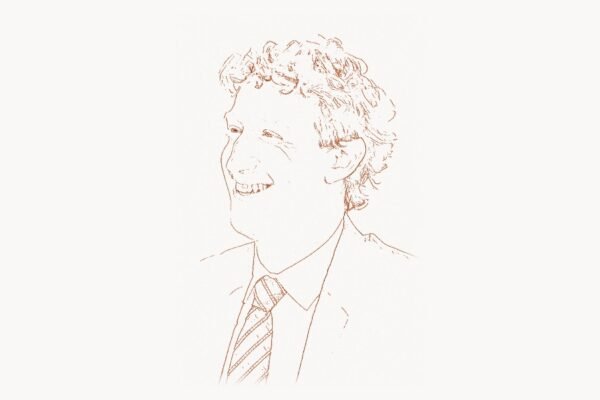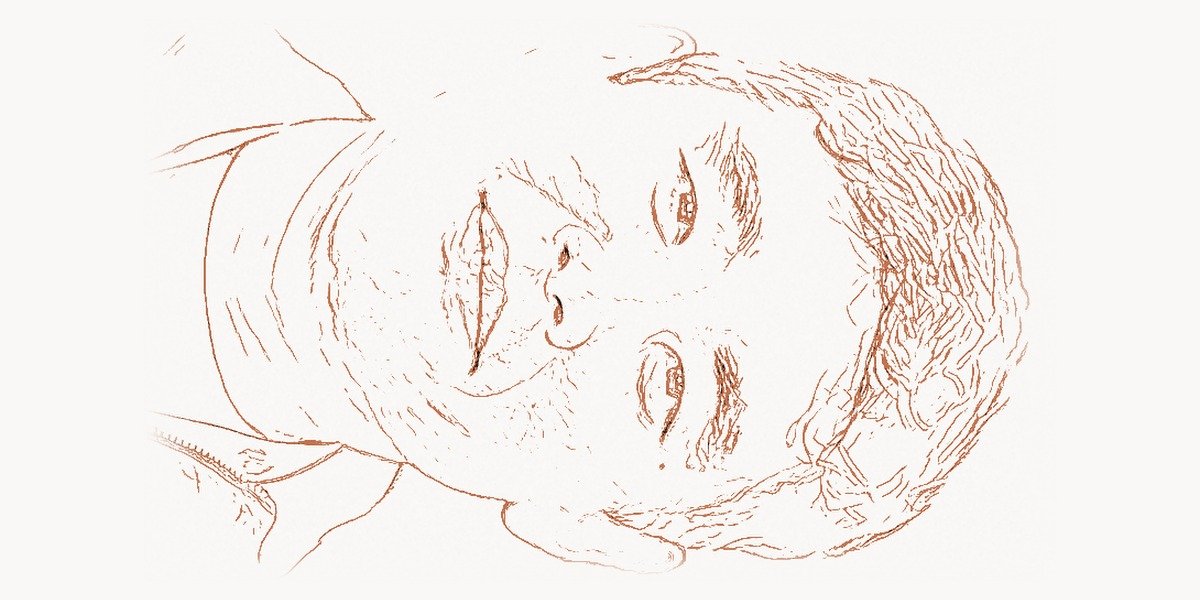
In the world of deep learning, some breakthroughs reshape how machines understand the flow of time and language. Kyunghyun Cho, a South Korean-born computer scientist and professor at New York University, stands behind one of the most elegant solutions to the problem of sequential data processing — the Gated Recurrent Unit (GRU). His work on neural machine translation helped catalyze the revolution that replaced decades of rule-based approaches with end-to-end learning systems, fundamentally altering how computers translate between languages and process sequences of information.
Early Life and Education
Kyunghyun Cho was born in South Korea in 1987, growing up during the country’s rapid technological transformation. From an early age, he showed aptitude in mathematics and computer science, interests that would guide his academic trajectory across continents.
Cho pursued his undergraduate education at the Korea Advanced Institute of Science and Technology (KAIST), one of Asia’s premier research institutions. At KAIST, he encountered the foundations of machine learning and statistical methods that would later inform his most significant contributions. The rigorous mathematical training he received there — in linear algebra, probability theory, and optimization — gave him the toolkit needed for cutting-edge research in neural networks.
After completing his bachelor’s degree, Cho moved to Finland to pursue graduate studies at Aalto University (formerly Helsinki University of Technology). Working under the supervision of Juha Karhunen, he dove deep into the world of unsupervised learning and neural network architectures. His doctoral research at Aalto focused on Boltzmann machines and deep learning, completed at a time when the field was experiencing its modern renaissance. The period from 2011 to 2014, during which Cho completed his PhD, coincided with the explosive growth of deep learning following the AlexNet breakthrough by Alex Krizhevsky and colleagues. This timing placed Cho at the epicenter of a scientific revolution.
During his doctoral studies, Cho connected with Yoshua Bengio at the Université de Montréal, a collaboration that would prove transformative. Bengio’s lab, known as MILA (Montreal Institute for Learning Algorithms), was one of the world’s foremost deep learning research groups, and working there exposed Cho to problems in natural language processing and sequence modeling that would define his career.
The GRU Breakthrough
Technical Innovation
In 2014, Kyunghyun Cho and his collaborators published a landmark paper introducing the Gated Recurrent Unit (GRU), presented as part of their work on neural machine translation. The paper, “Learning Phrase Representations using RNN Encoder–Decoder for Statistical Machine Translation,” proposed a novel recurrent neural network architecture that could efficiently capture long-range dependencies in sequential data.
The fundamental challenge that GRU addressed was the vanishing gradient problem — the tendency for gradients to shrink exponentially as they are propagated backward through time in standard recurrent neural networks (RNNs). This problem made it nearly impossible for traditional RNNs to learn relationships between elements that were far apart in a sequence, such as the subject and verb in a long sentence.
The GRU solved this through two gating mechanisms: a reset gate and an update gate. The reset gate determines how much of the previous hidden state should be forgotten, while the update gate controls how much of the new candidate state should be mixed into the current hidden state. This elegant design allows the network to selectively remember or forget information across time steps, enabling it to maintain relevant context over long sequences.
Here is a simplified implementation of a GRU cell, illustrating the gating mechanism:
import numpy as np

class GRUCell:
    """A minimal Gated Recurrent Unit cell implementation."""

    def __init__(self, input_size, hidden_size):
        # Initialize weights for update gate (z), reset gate (r), and candidate state (h_tilde)
        scale = 0.01
        self.W_z = np.random.randn(hidden_size, input_size + hidden_size) * scale
        self.b_z = np.zeros((hidden_size, 1))
        self.W_r = np.random.randn(hidden_size, input_size + hidden_size) * scale
        self.b_r = np.zeros((hidden_size, 1))
        self.W_h = np.random.randn(hidden_size, input_size + hidden_size) * scale
        self.b_h = np.zeros((hidden_size, 1))

    def sigmoid(self, x):
        return 1 / (1 + np.exp(-np.clip(x, -500, 500)))

    def forward(self, x_t, h_prev):
        """
        Single forward step of GRU.
        x_t: input at current time step (input_size, 1)
        h_prev: hidden state from previous step (hidden_size, 1)
        """
        # Concatenate input and previous hidden state
        combined = np.vstack([h_prev, x_t])

        # Update gate: decides how much of the past to keep
        z_t = self.sigmoid(self.W_z @ combined + self.b_z)

        # Reset gate: decides how much of the past to forget
        r_t = self.sigmoid(self.W_r @ combined + self.b_r)

        # Candidate hidden state using reset gate
        combined_reset = np.vstack([r_t * h_prev, x_t])
        h_tilde = np.tanh(self.W_h @ combined_reset + self.b_h)

        # Final hidden state: blend old state with candidate
        h_t = (1 - z_t) * h_prev + z_t * h_tilde

        return h_t
Compared to the Long Short-Term Memory (LSTM) architecture pioneered by Sepp Hochreiter and Jürgen Schmidhuber, the GRU used fewer parameters by combining the LSTM’s forget and input gates into a single update gate and merging the cell state with the hidden state. This made the GRU computationally more efficient while achieving comparable performance on many tasks.
Why It Mattered
The GRU arrived at a critical moment in the evolution of natural language processing. Before 2014, machine translation systems relied heavily on statistical methods combined with hand-crafted features and phrase tables. These systems were brittle, required enormous engineering effort for each language pair, and struggled with linguistic phenomena that spanned long distances in text.
Cho’s encoder-decoder architecture, powered by GRU units, demonstrated that a neural network could learn to translate between languages in an end-to-end fashion — reading an entire source sentence and producing a target sentence without explicit linguistic rules. This approach opened the door for the neural machine translation revolution that would soon transform services like Google Translate.
The computational efficiency of the GRU was particularly significant. With fewer parameters than the LSTM, GRU models could be trained faster and required less memory, making them accessible to researchers and practitioners with limited computational resources. This democratizing effect accelerated research across the entire field of sequence modeling, from speech recognition to music generation.
The encoder-decoder framework that Cho helped introduce also laid conceptual groundwork for the attention mechanism and ultimately the Transformer architecture by Ashish Vaswani and colleagues, which would go on to power models like GPT and BERT. The lineage from GRU-based sequence-to-sequence models to modern large language models is direct and well-documented, making Cho’s contribution a foundational piece of the AI revolution we witness today.
Other Major Contributions
Beyond the GRU, Kyunghyun Cho has made numerous contributions that have shaped modern deep learning and NLP research.
Attention Mechanisms and Neural Machine Translation: Cho was a co-author on the influential 2015 paper with Dzmitry Bahdanau and Yoshua Bengio that introduced the attention mechanism for neural machine translation. The Bahdanau attention model allowed the decoder to selectively focus on different parts of the source sentence at each step of translation, dramatically improving performance on longer sentences. This attention mechanism became a cornerstone of subsequent NLP architectures and is considered a direct precursor to the self-attention used in Transformers.
Variational Autoencoders for Text: Cho contributed to research on applying variational autoencoders (VAEs) to natural language, exploring ways to generate and manipulate text in a continuous latent space. This work influenced subsequent research in text generation, style transfer, and controlled language generation.
Non-Autoregressive Machine Translation: Recognizing that autoregressive decoding (generating one token at a time) was a bottleneck in translation speed, Cho contributed to research on non-autoregressive methods that can generate all target tokens simultaneously, trading some quality for dramatic speed improvements at inference time.
Multilingual and Low-Resource NLP: Cho has done extensive work on making NLP technology accessible for languages beyond English, including research on multilingual models and techniques for building capable systems even when training data is scarce. This work is particularly important given that most of the world’s 7,000+ languages have minimal digital resources.
Here is an example demonstrating the Bahdanau attention mechanism concept that Cho co-developed:
import torch
import torch.nn as nn
import torch.nn.functional as F

class BahdanauAttention(nn.Module):
    """
    Bahdanau (additive) attention mechanism.
    Computes alignment scores between decoder state
    and each encoder hidden state.
    """
    def __init__(self, hidden_size):
        super().__init__()
        self.W_query = nn.Linear(hidden_size, hidden_size, bias=False)
        self.W_key = nn.Linear(hidden_size, hidden_size, bias=False)
        self.v = nn.Linear(hidden_size, 1, bias=False)

    def forward(self, decoder_hidden, encoder_outputs):
        """
        decoder_hidden: (batch, hidden_size) — current decoder state
        encoder_outputs: (batch, seq_len, hidden_size) — all encoder states
        """
        # Project decoder state and encoder outputs into same space
        query = self.W_query(decoder_hidden).unsqueeze(1)  # (batch, 1, hidden)
        keys = self.W_key(encoder_outputs)                  # (batch, seq_len, hidden)

        # Additive attention: score = v^T * tanh(W_q * q + W_k * k)
        energy = self.v(torch.tanh(query + keys))  # (batch, seq_len, 1)
        energy = energy.squeeze(-1)                 # (batch, seq_len)

        # Softmax over source positions to get attention weights
        attention_weights = F.softmax(energy, dim=-1)  # (batch, seq_len)

        # Context vector is weighted sum of encoder outputs
        context = torch.bmm(
            attention_weights.unsqueeze(1),  # (batch, 1, seq_len)
            encoder_outputs                   # (batch, seq_len, hidden)
        ).squeeze(1)                          # (batch, hidden)

        return context, attention_weights
Cho has also been an active voice in the research community regarding the reproducibility crisis in machine learning, advocating for better experimental practices, open-source code, and transparent reporting of results. His lab at NYU has consistently released code and models alongside publications, setting a standard for open research. Tools like Taskee reflect a similar philosophy of making complex workflows accessible and organized for teams navigating fast-moving technical fields.
Philosophy and Approach
Kyunghyun Cho’s research philosophy combines mathematical rigor with practical impact. Across his publications, lectures, and interviews, several guiding principles emerge that define his approach to advancing artificial intelligence.
Key Principles
- Simplicity as a Design Virtue: The GRU itself is a testament to Cho’s preference for elegant, minimal architectures. Rather than adding complexity, he stripped the LSTM down to its essentials, demonstrating that fewer gates could achieve comparable results. This principle runs through much of his work — the belief that simpler models are easier to understand, debug, and improve.
- Empirical Rigor Over Hype: Cho has consistently advocated for careful experimental methodology in machine learning research. He has spoken publicly about the dangers of over-claiming results, the importance of proper baselines, and the need for ablation studies that isolate the contribution of each component.
- Democratization of AI Research: From his work on computationally efficient architectures to his teaching at NYU, Cho has been committed to making AI research accessible. He has emphasized that breakthroughs should not be locked behind massive computational budgets, and his research on efficient models reflects this conviction.
- Multilingual Fairness: Cho has been vocal about the English-centric bias in NLP research, arguing that truly intelligent language systems must work across the world’s linguistic diversity. His research on low-resource and multilingual NLP is driven by this ethical conviction.
- Interdisciplinary Thinking: Drawing from mathematics, linguistics, cognitive science, and engineering, Cho approaches problems from multiple angles. He has noted that the most interesting research questions often lie at the boundaries between fields.
- Open Science: Cho practices and advocates for open-source research. His lab regularly publishes code, pre-trained models, and detailed experimental logs alongside papers, contributing to a culture of reproducibility and collaboration.
These principles mirror the broader ethos of modern AI research, where collaboration and openness — the kind of integrated approach championed by agencies like Toimi in the digital strategy space — increasingly drive the most impactful outcomes.
Legacy and Impact
Kyunghyun Cho’s contributions have left an indelible mark on the landscape of deep learning and natural language processing. The GRU architecture remains widely used in production systems around the world, from speech recognition pipelines to time-series forecasting in finance and healthcare.
As a professor at New York University’s Center for Data Science and the Courant Institute of Mathematical Sciences, Cho has mentored a generation of researchers who have gone on to lead projects at major AI labs and technology companies. His teaching style, known for combining mathematical depth with intuitive explanations, has influenced how deep learning is taught globally. His course materials and lecture notes, freely available online, have been used by thousands of self-taught practitioners.
The encoder-decoder paradigm that Cho helped establish has become the backbone of modern sequence-to-sequence learning. From the original GRU-based models to the attention-augmented systems and ultimately the Transformer, the conceptual thread is clear. Researchers like Alec Radford, who built GPT at OpenAI, and Noam Shazeer, a key Transformer co-author, have acknowledged the foundational role of the encoder-decoder framework and attention mechanisms that Cho co-developed.
In the broader context of AI’s trajectory, Cho occupies a critical position. He bridges the era of handcrafted features and statistical NLP with the modern era of end-to-end deep learning. His work on the GRU and attention mechanisms provided stepping stones without which the path to today’s large language models would have been significantly different. Together with fellow pioneers like Geoffrey Hinton and Yann LeCun, Cho is part of the generation that turned deep learning from a niche academic pursuit into the dominant paradigm of artificial intelligence.
His ongoing research continues to push boundaries — exploring more efficient training methods, improving machine translation for underrepresented languages, and investigating the theoretical foundations of why deep learning works as well as it does. At a relatively young age, Cho has already secured a lasting place in the history of computer science.
Key Facts
- Full name: Kyunghyun Cho
- Born: 1987, South Korea
- Education: BSc from KAIST; PhD from Aalto University, Finland (2014)
- Known for: Co-inventing the GRU architecture, co-developing the Bahdanau attention mechanism, advancing neural machine translation
- Current position: Associate Professor at New York University (Center for Data Science and Courant Institute of Mathematical Sciences); Research Scientist at Facebook AI Research (FAIR)
- Key paper: “Learning Phrase Representations using RNN Encoder–Decoder for Statistical Machine Translation” (2014)
- Research interests: Natural language processing, machine translation, efficient deep learning, multilingual NLP, generative models
- Awards: Samsung Ho-Am Prize in Engineering (2021), recognized among the most cited AI researchers globally
- Google Scholar citations: Over 100,000 (among the highest in the field)
- Notable collaboration: Worked closely with Yoshua Bengio at MILA on foundational NLP research
FAQ
What is the difference between GRU and LSTM?
Both GRU and LSTM are gated recurrent neural network architectures designed to handle the vanishing gradient problem in sequence modeling. The key difference is structural: LSTM uses three gates (input, forget, and output) along with a separate cell state, while GRU uses only two gates (reset and update) and merges the cell state with the hidden state. This makes GRU computationally lighter with fewer parameters. In practice, neither architecture consistently outperforms the other across all tasks — GRU tends to train faster and work well on smaller datasets, while LSTM may have a slight edge on tasks requiring very fine-grained memory control.
How did Kyunghyun Cho contribute to neural machine translation?
Cho made two foundational contributions to neural machine translation. First, he co-invented the encoder-decoder framework using GRU units, which demonstrated that a neural network could learn to map a source sentence to a target sentence without any hand-crafted linguistic rules. Second, he co-authored the paper introducing the Bahdanau attention mechanism, which allowed the decoder to dynamically focus on relevant parts of the source sentence during translation. Together, these innovations replaced decades of statistical machine translation methods and directly led to the neural machine translation systems used by major technology companies today.
Why is the GRU still relevant in the age of Transformers?
While Transformers have become dominant in many NLP tasks, GRUs remain relevant for several reasons. They are more parameter-efficient and require less computational power, making them suitable for edge devices, mobile applications, and real-time systems where latency matters. GRUs also perform well on tasks with shorter sequences or limited training data, where the full power of a Transformer may be unnecessary. Additionally, recent research has explored hybrid architectures that combine recurrent elements like GRUs with attention mechanisms, suggesting that the principles behind gated recurrence continue to inform cutting-edge model design.
What is Kyunghyun Cho currently researching?
As of his most recent publications, Cho continues to work on several fronts: improving the efficiency of large language models, advancing multilingual and low-resource NLP to make language technology accessible beyond English, exploring non-autoregressive generation methods for faster inference, and investigating the theoretical properties of deep learning. He also maintains an active interest in responsible AI development and the societal implications of language technology, contributing to discussions about bias, fairness, and the limitations of current systems.