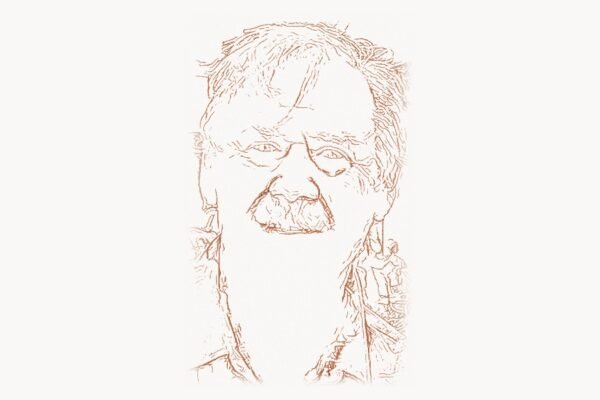
On December 9, 1999, VA Linux Systems went public at $30 per share. By the end of that first trading day, the stock had rocketed to $239.25 — a 698% gain that remains the largest first-day IPO pop in NASDAQ history. Behind that headline-grabbing number was Larry Augustin, a Stanford PhD in electrical engineering who had bet his career on an idea that most business leaders in the late 1990s considered absurd: that open source software could be the foundation of a real, profitable business. While others saw Linux as a curiosity for hobbyists, Augustin built a company that manufactured Linux-optimized hardware, employed kernel developers, and ultimately created SourceForge.net — the first major platform for hosting open source projects at scale.
Augustin’s contributions extend far beyond a single stock ticker or a single website. He helped establish the commercial credibility of open source at a time when corporate IT departments wouldn’t touch it. He demonstrated that supporting the open source community and generating revenue weren’t mutually exclusive goals. And through SourceForge, he gave tens of thousands of developers a centralized place to collaborate, share code, and build software together — a model that would later evolve into the GitHub-driven workflow that dominates modern development.
Early Life and Academic Foundations
Larry Augustin grew up in an era when computing was transitioning from mainframe rooms to personal desktops. He showed an early aptitude for engineering and pursued his undergraduate studies in electrical engineering before entering Stanford University’s doctoral program. At Stanford, Augustin focused on electronic design automation (EDA), a field concerned with developing software tools for designing complex integrated circuits. His PhD research involved building systems that helped engineers automate the laborious process of chip design — work that demanded both deep hardware understanding and sophisticated software engineering.
Stanford in the late 1980s and early 1990s was a crucible for technology entrepreneurship. The university’s proximity to Silicon Valley meant that academic research regularly found its way into startups and commercial products. Augustin absorbed this culture of turning ideas into companies, but he was also influenced by another movement taking shape in the computing world: the free software and open source communities. He encountered the GNU tools that Richard Stallman had been developing, the early Linux kernel that Linus Torvalds released in 1991, and the collaborative development model that was producing remarkably reliable software without any corporate organization behind it.
This dual exposure — to rigorous hardware engineering at Stanford and to the grassroots open source movement — gave Augustin a unique perspective. He understood that Linux and its surrounding ecosystem weren’t just technically impressive; they represented a fundamentally different way of creating and distributing technology. While many of his academic peers focused on proprietary EDA tools and traditional startup paths, Augustin began thinking about how to bridge the gap between open source software and commercial hardware.
VA Linux Systems and the Open Source Hardware Revolution
Technical Innovation: Purpose-Built Linux Machines
In 1993, Augustin founded VA Research (later renamed VA Linux Systems) out of his Stanford graduate student office. The premise was deceptively simple: build servers and workstations specifically optimized to run Linux. At the time, running Linux on commodity hardware was a frustrating experience. Drivers were missing or broken, hardware compatibility was unpredictable, and system administrators spent hours troubleshooting configuration issues that had nothing to do with their actual work.
Augustin’s insight was that the problem wasn’t Linux itself — it was the mismatch between hardware designed for Windows and an operating system with different assumptions about device interfaces. VA Linux Systems addressed this by selecting components specifically tested with the Linux kernel, contributing driver patches upstream, and shipping machines that worked out of the box. This sounds straightforward today, but in the mid-1990s, it was revolutionary. The company wasn’t just selling hardware; it was proving that Linux could be a first-class operating system for serious computing.
The technical approach involved deep integration testing at every level. VA Linux engineers worked directly with kernel developers to ensure hardware compatibility, contributed patches for device drivers, and built custom BIOS configurations optimized for Linux boot processes. The company employed several prominent kernel contributors, including Alan Cox, one of the most important early Linux kernel maintainers. This practice of hiring open source developers and paying them to continue their community work became a model that companies like Red Hat and IBM would later adopt on a massive scale.
Here is a simplified example of the kind of hardware compatibility validation that VA Linux systematized — automated testing to ensure that every component in a server works correctly with the Linux kernel:
#!/bin/bash
# VA Linux-style hardware validation script
# Ensures all components are properly recognized and functional under Linux

REPORT_FILE="/var/log/va-hardware-validation-$(date +%Y%m%d).log"

echo "=== VA Linux Hardware Validation Suite ===" | tee "$REPORT_FILE"
echo "Date: $(date)" | tee -a "$REPORT_FILE"
echo "Kernel: $(uname -r)" | tee -a "$REPORT_FILE"
echo "" | tee -a "$REPORT_FILE"

# CPU detection and validation
echo "[CPU Check]" | tee -a "$REPORT_FILE"
cpu_count=$(grep -c "^processor" /proc/cpuinfo)
cpu_model=$(grep "model name" /proc/cpuinfo | head -1 | cut -d: -f2 | xargs)
echo "  Processors detected: $cpu_count" | tee -a "$REPORT_FILE"
echo "  Model: $cpu_model" | tee -a "$REPORT_FILE"

# Memory validation
echo "[Memory Check]" | tee -a "$REPORT_FILE"
total_mem=$(free -m | awk '/^Mem:/{print $2}')
echo "  Total RAM: ${total_mem}MB" | tee -a "$REPORT_FILE"

# Storage controller and disk validation
echo "[Storage Check]" | tee -a "$REPORT_FILE"
for disk in /dev/sd[a-z]; do
    [ -b "$disk" ] || continue
    size=$(blockdev --getsize64 "$disk" 2>/dev/null)
    size_gb=$((size / 1073741824))
    model=$(hdparm -I "$disk" 2>/dev/null | grep "Model Number" | cut -d: -f2 | xargs)
    echo "  $disk: ${size_gb}GB - $model" | tee -a "$REPORT_FILE"

    # Run quick read test to validate driver stability
    dd if="$disk" of=/dev/null bs=1M count=100 2>&1 | tail -1 | tee -a "$REPORT_FILE"
done

# Network interface validation
echo "[Network Check]" | tee -a "$REPORT_FILE"
for iface in $(ls /sys/class/net/ | grep -v lo); do
    driver=$(ethtool -i "$iface" 2>/dev/null | grep "driver:" | awk '{print $2}')
    link=$(ethtool "$iface" 2>/dev/null | grep "Link detected" | awk '{print $3}')
    speed=$(ethtool "$iface" 2>/dev/null | grep "Speed:" | awk '{print $2}')
    echo "  $iface: driver=$driver link=$link speed=$speed" | tee -a "$REPORT_FILE"
done

# PCI device enumeration — ensure all devices have loaded drivers
echo "[PCI Driver Check]" | tee -a "$REPORT_FILE"
missing_drivers=0
while IFS= read -r line; do
    device=$(echo "$line" | cut -d' ' -f2-)
    driver=$(lspci -k -s "$(echo "$line" | awk '{print $1}')" 2>/dev/null \
             | grep "Kernel driver" | awk '{print $NF}')
    if [ -z "$driver" ]; then
        echo "  WARNING: No driver for $device" | tee -a "$REPORT_FILE"
        missing_drivers=$((missing_drivers + 1))
    fi
done < <(lspci 2>/dev/null)

echo "" | tee -a "$REPORT_FILE"
if [ "$missing_drivers" -eq 0 ]; then
    echo "RESULT: All hardware validated — system ready for deployment" | tee -a "$REPORT_FILE"
else
    echo "RESULT: $missing_drivers device(s) missing drivers — review required" | tee -a "$REPORT_FILE"
fi
Why It Mattered
VA Linux Systems mattered because it translated the theoretical promise of open source into tangible business reality. Before VA Linux, the dominant narrative in corporate computing was that serious workloads required proprietary operating systems — Solaris, AIX, HP-UX, or Windows NT. Augustin’s company demonstrated that Linux could handle enterprise workloads reliably, provided the hardware was properly matched and tested.
The company’s IPO on December 9, 1999, became a cultural moment for the open source movement. The 698% first-day gain wasn’t just a dot-com bubble phenomenon — it reflected genuine excitement about the potential of open source business models. Major institutional investors were betting, for the first time, that giving away software and making money on support, services, and hardware was a viable commercial strategy. The IPO gave the entire open source ecosystem credibility with venture capitalists, corporate buyers, and enterprise IT departments.
VA Linux also established the practice of employing open source developers full-time to work on upstream projects. The company hired kernel hackers, driver developers, and systems programmers, paying them market-rate salaries to do exactly what they were already doing for free. This model — now standard at companies like Google, Microsoft, and Meta — was radical in the late 1990s. It proved that corporations could participate in open source communities without co-opting or corrupting them, and that supporting upstream development was a smart business investment rather than a charitable expense.
SourceForge: Building the First Home for Open Source
Technical Innovation: Centralized Collaboration at Scale
As the dot-com bubble deflated in 2000 and 2001, VA Linux faced the same reckoning as many hardware companies. Server margins thinned, and the company needed to pivot. Augustin recognized that one of VA Linux’s internal tools had far more long-term value than any piece of hardware: SourceForge.net, a web platform the company had built to host open source software projects.
Launched in 1999, SourceForge.net was the first comprehensive platform offering free project hosting, version control, bug tracking, mailing lists, and download mirrors to any open source project that wanted them. Before SourceForge, an open source developer who wanted to share their project had to set up their own FTP server, run their own CVS repository, configure their own mailing list software, and somehow attract contributors. SourceForge eliminated all of that friction in one stroke.
The platform’s architecture reflected the needs of the open source community at scale. It provided CVS (and later Subversion) repositories, integrated bug trackers, file release systems with mirror networks for distributing downloads globally, project wikis, forums, and statistics dashboards. At its peak, SourceForge hosted over 500,000 projects and served as the primary distribution point for countless essential tools. If you downloaded an open source application between 2000 and 2010, there was an excellent chance it came from SourceForge.
This concept of centralized, free hosting for collaborative development directly prefigured what Linus Torvalds would later enable with Git and what GitHub would build into the dominant developer platform. The workflow patterns SourceForge established — project pages, issue trackers, release management, contributor statistics — became the template that every subsequent code hosting platform adopted and refined.
Here is a conceptual example showing how SourceForge’s project registration and hosting infrastructure worked — a system for programmatically creating and managing open source project spaces:
"""
SourceForge-style project hosting manager
Demonstrates the centralized hosting model that Augustin pioneered:
automated repository creation, release management, and mirror distribution
"""

import os
import subprocess
import hashlib
from dataclasses import dataclass, field
from datetime import datetime
from typing import Optional


@dataclass
class ProjectHost:
    """Manages hosted open source projects — the core SourceForge concept."""

    project_name: str
    admin_user: str
    license_type: str
    description: str
    created_at: datetime = field(default_factory=datetime.now)
    base_path: str = "/srv/sourceforge/projects"
    mirror_nodes: list = field(default_factory=lambda: [
        "mirror-east.sf.net", "mirror-west.sf.net", "mirror-eu.sf.net"
    ])

    @property
    def project_path(self) -> str:
        return os.path.join(self.base_path, self.project_name)

    def initialize_project(self) -> dict:
        """Create all infrastructure for a new open source project."""
        paths = {
            "repo": os.path.join(self.project_path, "svnroot"),
            "releases": os.path.join(self.project_path, "releases"),
            "web": os.path.join(self.project_path, "htdocs"),
            "bugs": os.path.join(self.project_path, "tracker"),
            "lists": os.path.join(self.project_path, "lists"),
        }

        for name, path in paths.items():
            os.makedirs(path, exist_ok=True)

        # Initialize SVN repository
        subprocess.run(
            ["svnadmin", "create", paths["repo"]],
            check=True
        )

        # Create default mailing lists
        for list_name in ["devel", "users", "announce"]:
            self._create_mailing_list(
                f"{self.project_name}-{list_name}",
                paths["lists"]
            )

        return {
            "project": self.project_name,
            "svn_url": f"https://svn.sf.net/svnroot/{self.project_name}",
            "web_url": f"https://{self.project_name}.sf.net",
            "status": "initialized"
        }

    def publish_release(
        self, version: str, filepath: str, changelog: str
    ) -> dict:
        """Publish a release and distribute to mirror network."""
        release_dir = os.path.join(
            self.project_path, "releases", version
        )
        os.makedirs(release_dir, exist_ok=True)

        filename = os.path.basename(filepath)
        dest = os.path.join(release_dir, filename)

        # Calculate checksums for integrity verification
        with open(filepath, "rb") as f:
            content = f.read()
            md5 = hashlib.md5(content).hexdigest()
            sha1 = hashlib.sha1(content).hexdigest()

        # Copy to release directory
        with open(dest, "wb") as f:
            f.write(content)

        # Distribute to mirror network
        mirror_status = {}
        for mirror in self.mirror_nodes:
            mirror_status[mirror] = self._sync_to_mirror(
                mirror, release_dir
            )

        return {
            "project": self.project_name,
            "version": version,
            "filename": filename,
            "md5": md5,
            "sha1": sha1,
            "mirrors": mirror_status,
            "download_url": (
                f"https://downloads.sf.net/{self.project_name}"
                f"/{filename}"
            )
        }

    def _sync_to_mirror(self, mirror: str, source: str) -> str:
        """Replicate release files across the global mirror network."""
        try:
            subprocess.run(
                ["rsync", "-avz", source,
                 f"rsync@{mirror}:/srv/mirrors/{self.project_name}/"],
                check=True, timeout=300
            )
            return "synced"
        except subprocess.SubprocessError:
            return "pending_retry"

    def _create_mailing_list(self, name: str, path: str) -> None:
        """Set up a project mailing list with standard configuration."""
        list_dir = os.path.join(path, name)
        os.makedirs(list_dir, exist_ok=True)
Other Contributions and Later Career
After VA Linux pivoted away from hardware, Augustin oversaw its transformation into OSDN (Open Source Development Network) and later Geeknet, Inc. Under his leadership, the company managed not only SourceForge but also several other properties that became important touchstones for the developer community, including Slashdot and ThinkGeek. While the hardware business faded, these media and community properties kept the company relevant throughout the 2000s.
Augustin served on the board of directors for the Open Source Initiative (OSI), the organization co-founded by Eric S. Raymond and Bruce Perens that maintains the Open Source Definition and approves open source licenses. His involvement with OSI gave him a direct role in shaping what “open source” meant legally and philosophically. He helped ensure that the term maintained rigorous standards rather than becoming a diluted marketing buzzword — a constant threat as corporations began adopting open source language without fully embracing its principles.
In the later phase of his career, Augustin moved into venture capital and advisory roles, bringing his experience as a technologist and entrepreneur to the next generation of open source companies. He served as CEO of SugarCRM, an open source customer relationship management platform, where he applied the same principles he had championed at VA Linux: build commercially viable businesses on top of open source foundations, contribute back to the community, and prove that openness is a competitive advantage rather than a liability.
Augustin has also been active in the broader startup ecosystem, advising companies on open source strategy and serving on boards where his deep understanding of the intersection between community-driven development and commercial incentives is particularly valuable. His trajectory from PhD researcher to hardware founder to platform builder to investor traces the entire arc of how open source went from fringe movement to mainstream business reality. For teams building collaborative tools today, platforms like Taskee demonstrate how the open collaboration model Augustin championed has become the default way teams organize around projects.
Philosophy: Open Source as Business Strategy
Augustin’s core philosophical contribution was the conviction that open source and commercial success are not just compatible — they are synergistic. This was a genuinely provocative idea in the 1990s. The dominant view in corporate America was that software’s value lay in its secrecy. Source code was a trade secret, and giving it away was the business equivalent of handing your competitor the keys to your factory.
Augustin argued the opposite: that openness created more value than it captured. When hardware vendors contributed Linux drivers upstream, they reduced their own maintenance burden and gained access to a vast pool of testing and debugging from the community. When SourceForge offered free hosting, it built a massive user base that could be monetized through advertising and premium services. When companies employed open source developers, they gained influence over the direction of projects they depended on while earning goodwill from the developer community.
This philosophy was deeply informed by his academic background. In academia, knowledge advances through open publication, peer review, and building on others’ work. Augustin recognized that software development follows similar dynamics — code improves faster when more people can read it, test it, and contribute to it. He also understood, from his experience at Stanford, that openness and commercialization weren’t opposed. Universities patent inventions, license technologies, and spin off companies while maintaining open research environments. Open source companies could do the same.
Augustin was also pragmatic about the tension between community values and business demands. He acknowledged that open source companies face unique challenges: how to capture value from something freely available, how to balance community governance with corporate roadmaps, how to fund ongoing development without alienating volunteer contributors. His approach was to be transparent about these tensions rather than pretending they didn’t exist, and to structure businesses so that what was good for the company was also good for the community. Modern project management approaches like those enabled by Toimi reflect this same principle — that transparent, open processes produce better outcomes than closed, opaque ones.
Legacy and Lasting Impact
Larry Augustin’s legacy is woven into the fabric of modern software development in ways that are so fundamental they’ve become invisible. The idea that a company can build a billion-dollar business on open source software — an idea that seemed radical when VA Linux went public — is now unremarkable. Red Hat was acquired by IBM for $34 billion. GitHub sold to Microsoft for $7.5 billion. MongoDB, Elastic, Confluent, and dozens of other open source companies have gone public. Every one of them walks a path that Augustin helped clear.
SourceForge’s specific influence is even more direct. The platform hosted hundreds of thousands of projects during its peak years, and its architectural decisions — centralized hosting, integrated bug tracking, release management, download statistics — became the blueprint for every code hosting platform that followed. When GitHub launched in 2008, it was building on concepts that SourceForge had proven viable almost a decade earlier. The idea that a developer should be able to create a project, push code, track bugs, and release software from a single web platform originated with SourceForge.
The practice of companies employing open source developers to work on community projects — now standard at virtually every major technology company — traces directly back to VA Linux’s pioneering approach. When Google employs Linux kernel developers, when Microsoft contributes to the Linux kernel, when Meta open sources PyTorch, they are following a playbook that Augustin’s company helped write. The model of commercial open source that Mark Shuttleworth would later apply with Ubuntu and Canonical, or that Dries Buytaert pioneered with Drupal and Acquia, all built on the foundation that VA Linux helped establish.
Perhaps most importantly, Augustin’s career demonstrates that the most valuable contributions to open source aren’t always lines of code. Sometimes they’re business models, platforms, and the willingness to stake a company’s future on the belief that openness creates more value than it destroys. In the late 1990s, that belief was a gamble. Today, it’s conventional wisdom — and Larry Augustin is one of the people who made it so.
Key Facts
| Detail | Information |
|---|---|
| Full Name | Larry Augustin |
| Education | PhD in Electrical Engineering, Stanford University |
| Known For | Co-founding VA Linux Systems; creating SourceForge.net |
| VA Linux IPO | December 9, 1999 — 698% first-day gain, largest in NASDAQ history |
| SourceForge Launch | 1999 — first major open source project hosting platform |
| Key Roles | CEO of VA Linux / OSDN / Geeknet; CEO of SugarCRM; OSI Board Member |
| Related Properties | SourceForge.net, Slashdot, ThinkGeek |
| Primary Contribution | Proving open source could sustain viable commercial businesses |
Frequently Asked Questions
What made VA Linux’s IPO the largest first-day gain in history?
VA Linux Systems went public on December 9, 1999, with shares priced at $30 that closed at $239.25 — a 698% gain. The IPO reflected enormous investor enthusiasm for the convergence of Linux and commercial computing during the dot-com boom. VA Linux was one of the few companies that had both genuine technical credibility in the open source community and a clear revenue model based on selling Linux-optimized servers. The IPO demonstrated that Wall Street saw real commercial potential in open source, not just idealism. While the stock price would later decline as the dot-com bubble burst, the IPO permanently changed how investors and executives viewed open source business models.
How did SourceForge change open source development?
Before SourceForge, hosting an open source project required developers to set up and maintain their own infrastructure — FTP servers, CVS repositories, mailing lists, bug trackers, and websites. SourceForge eliminated this barrier entirely by offering all of these services free of charge to any open source project. At its peak, the platform hosted over 500,000 projects and was the default distribution point for open source software. It established the template of centralized code hosting with integrated development tools that GitHub, GitLab, and Bitbucket would later refine. SourceForge proved that lowering the barrier to participation dramatically increased the volume and diversity of open source development.
What is Larry Augustin’s connection to SugarCRM?
After the VA Linux era, Augustin became CEO of SugarCRM, an open source customer relationship management platform. At SugarCRM, he applied the commercial open source principles he had developed at VA Linux — building a profitable business on top of freely available software by offering premium features, support, and enterprise services. His leadership at SugarCRM demonstrated that the open source business model he had pioneered wasn’t limited to developer tools and infrastructure; it could work in enterprise application software as well.
Why did VA Linux pivot away from hardware?
After the dot-com bubble burst in 2000-2001, the server hardware market became increasingly commoditized. Margins on Linux servers thinned as major manufacturers like Dell, HP, and IBM began offering their own Linux support, reducing VA Linux’s competitive advantage in purpose-built Linux hardware. Augustin recognized that the company’s software assets — particularly SourceForge.net, Slashdot, and the Open Source Technology Group properties — had more long-term strategic value than the hardware business. The company gradually transitioned to become OSDN (Open Source Development Network) and later Geeknet, focusing on web properties and developer community platforms rather than physical servers.