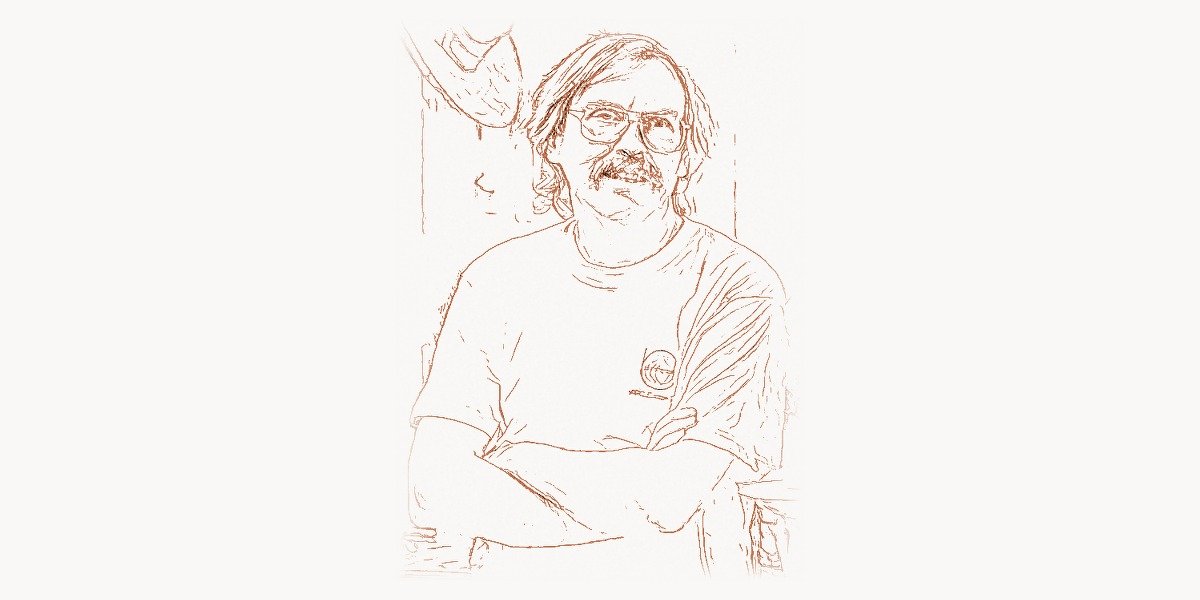
On December 18, 1987, Larry Wall posted a message to the Usenet newsgroup comp.sources.misc announcing the release of Perl 1.0 — a “practical extraction and report language” that combined features of C, sed, awk, and shell scripting into a single tool. Wall, a 33-year-old linguist-turned-programmer working at Unisys, had created Perl to solve a specific problem: generating reports from a network of Unix systems connected by a news feed. He needed something more powerful than shell scripts but less cumbersome than C. What he built became the dominant programming language of the early internet era. Throughout the 1990s and into the 2000s, Perl was the language that powered CGI scripts, processed server logs, automated system administration, parsed text files, and glued together the heterogeneous systems that formed the backbone of the web. It earned the nickname “the duct tape of the internet” because it could connect and patch together virtually anything. Perl’s regular expression integration, text processing capabilities, and the CPAN (Comprehensive Perl Archive Network) repository of reusable modules made it the go-to tool for an entire generation of programmers. And behind it all was a man whose background was not in computer science but in linguistics — a fact that shaped every aspect of how Perl was designed.
Early Life and Path to Technology
Larry Wall was born on September 27, 1954, in Los Angeles, California. He grew up in a family that valued education and language — his father was a pastor, and Wall developed an early interest in both human languages and music. He attended Seattle Pacific University, where he studied chemistry and music. He planned to become a missionary linguist — someone who travels to remote communities, learns their unwritten language, develops a writing system for it, and translates texts. This plan shaped his undergraduate studies: he took courses in linguistics, natural language processing, and computer science alongside his chemistry work.
After graduating, Wall pursued graduate work in linguistics at the University of California, Berkeley, and at UCLA. However, financial constraints led him to leave graduate school before completing his PhD. He joined the Jet Propulsion Laboratory (JPL) at NASA, and later Unisys (formerly Burroughs Corporation), where he worked on Unix systems. At Unisys, Wall’s combined skills — linguistic training, Unix expertise, and C programming ability — converged in the creation of Perl. His linguistic background was not incidental to Perl’s design; it was foundational. Wall approached programming language design not as a mathematician (like many language designers) but as a linguist, asking not “What is formally elegant?” but “How do people naturally express instructions?”
The Breakthrough: Creating Perl
The Technical Innovation
Wall began developing Perl in 1987 while working on a configuration management system at Unisys. He needed to process text files across a network — extracting data from log files, generating reports, and managing system configurations. The existing Unix tools each handled a piece of the problem: awk was good at field processing, sed at stream editing, shell scripts at combining commands, and C at everything else. But each had limitations, and using them together required writing glue code that was fragile and hard to maintain.
Perl (originally “Practical Extraction and Report Language,” though Wall later also offered “Pathologically Eclectic Rubbish Lister”) combined the best features of all these tools into a single language. It had C-like syntax for control flow and data structures, awk-like pattern scanning, sed-like text substitution, and built-in support for regular expressions that went far beyond what any previous language had offered. Regular expressions were not just a library in Perl — they were woven into the language’s syntax with the =~ binding operator:
#!/usr/bin/perl
use strict;
use warnings;

# Perl's text processing power: parse an Apache access log
my %status_counts;
my %url_hits;

while (my $line = <STDIN>) {
    # Regular expression with named captures
    if ($line =~ m{
        ^(?<ip>\S+)\s+        # IP address
        \S+\s+\S+\s+          # ident and auth fields
        \[(?<date>[^\]]+)\]\s+ # date in brackets
        "(?<method>\w+)\s+     # HTTP method
        (?<url>\S+)\s+         # URL
        \S+"\s+                # protocol
        (?<status>\d+)         # status code
    }x) {
        $status_counts{$+{status}}++;
        $url_hits{$+{url}}++ if $+{status} eq '200';
    }
}

# Print top 10 URLs by hit count
my @sorted = sort { $url_hits{$b} <=> $url_hits{$a} } keys %url_hits;
printf "%-50s %s\n", "URL", "Hits";
printf "%-50s %s\n", $_, $url_hits{$_} for @sorted[0..9];
Perl’s regular expression engine became the de facto standard for regex syntax. The PCRE (Perl-Compatible Regular Expressions) library, originally written by Philip Hazel to bring Perl’s regex capabilities to other languages, is used by PHP, Apache HTTP Server, Nginx, R, and dozens of other software projects. Python’s re module, Ruby’s regex support, JavaScript’s RegExp, and Java’s java.util.regex were all influenced by Perl’s regex syntax and extensions — including non-greedy quantifiers (*?, +?), lookahead/lookbehind assertions, named captures, and the /x verbose mode.
Another key innovation was CPAN — the Comprehensive Perl Archive Network — launched in 1995 by Jarkko Hietaniemi and Andreas J. Koenig. CPAN was one of the first centralized repositories of reusable software modules, predating npm, PyPI, RubyGems, and Maven by years. By 2000, CPAN hosted thousands of modules covering everything from database access and XML parsing to web frameworks and bioinformatics. The idea that a language should have an easily accessible repository of community-contributed libraries — now considered essential for any language — was pioneered by the Perl community through CPAN.
# CPAN modules made complex tasks trivial
use LWP::UserAgent;
use JSON::PP;
use Data::Dumper;

my $ua = LWP::UserAgent->new(timeout => 10);
my $response = $ua->get('https://api.github.com/users/larrywall');

if ($response->is_success) {
    my $data = decode_json($response->decoded_content);
    print "Name: $data->{name}\n";
    print "Public repos: $data->{public_repos}\n";
} else {
    die "Request failed: " . $response->status_line;
}
Why It Mattered
Perl arrived at the dawn of the World Wide Web and became its first scripting language. CGI (Common Gateway Interface) scripts — the mechanism by which web servers executed dynamic content — were overwhelmingly written in Perl throughout the 1990s. When you submitted a form on a website in 1996, it was almost certainly processed by a Perl script. When a system administrator needed to parse log files, extract data from databases, or automate deployment tasks, Perl was the tool of choice.
Perl’s motto — “There’s More Than One Way To Do It” (TMTOWTDI, pronounced “Tim Toady”) — reflected Wall’s linguistic insight that natural languages thrive on having multiple ways to express the same idea. This philosophy made Perl extremely flexible but also led to its eventual criticism: Perl code written by different programmers could look radically different, making maintenance difficult in large teams. The language’s density and the culture of “Perl golf” (solving problems in the fewest characters possible) earned it a reputation for being “write-only code” — easy to write but hard to read.
Despite these criticisms, Perl’s influence on subsequent languages was enormous. PHP borrowed Perl’s variable sigils ($, @, %) and regex integration. Ruby borrowed Perl’s regular expression syntax and many of its string processing features. Python was partly designed as a reaction against Perl’s complexity, emphasizing “one obvious way to do it” — but still borrowed Perl’s regex capabilities. The CPAN model inspired every modern package manager. Even the phrase “scripting language” became mainstream largely because of Perl’s prominence.
Beyond Perl: Other Contributions
Wall’s contributions extend beyond Perl itself. Before Perl, he created two widely-used Unix utilities: patch (1985) and rn (readnews, 1984). The patch utility, which applies diff output to original files, became an essential tool in software development — it is the foundation of how patches are distributed in the open-source world and was crucial to the development process of the Linux kernel before the adoption of Git. Wall received the Free Software Foundation’s Award for the Advancement of Free Software in 1998 partly for patch‘s contribution to collaborative development.
Wall also spent many years working on Perl 6 (announced in 2000), an ambitious redesign of the language that aimed to fix Perl 5’s accumulated design debt. Perl 6 was eventually renamed “Raku” in 2019 to distinguish it from Perl 5, which continues to be developed independently. Raku is a fascinating language in its own right — with grammars (built-in parsing tools), junction types, lazy evaluation, and an advanced type system — but it has not achieved Perl 5’s level of adoption. The Raku project demonstrated both Wall’s ambition as a language designer and the difficulty of making a clean break from a language with millions of users and billions of lines of deployed code.
Wall’s writing has also been influential. His annual “State of the Onion” addresses to the Perl community were celebrated for their wit, cultural references, and deep insights about language design, community building, and the nature of programming. He brought a literary quality to technical discourse that was rare in the programming world.
Perl’s Influence on Modern Text Processing
Perl’s most lasting technical contribution may be its regular expression engine, which became the de facto standard for pattern matching across the software industry. Before Perl, regular expressions were limited to the basic POSIX syntax supported by grep, sed, and awk — a syntax with limited capabilities and awkward escape sequences. Perl extended regular expressions with non-greedy quantifiers (matching as little text as possible), lookahead and lookbehind assertions (checking context without consuming characters), named capture groups (giving meaningful names to matched substrings), the /x extended mode (allowing whitespace and comments for readability), and Unicode property matching. These extensions made regular expressions powerful enough to handle real-world text processing tasks — parsing structured data formats, validating input, extracting information from unstructured text — that were previously beyond regex’s reach.
The PCRE (Perl-Compatible Regular Expressions) library, maintained by Philip Hazel, brought Perl’s regex syntax to dozens of other languages and tools. PHP’s preg_ functions, Apache’s mod_rewrite, Nginx’s location matching, R’s string processing, and many text editors’ search features all use PCRE or a subset of Perl’s regex syntax. When a developer writes a regular expression in virtually any modern programming language, they are writing in a syntax that Larry Wall and the Perl community developed and refined over decades.
Philosophy and Engineering Approach
Key Principles
Wall’s approach to language design is explicitly linguistic. He has argued that programming languages should be studied and designed using the same principles that govern natural languages — principles of expressiveness, context sensitivity, and accommodation of multiple dialects and speaking styles. This stands in sharp contrast to the mathematical tradition of language design (formal grammars, type theory, lambda calculus) that dominates computer science.
The linguistic perspective manifests in several concrete design choices. Perl uses context (scalar vs. list context) to determine the behavior of expressions, much as English words change meaning based on grammatical context. Perl allows “baby Perl” — simple, straightforward code that beginners can write — alongside “advanced Perl” that uses closures, references, and metaprogramming, much as a natural language allows both simple and complex expression. And Perl’s TMTOWTDI philosophy reflects the linguistic observation that expressiveness requires redundancy — having only one way to say things makes a language less expressive, not more.
Wall identifies three key programmer virtues, delivered with characteristic humor: Laziness (the desire to avoid unnecessary work, leading to writing reusable code and documentation), Impatience (the desire for the computer to do things quickly, leading to writing efficient programs), and Hubris (the desire to write programs that others cannot criticize, leading to writing maintainable code). These “virtues” are tongue-in-cheek but contain genuine insight about what motivates good software engineering.
His philosophy also emphasizes that the most important feature of a programming language is its community. Wall nurtured the Perl community carefully, establishing norms of generosity (answering questions, contributing modules to CPAN), humor (the Perl community was famous for its wit), and pragmatism. The annual YAPC (Yet Another Perl Conference) events and the Perl Mongers user groups created a social infrastructure that sustained Perl through decades of technological change.
Legacy and Modern Relevance
Perl’s cultural dominance has waned since the mid-2000s. Python replaced Perl as the default “glue” language, PHP and later Node.js took over web development, and Ruby on Rails captured the rapid web development niche. Perl’s “write-only” reputation and the long delay of Perl 6 contributed to a perception of stagnation.
But Perl is far from dead. Perl 5 continues to receive regular releases — Perl 5.38 (July 2023) added a new class syntax (an experimental native object system), improved Unicode support, and various performance optimizations. CPAN hosts over 200,000 modules. Major technology companies including Amazon, Booking.com, DuckDuckGo, cPanel, and BBC still run significant Perl codebases. System administrators worldwide still use Perl for automation and text processing. Bioinformatics — a field that processes massive text-based datasets (DNA sequences, protein structures, BLAST output) — adopted Perl early and continues to use it extensively.
Perl’s most lasting legacy, however, lies in its influence on other languages. The PCRE regex standard is used by virtually every modern programming language and tool. CPAN’s model inspired npm, PyPI, RubyGems, Cargo, and every other package repository. Perl’s demonstration that a “scripting language” could be powerful enough for serious production use paved the way for Python, Ruby, PHP, and JavaScript to become mainstream application languages. And Wall’s linguistic approach to language design — his insistence that programming languages should accommodate human expressiveness rather than constraining it — remains a valuable counterpoint to the more rigid, formalist tradition in language design.
Larry Wall did not set out to build the most theoretically elegant language. He set out to build the most useful one. For a crucial period in the internet’s development — roughly 1993 to 2005 — he succeeded. Perl held the internet together during its most explosive growth, and the tools and ideas it introduced continue to shape how programmers work, even if they have never written a line of Perl themselves.
Key Facts
- Born: September 27, 1954, Los Angeles, California, United States
- Known for: Creating Perl, the
patchutility, and the Raku language - Key projects: Perl (1987–present), Raku/Perl 6,
patch(1985),rnnewsreader (1984) - Awards: FSF Award for the Advancement of Free Software (1998), USENIX Lifetime Achievement Award (2013), first recipient of the White Camel Award for community service
- Education: B.A. from Seattle Pacific University; graduate work in linguistics at UC Berkeley and UCLA
Frequently Asked Questions
Who is Larry Wall?
Larry Wall is an American programmer and linguist who created the Perl programming language in 1987. Trained as a linguist rather than a computer scientist, Wall designed Perl around principles borrowed from natural language: expressiveness, context sensitivity, and the freedom to say things in multiple ways. He also created the Unix patch utility and led the design of Raku (originally Perl 6).
What did Larry Wall create?
Wall’s most significant creation is Perl, which dominated web development and system administration throughout the 1990s and early 2000s. He also created the patch utility (essential to open-source software development), the rn Usenet newsreader, and led the design of Raku (Perl 6). Perl’s regex syntax, through the PCRE library, became the standard used by virtually every modern programming language.
Why is Larry Wall important?
Wall created the language that powered the early web. Perl’s CGI scripts handled the vast majority of dynamic web content in the 1990s, and Perl’s innovations — integrated regular expressions, CPAN (one of the first package repositories), and the practical demonstration that interpreted “scripting” languages could handle serious production workloads — directly influenced every major programming language that followed. His linguistic approach to language design offered a fundamentally different perspective from the mathematical formalism that dominated computer science, demonstrating that programming languages could be designed around human expressiveness rather than theoretical elegance.