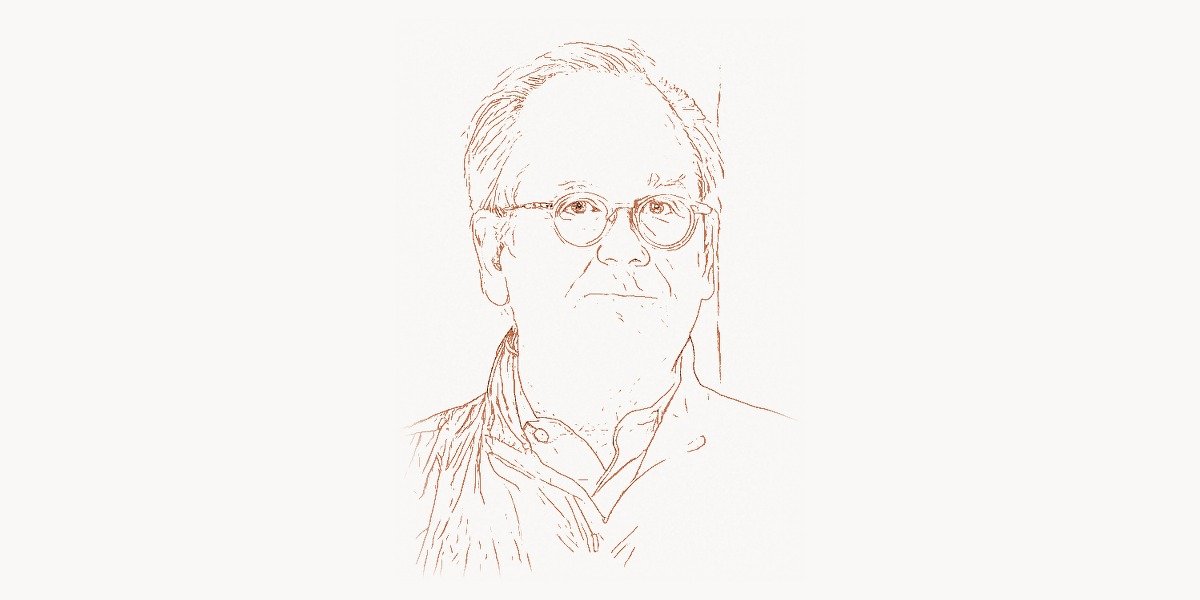
In the early 2000s, a law professor at Stanford launched an organization that would fundamentally change how creative work is shared, remixed, and distributed on the internet. Lawrence Lessig did not write a single line of production code for the project. He did not design a protocol or compile a binary. What he did was arguably more consequential for the technology ecosystem than any software release of that era: he created a legal framework — Creative Commons — that gave millions of creators a way to grant permissions for their work that existing copyright law made nearly impossible. In doing so, Lessig bridged the gap between the open culture ethos championed by figures like Richard Stallman and the practical realities of a legal system that defaulted to maximum restriction. His work ensured that the internet’s promise of open knowledge sharing had a legal foundation, not just a technological one.
Lessig’s influence extends far beyond Creative Commons. He argued a landmark internet regulation case before the U.S. Supreme Court, wrote books that redefined how technologists think about the relationship between code and law, and became one of the most vocal advocates for institutional reform in American public life. His career is a demonstration of how legal thinking — applied rigorously to technical systems — can reshape the infrastructure of knowledge itself. The tools used today for collaborative project management and open content publishing owe a structural debt to the licensing frameworks Lessig helped establish.
Early Life and Education
Lawrence Lessig was born on June 3, 1961, in Rapid City, South Dakota. He grew up in Williamsport, Pennsylvania, a small city in the north-central part of the state known more for the Little League World Series than for producing legal scholars. Lessig’s early education was conventional by most accounts, but he showed an early aptitude for structured argumentation and philosophical reasoning.
Lessig pursued his undergraduate education at the University of Pennsylvania, where he studied economics and management at the Wharton School. He graduated in 1983. He then earned a Master of Arts in philosophy from Trinity College, Cambridge, in 1986 — an experience that deepened his interest in the theoretical foundations of governance and regulation. Lessig completed his legal education at Yale Law School, graduating in 1989. At Yale, he was editor of the Yale Law Journal, a distinction that marked him as one of the top legal minds of his cohort.
After law school, Lessig clerked for Judge Richard Posner on the U.S. Court of Appeals for the Seventh Circuit and subsequently for Justice Antonin Scalia on the U.S. Supreme Court. These two clerkships are notable for their ideological range: Posner was a pragmatic centrist known for his law-and-economics approach, while Scalia was the intellectual anchor of the Court’s conservative wing. Lessig has described this experience as formative, teaching him that rigorous legal reasoning could lead principled thinkers to radically different conclusions. This intellectual flexibility would later become central to his work on internet law, where he navigated between libertarian arguments for unfettered code and progressive arguments for regulated access.
Creative Commons: The Legal Infrastructure for Open Culture
Technical Innovation
Lessig founded Creative Commons (CC) in 2001, and the organization released its first set of licenses in December 2002. The problem CC addressed was both legal and practical. Under the Berne Convention and U.S. copyright law, every original creative work is automatically copyrighted upon creation. No registration is required. This means that by default, no one can legally copy, distribute, modify, or build upon a work without the explicit permission of the copyright holder. For the vast majority of casual creators — bloggers, photographers, musicians, educators — this default was absurdly restrictive. A teacher who wanted to share a lesson plan, a photographer who wanted others to use a landscape photo, or a musician who wanted to allow remixes had no simple way to signal those permissions.
The existing alternatives were inadequate. Public domain dedication was total — surrendering all rights. The GNU General Public License, created by Richard Stallman for software, was brilliant for code but poorly suited to photographs, essays, music, or video. Lessig and his team — which included Hal Abelson, Eric Eldred, and several other legal and technical collaborators — designed a set of modular licenses that let creators choose exactly which rights to retain and which to grant. The six core CC licenses are built from four conditions: Attribution (BY), ShareAlike (SA), NonCommercial (NC), and NoDerivatives (ND). These can be combined to produce licenses ranging from CC BY (the most permissive — do anything, just credit the author) to CC BY-NC-ND (the most restrictive — share only, no modifications, no commercial use).
What made Creative Commons technically innovative was not just the legal text but the machine-readable layer. Each CC license has three expressions: a legal code (the full license), a human-readable summary (the “deed”), and a machine-readable metadata format using RDF (Resource Description Framework). This third layer was crucial. It allowed search engines, content platforms, and automated systems to detect and filter by license type. When you search for reusable images on Google or Flickr, the system that enables that filtering depends directly on CC’s machine-readable metadata standard.
<!-- Creative Commons machine-readable metadata using RDF/XML -->
<!-- This three-layer approach (legal code, human summary, -->
<!-- machine-readable metadata) was Lessig's key innovation -->

<rdf:RDF xmlns:rdf="http://www.w3.org/1999/02/22-rdf-syntax-ns#"
         xmlns:cc="http://creativecommons.org/ns#"
         xmlns:dc="http://purl.org/dc/elements/1.1/">

  <cc:Work rdf:about="https://example.com/article">
    <dc:title>Understanding Digital Commons</dc:title>
    <dc:creator>Jane Doe</dc:creator>
    <dc:date>2025-08-15</dc:date>
    <dc:description>
      An exploration of how legal frameworks
      enable open knowledge sharing on the web.
    </dc:description>

    <!-- License reference: CC BY-SA 4.0 -->
    <cc:license
      rdf:resource="https://creativecommons.org/licenses/by-sa/4.0/"/>
  </cc:Work>

  <cc:License
    rdf:about="https://creativecommons.org/licenses/by-sa/4.0/">

    <!-- Permissions granted by this license -->
    <cc:permits rdf:resource="http://creativecommons.org/ns#Reproduction"/>
    <cc:permits rdf:resource="http://creativecommons.org/ns#Distribution"/>
    <cc:permits rdf:resource="http://creativecommons.org/ns#DerivativeWorks"/>

    <!-- Conditions required -->
    <cc:requires rdf:resource="http://creativecommons.org/ns#Attribution"/>
    <cc:requires rdf:resource="http://creativecommons.org/ns#ShareAlike"/>
    <cc:requires rdf:resource="http://creativecommons.org/ns#Notice"/>

    <!-- What is prohibited -->
    <!-- (No prohibitions under BY-SA — commercial use allowed) -->
  </cc:License>

</rdf:RDF>

<!--
  This metadata enables automated license detection.
  Search engines, CMS platforms, and content aggregators
  can parse this to filter and display license information.
  Wikipedia, Flickr, the Smithsonian, and MIT OpenCourseWare
  all rely on this machine-readable layer.
-->
Why It Mattered
The scale of Creative Commons adoption has been extraordinary. As of 2023, more than 2.5 billion works have been published under CC licenses worldwide. Wikipedia — the most visited reference site on the internet — uses CC BY-SA for all its content. MIT OpenCourseWare, Khan Academy, the Smithsonian Institution’s Open Access initiative, and countless university programs rely on CC licenses to share educational materials. Government agencies in dozens of countries have adopted CC licenses for public data and research outputs. The entire open educational resources (OER) movement is built on CC’s legal infrastructure.
For technologists specifically, CC licenses solved a problem that the open source movement had only partially addressed. The GNU GPL, the MIT License, and the Apache License worked well for source code, but they were awkward or inapplicable for documentation, design assets, datasets, and multimedia. CC filled this gap. A developer working on an open source project today can license their code under MIT, their documentation under CC BY, and their design assets under CC BY-SA — each license precisely matched to the type of work. This layered licensing approach, which seems obvious now, was a genuine innovation that Lessig and his collaborators made possible.
The impact on the web was structural. Before CC, sharing creative work online existed in a legal gray zone. People posted content, other people reused it, and the legal status of these interactions was almost never addressed. CC transformed this ambiguity into clarity. It created a commons — a shared pool of legally reusable resources — that has become essential infrastructure for the modern internet, much like TCP/IP (co-created by Vint Cerf) is essential for networking.
Code Is Law: The Theoretical Framework
Lessig’s most influential intellectual contribution is the concept that “code is law” — the idea that software architecture regulates human behavior just as effectively as legal statutes. He developed this argument most fully in his 1999 book Code and Other Laws of Cyberspace (revised in 2006 as Code: Version 2.0). The central thesis is that cyberspace is not inherently free or unregulated. Instead, its architecture — the protocols, platforms, and algorithms that constitute it — embeds regulatory choices that constrain what users can and cannot do.
Lessig identified four modalities of regulation: law (statutes and court decisions), social norms (community expectations and cultural practices), markets (economic incentives and price mechanisms), and architecture (the physical or digital structures that make some actions easy and others impossible). In the digital world, architecture — code — is the most powerful of these regulators because it operates automatically, invisibly, and without appeal. A DRM system that prevents copying does not need a court to enforce it. A platform algorithm that buries certain content does not need a legislative vote. The code simply makes the restricted action impossible or invisible.
# Lessig's "Four Modalities of Regulation" as a conceptual model
# Demonstrating how code architecture embeds regulatory choices
# that constrain user behavior as effectively as law

class RegulatoryModality:
    """
    Lessig argued that behavior is regulated by four forces.
    In cyberspace, architecture (code) is the most powerful
    because it operates automatically and without appeal.
    """
    def __init__(self, name, mechanism, enforcement):
        self.name = name
        self.mechanism = mechanism
        self.enforcement = enforcement
        self.constraints = []

    def add_constraint(self, behavior, effect):
        self.constraints.append({
            "behavior": behavior,
            "effect": effect
        })

    def describe(self):
        output = f"Modality: {self.name}\n"
        output += f"  Mechanism: {self.mechanism}\n"
        output += f"  Enforcement: {self.enforcement}\n"
        for c in self.constraints:
            output += f"  - {c['behavior']} → {c['effect']}\n"
        return output


# The four modalities as Lessig defined them
law = RegulatoryModality(
    name="Law",
    mechanism="Statutes, regulations, court decisions",
    enforcement="State power — courts, police, penalties"
)
law.add_constraint(
    "Copying copyrighted material",
    "Legal penalties (fines, imprisonment)"
)

norms = RegulatoryModality(
    name="Social Norms",
    mechanism="Community expectations and stigma",
    enforcement="Social pressure — reputation, exclusion"
)
norms.add_constraint(
    "Plagiarizing content",
    "Community condemnation, loss of reputation"
)

market = RegulatoryModality(
    name="Market",
    mechanism="Prices, economic incentives",
    enforcement="Cost barriers — pricing, scarcity"
)
market.add_constraint(
    "Accessing premium content",
    "Paywall blocks access without subscription"
)

architecture = RegulatoryModality(
    name="Architecture (Code)",
    mechanism="Technical design, protocols, algorithms",
    enforcement="Automatic — impossible actions need no enforcement"
)
architecture.add_constraint(
    "Copying DRM-protected file",
    "Technically impossible — code prevents the action"
)
architecture.add_constraint(
    "Viewing censored search results",
    "Content never appears — user may not know it exists"
)
architecture.add_constraint(
    "Exceeding API rate limit",
    "Request rejected automatically by server"
)

# Display all four modalities
modalities = [law, norms, market, architecture]
for modality in modalities:
    print(modality.describe())

# Lessig's key insight: in cyberspace, architecture
# is the DOMINANT modality because it is self-executing.
# Unlike law, it requires no enforcement mechanism.
# Unlike norms, it cannot be defied through courage.
# Unlike markets, it cannot be overcome with money.
# Code simply makes the prohibited action impossible.
This framework gave technologists and policymakers a shared vocabulary for discussing the regulatory implications of technical design decisions. When we debate whether a social media platform’s algorithm amplifies misinformation, we are having a conversation that Lessig’s framework made possible. When engineers argue that privacy should be built into system architecture rather than bolted on through policy — an approach known as “privacy by design” — they are applying Lessig’s insight that code is a more effective regulator than law. The European Union’s GDPR, with its emphasis on “data protection by design and by default,” reflects this thinking directly.
Other Contributions
Eldred v. Ashcroft and Copyright Duration
In 2003, Lessig argued Eldred v. Ashcroft before the U.S. Supreme Court, challenging the constitutionality of the Copyright Term Extension Act (CTEA) of 1998 — sometimes called the “Mickey Mouse Protection Act” because its passage coincided conveniently with the approaching expiration of Disney’s earliest Mickey Mouse copyrights. The CTEA extended copyright terms by 20 years, both prospectively and retroactively. Lessig argued that the retroactive extension violated the Constitution’s Copyright Clause, which grants Congress the power to secure copyrights “for limited Times.” If Congress could repeatedly extend existing copyrights, he argued, the “limited Times” constraint was meaningless.
The Supreme Court ruled 7-2 against Lessig’s position, holding that Congress had broad discretion in setting copyright terms. Lessig was publicly devastated by the loss and has written candidly about his view that his oral argument was inadequate — that he failed to make the case accessible to justices unfamiliar with the technical and economic arguments. Despite the legal defeat, the case succeeded in bringing copyright term extension into public debate. It became a rallying point for the growing movement against copyright maximalism and directly catalyzed Lessig’s decision to create Creative Commons as a practical alternative to legislative reform.
Academic and Institutional Work
Lessig’s academic career has spanned three of America’s most prestigious law schools. He taught at the University of Chicago Law School before moving to Stanford Law School, where he founded the Center for Internet and Society in 2000. In 2009, he moved to Harvard Law School, where he held the Roy L. Furman Professorship and directed the Edmond J. Safra Center for Ethics. At each institution, he built programs that trained a generation of lawyers and scholars to think critically about the intersection of technology, law, and policy — many of whom went on to influence tech policy at companies, nonprofits, and government agencies worldwide.
Institutional Corruption and Political Reform
Around 2007, Lessig shifted a significant portion of his public advocacy from internet policy to institutional corruption — specifically the influence of money in American politics. He founded Rootstrikers, a campaign focused on reducing the influence of lobbyist and corporate money on Congress. In 2014, he co-founded Mayday PAC, a “super PAC to end all super PACs,” which aimed to elect candidates committed to campaign finance reform. In 2015, he briefly ran for the Democratic presidential nomination on a single-issue platform of electoral reform. While none of these political ventures achieved their immediate goals, they reflected Lessig’s conviction that the problems he had identified in internet regulation — the capture of rulemaking processes by concentrated interests — were symptoms of a deeper dysfunction in democratic governance.
Philosophy: Freedom, Architecture, and the Commons
Lessig’s philosophical framework rests on two interconnected ideas. The first is that freedom in the digital age depends on the architecture of the systems people use. If code determines what users can do — what they can read, copy, share, modify, and build upon — then the design of code is a political act, whether the designer intends it or not. Every technical decision about DRM, API access, content moderation, or data portability is, in Lessig’s view, a regulatory decision with consequences as real as any statute.
The second idea is that a healthy culture requires a commons — a shared pool of creative and intellectual resources that anyone can access and build upon. Lessig articulated this most forcefully in his 2004 book Free Culture, which argued that the expansion of copyright law was creating a “permission culture” in which every use of existing creative work required clearance from rights holders. This was stifling innovation and creativity, he argued, because culture has always been built by borrowing from, remixing, and transforming what came before. The alternative — “free culture” — was not a culture without property rights, but one in which the default allowed building upon existing work, with creators retaining only the specific rights they chose to enforce.
This philosophy placed Lessig in a distinctive position relative to other digital freedom advocates. He was more pragmatic than Stallman, who insisted on a strict ethical framework that rejected proprietary software entirely. He was more legally rigorous than Aaron Swartz, who sometimes prioritized direct action over institutional reform. And he was more theoretically ambitious than most open source advocates, who focused on the practical benefits of collaborative development without making broader claims about cultural freedom. Lessig synthesized these positions into a coherent framework that influenced law, technology, and culture simultaneously. His approach to managing the complexity of open licensing across distributed teams anticipated the challenges that modern digital agencies face when coordinating creative assets across projects.
Legacy and Lasting Impact
Lawrence Lessig’s legacy is embedded in the infrastructure of the modern internet in ways that most users never see. Every time a Wikipedia article is shared, a Creative Commons license governs the terms. Every time a developer includes a CC-licensed image in a project, Lessig’s legal architecture is at work. Every time a policymaker debates whether a platform’s algorithm should be regulated, they are engaging with the “code is law” framework. Every time a university publishes open educational resources, it builds on the commons that Lessig helped create.
His influence on the open source and open culture movements is foundational. The CC license suite is not just one option among many — it is the dominant standard for non-software creative works. The Open Definition, maintained by the Open Knowledge Foundation, recognizes CC BY and CC BY-SA as conformant open licenses. Creative Commons has become so integral to knowledge sharing that it operates more like infrastructure than an organization — invisible when it works, noticed only when it is absent. The principles Lessig established inform how platforms manage content licensing, how the open web distributes knowledge, and how development teams organize collaboration on shared creative assets.
Lessig’s books remain required reading in law schools, computer science programs, and policy programs worldwide. Code and Other Laws of Cyberspace is considered one of the foundational texts of internet law. Free Culture is among the most widely assigned texts in courses on intellectual property and digital rights. His concept of “code is law” has become so widespread that it has entered common usage among technologists who may not even know its origin — much like the ideas of foundational thinkers such as Alan Turing permeate computing without most practitioners tracing them to their source.
Perhaps most significantly, Lessig demonstrated that the tools of legal thinking are as essential to the technology ecosystem as the tools of engineering. He showed that protocols, licenses, and legal frameworks are not peripheral to technological innovation — they are part of it. In a world where debates over AI training data, content moderation, data portability, and platform regulation grow more consequential every year, Lessig’s insistence that architecture is regulation, and that regulation is a design choice, has never been more relevant.
Key Facts
| Category | Detail |
|---|---|
| Full Name | Lawrence Lessig |
| Born | June 3, 1961, Rapid City, South Dakota, USA |
| Education | BA Economics, University of Pennsylvania (Wharton); MA Philosophy, Trinity College, Cambridge; JD, Yale Law School |
| Key Achievement | Founded Creative Commons (2001), creating the dominant licensing standard for non-software creative works |
| Notable Books | Code and Other Laws of Cyberspace (1999), The Future of Ideas (2001), Free Culture (2004), Remix (2008), Republic, Lost (2011) |
| Supreme Court Case | Eldred v. Ashcroft (2003) — challenged Copyright Term Extension Act |
| Academic Positions | University of Chicago, Stanford Law (founded Center for Internet and Society), Harvard Law (Roy L. Furman Professor) |
| Key Concept | “Code is law” — software architecture regulates behavior as effectively as legal statutes |
| Creative Commons Impact | Over 2.5 billion works licensed globally; used by Wikipedia, MIT OCW, Smithsonian, Khan Academy |
| Awards | Free Software Foundation Award (2002), Webby Award for Lifetime Achievement, Scientific American 50 |
Frequently Asked Questions
What is Creative Commons and why did Lawrence Lessig create it?
Creative Commons is a nonprofit organization that provides free, standardized licenses allowing creators to specify how others may use their work. Lessig created it in 2001 because existing copyright law automatically restricted all uses of creative works by default, leaving no simple mechanism for creators who wanted to share. The CC license suite offers modular options — from fully open (CC BY) to more restrictive (CC BY-NC-ND) — covering the gap between full copyright and public domain. With over 2.5 billion works licensed under CC terms, including all of Wikipedia, the system has become the standard legal infrastructure for open content on the internet.
What does Lessig mean by “code is law”?
Lessig argues that the technical architecture of software and digital systems regulates human behavior just as powerfully as legal statutes. A DRM system that prevents copying enforces a restriction without any court order. An algorithm that suppresses certain content operates as censorship without any legislative act. The key insight is that code is self-executing: unlike law, which requires enforcement, code makes prohibited actions simply impossible. This means that the people who design software architectures are, in effect, lawmakers — whether they intend to be or not. The framework has become foundational to debates about platform regulation, privacy by design, and AI governance.
Did Lessig win or lose the Eldred v. Ashcroft Supreme Court case?
Lessig lost the case. The Supreme Court ruled 7-2 in 2003 that the Copyright Term Extension Act was constitutional, holding that Congress had broad discretion in setting copyright duration. Lessig argued that retroactively extending existing copyrights made the constitutional requirement of “limited Times” meaningless, but the majority disagreed. Despite the legal defeat, the case succeeded in bringing the issue of copyright overreach into public debate and directly motivated Lessig to found Creative Commons as a practical workaround — building voluntary licensing tools rather than waiting for legislative change.
How has Lessig’s work influenced modern technology policy?
Lessig’s influence is visible across multiple domains of technology policy. His “code is law” framework shaped how regulators think about platform governance, leading to provisions like the EU’s GDPR requirement for “data protection by design.” Creative Commons licenses became the legal backbone of open educational resources, open data initiatives, and knowledge-sharing platforms globally. His writing on the interplay between copyright and innovation influenced the open access movement, which culminated in policies requiring free public access to federally funded research. His broader argument — that technical architecture is a form of regulation — has become the default analytical framework for policy discussions about AI, content moderation, and digital rights.