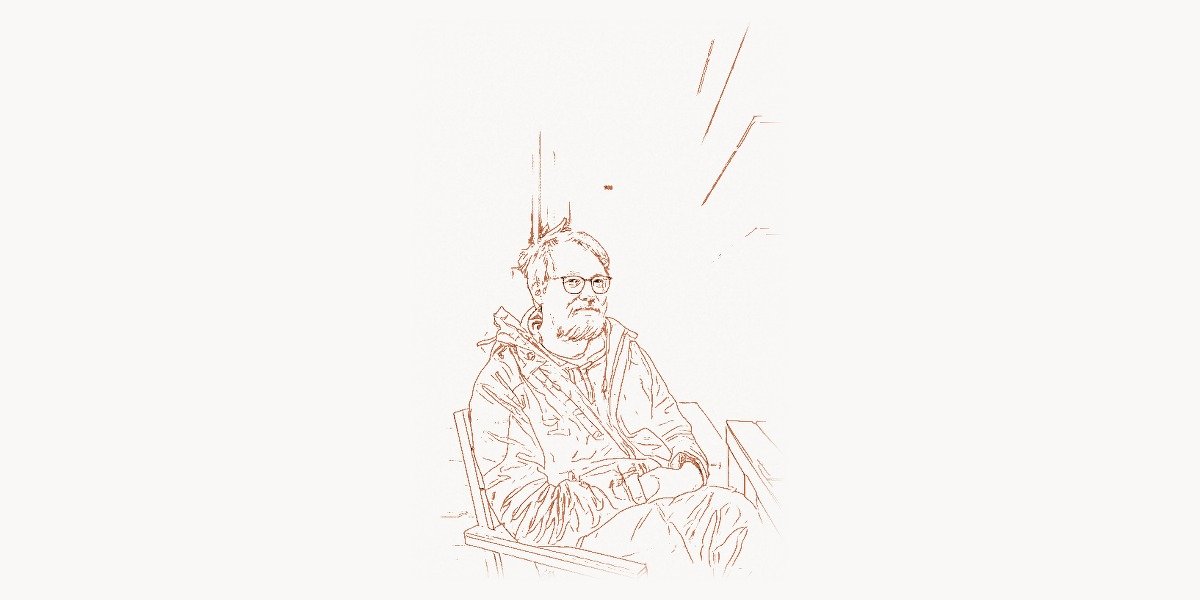
Few names in the Linux world provoke such polarized reactions as Lennart Poettering. To his supporters, he is the visionary systems engineer who dragged Linux infrastructure into the modern era, replacing decades-old init systems with a coherent, unified service manager. To his detractors, he is the developer who broke Unix philosophy and introduced unnecessary complexity into the heart of every major Linux distribution. Regardless of where one stands in that debate, the facts are indisputable: Poettering’s creations — systemd, PulseAudio, and Avahi — run on hundreds of millions of machines worldwide. His work has fundamentally reshaped how Linux boots, manages services, handles audio, and discovers network devices. This is the story of one of the most influential and controversial systems engineers of the twenty-first century.
Early Life and Education
Lennart Poettering was born in 1980 in Guatemala, where his German father worked as a diplomat. He spent portions of his childhood in various countries before the family settled in Germany. Growing up in an internationally mobile household gave Poettering exposure to different cultures and perspectives — a background that would later inform his willingness to challenge established norms in the software world.
Poettering studied computer science at the University of Hamburg, where he became deeply involved in the free software community. Even as a student, he demonstrated a talent for systems-level programming and a strong opinion about how software infrastructure should be designed. His university years coincided with the early 2000s Linux desktop push, a period when the community was aggressively trying to make Linux viable for everyday users. This environment shaped his conviction that Linux’s underlying plumbing needed fundamental overhaul, not incremental patches.
Avahi: Zero-Configuration Networking for Linux
Poettering’s first major contribution to the Linux ecosystem was Avahi, an implementation of the mDNS/DNS-SD protocol suite (also known as Zeroconf or Bonjour in Apple’s ecosystem). Before Avahi, discovering printers, file shares, and other services on a local network required manual configuration on Linux systems — a sharp contrast to the seamless experience on macOS and Windows.
Released in 2004, Avahi quickly became the standard mDNS implementation across Linux distributions. It enabled automatic service discovery without requiring a central DNS server, making local networking dramatically more user-friendly. While Avahi was not a flashy project, it demonstrated two traits that would define Poettering’s career: identifying critical infrastructure gaps that others overlooked and building comprehensive solutions rather than minimal patches.
The project also established Poettering’s connection to the freedesktop.org community, a collaborative space where cross-desktop Linux standards were developed. This community would become the home for many of his future projects, including his most significant creations.
PulseAudio: Fixing Linux Audio
If there was one area where Linux’s reputation suffered most among desktop users, it was audio. The stack was a tangled mess of competing subsystems — OSS, ALSA, ESD, aRts — each with different capabilities and limitations. Mixing audio from multiple applications simultaneously, something Windows and macOS handled transparently, was a genuine challenge on Linux. Poettering set out to fix this with PulseAudio, a network-capable sound server designed to sit on top of ALSA and provide a unified, modern audio experience.
PulseAudio was first released in 2004, but its widespread adoption — and the controversy surrounding it — peaked between 2008 and 2010 when major distributions like Ubuntu and Fedora made it the default sound server. The initial rollout was rocky. Users experienced audio glitches, latency issues, and bizarre failures. The backlash was intense, and “just remove PulseAudio” became a common piece of advice in Linux forums.
However, the problems were not solely PulseAudio’s fault. Many ALSA drivers had bugs that were previously masked by simpler audio configurations. PulseAudio exposed these issues by demanding more from the underlying driver stack. Over time, as drivers improved and PulseAudio itself matured, it became a reliable and feature-rich audio system. Per-application volume control, automatic device switching, network audio streaming, and Bluetooth audio support all became seamless — features that had been nearly impossible before.
The PulseAudio experience taught Poettering and the broader community a critical lesson about infrastructure transitions: replacing a deeply embedded system component causes widespread disruption even when the replacement is technically superior. This lesson would prove relevant — and somewhat ironic — when systemd arrived. For developers working on complex projects where infrastructure transitions are common, tools like Taskee can help coordinate the rollout phases and track progress across teams.
systemd: Reimagining How Linux Boots and Runs
In March 2010, Poettering announced systemd, a system and service manager intended to replace the venerable SysVinit. The announcement — posted on his blog — laid out a vision for a fundamentally different approach to Linux system initialization and service management. Where SysVinit used sequential shell scripts to start services one after another, systemd introduced parallelized startup with explicit dependency tracking, socket activation, and a unified configuration format.
The technical arguments were compelling. SysVinit was slow because it started services sequentially. It had no built-in mechanism for process supervision — if a service crashed, it stayed dead unless a separate watchdog was configured. Service files were shell scripts of varying quality, with no standardized interface for querying status, managing dependencies, or handling failures. systemd addressed all of these shortcomings with a clean, declarative unit file format.
A basic systemd service unit file demonstrates the clarity of the approach:
[Unit]
Description=My Custom Web Application
Documentation=https://example.com/docs
After=network.target postgresql.service
Requires=postgresql.service

[Service]
Type=notify
User=webapp
Group=webapp
WorkingDirectory=/opt/webapp
ExecStart=/opt/webapp/bin/server --config /etc/webapp/config.toml
ExecReload=/bin/kill -HUP $MAINPID
Restart=on-failure
RestartSec=5
WatchdogSec=30
MemoryMax=512M
CPUQuota=80%

[Install]
WantedBy=multi-user.target
Compare that to the equivalent SysVinit script, which would have required dozens of lines of bash handling PID files, start/stop functions, status checks, and signal trapping — all reimplemented slightly differently for each service. systemd’s declarative format eliminated entire categories of bugs and inconsistencies.
Rapid Adoption and Fierce Resistance
systemd’s adoption was remarkably swift. Fedora adopted it in 2011 (version 15), followed by Arch Linux, openSUSE, and most critically, Debian in 2014 after a contentious vote within the project’s technical committee. By 2015, every major Linux distribution except Gentoo and Slackware had made systemd the default init system — a transformation of core infrastructure that was extraordinary in both speed and scope. Patrick Volkerding’s Slackware notably remained one of the few holdouts, consistent with its tradition of conservative, Unix-purist design.
The resistance was equally fierce. Critics argued that systemd violated the Unix philosophy of small, single-purpose tools by bundling a growing number of components: a logging daemon (journald), a login manager (logind), a network manager (networkd), a DNS resolver (resolved), a time synchronization client (timesyncd), and more. The project’s scope expanded well beyond init replacement into what some saw as an attempt to standardize — or monopolize — the entire Linux base system.
The debate grew so heated that it fractured communities. The Debian vote on systemd adoption led to the creation of the Devuan distribution, a Debian fork specifically created to avoid systemd. Online discussions frequently devolved into personal attacks against Poettering, who reported receiving death threats and sustained harassment. The intensity of the opposition reflected how deeply the Unix community valued its traditions — and how threatening systemd’s integrationist approach felt to those traditions.
The Technical Merits
Setting aside the philosophical debates, systemd introduced genuinely transformative capabilities. Socket activation allowed services to be started on-demand when a connection arrived, reducing boot times and resource usage. Cgroup integration provided fine-grained resource control for every service. The journal provided structured, indexed logging that could be queried with precise filters — a dramatic improvement over parsing flat text files with grep.
Querying the journal demonstrates the power of structured logging:
# Show logs for a specific service since last boot
journalctl -u nginx.service -b --no-pager

# Show only errors from the last hour in JSON format
journalctl -p err --since "1 hour ago" -o json-pretty

# Follow real-time logs for multiple services
journalctl -f -u postgresql.service -u webapp.service

# Show disk usage of the journal
journalctl --disk-usage

# Show kernel messages related to USB
journalctl -k --grep="usb"
These capabilities were not merely convenient — they fundamentally improved the operational reliability of Linux systems. System administrators could now reason about service dependencies, track resource consumption per service, and debug boot failures with tools that provided structured, queryable data rather than scattered log files. This operational clarity proved especially valuable in containerized environments, where systemd’s cgroup integration aligned naturally with the resource isolation model used by Docker and container runtimes.
Working at Red Hat
Throughout the development of PulseAudio, Avahi, and systemd, Poettering worked at Red Hat, the leading commercial Linux company. Red Hat provided the ideal environment for his work: a company that was deeply invested in Linux infrastructure, employed many of the kernel’s top developers, and had both the resources and the motivation to improve the Linux base system. His colleague Ingo Molnar, famous for the Completely Fair Scheduler in the Linux kernel, was an early advocate and contributor to systemd’s development.
Red Hat’s support was instrumental in systemd’s success. The company not only employed Poettering full-time to work on the project but also ensured that Fedora — Red Hat’s community distribution — served as the proving ground for systemd and its components. This corporate backing gave systemd an advantage that few open source projects enjoy: a well-funded team, professional testing infrastructure, and a guaranteed deployment path through one of the most influential Linux distributions.
Poettering’s tenure at Red Hat also saw him contribute to D-Bus, the inter-process communication system that became central to the Linux desktop, and various other freedesktop.org specifications. His work consistently focused on the same theme: replacing ad-hoc, fragmented Linux infrastructure with standardized, well-designed systems.
The Move to Microsoft
In 2022, Poettering made a move that surprised many in the Linux community: he joined Microsoft. The announcement came via his social media accounts and was met with a mixture of shock, skepticism, and pragmatic acceptance. Microsoft had spent the previous several years investing heavily in Linux — through Windows Subsystem for Linux (WSL), Azure’s extensive Linux support, and contributions to the Linux kernel — but hiring the creator of systemd still felt like a symbolic milestone.
At Microsoft, Poettering continued working on systemd and related projects. His GitHub activity showed ongoing commits to the systemd repository, and he remained involved in the project’s technical direction. The move underscored a broader reality: in the modern tech industry, the boundaries between companies and open source projects are increasingly fluid. A developer can work for Microsoft while maintaining a project that runs on every Linux server in the world — including those competing with Azure.
Technical Philosophy and Design Principles
Understanding Poettering’s impact requires understanding his design philosophy, which diverges sharply from traditional Unix thinking. Where the Unix philosophy advocates for small, composable tools connected by text pipes, Poettering has argued for integrated systems with well-defined interfaces. His rationale is pragmatic rather than ideological: real-world systems have complex interdependencies that text pipes handle poorly.
Consider service management. In the SysVinit model, a service’s startup script is an independent shell program that happens to be placed in /etc/init.d/. There is no formal mechanism for one service to express a dependency on another, no standardized way to report status, and no guarantee about execution order. The Unix philosophy’s emphasis on independence becomes a liability when components genuinely depend on each other.
systemd’s approach treats the entire system as a graph of interdependent units with explicit relationships. This integrationist philosophy extends to logging (structured journal entries rather than arbitrary text files), device management (udev rules integrated with the service manager), and network configuration (networkd coordinating with resolved and timesyncd). Each component can function independently, but they work better together — a design pattern that owes more to Plan 9’s /proc philosophy than to classical Unix.
This approach has parallels in modern software development broadly. The shift from monolithic applications to microservices initially emphasized independence, but the industry quickly learned that managing dependencies, configuration, and cross-service concerns requires coordinated infrastructure. Tools for managing complex digital projects reflect a similar evolution — from isolated task lists to integrated project management platforms that track dependencies and resource allocation across entire teams.
Contributions Beyond the Big Three
While systemd, PulseAudio, and Avahi are Poettering’s most prominent projects, his contributions extend further. He played a key role in developing and promoting several technologies that modernized the Linux stack:
systemd-homed introduced a new approach to home directory management, making portable and encrypted home directories a first-class feature of the Linux system. Instead of scattering user configuration across /etc/passwd, /etc/shadow, and /etc/group, systemd-homed encapsulates everything about a user’s identity and data in a self-contained, encrypted image that can move between machines.
systemd-boot (formerly gummiboot) provided a simple UEFI boot manager as an alternative to GRUB, which had grown increasingly complex. The tool exemplified Poettering’s preference for purpose-built solutions over multipurpose tools that accumulate features over decades.
mkosi, a tool for building clean OS images using distribution package managers, reflected his interest in reproducible builds and immutable infrastructure — concepts that aligned with the container and cloud-native movements. Developers working with modern CI/CD pipelines increasingly rely on tools like mkosi to create reproducible build environments.
The Controversy: Unpacking the Criticism
No honest account of Poettering’s career can avoid addressing the controversy that has followed him. The criticism falls into several categories, and understanding them requires separating technical disagreements from personal attacks.
Scope creep is the most common technical criticism. systemd started as an init replacement but grew to encompass logging, networking, DNS, time synchronization, login management, container management, and more. Critics argue this creates a tightly coupled monoculture that is difficult to audit, replace partially, or run on non-standard systems. Supporters counter that these components are modular — each can be replaced independently — and that tight integration improves reliability.
Binary logging in journald was another flashpoint. Traditional Unix logging uses plain text files, which are simple, universally readable, and compatible with the entire Unix tool ecosystem. journald stores logs in a binary format that requires the journalctl tool to read. Poettering argued that structured binary logging enables features impossible with flat text — indexing, authentication, structured fields — but critics saw it as a rejection of Unix’s text-is-universal interface.
Attitude toward compatibility also drew criticism. Poettering was perceived as dismissive of edge cases, embedded systems, and non-Linux platforms. His blog post “The Biggest Myths” about systemd, while technically informative, struck some readers as condescending. In open source communities where tone matters, this approach alienated potential allies.
The personal attacks went far beyond legitimate criticism. Poettering publicly described receiving death threats and sustained online harassment. Linus Torvalds, who has his own history of sharp communication, at times criticized systemd’s approach but also acknowledged the harassment was unacceptable. The situation highlighted the open source community’s ongoing struggle with toxic behavior toward developers who make controversial but consequential decisions.
Legacy and Impact
As of the mid-2020s, Poettering’s impact on Linux is difficult to overstate. systemd is the init system on essentially every major Linux distribution used in production environments. It manages services on the vast majority of Linux servers powering the internet, from small VPS instances to massive cloud deployments on AWS, Google Cloud, and Azure. PulseAudio (and its successor PipeWire, which was built to address PulseAudio’s limitations while learning from its design) handles audio on nearly every Linux desktop. Avahi provides service discovery across millions of networks.
More broadly, Poettering changed the culture of Linux systems development. Before systemd, the attitude toward Linux base infrastructure was conservative — if it worked, do not touch it. Poettering demonstrated that wholesale replacement of core components was possible and, in many cases, beneficial. This precedent influenced later projects: PipeWire replacing PulseAudio, Wayland replacing X11, and the general willingness to rethink foundational components rather than patching them indefinitely. The modernization effort in the Linux graphics stack, championed by developers like Keith Packard, followed a similar trajectory of replacing entrenched but aging infrastructure.
His work also accelerated Linux’s viability as a server platform in the cloud era. systemd’s cgroup integration, socket activation, and service supervision capabilities aligned perfectly with the requirements of cloud infrastructure, where services must start quickly, be monitored reliably, and recover from failures automatically. It is no coincidence that the rise of systemd paralleled the rise of Linux as the dominant server operating system.
Whether one views Poettering as a visionary modernizer or an aggressive integrationist who overstepped, his influence is undeniable. He identified real problems — slow boot times, fragmented audio, missing service supervision, inconsistent service configuration — and built comprehensive solutions that the industry adopted. The debates he sparked about Unix philosophy, software scope, and community governance continue to shape how the Linux ecosystem evolves.
Frequently Asked Questions
What is systemd and why was it created?
systemd is a system and service manager for Linux that replaced the older SysVinit system. It was created by Lennart Poettering and Kay Sievers in 2010 to address fundamental limitations of SysVinit, including slow sequential boot processes, lack of service supervision, and inconsistent service management interfaces. systemd introduced parallel service startup, socket activation, cgroup-based resource management, and a declarative unit file format that standardized how services are configured across all Linux distributions.
Why is Lennart Poettering considered controversial?
Poettering is controversial primarily because systemd’s integrationist design philosophy clashes with the traditional Unix philosophy of small, single-purpose tools. Critics argue that systemd grew too large in scope, replaced working components unnecessarily, introduced binary logging that broke text-based workflows, and created a monoculture in Linux infrastructure. The debate became intensely personal, with Poettering reporting death threats and sustained harassment — illustrating both the passion of the Linux community and its problems with toxic behavior.
What happened to PulseAudio?
PulseAudio remains in use on many Linux systems but is gradually being superseded by PipeWire, a newer audio (and video) server created by Wim Taymans. PipeWire was designed to handle the use cases that PulseAudio addressed while also supporting professional audio workflows (previously handled by JACK) and modern video capture requirements. PipeWire maintains backward compatibility with PulseAudio applications, making the transition largely transparent to users.
Why did Lennart Poettering move from Red Hat to Microsoft?
Poettering joined Microsoft in 2022, continuing his work on systemd and related projects. While he has not publicly detailed all his reasons, the move reflected Microsoft’s significant investment in Linux infrastructure through Azure and WSL. At Microsoft, Poettering maintained his role as a leading systemd contributor, demonstrating that modern open source development often transcends company boundaries.
Does systemd violate the Unix philosophy?
This is the central philosophical debate. Proponents of traditional Unix philosophy argue that systemd does violate it by bundling many functions into a single project. Poettering and his supporters counter that systemd’s components are modular — each can be replaced independently — and that explicit integration between interdependent components produces more reliable systems than loose coupling through text pipes. The debate remains unresolved and reflects a genuine tension in software design between modularity and integration.
What Linux distributions do not use systemd?
Several distributions avoid systemd, though they represent a small fraction of the Linux ecosystem. Notable examples include Devuan (a Debian fork), Gentoo (which supports multiple init systems including OpenRC), Slackware, Alpine Linux (which uses OpenRC), Void Linux (which uses runit), and Artix Linux (an Arch fork without systemd). These distributions cater to users who prefer alternative init systems for philosophical, technical, or minimalism reasons.
What is Avahi used for?
Avahi is an implementation of the mDNS/DNS-SD protocols that enables automatic service discovery on local networks without requiring a central DNS server. In practice, it allows Linux machines to automatically find printers, file shares, media servers, and other network services. It is the Linux equivalent of Apple’s Bonjour and is widely used in both desktop and embedded Linux environments.