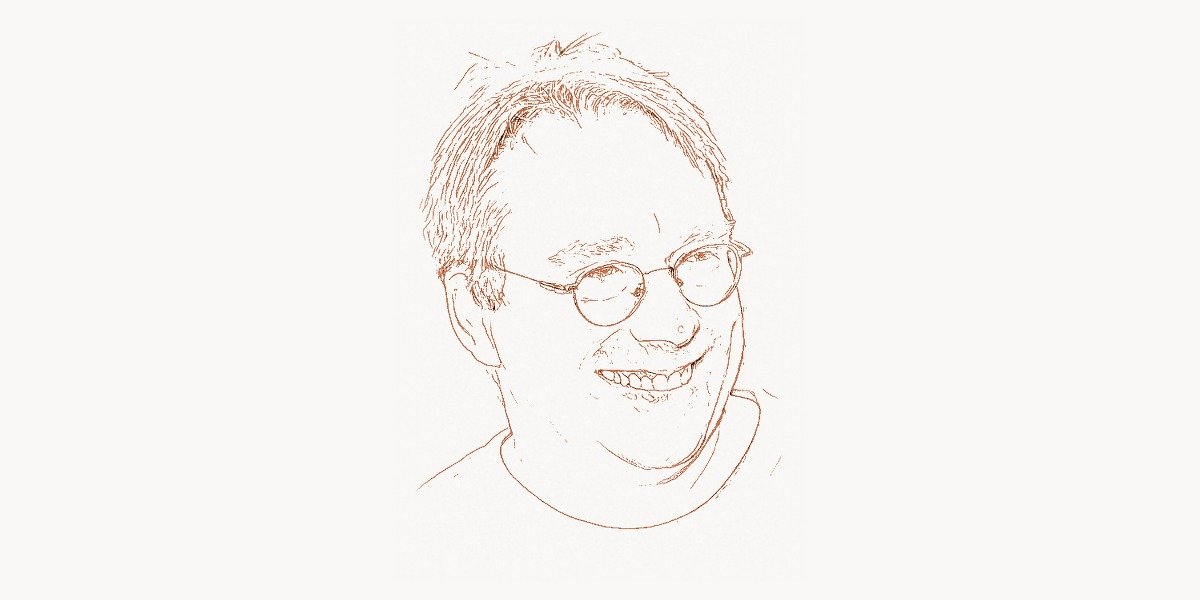
On August 25, 1991, a 21-year-old Finnish student posted a modest message to the comp.os.minix newsgroup. “I’m doing a (free) operating system (just a hobby, won’t be big and professional like gnu),” he wrote. That student was Linus Torvalds, and his hobby project would become Linux — the kernel that now powers 96.3% of the top one million web servers, all 500 of the world’s fastest supercomputers, and over 3 billion Android devices. Fourteen years later, he would create Git, the version control system used by virtually every software team on Earth. Two tools. One person’s frustration with existing software. An entire industry reshaped.
Early Life and Path to Technology
Linus Benedict Torvalds was born on December 28, 1969, in Helsinki, Finland. His parents, Nils and Anna Torvalds, were both journalists — his father a Finnish-speaking Swede who worked in radio, his mother a translator. The family was not particularly technical. But Linus found his calling early: his grandfather, Leo Toerngvist, a statistics professor at the University of Helsinki, owned a Commodore VIC-20. By age 11, Linus was writing programs in BASIC on that machine, typing them in from magazines and then modifying them to see what happened.
He enrolled at the University of Helsinki in 1988 to study computer science. There he encountered Andrew Tanenbaum’s MINIX, a simplified Unix clone designed for teaching. MINIX worked, but its license restricted modifications, and Tanenbaum was not interested in contributions from students who wanted to expand it beyond its educational purpose. Torvalds wanted a real operating system on his new Intel 386 PC — one he could modify freely. Unable to afford the $5,000 price tag of a commercial Unix license, he decided to write his own kernel from scratch. He was 21 years old, working alone in his apartment in Helsinki.
The Breakthrough: Building the Linux Kernel
The Technical Innovation
Torvalds started work on his kernel in April 1991. His initial goal was surprisingly narrow: he wanted terminal emulation so he could connect to his university’s Unix server from home over a modem. He needed a terminal program, and to build a terminal program, he needed a terminal driver, a serial port driver, and something to manage memory and processes. Before long, he was building an operating system kernel.
He wrote the first code in GNU C on his Intel 386 PC, using MINIX as his development environment. The 386 processor was important — it was the first affordable Intel chip with proper hardware memory protection and 32-bit addressing, making it capable of running a real multitasking operating system.
Version 0.01, released in September 1991, was barely functional. It needed MINIX’s filesystem to boot. It had no networking support. It supported exactly one hardware configuration — Torvalds’ own PC with its specific hard drive and memory layout. But it had a working process scheduler, memory management with paging, and a nascent filesystem. Critically, Torvalds released the source code on an FTP server and invited others to contribute.
By October 1991, version 0.02 could run the GNU Bash shell and the GCC compiler. Contributors started submitting patches — first a handful, then dozens. By December, version 0.11 was self-hosting — it could compile its own source code without needing MINIX. This was a crucial milestone: the operating system was now independent of the platform it was born on.
The development speed was remarkable, partly because Torvalds had made a pragmatic architectural decision that would define the project: he chose a monolithic kernel design. This sparked a famous Usenet debate with Andrew Tanenbaum in January 1992. Tanenbaum publicly declared that Linux was “obsolete” because it used a monolithic architecture instead of a microkernel. In a microkernel design, drivers and services run in user space as separate processes, communicating through message passing. Tanenbaum argued this was cleaner, more modular, and more reliable. Torvalds disagreed. A monolithic kernel, where drivers run inside kernel space with direct access to hardware, was simpler to develop and significantly faster in practice. Three decades later, Linux dominates the server and embedded markets while microkernel operating systems (Mach, MINIX 3, QNX) remain niche. Pragmatism won.
/* Early Linux kernel: process creation via fork()
 * Torvalds implemented Unix semantics from scratch on the i386.
 * This pattern — clean C, direct hardware interaction — defined Linux.
 *
 * The fork() system call duplicates the calling process.
 * The child gets a copy of the parent's memory space. */

#include <linux/sched.h>
#include <asm/system.h>

int sys_fork(struct pt_regs *regs)
{
    return do_fork(SIGCHLD, regs->esp, regs, 0);
}

/* Every Linux system starts here — PID 1 (init) spawns user space.
 * This function has existed in some form since the very first release.
 * If none of the init binaries are found, the kernel panics. */
static int init(void *unused)
{
    if (execute_command)
        run_init_process(execute_command);

    run_init_process("/sbin/init");
    run_init_process("/etc/init");
    run_init_process("/bin/init");
    run_init_process("/bin/sh");

    panic("No init found. Try passing init= option to kernel.");
}
In January 1992, Torvalds made the second most important decision of the project: he re-licensed Linux under the GNU General Public License (GPL) version 2. The original license had a restriction against commercial distribution. The GPL removed that restriction but added a different requirement: anyone distributing modified versions must also share the source code. This “copyleft” mechanism created a virtuous cycle. Every company that improved Linux — IBM, Red Hat, Google, Intel, Samsung, Huawei — had to contribute those improvements back to the community. Over time, this meant that Linux accumulated improvements from the world’s largest technology companies, all for free. Corporate self-interest, channeled through the GPL, produced a commons that benefited everyone.
Why It Mattered
Linux did not just provide another operating system. It proved that a decentralized, volunteer-driven development model could produce software rivaling and eventually surpassing anything created by corporations with billion-dollar budgets. This was not a foregone conclusion. In the early 1990s, the idea that unpaid volunteers coordinating over email could build an enterprise-grade operating system was considered unrealistic by most industry professionals.
The numbers today are staggering. Linux runs on 96.3% of the top one million web servers worldwide. Android, which uses the Linux kernel, runs on 3.6 billion active devices. Every major cloud provider — Amazon Web Services, Google Cloud Platform, Microsoft Azure — relies on Linux as its primary server operating system. All 500 of the world’s fastest supercomputers run Linux (the last non-Linux supercomputer dropped off the list in November 2017). The International Space Station switched to Linux in 2013. Tesla vehicles run Linux. The Mars Ingenuity helicopter ran Linux on a Qualcomm Snapdragon processor.
For web developers focused on performance and deployment, this matters directly. When you deploy a web application to any major hosting platform, it almost certainly runs on a Linux server. Understanding Linux process management, file permissions, memory handling, and networking fundamentals makes you a measurably better developer. The kernel Torvalds started writing in his Helsinki apartment now handles billions of HTTP requests every second across the global internet.
Beyond Linux: Creating Git
By 2005, the Linux kernel project had grown to thousands of contributors submitting patches through a complex email-based workflow. Since 2002, the project had used BitKeeper, a proprietary version control system whose creator, Larry McVoy, offered a free license to open-source developers. In April 2005, that license was revoked after Andrew Tridgell, a Linux developer, reverse-engineered BitKeeper’s protocol.
Torvalds needed a replacement immediately. He evaluated every open-source version control system available — CVS, Subversion, Monotone, GNU Arch, Darcs — and found them all inadequate. CVS and Subversion were centralized, creating a single point of failure. Monotone was too slow. None could handle the Linux kernel’s scale: 20,000+ files, thousands of branches, hundreds of merges per release cycle. So he did what he always does when existing tools fail him: he built his own.
In approximately ten days in April 2005, Torvalds wrote the core of Git. His requirements were specific and uncompromising: fully distributed operation (no central server as a single point of failure), extreme speed (handling the kernel’s massive codebase), cryptographic data integrity (SHA-1 hashes for every object), and efficient support for non-linear development (cheap branching and merging). The first self-hosting commit — Git tracking its own source code — happened on April 7, 2005. By June, Git was managing the Linux kernel’s development.
# Git's fundamental design: content-addressable storage
# Every object (blob, tree, commit, tag) is stored by its SHA-1 hash.
# This makes Git a content-addressable filesystem with version control on top.

# Store a piece of content and get its hash address
echo "Hello, Linux" | git hash-object -w --stdin
# Returns: a5c19667710c39d4b0f6a77d5b1783bcf6dd428f

# Retrieve content by its hash — the hash IS the address
git cat-file -p a5c19667710c39d4b0f6a77d5b1783bcf6dd428f
# Output: Hello, Linux

# A commit is a text object pointing to a tree (snapshot) and parent(s)
git cat-file -p HEAD
# tree 4b825dc642cb6eb9a060e54bf899d0356c3e37e0
# parent 8e2a0b1c3d4e5f6a7b8c9d0e1f2a3b4c5d6e7f8a
# author Linus Torvalds <torvalds@linux-foundation.org> 1112911993 -0700
#
# Initial revision of "git", the information manager from hell

# Branching is just creating a pointer — near-instantaneous
git branch feature-x    # Creates a 41-byte file. That's it.
git checkout feature-x   # Switches the HEAD pointer. Milliseconds.
Git’s design was radical compared to existing version control systems. CVS and Subversion tracked changes (deltas) to individual files. Git took a completely different approach: it stores snapshots of the entire project state at each commit. Each file is stored as a “blob” object identified by its SHA-1 hash. A “tree” object maps filenames to blob hashes. A “commit” object points to a tree and to its parent commit(s). This content-addressable architecture made branching trivial (creating a branch is just writing a 41-byte file containing a commit hash) and merging fast (Git can compare tree objects structurally rather than diffing every file).
Today, Git is used by an estimated 100 million developers worldwide. GitHub hosts over 420 million repositories. GitLab, Bitbucket, and dozens of other platforms are built on Git. The basic Git workflow — clone, branch, commit, push, pull request — is the standard collaboration model for software development globally. The CI/CD pipelines that automate modern deployment all trigger from Git events.
Philosophy and Engineering Approach
Key Principles
Torvalds’ engineering philosophy can be distilled into several concrete principles that he has articulated repeatedly in emails, talks, and interviews over three decades.
Pragmatism over ideology. The monolithic-vs-microkernel debate is the defining example. Torvalds chose the architecture that worked, not the one that was theoretically elegant. He has applied the same logic throughout his career — to coding standards, licensing decisions, language choices, and feature priorities. “Talk is cheap. Show me the code,” he wrote on the Linux kernel mailing list — a statement that became the project’s unofficial motto and one of the most quoted lines in open-source culture.
Never break user space. This is Torvalds’ most fiercely held rule, and he enforces it with legendary intensity. If a kernel update breaks existing user-space programs, the kernel is wrong — not the programs. He has publicly rebuked senior kernel developers who argued that user-space code should adapt to kernel changes. In a 2012 mailing list post, he wrote that breaking user space is “the number one rule” and that any developer who does so “will be personally walking over to where you live and break your kneecaps.” (Hyperbole, but the principle is absolute.) This commitment to backward compatibility is a major reason enterprises trust Linux for production systems handling trillions of dollars in transactions.
“Good taste” in code. In a 2016 TED interview, Torvalds demonstrated his concept of “good taste” with two code examples for removing a node from a linked list. The first checked whether the node was the head of the list as a special case. The second used an indirect pointer that eliminated the special case entirely — the same code handled all nodes, including the head. Torvalds called the second example “good taste.” The principle: well-designed code eliminates edge cases through better abstractions, not by piling on conditional checks.
Release early, iterate constantly. The Linux kernel follows a strict time-based release cycle — a new version every 9-10 weeks. Each release begins with a two-week merge window during which new features are accepted, followed by 6-8 weeks of release candidates (rc1 through rc7 or rc8) focused on stabilization and bug fixes. This cadence forces developers to submit small, focused patches rather than massive feature branches. As of early 2026, the kernel is past version 6.12, with each release containing 10,000-15,000 individual commits from over 1,500 contributors.
Legacy and Modern Relevance
Torvalds’ influence on modern software development extends far beyond the code he personally wrote. He demonstrated conclusively that open-source development can produce world-class infrastructure software. He proved that a single developer’s side project can scale to a global collaboration involving over 15,000 contributors from hundreds of companies. He showed that giving software away under a copyleft license can create more economic value than selling it — the Linux ecosystem is estimated to represent over $50 billion in development value.
Every web developer interacts with Torvalds’ work daily, whether they realize it or not. When you run git commit, that is his creation. When you deploy to AWS, Google Cloud, or Azure, your code runs on his kernel. When you run Docker containers, they rely on Linux kernel features — cgroups for resource isolation, namespaces for process isolation, overlay filesystems for image layering. When you browse any website, the server responding to your request is almost certainly running Linux.
The modern web frameworks we build with — React, Vue, Svelte — all run on infrastructure Torvalds built. The open-source model he championed by example has become the default development model for developer tools and infrastructure software. npm, PyPI, crates.io, Docker Hub — the entire ecosystem of package registries and repositories exists because Torvalds proved that open collaboration works at global scale.
Other tech pioneers built specific applications or languages. Dennis Ritchie and Ken Thompson created Unix and C — the philosophical ancestors of Linux. Tim Berners-Lee invented the Web. Brendan Eich created JavaScript. Grace Hopper invented the compiler. But all of their creations run on Linux servers, managed and deployed through Git. That is the scope of Torvalds’ impact.
Today, Torvalds lives in Portland, Oregon, with his wife Tove (a Finnish karate champion) and continues to manage Linux kernel development as the project’s “benevolent dictator for life.” He works from home, reviews patches submitted by maintainers, makes final merge decisions, and occasionally fires off a characteristically blunt email to a developer whose patch does not meet his standards. He is employed by the Linux Foundation, which funds his work. At 56, he has held his role as Linux’s lead maintainer for over three decades — one of the longest continuous leadership tenures in the history of software development.
Key Facts
- Born: December 28, 1969, Helsinki, Finland
- Known for: Creating Linux (1991) and Git (2005)
- Education: M.Sc. in Computer Science, University of Helsinki (1996)
- Key projects: Linux kernel, Git, Subsurface (open-source dive log software)
- Awards: Millennium Technology Prize (2012, shared), IEEE Computer Pioneer Award (2014), ACM Software System Award (for Git, 2023)
- Current role: Lead maintainer of the Linux kernel at the Linux Foundation
- Citizenship: Finnish and American (U.S. citizen since 2010)
- Linux kernel stats: 30+ million lines of code, 15,000+ contributors, new release every ~10 weeks
Frequently Asked Questions
Who is Linus Torvalds?
Linus Torvalds is a Finnish-American software engineer who created the Linux kernel in 1991 and the Git version control system in 2005. He remains the lead maintainer of the Linux kernel, overseeing the development of the operating system that powers most of the world’s servers, all of the top 500 supercomputers, and over 3 billion Android smartphones.
What did Linus Torvalds create?
Torvalds created two foundational tools in modern computing. Linux is an open-source operating system kernel that runs on everything from web servers to Android phones to the International Space Station and the Mars Ingenuity helicopter. Git is a distributed version control system used by over 100 million developers for tracking code changes and collaborating on software projects. Both tools are free and open-source.
Why is Linus Torvalds important to computer science?
Torvalds proved that open-source, community-driven development can produce software that outperforms commercial alternatives backed by billions of dollars. Linux displaced proprietary Unix systems and became the dominant operating system for servers, mobile devices (via Android), and embedded systems. Git revolutionized how developers collaborate on code. Together, these two projects underpin nearly all modern software infrastructure.
What is Linus Torvalds doing today?
Torvalds continues to serve as the lead maintainer and “benevolent dictator for life” of the Linux kernel project. He works from his home in Portland, Oregon, reviewing patches from subsystem maintainers, making merge decisions, and guiding the kernel’s development through its regular 9-10 week release cycle. He is employed by the Linux Foundation, the nonprofit organization that supports the Linux ecosystem.