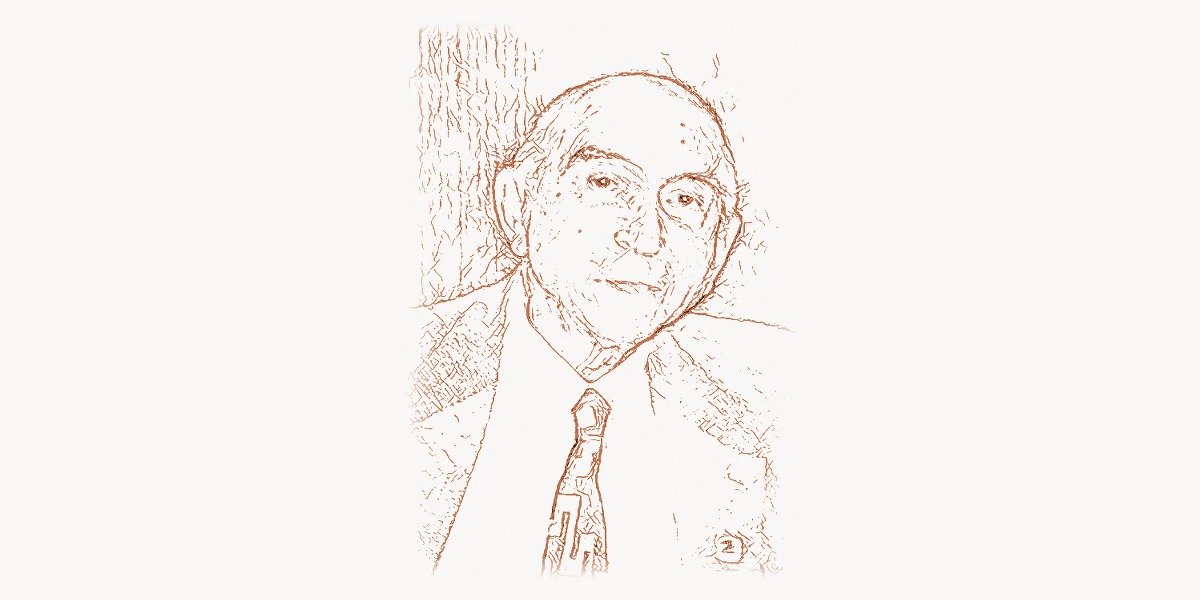
In an era when computers demanded absolute certainty — every value a rigid 0 or 1, every boundary razor-sharp — one mathematician dared to ask: what if machines could reason like humans, embracing shades of gray instead of stark black and white? Lotfi Aliasker Zadeh, a professor at the University of California, Berkeley, introduced fuzzy logic and fuzzy sets theory in 1965, fundamentally altering how engineers, computer scientists, and AI researchers think about uncertainty, imprecision, and the messy realities of the physical world. His ideas were initially dismissed by many in the Western academic establishment, yet they went on to power everything from subway systems in Sendai to washing machines in Tokyo, from industrial process controls to modern artificial intelligence. Zadeh’s work did not merely add a new tool to the mathematical toolbox — it challenged the very foundations of classical logic that had dominated scientific thought since Aristotle.
Early Life and Education
Lotfi Aliasker Zadeh was born on February 4, 1921, in Baku, Azerbaijan, which was then part of the Soviet Union. His father, Rahim Aleskerzade, was an Iranian journalist and businessman from Ardabil; his mother, Fanya Korenman, was a Russian physician. This multicultural upbringing — spanning Azerbaijani, Iranian, and Russian influences — would later inform Zadeh’s unusually broad intellectual perspective. The family moved to Tehran, Iran, when Lotfi was ten years old, and he attended Alborz College, an American Presbyterian missionary school known for its rigorous academic standards. There, he developed a deep fascination with science and mathematics, absorbing both Eastern and Western intellectual traditions.
In 1942, Zadeh earned his bachelor’s degree in electrical engineering from the University of Tehran. Seeking greater academic opportunities, he emigrated to the United States in 1944 — a journey that took him through Cairo during the turbulence of World War II. He enrolled at the Massachusetts Institute of Technology, where he earned a master’s degree in electrical engineering in 1946. He then moved to Columbia University in New York, completing his Ph.D. in 1949 under the supervision of John R. Ragazzini. His doctoral work focused on frequency analysis of time-varying networks, a rigorous grounding in classical systems theory that would ironically serve as the springboard for his later radical departure from classical mathematical thinking.
At Columbia, Zadeh quickly rose through the academic ranks, becoming a full professor by 1957. However, it was his move to the University of California, Berkeley, in 1959 that would define his career. He joined the Department of Electrical Engineering and Computer Sciences and would remain there for the rest of his life — a remarkable tenure of nearly six decades. At Berkeley, Zadeh found the intellectual freedom and stimulating environment that allowed him to pursue ideas that most of his contemporaries considered heretical.
Career and Fuzzy Logic
Technical Innovation
The landmark moment came in 1965, when Zadeh published his seminal paper “Fuzzy Sets” in the journal Information and Control. Classical set theory, as formalized by Georg Cantor and refined by generations of mathematicians, operated on a simple principle: an element either belongs to a set or it does not. Membership is binary — 1 or 0, true or false. Zadeh proposed something revolutionary: what if membership in a set were a matter of degree? In his framework, an element could belong to a set with a membership value anywhere in the continuous interval from 0 to 1. A person who is 1.75 meters tall might have a membership degree of 0.7 in the set of “tall people” rather than being forced into a binary classification.
This seemingly simple extension had profound consequences. Consider how humans describe temperature. We do not say “the water is exactly 37.2 degrees Celsius and therefore falls into category B of warmth classification.” We say “the water is warm” or “quite hot” or “a bit cool.” Fuzzy sets allowed mathematical systems to model this kind of natural, linguistic reasoning for the first time. Zadeh formalized these ideas further in a series of papers throughout the late 1960s and 1970s, introducing fuzzy logic as a logical system built on fuzzy sets, where truth values could range between completely true and completely false.
The mathematical definition of a fuzzy set is elegant in its simplicity:
# Classical set vs Fuzzy set membership
# Classical: Is the temperature "hot"? Binary answer.
def classical_hot(temp):
    return 1 if temp >= 30 else 0

# Fuzzy: How "hot" is the temperature? Degree of membership.
def fuzzy_hot(temp):
    if temp <= 20:
        return 0.0    # definitely not hot
    elif temp >= 35:
        return 1.0    # definitely hot
    else:
        return (temp - 20) / 15.0  # gradual transition

# Examples:
# classical_hot(29) = 0  (not hot — abrupt cutoff)
# fuzzy_hot(29)     = 0.6 (mostly hot — smooth gradient)
# fuzzy_hot(25)     = 0.33 (somewhat hot)
# fuzzy_hot(35)     = 1.0 (fully hot)
In 1973, Zadeh published another groundbreaking paper introducing the concept of linguistic variables — variables whose values are words or sentences in natural language rather than numbers. This idea formed the bridge between fuzzy mathematics and practical engineering. A linguistic variable like “speed” could take values such as “slow,” “medium,” or “fast,” each defined by a fuzzy membership function. Engineers could then write control rules in near-natural language: “If speed is fast and distance is close, then braking force is strong.”
Why It Mattered
The significance of fuzzy logic extends far beyond mathematical elegance. Before Zadeh’s work, engineers building control systems for complex processes faced a fundamental dilemma. Classical control theory required precise mathematical models of the systems being controlled. But many real-world systems — chemical plants, vehicle dynamics, climate systems — are too complex to model precisely. Engineers either oversimplified their models (losing accuracy) or built enormously complex ones (losing practicality). Fuzzy logic offered a third path: encode the intuitive knowledge of experienced human operators into rule-based systems that could handle imprecision naturally.
The practical impact was first demonstrated dramatically in Japan. In 1987, Hitachi implemented a fuzzy logic control system for the Sendai subway, managing acceleration and braking with a smoothness that passengers noticed immediately. The system used fuzzy rules derived from the expertise of veteran drivers. Japanese industry embraced fuzzy logic enthusiastically — by the early 1990s, fuzzy controllers appeared in washing machines, rice cookers, cameras (for autofocus), air conditioners, and automobile transmissions. Companies like Matsushita, Sony, and Mitsubishi invested heavily in fuzzy technology.
This practical success stood in sharp contrast to the reception Zadeh’s ideas initially received in Western academia. Many prominent mathematicians and computer scientists were hostile to the concept. The renowned probabilist Rudolf Kalman dismissed fuzzy logic publicly. William Kahan, Zadeh’s own colleague at Berkeley and a Turing Award laureate, was a vocal critic. The objections were philosophical: why introduce vagueness into mathematics, which existed precisely to eliminate vagueness? Zadeh weathered this criticism with patience, arguing that precision was not always desirable — that forcing precision where the underlying phenomena were inherently imprecise led to worse, not better, results. The success of fuzzy logic in Japanese industry ultimately vindicated his position, though some academic skepticism persisted for decades. Zadeh’s intellectual courage in the face of sustained criticism from peers — including Alan Turing‘s philosophical descendants in the AI community — remains one of the most compelling aspects of his legacy.
Other Major Contributions
While fuzzy logic was Zadeh’s defining achievement, his contributions to science and engineering spanned a remarkably broad range. Before his fuzzy period, he made significant contributions to classical systems theory and linear systems analysis. His 1963 paper on system identification introduced state-space methods that became standard in control engineering — the same mathematical frameworks that would later influence the work of engineers like Jeff Dean building large-scale systems at Google.
In the 1970s and 1980s, Zadeh developed the theory of possibility, an alternative to probability theory for dealing with uncertainty. While probability theory asks “how likely is this event?”, possibility theory asks “how possible is this event?” — a subtle but important distinction when dealing with incomplete information. This work resonated with researchers in artificial intelligence who were grappling with how to represent uncertain knowledge in expert systems.
Zadeh also introduced the concept of computing with words (CW), a methodology for reasoning and computing with information described in natural language. This vision anticipated many of the challenges that modern natural language processing systems face. The work of researchers like Tomas Mikolov, who developed Word2Vec for representing words as numerical vectors, can be seen as a different approach to the same fundamental problem Zadeh identified: bridging the gap between human linguistic reasoning and machine computation.
His concept of soft computing — an umbrella term encompassing fuzzy logic, neural networks, evolutionary computation, and probabilistic reasoning — provided a philosophical framework for combining multiple approaches to handle real-world complexity. This integrative vision proved prescient as modern AI systems increasingly combine different techniques. The deep learning revolution championed by researchers such as Jurgen Schmidhuber with LSTM networks has in recent years found common ground with fuzzy approaches in neuro-fuzzy systems that combine the learning capability of neural networks with the interpretability of fuzzy rule systems.
A practical fuzzy logic controller demonstrates how these principles translate into working systems:
// Simple fuzzy logic controller for room temperature
// Demonstrates fuzzification, rule evaluation, and defuzzification

function fuzzyMembership(value, points) {
  // Trapezoidal membership function
  const [a, b, c, d] = points;
  if (value <= a || value >= d) return 0;
  if (value >= b && value <= c) return 1;
  if (value < b) return (value - a) / (b - a);
  return (d - value) / (d - c);
}

// Fuzzify temperature input
const temp = 26; // current temperature in Celsius
const cold   = fuzzyMembership(temp, [10, 10, 18, 22]);  // 0.0
const comfy  = fuzzyMembership(temp, [20, 23, 25, 28]);  // 0.67
const hot    = fuzzyMembership(temp, [25, 29, 40, 40]);  // 0.25

// Fuzzy rules (IF-THEN):
// IF cold  THEN heater = high
// IF comfy THEN heater = off
// IF hot   THEN cooler = medium
// Output: blended control signal via centroid defuzzification
Philosophy and Approach
Zadeh's intellectual philosophy was distinctive and deeply shaped every aspect of his work. He was not merely a mathematician solving technical problems — he was a thinker challenging fundamental assumptions about how humans interact with information and how machines should process it.
Key Principles
- The Principle of Incompatibility: As the complexity of a system increases, our ability to make precise and significant statements about its behavior diminishes until a threshold is reached beyond which precision and significance become almost mutually exclusive. This principle, which Zadeh articulated in 1973, argued that for highly complex systems, forcing precision actually reduces the meaningfulness of analysis.
- Tolerance for imprecision: Zadeh believed that the human mind's remarkable ability to summarize information, reason approximately, and make decisions under uncertainty was not a weakness to be corrected but a strength to be emulated. Machines should learn to be "usefully imprecise" rather than "uselessly precise."
- Gradualism over bivalence: Rather than forcing the world into binary categories, Zadeh advocated for recognizing the gradual transitions that characterize most natural phenomena. Boundaries between categories are typically fuzzy, not sharp, and our formal systems should reflect this reality.
- Linguistic reasoning as computation: Zadeh saw human language not as an imprecise approximation of mathematical truth but as a sophisticated computational system in its own right. His computing with words paradigm proposed that sentences in natural language could serve as carriers of imprecise information that could be processed computationally.
- Intellectual courage and persistence: Zadeh maintained his convictions for decades despite sustained criticism from prominent colleagues. He viewed scientific progress as requiring willingness to challenge established paradigms — an outlook reminiscent of the boundary-pushing approaches seen in the work of innovators like Rich Hickey, who similarly challenged mainstream programming orthodoxies with Clojure.
- Interdisciplinary synthesis: Drawing on his multicultural background and broad education, Zadeh consistently sought connections between disparate fields. His work bridged electrical engineering, mathematics, computer science, linguistics, philosophy, and cognitive science — a breadth of vision that modern cross-functional project teams strive to emulate.
Legacy and Impact
Lotfi Zadeh passed away on September 6, 2017, at the age of 96 in Berkeley, California. His legacy is vast and continues to expand. Fuzzy logic has become a standard tool in the engineer's toolkit, with applications spanning industrial automation, consumer electronics, automotive systems, medical diagnostics, financial modeling, and artificial intelligence. The IEEE Computational Intelligence Society, which Zadeh helped shape, recognizes fuzzy systems as one of the three pillars of computational intelligence alongside neural networks and evolutionary computation.
The numbers speak to the scale of his influence: over 250,000 academic papers have cited fuzzy sets and fuzzy logic; thousands of patents worldwide incorporate fuzzy techniques; and fuzzy control systems operate in countless industrial and consumer products. In project management and software development, fuzzy approaches have been applied to effort estimation, risk assessment, and decision-making under uncertainty — areas where platforms like Taskee help teams navigate complexity in their daily workflows.
Zadeh received numerous honors throughout his career, including the IEEE Medal of Honor (the highest award from the Institute of Electrical and Electronics Engineers), the Honda Prize, the Kampe de Feriet Award, the Eringen Medal, and over 30 honorary doctorates from universities around the world. He was elected to the National Academy of Engineering, a foreign member of many national academies, and received the prestigious Benjamin Franklin Medal.
Perhaps more importantly, Zadeh's philosophical contribution — his insistence that science must embrace, rather than fear, imprecision — has influenced fields far beyond engineering. In economics, medicine, linguistics, sociology, and environmental science, fuzzy methods provide tools for reasoning about inherently vague concepts. The very field of artificial intelligence, which pioneers like Turing helped establish with its roots in Boolean logic, has increasingly incorporated Zadeh's insight that intelligent behavior requires the ability to work with uncertainty and partial truth.
His work stands as a testament to what happens when a first-rate mind refuses to be confined by disciplinary boundaries and has the courage to challenge deeply entrenched assumptions. In a world that grows ever more complex, Lotfi Zadeh's vision of a mathematics that embraces the nuance and ambiguity of human experience remains profoundly relevant.
Key Facts
- Full Name: Lotfi Aliasker Zadeh
- Born: February 4, 1921, Baku, Azerbaijan SSR
- Died: September 6, 2017, Berkeley, California, USA
- Education: B.S. University of Tehran (1942); M.S. MIT (1946); Ph.D. Columbia University (1949)
- Known For: Fuzzy sets, fuzzy logic, linguistic variables, possibility theory, computing with words, soft computing
- Seminal Paper: "Fuzzy Sets" (1965), published in Information and Control
- Awards: IEEE Medal of Honor, Honda Prize, Benjamin Franklin Medal, 30+ honorary doctorates
- Career: Professor at UC Berkeley from 1959 to 2017 — nearly 58 years
- Nationality: Born in Soviet Azerbaijan, raised in Iran, naturalized U.S. citizen
- Impact: Over 250,000 academic citations; thousands of patents incorporating fuzzy techniques worldwide
FAQ
What is fuzzy logic and how does it differ from classical Boolean logic?
Classical Boolean logic operates with only two truth values: true (1) and false (0). Every proposition is strictly one or the other. Fuzzy logic, as conceived by Lotfi Zadeh, extends this by allowing truth values to be any real number between 0 and 1. This means a statement can be "partially true" — for example, 0.7 true. In practical terms, this allows computer systems to handle the kind of imprecise, qualitative reasoning that humans perform naturally. When you say "the room is warm," you are making a fuzzy statement — the room is not simply "warm" or "not warm" in a binary sense. Fuzzy logic gives machines the ability to process such statements mathematically, which is why it has proven so valuable in control systems, decision-making algorithms, and artificial intelligence applications.
Why was fuzzy logic initially rejected by Western scientists but embraced in Japan?
The resistance in Western academia was largely philosophical. Many mathematicians and computer scientists viewed the introduction of vagueness into formal systems as fundamentally wrong-headed — mathematics, in their view, existed to provide certainty and precision. Prominent critics like Rudolf Kalman saw fuzzy logic as a step backward. In Japan, however, the engineering culture was more pragmatic: what mattered was whether a technique worked in practice, not whether it satisfied philosophical criteria. Japanese engineers discovered that fuzzy logic controllers could solve real problems — managing subway systems, optimizing appliances, controlling cameras — more effectively and more simply than classical approaches. The commercial success of these applications eventually forced a reassessment in the West as well.
How is fuzzy logic used in modern artificial intelligence and machine learning?
Fuzzy logic plays several important roles in modern AI. Neuro-fuzzy systems combine the learning capability of neural networks with the interpretability of fuzzy rules, producing AI models that can both learn from data and explain their reasoning in human-understandable terms. Fuzzy logic is also used in natural language processing for handling linguistic ambiguity, in recommendation systems for modeling user preferences that are inherently imprecise, and in robotics for sensor fusion and decision-making. As AI researchers increasingly focus on explainability and interpretability — understanding why a model makes a particular decision — Zadeh's fuzzy approach offers advantages over opaque "black box" models, since fuzzy rules can be read and understood by humans.
What is the difference between probability theory and possibility theory?
Both probability theory and possibility theory deal with uncertainty, but they address different kinds of it. Probability theory quantifies the likelihood of events based on frequency or evidence — "there is a 70% chance of rain tomorrow." Possibility theory, which Zadeh introduced in 1978, quantifies how plausible or feasible an event is given incomplete information — "it is quite possible that it will rain tomorrow" — without requiring precise numerical probabilities. Possibility theory is especially useful when data is scarce or qualitative, when experts express judgments in linguistic terms rather than numerical probabilities, and when the cost of acquiring precise probability estimates outweighs the benefit. The two theories are complementary, and both are used in modern uncertain reasoning systems.