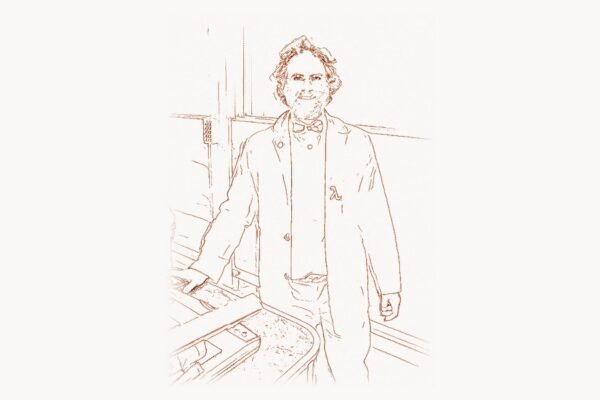
In the summer of 2005, Luke Kanies sat in his apartment in Portland, Oregon, staring at a problem that had consumed his professional life for the better part of a decade. He had spent years working as a systems administrator, managing fleets of Unix and Linux servers, and he had come to a conclusion that the rest of the industry would take another half-decade to accept: the way people managed infrastructure was fundamentally broken. Every organization he had worked with treated servers like pets — individually configured, manually maintained, and impossible to reproduce. When a server died, rebuilding it was an archaeological expedition through years of undocumented changes, ad hoc scripts, and tribal knowledge. Kanies believed there had to be a better way, and in August 2005 he released the first version of Puppet — a declarative configuration management tool that would go on to reshape how the entire technology industry thinks about infrastructure. Puppet did not merely automate server configuration; it introduced a paradigm shift. It treated infrastructure as code — something that could be written, versioned, tested, reviewed, and shared just like application source code. That idea, which Kanies championed before the term “infrastructure as code” even existed, became one of the foundational principles of the DevOps movement and modern cloud computing.
Early Life and the Path to Systems Administration
Luke Kanies grew up in the American South and studied philosophy and religion at university — a background that seems unusual for someone who would become a leading figure in infrastructure automation, but one that profoundly shaped his approach to technology. Philosophy taught him to think in abstractions, to look for underlying patterns beneath surface complexity, and to question assumptions that others took for granted. These skills proved more valuable in systems engineering than any specific programming course might have been.
Kanies entered the technology industry as a Unix systems administrator in the late 1990s, during the first dot-com boom. He worked at several organizations managing increasingly large fleets of servers, and he quickly developed a reputation as someone who thought deeply about the systemic problems of infrastructure management rather than just fighting the daily fires. The standard approach to managing servers at the time involved writing shell scripts — hundreds or thousands of them — each handling a specific task on a specific set of machines. These scripts were fragile, order-dependent, and impossible to maintain at scale. If a script failed halfway through execution, the administrator had to manually determine what had been changed and what had not. There was no concept of desired state, no idempotency, and no way to verify that a server matched its intended configuration without running the scripts again and hoping nothing broke.
Before creating Puppet, Kanies worked extensively with CFEngine, the configuration management tool created by Mark Burgess at Oslo University College in 1993. CFEngine was the first tool to apply the concept of convergence to system administration — the idea that a system should be continuously driven toward a desired state rather than configured once and forgotten. Kanies recognized CFEngine’s foundational importance but also saw its limitations: its syntax was cryptic, its community was small, its error messages were unhelpful, and it was difficult for ordinary system administrators to adopt. He spent years contributing to and extending CFEngine before concluding that the problems he wanted to solve required starting from scratch.
The Breakthrough: Creating Puppet
The Technical Innovation
Puppet was released in August 2005 after approximately two years of development. Kanies designed it around several key principles that distinguished it from everything that came before. The most important was declarative configuration: instead of writing scripts that told a server how to reach a desired state (install this package, then edit this file, then restart this service), administrators described what the desired state should be, and Puppet figured out how to get there. This was a fundamental conceptual shift — from imperative scripting to declarative modeling.
Puppet introduced its own domain-specific language (DSL) for describing system configurations. The language was designed to be readable by systems administrators who were not professional programmers — a deliberate choice that reflected Kanies’s understanding of his audience. A Puppet manifest described resources (packages, files, services, users, cron jobs) and the relationships between them:
# Puppet manifest: Declare desired state for a web server
class webserver {
  # Ensure the package is installed
  package { 'nginx':
    ensure => installed,
  }

  # Manage the configuration file
  file { '/etc/nginx/nginx.conf':
    ensure  => file,
    content => template('webserver/nginx.conf.erb'),
    owner   => 'root',
    group   => 'root',
    mode    => '0644',
    require => Package['nginx'],
    notify  => Service['nginx'],
  }

  # Manage virtual host configuration
  file { '/etc/nginx/sites-available/myapp.conf':
    ensure  => file,
    content => template('webserver/myapp.conf.erb'),
    require => Package['nginx'],
    notify  => Service['nginx'],
  }

  # Ensure a symlink for enabling the site
  file { '/etc/nginx/sites-enabled/myapp.conf':
    ensure  => link,
    target  => '/etc/nginx/sites-available/myapp.conf',
    require => File['/etc/nginx/sites-available/myapp.conf'],
    notify  => Service['nginx'],
  }

  # Ensure the service is running and enabled
  service { 'nginx':
    ensure    => running,
    enable    => true,
    subscribe => File['/etc/nginx/nginx.conf'],
  }
}
This manifest did not describe a sequence of commands. It described a desired end state: nginx should be installed, its configuration file should have specific content, and the service should be running. Puppet’s resource abstraction layer (RAL) handled the platform-specific details — using apt-get on Debian, yum on Red Hat, pkg on FreeBSD — so that the same manifest worked across different operating systems. The dependency graph (expressed through require, notify, and subscribe) ensured that resources were applied in the correct order, and Puppet’s idempotent design meant that running the same manifest multiple times produced the same result, regardless of the system’s initial state.
The architecture followed a client-server model. A central Puppet master compiled catalogs (specific instructions for each node based on its role, operating system, and other facts) and served them to Puppet agents running on managed nodes. Agents periodically checked in, received their catalogs, compared the desired state to the actual state, made any necessary changes, and reported the results back to the master. This pull-based model meant that even if a server was offline during a configuration change, it would converge to the correct state the next time it checked in.
Puppet also introduced Facter, a companion tool that gathered system facts (operating system, IP addresses, hardware details, memory, processor count) and made them available as variables in Puppet manifests. This allowed administrators to write conditional configurations — different settings for production versus development, different packages for Debian versus Red Hat — within a single, unified codebase.
Why It Mattered
Puppet’s impact cannot be understood without appreciating the state of infrastructure management in the mid-2000s. Most organizations managed their servers through a combination of manual SSH sessions, ad hoc shell scripts, and tribal knowledge stored in the heads of senior administrators. Documentation was perpetually outdated. Configuration drift — the slow, invisible divergence of servers from their intended state — was universal and accepted as inevitable. When Linus Torvalds revolutionized version control with Git, he solved the problem of tracking changes to source code; Puppet solved the analogous problem for infrastructure, making server configurations trackable, reviewable, and reproducible.
Puppet made it possible, for the first time at scale, to treat infrastructure configurations as a codebase. Manifests could be stored in Git, reviewed through pull requests, tested with automated tools, and deployed through continuous integration pipelines. This was the essence of what would later be called “infrastructure as code” — a term that Mitchell Hashimoto and others would later popularize, but whose practical foundations Kanies laid with Puppet years earlier.
The timing was also significant. Amazon Web Services launched EC2 in 2006, just one year after Puppet’s initial release. Suddenly, organizations could spin up hundreds of servers in minutes — but needed a way to configure them just as quickly. Manual configuration, merely painful with a dozen servers, became impossible with hundreds. Puppet provided the answer, and this capability was a prerequisite for the cloud computing revolution that followed.
Building Puppet Labs
In 2009, Kanies founded Puppet Labs (later renamed simply Puppet) as a commercial company to provide enterprise support, training, and additional tooling around the open-source Puppet project. This was a critical decision that reflected Kanies’s understanding of the enterprise software market. Open-source infrastructure tools were common, but getting large enterprises to adopt them required professional support, security certifications, and a commercial entity that could sign contracts and provide SLAs.
Puppet Labs grew rapidly. The company raised over $87 million in venture capital and built Puppet Enterprise, a commercial distribution that added features like a web-based console, role-based access control, orchestration capabilities, and compliance reporting. By 2016, Puppet was used by more than 40,000 organizations worldwide, including 75% of the Fortune 100. The company employed over 500 people and had become one of the defining companies of the DevOps ecosystem.
Kanies served as CEO until 2016, when he transitioned to the role of Executive Chairman and eventually left the company. His leadership style was distinctive — more philosopher than typical Silicon Valley CEO. He wrote extensively about the organizational and cultural dimensions of infrastructure automation, arguing that tools alone could not transform how organizations operated. He emphasized that Puppet’s real value was not in automating individual tasks but in creating a shared language for infrastructure — a way for teams to communicate about their systems precisely and unambiguously. This insight connected directly to the DevOps movement that was emerging simultaneously, which similarly emphasized collaboration, communication, and shared responsibility between development and operations teams.
Managing a team’s infrastructure at scale is a challenge that modern project management platforms also address — coordinating who changes what, when, and why across complex systems requires the same rigor in task tracking as it does in configuration management.
The Configuration Management Wars and Puppet’s Competitors
Puppet’s success inspired a wave of competing tools, each approaching the configuration management problem from a slightly different angle. Chef, created by Adam Jacob and released in 2009, took a more programmatic approach — using Ruby as its DSL rather than Puppet’s custom language, appealing to developers who preferred the full power of a general-purpose programming language. Ansible, created by Michael DeHaan and released in 2012, took the opposite approach — eliminating the client-server architecture entirely in favor of agentless, SSH-based execution with YAML configuration files, dramatically lowering the barrier to entry. SaltStack (Salt), also released in 2012, emphasized speed and scalability with its ZeroMQ-based transport layer.
The “configuration management wars” of 2012-2016 were one of the defining technical debates of the DevOps era, but all competing tools owed a fundamental debt to Puppet for establishing the core concepts: declarative desired-state configuration, idempotent operations, resource abstraction across platforms, and the treatment of infrastructure as versionable, testable code. Ansible ultimately gained the broadest adoption due to its lower learning curve and was acquired by Red Hat in 2015. As the industry shifted toward containerization and Kubernetes, the unit of deployment changed from servers to containers, but the principles Puppet established remained foundational.
Infrastructure as Code: The Paradigm Puppet Defined
The term “infrastructure as code” (IaC) has become so ubiquitous that it is easy to forget how radical the idea was when Kanies first championed it. Before Puppet, infrastructure was understood as a physical reality — racks of servers in data centers, cables, switches, storage arrays. Managing infrastructure meant physically touching hardware, or at best, typing commands into terminal sessions connected to individual machines. The idea that infrastructure could be described in text files, versioned in repositories, and applied automatically was genuinely novel.
Kanies argued persistently that the separation between “infrastructure” and “code” was artificial and harmful — that treating infrastructure configurations with less rigor, less testing, and less version control than application code was the root cause of most operational failures. Many traditional IT operations professionals saw automation as a threat, while developers saw infrastructure as beneath their concern. Kanies’s persistence in bridging this gap was as important as Puppet’s code itself.
The infrastructure as code paradigm that Puppet defined directly influenced the next generation of tools. Hashimoto’s Terraform (2014) extended the declarative, desired-state model from server configuration to cloud resource provisioning — managing not just what runs on servers, but the servers themselves, along with networks, load balancers, DNS records, and databases. Docker (2013) applied similar principles to application packaging, using Dockerfiles as declarative descriptions of application environments. Kubernetes (2014) extended the model further, using YAML manifests to declare the desired state of entire application deployments. The thread connecting all of these tools runs directly through Puppet and the paradigm Kanies established.
Modern web development agencies now treat infrastructure as code as a baseline expectation — every production deployment managed through version-controlled configuration rather than manual intervention.
The Puppet Ecosystem and Community
One of Kanies’s most important contributions was building an ecosystem around Puppet that extended far beyond the core tool. Puppet Forge, launched in 2012, became a repository of community-contributed Puppet modules — reusable configurations for common software stacks (Apache, MySQL, PostgreSQL, Elasticsearch, Kubernetes). By 2020, Puppet Forge hosted thousands of modules that had been downloaded millions of times, creating a shared library of infrastructure knowledge that organizations could build upon rather than reinventing from scratch.
The Puppet community also developed important practices around infrastructure testing. Tools like rspec-puppet, Beaker, and puppet-lint established the idea that infrastructure code should be tested with the same rigor as application code — unit tests for individual modules, integration tests for complete configurations, and style checks for consistency. This testing culture was a direct extension of the “infrastructure as code” philosophy: if infrastructure is code, it should be tested like code.
# rspec-puppet: Unit testing Puppet manifests
require 'spec_helper'

describe 'webserver' do
  context 'on Debian-based systems' do
    let(:facts) do
      { osfamily: 'Debian', operatingsystem: 'Ubuntu' }
    end

    it { is_expected.to compile.with_all_deps }

    it { is_expected.to contain_package('nginx')
      .with_ensure('installed') }

    it { is_expected.to contain_file('/etc/nginx/nginx.conf')
      .with(
        'owner' => 'root',
        'group' => 'root',
        'mode'  => '0644',
      )
      .that_requires('Package[nginx]')
      .that_notifies('Service[nginx]') }

    it { is_expected.to contain_service('nginx')
      .with(
        'ensure' => 'running',
        'enable' => true,
      ) }
  end

  context 'on RedHat-based systems' do
    let(:facts) do
      { osfamily: 'RedHat', operatingsystem: 'CentOS' }
    end

    it { is_expected.to compile.with_all_deps }
    it { is_expected.to contain_package('nginx') }
  end
end
Kanies also championed the annual State of DevOps report, which Puppet sponsored and co-produced with researchers including Nicole Forsgren and Gene Kim. These reports, published annually from 2013, provided the first rigorous, data-driven evidence that DevOps practices (including infrastructure as code, continuous delivery, and automated testing) correlated with superior organizational performance. The research legitimized DevOps in the eyes of enterprise executives who had been skeptical of what they perceived as a grassroots engineering trend.
Philosophy and Engineering Approach
Key Principles
Kanies’s approach to infrastructure automation was shaped by several deeply held principles that set him apart from other technologists in the space. The first was his insistence on abstraction. Puppet’s resource abstraction layer was not just a technical convenience — it reflected Kanies’s belief that infrastructure management should operate at the level of intent, not implementation. An administrator should be able to say “this package should be installed” without worrying about whether the underlying system uses apt, yum, zypper, or pkg. This level of abstraction made Puppet manifests portable across operating systems and freed administrators to think about what their infrastructure should look like rather than how to make it happen.
The second was modeling over scripting. Kanies drew a sharp distinction between configuration management (declaring a desired state) and orchestration (executing commands), arguing that conflating these concepts was the source of most infrastructure failures. The third was organizational transformation — technology adoption without cultural change was futile. He pushed customers to rethink their workflows and team structures, ideas that aligned with the broader DevOps movement championed by Patrick Debois and others.
Legacy and Modern Relevance
Puppet as a company was acquired by Perforce Software in 2022, marking the end of its run as an independent entity. But Kanies’s legacy extends far beyond the fate of any single company or product. The ideas he championed — infrastructure as code, declarative configuration, desired-state convergence, infrastructure testing, and the organizational importance of automation — are now so deeply embedded in the technology industry that they are taken for granted. Every organization that uses Terraform, Ansible, Kubernetes, or any other modern infrastructure tool is building on foundations that Luke Kanies laid.
The shift from imperative scripting to declarative modeling that Puppet pioneered has become the dominant paradigm in infrastructure management. Kubernetes manifests, Terraform configurations, CloudFormation templates, and even Dockerfiles all follow the declarative pattern that Puppet established: describe what you want, and let the system figure out how to achieve it. The idea that infrastructure should be versioned, tested, and reviewed with the same discipline as application code is no longer controversial — it is a baseline expectation at any competent technology organization.
After leaving Puppet, Kanies founded Clickety, a company focused on relationship management software, and has continued to write and speak about technology, leadership, and organizational design. His intellectual range — from philosophy through systems administration to company building — gives his perspective a breadth that is rare in the technology industry.
Luke Kanies did not invent configuration management — Mark Burgess’s CFEngine preceded Puppet by over a decade. But Kanies made configuration management accessible, practical, and adoptable at enterprise scale. He combined a powerful technical vision with the ability to articulate that vision in terms that both engineers and executives could understand. He built a community, a company, and an ecosystem around that vision. And he championed a paradigm — infrastructure as code — that fundamentally changed how the technology industry builds and operates its systems. In doing so, he helped make the modern cloud-native world possible.
Key Facts
- Known for: Creating Puppet, founding Puppet Labs, pioneering infrastructure as code
- Key projects: Puppet (2005–present), Puppet Forge, Facter, State of DevOps Report (co-sponsor)
- Company: Puppet Labs (founded 2009, CEO until 2016, acquired by Perforce 2022)
- Education: Philosophy and religion (undergraduate)
- Impact: Puppet used by 40,000+ organizations, including 75% of the Fortune 100; infrastructure as code became a foundational DevOps principle
- Post-Puppet: Founded Clickety (relationship management software)
Frequently Asked Questions
Who is Luke Kanies?
Luke Kanies is the founder of Puppet Labs and the creator of Puppet, one of the most influential configuration management tools in the history of systems administration. A former Unix systems administrator with a background in philosophy, Kanies recognized that the manual, ad hoc approach to server management was unsustainable at scale and created a declarative tool that allowed administrators to describe their desired infrastructure state in code. His work laid the practical foundations for the infrastructure as code movement and played a central role in the emergence of DevOps as a discipline.
What is Puppet and why was it important?
Puppet is an open-source configuration management tool that allows systems administrators and DevOps engineers to define the desired state of their infrastructure using a declarative domain-specific language. Instead of writing scripts that execute commands in sequence, Puppet users describe what their systems should look like — which packages should be installed, what configuration files should contain, which services should be running — and Puppet ensures that the actual systems converge to that desired state. Puppet was important because it was the first configuration management tool to achieve widespread enterprise adoption, proving that infrastructure could be managed as code with the same rigor applied to software development.
How did Luke Kanies influence DevOps?
Kanies’s influence on DevOps was both technical and cultural. Technically, Puppet provided one of the first practical tools for implementing infrastructure as code — a core DevOps practice. Culturally, Kanies argued persistently that operational excellence required the same engineering discipline as software development, and that the separation between development and operations teams was harmful. Puppet Labs also co-sponsored the annual State of DevOps Report, which provided the first data-driven evidence that DevOps practices drive superior organizational performance, helping to legitimize the movement in enterprise environments.
What is infrastructure as code?
Infrastructure as code (IaC) is the practice of managing and provisioning computing infrastructure through machine-readable definition files rather than through manual processes or interactive configuration tools. IaC treats infrastructure configurations as software artifacts that can be versioned in source control, reviewed through pull requests, tested with automated frameworks, and deployed through continuous integration pipelines. Luke Kanies was one of the earliest and most persistent advocates of this approach, and Puppet was one of the first tools to make it practical at enterprise scale.
What happened to Puppet after Luke Kanies left?
After Kanies transitioned from CEO in 2016, Puppet continued to operate as an independent company under subsequent leadership, expanding its product portfolio to include Puppet Enterprise, Puppet Bolt (an agentless orchestration tool), and Puppet Comply (a compliance automation tool). In 2022, Puppet was acquired by Perforce Software, a company focused on developer tools and version management. The open-source Puppet project continues to be maintained, and Puppet modules remain widely used across the industry, though Ansible has surpassed Puppet in new adoption rates.