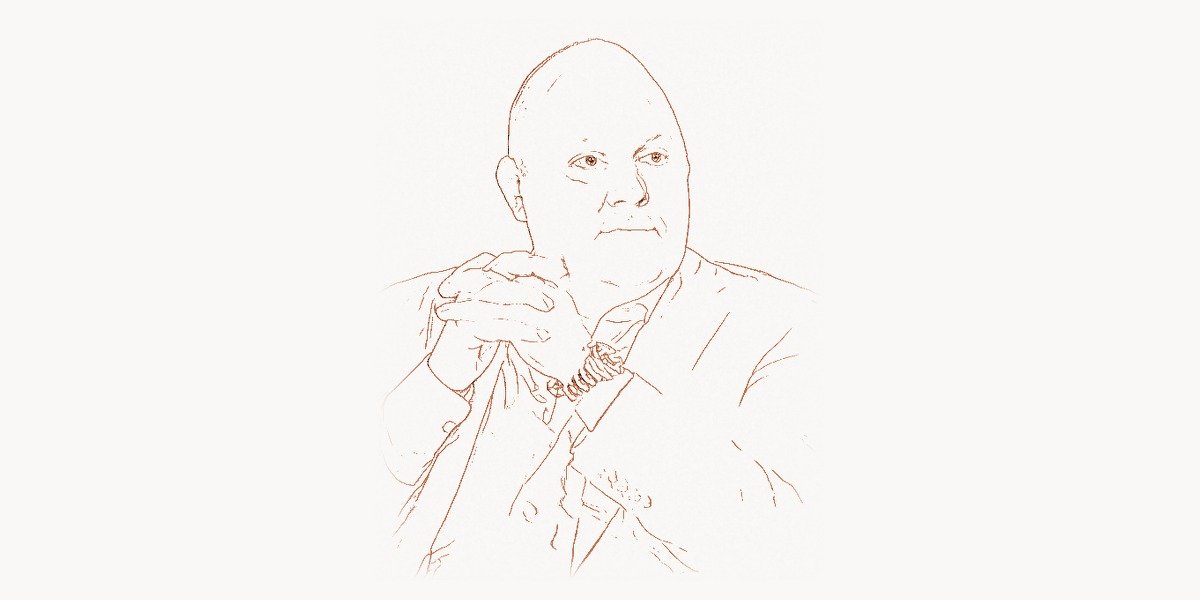
In the early 1990s, the World Wide Web existed — but almost nobody could actually use it. Tim Berners-Lee had built the first web browser and server at CERN in 1990, but viewing web pages required a Unix workstation and a command-line interface that only academics and systems administrators could navigate. The internet had millions of connected computers, yet the web remained a curiosity confined to physics laboratories and university computer science departments. Then, in the spring of 1993, a 22-year-old undergraduate at the University of Illinois released a program called Mosaic — a graphical web browser that ran on Windows and Macintosh, displayed images inline with text, and could be installed by anyone who could double-click an icon. Within 18 months, the number of web users exploded from a few thousand to several million. Marc Andreessen did not invent the web, but he made it accessible to the entire world. In doing so, he triggered a chain reaction that created the commercial internet, the browser wars, the dot-com boom, and ultimately the software-driven economy that defines the 21st century. From Mosaic to Netscape to Andreessen Horowitz, his career traces the arc of the modern web itself — from a student project in a basement lab to a force that has restructured every industry on Earth.
Early Life and Education
Marc Lowell Andreessen was born on July 9, 1971, in Cedar Falls, Iowa. His father, Lowell Andreessen, worked for a seed company, and his mother, Patricia, worked for Lands’ End. The family moved to New Lisbon, Wisconsin, when Marc was young, and he grew up in a small-town Midwestern environment far removed from the technology hubs of Silicon Valley or the research corridors of the East Coast. Andreessen showed an early fascination with computers, teaching himself BASIC from a library book at age nine on a TRS-80 that his family purchased. By the time he was in middle school, he had moved beyond BASIC and was writing programs in C and Pascal.
Andreessen enrolled at the University of Illinois at Urbana-Champaign in 1989, majoring in computer science. The university was home to the National Center for Supercomputing Applications (NCSA), one of the original sites of the NSFNet backbone and a hub for internet research. As a sophomore, Andreessen took a part-time job at NCSA for $6.85 an hour. It was at NCSA that he first encountered the World Wide Web that Tim Berners-Lee had created at CERN. The existing browsers — Berners-Lee’s line-mode browser, ViolaWWW, and others — were functional but limited. They ran on Unix systems, required technical expertise, and displayed text only, with links shown as numbered references. Andreessen recognized immediately that the web’s potential was being strangled by its user interface. If ordinary people could not use it, the web would remain an academic tool. That insight became the foundation of everything he built.
The Mosaic and Netscape Breakthrough
Technical Innovation
In late 1992, Andreessen and Eric Bina, a fellow NCSA programmer, began working on a new web browser. They called it Mosaic. Working in marathon coding sessions — Bina handling the core Unix networking code, Andreessen designing the user interface and feature set — they produced the first version in roughly three months. Mosaic 1.0 for X Window System was released on January 23, 1993. Windows and Macintosh versions followed later that year.
Mosaic introduced several innovations that transformed the web from a text-based information system into a visual medium. The most consequential was inline image display: previous browsers either could not display images at all or opened them in separate windows. Mosaic rendered images directly within the page, alongside text, using the <img> tag that Andreessen proposed to the www-talk mailing list in February 1993. This single feature changed the fundamental nature of the web — it was no longer just a hypertext system but a multimedia platform. Mosaic also introduced forms support, bookmarks, a clickable interface with back/forward navigation, and the ability to handle multiple document types through external viewers.
Consider what early web development looked like in the Mosaic era. The HTML that Mosaic rendered was simple by today’s standards, but it was revolutionary in its accessibility:
<!-- A typical web page from 1993-1994, the Mosaic era -->
<!-- No CSS, no JavaScript — just structural HTML -->
<html>
<head>
  <title>Welcome to My Home Page</title>
</head>
<body>
  <h1>Welcome to the World Wide Web!</h1>
  <p>This page is best viewed with
    <a href="http://mosaic.ncsa.uiuc.edu/">NCSA Mosaic</a>.
  </p>

  <!-- The <img> tag — Andreessen's key innovation -->
  <!-- Before Mosaic, images could not appear inline -->
  <img src="welcome.gif" alt="Welcome banner">

  <h2>Interesting Links</h2>
  <ul>
    <li><a href="http://info.cern.ch/">CERN — Where the Web Was Born</a></li>
    <li><a href="http://www.ncsa.uiuc.edu/">NCSA Home Page</a></li>
    <li><a href="gopher://gopher.tc.umn.edu/">Gopher at UMN</a></li>
  </ul>

  <!-- Forms — another Mosaic innovation -->
  <h2>Search the Web</h2>
  <form action="http://www.search.com/cgi-bin/search" method="GET">
    <input type="text" name="query" size="30">
    <input type="submit" value="Search">
  </form>

  <hr>
  <address>webmaster@example.com</address>
</body>
</html>
This HTML was what Mosaic was built to render — and it was the foundation of the entire web industry. Every modern React component, every CSS layout system, every responsive design framework ultimately descends from this simple markup language rendered in a graphical browser window.
After graduating from the University of Illinois in December 1993, Andreessen moved to California. At NCSA, he had grown frustrated with the bureaucratic pace of a government-funded institution. In Silicon Valley, he met Jim Clark, the founder of Silicon Graphics, who was looking for his next venture. Clark saw in Mosaic — and in Andreessen — the future of computing. In April 1994, they co-founded Mosaic Communications Corporation, which was quickly renamed Netscape Communications to avoid legal conflicts with the University of Illinois over the Mosaic name.
Netscape Navigator, released in December 1994, was Mosaic rebuilt from scratch — faster, more stable, with better rendering and support for new web standards. Navigator introduced innovations that defined the modern web: cookies for stateful sessions, SSL (Secure Sockets Layer) for encrypted communication, frames for page layouts, and JavaScript — the programming language that Brendan Eich created at Netscape in just 10 days in May 1995. Navigator also pioneered the “freemium” distribution model: the browser was free for personal and educational use but required a license for commercial use.
// JavaScript — born at Netscape in 1995
// Brendan Eich created it in 10 days for Navigator 2.0
// This is the language Andreessen championed to make
// the web interactive, not just a static document viewer

// Early Netscape JavaScript (1995-1996)
// Form validation — one of JS's first practical uses
function validateForm() {
  var name = document.forms[0].username.value;
  var email = document.forms[0].email.value;

  if (name === "") {
    alert("Please enter your name!");
    return false;
  }

  // Simple email check — 1990s style
  if (email.indexOf("@") === -1) {
    alert("Please enter a valid email address!");
    return false;
  }

  return true;
}

// Dynamic content — revolutionary in 1995
// Before JavaScript, any interaction required
// a full page reload from the server
document.write("<p>Welcome! You are visiting on "
  + new Date().toLocaleDateString() + "</p>");

// Netscape's vision: the browser as a platform
// This idea — that the browser would become the
// operating system — terrified Microsoft and
// triggered the browser wars of 1995-2001
Why It Mattered
The scale of Mosaic and Netscape’s impact is difficult to overstate. Before Mosaic, in early 1993, web traffic accounted for approximately 0.1% of internet backbone traffic. By September 1993, Mosaic was the most popular way to access the web, and web traffic was doubling every few months. By 1995, the web had become the dominant application on the internet. Netscape Navigator captured over 80% of the browser market at its peak. Netscape’s IPO on August 9, 1995 — when the company’s stock price doubled on the first day of trading, valuing the company at $2.9 billion despite minimal revenue — is widely considered the event that launched the dot-com era.
Andreessen’s fundamental insight was that the browser was not just a document viewer — it was a platform. Netscape Navigator, with JavaScript, cookies, SSL, and plugin support, turned the browser into an application runtime environment. This was the idea that famously terrified Microsoft: if applications ran in the browser, the operating system became irrelevant. Bill Gates wrote his famous “Internet Tidal Wave” memo in May 1995, redirecting Microsoft’s entire strategy to focus on the internet. The resulting browser war between Netscape Navigator and Internet Explorer — which Microsoft bundled with Windows — was the defining technology battle of the late 1990s. Netscape ultimately lost the browser war, but the vision was correct. Today, the browser is arguably the most important application platform on Earth. Progressive web apps, cloud-based office suites, video conferencing, and complex code editors running in the browser all fulfill the platform vision that Andreessen articulated in 1994.
The internet’s infrastructure, built on Vint Cerf’s TCP/IP, provided the global network — but it was Andreessen’s browser that gave that network a face, a visual interface that hundreds of millions of people could understand and use. The combination of TCP/IP for transport and the graphical browser for interaction was the one-two punch that created the modern digital world.
Other Major Contributions
After Netscape was acquired by AOL in 1999 for $4.2 billion, Andreessen co-founded Loudcloud in 1999 with Ben Horowitz, Tim Howes, and In Sik Rhee. Loudcloud was a cloud computing company — before the term “cloud computing” was widely used — that provided managed infrastructure services for internet companies. When the dot-com bubble burst, Loudcloud pivoted to enterprise software, rebranding as Opsware. The company developed automation software for data center operations and was acquired by Hewlett-Packard in 2007 for $1.6 billion. The Loudcloud-to-Opsware journey became a Silicon Valley case study in surviving a market collapse and executing a successful pivot.
In 2004, Andreessen co-founded Ning, a platform that allowed anyone to create their own social network. While Ning never achieved the scale of Facebook or Twitter, it demonstrated the concept of white-label social networking and was eventually acquired in 2011. Andreessen also served on the board of Facebook (now Meta) from 2008 to 2022, providing strategic advice during the company’s growth from a college social network to a global platform with over 3 billion users.
In 2009, Andreessen and Ben Horowitz co-founded Andreessen Horowitz (a16z), a venture capital firm that has become one of the most influential in technology. The firm pioneered a new model of venture capital that went beyond writing checks — a16z built an operational platform with dedicated teams for recruiting, marketing, business development, and regulatory affairs to support portfolio companies. As of 2025, a16z manages over $40 billion in assets and has invested in companies including GitHub, Airbnb, Coinbase, Stripe, Slack, Databricks, Figma, and numerous others. For modern startups and development teams, tools like Toimi for web project management reflect the same philosophy that a16z champions — enabling teams to move faster with better tooling. The firm has been particularly active in crypto/web3, AI, and bio investments, reflecting Andreessen’s belief that software continues to transform every industry.
Philosophy and Approach
Key Principles
Andreessen’s most famous articulation of his worldview came in a 2011 Wall Street Journal essay titled “Why Software Is Eating the World.” The thesis was straightforward: software companies were in the process of disrupting and transforming every traditional industry. Amazon was eating retail. Spotify was eating music. Netflix was eating entertainment. Uber was eating transportation. This was not a temporary trend but a permanent structural shift driven by the maturation of internet infrastructure, the ubiquity of smartphones, and the decreasing cost of computing. More than a decade later, the thesis has proven largely correct — and has been extended by the rise of AI, which Andreessen has described as “software eating the world, accelerated.”
Several principles define Andreessen’s approach to technology and business. First is what he calls “strong beliefs, loosely held” — the willingness to commit fully to a thesis while remaining ready to revise it when evidence changes. This intellectual flexibility has allowed him to navigate multiple technology waves, from the web to mobile to cloud to crypto to AI. Second is a deep optimism about technology’s capacity to improve human life. Andreessen is a vocal techno-optimist who has argued that most problems attributed to technology — inequality, misinformation, social isolation — are better solved with more technology, not less. In 2023, he published “The Techno-Optimist Manifesto,” a lengthy essay arguing that technological progress is the primary driver of human flourishing and that attempts to slow or regulate technology are fundamentally misguided.
Third is the principle of platform thinking. From Mosaic (the browser as a platform for web content) to Netscape (the browser as an application platform) to a16z (the VC firm as a platform for startups), Andreessen consistently builds platforms rather than point solutions. This approach mirrors the architectural philosophy of the internet itself: create infrastructure that others can build upon. When it comes to managing the complexity of modern software projects built on these platforms, task management tools like Taskee help development teams organize their work effectively across distributed environments.
Fourth is a contrarian investment philosophy. Andreessen has argued that the best investments are in ideas that most people dismiss as crazy, toys, or irrelevant. The web was dismissed in 1993. Social media was dismissed in 2005. Crypto was dismissed in 2015. AI was cyclically dismissed for decades. In each case, the contrarian bet turned out to be correct. As he has often stated: “The big opportunities are where most people think the idea is bad but it is actually good.”
Andreessen is also notable for his prolific engagement with ideas. He was an early and extremely active user of Twitter (now X), where he shared reading recommendations, technology analysis, and philosophical arguments. His reading habits are legendary in Silicon Valley — he claims to read multiple books per week across technology, history, philosophy, economics, and science fiction. This breadth of intellectual engagement informs his investment decisions and his ability to spot patterns across seemingly unrelated fields.
Legacy and Impact
Marc Andreessen’s legacy operates on multiple levels. At the most fundamental level, he democratized the web. Before Mosaic, the web was a tool for specialists. After Mosaic, it was a medium for everyone. This act of democratization — taking a powerful but inaccessible technology and making it usable by ordinary people — is the single most consequential thing Andreessen has done. Every web developer writing HTML, every designer creating responsive layouts, every entrepreneur building a web application is working within the ecosystem that Mosaic and Netscape created.
At the industry level, Andreessen helped create the model for the modern technology company. Netscape’s IPO established the template for technology IPOs. Its “freemium” distribution model influenced a generation of software companies. Its open-source release of the Netscape browser code (as Mozilla, which eventually became Firefox) helped establish open source as a viable business strategy. The open-source movement that Linus Torvalds championed with Linux and Git found a powerful ally in Netscape’s decision to open its browser source code in 1998.
At the investment level, a16z has shaped the technology landscape by providing capital and operational support to companies that define the current era. GitHub changed how developers collaborate. Airbnb changed how people travel. Coinbase became the gateway for cryptocurrency adoption. Stripe simplified online payments. These companies were all a16z portfolio investments, and their success reflects Andreessen’s ability to identify transformative companies early.
The throughline in Andreessen’s career — from Mosaic to Netscape to Loudcloud/Opsware to a16z — is a relentless focus on software as the fundamental force reshaping the economy. He saw in 1993 that the web browser would change everything, and he has spent three decades acting on that insight, first as an engineer, then as an entrepreneur, and now as an investor. The AI revolution, which Andreessen has been one of the earliest and most vocal proponents of through a16z’s massive investments in companies like Sam Altman’s OpenAI and other AI infrastructure companies, represents the latest chapter in the “software eating the world” thesis.
Whether one agrees with all of his views — and Andreessen is a polarizing figure, particularly on questions of technology regulation, social media governance, and crypto — his impact on the technology industry is undeniable. The web browser, the dot-com boom, the modern VC model, and the “software is eating the world” framework are all, in significant part, his creations. Andreessen did not build the internet, and he did not invent the web. But he built the window through which billions of people first saw both — and then spent three decades funding and championing the companies that filled that window with the applications, platforms, and services that define modern digital life.
Key Facts
- Born: July 9, 1971, Cedar Falls, Iowa, USA
- Known for: Creating Mosaic (first widely-used graphical web browser), co-founding Netscape, co-founding Andreessen Horowitz (a16z)
- Key projects: NCSA Mosaic (1993), Netscape Navigator (1994), Loudcloud/Opsware (1999–2007), Ning (2004), Andreessen Horowitz (2009–present)
- Awards and recognition: Named to TIME 100 list, World Economic Forum Global Leader for Tomorrow, elected to the American Academy of Arts and Sciences
- Education: B.S. in Computer Science from the University of Illinois at Urbana-Champaign (1993)
- Career: NCSA (1991–1993), Netscape (1994–1999), Loudcloud/Opsware (1999–2007), a16z (2009–present)
- Notable board seats: Facebook/Meta (2008–2022), Hewlett-Packard Enterprise, various a16z portfolio companies
- Key philosophy: “Software is eating the world” — the thesis that software companies will disrupt and transform every traditional industry
Frequently Asked Questions
What did Marc Andreessen create?
Marc Andreessen co-created NCSA Mosaic (1993), the first widely-used graphical web browser that made the World Wide Web accessible to non-technical users. He then co-founded Netscape Communications (1994), which produced Netscape Navigator — the dominant web browser of the mid-1990s. Netscape also introduced SSL encryption, cookies, and was the birthplace of JavaScript. After Netscape, Andreessen co-founded Loudcloud (later Opsware), an early cloud computing company acquired by HP for $1.6 billion, and Andreessen Horowitz (a16z), one of the world’s most influential venture capital firms managing over $40 billion in assets.
Why is Marc Andreessen considered a web pioneer?
Andreessen is considered a web pioneer because Mosaic was the catalyst that transformed the World Wide Web from an academic curiosity into a mass medium. Before Mosaic, web usage was negligible. After Mosaic, web traffic began doubling every few months, leading directly to the commercialization of the internet. Netscape’s IPO in August 1995 launched the dot-com era, and the browser’s evolution into an application platform — with JavaScript, SSL, and plugin support — established the foundation for the modern web economy. His later work at a16z, promoting the thesis that “software is eating the world,” has shaped how the technology industry thinks about software’s role in the broader economy.
How did Mosaic change the internet?
Mosaic changed the internet by making the World Wide Web visual and accessible. Before Mosaic, web browsing required Unix expertise and displayed only text. Mosaic introduced inline image display (the <img> tag), a graphical point-and-click interface, forms for user input, bookmarks, and versions for Windows and Macintosh — making the web usable on the computers most people actually owned. Within months of its release, web traffic went from a fraction of a percent of internet usage to the dominant application. Mosaic proved that the web could be a mainstream medium, which attracted businesses, investors, and developers — triggering the commercial internet revolution. Every modern web browser, from Chrome to Firefox to Safari, is a direct descendant of the paradigm Mosaic established.