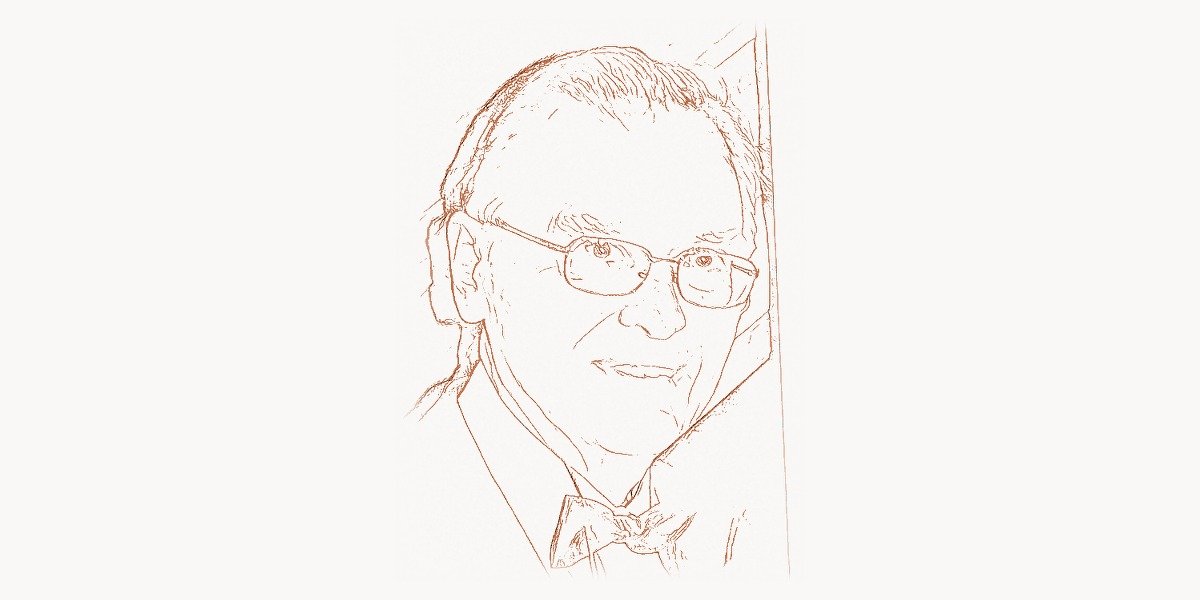
When engineers at Intel needed a way to power a Japanese calculator in 1969, nobody expected the solution would reshape the entire trajectory of human civilization. Marcian Edward “Ted” Hoff, a quiet Stanford PhD with a talent for elegant simplification, proposed something radical: instead of building custom chips for every device, why not create a single, general-purpose processor that could be programmed to do anything? That idea became the Intel 4004 — the world’s first commercial microprocessor — and it changed everything.
Early Life and Education
Ted Hoff was born on October 28, 1937, in Rochester, New York. From an early age, he showed an aptitude for tinkering with electronics. As a teenager, he won a science fair award from the Rochester Engineering Society for building a remote-control system for a model railroad — a project that hinted at his future ability to compress complex functionality into compact systems.
Hoff earned his Bachelor of Science in electrical engineering from Rensselaer Polytechnic Institute in 1958. He then moved to Stanford University, where he pursued his PhD under Professor Bernard Widrow. At Stanford, Hoff made his first notable contribution to computing: he co-developed the least mean squares (LMS) adaptive filtering algorithm with Widrow. This algorithm, sometimes called the Widrow-Hoff algorithm, became foundational in signal processing, telecommunications, and later in the training of neural networks. It remains one of the most widely used adaptive algorithms in engineering to this day.
Hoff completed his doctorate in 1962 and stayed at Stanford briefly as a research associate. But in 1968, a fateful decision changed the course of his career — and the world. He joined a tiny semiconductor startup in Mountain View called Intel, as employee number 12.
Career and the Invention of the Microprocessor
The Technical Innovation Behind the Intel 4004
In 1969, the Japanese calculator company Busicom approached Intel with a request to design a set of custom chips for a new line of calculators. Their original specification called for twelve separate integrated circuits, each performing a dedicated function. It was a conventional approach — the standard practice of the era was to design special-purpose logic chips tailored to each application.
Hoff studied the Busicom specification and saw a fundamental problem: the twelve-chip design was complex, expensive, and inflexible. Drawing on his experience with general-purpose computer architectures at Stanford, he proposed a radical alternative. Instead of twelve specialized chips, Hoff envisioned a single general-purpose processor — a central processing unit on a chip — that could be programmed with software stored in external memory.
This was the conceptual breakthrough. Hoff’s architecture called for four chips instead of twelve: the 4001 (ROM), 4002 (RAM), 4003 (shift register), and — most critically — the 4004, a 4-bit central processor. The 4004 could execute instructions sequentially, just like a minicomputer, but it was etched onto a single piece of silicon measuring just 3mm by 4mm.
Here is a simplified representation of the kind of instruction set the 4004 operated with — a basic register-based architecture that Hoff helped define:
; Intel 4004 — simplified instruction flow
; Accumulator-based architecture, 4-bit data bus
; 46 instructions, 16 registers (4-bit each)

FIM R0R1, 0x3A   ; Fetch immediate: load register pair R0R1 with 0x3A
SRC R0R1          ; Set register control: send address from R0R1
RDM               ; Read data RAM into accumulator
ADD R2            ; Add contents of register R2 to accumulator
XCH R3            ; Exchange accumulator with register R3
WRM               ; Write accumulator back to data RAM
JCN Z, LOOP       ; Jump to LOOP if accumulator is zero
BBL 0             ; Branch back and load: return from subroutine
Working alongside Federico Faggin — the brilliant physicist who led the chip’s physical implementation — and Stanley Mazor, who helped refine the architecture and instruction set, Hoff’s concept became reality. Faggin solved the enormous silicon design challenges, translating Hoff’s architectural vision into the 2,300-transistor chip that shipped in November 1971. The collaboration between Hoff’s conceptual architecture, Mazor’s logical refinements, and Faggin’s implementation genius remains one of the most consequential team efforts in technology history.
Why It Mattered
Before the microprocessor, computing power was locked inside large, expensive machines. Every new electronic device required its own custom-designed logic circuits. This meant that adding intelligence to everyday objects was prohibitively expensive and time-consuming.
The Intel 4004 shattered this paradigm. By putting an entire CPU onto a single chip that could be mass-produced and reprogrammed for different tasks, the microprocessor made computing power a commodity. It was the seed from which personal computers, embedded systems, mobile phones, and eventually the entire digital economy grew.
To appreciate the scale: the 4004 executed approximately 92,000 instructions per second and contained 2,300 transistors. A modern processor contains billions of transistors and executes billions of instructions per second. But every one of those modern chips is a direct descendant of the architecture Ted Hoff proposed in 1969. As Gordon Moore himself acknowledged, the microprocessor was the innovation that gave his famous law its most transformative expression — it was not just that transistors were doubling, but that a general-purpose processor was being built from them.
The microprocessor also democratized innovation. Before the 4004, only large corporations and governments could afford to build computing systems. After it, small teams and eventually individuals could create intelligent devices. The line from the Intel 4004 to the garage-built Apple I by Steve Wozniak is direct and unmistakable.
Other Contributions and Career at Intel
While the 4004 is Hoff’s most celebrated contribution, his career at Intel spanned far more than a single invention. After the 4004, he continued to influence the development of Intel’s microprocessor family and contributed to the architecture discussions that led to the 8008 and 8080 — the chip that powered the Altair 8800 and ignited the personal computer revolution.
Hoff also served as Intel’s first Chief Technologist, a role in which he guided the company’s long-term technical strategy. In this position he helped evaluate emerging technologies and advised on which research directions would yield the greatest returns. His ability to see connections between disparate technical domains — from signal processing to computer architecture to communications — made him an invaluable strategic thinker.
Beyond Intel, Hoff held over a dozen patents spanning fields as diverse as digital-to-analog conversion, signal compression, and charge-coupled device (CCD) technology. His earlier work on the Widrow-Hoff LMS algorithm continued to find new applications over the decades, becoming central to noise-canceling headphones, echo cancellation in telecommunications, and adaptive beamforming in radar systems. This algorithm’s influence on modern deep learning research — where adaptive gradient methods are fundamental — is a thread connecting Hoff’s earliest work to the most cutting-edge AI systems of today.
Hoff’s patent for a talking electronic learning aid (1977) also foreshadowed the age of embedded computing. The device, built for Mattel, showed that microprocessors could bring intelligence to consumer products at scale — an insight that would eventually define the Internet of Things era.
The convergence of Hoff’s microprocessor with the work of other semiconductor pioneers like Jack Kilby and Robert Noyce — the co-inventors of the integrated circuit — created an entire ecosystem of innovation. Without the integrated circuit, the microprocessor could not exist. Without the microprocessor, the integrated circuit would not have reached its full transformative potential.
Philosophy and Approach to Innovation
Ted Hoff’s approach to engineering was defined by a pursuit of elegant simplicity — finding the general solution where others saw only specific problems. His philosophy offers lasting lessons for engineers, architects, and anyone building complex systems.
Key Principles
- Simplify ruthlessly. When presented with a twelve-chip custom design, Hoff asked: what if one general-purpose chip could replace them all? The best solutions often come from reducing the problem, not adding complexity to the answer.
- Think in architectures, not components. Hoff’s breakthrough was not a transistor-level innovation — it was an architectural insight. He understood that the right abstraction layer could unlock capabilities far beyond what any specific hardware optimization could achieve.
- Let software absorb complexity. By moving logic from fixed hardware into programmable software, Hoff created a system that could evolve over time without redesigning the silicon. This principle now underpins everything from cloud computing to firmware updates.
- Cross-pollinate between fields. Hoff’s signal processing background informed his computer architecture work, and vice versa. His ability to transfer concepts across domains — adaptive algorithms to chip design, mainframe architectures to embedded systems — was a consistent source of innovation.
- Bet on generality over specialization. The custom chip approach was faster for a single use case. But Hoff recognized that a general-purpose approach, while initially less efficient, would scale to an unlimited range of applications. History vindicated this bet spectacularly.
These principles are visible today in the work of modern systems architects. When teams at companies like Toimi design flexible, modular digital platforms, they are operating in the philosophical tradition that Hoff helped establish: build general-purpose tools that can adapt to changing needs, rather than brittle single-purpose solutions.
The following Python snippet illustrates the Widrow-Hoff LMS algorithm — the adaptive filter Hoff co-invented at Stanford — which remains a cornerstone of signal processing and a precursor to modern gradient descent:
import numpy as np

def lms_filter(desired, input_signal, order=4, mu=0.01):
    """
    Widrow-Hoff Least Mean Squares adaptive filter.

    This algorithm adjusts filter weights iteratively to minimize
    the mean squared error between desired and actual output —
    a principle that underpins modern neural network training.

    Parameters:
        desired: target signal (numpy array)
        input_signal: noisy input (numpy array)
        order: number of filter taps
        mu: learning rate (step size)

    Returns:
        output: filtered signal
        error: error signal at each step
        weights: final adapted weights
    """
    n = len(desired)
    weights = np.zeros(order)
    output = np.zeros(n)
    error = np.zeros(n)

    for i in range(order, n):
        x = input_signal[i - order:i][::-1]
        output[i] = np.dot(weights, x)
        error[i] = desired[i] - output[i]
        # Weight update rule: the heart of LMS
        weights += 2 * mu * error[i] * x

    return output, error, weights
Legacy and Impact
Ted Hoff’s invention of the microprocessor architecture has been recognized as one of the most significant technical contributions of the twentieth century. In 2009, he was awarded the National Medal of Technology and Innovation by President Barack Obama — the highest honor for technological achievement in the United States. In 2010, he was inducted into the National Inventors Hall of Fame alongside Federico Faggin and Stanley Mazor.
The scale of the microprocessor’s impact is difficult to overstate. By 2025, there are more microprocessors on Earth than there are humans — embedded in cars, appliances, medical devices, industrial equipment, satellites, and billions of phones. The entire digital infrastructure that modern society depends on traces its lineage to the architectural decision Hoff made in 1969.
The semiconductor industry that grew around the microprocessor was shaped by visionaries like Morris Chang, whose founding of TSMC created the foundry model that today manufactures chips designed by companies worldwide. And the relentless performance improvements that Jim Keller has driven across multiple chip companies are all built on the general-purpose processor paradigm that Hoff originated.
Hoff’s work also influenced the development of project management in technology. The complexity of designing and manufacturing microprocessors required new approaches to coordinating large engineering teams — challenges that modern tools like Taskee are designed to address, helping teams manage the kind of intricate, multi-disciplinary work that semiconductor development pioneered.
Perhaps most remarkably, Hoff achieved all of this with characteristic modesty. Unlike many technology figures, he never sought celebrity status. He remained a working engineer and technologist throughout his career, more interested in the next problem than in the last triumph. When asked about the microprocessor’s impact, he often deflected credit to his collaborators and to the broader Intel team that made commercialization possible.
The story of Ted Hoff is a reminder that the most transformative innovations are often not about raw technical power — they are about seeing the right abstraction. A single architectural insight, pursued with clarity and persistence, can reshape the world.
Key Facts About Marcian “Ted” Hoff
- Full name: Marcian Edward Hoff Jr.
- Born: October 28, 1937, Rochester, New York
- Education: BS from Rensselaer Polytechnic Institute (1958), MS and PhD from Stanford University (1962)
- Joined Intel: 1968, as employee number 12
- Key invention: Proposed the general-purpose microprocessor architecture that became the Intel 4004 (1969-1971)
- Intel 4004 specs: 2,300 transistors, 4-bit architecture, 740 kHz clock, ~92,000 instructions per second
- Co-inventors of the 4004: Federico Faggin (chip design lead), Stanley Mazor (architecture/logic), Masatoshi Shima (logic design at Busicom)
- Other invention: Co-developed the Widrow-Hoff LMS adaptive filter algorithm (1960)
- Awards: National Medal of Technology and Innovation (2009), National Inventors Hall of Fame (2010), IEEE Emanuel R. Piore Award, Stuart Ballantine Medal
- Patents: Holds over 15 patents in processor architecture, signal processing, and consumer electronics
- Role at Intel: Served as Intel’s first Chief Technologist
Frequently Asked Questions
Did Ted Hoff invent the microprocessor by himself?
No — the Intel 4004 was a team effort. Hoff conceived the general-purpose processor architecture and proposed it as an alternative to the original twelve-chip custom design. Stanley Mazor helped refine the instruction set and architecture. Federico Faggin led the critical silicon design and implementation, translating the concept into a working chip. Masatoshi Shima contributed logic design from the Busicom side. Each contribution was essential — Hoff provided the architectural vision, and his collaborators made it physically real.
What is the Widrow-Hoff algorithm and why does it matter today?
The Widrow-Hoff algorithm, also known as the Least Mean Squares (LMS) algorithm, is an adaptive filtering method that Hoff co-developed with Bernard Widrow at Stanford in 1960. It adjusts filter coefficients iteratively to minimize the error between a desired signal and an actual output. This principle of iterative error minimization is directly related to the gradient descent methods used in modern machine learning and deep learning. The algorithm is used today in noise-canceling headphones, echo cancellation, medical signal processing, and as a conceptual ancestor of the backpropagation techniques that power contemporary neural networks.
How did the Intel 4004 compare to computers of its time?
The Intel 4004 had roughly the same computational power as the ENIAC — a room-sized computer built in 1945 that weighed 30 tons and consumed 150 kilowatts of power. The 4004 achieved comparable performance in a chip the size of a fingernail, consuming a fraction of a watt. However, the 4004 was not designed to replace mainframes or minicomputers. Its significance lay in making computing power available for entirely new categories of devices — calculators, traffic lights, industrial controllers — that had never before contained a processor.
What is Ted Hoff’s most lasting contribution to computing?
While the Intel 4004 is his most famous achievement, Hoff’s most lasting contribution may be the conceptual framework itself: the idea that a single, general-purpose programmable processor can replace dedicated custom logic. This architectural philosophy — generality over specialization, software over hardware — became the dominant paradigm of the entire computing industry. Every smartphone, laptop, server, and embedded device in the world operates on this principle. Combined with his earlier work on adaptive algorithms, Hoff’s contributions span both the hardware foundation of modern computing and the mathematical techniques that drive modern AI.