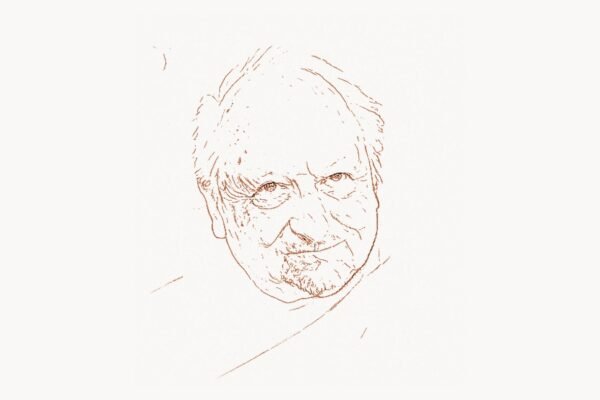
In 2006, when Maria Klawe became the fifth president of Harvey Mudd College, only 10 percent of the school’s computer science majors were women. Within a decade, that number would climb to nearly 50 percent — a transformation so dramatic that it became a case study cited by universities, government agencies, and technology companies worldwide. But Klawe did not accomplish this through quotas, mandates, or lowering standards. She did it by rethinking what a computer science education should look like from the ground up: redesigning introductory courses, dismantling the cultural gatekeeping that rewarded prior experience over intellectual curiosity, and demonstrating that the gender gap in computing was not a pipeline problem but a pedagogy problem. A mathematician by training and a computer scientist by career, Klawe brought four decades of research in algorithms, discrete mathematics, and human-computer interaction to the task of institutional change. The result was not just a statistical success story but a blueprint for how computing education can be restructured to welcome a broader range of minds without sacrificing rigor.
Early Life and Academic Foundations
Maria Margaret Klawe was born in 1951 in Toronto, Canada. She grew up in a household that valued intellectual pursuit and scientific inquiry. From an early age, Klawe displayed a deep affinity for mathematics — the kind of abstract, pattern-driven thinking that would later define her research career. She pursued her undergraduate education at the University of Alberta, earning a Bachelor of Science in mathematics in 1973. She remained at the same institution for her graduate work, completing her PhD in mathematics in 1977.
Her doctoral research focused on topics in functional analysis and discrete mathematics — areas that sat at the intersection of pure mathematical theory and the emerging computational methods that were beginning to reshape scientific research. This dual orientation toward theory and application would become a hallmark of her career. Where many mathematicians of her generation remained within the boundaries of their discipline, Klawe moved fluidly between mathematical abstraction and the practical problems of computing.
After completing her PhD, Klawe joined the University of Toronto as a faculty member, beginning what would become a lifelong commitment to both research and academic leadership. Even at this early stage, she was thinking about how mathematics and computer science were taught — observations that would crystallize decades later into her transformative work at Harvey Mudd.
IBM and the SMAWK Algorithm
Industry Research at Almaden
In the early 1980s, Klawe moved to industry, joining IBM’s Almaden Research Center in San Jose, California. She spent eight years at IBM, rising from research scientist to manager of the Discrete Mathematics Group and later manager of the Mathematics and Related Computer Science Department. This period was formative: it exposed Klawe to the real-world computational challenges that drove industrial research and gave her firsthand experience managing technical teams — skills she would later apply at much larger institutional scales.
It was during her time connected with algorithmic research that Klawe made her most cited technical contribution. Together with Alok Aggarwal, Shlomo Moran, Peter Shor, and Robert Wilber, she co-invented the SMAWK algorithm — a matrix-searching algorithm that efficiently finds the minimum value in each row of a totally monotone matrix. The algorithm, named after its creators’ initials, runs in O(m) time for an m-by-n totally monotone matrix (where m ≥ n), a significant improvement over the naive O(mn) approach.
# SMAWK Algorithm — conceptual implementation
# Finds row minima in a totally monotone matrix
# A matrix is totally monotone if the position of
# the minimum in each row is non-decreasing

def smawk(rows, cols, lookup):
    """
    SMAWK algorithm for finding row minima in a
    totally monotone matrix.

    Klawe et al. (1987) proved this runs in O(m) time
    for an m×n totally monotone matrix, far better
    than the naive O(mn) brute-force approach.

    Applications: computational geometry, sequence
    alignment, optimal paragraph formatting, concave
    cost network flow problems.

    Parameters:
        rows: list of row indices
        cols: list of column indices
        lookup: function(i, j) returning matrix value
    Returns:
        dict mapping each row to its minimum column
    """
    # REDUCE phase: eliminate columns that cannot
    # contain any row minimum (the key insight)
    def reduce(rows, cols):
        surviving = []
        for col in cols:
            while surviving and \
                  lookup(rows[len(surviving)-1], surviving[-1]) \
                  >= lookup(rows[len(surviving)-1], col):
                surviving.pop()
            if len(surviving) < len(rows):
                surviving.append(col)
        return surviving

    # Base case: single row
    if len(rows) == 1:
        min_col = min(cols, key=lambda c: lookup(rows[0], c))
        return {rows[0]: min_col}

    # REDUCE columns
    cols = reduce(rows, cols)

    # INTERPOLATE: solve for odd-indexed rows recursively
    odd_rows = [rows[i] for i in range(1, len(rows), 2)]
    result = smawk(odd_rows, cols, lookup)

    # Fill in even-indexed rows using monotonicity
    # (min position in even row is bounded by neighbors)
    for i in range(0, len(rows), 2):
        row = rows[i]
        # Determine search bounds from adjacent odd rows
        lo = cols[0] if i == 0 \
             else result[rows[i-1]]
        hi = cols[-1] if i+1 >= len(rows) \
             else result[rows[i+1]]

        # Search only within bounds
        candidates = [c for c in cols if lo <= c <= hi]
        result[row] = min(candidates,
                          key=lambda c: lookup(row, c))

    return result

# The SMAWK algorithm has practical applications in:
# - Optimal text justification (Knuth-Plass style)
# - Finding shortest paths in grid graphs
# - String editing and sequence alignment
# - Concave least-weight subsequence problems
The SMAWK algorithm found applications across computational geometry, optimal text formatting (including extensions of Donald Knuth's paragraph-breaking algorithms), sequence alignment in bioinformatics, and concave cost network flow problems. It remains a fundamental result in the study of matrix searching and geometric optimization — one of those algorithmic tools that quietly underpins a wide range of computational applications.
During this period, Klawe also contributed to research on geometric optimization problems, distributed leader election algorithms, and the art gallery problem — a classic computational geometry question about determining the minimum number of guards needed to observe every point in a polygonal space. Her publication record from the 1980s and 1990s reflects a researcher comfortable working across the boundaries of discrete mathematics, theoretical computer science, and applied algorithms.
University of British Columbia: Leadership and Advocacy Begin
In 1988, Klawe returned to academia, joining the University of British Columbia (UBC) as head of the Department of Computer Science — a position she held until 1995. Her tenure at UBC marked the beginning of her dual career as both a researcher and an advocate for broadening participation in computing.
At UBC, Klawe observed firsthand the attrition of women from computer science programs. When she arrived, only 16 percent of computer science majors were female. Through a combination of curriculum adjustments, mentorship programs, and cultural changes within the department, she increased that number to 27 percent by the time she stepped down as department head. She also grew the number of female faculty from two to seven — a change that provided visible role models for students and helped shift the perception that computer science was an exclusively male domain.
In 1991, Klawe co-founded CRA-W (the Computing Research Association's Committee on the Status of Women in Computing Research) with Nancy Leveson. CRA-W became one of the most influential organizations advocating for women in computing, providing mentorship, scholarships, and research opportunities for women at all career stages. The founding of CRA-W was not a symbolic gesture — it was the creation of institutional infrastructure that would support thousands of women in computing over the following decades.
Klawe's time at UBC also included roles as vice president of student and academic services (1995–1998) and dean of science (1998–2002). Each position gave her broader institutional perspective and deeper understanding of how university structures could either support or hinder diversity in STEM fields. By the time she left UBC, she had developed a comprehensive understanding of the systemic factors that drive women away from computing — and practical strategies for addressing them.
Princeton and the Path to Harvey Mudd
Before arriving at Harvey Mudd, Klawe served as dean of engineering and professor of computer science at Princeton University. At Princeton, she continued her dual focus on research and institutional leadership, while also deepening her engagement with national conversations about diversity in STEM education. The position at one of the world's most prestigious engineering schools gave her credibility and visibility that would prove essential in her later work.
It was during this period that Klawe began to formalize her thinking about what it would take to fundamentally transform computing education. She had spent years observing the same patterns across different institutions: talented women entering computer science programs, encountering a culture that rewarded prior programming experience over intellectual potential, and leaving for other fields. The problem was not that women lacked ability or interest — it was that the way computer science was taught and the culture that surrounded it systematically discouraged students who did not fit a narrow mold.
The Harvey Mudd Transformation
Redesigning the Introductory Course
When Klawe became president of Harvey Mudd College in 2006, she inherited an institution with a strong reputation in science and engineering but a computer science program that struggled with gender diversity. Only 10 percent of CS majors were women. The introductory computer science course, required for all first-year students, was widely considered the most despised course on campus.
The transformation began with the introductory course itself. Working with the CS faculty, Klawe oversaw a fundamental redesign. The course was renamed from "Introduction to Programming in Java" to "Creative Approaches to Problem Solving in Science and Engineering Using Python." This was not merely cosmetic: the new title reflected a genuine shift in pedagogical approach. The language switch from Java to Python lowered the barrier to entry. The emphasis on creative problem solving rather than programming syntax made the course accessible to students with no prior coding experience.
Faculty split the introductory course into two sections, named Black and Gold after Harvey Mudd's school colors. The Black section was for students with prior programming experience; the Gold section was for those without. This separation was crucial: it prevented experienced programmers from dominating classroom discussions and making newcomers feel inadequate. Students who had been coding since age twelve were no longer sitting next to students who had never written a line of code, creating an environment where both groups could learn at an appropriate pace.
The cultural changes went deeper than course structure. Students who dominated class discussions — typically male students eager to demonstrate their existing knowledge — were taken aside individually by faculty. Rather than being scolded, they were told that their enthusiasm was valued but would be better channeled through one-on-one conversations with professors. This approach preserved their engagement while creating space for other students to participate. The approach reflected Klawe's philosophy that diversity initiatives should be additive rather than punitive — expanding opportunity rather than restricting it.
Managing large-scale educational transformation requires the same kind of systematic, structured thinking that drives effective project management in professional settings. Klawe treated the curriculum redesign as a coordinated institutional effort with clear goals, measurable outcomes, and iterative refinement — an approach that modern project management platforms like Taskee are designed to support across distributed teams.
Beyond the Classroom
Klawe understood that changing the curriculum was necessary but not sufficient. She also implemented structural changes that addressed the broader environment. Harvey Mudd began offering summer research positions to first-year women in computer science, giving them the opportunity to apply their new skills to meaningful projects — from educational games to assistive technology. These early research experiences built confidence and demonstrated that computer science was not just about coding exercises but about solving real problems.
The college also began sending up to 25 first-year women to the Grace Hopper Celebration of Women in Computing — the largest conference focused on women in technology. Attending the conference gave students a vivid sense that they were part of a larger community and that successful careers in computing were not only possible but already being built by thousands of women around the world.
The results were striking. By 2016, nearly half of Harvey Mudd's computer science majors were women — compared to a national average of approximately 18 percent. The transformation attracted international attention and became a model studied by institutions ranging from small liberal arts colleges to large research universities. More importantly, it demonstrated that the gender gap in computing was not an inevitable consequence of innate differences but a product of educational design choices that could be changed.
The BRAID Initiative and National Impact
Klawe's ambitions extended well beyond Harvey Mudd. In collaboration with the Anita Borg Institute (now AnitaB.org), she launched the BRAID (Building Recruiting And Inclusion for Diversity) initiative, which worked to replicate Harvey Mudd's success at 15 other academic institutions. BRAID provided participating schools with resources, best practices, and a network of peers working toward similar goals.
The initiative reflected Klawe's understanding that systemic problems require systemic solutions. A single institution achieving gender parity in CS was encouraging, but it would not change the broader landscape. BRAID aimed to create a critical mass of institutions implementing evidence-based diversity strategies, generating enough data and momentum to shift national norms. This kind of cross-institutional collaboration is analogous to how modern digital agencies coordinate complex projects across multiple teams — scaling proven approaches through structured knowledge sharing and strategic alignment.
Klawe's national impact also extended through her board service. She served on the boards of Microsoft, Broadcom, and the nonprofit Math for America, among others. Her Microsoft board position (2009–2015) gave her a platform to advocate for diversity within one of the world's largest technology companies, while her involvement with Math for America connected her work in computing education to the broader challenges of STEM teaching.
Research Contributions and Technical Legacy
While Klawe's advocacy work has received the most public attention, her research contributions form a substantial body of work in theoretical computer science and discrete mathematics. Beyond the SMAWK algorithm, her research encompassed functional analysis, distributed algorithms, computational geometry, and — increasingly from the 1990s onward — human-computer interaction and the effects of gender on technology use.
Her work on distributed leader election algorithms contributed to the theoretical foundations of distributed computing systems. Her research on the art gallery problem advanced understanding of visibility and coverage in geometric spaces — problems with applications in robotics, surveillance, and sensor network design. Her studies of gender and electronic game-playing, conducted from the late 1990s through the 2000s, were among the first rigorous academic investigations of how gender influences interaction with technology — research that would become increasingly relevant as the technology industry grappled with questions of inclusive design.
Klawe's research output demonstrates that her advocacy for diversity was not separate from her technical work but deeply connected to it. Her investigations of human-computer interaction and gender revealed that design choices in software and educational materials had measurable effects on who engaged with technology and who did not. This empirical grounding gave her diversity work a scientific rigor that distinguished it from purely ideological approaches.
Honors, Recognition, and Continuing Work
Klawe's contributions have been recognized with an extensive list of honors. She was inducted as a Fellow of the Association for Computing Machinery (ACM) in 1996, one of computing's highest professional distinctions, joining the ranks of pioneers like Edsger Dijkstra and Donald Knuth. She became a founding Fellow of the Canadian Information Processing Society in 2006, a Fellow of the American Academy of Arts and Sciences in 2009, a Fellow of the American Mathematical Society in 2012, and a Fellow of the Association for Women in Mathematics in 2019.
She has received honorary doctorates from more than a dozen universities, including the University of Waterloo, Queen's University, the University of British Columbia, the University of Toronto, and McGill University. She received the Vancouver YWCA Women of Distinction Award in Science and Technology in 1997 and the Wired Woman Pioneer Award in 2001. In 2014, she was named one of the most influential people in technology by multiple publications.
In 2023, after 17 years as president of Harvey Mudd College, Klawe stepped into a new role as president of Math for America (MfA), an organization dedicated to transforming the teaching of mathematics and science by building communities of master STEM teachers. The move reflected her belief that the challenges she had addressed in higher education — the need for better pedagogy, more inclusive teaching practices, and stronger support structures for underrepresented groups — were equally pressing in K-12 education. At MfA, she continues to apply the evidence-based, system-level thinking that defined her work at Harvey Mudd.
Klawe is also an accomplished painter, known for watercolor landscapes that she creates during her travels. She has spoken publicly about how artistic practice complements her scientific work — a perspective reminiscent of Ada Lovelace's concept of "poetical science," where imagination and analytical rigor reinforce each other.
Philosophy and Approach to Change
Klawe's approach to institutional transformation is characterized by several principles that have made her work particularly effective and widely replicable.
First, she insists on evidence-based intervention. Every change she implemented at Harvey Mudd was grounded in research — either existing studies on pedagogy and diversity or data collected from the college's own students. This empirical approach allowed her to distinguish between interventions that actually worked and those that merely felt right, and to refine her strategies based on measurable outcomes.
Second, she frames diversity as a quality issue rather than a fairness issue. Her argument is not simply that excluding women from computing is unjust (though it is) but that computing itself is impoverished when it draws from too narrow a talent pool. The field produces better research, better products, and better solutions when it includes diverse perspectives — an argument that resonates with engineering-minded audiences who might be skeptical of purely moral appeals.
Third, she focuses on systemic design rather than individual remediation. Rather than asking why individual women leave computer science and trying to fix them, she asks what about the educational system drives them away and fixes the system. This approach — redesigning development workflows and learning environments rather than expecting individuals to adapt to hostile structures — has proven far more effective than traditional diversity programs that focus on mentoring and support without addressing underlying structural problems.
Key Facts
- Born: 1951, Toronto, Canada
- Education: BSc Mathematics (1973) and PhD Mathematics (1977), University of Alberta
- Known for: SMAWK algorithm, transforming gender diversity in CS education, Harvey Mudd College presidency
- Key roles: President of Harvey Mudd College (2006–2023), Dean of Engineering at Princeton, Head of CS at UBC, IBM Almaden Research Center
- Current role: President of Math for America (since 2023)
- Recognition: ACM Fellow (1996), Fellow of American Academy of Arts and Sciences, Fellow of American Mathematical Society, 11+ honorary doctorates
- Co-founded: CRA-W (Computing Research Association's Committee on the Status of Women, 1991)
- Key achievement: Increased Harvey Mudd CS female enrollment from 10% to ~50%
Frequently Asked Questions
Who is Maria Klawe?
Maria Klawe is a Canadian-American computer scientist and mathematician who served as the fifth president of Harvey Mudd College from 2006 to 2023. She is known for co-inventing the SMAWK algorithm, a matrix-searching method with applications in computational geometry, and for dramatically increasing the representation of women in computer science at Harvey Mudd — from 10 percent to nearly 50 percent of CS majors. She co-founded CRA-W, the Computing Research Association's Committee on the Status of Women, and is an ACM Fellow. She currently serves as president of Math for America.
What is the SMAWK algorithm?
The SMAWK algorithm, co-invented by Maria Klawe along with Aggarwal, Moran, Shor, and Wilber, is an efficient method for finding the minimum value in each row of a totally monotone matrix. It runs in linear time O(m) for an m-by-n matrix (where m is at least n), compared to the naive O(mn) approach. The algorithm has applications in computational geometry, optimal text justification, sequence alignment, and network flow problems. It exemplifies the kind of elegant algorithmic result that can have broad practical impact across seemingly unrelated domains.
How did Maria Klawe increase women in CS at Harvey Mudd?
Klawe oversaw a multi-pronged approach that redesigned the introductory CS course (switching from Java to Python, splitting sections by prior experience, emphasizing creative problem solving over syntax), offered early research opportunities to first-year women, sent students to the Grace Hopper Celebration of Women in Computing, and addressed classroom dynamics that disadvantaged newcomers. The approach focused on fixing the educational system rather than trying to fix individual students, and it achieved results — nearly 50% female CS enrollment — that far exceeded the national average of approximately 18-21 percent.
What research contributions has Maria Klawe made?
Beyond the SMAWK algorithm, Klawe has contributed to research on functional analysis, discrete mathematics, distributed leader election algorithms, the art gallery problem in computational geometry, and human-computer interaction. Her later research focused on gender and technology use, investigating how design choices in software and educational materials affect who engages with computing. She has published extensively in top venues across mathematics and computer science.
What is Maria Klawe doing now?
Since 2023, Klawe has served as president of Math for America (MfA), an organization dedicated to improving STEM education by building communities of expert teachers. She also continues to serve on corporate and nonprofit boards and remains active in advocating for diversity in technology fields. Her move to MfA reflects her belief that the pedagogical reforms she championed in higher education — evidence-based curriculum design, inclusive teaching practices, systemic rather than individual approaches — are equally needed in K-12 STEM education.