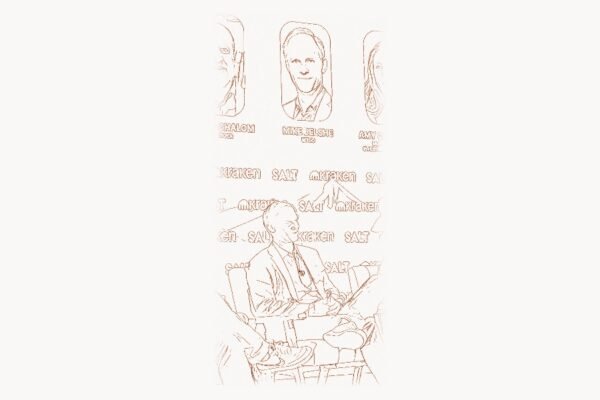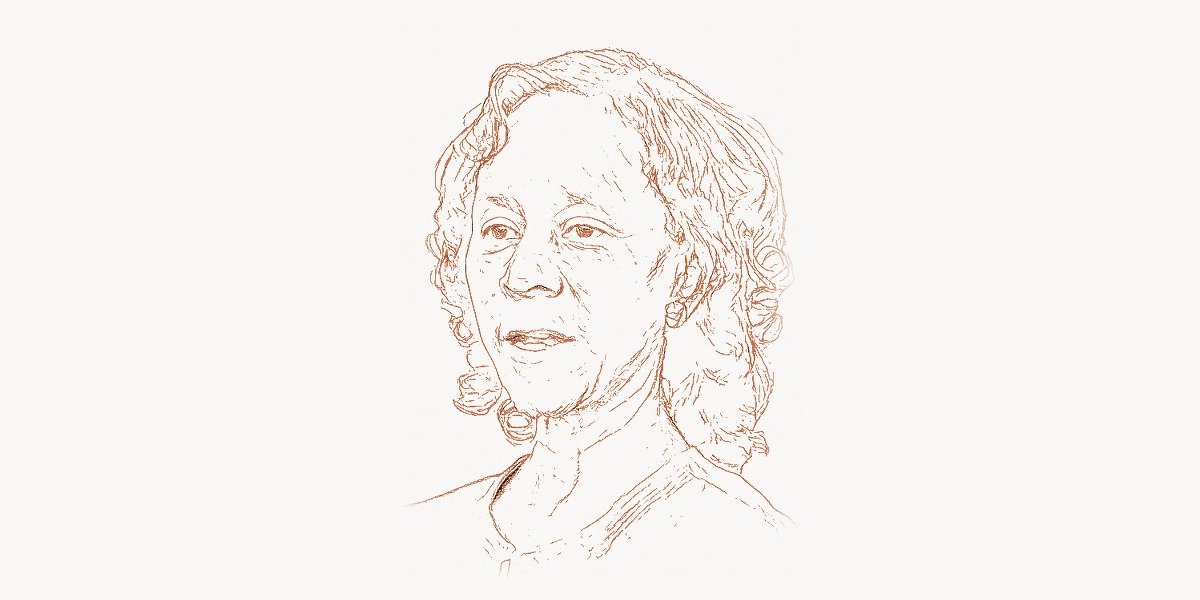
In 2020, Marian Croak was inducted into the National Inventors Hall of Fame — only the second Black woman ever to receive that honor. With over 200 patents to her name, she had already spent decades quietly reshaping how the world communicates. From pioneering Voice over Internet Protocol (VoIP) technology at AT&T Bell Labs to leading engineering teams at Google responsible for serving billions of users, Croak’s career is a masterclass in turning fundamental research into infrastructure that people rely on every day without a second thought.
Early Life and Education
Marian Croak grew up in New York City, where she developed an early fascination with science and mathematics. She earned her bachelor’s degree from Princeton University and went on to complete her Ph.D. in social psychology and quantitative analysis from the University of Southern California. While that academic background might seem unusual for someone who would become one of the most prolific inventors in telecommunications, it gave her a distinctive lens — she understood not just how technology worked, but how people actually used it. That human-centered perspective would become a recurring theme throughout her career.
Her doctoral work focused on quantitative methods and social behavior, grounding her in data-driven analysis. This combination of rigorous statistical thinking and empathy for end-user experience set her apart from peers who approached engineering from a purely technical standpoint. In many ways, her path mirrors the interdisciplinary approach championed by pioneers like Don Norman, who demonstrated that great technology must be designed with humans in mind.
Career and the VoIP Revolution
Croak joined AT&T Bell Labs in 1982 and spent over 30 years there, eventually rising to Senior Vice President of Research and Development. During that time, she became one of the foremost experts in converting traditional telephone systems to Internet-based protocols — the technology we now call VoIP.
Technical Innovation: Making Voice Travel Over IP
The fundamental challenge of VoIP is deceptively simple to describe but enormously difficult to solve: how do you take an analog voice signal, break it into digital packets, send those packets across an unreliable network, and reassemble them on the other end with enough fidelity and low enough latency that two people can have a natural conversation?
Traditional telephony used circuit switching — a dedicated, continuous connection between two endpoints for the duration of a call. VoIP replaces this with packet switching, where voice data is chopped into small packets that travel independently across the network and are reassembled at the destination.
Here is a simplified representation of how a VoIP packet is structured as it traverses the network:
class VoIPPacket:
    """Simplified model of a VoIP packet structure."""

    def __init__(self, source_ip, dest_ip, payload, sequence_num):
        # IP Header — routing information
        self.source_ip = source_ip
        self.dest_ip = dest_ip

        # UDP Header — lightweight transport (no TCP handshake overhead)
        self.source_port = 5060  # SIP default
        self.dest_port = 5060

        # RTP Header — real-time transport protocol
        self.sequence_num = sequence_num
        self.timestamp = self._generate_timestamp()
        self.payload_type = 0  # G.711 codec (PCM audio)

        # Voice payload — typically 20ms of encoded audio
        self.payload = payload

    def _generate_timestamp(self):
        """RTP timestamps increment by sample count, not wall clock."""
        return self.sequence_num * 160  # 160 samples per 20ms at 8kHz

    def packet_size(self):
        """VoIP packets are small — latency matters more than throughput."""
        ip_header = 20       # bytes
        udp_header = 8       # bytes
        rtp_header = 12      # bytes
        payload_size = len(self.payload)
        return ip_header + udp_header + rtp_header + payload_size
Croak’s patents addressed many of the hardest problems in this pipeline: jitter buffering (smoothing out variations in packet arrival times), echo cancellation across IP networks, quality-of-service monitoring, and graceful degradation when network conditions worsened. Her work ensured that VoIP could meet the reliability expectations that decades of traditional telephony had established.
One of her most significant contributions was developing systems for text and voice voting — the technology that allows millions of people to vote via phone during television shows, charity telethons, and similar large-scale events. This required solving concurrency problems at staggering scale: handling millions of simultaneous inputs without dropping calls or corrupting vote counts.
Why It Mattered: The Trillion-Dollar Infrastructure Shift
Before Croak’s work and that of her contemporaries, making a phone call meant relying on infrastructure that had changed relatively little since the mid-20th century. Circuit-switched networks were expensive to maintain, difficult to scale, and fundamentally separated from the data networks that were becoming increasingly important.
VoIP unified voice and data onto a single network. The consequences were enormous:
- Cost reduction — Long-distance and international calls went from expensive luxuries to essentially free features bundled into internet service
- Scalability — Adding capacity meant adding bandwidth, not laying new copper or fiber for dedicated voice circuits
- Feature integration — Voice could now be combined with video, messaging, screen sharing, and other data services in unified platforms
- Global accessibility — Anyone with an internet connection could make voice calls, democratizing communication across economic boundaries
Every time you use Zoom, Google Meet, WhatsApp calls, Discord, or any modern communication platform, you are using technology that Croak helped pioneer. The shift from circuit-switched to packet-switched voice infrastructure represents one of the largest technology transitions in history, comparable to the move from mainframes to personal computers that leaders like Bill Gates championed.
Other Contributions
Croak’s influence extends well beyond VoIP. Even during her AT&T years, she was deeply involved in developing the infrastructure for emergency services and accessibility features. Her patents include work on IP-based 911 systems — ensuring that as the world moved from traditional phone lines to internet-based communication, emergency calling would remain reliable. This was not glamorous work, but it was essential: the transition from circuit-switched to packet-switched networks threatened to break the emergency calling infrastructure that millions of people depend on. Croak’s team developed protocols that maintained location accuracy and call reliability for VoIP-based emergency services, work that continues to save lives every day.
After joining Google in 2014, she became Vice President of Engineering, where she led teams working on some of the company’s most critical infrastructure. Her transition from Bell Labs to one of the world’s largest technology companies was a natural evolution — Google’s communication tools, from Google Voice to Google Meet, are direct descendants of the VoIP technology she helped create.
At Google, she has overseen research and development in areas including network reliability, expansion of internet access to underserved regions, and the application of machine learning to network optimization. Her work on Google’s network infrastructure touches the same distributed-systems challenges that engineers like Jeff Dean and Sanjay Ghemawat tackled with MapReduce and GFS — ensuring that systems serving billions of users remain fast, reliable, and resilient.
She has also been a strong advocate for diversity in STEM fields. Croak has mentored countless engineers and has spoken publicly about the importance of creating pathways for underrepresented groups in technology. Her advocacy resonates with the work of researchers like Joy Buolamwini, who has highlighted how lack of diversity in tech leads to biased and harmful systems.
In addition to her National Inventors Hall of Fame induction, Croak has been recognized with numerous awards, including being named to the Women in Technology International Hall of Fame. Her 200+ patents span voice communication, network protocols, data services, and voting technologies — a breadth that reflects her ability to identify and solve problems across multiple domains simultaneously.
For teams building modern communication platforms, tools like Taskee help manage the complex workflows involved in developing and deploying real-time voice and video infrastructure — the kind of coordination challenges that Croak navigated throughout her career.
Philosophy and Approach
Croak’s career reflects a consistent set of principles that guided her from Bell Labs researcher to Google VP. Her approach combines deep technical rigor with a pragmatic focus on real-world impact.
Key Principles
- Solve for the end user, not the specification — Croak’s social psychology background meant she always asked how people would actually use a technology, not just whether it met technical benchmarks. A system with perfect packet delivery means nothing if the voice quality sounds robotic to human ears.
- Patent as a discipline, not a trophy — With over 200 patents, Croak treats the patent process as a rigorous way to formalize and document innovation. Each patent represents a specific, well-defined solution to a concrete problem — not speculative claims on broad ideas.
- Scale thinking from day one — Her work on text voting systems for millions of concurrent users taught her to design for scale as a fundamental property, not an afterthought. This mindset proved invaluable at Google, where every system must handle billions of requests.
- Diversity produces better engineering — Croak has consistently argued that diverse teams identify more failure modes, consider more use cases, and produce more robust solutions. This is not just a social position — it is an engineering methodology.
- Bridge research and production — Moving between Bell Labs research and AT&T production systems, then to Google’s engineering organization, Croak learned to value both theoretical elegance and practical deployment. The best ideas are worthless if they cannot be shipped.
The following snippet illustrates the kind of concurrent-load management that Croak’s voting systems had to handle — accepting and tallying millions of inputs in real time while maintaining data integrity:
package main

import (
    "fmt"
    "sync"
    "sync/atomic"
)

// VoteTally demonstrates concurrent vote processing
// similar to the scale challenges in Croak's text-voting patents
type VoteTally struct {
    counts sync.Map      // thread-safe map for vote options
    total  atomic.Int64  // lock-free atomic counter
}

func (vt *VoteTally) CastVote(option string) {
    // Atomic increment — no locks, no data races
    val, _ := vt.counts.LoadOrStore(option, new(atomic.Int64))
    val.(*atomic.Int64).Add(1)
    vt.total.Add(1)
}

func (vt *VoteTally) Results() map[string]int64 {
    results := make(map[string]int64)
    vt.counts.Range(func(key, value any) bool {
        results[key.(string)] = value.(*atomic.Int64).Load()
        return true
    })
    return results
}

func main() {
    tally := &VoteTally{}
    var wg sync.WaitGroup

    // Simulate 1M concurrent votes across 4 options
    for i := 0; i < 1_000_000; i++ {
        wg.Add(1)
        go func(id int) {
            defer wg.Done()
            options := []string{"Option A", "Option B", "Option C", "Option D"}
            tally.CastVote(options[id%4])
        }(i)
    }

    wg.Wait()
    fmt.Printf("Total votes: %d\n", tally.total.Load())
    for opt, count := range tally.Results() {
        fmt.Printf("  %s: %d\n", opt, count)
    }
}
This pattern — using lock-free data structures and atomic operations to handle massive concurrency — reflects the core engineering challenge that Croak solved repeatedly throughout her career: how to make systems that work reliably at scales that most people never think about.
Legacy and Impact
Marian Croak's legacy is woven into the fabric of modern communication. The VoIP technology she helped develop now carries a substantial portion of all voice communication worldwide. Every video call, every voice message, every internet-based phone service descends from the work she and her colleagues did at Bell Labs.
Her patent portfolio of 200+ inventions places her among the most prolific inventors in telecommunications history. But numbers alone do not capture her impact. Croak's patents are not incremental variations on a theme — they span voice processing, network architecture, data services, voting systems, and accessibility technologies. This breadth demonstrates an engineer who could see connections across domains, much like Vint Cerf, whose TCP/IP work created the network layer that VoIP relies on.
At Google, Croak continues to shape how billions of people connect. Her leadership in expanding internet access to underserved communities reflects a commitment to the democratizing potential of technology that echoes the open-access ideals of pioneers like Tim Berners-Lee.
Perhaps most importantly, Croak represents a model for what a technology career can look like: deeply technical, consistently innovative, socially conscious, and sustained over decades. In an industry that often celebrates young founders and quick exits, her four-decade career stands as a reminder that the most transformative work often happens through persistent, focused effort — the kind of long-term thinking that organizations like Toimi bring to building digital products that stand the test of time.
Key Facts About Marian Croak
- Born: 1955, New York City, USA
- Education: B.S. from Princeton University; Ph.D. in Social Psychology and Quantitative Analysis from USC
- Career span: 30+ years at AT&T/Bell Labs (1982–2014), then VP of Engineering at Google (2014–present)
- Patents: Over 200 granted patents in voice communication, network protocols, and data services
- Key innovation: Pioneering VoIP technology and large-scale text/voice voting systems
- Notable honor: Inducted into the National Inventors Hall of Fame in 2022 — one of very few Black women to receive this distinction
- Other recognition: Women in Technology International Hall of Fame; named one of the most important Black voices in technology
- Current role: VP of Engineering at Google, overseeing research in network reliability and internet access expansion
- Advocacy: Active mentor and advocate for diversity in STEM, particularly for underrepresented minorities and women in engineering
Frequently Asked Questions
What exactly did Marian Croak invent?
Croak did not invent a single product that you can point to on a shelf. Instead, she invented the underlying systems and protocols that make modern voice communication possible over the internet. Her 200+ patents cover technologies like VoIP packet processing, jitter compensation, echo cancellation for IP networks, quality monitoring systems, and large-scale text and voice voting platforms. These inventions are embedded in the infrastructure that powers every internet-based phone call, video conference, and voice message sent today. Think of her work as building the plumbing — invisible but absolutely essential.
How did Marian Croak's VoIP work differ from other early VoIP research?
While many researchers worked on the theoretical foundations of sending voice over packet networks, Croak focused on the practical engineering challenges of making VoIP reliable enough to replace traditional phone systems. Her patents specifically addressed the problems that made early VoIP frustrating — audio delays, echo artifacts, dropped packets causing garbled speech, and system failures under heavy load. She approached these problems not just as signal processing challenges but as user experience problems, leveraging her social psychology training to define what "good enough" meant from the listener's perspective. This practical, human-centered approach to a deeply technical problem set her work apart from more theoretical contributions in the field.
Why was her induction into the National Inventors Hall of Fame significant?
The National Inventors Hall of Fame recognizes individuals whose patented inventions have had a significant impact on society. When Croak was inducted in 2022, she became one of the very few Black women ever honored — a fact that highlights both her extraordinary accomplishments and the persistent underrepresentation of Black women in technology and invention. Her induction placed her alongside figures like Grace Hopper in the pantheon of recognized technology pioneers, validating decades of work that had often been invisible to the broader public despite its enormous impact on daily life.
What is Marian Croak working on at Google today?
At Google, Croak serves as Vice President of Engineering, where her work spans several critical areas. She leads teams focused on expanding internet access to underserved and rural communities — work that directly addresses the digital divide. She also oversees research into network reliability and performance optimization, applying machine learning techniques to predict and prevent network failures before they affect users. Her role connects to Google's broader mission of organizing the world's information and making it universally accessible — a goal that requires the kind of robust, scalable infrastructure engineering that has defined Croak's entire career.