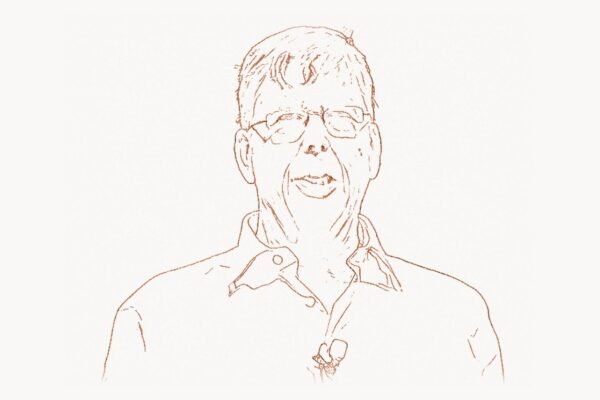
In the early 2000s, the Linux desktop was a fragmented landscape — powerful but inaccessible, beloved by hackers but feared by everyone else. Then a South African entrepreneur who had already sold an internet security company for hundreds of millions of dollars, and who had literally been to outer space, decided that the most important thing he could do was make Linux usable for ordinary people. Mark Shuttleworth founded Canonical and launched Ubuntu in 2004, igniting a revolution in open-source software distribution that brought Linux to millions of desktops and, eventually, became the dominant operating system for cloud servers worldwide. His combination of business acumen, technical vision, and genuine idealism reshaped what open source could become.
Early Life and Education
Mark Richard Shuttleworth was born on September 18, 1973, in Welkom, South Africa, a gold mining town in the Free State province. Growing up in the post-apartheid era, he developed an early fascination with computers and technology. He attended Diocesan College (Bishops) in Cape Town, a prestigious independent school, where his aptitude for science and mathematics became apparent.
Shuttleworth went on to study finance and information technology at the University of Cape Town. During his university years in the early 1990s, he became deeply involved with the nascent Linux community. He installed Debian Linux and began contributing to the project, becoming an official Debian developer. This experience was formative — it introduced him to the collaborative ethos of free software and the practical challenges of making Linux accessible. He later described these university years as the period that shaped his lifelong commitment to open-source principles.
After graduating, Shuttleworth founded Thawte Consulting in 1995, a company focused on digital certificates and internet security, which he operated from his parents’ garage. Thawte became the first certificate authority to issue SSL certificates outside the United States, challenging VeriSign’s near-monopoly. In 1999, VeriSign acquired Thawte for approximately $575 million, making Shuttleworth one of the youngest self-made billionaires in the world at age 26. Rather than retiring into luxury, he began planning his next ventures — one that would take him to the stars, and another that would change open-source computing forever. This trajectory mirrors the entrepreneurial spirit seen in other tech visionaries like Larry Page, who similarly turned early success into ambitious long-term projects.
The Ubuntu Breakthrough
Technical Innovation
In 2004, Shuttleworth founded Canonical Ltd. and announced the Ubuntu Linux distribution. The name “Ubuntu” comes from the Zulu and Xhosa philosophy meaning “humanity towards others” — a deliberate signal that this distribution was about people first, technology second.
Ubuntu was built on Ian Murdock’s Debian, inheriting its robust package management system and vast software repository. But Shuttleworth’s team made critical engineering decisions that distinguished Ubuntu from everything else in the Linux world. They committed to a strict six-month release cycle, alternating between feature-rich and stability-focused releases. Every two years, a Long Term Support (LTS) release would receive five years of security updates, giving enterprises the predictability they needed.
The first release, Ubuntu 4.10 “Warty Warthog,” shipped in October 2004 with a GNOME desktop, and Canonical mailed free CDs to anyone in the world who requested them through the ShipIt program. This was unprecedented — a professionally packaged Linux distribution delivered to your doorstep at zero cost. The installer was dramatically simplified compared to other distributions of the era. Where Debian required users to navigate complex partitioning schemes and package selections, Ubuntu offered a streamlined process that could get a complete desktop system running in under thirty minutes.
Under the hood, Ubuntu introduced several technical innovations. The use of sudo instead of a separate root account was a deliberate security choice that also simplified the user experience. The hardware detection and driver management through jockey (later integrated into the Software Center) addressed one of Linux’s most persistent pain points. Here is a classic example of how Ubuntu simplified system administration tasks that previously required complex manual configuration:
# Ubuntu's simplified package management workflow
# Update package lists and upgrade all packages
sudo apt update && sudo apt upgrade -y

# Install a complete LAMP stack in one command
sudo apt install -y apache2 mysql-server php libapache2-mod-php php-mysql

# Enable and start services
sudo systemctl enable apache2 mysql
sudo systemctl start apache2 mysql

# Check service status
systemctl status apache2 --no-pager
This kind of streamlined workflow stood in stark contrast to the manual compilation and dependency resolution that Linux users had long endured. Canonical also invested heavily in Launchpad, a web-based platform for collaborative software development, bug tracking, and translation. Launchpad enabled Ubuntu’s global community to translate the operating system into over 200 languages, making it truly international in scope.
Why It Mattered
Before Ubuntu, Linux on the desktop was largely the province of enthusiasts and professionals. Distributions like Slackware, Gentoo, and even Debian required substantial technical knowledge. Red Hat and SUSE focused primarily on the enterprise server market. Shuttleworth saw an enormous gap: millions of people who might benefit from a free, open-source operating system but were intimidated by the existing options.
Ubuntu changed the conversation around Linux. For the first time, a Linux distribution was reviewed favorably in mainstream technology publications. Governments, schools, and organizations in developing nations adopted it as a cost-effective alternative to proprietary software. The French National Assembly, the city of Munich (initially), and numerous school systems worldwide deployed Ubuntu, demonstrating that open-source software could serve institutional needs.
The ripple effects extended far beyond the desktop. Ubuntu Server became the preferred platform for cloud computing, running more workloads on Amazon Web Services than any other operating system. When Docker containers rose to prominence, Ubuntu images became the default base for countless containerized applications — a testament to the ecosystem that Solomon Hykes built on foundations that Ubuntu helped establish. Ubuntu’s dominance in the cloud proved that Shuttleworth’s investment in a polished, well-supported Linux distribution had far-reaching consequences.
Other Major Contributions
Shuttleworth’s impact extends well beyond Ubuntu itself. In April 2002, he became the first citizen of an African country to travel to space, spending roughly eight days aboard the International Space Station as a paying participant on a Russian Soyuz mission. He used the journey to conduct science experiments on behalf of South African educational institutions and to inspire young people across Africa to pursue careers in science and technology. The Mark Shuttleworth Trust, established with proceeds from the Thawte sale, has funded numerous educational and open-source initiatives throughout South Africa.
Within the technology sphere, Shuttleworth drove several ambitious projects through Canonical. The Unity desktop environment, introduced in 2010, was a bold attempt to create a unified interface that could span desktops, tablets, and phones. While controversial among longtime Linux users who preferred GNOME or KDE, Unity demonstrated that Linux could offer a coherent, designed user experience rather than simply assembling disparate components. The project influenced other desktop environments, much as Alan Kay’s early work on graphical user interfaces set the stage for decades of innovation in human-computer interaction.
Canonical also developed Snaps, a universal packaging format designed to work across different Linux distributions. Snaps addressed the long-standing fragmentation problem in Linux software distribution — the same package built once could run on Ubuntu, Fedora, Arch, and other distributions without modification. This approach complemented similar efforts like Flatpak and AppImage, pushing the entire Linux ecosystem toward better software distribution practices.
The Ubuntu Phone initiative, though ultimately discontinued, was a visionary attempt to create a fully convergent operating system. The idea that a phone could dock into a monitor and become a desktop computer anticipated concepts later explored by Samsung DeX and similar technologies. Shuttleworth’s willingness to pursue ambitious, even risky, projects set Canonical apart from more conservative Linux vendors.
Shuttleworth also championed Juju, a service orchestration tool for cloud deployments, and MAAS (Metal as a Service), which brought cloud-like provisioning to bare metal servers. These tools reflected Canonical’s strategic pivot toward enterprise cloud infrastructure — a move that has proven commercially successful as Ubuntu dominates cloud workloads globally.
Philosophy and Approach
Shuttleworth’s approach to technology and business is guided by a distinctive set of principles that blend idealism with pragmatism. Unlike purists who insist on absolute software freedom at the expense of usability, and unlike corporations that embrace open source purely for competitive advantage, Shuttleworth occupies a deliberate middle ground.
Key Principles
- Open source as a public good: Shuttleworth views free software not merely as a development methodology but as a social imperative. He has repeatedly argued that access to technology is a fundamental enabler of economic development, particularly in the Global South. Ubuntu’s free-of-charge model and multilingual support reflect this conviction directly.
- Design matters: Long before Apple’s design philosophy became the industry standard, Shuttleworth insisted that Linux could and should be beautiful. He hired professional designers, established visual identity guidelines, and argued that aesthetics are not superficial — they communicate respect for the user. This echoes principles articulated by Don Norman in his foundational work on user experience design.
- Predictability enables trust: The rigid six-month release cycle and LTS schedule were not merely logistical choices — they were trust-building mechanisms. By delivering on schedule, every time, Canonical demonstrated reliability that enterprises required before committing to open-source infrastructure.
- Community and commerce coexist: Shuttleworth structured Canonical to generate revenue through enterprise support, cloud services, and IoT solutions while keeping Ubuntu itself free. This model, similar to what Richard Stallman initially envisioned for free software sustainability, proved that commercial viability and open-source values need not conflict.
- Convergence is the future: Shuttleworth has consistently pushed for computing experiences that transcend device categories. From Unity’s cross-platform ambitions to Ubuntu Core for IoT devices, the vision is a single, coherent software platform that scales from embedded systems to supercomputers.
- Invest in infrastructure: Rather than chasing consumer trends, Shuttleworth focused Canonical’s resources on the layers that everything else depends on — the kernel, package management, cloud orchestration, and security updates. This infrastructure-first approach mirrors the philosophy that made Linus Torvalds’s Linux kernel the foundation of modern computing.
These principles are visible in practice across the Ubuntu ecosystem. For example, configuring an Ubuntu server for automated security updates demonstrates how design and predictability come together:
# Configure unattended security upgrades on Ubuntu Server
sudo apt install -y unattended-upgrades

# Enable automatic security updates
sudo dpkg-reconfigure -plow unattended-upgrades

# Verify configuration
cat /etc/apt/apt.conf.d/20auto-upgrades
# APT::Periodic::Update-Package-Lists "1";
# APT::Periodic::Unattended-Upgrade "1";

# Check logs for applied updates
sudo cat /var/log/unattended-upgrades/unattended-upgrades.log | tail -20
This kind of sensible default configuration — secure by design, transparent in operation — exemplifies Shuttleworth’s philosophy that good engineering should reduce friction, not create it.
Legacy and Impact
Mark Shuttleworth’s legacy is measured in numbers that would be extraordinary for any single technology project. Ubuntu has been downloaded hundreds of millions of times since its launch. It runs on an estimated 40% of cloud workloads globally. It powers everything from the International Space Station’s laptops to Walmart’s infrastructure to countless development environments around the world.
But the quantitative impact tells only part of the story. Shuttleworth changed the culture of open source. Before Ubuntu, the Linux community had a reputation (not entirely undeserved) for hostility toward newcomers. The Ubuntu Code of Conduct, which Shuttleworth personally drafted, established that respectful, welcoming behavior was not optional but foundational. The phrase “be excellent to each other” became shorthand for a new ethos in open-source communities. This cultural shift influenced projects far beyond Ubuntu — from the Rust community’s celebrated code of conduct to broader industry discussions about inclusion in technology.
Shuttleworth also proved a critical business thesis: that an open-source company could compete with proprietary vendors not by charging for software but by monetizing services, support, and enterprise solutions built around free software. Canonical’s path to profitability, achieved in the early 2020s, validated a model that benefits users, developers, and the company simultaneously.
The educational impact is equally profound. Ubuntu became the default recommendation for students learning Linux, programming, and system administration. University computer science departments worldwide standardized on Ubuntu for their labs and courses. An entire generation of developers — many of whom now build infrastructure at major technology companies — cut their teeth on Ubuntu. This educational pipeline echoes the impact that Andrew Ng achieved in making artificial intelligence education accessible to millions.
Shuttleworth’s space journey, while sometimes dismissed as a billionaire’s adventure, carried genuine significance for Africa. He was the first person from the continent to orbit Earth, and he leveraged the experience to promote science education through the Hip2B2 campaign (It’s Hip to Be Square), reaching thousands of South African students. The symbolism of an African entrepreneur conquering both space and the software industry resonated powerfully in a continent often overlooked by the technology mainstream.
Key Facts
- Full name: Mark Richard Shuttleworth
- Born: September 18, 1973, Welkom, South Africa
- Education: University of Cape Town (Finance and IT)
- Founded: Thawte Consulting (1995), Canonical Ltd. (2004)
- Key creation: Ubuntu Linux (first release October 2004)
- Space flight: April 25 – May 5, 2002 (Soyuz TM-34 to ISS), first African in space
- Thawte acquisition: Sold to VeriSign for approximately $575 million in 1999
- Citizenship: South African and British
- Honors: Order of Mapungubwe (South Africa), honorary doctorates from multiple universities
- Ubuntu release model: Six-month cycles with biennial LTS releases (five-year support)
- Canonical revenue model: Enterprise support, Ubuntu Pro subscriptions, cloud services, IoT solutions
Frequently Asked Questions
What does “Ubuntu” mean and why was the name chosen?
Ubuntu is a Nguni Bantu term roughly translating to “humanity towards others” or “I am because we are.” Shuttleworth chose this name deliberately to signal that the distribution was fundamentally about people and community rather than technology for its own sake. The philosophy embedded in the name reflects the project’s commitment to accessibility, internationalization, and the belief that software should serve all of humanity, not just those with technical expertise. The name also roots the project in its African origins, connecting a global technology movement to Southern African philosophical traditions.
How did Mark Shuttleworth fund Ubuntu and Canonical?
Shuttleworth used his personal fortune from the Thawte sale to fund Canonical and Ubuntu’s development. For many years, he invested tens of millions of dollars annually to sustain the project, essentially subsidizing free software distribution on a massive scale. This personal investment was unusual in the open-source world and gave Canonical the runway to build a polished product without the immediate pressure of profitability. By the early 2020s, Canonical had grown its enterprise services — including Ubuntu Pro subscriptions, managed cloud services, and IoT support — to the point of achieving profitability, validating the long-term strategy that Shuttleworth had pursued for nearly two decades.
What is Ubuntu’s role in cloud computing?
Ubuntu has become the dominant operating system for cloud computing workloads. It is the most popular OS on Amazon Web Services, Google Cloud Platform, and Microsoft Azure. This dominance stems from several factors: the LTS release model provides the stability enterprises require, the extensive package repository covers virtually every server-side use case, and Canonical’s direct partnerships with major cloud providers ensure optimized images and tight integration. Ubuntu’s container story is equally strong — it is the most common base image for Docker containers and is deeply integrated with Kubernetes orchestration. This cloud dominance represents perhaps the most commercially significant outcome of Shuttleworth’s original vision, transforming Ubuntu from a desktop experiment into critical infrastructure for the global internet.
How did Shuttleworth’s space trip connect to his technology work?
Shuttleworth’s 2002 journey to the International Space Station was more than a personal adventure. He trained for nearly a year at Star City in Russia, passed rigorous physical and technical examinations, and carried out scientific experiments in microgravity related to stem cells and embryonic development on behalf of South African researchers. Upon his return, he used his status as the first African in space to launch extensive educational outreach programs across South Africa. The Hip2B2 campaign visited schools throughout the country, encouraging students — particularly those from disadvantaged backgrounds — to pursue science, technology, engineering, and mathematics. The space journey and his technology work share a common thread: demonstrating that barriers conventionally considered insurmountable, whether reaching orbit or making Linux user-friendly, can be overcome through determination, investment, and a willingness to challenge the status quo.