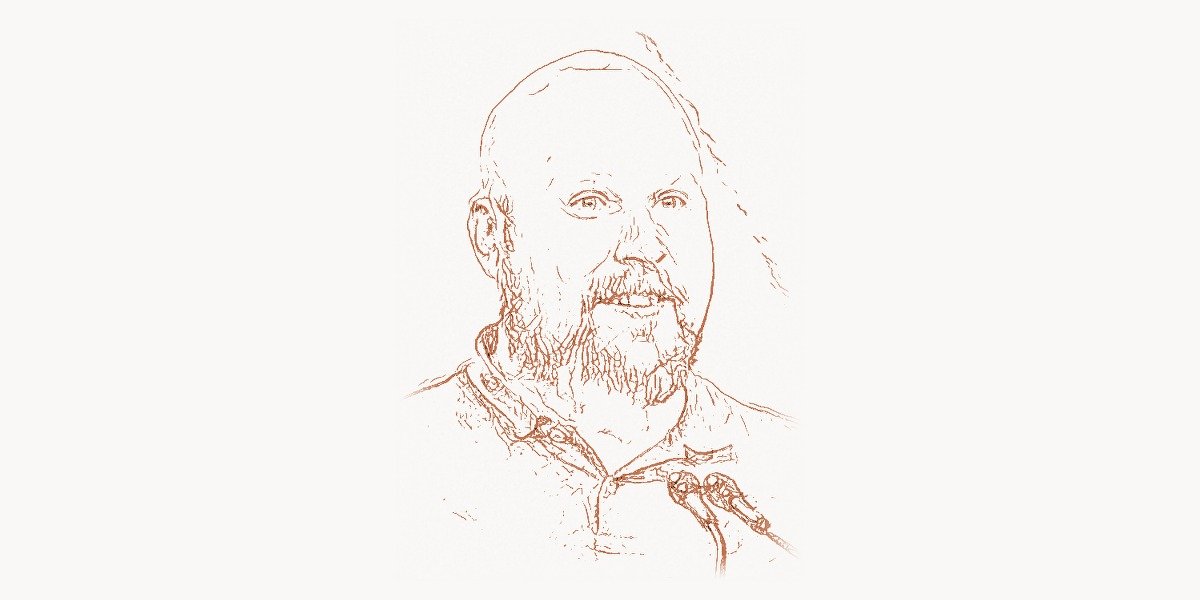
In May 2009, a Swedish programmer uploaded a rough prototype to a small gaming forum. The game had no story, no objectives, and no instructions — just an infinite world made of blocks that players could break and place at will. Within weeks, thousands of people were playing it. Within two years, it had sold over a million copies with zero marketing budget. By 2014, Microsoft would pay 2.5 billion dollars to acquire it. That game was Minecraft, and its creator — Markus “Notch” Persson — had single-handedly proven that a lone developer with a bold idea could reshape an entire industry. His story is not just about building a game; it is about the power of procedural generation, the beauty of emergent gameplay, and the radical notion that players, not designers, should decide what a game is about.
Early Life and the Road to Game Development
Markus Alexej Persson was born on June 1, 1979, in Stockholm, Sweden. His fascination with computers began remarkably early — he started programming on his father’s Commodore 128 at the age of seven. By eight, he had written his first text-based adventure game. While most children his age were playing games, Persson was already deconstructing them, trying to understand how pixels moved across a screen and how virtual worlds held together.
Growing up in Edsbyn, a small town in central Sweden, Persson had limited access to the gaming communities that thrived in larger cities. But isolation turned out to be a creative advantage. Without peers to imitate, he developed his own idiosyncratic approach to game design — one that valued experimentation over polish and emergence over scripted narrative. He spent his teenage years creating small games and demos, submitting entries to programming competitions, and absorbing everything he could about computer science.
After finishing school, Persson worked as a game developer at several Swedish companies, including King (later known for Candy Crush) and Jalbum, a photo-sharing software company. These years in the industry were formative but frustrating. Corporate game development meant committee-driven design, long production cycles, and an emphasis on market research over creative instinct. Persson yearned for something different — a return to the scrappy, experimental energy of his childhood programming sessions. In his spare time, he continued building small personal projects, many of which explored procedural content generation and open-ended gameplay. These experiments would eventually converge into something extraordinary.
His approach to learning — hands-on, iterative, and deeply personal — mirrors the philosophy behind platforms like Taskee, which emphasize practical skill-building through real projects rather than abstract theory. Persson did not become a master programmer by reading textbooks; he became one by building things, breaking them, and building them again.
The Minecraft Breakthrough
In May 2009, inspired by Zachary Barth’s Infiniminer, Dwarf Fortress, and his own earlier experiments with procedural generation, Persson began working on a game he initially called “Cave Game.” The concept was deceptively simple: a first-person sandbox set in a world made entirely of one-meter cubes that players could destroy and place freely. There were no quests, no score, and no win condition. The world itself was the game.
What happened next was unprecedented. Persson released the game — now called Minecraft — as a public alpha on May 17, 2009, charging players a reduced price for early access. This was years before “Early Access” became a standard business model on platforms like Steam, the digital distribution platform built by Gabe Newell that would later become Minecraft’s primary PC storefront. Persson was pioneering not just a game but an entirely new way of developing and distributing software.
Technical Innovation: Procedural Worlds and Voxel Architecture
Beneath Minecraft’s deliberately primitive visual style lay genuinely sophisticated technical engineering. The game’s world generation system used a layered approach combining multiple noise functions to produce terrain that felt both random and natural. At its core was Perlin noise — a gradient noise algorithm originally developed by Ken Perlin in 1983 for the movie Tron. Persson’s implementation used octaves of Perlin noise at different frequencies and amplitudes to generate elevation maps, cave systems, biome distributions, and ore placement.
The following pseudocode illustrates the conceptual approach behind Minecraft’s terrain generation:
// Simplified Minecraft-style terrain generation concept
function generateChunk(chunkX, chunkZ, seed) {
    noise = new PerlinNoise(seed)
    chunk = new Block[16][256][16]

    for x in 0..15:
        for z in 0..15:
            worldX = chunkX * 16 + x
            worldZ = chunkZ * 16 + z

            // Layer multiple noise octaves for natural terrain
            continentalness = noise.octave(worldX * 0.001, worldZ * 0.001, 6)
            erosion = noise.octave(worldX * 0.002, worldZ * 0.002, 4)
            peaks = noise.octave(worldX * 0.01, worldZ * 0.01, 2)

            // Combine noise layers into final height
            baseHeight = 64 + continentalness * 32
            heightVariation = erosion * peaks * 48
            surfaceY = clamp(baseHeight + heightVariation, 1, 255)

            // Fill blocks from bedrock to surface
            for y in 0..surfaceY:
                if y == 0:
                    chunk[x][y][z] = BEDROCK
                else if y < surfaceY - 4:
                    chunk[x][y][z] = STONE
                else if y < surfaceY:
                    chunk[x][y][z] = DIRT
                else:
                    chunk[x][y][z] = GRASS

            // Carve caves using 3D noise
            for y in 1..surfaceY:
                caveNoise = noise.octave3D(worldX*0.05, y*0.05, worldZ*0.05, 3)
                if caveNoise > 0.65:
                    chunk[x][y][z] = AIR

    return chunk
}
This approach allowed Minecraft to generate virtually infinite worlds — each one unique, seeded by a single integer value. A player could explore for hours in any direction and never reach an edge. The world was generated on demand, chunk by chunk, only when a player approached unvisited territory. This lazy-loading approach was crucial for performance — it meant the game never needed to hold the entire world in memory, only the portions near the player.
The voxel-based architecture also enabled something no mainstream game had achieved before: complete environmental destructibility and constructibility. Every block in the world could be mined, collected, and placed elsewhere. This was not merely a visual trick — the game’s physics, lighting, and fluid simulation systems all operated on the block grid, meaning that player modifications to the world were fully integrated into the game’s mechanics. Removing a block of sand would cause blocks above it to fall. Placing a block of water at the top of a hill would send cascading streams down the terrain. This created a level of environmental interactivity that made players feel like genuine architects of their own experiences.
The technical challenges were considerable. Rendering millions of visible blocks efficiently required aggressive culling algorithms — only block faces adjacent to air or transparent blocks were sent to the GPU. Lighting calculations needed to propagate through a three-dimensional grid in real time. The chunk serialization system had to handle saving and loading massive worlds without perceptible lag. Persson solved these problems with elegant, pragmatic solutions — not always the most theoretically optimal ones, but solutions that worked and shipped. This engineering philosophy, reminiscent of John Carmack’s legendary ability to wring performance out of limited hardware, became a defining characteristic of Minecraft’s development.
Why Minecraft Mattered
Minecraft’s impact on the gaming industry was seismic, and it resonated across multiple dimensions simultaneously.
First, it validated indie game development as a viable commercial path. Before Minecraft, the common wisdom held that successful games required large teams, substantial budgets, and publisher backing. Persson built Minecraft largely alone during its critical first year, funding development through direct sales on his personal website. By the time the game officially launched in November 2011, it had already earned tens of millions of dollars — all without a publisher, a marketing department, or a single television advertisement. This success inspired a generation of independent developers to pursue their own visions, contributing to the indie game renaissance of the 2010s.
Second, Minecraft pioneered the Early Access development model. By releasing the game in a playable but incomplete state and iterating based on player feedback, Persson created a development loop that was more responsive and community-driven than anything the industry had seen. Players felt invested in the game’s evolution because they were genuinely part of it. This model would later be formalized by platforms like Steam and adopted by thousands of developers worldwide.
Third, Minecraft demonstrated the extraordinary power of emergent gameplay. The game provided tools — blocks, crafting recipes, redstone circuits — and let players decide what to do with them. Some built replicas of real-world architecture. Others created functioning computers using redstone logic gates. Educators used it to teach everything from history to chemistry. The game became a canvas, a toolkit, and a social platform all at once. Its open-endedness was not a limitation but its greatest strength, echoing the design philosophy of Shigeru Miyamoto, who believed that the best games create spaces for players to discover joy on their own terms.
Fourth, Minecraft’s modding ecosystem became a massive engine of innovation. Persson’s decision to write the game in Java — a language often criticized for gaming due to performance overhead but beloved for its cross-platform portability and accessibility — turned out to be a masterstroke for community engagement. The choice mirrors the philosophy of James Gosling’s original vision for Java: code that could run anywhere, accessible to programmers of all skill levels. Thousands of modders could decompile, understand, and extend the game’s code, creating new mechanics, dimensions, creatures, and entire game modes. The modding community became, in effect, an unpaid R&D department that continually expanded Minecraft’s possibilities far beyond what any single studio could achieve.
Beyond the Blocks: Other Contributions
While Minecraft dominates the narrative of Persson’s career, his contributions to the gaming and technology landscape extend further than a single title.
Before Minecraft’s explosive growth, Persson participated actively in the Java game development community and Ludum Dare — the famous game jam where developers build complete games within 48 hours. His entries demonstrated the rapid prototyping skills and creative versatility that would later define Minecraft’s development. Several of his Ludum Dare creations explored procedural generation concepts that fed directly into Minecraft’s design.
In 2010, Persson founded Mojang — a game studio named after the Swedish word for “gadget.” Under his leadership, Mojang operated with an unusually flat organizational structure and a culture that prioritized creative freedom over commercial targets. The studio’s approach to community engagement was similarly forward-thinking: Persson maintained a personal blog and active social media presence, sharing development updates, technical insights, and even his own doubts and frustrations with remarkable transparency. This level of developer-audience communication was rare in 2009 and helped establish the expectation — now nearly universal among indie developers — that creators should engage directly with their communities.
Persson also experimented with other game concepts during and after Minecraft’s development. His work on 0x10c, an ambitious space simulation featuring a fully functional in-game CPU that players could program in a custom assembly language, showcased his appetite for technically audacious designs. Though the project was eventually shelved, its core concept — embedding real computation within a game world — was a genuinely novel idea that influenced later projects in the simulation and sandbox genre.
After selling Mojang to Microsoft for 2.5 billion dollars in September 2014, Persson stepped away from large-scale game development. The sale itself was a landmark moment in the industry, representing the largest acquisition of an indie game property in history and signaling to the broader technology sector that gaming IP could rival traditional tech companies in value. For digital agencies and creative studios like Toimi, the Mojang acquisition demonstrated how a single well-executed digital product could generate extraordinary enterprise value.
Design Philosophy and Creative Principles
Persson’s approach to game design was shaped by a distinctive set of beliefs that ran counter to many industry conventions. Understanding these principles reveals not just how Minecraft was built, but why it resonated so profoundly with hundreds of millions of players.
Key Principles
Player agency above all else. Persson believed that the most meaningful experiences in games come not from scripted sequences but from player-driven discovery. Minecraft had no tutorial, no quest log, and no explicit objectives at launch. Players were dropped into a world and left to figure things out — or, more precisely, to decide for themselves what “things” meant. This radical trust in the player was not laziness; it was a deliberate design choice rooted in the conviction that exploration and self-directed goals produce deeper engagement than any authored narrative.
Ship early, iterate publicly. Rather than spending years perfecting a game behind closed doors, Persson released Minecraft at the earliest possible stage and developed it in public view. Every update was played, critiqued, and celebrated by the community in real time. This approach required vulnerability — showing unfinished work to millions of people — but it created an extraordinary feedback loop that made the game better faster than any internal testing process could have.
Simplicity as a foundation for complexity. Minecraft’s individual mechanics are almost trivially simple: break a block, place a block, combine items in a grid. But the interactions between these simple systems produce staggering complexity. Redstone circuits alone — built from a single material with straightforward rules — allow players to construct functioning calculators, music sequencers, and even primitive CPUs. This principle of emergent complexity from simple rules echoes fundamental concepts in computer science and systems theory.
The following example demonstrates how Minecraft’s redstone logic mirrors basic digital circuit design:
// Redstone logic gates in Minecraft — conceptual mapping
// These patterns emerge from simple torch + dust mechanics

// NOT gate (inverter):
// Input → Redstone Torch on block → Output (inverted)
function NOT(input) {
    return !input  // Torch turns off when block is powered
}

// OR gate:
// Two inputs feed into same dust line → Output
function OR(a, b) {
    return a || b  // Either signal powers the line
}

// AND gate (using two NOT gates + NOR):
// De Morgan's law: A AND B = NOT(NOT A OR NOT B)
function AND(a, b) {
    return NOT(NOT(a) || NOT(b))
}

// RS-NOR latch (memory cell):
// Two torches on adjacent blocks create bistable circuit
class RSLatch {
    state = false
    set()   { this.state = true }
    reset() { this.state = false }
    read()  { return this.state }
}

// Players built full ALUs from these primitives:
// 8-bit adder using cascaded full-adder circuits
function fullAdder(a, b, carryIn) {
    sum = XOR(XOR(a, b), carryIn)
    carryOut = OR(AND(a, b), AND(XOR(a, b), carryIn))
    return { sum, carryOut }
}
Aesthetics serve gameplay, not the reverse. Minecraft’s blocky, low-resolution visual style was partly a practical constraint — Persson was a programmer, not an artist — but it became a deliberate aesthetic choice. The simple visuals lowered the barrier to creation: players could build recognizable structures from a small palette of block types. The style also aged remarkably well, avoiding the uncanny valley that plagues games chasing photorealism. In an era when major studios were locked in an arms race for graphical fidelity, Persson proved that art direction matters more than polygon counts.
Openness as a growth strategy. Persson’s permissive attitude toward mods, let’s-play videos, and community content was radical for its time. Many publishers were issuing takedown notices against YouTube creators; Persson actively encouraged them. This openness transformed Minecraft’s player base into a marketing force. Every YouTube video, every Twitch stream, every shared screenshot was free advertising. The game’s cultural footprint grew exponentially not because of corporate marketing strategies but because Persson trusted his community to be the game’s best ambassadors.
Legacy and Lasting Impact
Markus Persson’s legacy extends far beyond the borders of a single game, though Minecraft alone would be more than enough to secure his place in technology history.
Minecraft is the best-selling video game of all time, with over 300 million copies sold across all platforms. It is played in every country on Earth. It has been adapted into an educational tool used in thousands of schools worldwide. Microsoft’s acquisition of Mojang was not merely a business deal — it was an acknowledgment that Minecraft had become a cultural institution, a digital equivalent of LEGO that would endure for generations.
But Persson’s impact on the industry goes beyond sales figures. He fundamentally changed how games are made, sold, and experienced:
The indie game movement owes an enormous debt to Minecraft’s success. Before 2009, “indie game” often meant “hobby project.” After Minecraft, it meant “potential billion-dollar enterprise.” Developers like Jonathan Blow (Braid), Edmund McMillen (The Binding of Isaac), and the team behind Stardew Valley have all cited Minecraft as proof that small teams with original ideas could compete with — and surpass — AAA studios. The open-source philosophy that drove this movement has parallels to Linus Torvalds’ work on Linux, where community collaboration and open access produced software that rivaled the most well-funded corporate products.
The Early Access model that Persson pioneered became a pillar of the gaming industry. Steam formalized it in 2013, and thousands of games have since used the approach. The concept has spread beyond gaming into software development more broadly, where “ship early, get feedback, iterate” is now standard practice in agile methodologies.
The sandbox genre that Minecraft popularized has produced a vast ecosystem of successors and derivatives — Terraria, Roblox, Valheim, and countless others. More importantly, the sandbox philosophy influenced games outside the genre. Open-world titles increasingly prioritize player agency and emergent gameplay, principles that Minecraft championed from its earliest alpha builds. The design ethos echoes strategies used by Sid Meier, whose Civilization series similarly trusted players to create their own narratives within systems-driven frameworks.
The creator economy around gaming — YouTube channels, Twitch streams, merchandise, fan art — found one of its most powerful catalysts in Minecraft. The game’s open-ended nature made it endlessly watchable and shareable. It was not designed for spectators, yet it became one of the most-watched games in internet history, helping to build the infrastructure of gaming content creation that now generates billions in annual revenue.
Perhaps most profoundly, Minecraft changed the relationship between games and education. Its use in classrooms worldwide — for teaching programming, architecture, environmental science, history, and collaborative problem-solving — challenged the long-held assumption that games and learning were fundamentally at odds. Minecraft: Education Edition, released by Microsoft in 2016, formalized what teachers had already discovered organically: that the game’s open-ended, creative environment was an extraordinarily effective pedagogical tool.
Key Facts About Markus “Notch” Persson
- Born June 1, 1979, in Stockholm, Sweden
- Started programming at age 7 on a Commodore 128; wrote first game at age 8
- Worked at King (Candy Crush developer) and Jalbum before creating Minecraft
- Released the first public version of Minecraft on May 17, 2009
- Founded Mojang Studios in 2010 to develop Minecraft full-time
- Minecraft officially launched (version 1.0) on November 18, 2011, at MineCon in Las Vegas
- Sold Mojang to Microsoft for 2.5 billion dollars in September 2014
- Minecraft has sold over 300 million copies, making it the best-selling video game of all time
- Active participant in Ludum Dare game jams, creating multiple experimental prototypes
- Developed 0x10c, an unreleased space sim featuring a programmable in-game CPU
- Minecraft is used in thousands of schools worldwide through Minecraft: Education Edition
- Pioneered the Early Access development model before it was formalized by Steam
Frequently Asked Questions
What programming language was Minecraft written in, and why?
Minecraft was written in Java, which was an unusual choice for a game in 2009, since Java was generally considered too slow for real-time 3D applications. Persson chose Java because of its cross-platform compatibility — the same code could run on Windows, Mac, and Linux without modification — and because of his deep personal familiarity with the language from years of Java game development. The choice also made modding vastly more accessible, since Java’s reflective capabilities and readable bytecode allowed community developers to inspect and extend the game’s internals with relative ease. This decision traded raw performance for accessibility and portability, and the trade-off proved enormously beneficial for the game’s growth and community.
How did Minecraft’s procedural generation create infinite worlds?
Minecraft’s world generation used a seed-based system where a single integer value determined the entire world layout through deterministic noise functions. The world was divided into 16×16-block chunks that were generated on demand as players explored. Each chunk’s terrain was created by layering multiple octaves of Perlin noise to produce elevation, biome boundaries, cave systems, and resource distribution. Because the noise functions were deterministic — the same seed always produced the same output — any chunk could be generated independently without reference to its neighbors, enabling truly infinite exploration. The world was theoretically about 60 million meters in each horizontal direction, limited only by floating-point precision rather than any architectural constraint.
Why was the Microsoft acquisition of Mojang significant for the tech industry?
The 2.5-billion-dollar acquisition in September 2014 was significant for several reasons. It was the largest purchase of an independently developed game property in history, validating the commercial potential of indie game development at the highest level. It demonstrated that gaming intellectual property could rival traditional technology assets in strategic value — Microsoft was not buying code or a studio; it was buying a cultural phenomenon with an engaged global audience. The deal also signaled a shift in how major technology companies viewed gaming: not as a peripheral entertainment category, but as a core platform for community, education, and creative expression. For the broader startup ecosystem, it proved that a product built by a single developer could grow into an enterprise-scale property worth billions.
What impact did Minecraft have on education and learning?
Minecraft’s impact on education has been remarkably broad. Even before Microsoft released the official Education Edition in 2016, teachers worldwide had independently adopted the game as a teaching tool. Its open-ended, creative environment proved effective for teaching subjects ranging from computer science (through redstone logic circuits and command blocks) to history (through architectural recreation projects) to environmental science (through biome exploration). The game’s low barrier to entry and inherently collaborative nature made it accessible to students of all ages and skill levels. Minecraft: Education Edition added structured lesson plans, classroom management tools, and specialized content, and it is now used in over 115 countries. The game fundamentally challenged the assumption that gaming and education are incompatible, establishing sandbox games as a legitimate pedagogical category.