In 1976, a paper appeared in the IEEE Transactions on Information Theory that shattered one of the oldest assumptions in cryptography. For thousands of years, from Caesar ciphers to the Enigma machine to Cold War spy networks, secure communication had required that both parties share a secret key in advance. If Alice wanted to send Bob an encrypted message, they first had to meet in person, use a trusted courier, or establish some other secure channel to exchange the key — a logistical nightmare that limited cryptography to governments, militaries, and intelligence agencies. Martin Hellman, along with Whitfield Diffie, proposed something that most cryptographers considered impossible: a method for two parties to establish a shared secret over a completely public channel, with an eavesdropper listening to every word, and still have the eavesdropper unable to determine the key. “New Directions in Cryptography” did not just introduce a clever trick. It redefined what cryptography could do, launched the entire field of public key cryptography, and laid the mathematical foundation for secure communication on the internet — from the TLS handshake protecting your connection to this website, to the encryption securing every online banking session, email exchange, and messaging app on the planet.
Early Life and Education
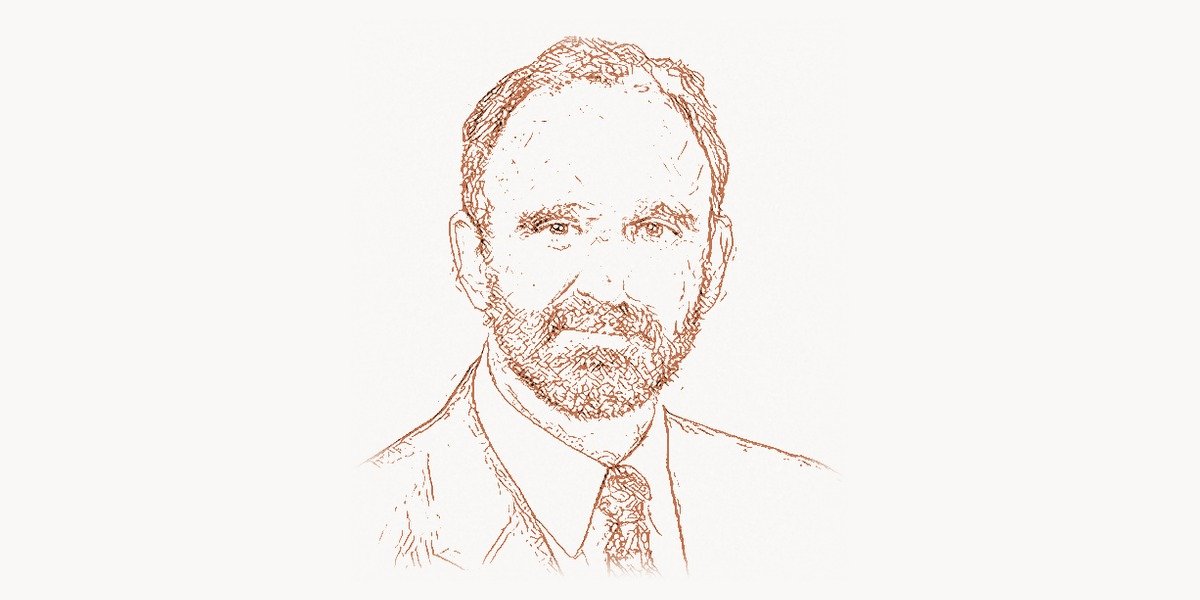
Martin Edward Hellman was born on October 2, 1945, in New York City. He grew up in a Jewish household in the Bronx, where his father worked as a high school physics teacher. The elder Hellman’s passion for science permeated the household, and Martin was drawn to mathematics and physics from an early age. He attended the Bronx High School of Science, the specialized public school that has produced more Nobel laureates than many entire countries, where he was immersed in a culture of intellectual competition and scientific ambition.
Hellman enrolled at New York University, where he earned his bachelor’s degree in electrical engineering in 1966. He then moved to Stanford University for graduate work, completing his master’s degree in 1967 and his Ph.D. in electrical engineering in 1969, under the supervision of Thomas Cover, a specialist in information theory and statistics. His doctoral work focused on learning with finite memory, a problem at the intersection of information theory and pattern recognition. This training in the mathematical foundations of information — the same theoretical framework that Claude Shannon had established two decades earlier — would prove essential when Hellman turned his attention to cryptography.
After completing his doctorate, Hellman took a position at IBM’s Thomas J. Watson Research Center in Yorktown Heights, New York, where he worked on pattern recognition and information theory. In 1971, he joined the electrical engineering faculty at Stanford University, where he would spend the rest of his academic career. It was at Stanford that Hellman began the research that would change the world — though at the time, almost no one in academia was working on cryptography, and those who suggested it as a research direction were met with skepticism or outright discouragement. The National Security Agency considered cryptography its private domain, and the notion that academic researchers could make meaningful contributions to the field was not widely accepted.
The Public Key Cryptography Breakthrough
Technical Innovation
The problem Hellman set out to solve was the key distribution problem, one of the most fundamental challenges in cryptographic practice. Traditional symmetric encryption — where the same key is used to encrypt and decrypt a message — works well once both parties have the key, but getting the key to both parties securely is a problem that grows exponentially with the number of participants. If ten people all need to communicate securely with each other, they need 45 different shared keys. If a thousand people need secure pairwise communication, they need nearly half a million keys. For a network like the modern internet, with billions of users, symmetric key distribution is simply impossible without some fundamentally new approach.
In 1974, Hellman encountered Whitfield Diffie, a cryptography enthusiast and self-taught researcher who had been independently thinking about the same problem. Diffie had been traveling the country, visiting researchers and building an informal network of people interested in civilian cryptography. When he arrived at Hellman’s office at Stanford, the two quickly recognized that they shared both the same problem and complementary skills: Diffie brought deep intuition about cryptographic systems and a relentless focus on the key distribution problem, while Hellman brought rigorous mathematical training in information theory and the ability to formalize ideas into provable results.
Their collaboration produced two interconnected ideas. The first was the concept of public key cryptography itself — the idea that encryption and decryption could use different keys, with the encryption key made public and the decryption key kept private. This was a conceptual revolution. In every previous cryptographic system, knowing the encryption key was equivalent to knowing the decryption key, or at least made it easy to compute. Diffie and Hellman proposed that it was possible to design systems where the relationship between the two keys was a one-way function: easy to compute in one direction but computationally infeasible to reverse.
The second idea was a concrete protocol — the Diffie-Hellman key exchange — that solved the key distribution problem using the mathematics of modular exponentiation. The protocol relies on a simple but profound mathematical property: while computing modular exponentials is efficient, reversing the operation — solving the discrete logarithm problem — is believed to be computationally intractable for sufficiently large numbers. Alice and Bob agree on a large prime p and a generator g, which can be public. Each generates a private secret, computes a public value, and exchanges it. Through the commutativity of exponentiation, both independently arrive at the same shared secret, while an eavesdropper who observes all public values cannot feasibly compute it.
"""
Diffie-Hellman Key Exchange — Simplified Demonstration

This illustrates the mathematical core of the protocol
that Hellman and Diffie published in 1976. In practice,
production implementations use much larger primes (2048+ bits)
and additional safeguards against various attacks.
"""

import random

def diffie_hellman_demo():
    # Public parameters (agreed upon openly)
    # In practice, these are standardized large primes (RFC 3526, RFC 7919)
    p = 23    # A prime number (production: 2048+ bit prime)
    g = 5     # A primitive root modulo p

    # Alice generates her private key (kept secret)
    a = random.randint(2, p - 2)  # Alice's secret
    A = pow(g, a, p)              # Alice's public value: g^a mod p

    # Bob generates his private key (kept secret)
    b = random.randint(2, p - 2)  # Bob's secret
    B = pow(g, b, p)              # Bob's public value: g^b mod p

    # Exchange: Alice sends A to Bob, Bob sends B to Alice
    # An eavesdropper sees: p, g, A, B — but NOT a or b
    print(f"Public parameters: p={p}, g={g}")
    print(f"Alice sends: A = {A}")
    print(f"Bob sends:   B = {B}")

    # Each side computes the shared secret independently
    shared_secret_alice = pow(B, a, p)  # B^a mod p = g^(ba) mod p
    shared_secret_bob = pow(A, b, p)    # A^b mod p = g^(ab) mod p

    # Both arrive at the same value: g^(ab) mod p
    assert shared_secret_alice == shared_secret_bob
    print(f"Shared secret:   {shared_secret_alice}")
    print(f"Eavesdropper sees p, g, A, B but cannot compute the secret")
    print(f"(would need to solve discrete logarithm: find a from g^a mod p)")

    return shared_secret_alice

# The mathematical property that makes this work:
# (g^a mod p)^b mod p == (g^b mod p)^a mod p == g^(ab) mod p
# Computing g^(ab) from g^a and g^b without knowing a or b
# is the Computational Diffie-Hellman (CDH) problem —
# believed to be as hard as the discrete logarithm problem.

diffie_hellman_demo()
Their landmark paper, “New Directions in Cryptography,” was published in November 1976 in IEEE Transactions on Information Theory. It described both the general concept of public key cryptography and the specific Diffie-Hellman key exchange protocol. The paper also introduced the idea of digital signatures — a method by which a person could sign a digital document in a way that anyone could verify but no one could forge — though Diffie and Hellman did not provide a concrete implementation for signatures. That challenge, along with the creation of a complete public key encryption system, would be taken up by others inspired by their work.
Why It Mattered
The publication of “New Directions in Cryptography” triggered a cascade of innovation that continues to this day. Within two years, Ronald Rivest, Adi Shamir, and Leonard Adleman at MIT had developed the RSA cryptosystem — the first practical public key encryption and digital signature scheme — directly inspired by the challenge that Diffie and Hellman had posed. RSA, which relies on the difficulty of factoring large composite numbers, became the most widely deployed public key system in the world and remains in use today.
Ralph Merkle, a Stanford graduate student who had been working independently on the key distribution problem, contributed the concept of Merkle’s Puzzles and later became a close collaborator with Hellman and Diffie. Hellman has consistently emphasized that the work should be understood as a three-person effort, crediting Merkle’s independent insights as essential to the development of public key cryptography. The three of them — Diffie, Hellman, and Merkle — formed the intellectual foundation on which all subsequent public key cryptography was built.
Today, every secure connection on the internet depends on the ideas Hellman helped create. When your browser establishes an HTTPS connection, it performs a key exchange that is a direct descendant of the Diffie-Hellman protocol. The TLS handshake that secures web traffic, email, messaging applications, VPN connections, and virtually every other form of encrypted communication on the internet uses either Diffie-Hellman key exchange or its elliptic curve variant (ECDH). Digital signatures — used for software updates, code signing, cryptocurrency transactions, and document authentication — implement the concept that Diffie and Hellman introduced in 1976. Bruce Schneier, whose work on applied cryptography brought these concepts to a wider audience of practitioners, has described the Diffie-Hellman paper as one of the most important in the history of cryptography.
Other Major Contributions
Beyond the public key breakthrough, Hellman made substantial contributions to several areas of cryptography and information security. In the late 1970s, he was one of the most prominent academic critics of the Data Encryption Standard (DES), the U.S. government’s symmetric encryption standard. Hellman and Diffie argued publicly that DES’s 56-bit key length was insufficient, warning that it could be broken by a determined adversary with enough computing power. The NSA and the National Bureau of Standards dismissed these concerns, but Hellman and Diffie were proven correct: in 1998, the Electronic Frontier Foundation built a machine called Deep Crack that broke DES in 56 hours, and DES was eventually replaced by the Advanced Encryption Standard (AES) with key lengths of 128, 192, or 256 bits — exactly the kind of margin that Hellman had advocated for two decades earlier.
Hellman also made important contributions to the theory of cryptanalysis. His work on time-memory trade-off attacks, published in 1980, introduced a technique — now known as Hellman tables — for precomputing partial solutions to cryptographic problems, trading storage space for computation time. This idea was later refined into rainbow tables, which became a standard tool for password cracking and, consequently, drove the adoption of salted hashing as a defense. The interplay between attack and defense that Hellman’s work exemplified — where understanding how to break a system leads to understanding how to build a stronger one — became a defining characteristic of modern cryptographic research.
"""
Hellman's Time-Memory Trade-Off — Conceptual Overview

Hellman (1980) showed that cryptanalytic problems can be
solved by precomputing chains of values and storing only
the endpoints, creating a trade-off between storage and
computation. This concept later evolved into rainbow tables.
"""

import hashlib

def hellman_table_concept():
    """
    Demonstrates the core idea behind Hellman tables:
    instead of storing ALL possible (input, output) pairs
    or computing everything on the fly, precompute chains
    and store only the start and end points.
    """

    def reduction(hash_val, step):
        """
        Reduction function: maps a hash back into the
        password space. Different at each step to avoid
        chain collisions (this insight led to rainbow tables).
        """
        num = int(hash_val[:8], 16) + step
        return f"pass{num % 10000:04d}"

    def hash_func(password):
        """Simple hash for demonstration."""
        return hashlib.md5(password.encode()).hexdigest()

    # PRECOMPUTATION PHASE: build chains, store only endpoints
    chain_length = 5
    table = {}  # {endpoint: startpoint}

    start_points = ["pass0042", "pass1337", "pass7890"]

    for start in start_points:
        current = start
        for step in range(chain_length):
            h = hash_func(current)
            current = reduction(h, step)
        # Store only start and end — the chain is implicit
        table[current] = start

    print("Hellman Table (only endpoints stored):")
    print(f"  Chains of length {chain_length}")
    print(f"  Storage: {len(table)} entries (vs {10000} for full table)")
    print(f"  Trade-off: less memory, more computation at lookup time")

    # LOOKUP PHASE: given a hash, walk chains to find it
    # 1. Apply reduction+hash from each possible chain position
    # 2. If endpoint matches a stored endpoint, replay that chain
    # 3. The password is found within the replayed chain

    # Hellman's key insight: O(N) passwords can be covered with
    # O(N^(2/3)) storage and O(N^(2/3)) computation time
    # Full table: O(N) storage, O(1) lookup
    # Brute force: O(1) storage, O(N) computation
    # Hellman tables: O(N^(2/3)) for both — the optimal trade-off

    n = 10000  # password space size
    print(f"\n  Full table:    storage=O({n}), lookup=O(1)")
    print(f"  Brute force:   storage=O(1), lookup=O({n})")
    print(f"  Hellman table: storage=O({int(n**(2/3))}), lookup=O({int(n**(2/3))})")

hellman_table_concept()
His collaboration with Diffie and Merkle extended beyond the original 1976 paper. The three continued to develop and refine public key concepts throughout the late 1970s, publishing on trap-door knapsack problems, privacy and authentication, and the general theory of one-way functions. Their work at Stanford established the university as a major center for cryptographic research, attracting students who would go on to shape the field — including researchers who contributed to elliptic curve cryptography, zero-knowledge proofs, and the broader discipline of computer security. The legacy of that Stanford cryptography group is visible in every aspect of modern internet security, from the protocols securing web applications managed through platforms like Toimi to the certificate authorities that validate website identities.
Philosophy and Approach
Key Principles
Hellman’s intellectual approach combined mathematical precision with a willingness to challenge established authority. His decision to pursue cryptography research in the early 1970s, when the NSA effectively claimed a monopoly on the subject, required significant professional courage. Colleagues warned him that he was wasting his career on a topic that the government would never allow academic researchers to publish on freely. The NSA did, in fact, attempt to discourage publication of the Diffie-Hellman paper, and the agency’s relationship with academic cryptographers remained tense for years. Hellman’s persistence in the face of institutional opposition helped establish the principle that cryptographic knowledge should be publicly available — a principle that ultimately made the internet’s security architecture possible.
Central to Hellman’s philosophy was the belief that security should not depend on secrecy about the system itself, but only on secrecy of the keys — a principle known as Kerckhoffs’s principle, which Hellman and the public key cryptography movement brought from a nineteenth-century academic curiosity to a foundational design requirement for modern systems. This principle, which states that a cryptographic system should be secure even if everything about the system except the key is public knowledge, is the reason why encryption algorithms like AES and protocols like TLS are openly published and peer-reviewed. If a system can only be secure when its design is secret, Hellman argued, then it is not truly secure — because designs inevitably leak. Only mathematical hardness, not obscurity, provides genuine security.
Later in his career, Hellman turned his analytical skills to a very different problem: the risk of nuclear war. Beginning in the 1980s, he applied probabilistic reasoning to estimate the cumulative risk of nuclear conflict, arguing that even a small annual probability of nuclear war compounds over decades into an unacceptable cumulative risk. He co-authored, with his wife Dorothie, a book on conflict resolution that argued the skills needed to resolve interpersonal conflicts are the same skills needed to resolve international ones. His nuclear risk work demonstrated the same intellectual pattern as his cryptographic research: taking a problem that most people treated as qualitative and subjective, and applying rigorous quantitative analysis to reveal insights that intuition alone could not provide.
Hellman has also been a vocal advocate for acknowledging the contributions of others. He has consistently referred to the Diffie-Hellman key exchange as the “Diffie-Hellman-Merkle key exchange,” crediting Ralph Merkle’s independent contributions, and he has spoken publicly about the importance of intellectual generosity in collaborative research. When writing about the development of public key cryptography, he frames it as a collective achievement built on foundations laid by Claude Shannon’s information theory, the number theory of mathematicians stretching back centuries, and the contributions of multiple researchers working on related problems simultaneously. This emphasis on acknowledging intellectual debts stands in contrast to the competitive individualism that often characterizes accounts of scientific breakthroughs.
Legacy and Impact
In 2015, Martin Hellman and Whitfield Diffie were awarded the A.M. Turing Award — computing’s highest honor, often called the Nobel Prize of computer science — for their contributions to public key cryptography. The award citation recognized that their work had revolutionized computer security and made secure communication over the internet possible. The Turing Award placed Hellman and Diffie in the company of figures like Alan Turing (for whom the award is named), Donald Knuth, Edsger Dijkstra, and John von Neumann — foundational figures whose work defined entire disciplines within computing.
The practical impact of Hellman’s work is woven into the fabric of modern digital life. Every time a user connects to a website over HTTPS, the browser and server perform a key exchange derived from the protocol Hellman co-invented. Every time someone sends an encrypted email, signs a software release, authenticates to a VPN, or conducts a cryptocurrency transaction, they are using technology that descends directly from the ideas in “New Directions in Cryptography.” The entire public key infrastructure (PKI) that underlies internet security — certificate authorities, digital certificates, TLS/SSL protocols — exists because Hellman, Diffie, and Merkle demonstrated that public key cryptography was mathematically possible.
Hellman’s influence extends beyond the specific protocols he helped create. His insistence on open, peer-reviewed cryptographic research established a culture that has produced decades of innovation. Before Hellman and Diffie, cryptography was largely a classified discipline. After them, it became one of the most active and productive fields in computer science, attracting researchers who developed elliptic curve cryptography, zero-knowledge proofs, homomorphic encryption, and post-quantum cryptography. The entire modern discipline of computer security — from network security to application security to the security engineering practices used by development teams working with tools like Taskee — is built on the foundation that Hellman’s generation of researchers established.
Perhaps most significantly, Hellman demonstrated that the most important innovations often come from challenging assumptions that everyone else takes for granted. The assumption that secure communication required a pre-shared secret had stood for thousands of years. Hellman, Diffie, and Merkle showed that this assumption was wrong — and in doing so, they made possible a form of secure global communication that their contemporaries could not have imagined. As the world moves toward post-quantum cryptography and new challenges to secure communication emerge, the intellectual tradition that Hellman helped create — open research, mathematical rigor, and the courage to question fundamental assumptions — remains as vital as ever.
Key Facts
- Born: October 2, 1945, New York City, United States
- Known for: Co-inventing the Diffie-Hellman key exchange, pioneering public key cryptography, advocating for open cryptographic research
- Key publication: “New Directions in Cryptography” (1976), co-authored with Whitfield Diffie, published in IEEE Transactions on Information Theory
- Awards: A.M. Turing Award (2015), IEEE Koji Kobayashi Computers and Communications Award (2000), IEEE Richard W. Hamming Medal (2010), National Inventors Hall of Fame inductee (2011)
- Education: B.S. in Electrical Engineering, New York University (1966); M.S. and Ph.D. in Electrical Engineering, Stanford University (1967, 1969)
- Affiliations: IBM Thomas J. Watson Research Center (1969–1971), Stanford University (1971–1996, Professor Emeritus)
- Key collaborators: Whitfield Diffie, Ralph Merkle
- Other work: Cryptanalysis of DES, time-memory trade-off attacks (Hellman tables), nuclear risk reduction advocacy
Frequently Asked Questions
What is the Diffie-Hellman key exchange and why is it important?
The Diffie-Hellman key exchange is a cryptographic protocol that allows two parties to establish a shared secret key over a public, insecure communication channel. Before Diffie-Hellman, secure communication required that both parties somehow share a secret key in advance — through a physical meeting, a trusted courier, or another secure channel. This was a fundamental limitation that made encryption impractical for large-scale, spontaneous communication. The Diffie-Hellman protocol solves this by using modular arithmetic: each party generates a private number, computes a public value from it, and exchanges public values. Each party can then independently compute the same shared secret using their own private number and the other party’s public value. The security of the protocol relies on the computational difficulty of the discrete logarithm problem. Today, variants of Diffie-Hellman — including elliptic curve Diffie-Hellman (ECDH) — are used in virtually every secure internet connection, including HTTPS, TLS, SSH, and VPN protocols.
How did Hellman’s work lead to the development of RSA encryption?
In their 1976 paper “New Directions in Cryptography,” Hellman and Diffie introduced the concept of public key cryptography — the idea that encryption and decryption could use separate keys, with the encryption key made public. However, they did not provide a complete public key encryption system; instead, they described the properties such a system would need to have and posed its construction as an open challenge. Ronald Rivest, Adi Shamir, and Leonard Adleman at MIT took up this challenge and in 1977 developed the RSA cryptosystem, which uses the difficulty of factoring large composite numbers as its security foundation. RSA was the first practical realization of the public key encryption concept that Hellman and Diffie had described, and it became the most widely used public key algorithm for decades. Without Hellman and Diffie’s conceptual framework, RSA would not have been conceived.
What is Hellman’s contribution to nuclear risk reduction?
Beginning in the 1980s, Hellman applied the same analytical rigor he used in cryptography to the problem of nuclear war risk. He argued that even if the probability of nuclear conflict in any given year is small — say, one or two percent — the cumulative probability over decades is alarmingly high, comparable to a game of Russian roulette played repeatedly. He used probabilistic models to demonstrate that humanity’s survival through the nuclear age involved a significant element of luck, not just good policy. Hellman has advocated for nuclear risk reduction through deterrence reform, improved communication between nuclear powers, and greater public awareness of cumulative nuclear risks. He co-authored a book with his wife Dorothie that draws parallels between interpersonal conflict resolution and international diplomacy, arguing that both require the same fundamental skills of empathy, perspective-taking, and willingness to compromise.
Did Hellman face opposition from the U.S. government for his cryptography research?
Yes. In the 1970s, the National Security Agency (NSA) considered cryptography a matter of national security and attempted to discourage academic research in the field. The NSA pressured the National Science Foundation to deny funding for cryptographic research and sent letters to researchers warning that publishing cryptographic results could violate the International Traffic in Arms Regulations (ITAR), which classified strong encryption as a munition. Hellman and Diffie persisted in publishing their work despite these pressures, and their success in doing so helped establish the principle that cryptographic knowledge should be openly published and peer-reviewed. This battle — sometimes called the “crypto wars” — continued in various forms into the 1990s, but the foundation that Hellman and Diffie laid ultimately prevailed and became the basis for internet security standards used worldwide today.