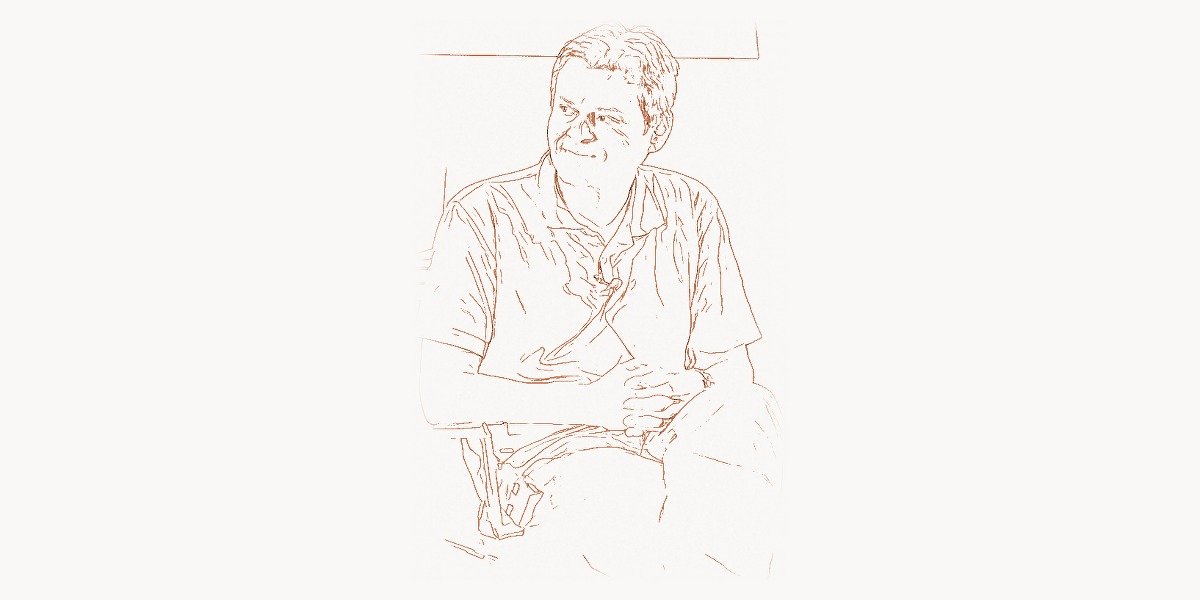
In the landscape of programming language design, few figures have managed to bridge the divide between academic rigor and industrial pragmatism as convincingly as Martin Odersky. While many language creators either remain rooted in theory or chase commercial trends, Odersky spent decades meticulously studying the deep structure of programming languages before distilling his insights into Scala — a language that proved you could have both object-oriented familiarity and functional programming elegance on the world’s most popular virtual machine. His work didn’t just give developers a new tool; it fundamentally shifted how the industry thought about type systems, concurrency, and scalable software architecture. From powering Twitter’s backend through its explosive growth to forming the backbone of Apache Spark, Scala’s influence reaches far beyond its community, reshaping the expectations developers have for any modern language.
Early Life and Path to Technology
Martin Odersky was born in 1958 in Germany, a country whose engineering traditions and emphasis on precision would deeply inform his approach to language design. Growing up during a period of rapid technological expansion in Europe, Odersky developed an early fascination with mathematics and logic — the twin foundations that would underpin his entire career. His academic path led him to one of the most prestigious technical institutions in the world: ETH Zurich, the Swiss Federal Institute of Technology, where some of the most consequential work in computer science had been and continued to be conducted.
At ETH Zurich, Odersky had the extraordinary fortune of studying under Niklaus Wirth, one of the towering figures of programming language design and the creator of Pascal, Modula-2, and Oberon. Wirth’s philosophy — that programming languages should be clean, well-structured, and designed with discipline — left an indelible mark on Odersky. Under Wirth’s supervision, Odersky completed his PhD, immersing himself in the principles of type theory, compiler construction, and language semantics. This was not merely an academic exercise; Wirth’s group was actively building languages and systems, and Odersky learned firsthand the difference between theoretically elegant designs and those that actually work in practice.
The influence of Wirth cannot be overstated. Where many programming language researchers of the era were drawn toward the complexity of large systems, Wirth championed simplicity and clarity. Odersky absorbed this ethos but would eventually take it in a direction Wirth himself might not have anticipated — toward a synthesis that embraced complexity when it served expressiveness, but always with a rigorous type-theoretic foundation to keep that complexity manageable. After completing his doctorate, Odersky held positions at several universities, including Yale and the University of South Australia, before settling at EPFL (École Polytechnique Fédérale de Lausanne) in Switzerland, where he would do his most transformative work.
During these early academic years, Odersky wasn’t just teaching; he was actively researching the intersection of object-oriented and functional programming paradigms. He studied languages like Lisp and ML, which had long championed functional approaches, and saw how the object-oriented revolution led by languages like Smalltalk and C++ had reshaped the industry. The question that consumed him was deceptively simple: why should these two paradigms remain separate?
The Breakthrough: Creating Scala
Before Scala, Odersky made a crucial detour through the Java ecosystem that would shape everything to follow. In the mid-1990s, he created Pizza, an experimental language that extended Java with generics, higher-order functions, and pattern matching. Pizza was never intended for mainstream adoption, but it demonstrated that the Java Virtual Machine could support far richer language features than Java itself offered. More importantly, Pizza’s generics work caught the attention of Sun Microsystems, the stewards of Java.
This led to Odersky’s collaboration on GJ (Generic Java), a project that brought parametric polymorphism — generics — to the Java language. When Java 5 launched in 2004 with generics support, millions of Java developers benefited directly from Odersky’s research. It was a remarkable achievement, but for Odersky, it also exposed the limitations of working within an existing language’s constraints. Java’s commitment to backward compatibility meant that generics had to be implemented through type erasure, a compromise that Odersky found intellectually unsatisfying. He became convinced that a clean-slate design, one that could run on the JVM but wasn’t shackled by Java’s legacy decisions, could go much further.
In 2003, at EPFL, Odersky released the first version of Scala — a name derived from “scalable language,” reflecting his ambition that the language should scale from small scripts to large systems. Scala was designed from the ground up to unify object-oriented and functional programming into a single coherent language. Every value in Scala is an object, and every operation is a method call, satisfying the object-oriented requirement. Simultaneously, functions are first-class values, pattern matching is native, and immutability is encouraged, fulfilling the functional programming vision.
The Technical Innovation
Scala’s technical innovations were numerous and profound. At the type system level, Odersky introduced a sophisticated approach to variance annotations, path-dependent types, and implicit parameters that gave the language extraordinary expressiveness while maintaining type safety. The trait system — Scala’s answer to both Java interfaces and mixins — allowed for a flexible form of composition that avoided the pitfalls of multiple inheritance that had plagued C++.
One of Scala’s most distinctive features was its approach to blending paradigms. Consider how a simple data transformation reads in Scala, combining object-oriented structure with functional style:
case class Developer(name: String, language: String, yearsExp: Int)

val developers = List(
  Developer("Alice", "Scala", 8),
  Developer("Bob", "Java", 12),
  Developer("Carol", "Scala", 5),
  Developer("Dave", "Python", 7)
)

// Functional pipeline with OOP structure
val seniorScalaDevs = developers
  .filter(_.language == "Scala")
  .filter(_.yearsExp >= 5)
  .sortBy(-_.yearsExp)
  .map(d => s"${d.name} (${d.yearsExp} years)")

println(seniorScalaDevs.mkString(", "))
// Output: Alice (8 years), Carol (5 years)
This code demonstrates several key Scala innovations at once: case classes that automatically generate equality, hashing, and pattern matching support; collection operations that read like a declarative pipeline; type inference that eliminates boilerplate; and string interpolation that makes formatting natural. Each of these features reflected a careful design decision, and together they created a programming experience that felt both powerful and coherent.
The implicit system was perhaps the most controversial and innovative feature. Implicits allowed the compiler to automatically pass certain arguments or apply certain conversions based on type context. This mechanism enabled type classes (a concept borrowed from Haskell), extension methods, and domain-specific languages — but it also made code harder to understand for newcomers. Odersky himself acknowledged this tension, and the evolution from Scala 2’s implicits to Scala 3’s more structured given/using syntax reflects his ongoing commitment to refining the language based on real-world feedback.
Why It Mattered
Scala arrived at a critical juncture in software development. By the mid-2000s, Java had become the dominant enterprise language, but developers were growing frustrated with its verbosity and limited expressiveness. Meanwhile, functional programming remained largely confined to academia and niche communities. Scala offered an escape route that didn’t require abandoning the JVM ecosystem — its seamless Java interoperability meant that companies could adopt Scala incrementally, calling existing Java libraries from Scala code and vice versa.
The impact was swift and significant. Twitter famously migrated substantial portions of its backend from Ruby to Scala around 2009, citing the need for better performance and concurrency handling as the platform scaled from millions to hundreds of millions of users. LinkedIn adopted Scala for its real-time infrastructure. Netflix used it for reactive microservices. These weren’t fringe startups experimenting with a toy language; they were among the most demanding distributed systems in the world, and Scala proved it could handle the load.
Perhaps the most consequential adoption came through Apache Spark, the big data processing framework that replaced Hadoop MapReduce as the industry standard. Spark was written in Scala, and its API leaned heavily on Scala’s functional programming features to offer a clean, expressive interface for data transformations at massive scale. When Spark became the de facto standard for big data processing, it pulled Scala into the mainstream of data engineering. For teams managing complex projects at this scale, tools like Taskee became essential for coordinating the sprints and deliverables involved in building and maintaining such sophisticated distributed systems.
Scala also influenced the broader programming language landscape in ways that extended far beyond its own community. Java itself began incorporating features that Scala had demonstrated were viable on the JVM: lambda expressions in Java 8, pattern matching in later versions, records, and sealed types all echo concepts that Scala had proven effective years earlier. Languages like Rust and Kotlin similarly drew on ideas that Scala had brought into the mainstream conversation, particularly around type inference, pattern matching, and the blending of functional and imperative styles.
Beyond Scala: Contributions to Java and Language Theory
While Scala is Odersky’s signature creation, his contributions to computer science extend well beyond a single language. His work on Generic Java directly shaped the version of Java that billions of lines of code are written in today. The theoretical frameworks he developed around type systems — particularly his work on the DOT calculus (Dependent Object Types), which provides a formal foundation for Scala’s type system — represent significant contributions to programming language theory.
Odersky also founded Lightbend (originally named Typesafe) in 2011, a company dedicated to supporting Scala and its ecosystem commercially. Lightbend developed and maintained the Akka framework, a toolkit for building concurrent, distributed, and resilient message-driven applications on the JVM. Akka’s actor model brought ideas from Erlang into the JVM world and became a cornerstone of reactive programming in enterprise systems. The company also stewarded the Play Framework, a web application framework that brought Scala’s expressiveness to web development.
The creation of Lightbend reflected Odersky’s understanding that a programming language succeeds not just on its technical merits but through its ecosystem. Developer tools, libraries, frameworks, documentation, and commercial support all matter. This pragmatic awareness, paired with deep theoretical knowledge, is what distinguishes Odersky from many academics who create intellectually interesting but practically unused languages. In modern software development, agencies like Toimi understand this same principle — that technical excellence must be paired with practical ecosystem thinking to deliver real results.
Odersky’s Coursera courses on functional programming in Scala became among the most popular programming courses on the platform, introducing hundreds of thousands of developers to both Scala and functional programming concepts. This educational work amplified Scala’s impact far beyond its direct user base, as developers carried functional programming ideas back to whatever language they used in their daily work.
Scala 3 and the Dotty Project
One of the most remarkable aspects of Odersky’s career is his willingness to critically reexamine and rebuild his own creation. Scala 3, developed under the codename Dotty, represented a major redesign of the language based on over fifteen years of experience with Scala 2. Released in 2021, Scala 3 addressed many of the criticisms that had been leveled at the language — particularly around the complexity of implicits and the steep learning curve.
The new given/using mechanism replaced the often confusing implicit keyword with a more structured and readable syntax. Union and intersection types brought greater flexibility to the type system. Enums became first-class citizens. The new indentation-based syntax option (inspired by languages like Python) offered a cleaner visual style for those who preferred it, while the traditional brace syntax remained available. Here is an example showcasing Scala 3’s refined syntax:
// Scala 3 — cleaner syntax, given/using, union types
enum Shape:
  case Circle(radius: Double)
  case Rectangle(width: Double, height: Double)
  case Triangle(base: Double, height: Double)

trait Measurable[T]:
  extension (shape: T) def area: Double

given Measurable[Shape] with
  extension (shape: Shape) def area: Double = shape match
    case Shape.Circle(r)       => Math.PI * r * r
    case Shape.Rectangle(w, h) => w * h
    case Shape.Triangle(b, h)  => 0.5 * b * h

@main def run() =
  val shapes: List[Shape] = List(
    Shape.Circle(5.0),
    Shape.Rectangle(4.0, 6.0),
    Shape.Triangle(3.0, 8.0)
  )
  shapes.foreach(s => println(s"${s} -> area = ${s.area}"))
This Scala 3 code demonstrates enums with associated data, extension methods through the given mechanism, exhaustive pattern matching, and the optional indentation-based syntax — all working together in a way that is both powerful and readable. Compared to the equivalent Scala 2 code, the reduction in boilerplate and improvement in clarity is striking.
The Dotty project also put the language on a firmer theoretical foundation through the DOT calculus, giving Scala 3 a formal type-theoretic basis that few mainstream languages can claim. This wasn’t just an academic exercise; having a solid formal foundation helps ensure that the type system is consistent and that complex feature interactions don’t lead to unsoundness — a problem that had occasionally plagued Scala 2.
Philosophy and Engineering Approach
Martin Odersky’s design philosophy occupies a unique position in the programming language landscape. Unlike minimalists who believe languages should be small and opinionated — an approach championed by creators like Rob Pike with Go — Odersky believes a language should provide powerful abstractions that allow users to build their own patterns and libraries that feel like native language features. This philosophy of “growing” a language through libraries rather than syntax is central to what makes Scala distinctive.
Key Principles
Unification over separation. Where most language designers saw object-oriented and functional programming as opposing camps, Odersky saw complementary strengths. His fundamental insight was that objects provide excellent mechanisms for structuring large programs (modules, encapsulation, subtyping), while functions excel at expressing computations (transformations, composition, immutability). A language that offers both, coherently integrated, gives programmers the right tool for each aspect of their problem. This unifying vision was influenced by his study of diverse language traditions, from Wirth’s structured programming to the functional traditions of ML and Haskell, to the object-oriented innovations of Smalltalk.
Types as documentation and safety net. Odersky is a firm believer in static typing, but not the verbose kind that plagues many enterprise languages. Scala’s type inference means that the compiler can figure out most types automatically, so programmers get the safety benefits of static typing without the syntactic overhead. The advanced type system features — generics with variance, type bounds, higher-kinded types, and dependent types in Scala 3 — allow library authors to express precise contracts that guide users toward correct usage.
Scalability of abstraction. The name “Scala” itself reflects the principle that the same language should work for a ten-line script and a ten-million-line system. This is achieved not by having features for every possible scenario but by providing composable abstractions that scale. A small team can use Scala as a concise scripting language, while a large organization can use its module system, type classes, and effect systems to manage complexity across thousands of source files.
Pragmatic evolution. Unlike language designers who treat their creation as finished once released, Odersky has shown a remarkable willingness to evolve Scala based on real-world feedback. The transition from Scala 2 to Scala 3 involved breaking changes — a decision many language creators avoid at all costs — because Odersky judged that the long-term health of the language required fixing fundamental design issues rather than perpetually working around them. This is reminiscent of the approach taken by Anders Hejlsberg with TypeScript, where the language continuously evolves its type system based on how developers actually write code.
Interoperability as a feature. From the beginning, Odersky designed Scala to interoperate seamlessly with Java. This wasn’t just a practical concession; it reflected a philosophical belief that languages don’t exist in isolation. The ability to call Java from Scala and vice versa, to use Java libraries without wrappers, and to deploy Scala code anywhere Java runs gave Scala a massive ecosystem advantage from day one. This pragmatic decision was arguably as important to Scala’s success as any of its technical innovations.
Legacy and Modern Relevance
Martin Odersky’s legacy operates on multiple levels. At the most direct level, Scala remains a significant language in the industry, particularly in data engineering (through Apache Spark), financial services, and backend systems at scale. Companies like Twitter (now X), Netflix, Airbnb, and numerous financial institutions continue to run critical infrastructure on Scala.
At a broader level, Odersky’s influence is felt in virtually every modern programming language. The idea that a language can and should blend object-oriented and functional paradigms is now mainstream, but it was radical when Scala launched in 2003. Java’s adoption of lambdas and streams, Kotlin’s design decisions, JavaScript’s embrace of functional patterns — all of these reflect a shift in industry thinking that Scala helped catalyze. Even languages from very different traditions, like Rust and Swift, incorporate functional programming features that the broader Scala conversation helped normalize.
Odersky’s work on the DOT calculus and the theoretical foundations of Scala 3 represents a contribution to computer science that will outlast any particular language. By demonstrating that a language with Scala’s expressive power can be placed on a rigorous formal foundation, Odersky provided a template for future language designers who want both theoretical soundness and practical utility.
His educational impact through Coursera and his textbooks has shaped how an entire generation of developers thinks about programming. The “Functional Programming Principles in Scala” course introduced functional programming to hundreds of thousands of developers who might never have encountered it otherwise, and many of them went on to apply those principles in whatever language they used professionally.
Perhaps most importantly, Odersky demonstrated that academic computer science and industrial software engineering need not be separate worlds. His career — spanning a PhD under Niklaus Wirth, contributions to Java generics, the creation of Scala, the founding of Lightbend, and the ongoing development of Scala 3 — shows that deep theoretical knowledge, when combined with genuine concern for practical usability, can produce tools that change how millions of people write software. In an era where the boundary between research and practice continues to blur, Odersky’s example is more relevant than ever.
Key Facts
- Born in 1958 in Germany; studied and completed his PhD at ETH Zurich under Niklaus Wirth
- Created the Pizza language in the 1990s, demonstrating generics and functional features on the JVM
- Co-designed Generic Java (GJ), which became the basis for Java generics in Java 5
- Released Scala in 2003 at EPFL in Lausanne, Switzerland — the name stands for “scalable language”
- Scala unifies object-oriented and functional programming paradigms on the Java Virtual Machine
- Founded Lightbend (formerly Typesafe) in 2011 to provide commercial support for the Scala ecosystem
- Major Scala adopters include Twitter, LinkedIn, Netflix, Airbnb, and Apache Spark
- Apache Spark, the dominant big data processing framework, is written in Scala
- Released Scala 3 (codename Dotty) in 2021, a major redesign with a formal type-theoretic foundation
- His Coursera course on functional programming became one of the platform’s most enrolled programming courses
- Professor at EPFL, where he leads the Programming Methods Laboratory (LAMP)
Frequently Asked Questions
What makes Scala different from Java, given that both run on the JVM?
While Scala and Java share the JVM as their runtime platform, Scala was designed from scratch to address limitations Odersky identified through years of working with Java — including its work on Java generics. Scala offers a far more expressive type system with features like type inference, higher-kinded types, and variance annotations. It treats functions as first-class values and makes pattern matching a core language feature. Scala also provides traits for flexible composition, case classes for immutable data modeling, and a collection library that emphasizes functional transformations. The result is a language where developers can express the same logic in significantly fewer lines of code while maintaining or exceeding Java’s type safety. Critically, Scala’s full interoperability with Java means teams can adopt it incrementally without rewriting existing codebases.
Why did some companies move away from Scala, and how has the language responded?
The primary criticisms of Scala have centered on its steep learning curve, slow compilation times, and the complexity of certain advanced features — particularly the implicit system in Scala 2. Some organizations found that while expert Scala developers were extraordinarily productive, onboarding new team members took longer than expected. In response, Odersky and the Scala community addressed these concerns directly with Scala 3. The new version replaced implicits with the more structured and readable given/using mechanism, introduced optional indentation-based syntax for cleaner code, improved compile times through an entirely new compiler architecture, and added better error messages. Scala 3 represents a conscious effort to make the language more approachable without sacrificing its power, reflecting Odersky’s belief that a language must evolve based on honest feedback from its community.
How did Martin Odersky’s academic background shape Scala’s design?
Odersky’s path from Niklaus Wirth’s research group at ETH Zurich through academic positions at Yale, South Australia, and EPFL gave him a uniquely deep understanding of programming language theory. His PhD work under Wirth instilled a commitment to clean, principled design. His subsequent research into type theory and the formal semantics of programming languages provided the tools to build a type system far more sophisticated than what most industry languages offered. The DOT calculus, which provides Scala 3’s theoretical foundation, is a direct product of this academic rigor. At the same time, Odersky’s practical experience — contributing to Java generics, founding Lightbend, and teaching hundreds of thousands of students through Coursera — ensured that his academic insights were always tempered by real-world concerns. This combination of theoretical depth and practical awareness is what makes Scala unusual among programming languages: it is both a research vehicle and an industrial tool, and it succeeds at being both because its creator has genuinely lived in both worlds throughout his career.