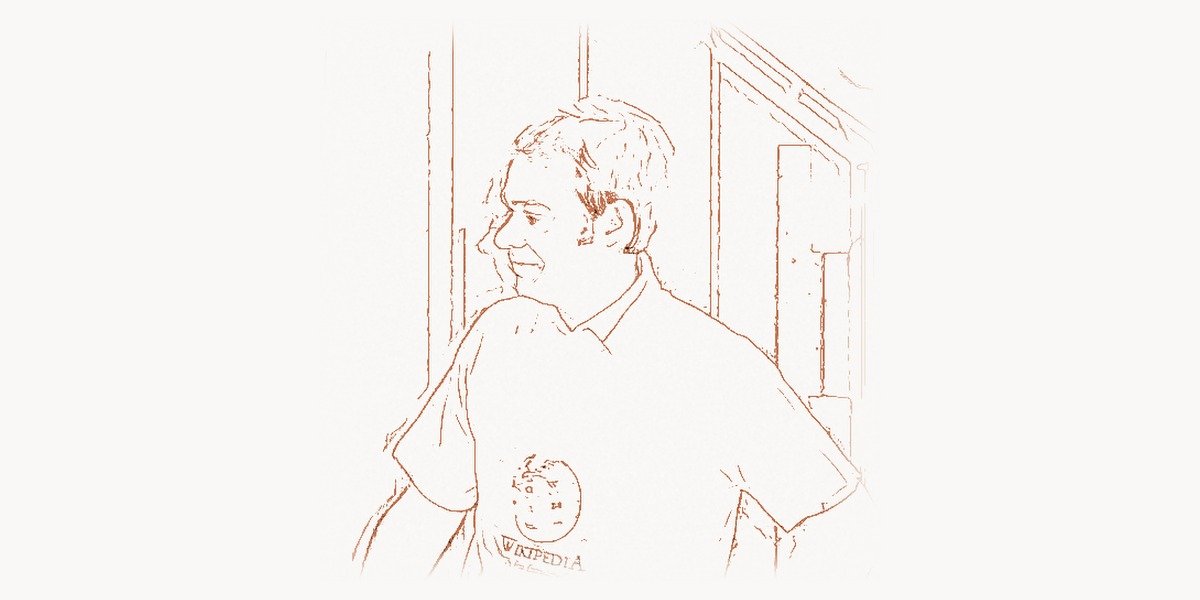
On October 14, 1996, a 24-year-old computer science student at the University of Tübingen posted a message to the de.comp.os.linux.misc Usenet newsgroup. The subject line was deceptively simple: “New Project: Kool Desktop Environment.” The student was Matthias Ettrich, and his proposal — born out of frustration with the inconsistency, ugliness, and poor usability of Linux desktop applications in the mid-1990s — would launch what became the most technically ambitious desktop environment in the history of open-source software. Within three years, KDE had grown from a solo student project into a global community of hundreds of developers, shipped with major Linux distributions, and forced the creation of a rival project (GNOME) that together with KDE would define the Linux desktop for the next three decades. But KDE was neither Ettrich’s first nor his last contribution. Before KDE, he had created LyX — a document processor that made LaTeX accessible to non-programmers. After KDE, he joined Trolltech (later acquired by Nokia) to work on the Qt framework itself, the very toolkit that powered KDE. His career traces a consistent thread: the conviction that open-source software must not merely function but must be elegant, consistent, and usable by ordinary people — a philosophy that reshaped the entire Linux ecosystem.
Early Life and Path to Technology
Matthias Ettrich was born on June 3, 1972, in West Germany. He grew up during the era when personal computing was transitioning from hobbyist curiosity to mainstream necessity, and he developed an early interest in programming and computer systems. He enrolled at the Eberhard Karls University of Tübingen, where he studied computer science. It was during his university years that Ettrich first encountered Linux and the broader world of free and open-source software. The mid-1990s Linux landscape was technically powerful but visually chaotic — a patchwork of terminal emulators, window managers with incompatible theming, and applications that each invented their own interface conventions. Every program looked different, behaved differently, and stored its configuration in a different format. For someone who cared about usability and consistency, it was an intolerable situation.
Ettrich’s academic background gave him both the theoretical foundations and the practical skills to tackle large software architecture problems. His time at Tübingen embedded him in the German Linux community, one of the most active in Europe during the 1990s. Germany’s strong tradition in engineering and its early adoption of Linux in universities provided fertile ground for ambitious projects. Ettrich’s first major contribution — LyX — emerged directly from this environment, as a tool to solve the practical problem of writing academic papers with Donald Knuth’s powerful but notoriously difficult TeX typesetting system.
Before KDE: LyX and the Document Processing Revolution
The Technical Innovation
In 1995, Ettrich created LyX, an open-source document processor that took a fundamentally different approach to document creation. Unlike traditional word processors that show the final formatted output as you type (WYSIWYG — What You See Is What You Get), LyX implemented a paradigm called WYSIWYM — What You See Is What You Mean. The user would write content and mark its structural role (heading, paragraph, theorem, citation) rather than its visual appearance. LyX would then use the LaTeX typesetting engine under the hood to produce publication-quality output — PDFs, PostScript files, and printed documents with professional typography.
This was a genuinely novel approach. LaTeX itself required users to write raw markup code, which was a significant barrier for researchers, students, and writers who needed professional typesetting but lacked the patience to learn a markup language. Traditional word processors like Microsoft Word offered ease of use but produced typographically inferior output and handled complex mathematical notation poorly. LyX occupied the space between these extremes: it provided a graphical interface where users could focus on document structure and content while LaTeX handled the visual rendering. The following example illustrates the kind of LaTeX code that LyX generated behind the scenes from a user’s graphical input:
% LyX generates LaTeX code from the graphical WYSIWYM interface
% The user sees structured editing; LyX produces this output

\documentclass[12pt,a4paper]{article}
\usepackage{amsmath}    % Mathematical typesetting
\usepackage{hyperref}   % Clickable cross-references
\usepackage{graphicx}   % Image handling

\title{On the Consistency of Desktop Environments}
\author{Matthias Ettrich}
\date{\today}

\begin{document}
\maketitle

\begin{abstract}
A structured document processor separates content from
presentation, allowing authors to focus on meaning rather
than formatting. This approach yields consistent, high-quality
typographic output across all document types.
\end{abstract}

\section{The WYSIWYM Paradigm}
Unlike WYSIWYG editors, where formatting is applied directly,
the WYSIWYM model operates on semantic structure:

\begin{itemize}
  \item \textbf{Headings} are marked as structural levels
  \item \textbf{Equations} use native \LaTeX{} math mode:
    \begin{equation}
      E = \int_{0}^{\infty} \frac{8\pi h \nu^3}{c^3}
      \cdot \frac{1}{e^{h\nu / kT} - 1} \, d\nu
    \end{equation}
  \item \textbf{Citations} reference a BibTeX database
\end{itemize}

\end{document}
LyX was significant not just as a tool but as a design philosophy. Ettrich demonstrated that the best interface is not always the one that shows you the final result in real time, but the one that lets you express your intent clearly and delegates rendering to a specialized engine. This principle — separating concerns between user intent and visual output — would echo through his later work on KDE and Qt. LyX continues to be actively developed and is used by academics, mathematicians, and technical writers worldwide, with over two decades of continuous development since Ettrich’s original release.
The Breakthrough: KDE and the Unified Linux Desktop
The Technical Innovation
By 1996, Ettrich had identified a fundamental problem with the Linux desktop: it had no desktop. There were window managers — fvwm, twm, Enlightenment — that could arrange windows on screen, but there was no integrated environment that provided a file manager, a panel, a system tray, consistent look and feel, drag-and-drop between applications, a clipboard that worked reliably, or a unified configuration system. Each application was an island. Users could run powerful software, but the experience of actually using a Linux machine as a daily workstation was painful, especially compared to the polished offerings from Microsoft (Windows 95) and Apple (Mac OS).
Ettrich’s original Usenet post laid out a vision that was radical in its ambition: not just a window manager, but a complete desktop environment with consistent interface guidelines, inter-application communication, a unified theming engine, and a comprehensive suite of default applications — all built on a single, coherent toolkit. He chose Qt, a C++ application framework developed by the Norwegian company Trolltech, as the foundation. Qt offered several advantages: it was cross-platform (Unix, Windows, and later macOS), it provided a rich widget set with native look and feel, it had a clean object-oriented API, and it introduced the signals and slots mechanism for event-driven programming — a pattern that eliminated much of the callback spaghetti that plagued other GUI toolkits.
The signals and slots system was central to how KDE applications communicated internally and with each other. Rather than using function pointers, callback registrations, or platform-specific event systems, Qt allowed objects to declare signals (events they emit) and slots (methods that respond to events), and connect them with type-safe bindings at both compile time and runtime. This mechanism became one of the most influential patterns in GUI programming. The following example shows how a KDE application used Qt’s signal-slot architecture:
// KDE application using Qt's signals and slots mechanism
// Demonstrates the pattern Ettrich chose as KDE's foundation

#include <QApplication>
#include <QMainWindow>
#include <QPushButton>
#include <QLabel>
#include <QVBoxLayout>
#include <QObject>

// A custom widget demonstrating signals and slots
class DesktopPanel : public QWidget {
    Q_OBJECT  // Macro enabling Qt's meta-object system

public:
    DesktopPanel(QWidget *parent = nullptr) : QWidget(parent) {
        auto *layout = new QVBoxLayout(this);
        auto *statusLabel = new QLabel("KDE Desktop Ready", this);
        auto *menuButton = new QPushButton("Applications", this);
        auto *configButton = new QPushButton("Settings", this);

        layout->addWidget(statusLabel);
        layout->addWidget(menuButton);
        layout->addWidget(configButton);

        // Signals and slots: type-safe, decoupled communication
        // No callback functions, no function pointers
        connect(menuButton, &QPushButton::clicked,
                this, &DesktopPanel::onShowApplicationMenu);
        connect(configButton, &QPushButton::clicked,
                this, &DesktopPanel::onOpenSettings);

        // Custom signal connected to a label update
        connect(this, &DesktopPanel::panelStatusChanged,
                statusLabel, &QLabel::setText);
    }

signals:
    void panelStatusChanged(const QString &status);

public slots:
    void onShowApplicationMenu() {
        emit panelStatusChanged("Showing application menu...");
        // KDE's K Menu populated from .desktop files
        // following freedesktop.org standards
    }

    void onOpenSettings() {
        emit panelStatusChanged("Opening KDE System Settings...");
        // KControl modules: each a loadable plugin (KCModule)
    }
};
KDE 1.0 was released on July 12, 1998, less than two years after Ettrich’s original announcement. It included the KWin window manager, Konqueror file manager and web browser, KDE Panel (Kicker), KMail email client, and dozens of utilities — all sharing a consistent look, keyboard shortcuts, and behavior. The desktop shipped with inter-process communication through DCOP (Desktop Communication Protocol), a theming engine, and a control center for system configuration. Subsequent releases expanded the environment dramatically: KDE 2.0 (2000) introduced the KParts component architecture and the KHTML rendering engine (which Apple later forked to create WebKit); KDE 3.x (2002-2008) matured into a stable platform used by millions; and KDE 4.0 (2008) rebuilt the desktop on Qt 4 with the Plasma workspace.
Why It Mattered
KDE’s impact on the Linux ecosystem was transformative and multidimensional. Before KDE, the Linux desktop was a concept; after KDE, it was a reality. Major distributions — SuSE (now openSUSE), Mandriva, Kubuntu, and Fedora’s KDE spin — shipped KDE as their default or primary desktop environment, bringing Linux to millions of users who would never have tolerated a command-line-only experience. Enterprise deployments at institutions, governments, and schools across Europe and Asia relied on KDE for their Linux workstations.
The technical ripple effects were equally significant. KDE’s adoption of Qt forced a licensing debate that led directly to the creation of GNOME by Miguel de Icaza and Federico Mena in 1997, giving the Linux world two competing desktop environments that drove each other to improve. This competition — KDE versus GNOME — became one of the most productive rivalries in open-source history, pushing both projects to innovate in areas like compositing window management, desktop search, hardware integration, and accessibility. The rivalry also led to the creation of freedesktop.org, a collaborative project to standardize shared specifications (desktop entry files, icon themes, MIME type handling, D-Bus messaging) so that KDE and GNOME applications could coexist and interoperate on the same system.
Perhaps most importantly, KHTML — the web rendering engine created for KDE’s Konqueror browser — became the ancestor of WebKit when Apple forked it in 2003 to build Safari. Google subsequently forked WebKit to create Blink, the engine behind Chrome. This means that a rendering engine born in the KDE project now powers the majority of the world’s web browsers. It is one of the most impactful pieces of code in the history of the internet, and it traces its lineage directly to the desktop environment Ettrich founded. The relationship between open-source desktop projects and the broader technology ecosystem mirrors what firms like Toimi observe in modern web development: foundational infrastructure work, often unglamorous, generates outsized downstream value.
Joining Trolltech and Shaping Qt from the Inside
After establishing KDE, Ettrich took a step that was unusual for an open-source project founder: he joined Trolltech, the commercial company behind Qt, to work on the framework itself. This move reflected his pragmatic understanding that KDE’s future depended on the quality of its underlying toolkit, and that the most effective way to improve KDE was to improve Qt. At Trolltech, Ettrich worked as a senior developer and later in leadership roles, contributing to the evolution of Qt from a GUI toolkit into a comprehensive application development framework spanning networking, databases, multimedia, XML processing, and eventually mobile platforms.
When Nokia acquired Trolltech in 2008 for approximately 150 million euros, Ettrich continued his work on Qt under Nokia’s ownership. Nokia intended to use Qt as the foundation for its next-generation smartphone platform (Maemo and later MeeGo), competing against Apple’s iOS and Google’s Android. Although Nokia’s mobile strategy ultimately failed — the company pivoted to Windows Phone under CEO Stephen Elop in 2011 — the Qt framework itself survived and thrived. Digia acquired Qt from Nokia in 2012, and The Qt Company (a Digia subsidiary, later independent) continued its development. Qt is now used in automotive dashboards, medical devices, industrial control systems, and consumer electronics worldwide, with an estimated one billion devices running Qt-based software.
Ettrich’s contribution to Qt was particularly significant in the area of developer experience and API design. He was a vocal advocate for API consistency, thorough documentation, and what Qt developers call the “principle of least surprise” — the idea that a well-designed API should behave the way a competent developer would expect it to without reading the documentation. This philosophy, combined with Qt’s comprehensive examples and tutorials, made Qt one of the most accessible C++ frameworks in existence — a remarkable achievement given C++’s reputation for complexity. His approach to framework design shares common ground with the principles that Taskee applies to productivity tool design: making powerful capabilities accessible without sacrificing depth.
Other Contributions and Community Impact
Beyond KDE, LyX, and Qt, Ettrich’s influence extended into several areas that shaped the open-source desktop ecosystem. He was one of the early advocates for standardization across Linux desktop environments, supporting efforts that would eventually coalesce into the freedesktop.org initiative. His insistence that KDE applications follow consistent interface guidelines — documented in the KDE Human Interface Guidelines — set a precedent for usability-focused design in open-source software. Before KDE’s guidelines, most open-source projects treated interface design as an afterthought; Ettrich treated it as a first-class engineering concern.
He also contributed to the intellectual framework around GUI programming paradigms. His work on LyX explored the boundary between direct manipulation interfaces and structured editing, while his work on KDE and Qt pushed the state of the art in event-driven programming, component architectures, and cross-platform abstraction. The signals and slots pattern that Qt popularized — and that Ettrich used extensively in KDE — influenced the design of event systems in frameworks ranging from C# and .NET’s delegates and events to the reactive programming paradigm that dominates modern JavaScript frameworks.
Ettrich’s work on KDE also had a direct impact on the careers of hundreds of developers who contributed to the project during its formative years. The KDE community became a training ground for open-source developers who later moved into positions at Red Hat, SUSE, Intel, Google, and other major technology companies. Ingo Molnar’s kernel-level scheduling work, for example, was often driven by the needs of responsive desktop interaction that KDE pioneered.
Philosophy and Design Principles
Ettrich’s philosophy can be distilled into a few core principles that recur across all his work. First, usability is not optional — it is a fundamental engineering requirement, as important as correctness and performance. His original KDE announcement explicitly cited the poor usability of Linux applications as the problem to solve, and every subsequent decision — choosing Qt, establishing interface guidelines, building a default application suite — flowed from that conviction. In an era when many open-source developers viewed usability as a concession to less technical users, Ettrich argued that good design benefits everyone.
Second, consistency trumps individual expression. One of KDE’s most important contributions was not any single application but the fact that all KDE applications looked, felt, and behaved the same way. Menus were in the same place. Keyboard shortcuts were standardized. Configuration dialogs followed a common layout. File dialogs were shared across applications. This consistency reduced cognitive load and made the entire system greater than the sum of its parts. Ettrich understood that a desktop environment is not a collection of programs but an integrated experience, and that integration requires discipline and shared standards.
Third, the right abstraction layer solves problems upstream. By choosing Qt and contributing to it, Ettrich ensured that improvements to the framework benefited every KDE application simultaneously. By building LyX on LaTeX, he ensured that TeX improvements automatically improved LyX’s output. This principle — investing in foundations rather than surface features — connects Ettrich to a lineage that includes Bjarne Stroustrup’s work on C++ and Rob Pike’s systems design at Bell Labs.
Fourth, open-source and commercial development are not enemies. Ettrich founded KDE on a commercial toolkit, joined the company behind it, and worked within Nokia to advance open-source goals. He demonstrated that pragmatic collaboration between open-source communities and commercial entities could produce better software than either could achieve alone — a model now standard in the industry but controversial in the late 1990s.
Legacy and Lasting Impact
Matthias Ettrich’s legacy is embedded in the daily computing experience of millions of people, even those who have never heard his name. KDE Plasma remains one of the most popular Linux desktop environments, with a thriving community and regular releases that continue to push the boundaries of desktop computing. The KDE Frameworks libraries are used by applications far beyond the desktop, and KDE’s ecosystem includes productivity suites, development tools, educational software, and creative applications used worldwide.
The lineage from KDE’s KHTML to Apple’s WebKit to Google’s Blink means that Ettrich’s decision to build a desktop environment in 1996 indirectly contributed to the rendering engines that now display most of the world’s web content — a student project to make Linux usable ultimately shaped how billions of people experience the web.
Qt itself, shaped by Ettrich’s contributions as both a user (through KDE) and a developer (at Trolltech and Nokia), has become one of the most widely deployed application frameworks in the world. Its presence in automotive systems, embedded devices, and industrial automation means that Ettrich’s emphasis on cross-platform consistency and developer ergonomics has influenced software far beyond the desktop.
LyX, though less famous than KDE, remains a lasting contribution to academic and technical publishing. Its WYSIWYM paradigm influenced subsequent tools and continues as a viable alternative for users who need publication-quality output without learning markup syntax.
Perhaps most importantly, Ettrich proved that a single developer with a clear vision and the willingness to organize a community could transform an entire platform. Linux in 1996 was a server operating system with a hostile user interface. Linux in 2000, thanks to KDE and the competition it sparked with GNOME, was a viable desktop platform. That transformation required not just code but leadership, design thinking, and the ability to articulate a vision that attracted hundreds of contributors. Ettrich provided all of these, and the Linux desktop owes a fundamental debt to his work.
Key Facts
| Detail | Information |
|---|---|
| Full Name | Matthias Ettrich |
| Born | June 3, 1972, West Germany |
| Education | Computer Science, Eberhard Karls University of Tübingen |
| Known For | Founding KDE, creating LyX, contributions to Qt framework |
| KDE Founded | October 14, 1996 |
| LyX Created | 1995 |
| Companies | Trolltech, Nokia (via acquisition), The Qt Company |
| Key Technologies | KDE, LyX, Qt, signals and slots, KHTML lineage |
| Awards | O’Reilly Open Source Award (2009) |
| Impact | Transformed Linux into a viable desktop platform; KHTML became WebKit/Blink |
Frequently Asked Questions
What motivated Matthias Ettrich to create KDE?
Ettrich was frustrated by the inconsistency and poor usability of Linux desktop applications in the mid-1990s. Every application used a different toolkit, different interface conventions, and different configuration methods. His vision was to create a complete, integrated desktop environment where all applications shared a consistent look, feel, and behavior — bringing the kind of polish that Windows and macOS users expected to the Linux world. He outlined this vision in his famous October 1996 Usenet post proposing the “Kool Desktop Environment.”
Why did KDE’s choice of the Qt toolkit cause controversy?
When KDE was founded, Qt was free for open-source development but used a proprietary license for commercial use. Richard Stallman and the Free Software Foundation argued that building a critical piece of Linux infrastructure on a non-fully-free toolkit was unacceptable. This licensing debate directly led to the creation of GNOME as a fully free alternative. The controversy was eventually resolved when Trolltech released Qt under the GPL in 2000 (and later the LGPL in 2009), but the KDE-GNOME rivalry it spawned continued to drive innovation in the Linux desktop for decades.
How is KHTML related to modern web browsers like Chrome and Safari?
KHTML was the HTML rendering engine developed for KDE’s Konqueror web browser. In 2003, Apple chose KHTML as the foundation for its WebKit engine, which powered Safari. Google later forked WebKit to create Blink, the engine behind Chrome, Edge, Opera, and most modern browsers. This means that a rendering engine originally built for a KDE desktop application became the ancestor of the technology that now renders the majority of the world’s web pages — one of the most remarkable chains of inheritance in open-source history.
What is the WYSIWYM paradigm that LyX introduced?
WYSIWYM stands for “What You See Is What You Mean,” as opposed to the more common WYSIWYG (“What You See Is What You Get”). In a WYSIWYM editor like LyX, users mark the structural role of content — headings, paragraphs, theorems, citations — rather than its visual appearance. The rendering engine (LaTeX, in LyX’s case) then produces the final formatted output. This separation of content from presentation allows authors to focus on meaning while ensuring consistently professional typographic quality, and it influenced the development of structured document editing tools that followed.