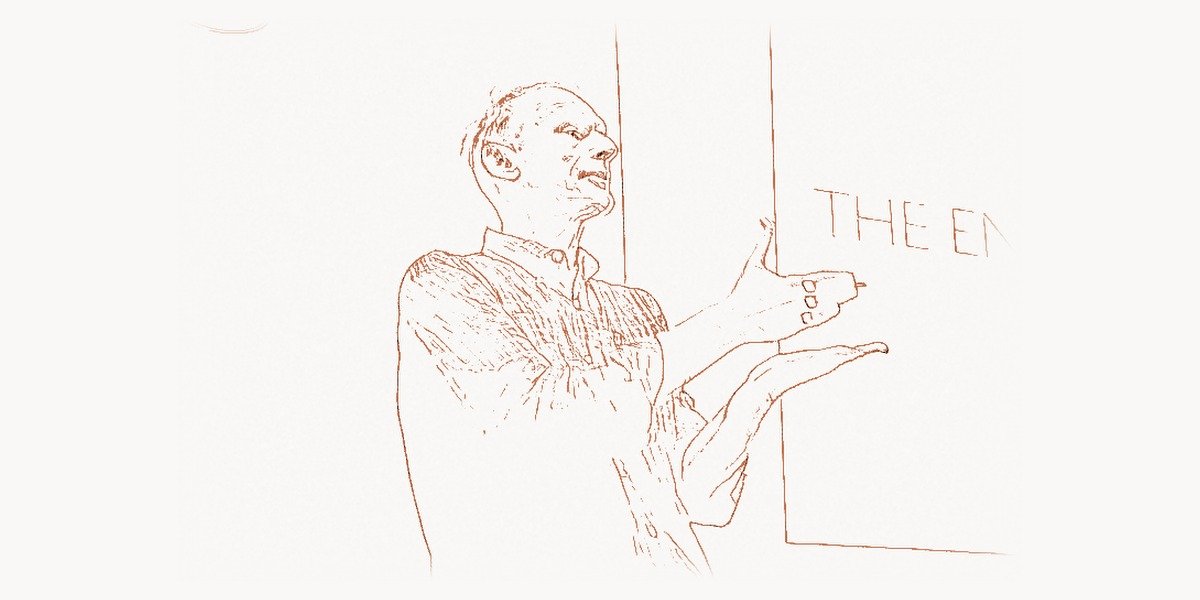
Most programming language designers build tools for professional developers. Matthias Felleisen built a language to teach people how to think. As the creator of Racket — originally known as PLT Scheme — and the architect of the “How to Design Programs” methodology, Felleisen has spent over three decades pursuing a singular vision: that programming is a teachable, systematic discipline, not a craft learned only through apprenticeship and raw talent. In doing so, he produced one of the most innovative programming languages ever created, a language that does not merely let you write programs but lets you invent entirely new languages tailored to your problem. His work stands at the intersection of programming language theory, education, and practical software engineering — a combination that has influenced language designers, type theorists, and computer science educators around the world.
Early Life and Education
Matthias Felleisen was born in 1957 in Germany. He grew up in an intellectual environment that valued rigorous thinking and systematic problem-solving — qualities that would define his entire career. He studied at the University of Karlsruhe (now the Karlsruhe Institute of Technology), one of Germany’s most prestigious technical institutions, before moving to the United States to pursue advanced study in computer science.
Felleisen earned his PhD from Indiana University in 1987, working under the supervision of Daniel P. Friedman — a legendary figure in the programming languages community and co-author of “The Little Schemer” series. Friedman’s influence on Felleisen was profound. At Indiana, Felleisen immersed himself in the theory of programming languages, particularly the lambda calculus, reduction semantics, and the formal study of how programs compute. His dissertation work on control operators and continuation-based semantics established him as a first-rate theorist with a rare gift: the ability to translate deep mathematical insights into practical tools that could be used by real programmers and, critically, by students learning to program for the first time.
After completing his PhD, Felleisen joined the faculty at Rice University in Houston, Texas, where he would spend a highly productive period building the research group that would change programming language education forever. In 2001, he moved to Northeastern University in Boston, where he continued his work and where he remains a Trustee Professor of Computer Science. Throughout his academic career, Felleisen has received numerous honors, including the ACM SIGPLAN Programming Languages Achievement Award in 2012 — the highest recognition in the programming languages field — and the ACM Karl V. Karlstrom Outstanding Educator Award in 2010.
The Racket Breakthrough
The story of Racket begins in the mid-1990s, when Felleisen and a group of collaborators — Matthew Flatt, Robert Bruce Findler, and Shriram Krishnamurthi — formed what they called the PLT group (an abbreviation that, they have insisted, does not stand for anything). Their initial goal was modest: they wanted to build a better pedagogical programming environment based on Scheme, the elegant dialect of Lisp co-created by Gerald Jay Sussman and Guy Steele. What they ended up building was something far more ambitious — a language that redefined what a programming language could be.
The project started as PLT Scheme in 1995. The team’s first insight was that the standard Scheme language, while beautiful in its minimalism, was not well-suited for teaching beginners. Scheme’s anything-goes flexibility — its dynamic typing, its cryptic error messages, its lack of guardrails — made it powerful for experts but bewildering for novices. Felleisen wanted a system where the language itself could be adapted to the student’s level of understanding, growing more powerful as the student’s skills developed.
Technical Innovation
The central technical innovation of Racket is its language-oriented programming paradigm. Unlike virtually every other programming language, Racket was designed from the ground up to be a platform for creating new languages. The key mechanism is the #lang directive, which appears at the top of every Racket file and specifies which language the file is written in. This is not merely a compatibility flag or a version selector — it completely changes the syntax, semantics, and type system of the language being used.
Consider this simple example that demonstrates Racket’s multi-language capability:
#lang racket

;; Racket as a language laboratory: defining a tiny DSL
;; for describing web page structures

(require racket/match)

;; A simple function using pattern matching
;; — one of Racket's many built-in features
(define (page-title elements)
  (match elements
    [(list 'html _ ... (list 'head _ ... (list 'title t) _ ...) _ ...)
     t]
    [_ "Untitled"]))

;; First-class functions and higher-order programming
;; — inherited from Scheme's lambda tradition
(define (transform-all items transformer)
  (map transformer items))

;; Contracts: Racket's approach to runtime verification
;; — a unique feature not found in standard Scheme
(define/contract (safe-divide numerator denominator)
  (-> number? (and/c number? (not/c zero?)) number?)
  (/ numerator denominator))

;; Hygienic macros: the backbone of Racket's
;; language-building capability
(define-syntax-rule (unless condition body ...)
  (when (not condition)
    body ...))

;; Using our macro — it looks like a built-in construct
(unless (zero? 42)
  (displayln "Racket makes language extension feel natural"))
The #lang mechanism is powered by Racket’s sophisticated macro system. While Scheme had macros, Racket’s macro system goes far beyond what any previous Lisp offered. Racket macros are hygienic by default — meaning they do not accidentally capture or shadow variable names in the surrounding code — and they operate on a rich syntax object representation that preserves source location information, lexical context, and other metadata. This makes it possible to write macros that produce meaningful error messages, a critical requirement for educational use.
Matthew Flatt, Felleisen’s long-time collaborator, deserves particular credit for the implementation of Racket’s module system and macro expander, which together form the technical foundation that makes language-oriented programming possible. The module system allows different files in the same project to be written in entirely different languages, all interoperating seamlessly. This is not a theoretical curiosity — it is used in practice. The Racket ecosystem includes dozens of languages: Typed Racket (a gradually typed variant), Scribble (a documentation language), Slideshow (a presentation language), Datalog, and many others.
Beyond the macro system, Racket introduced several other significant technical innovations. Its contract system, designed by Findler and Felleisen, provides a way to specify and enforce the behavioral obligations of functions and modules at runtime — a form of design-by-contract that goes beyond simple type checking to express complex relational properties. Racket also pioneered the concept of language levels for education, where beginners work in restricted subsets of the language (Beginning Student, Intermediate Student, Advanced Student) that provide progressively more features and correspondingly more detailed error messages.
Why It Mattered
Racket’s language-oriented programming paradigm addressed a problem that had plagued software engineering for decades: the mismatch between the problem domain and the programming language. Most languages force programmers to translate their domain concepts into the language’s fixed set of abstractions. Racket inverted this relationship — instead of fitting the problem to the language, you fit the language to the problem. This idea, sometimes called linguistic abstraction, is arguably the most powerful form of abstraction in computer science.
The practical impact has been significant. Racket has been used to build domain-specific languages for fields ranging from biology to game design. Its influence on other language communities is visible in Rust’s macro system, in Elixir’s metaprogramming capabilities, and in the growing interest in language workbenches and extensible compilers across the industry. When developers today use tools that let them define custom syntax or embed DSLs within a host language, they are working with ideas that Felleisen and the PLT group helped pioneer.
In 2010, the team made the bold decision to rename PLT Scheme to Racket, signaling that the language had grown well beyond its Scheme roots. It was no longer just a dialect of an existing language — it was a new kind of programming system, one that treated language creation as a first-class activity. The name change was controversial in some quarters but ultimately reflected a genuine evolution in the language’s identity and ambitions.
Other Major Contributions
While Racket is Felleisen’s most visible creation, his influence extends across several other domains that have reshaped how computer science is taught and how programming languages are studied.
How to Design Programs (HtDP)
In 2001, Felleisen, along with Findler, Flatt, and Krishnamurthi, published “How to Design Programs” (HtDP) — a textbook that proposed a radically different approach to teaching programming. While MIT’s SICP (by Abelson and Sussman) had been the gold standard for introductory computer science, Felleisen argued that SICP was better suited for already-gifted students than for the broad population that computer science departments needed to serve. SICP assumed a certain mathematical maturity and comfort with abstraction; HtDP aimed to build those skills from scratch.
The HtDP methodology is built around a systematic design recipe — a step-by-step process for going from a problem statement to a working, tested program. Students learn to write a purpose statement, define data representations, write examples before code, write function templates based on the data definition, fill in the template to complete the function, and test against the examples. This recipe may sound mechanical, but that is precisely the point: by making the design process explicit and repeatable, Felleisen gave students a scaffold that they could rely on when facing problems they had never seen before. The approach has been adopted at over a hundred universities worldwide and has proven particularly effective at retaining students who might otherwise have been lost to the intimidation factor of their first programming course.
HtDP was also a statement about what programming education should value. Rather than emphasizing clever tricks or language-specific idioms, it focused on universal design principles that transfer across languages and paradigms. A student trained in the HtDP methodology can apply the same design recipe whether they later work in Python, Java, or JavaScript — the systematic approach to problem decomposition is language-independent. Teams working on complex project workflows benefit from exactly this kind of structured thinking.
DrRacket (formerly DrScheme)
Understanding that pedagogy requires more than just a textbook, Felleisen and his team built DrRacket — an integrated development environment specifically designed for learning. DrRacket was not an afterthought or a stripped-down version of a professional tool; it was designed from the ground up with novice programmers in mind. Its key innovations included language levels that progressively introduced complexity, an algebraic stepper that let students see each step of program evaluation (making the abstract process of computation visible and concrete), integrated testing tools that encouraged students to write tests from their very first program, and clear, pedagogically-oriented error messages that pointed students toward the conceptual mistake rather than reporting a cryptic syntax error.
DrRacket demonstrated that the development environment is not separate from the language — it is part of the language experience. This insight influenced the design of educational tools across the industry, and echoes can be seen in modern code editors and IDEs that prioritize the learning experience alongside professional productivity.
Redex: A Domain-Specific Language for Semantics
For the programming languages research community, Felleisen and Findler created Redex — a domain-specific language embedded in Racket for modeling and testing programming language semantics. Redex allows researchers to define the grammar, reduction rules, and type systems of a language in executable form, and then automatically test properties of the language by running random examples through the model. Before Redex, programming language researchers often worked with pen-and-paper proofs that could contain subtle errors. Redex brought a form of lightweight formal verification to the language design process, allowing researchers to catch mistakes early and explore design alternatives quickly. It has been used in dozens of published research papers and has become a standard tool in the PLT community.
Philosophy and Approach
Felleisen’s work is guided by a coherent and distinctive philosophy that connects his research, his teaching, and his language design. Understanding this philosophy is essential to understanding why his contributions have been so lasting.
Key Principles
Programming is design, not just coding. Felleisen has consistently argued that the core skill in programming is not knowledge of syntax or APIs but the ability to systematically decompose problems and design solutions. This belief drove the creation of HtDP and its design recipe methodology. In Felleisen’s view, a programmer who can design well can learn any language quickly; a programmer who only knows a language without design skills will struggle in every context. This principle resonates strongly with modern approaches to digital product design, where systematic methodology separates reliable outcomes from guesswork.
Languages should serve their users, not the other way around. The entire Racket project embodies the conviction that programmers should not have to contort their thinking to fit the language they happen to be using. Instead, the language should be malleable enough to adapt to the domain. This is a deeply humanistic view of programming — it centers the human thinker rather than the machine executor. It stands in contrast to the philosophy of languages like C, which prioritize machine efficiency, and even of languages like Java, which impose a single paradigm (object-orientation) on every problem.
Theory and practice must inform each other. Felleisen is unusual among programming language researchers in that he insists on building real, usable systems — not just publishing papers. Racket is not a toy language; it is a production-quality system with a package manager, a web server, a GUI toolkit, and a growing ecosystem of libraries. At the same time, every major design decision in Racket is grounded in formal theory. The contract system is based on higher-order blame theory. The macro system is rooted in a formal model of syntactic abstraction. The module system has a well-defined semantics. This insistence on the unity of theory and practice is Felleisen’s signature intellectual commitment.
Education is not a lesser form of research. In many computer science departments, teaching is treated as a service obligation — something professors do to earn the right to conduct research. Felleisen has argued, both by example and in writing, that thinking deeply about how to teach programming is itself a form of research, and a form that has more impact on the world than most published papers. His educational innovations have reached hundreds of thousands of students; his formal semantics papers, brilliant as they are, have reached thousands. The willingness to take education as seriously as theory is what sets Felleisen apart from most of his peers.
Legacy and Impact
Matthias Felleisen’s influence radiates outward in concentric circles, each broader than the last.
In the programming languages research community, his work on reduction semantics and operational models has become foundational. His textbook “Semantics Engineering with PLT Redex” (co-authored with Findler and Flatt) is used in graduate courses worldwide. His former students and collaborators hold faculty positions at leading universities — Shriram Krishnamurthi at Brown, Robby Findler at Northwestern, Matthew Flatt at Utah — each continuing and extending the research program Felleisen initiated. The intellectual lineage is clear and prolific.
In the broader programming language ecosystem, Racket’s ideas have been remarkably influential even among developers who have never written a line of Racket code. The concept of language-oriented programming has influenced projects from Rust to Julia. Racket’s approach to hygienic macros has been studied and adapted by language designers working on systems far removed from the Lisp family. The idea of language levels for education has been adopted by tools like Scratch and by various online programming platforms. When modern frameworks introduce domain-specific languages for templating, styling, or state management, they are — whether they know it or not — walking the path that Racket illuminated.
In computer science education, Felleisen’s impact is perhaps most profound and most enduring. The HtDP approach has been adopted at universities across North America, Europe, and Asia. The design recipe methodology has proven particularly effective at increasing retention among students who are not already confident programmers — a population that disproportionately includes women and underrepresented minorities. By making programming systematic rather than mystical, Felleisen helped open the door for thousands of students who might otherwise have concluded that programming was not for them.
The Bootstrap program, a curriculum Felleisen helped develop with Krishnamurthi, brings programming concepts to middle and high school students through the lens of algebra and physics. By connecting programming to subjects students are already learning, Bootstrap demonstrates that computational thinking is not a separate discipline but a way of engaging with the world. The program has reached tens of thousands of students in the United States and continues to grow.
At its deepest level, Felleisen’s legacy is a vision of programming as a humane, teachable, systematizable discipline. In an industry that often mythologizes the lone genius hacker, Felleisen offered a counter-narrative: that good programming is not about brilliance but about method, not about talent but about design, not about the language you use but about the principles you apply. That vision has shaped a generation of computer scientists, educators, and programmers — and its influence continues to grow.
Key Facts
- Full name: Matthias Felleisen
- Born: 1957, Germany
- Education: PhD in Computer Science, Indiana University (1987); studied at the University of Karlsruhe
- Key creation: Racket programming language (originally PLT Scheme, 1995; renamed Racket in 2010)
- Major publications: “How to Design Programs” (2001, 2nd edition 2018), “Semantics Engineering with PLT Redex” (2009)
- Key collaborators: Matthew Flatt, Robert Bruce Findler, Shriram Krishnamurthi, Daniel P. Friedman
- Awards: ACM SIGPLAN Programming Languages Achievement Award (2012), ACM Karl V. Karlstrom Outstanding Educator Award (2010)
- Current position: Trustee Professor, Northeastern University, College of Computer and Information Science
- Core innovation: Language-oriented programming — the idea that a programming language should be a platform for creating other languages
- Educational impact: HtDP methodology adopted at 100+ universities worldwide; Bootstrap curriculum reaches tens of thousands of K-12 students
Frequently Asked Questions
What is Racket and how does it differ from Scheme?
Racket began life as PLT Scheme in 1995 but has evolved into something substantially different from any standard Scheme dialect. While Scheme — the language co-created by Sussman and Steele in the 1970s — is deliberately minimalist, Racket is a comprehensive programming ecosystem. The most distinctive feature is Racket’s #lang mechanism, which allows each file to declare its own language. This makes Racket not just a single language but a platform for building languages. Racket also includes a powerful contract system, a module system designed for language interoperability, an extensive standard library, and DrRacket — an integrated development environment designed for both education and professional use. The decision to rename PLT Scheme to Racket in 2010 reflected this fundamental shift in identity: Racket is a language about languages, not merely another Lisp dialect.
What is the “How to Design Programs” methodology and why is it significant?
The “How to Design Programs” (HtDP) methodology, developed by Felleisen and his collaborators, is a systematic approach to teaching programming that centers on a design recipe — a repeatable, step-by-step process for going from a problem description to a tested, working program. The recipe involves understanding the problem domain, defining data representations, writing concrete examples, creating function templates based on data definitions, implementing the function body, and testing against the examples. HtDP was created as an alternative to the SICP approach popularized at MIT, which Felleisen felt relied too heavily on mathematical intuition and was better suited for already-gifted students. HtDP’s significance lies in its accessibility: by making the design process explicit, it gives all students — not just the naturally gifted — a reliable method for solving programming problems. It has been adopted at over a hundred universities worldwide and has been particularly effective at improving retention rates in introductory computer science courses.
How has Felleisen’s work influenced modern programming languages and tools?
Felleisen’s influence on modern programming extends far beyond the Racket community. His work on language-oriented programming — the idea that programmers should be able to create domain-specific languages as easily as they create functions — has influenced the design of macro systems in Rust, metaprogramming in Elixir, and the broader trend toward embedded DSLs in languages like Haskell, Scala, and Kotlin. His contract system for Racket inspired similar features in other languages and helped establish runtime verification as a practical tool for software reliability. The DrRacket IDE’s pedagogical innovations — language levels, algebraic stepping, and instructive error messages — influenced educational programming environments across the field. Perhaps most broadly, his insistence that programming language design and education are inseparable has shaped a generation of researchers and language designers who view accessibility and learnability not as afterthoughts but as core design criteria.