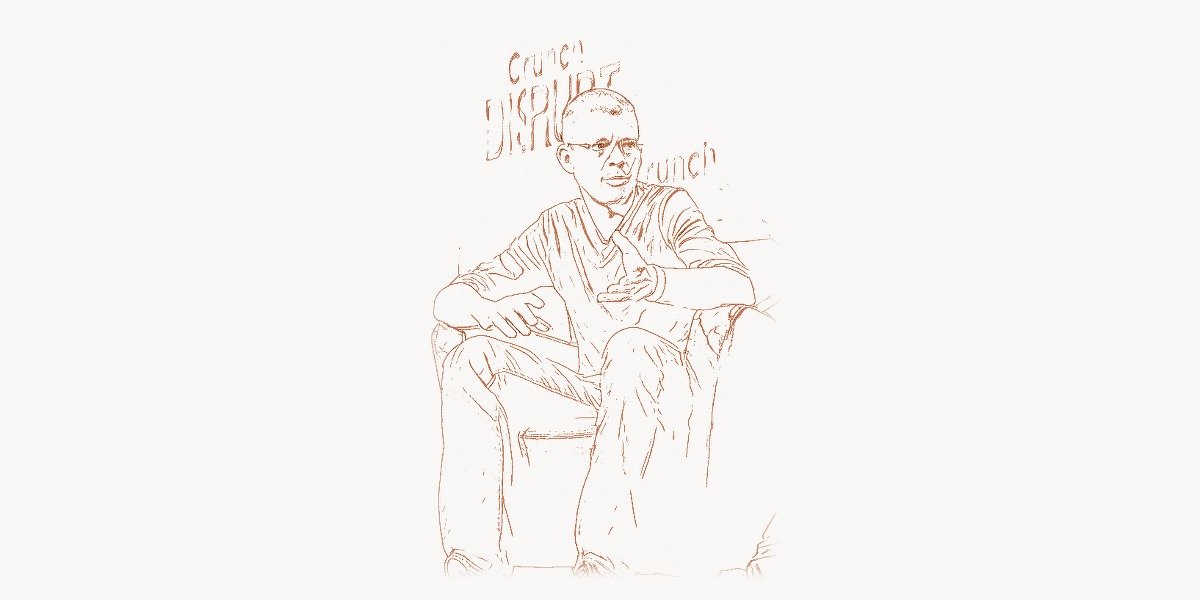
In the summer of 1998, a 23-year-old Ukrainian immigrant sat in a lecture hall at Stanford University, listening to a talk about cryptography. He had already started and shuttered three companies. He was sleeping on friends’ couches, running low on money, and burning through ideas the way other people burn through coffee. After the talk, he approached the speaker — a hedge fund manager named Peter Thiel — and the two began a conversation that would eventually reshape how the world moves money. Within months, Max Levchin and Thiel co-founded a small security company called Confinity, which built a product called PayPal. Within four years, PayPal had survived a merger war with Elon Musk’s X.com, fended off organized crime syndicates trying to defraud it out of existence, processed billions of dollars in online payments, and sold to eBay for $1.5 billion. The alumni of that company — the so-called “PayPal Mafia” — went on to found or lead Tesla, LinkedIn, YouTube, Palantir, Yelp, and a dozen other companies that define the modern internet. But Levchin’s story did not end with PayPal. He went on to co-found Affirm, a company that reinvented consumer lending for the digital age, and to build a career as one of Silicon Valley’s most prolific and technically rigorous entrepreneurs. His story is one of cryptography, fraud detection, financial engineering, and the relentless application of mathematical thinking to real-world problems.
From Kyiv to Silicon Valley
Max Rafailovich Levchin was born on July 11, 1975, in Kyiv, Ukraine, then part of the Soviet Union. His family was Jewish, and as the Soviet Union collapsed, they faced both economic instability and rising antisemitism. In 1991, when Levchin was 16, his family emigrated to the United States and settled in Chicago. They arrived with almost nothing — Levchin later described the family’s total assets upon arrival as a few hundred dollars and a couple of suitcases.
Levchin enrolled at the University of Illinois at Urbana-Champaign, one of the top computer science programs in the country. It was the same university where Marc Andreessen had recently built the Mosaic web browser, and the department was steeped in a culture of building real systems, not just theorizing about them. Levchin was drawn to cryptography and security — fields that combined deep mathematics with practical applications. He was fascinated by the problem of proving identity in a digital world: how do you verify that someone is who they claim to be when all you have are bits on a wire?
During his time at Illinois, Levchin started his first companies. None of them succeeded in the conventional sense, but each taught him something critical about building technology products. He learned that technical elegance was necessary but not sufficient — you also needed a market, a business model, and the ability to execute under pressure. By the time he graduated in 1997, he had the technical skills of a seasoned cryptographer and the scar tissue of a serial entrepreneur.
The Birth of PayPal
Confinity and the Security Problem
Levchin moved to Silicon Valley in 1998, determined to build a company around cryptographic security. His original idea was to build software that would allow people to store encrypted data on PalmPilot handheld devices — a kind of digital wallet for sensitive information. He pitched this idea to Peter Thiel, who was intrigued enough to invest and co-found a company they called Confinity.
The PalmPilot security product never found a market. But during development, Levchin and his team built a feature that allowed PalmPilot users to beam money to each other using the device’s infrared port. This feature — essentially a demo, an afterthought — generated far more interest than the core security product. People did not care about storing encrypted data on their handheld devices. They cared very much about sending money to each other electronically.
Levchin and Thiel pivoted. They abandoned the PalmPilot security product and built a web-based payment system that allowed anyone with an email address to send money to anyone else. They called it PayPal. The product launched in late 1999 and grew explosively, driven by eBay power sellers who needed a way to accept payments from buyers. PayPal offered instant, free transfers — a radical improvement over the existing system of mailing checks and waiting for them to clear.
The Fraud Wars
PayPal’s growth created an immediate and existential problem: fraud. As the platform scaled, it attracted organized crime syndicates, identity thieves, and individual scammers at a pace that threatened to destroy the company. At one point, PayPal was losing more than $10 million per month to fraud. The company was literally hemorrhaging money faster than it could raise it.
This is where Levchin’s cryptography background became the company’s most critical asset. He built PayPal’s fraud detection system from scratch, assembling a team of mathematicians and engineers and creating what was, at the time, one of the most sophisticated real-time fraud detection systems in the world. The system used a combination of pattern recognition, statistical analysis, and machine learning techniques that were cutting-edge for the late 1990s. Levchin later described the fraud battle as the defining technical challenge of his career — a high-stakes, adversarial game where the rules changed constantly and the cost of losing was the company’s survival.
# Conceptual model: PayPal-era fraud detection system (circa 2000-2002)
# Levchin's team built real-time risk scoring for every transaction
# This simplified model illustrates the multi-signal approach

import math
from dataclasses import dataclass
from typing import List, Dict

@dataclass
class Transaction:
    user_id: str
    amount: float
    ip_address: str
    device_fingerprint: str
    recipient_id: str
    timestamp: float
    country_code: str
    email_domain: str

class FraudRiskEngine:
    """
    Multi-layered fraud scoring engine.
    Each signal contributes a weighted risk score.
    The system learned adversarially — as fraudsters adapted,
    new signals and weights were continuously deployed.
    """

    # Risk weights calibrated from historical fraud patterns
    VELOCITY_WEIGHT = 0.25
    NETWORK_WEIGHT = 0.20
    DEVICE_WEIGHT = 0.20
    GEOGRAPHIC_WEIGHT = 0.15
    BEHAVIORAL_WEIGHT = 0.20

    def __init__(self):
        self.user_history: Dict[str, List[Transaction]] = {}
        self.known_fraud_networks: set = set()
        self.device_registry: Dict[str, List[str]] = {}

    def score_transaction(self, txn: Transaction) -> float:
        """
        Returns a risk score between 0.0 (safe) and 1.0 (fraud).
        Transactions above 0.7 are blocked; 0.4-0.7 require review.
        """
        scores = {
            'velocity': self._velocity_check(txn),
            'network': self._network_analysis(txn),
            'device': self._device_anomaly(txn),
            'geographic': self._geo_risk(txn),
            'behavioral': self._behavioral_pattern(txn),
        }

        # Weighted composite score
        composite = (
            scores['velocity'] * self.VELOCITY_WEIGHT +
            scores['network'] * self.NETWORK_WEIGHT +
            scores['device'] * self.DEVICE_WEIGHT +
            scores['geographic'] * self.GEOGRAPHIC_WEIGHT +
            scores['behavioral'] * self.BEHAVIORAL_WEIGHT
        )

        # Apply sigmoid normalization for smooth risk curve
        normalized = 1.0 / (1.0 + math.exp(-10 * (composite - 0.5)))
        return round(normalized, 4)

    def _velocity_check(self, txn: Transaction) -> float:
        """How many transactions has this user attempted recently?
        Fraudsters often run rapid-fire small transactions to test
        stolen credentials before making large withdrawals."""
        history = self.user_history.get(txn.user_id, [])
        recent = [t for t in history
                  if txn.timestamp - t.timestamp < 3600]  # last hour
        if len(recent) > 10:
            return 0.95  # extreme velocity
        if len(recent) > 5:
            return 0.6
        return len(recent) * 0.08

    def _network_analysis(self, txn: Transaction) -> float:
        """Detect fraud rings: multiple accounts linked by shared
        devices, IPs, or recipient patterns. This was Levchin's
        key insight — individual fraud signals are weak, but
        network-level patterns are unmistakable."""
        if txn.device_fingerprint in self.known_fraud_networks:
            return 0.9
        linked_users = self.device_registry.get(
            txn.device_fingerprint, [])
        if len(linked_users) > 3:
            return 0.7  # multiple accounts, one device
        return 0.1

    def _device_anomaly(self, txn: Transaction) -> float:
        """Has this device been seen before with this user?
        New device + high-value transaction = elevated risk."""
        known_devices = self.device_registry.get(txn.user_id, [])
        if txn.device_fingerprint not in known_devices:
            return min(0.8, txn.amount / 5000)  # scale with amount
        return 0.05

    def _geo_risk(self, txn: Transaction) -> float:
        """Geographic impossibility detection.
        A user cannot transact from New York and Lagos
        within the same hour."""
        history = self.user_history.get(txn.user_id, [])
        for prev in reversed(history):
            if txn.timestamp - prev.timestamp < 7200:
                if prev.country_code != txn.country_code:
                    return 0.85  # impossible travel
        return 0.05

    def _behavioral_pattern(self, txn: Transaction) -> float:
        """Does this transaction match the user's normal pattern?
        Sudden shifts in amount, recipient type, or timing
        indicate account compromise."""
        history = self.user_history.get(txn.user_id, [])
        if not history:
            return 0.3  # new user, moderate baseline risk
        avg_amount = sum(t.amount for t in history) / len(history)
        if txn.amount > avg_amount * 5:
            return 0.75  # 5x normal amount
        return 0.1
The fraud detection system became one of PayPal’s core competitive advantages. Competitors who tried to build similar payment platforms were often destroyed by fraud before they could reach scale. Levchin’s team had not only built a payment product — they had built one of the earliest practical applications of what we now call machine learning in production at scale, processing millions of transactions in real time and making instantaneous decisions about which ones were legitimate.
The PayPal Mafia and the Merger with X.com
In March 2000, Confinity merged with X.com, an online banking startup founded by Elon Musk. The merger was contentious from the start. Musk wanted to rebrand PayPal under the X.com name and rebuild the technology stack on Microsoft Windows servers. Levchin and the original PayPal engineering team — who had built the system on Linux and open-source technologies — were fiercely opposed. The technical debate was also a cultural one: it was a clash between Musk’s top-down, brand-driven approach and Levchin’s bottom-up, engineering-driven culture.
In September 2000, while Musk was on a flight to a fundraising meeting, the board voted to remove him as CEO and replace him with Peter Thiel. Levchin remained as CTO and continued to lead the engineering organization. The product kept the PayPal name, and the Linux-based infrastructure stayed. PayPal went public in February 2002 and was acquired by eBay in October of the same year for $1.5 billion.
The group of people who worked at PayPal during this period — including Levchin, Thiel, Musk, Reid Hoffman, David Sacks, Roelof Botha, and others — became known as the “PayPal Mafia” for their outsized influence on Silicon Valley. They went on to found, fund, or lead many of the most important technology companies of the next two decades. Levchin’s role in this network is sometimes understated in popular accounts, which tend to focus on the more publicly visible figures like Thiel and Musk. But within the PayPal alumni, Levchin is regarded as the technical conscience of the company — the person who ensured that the product actually worked, at scale, under adversarial conditions.
Slide, Yelp, and the Years Between
After PayPal’s sale to eBay, Levchin did not rest. He co-founded Slide, a social media application company, in 2004. Slide built widgets and applications for platforms like MySpace and Facebook, at a time when social networking was exploding but no one knew how to monetize it. Slide was acquired by Google in 2010 for approximately $182 million. Levchin also served as an early investor and board member at Yelp, the local business review platform co-founded by his former PayPal colleague Russel Simmons. Yelp went public in 2012.
During this period, Levchin was also deeply involved in the broader startup ecosystem as an investor and advisor. He invested in dozens of early-stage companies, with a particular focus on financial technology, security, and data science. He served on the boards of Yahoo and several other public companies. But by 2012, Levchin was itching to build again. The financial services industry, he believed, was fundamentally broken — not just in how it moved money (which PayPal had addressed) but in how it extended credit to consumers.
Affirm: Reinventing Consumer Lending
The Problem with Credit Cards
The credit card system that dominates consumer lending in the United States was designed in the 1960s and has barely changed since. Its revenue model depends on consumer confusion: late fees, compounding interest, hidden charges, and penalty rates that can push effective annual interest rates above 30%. The system is particularly punitive for young consumers, immigrants, and others with thin credit files — precisely the demographics that are growing fastest. Levchin saw this as both a moral problem and a business opportunity.
In 2012, Levchin co-founded Affirm with the mission of building honest financial products for consumers. The core product was a point-of-sale lending platform that allowed consumers to split purchases into fixed monthly payments with transparent pricing — no hidden fees, no compounding interest, no late fees, no penalty rates. The idea was not new — installment lending has existed for over a century — but Affirm’s execution was. It integrated directly into the e-commerce checkout flow, made credit decisions in real time using machine learning, and presented terms so simple that a consumer could understand exactly what they would pay before they committed.
The Technical Architecture of BNPL
Affirm’s credit risk modeling represents some of the most sophisticated applied mathematics in fintech. Traditional credit scoring relies on FICO scores — a single number derived from a consumer’s credit history. FICO scores are backward-looking, slow to update, and blind to most of the information that actually predicts whether a person will repay a loan. Affirm’s system ingests thousands of data points per transaction and produces a risk assessment in under a second.
# Simplified Affirm-style BNPL credit risk model
# Real-time underwriting for point-of-sale installment loans
# The actual system processes thousands of features per decision

import numpy as np
from typing import Tuple

class InstallmentRiskModel:
    """
    Buy-Now-Pay-Later underwriting engine.
    Unlike traditional FICO-based lending, this model:
    1. Evaluates each transaction independently
    2. Uses merchant and purchase context as risk signals
    3. Produces transparent, fixed-cost loan terms
    4. Makes decisions in < 1 second at checkout
    """

    # Risk tiers determine offered APR and max term length
    RISK_TIERS = {
        'prime':     {'max_apr': 0.0,  'max_months': 12},
        'near_prime': {'max_apr': 0.10, 'max_months': 12},
        'subprime':  {'max_apr': 0.20, 'max_months': 6},
        'decline':   {'max_apr': None, 'max_months': 0},
    }

    def underwrite(self, applicant: dict, purchase: dict
                    ) -> Tuple[str, dict]:
        """
        Real-time underwriting decision.
        Returns (decision, terms) where decision is
        'approved' or 'declined' and terms specify
        APR, monthly payment, and total cost.
        """
        # Feature engineering: transform raw data into risk signals
        features = self._extract_features(applicant, purchase)

        # Probability of default (PD) — core risk metric
        pd = self._predict_default_probability(features)

        # Expected loss given default
        lgd = self._estimate_loss_given_default(
            purchase['amount'], purchase['category'])

        # Expected loss = PD * LGD * Exposure
        expected_loss = pd * lgd * purchase['amount']

        # Risk tier assignment
        tier = self._assign_tier(pd, expected_loss, purchase)

        if tier == 'decline':
            return ('declined', {})

        # Calculate transparent, fixed installment terms
        terms = self._calculate_terms(
            purchase['amount'], tier, features)

        return ('approved', terms)

    def _extract_features(self, applicant: dict,
                          purchase: dict) -> np.ndarray:
        """
        Key innovation: Affirm uses transaction-level context
        that traditional lenders ignore entirely.
        - What is being purchased? (mattress vs. luxury handbag)
        - From which merchant? (return rates, dispute history)
        - At what time? (3 AM impulse purchases are riskier)
        - What is the applicant's history on our platform?
        """
        feature_vector = np.array([
            applicant.get('affirm_history_months', 0),
            applicant.get('prior_loans_completed', 0),
            applicant.get('prior_late_payments', 0),
            applicant.get('income_estimate', 50000) / 100000,
            purchase['amount'] / 10000,
            1.0 if purchase['category'] == 'essential' else 0.0,
            applicant.get('debt_to_income', 0.3),
            purchase.get('merchant_risk_score', 0.5),
            applicant.get('account_age_days', 0) / 365,
            applicant.get('platform_repayment_rate', 0.95),
        ])
        return feature_vector

    def _predict_default_probability(self,
                                      features: np.ndarray) -> float:
        """
        Gradient-boosted model trained on millions of historical
        loan outcomes. Updated weekly with new performance data.
        Ensemble of 500+ decision trees with regularization
        to prevent overfitting to recent trends.
        """
        # Simplified logistic scoring for illustration
        weights = np.array([
            -0.15,  # affirm history (longer = safer)
            -0.20,  # completed loans (more = safer)
             0.40,  # late payments (more = riskier)
            -0.25,  # income (higher = safer)
             0.15,  # purchase amount (higher = riskier)
            -0.10,  # essential purchase (safer)
             0.30,  # debt-to-income (higher = riskier)
             0.20,  # merchant risk
            -0.15,  # account age (older = safer)
            -0.35,  # platform repayment rate
        ])
        logit = np.dot(features, weights) + 0.1  # bias
        pd = 1.0 / (1.0 + np.exp(-logit))
        return float(np.clip(pd, 0.001, 0.999))

    def _assign_tier(self, pd, expected_loss, purchase) -> str:
        if pd < 0.02 and expected_loss < 50:
            return 'prime'
        elif pd < 0.05 and expected_loss < 150:
            return 'near_prime'
        elif pd < 0.12 and expected_loss < 300:
            return 'subprime'
        return 'decline'

    def _calculate_terms(self, amount, tier, features) -> dict:
        """Generate transparent, simple installment terms.
        The consumer sees EXACTLY what they will pay.
        No hidden fees. No compounding. No surprises."""
        config = self.RISK_TIERS[tier]
        apr = config['max_apr']
        months = min(config['max_months'],
                     max(3, int(amount / 250) * 3))
        monthly_rate = apr / 12
        if monthly_rate > 0:
            payment = amount * (monthly_rate *
                (1 + monthly_rate) ** months) / (
                (1 + monthly_rate) ** months - 1)
        else:
            payment = amount / months
        return {
            'apr_percent': round(apr * 100, 1),
            'num_payments': months,
            'monthly_payment': round(payment, 2),
            'total_cost': round(payment * months, 2),
            'total_interest': round(payment * months - amount, 2),
            'late_fee': 0,  # Affirm charges no late fees
        }
Affirm went public in January 2021 at a valuation of approximately $12 billion. As of 2025, it has facilitated tens of billions of dollars in consumer loans and partnered with major retailers including Amazon, Shopify, Walmart, and Peloton. The Buy Now, Pay Later (BNPL) model that Affirm popularized has become a major category in fintech, with competitors including Klarna, Afterpay, and others entering the space. But Affirm’s emphasis on transparency — no hidden fees, no compounding interest, no late penalties — remains its primary differentiator and a direct reflection of Levchin’s engineering-first philosophy.
Technical Philosophy and Engineering Principles
Cryptographic Thinking Applied to Business
Levchin’s approach to building companies is deeply shaped by his training in cryptography. In cryptography, you assume the adversary is intelligent, resourceful, and actively trying to break your system. You design for the worst case, not the average case. You build redundancy, verification, and fail-safes into every layer. This adversarial mindset — what cryptographers call “security thinking” — pervades everything Levchin builds.
At PayPal, this meant designing the fraud detection system to evolve faster than the fraudsters. At Affirm, it means building credit models that assume the worst about human behavior while still offering fair, transparent terms. In both cases, the engineering challenge is the same: build a system that works correctly under adversarial conditions, at scale, in real time.
Levchin has spoken extensively about the importance of what he calls “hard problems” — technical challenges that cannot be solved by throwing more engineers or more money at them but require genuine intellectual breakthroughs. He distinguishes between “hard” problems (which require novel approaches) and “big” problems (which are merely labor-intensive). He is drawn to the former and bored by the latter. This preference explains his career trajectory: cryptography, fraud detection, credit risk modeling — each one a genuinely hard problem that requires deep mathematical thinking.
His engineering teams are known for their rigor. Levchin insists on code review for every change, automated testing at every level, and continuous monitoring of production systems. He is skeptical of trends — he adopted frameworks and tools based on their technical merits, not their popularity. When building Affirm’s infrastructure, his team evaluated dozens of technology stacks and chose the one that offered the best balance of reliability, performance, and maintainability, not the one that was most fashionable. This pragmatic, evidence-based approach to technology selection is a hallmark of teams led by engineers with deep experience in high-stakes, production systems.
Building for Scale and Security
One of Levchin’s recurring themes is that web applications handling financial data must be built to a fundamentally different standard than consumer applications handling non-sensitive data. A bug in a social media app might cause a user to see the wrong photo. A bug in a payment system can cause someone to lose their money. This difference in consequences requires a different approach to every aspect of engineering: design, testing, deployment, monitoring, and incident response.
At both PayPal and Affirm, Levchin championed what modern project management methodologies would call a “zero-defect” culture for financial operations — not in the sense that bugs never occur, but in the sense that the cost of a bug in a financial transaction is treated as categorically different from the cost of a bug in a non-financial feature. Financial code paths get more review, more testing, more monitoring, and faster incident response than other parts of the system. This seems obvious in hindsight, but many fintech startups have failed precisely because they treated financial operations with the same move-fast-and-break-things attitude that works in consumer social applications.
Impact on the Financial Technology Industry
Levchin’s impact on financial technology extends across three distinct waves. The first wave, at PayPal, demonstrated that the internet could be a platform for financial transactions — not just information. Before PayPal, online payments were clunky, unreliable, and mistrusted by both consumers and merchants. PayPal proved that a well-engineered digital payment system could be faster, cheaper, and more secure than traditional methods. This paved the way for everything that followed: Stripe, Square, Venmo, and the entire mobile payments ecosystem.
The second wave, through Levchin’s investing and advisory work, helped catalyze the broader fintech revolution of the 2010s. As a prominent investor and board member, he mentored dozens of fintech founders and helped shape the industry’s culture and technical standards. His emphasis on engineering rigor, cryptographic security, and transparent consumer practices influenced a generation of fintech companies.
The third wave, at Affirm, is reshaping consumer lending itself. The BNPL model challenges the credit card industry’s core business model by offering a product that is transparently priced and fundamentally aligned with the consumer’s interest. Traditional credit cards profit when consumers fail to pay on time — late fees and penalty interest rates are major revenue sources. Affirm’s model aligns profit with consumer success: the company makes money when consumers repay their loans, not when they fail to. This alignment of incentives is a significant innovation in financial product design.
The broader fintech ecosystem that Levchin helped build has also created enormous opportunities for web development agencies and project management platforms that support the growing demand for complex, secure, compliance-ready financial applications. Building fintech products requires a level of engineering discipline, security awareness, and regulatory knowledge that raises the bar for the entire web development industry.
Lessons from Levchin’s Career
Several themes recur across Levchin’s career that are instructive for engineers, entrepreneurs, and technical leaders.
First, the importance of intellectual honesty about technical difficulty. Levchin’s companies have succeeded in large part because he chose problems that were genuinely hard — problems where technical excellence was a decisive competitive advantage, not just a nice-to-have. In a world where many startups compete primarily on marketing, fundraising, or speed of execution, Levchin’s companies compete on the quality of their engineering.
Second, the value of adversarial thinking. Levchin’s cryptography background taught him to think like an attacker — to anticipate how systems can be exploited and to build defenses proactively rather than reactively. This mindset is valuable not just in security but in any domain where systems interact with unpredictable or hostile actors, which in practice means most systems that interact with the real world.
Third, the power of immigrant hunger. Levchin has spoken openly about how arriving in America with nothing shaped his work ethic and risk tolerance. When you have experienced genuine instability — the collapse of a country, the uncertainty of immigration, the reality of poverty — the risks of starting a company seem manageable by comparison. This is not a romanticization of hardship; it is an observation that the experience of rebuilding from zero can create an unusual capacity for persistence and resilience.
Fourth, the importance of choosing co-founders wisely. Levchin’s partnership with Peter Thiel at PayPal was a textbook example of complementary skills: Levchin brought deep technical expertise, and Thiel brought strategic thinking and capital allocation skills. Neither could have built PayPal alone. Levchin has applied the same principle at Affirm, surrounding himself with co-founders and leaders who complement his technical orientation with operational, financial, and go-to-market expertise.
Current Work and Future Directions
As of 2025, Levchin continues to lead Affirm as its CEO, guiding the company through a period of rapid growth and increasing regulatory scrutiny of the BNPL industry. He has also been vocal about the application of artificial intelligence to financial services — both its potential and its risks. He argues that AI-driven credit models are more accurate and fairer than traditional FICO-based models, but only if they are built with rigorous attention to bias, transparency, and explainability.
Levchin remains active as an investor and advisor, with a particular focus on companies working at the intersection of artificial intelligence, financial services, and consumer technology. He sits on the board of several technology companies and is a frequent speaker at industry conferences on topics ranging from cryptography to entrepreneurship to immigration policy.
His career trajectory — from Ukrainian immigrant to co-founder of one of the most influential technology companies in history — represents the archetypal Silicon Valley story. But what makes Levchin distinctive within that narrative is his commitment to technical depth. In an industry that often celebrates visionaries and dealmakers, Levchin is, at his core, an engineer. He writes code. He reviews code. He cares about how systems work at the lowest level. And he has demonstrated, across three decades and multiple companies, that deep technical expertise is not just a starting point for a career in technology — it can be the foundation of a career at the very highest level of the industry.
Frequently Asked Questions
What was Max Levchin’s specific role in building PayPal?
Levchin served as co-founder and Chief Technology Officer of PayPal, where he was responsible for the entire engineering organization. His most critical contribution was building the fraud detection system that allowed PayPal to survive and scale. When organized crime syndicates and individual scammers nearly bankrupted the company through fraudulent transactions, Levchin led the team that built a real-time, machine-learning-based fraud detection engine. This system processed millions of transactions per day and made instantaneous risk assessments — work that represented one of the earliest large-scale applications of machine learning in production financial systems.
How does Affirm’s Buy Now, Pay Later model differ from traditional credit cards?
Affirm’s BNPL model differs from traditional credit cards in several fundamental ways. First, every loan has a fixed repayment schedule — consumers know exactly how much they will pay and when, with no compounding interest. Second, Affirm charges no late fees and no penalty interest rates. Third, credit decisions are made at the transaction level using machine learning, rather than relying solely on a single credit score. Fourth, the total cost of the loan is disclosed upfront before the consumer commits. This transparency-first approach inverts the traditional credit card business model, which generates significant revenue from fees and charges that consumers do not fully understand at the time of purchase.
What programming languages and technologies did Levchin use at PayPal?
PayPal’s original technology stack was built primarily on Linux servers with a backend written in C++ for performance-critical components and a mix of scripting languages for application logic. The fraud detection system used custom-built statistical models and early machine learning algorithms. This was a significant point of contention during the merger with Elon Musk’s X.com — Musk wanted to migrate the entire stack to Microsoft Windows and C#, while Levchin’s engineering team insisted on maintaining the Linux-based infrastructure they had built. The board ultimately sided with Levchin’s team, and PayPal continued to run on open-source infrastructure.
What is the “PayPal Mafia” and why is it significant in tech history?
The “PayPal Mafia” is the informal name for the group of early PayPal employees and founders who went on to create or lead some of the most important technology companies of the 2000s and 2010s. Members include Peter Thiel (Palantir, Founders Fund), Elon Musk (Tesla, SpaceX), Reid Hoffman (LinkedIn), Steve Chen and Chad Hurley (YouTube), Jeremy Stoppelman and Russel Simmons (Yelp), David Sacks (Yammer, Craft Ventures), and Levchin himself (Slide, Affirm). The group’s outsized influence stems from the intense, high-pressure environment at early PayPal, which forged strong personal relationships and a shared set of beliefs about how to build technology companies under adversarial conditions.
How has Levchin’s background as an immigrant influenced his approach to technology and business?
Levchin has spoken frequently about how emigrating from the Soviet Union at age 16 shaped his worldview. Arriving in the United States with almost no money or connections gave him an unusually high tolerance for risk and discomfort — founding a startup felt comparatively easy after the experience of rebuilding a life in a new country. His immigrant background also gave him a deep appreciation for financial inclusion. Both PayPal and Affirm serve populations that are underserved by traditional financial institutions — eBay sellers in developing countries, young consumers without credit histories, immigrants without established banking relationships. Levchin has argued that technology-driven financial products can be both more profitable and more equitable than traditional banking, precisely because they can assess risk more accurately and serve customers that traditional institutions ignore.