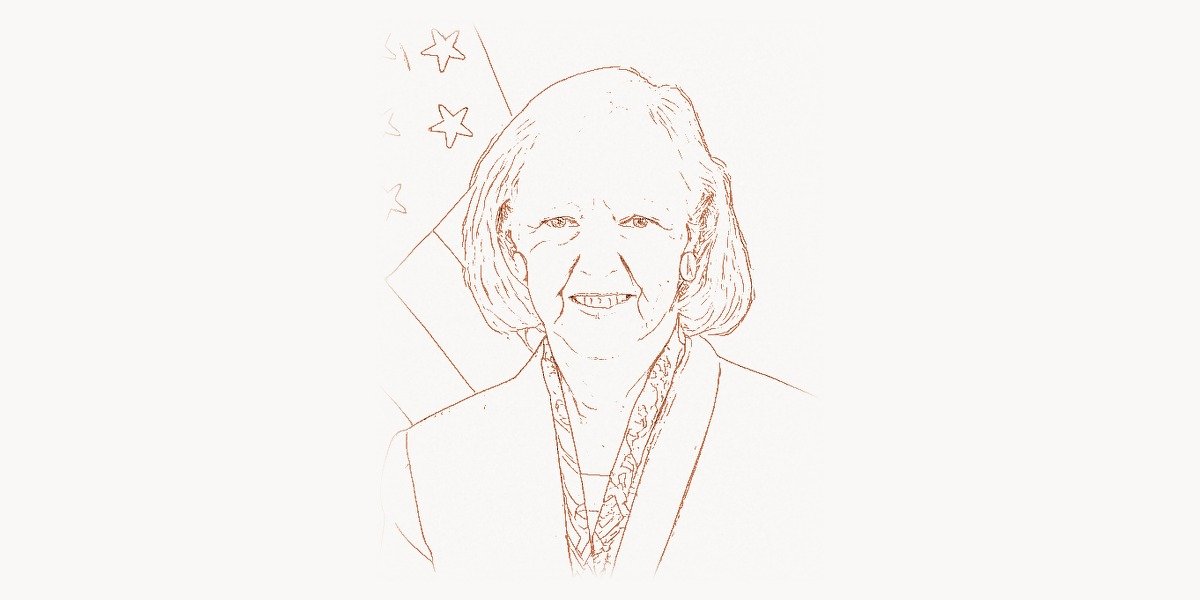
In the spring of 1998, a Princeton-educated management consultant with no technology background agreed to an interview with a small online auction company run out of a modest office in San Jose, California. The company had 30 employees, about $4.7 million in annual revenue, and a website that looked like it had been designed as an afterthought. The consultant was Meg Whitman, a former executive at Hasbro, Stride Rite, and FTD. The company was eBay. Within a decade, Whitman would transform that rudimentary auction site into a global e-commerce empire with 15,000 employees, $8 billion in annual revenue, and 233 million registered users across 39 countries. She did not write a single line of code. What she did was something arguably harder: she built the organizational, strategic, and operational infrastructure that turned a technologist’s experiment into a platform that fundamentally changed how hundreds of millions of people buy and sell goods. In doing so, she became one of the most consequential figures in the history of internet commerce — a CEO who proved that scaling a technology company requires not just engineers who can build systems, but leaders who can build organizations.
Early Life and Path to Technology
Margaret Cushing Whitman was born on August 4, 1956, in Huntington, New York, the youngest of three children. She grew up in Cold Spring Harbor on Long Island, where she developed the competitive drive and pragmatic approach that would characterize her entire career. She attended Princeton University, earning a bachelor’s degree in economics in 1977, and went on to earn her MBA from Harvard Business School in 1979.
Whitman’s pre-technology career was a masterclass in consumer brand management. She worked at Procter & Gamble, where she learned the fundamentals of brand positioning and consumer psychology. She moved to Bain & Company, the management consulting firm, where she spent eight years honing her strategic and analytical skills. She then served as senior vice president at Walt Disney, managing consumer products across Asia and Europe. She became president of Stride Rite’s footwear division, then moved to FTD as its CEO, and finally became general manager of the Playskool division at Hasbro.
Each of these roles taught her something essential for eBay: P&G taught her consumer marketing at scale, Bain taught her strategic analysis and operational discipline, Disney taught her global brand management, and Hasbro taught her how to lead a consumer-facing business through rapid change. None of them prepared her for what the internet was about to do to commerce. That education would come on the job, in real time, at a pace that would have overwhelmed a less adaptable leader.
The eBay Transformation: Building a Global Marketplace
From Auction Site to E-Commerce Platform
When Whitman joined eBay as CEO in March 1998, the company was the creation of Pierre Omidyar, who had launched it in 1995 as a side project built on the then-radical idea that strangers on the internet could trust each other enough to exchange goods and money. The site worked — people were buying and selling everything from Pez dispensers to used electronics — but it was essentially a one-feature product: an online auction. The technology was fragile, the user experience was primitive, and the business model depended entirely on listing fees and final value fees.
Whitman recognized immediately that eBay’s real asset was not its auction technology but its community. Millions of people were using the platform not just to buy cheap goods but to connect with other collectors, hobbyists, and small-business owners. The feedback system — where buyers and sellers rated each other — had created a rudimentary but functional trust infrastructure. This was the foundation Whitman would build upon for the next decade.
Her first strategic decisions were deceptively simple but architecturally significant. She invested heavily in site reliability and performance. She introduced fixed-price listings alongside auctions, recognizing that many buyers did not want to wait days to find out if they had won an item. She expanded the category structure from a handful of broad groups to thousands of specific subcategories. She professionalized the seller experience by introducing tools for inventory management, shipping integration, and sales analytics — turning casual sellers into professional merchants.
# eBay Marketplace Scaling Architecture (conceptual model, circa 2002-2005)
# Under Whitman's leadership, eBay evolved from a monolithic
# application to a distributed platform handling 1+ billion
# page views per day

class MarketplacePlatform:
    """
    eBay's architecture during the Whitman era prioritized
    three things: trust, availability, and scale.
    """
    def __init__(self):
        self.search_index = SearchCluster(
            shards=256,           # Distributed search across hundreds of nodes
            replication_factor=3, # Triple redundancy for availability
            index_latency_ms=500  # Near real-time indexing of new listings
        )
        self.trust_engine = FeedbackSystem(
            # Whitman expanded ratings from simple +1/-1 to
            # detailed seller ratings (DSR) across 4 dimensions
            rating_dimensions=4,
            fraud_detection=True,
            buyer_protection=True  # Added PayPal buyer protection (2002)
        )
        self.listing_service = ListingEngine(
            formats=["auction", "fixed_price", "best_offer", "classified"],
            categories=50000,      # Grew from ~100 to 50,000+
            item_specifics=True,   # Structured data for better search
            max_photos=12
        )

    def process_transaction(self, buyer, seller, item, price):
        """
        Transaction flow that handled $52B in gross merchandise
        volume (GMV) by 2005 — Whitman's operational masterpiece.
        """
        # 1. Verify trust scores for both parties
        seller_trust = self.trust_engine.evaluate(seller)
        if seller_trust.risk_score > THRESHOLD:
            return TransactionResult(status="HELD", reason="seller_review")

        # 2. Process payment through PayPal (acquired 2002, $1.5B)
        payment = PayPalGateway.process(
            amount=price,
            buyer_account=buyer.paypal_id,
            seller_account=seller.paypal_id,
            buyer_protection=True
        )

        # 3. Trigger post-sale workflow
        self.notification_service.send(buyer, "purchase_confirmation")
        self.notification_service.send(seller, "sale_notification")
        self.shipping_service.generate_label(seller, buyer, item)
        return TransactionResult(status="COMPLETED", transaction_id=payment.id)

# Global Expansion under Whitman (2000-2007)
REGIONAL_DEPLOYMENTS = {
    "us":  {"dc": "san-jose",   "launched": 1995, "gmv_peak": "$24B"},
    "uk":  {"dc": "london",     "launched": 1999, "gmv_peak": "$8B"},
    "de":  {"dc": "frankfurt",  "launched": 1999, "gmv_peak": "$6B"},
    "cn":  {"dc": "shanghai",   "launched": 2002, "gmv_peak": "$0.1B"},
}
The PayPal Acquisition and Strategic Vision
Perhaps Whitman’s most consequential strategic decision was the acquisition of PayPal in October 2002 for $1.5 billion. At the time, it was controversial — eBay already had its own payment system called Billpoint, and many analysts questioned paying a premium for a company largely dependent on eBay’s marketplace. But Whitman understood that the payments layer was the single biggest friction point in online commerce. If eBay could own the payment experience, it could reduce transaction friction, increase buyer confidence, and capture additional revenue from every sale.
The PayPal acquisition proved to be one of the most successful in technology history. PayPal grew from processing a fraction of eBay transactions to becoming the default payment method for the entire marketplace, and eventually expanded far beyond eBay. When PayPal was spun off as an independent company in 2015, it was worth more than $46 billion — over thirty times what Whitman had paid. The strategic logic — that controlling the payment infrastructure of a marketplace creates compounding value — became a foundational principle of platform economics that influenced companies from Alibaba to Stripe.
Under Whitman’s leadership, eBay also expanded through international acquisitions including Gumtree (UK classifieds), mobile.de (German auto classifieds), and Marktplaats.nl (Netherlands). The China expansion ultimately failed against local competitor Taobao, teaching the technology industry a crucial lesson: marketplace network effects are local, not global. A dominant marketplace cannot simply transplant its model without deep cultural adaptation.
Scaling Operations and Leadership Philosophy
Whitman’s approach to scaling eBay was distinctive. While many tech CEOs focused on product innovation, Whitman focused on operational excellence and organizational discipline. She organized eBay around category-based business units, each responsible for its own P&L — electronics sellers had different needs than collectibles sellers.
Her emphasis on metrics and data-driven decision-making was ahead of its time. She instituted rigorous measurement of key marketplace health metrics: gross merchandise volume, take rate, buyer-to-seller ratio, listing conversion rates, and Net Promoter Score. These metrics were reviewed weekly at the executive level. Every strategic initiative had to be justified with data and measured against clearly defined outcomes.
Whitman also understood community management at scale. She hosted community forums, attended seller conferences personally, and created the eBay University program to train sellers. When policy changes were needed, she communicated directly with the community and incorporated feedback. This approach to stakeholder management in a two-sided marketplace — prioritizing culture and community as a competitive moat, much as Tony Hsieh would later do at Zappos — influenced how future companies from Airbnb to Uber managed their supply-side communities.
Whitman took eBay public in September 1998, just six months after joining. The IPO was one of the most successful of the dot-com era: shares priced at $18 closed the first day at $53.50. What made eBay unusual among dot-com companies was its profitability. The marketplace model — facilitating transactions without holding inventory — was inherently capital-efficient.
HP and Beyond: The Second Act
After leaving eBay in 2008, Whitman entered politics, running for Governor of California in 2010. She spent approximately $144 million of her own money on the campaign but lost to Jerry Brown. In September 2011, HP’s board recruited Whitman as CEO to replace the controversial Leo Apotheker. HP was in crisis: the disastrous $11.1 billion Autonomy acquisition (later written down by $8.8 billion), declining competitiveness against rivals in the semiconductor and cloud infrastructure spaces, and demoralized culture after four CEOs in seven years.
Whitman focused on operational stabilization: cutting costs, restructuring business units, and rebuilding morale. Her most significant decision was the 2015 split of HP into HP Inc. (PCs and printers) and Hewlett Packard Enterprise (servers, storage, networking, and services). This was one of the largest corporate separations in history, involving the disentanglement of a company with over $110 billion in annual revenue. Managing this while running day-to-day operations required the kind of large-scale organizational execution Whitman had mastered at eBay.
In 2018, Whitman became CEO of Quibi, a mobile-first short-form video streaming startup founded by Jeffrey Katzenberg. Quibi launched in April 2020 with $1.75 billion in funding and shut down in December 2020 — just eight months later. The COVID-19 pandemic eliminated the on-the-go viewing use case, and the core assumption that people wanted premium short-form content separate from YouTube or TikTok proved wrong. Whitman acknowledged the product-market fit failure honestly, setting a standard for candid post-mortems in an industry prone to narrative-spinning.
In 2022, Whitman was appointed U.S. Ambassador to Kenya, bringing her business and technology expertise to one of Africa’s most vibrant startup ecosystems.
Technical Impact: The Architecture of Trust at Scale
Although Whitman was not an engineer, her strategic decisions at eBay drove profound technical consequences. The marketplace she built required solving some of the hardest distributed systems problems of the early internet era. The challenge of maintaining a consistent, real-time view of millions of concurrent auctions across a globally distributed user base drove innovations in database architecture, search indexing, and the kind of cloud-ready service-oriented architecture that became an industry standard.
// E-Commerce Platform Trust Architecture
// The reputation system Whitman expanded at eBay became the
// template for all subsequent marketplace platforms:
// Airbnb, Uber, Etsy, and hundreds more.

interface SellerReputation {
  // Whitman introduced Detailed Seller Ratings (DSR) in 2007
  overallScore: number;          // 0-100 aggregate
  itemAsDescribed: number;       // 1-5 star average
  communication: number;         // 1-5 star average
  shippingTime: number;          // 1-5 star average
  shippingCost: number;          // 1-5 star average
  positivePercentage: number;    // "99.8% positive" — industry standard
  powerseller: boolean;          // Volume tier (introduced 1999)
  topRated: boolean;             // Quality tier (introduced 2010)
}

interface MarketplaceHealthMetrics {
  // The metrics framework Whitman used to manage eBay
  // became the standard playbook for marketplace businesses

  // Supply-side
  activeListings: number;
  sellThroughRate: number;       // % listings resulting in sale
  sellerRetention90Day: number;

  // Demand-side
  activeUsers: number;
  searchToViewRate: number;      // Search relevance
  viewToPurchaseRate: number;    // Conversion
  repeatPurchaseRate: number;

  // Platform economics
  grossMerchandiseVolume: number;
  takeRate: number;              // Revenue as % of GMV
  paymentAttachRate: number;     // % through PayPal
  crossBorderTradePercent: number;

  // Trust and safety
  fraudRate: number;             // Target: below 0.1%
  disputeResolutionTimeHours: number;
}

// Whitman's insight: marketplace health is a SYSTEM property.
// No single metric captures it. This systems-thinking approach
// became standard at every major marketplace company.
Legacy and Modern Relevance
Meg Whitman’s impact extends far beyond the specific companies she led. She demonstrated that scaling a technology platform is as much an organizational challenge as a technical one. The marketplace business model she perfected at eBay — two-sided platforms, trust-based transactions between strangers, community-driven network effects, and payment infrastructure as competitive advantage — became the template for an entire generation of platform companies. Every ride-sharing app, home-sharing marketplace, and freelance platform owes something to the patterns Whitman established.
Her career demonstrated the value of bringing non-technical leadership to technology companies. In an industry that often fetishizes engineering prowess, Whitman showed that consumer marketing, strategic planning, operational discipline, and organizational management are equally essential for building lasting technology businesses. She brought the rigor of Procter & Gamble and the strategic frameworks of Bain to Silicon Valley, influencing how companies from Shopify to Netflix think about scaling operations.
The PayPal acquisition alone would secure Whitman’s place in technology history. Her recognition that payment infrastructure was the key leverage point in marketplace economics anticipated the fintech revolution by more than a decade. Every integrated payment platform — from Apple Pay to the payment systems embedded in modern business management tools — exists in a lineage tracing back to Whitman’s decision to acquire PayPal.
Most significantly, Whitman proved that marketplace businesses can be both enormously profitable and genuinely useful. Under her leadership, eBay enabled millions of people to start small businesses and participate in a global economy previously accessible only to large retailers. The democratization of commerce that eBay achieved under Whitman was one of the internet’s most transformative early promises — and one of its most fully realized.
Key Facts
- Born: August 4, 1956, Huntington, New York, United States
- Education: B.A. Economics, Princeton University (1977); MBA, Harvard Business School (1979)
- Known for: Scaling eBay from 30 employees to 15,000 and from $4.7M to $8B in revenue; HP split into HP Inc. and Hewlett Packard Enterprise
- Key roles: CEO of eBay (1998–2008), CEO of HP/HPE (2011–2018), CEO of Quibi (2018–2020), U.S. Ambassador to Kenya (2022–2025)
- Major acquisitions: PayPal ($1.5B, 2002), Skype ($2.6B, 2005), StubHub ($310M, 2007)
- Net worth: Approximately $5 billion (as of 2025)
- Recognition: Forbes Most Powerful Women list, Fortune 50 Most Powerful Women in Business (multiple years)
Frequently Asked Questions
What did Meg Whitman do at eBay?
Meg Whitman served as CEO of eBay from 1998 to 2008, transforming the company from a small online auction site with 30 employees and $4.7 million in revenue into a global e-commerce platform with 15,000 employees, $8 billion in annual revenue, and 233 million registered users across 39 countries. She introduced fixed-price listings, expanded categories, acquired PayPal for $1.5 billion, and built the operational infrastructure that made eBay one of the most successful internet companies of the early 2000s.
Why was the PayPal acquisition so important?
The PayPal acquisition in 2002 solved the fundamental payments problem in online commerce. Before PayPal, buyers and sellers relied on checks, money orders, and direct credit card transactions — all slow, insecure, or unavailable to many users. By integrating PayPal into eBay’s checkout, Whitman reduced transaction friction, increased buyer confidence through purchase protection, and captured additional revenue. PayPal eventually grew far beyond eBay and was spun off in 2015 with a market capitalization exceeding $46 billion — over thirty times the original acquisition price.
What happened at HP under Meg Whitman?
Whitman became HP’s CEO in September 2011 when the company was in crisis after the disastrous Autonomy acquisition, declining PC sales, and four CEOs in seven years. She stabilized operations, restructured business units, and orchestrated the 2015 split into HP Inc. (PCs and printers) and Hewlett Packard Enterprise (servers, storage, networking). This was one of the largest corporate separations in history and allowed each company to compete more effectively in its respective market.
Why did Quibi fail?
Quibi, a mobile-first short-form streaming service, launched in April 2020 with $1.75 billion in funding and shut down in December 2020. The primary causes were a fundamental misread of consumer behavior — the assumption that people wanted premium short-form content separate from YouTube and TikTok — and catastrophic timing, as the COVID-19 pandemic eliminated the on-the-go mobile viewing use case the product was designed for.
What is Meg Whitman’s lasting impact on the technology industry?
Whitman established the operational playbook for scaling two-sided marketplace businesses — community management, trust infrastructure, payment integration, and metrics-driven management — that became the template for Airbnb, Uber, Etsy, Shopify, and dozens more. Her PayPal acquisition anticipated the fintech revolution. She proved that non-technical leaders can be extraordinarily effective at scaling technology companies, bringing management discipline from consumer goods and consulting to Silicon Valley when the industry needed operational maturity most.