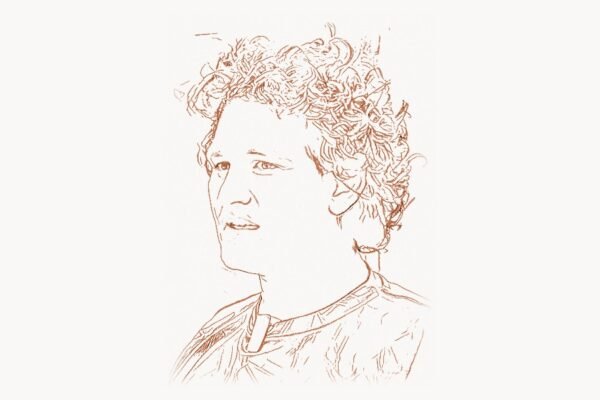
In 2014, when Michael Stonebraker received the ACM Turing Award — computing’s highest honor — the citation praised him for “fundamental contributions to the concepts and practices underlying modern database systems.” It was an elegant understatement. Stonebraker had not merely contributed to database systems. Over four decades, he had invented, reinvented, and then reinvented again the very idea of what a database could be. He created Ingres, one of the first relational databases, which proved that Edgar F. Codd’s theoretical model could actually work in practice. Then, dissatisfied with the limitations of relational systems, he created Postgres, which introduced object-relational concepts, extensible type systems, and crash recovery mechanisms that became the foundation of PostgreSQL — arguably the most important open-source database in the world today. But Stonebraker did not stop there. He went on to build column-store databases (C-Store, which became Vertica), in-memory OLTP engines (VoltDB), streaming systems (Aurora/StreamBase), and science-oriented array databases (SciDB). Each project challenged the industry’s assumption that one database architecture could serve all purposes. Each spawned a company. And each forced the rest of the database world to reconsider what it thought it knew. No single person has done more to shape how the world stores, queries, and reasons about data.
Early Life and Education
Michael Ralph Stonebraker was born on October 11, 1943, in Newburyport, Massachusetts. He grew up in a middle-class New England household where education was valued but technology was not yet a career path anyone could imagine. Stonebraker attended Princeton University, earning his bachelor’s degree in electrical engineering in 1965. He then moved to the University of Michigan, where he completed his master’s degree in 1967 and his Ph.D. in 1971, both in electrical engineering and computer science.
His doctoral work did not focus on databases — the field barely existed yet. But when Stonebraker joined the faculty at the University of California, Berkeley, in 1971, he encountered Edgar F. Codd’s landmark 1970 paper, “A Relational Model of Data for Large Shared Data Banks.” Codd, working at IBM Research, had proposed that data should be organized in tables (relations) and queried using a high-level declarative language, rather than navigated through hierarchical or network structures as was the practice at the time. The paper was revolutionary in concept but purely theoretical. No one had built a working relational database system. IBM was developing System R as a research prototype, but it was a closed corporate project. Stonebraker saw an opportunity — and a challenge — that would define his entire career.
The Relational Database Breakthrough
Technical Innovation
In 1973, Stonebraker and his colleague Eugene Wong launched the Ingres project at Berkeley. The goal was ambitious: build a complete, working relational database management system from scratch, in an academic setting, and prove that Codd’s relational model was not just mathematically elegant but practically viable. The project ran from 1973 to 1982 and became one of the most influential database research efforts in history.
Ingres implemented the relational model with a query language called QUEL (Query Language), which was an alternative to IBM’s SQL. QUEL was based on tuple relational calculus and had a cleaner, more orthogonal design than SQL. While SQL ultimately won the standards battle — largely due to IBM’s commercial influence — many database researchers still regard QUEL as the technically superior language. The debate over query language design echoed a broader tension in computing between mathematical purity and industrial pragmatism.
The Ingres team tackled fundamental problems that no one had solved before in a relational context. They developed query optimization techniques, including the use of cost-based optimization where the system estimates the cost of different execution plans and chooses the cheapest one. They implemented access methods including B-tree indexes and hash-based structures. They built a buffer manager, a lock manager, and a recovery subsystem — all the components that Jim Gray was simultaneously formalizing as the theoretical foundations of transaction processing at IBM. Where Gray provided the theory of reliable transactions, Stonebraker provided a working system that embodied those principles.
Critically, Ingres was developed and distributed under a BSD license — open-source before the term existed. Berkeley distributed the source code freely, and it was adopted and modified by organizations around the world. The Ingres codebase directly spawned several commercial database products: Ingres Corporation (later acquired by Computer Associates), Sybase, NonStop SQL (at Tandem), and Britton-Lee’s database machine. It also deeply influenced the design of Microsoft SQL Server (which began as a Sybase port) and Informix. Through these descendants, Stonebraker’s Berkeley project shaped the entire commercial database industry.
-- The evolution from Stonebraker's QUEL (Ingres) to SQL (Postgres)
-- shows how database query languages matured

-- QUEL syntax (Ingres, 1970s):
-- RANGE OF e IS employees
-- RETRIEVE (e.name, e.salary)
-- WHERE e.department = "Engineering"
--   AND e.salary > 50000

-- The same query in modern PostgreSQL:
SELECT name, salary
FROM employees
WHERE department = 'Engineering'
  AND salary > 50000;

-- Stonebraker's PostgreSQL introduced extensibility:
-- Users can define custom types, operators, and index methods.
-- This was revolutionary — no other database allowed this.

CREATE TYPE rgb_color AS (
    red   INTEGER,
    green INTEGER,
    blue  INTEGER
);

CREATE FUNCTION color_distance(rgb_color, rgb_color)
RETURNS FLOAT AS $$
    SELECT SQRT(
        POWER(($1).red - ($2).red, 2) +
        POWER(($1).green - ($2).green, 2) +
        POWER(($1).blue - ($2).blue, 2)
    );
$$ LANGUAGE SQL IMMUTABLE;

-- This kind of extensibility is why PostgreSQL
-- now powers everything from geospatial (PostGIS)
-- to AI vector search (pgvector)
Why It Mattered
Before Ingres and IBM’s System R, interacting with a database meant writing procedural navigation code — walking through hierarchical pointers, traversing network links, and managing physical storage details in application programs. If the database schema changed, every application had to be rewritten. Codd’s relational model promised to free programmers from this burden by providing a declarative query interface: you describe what data you want, and the database figures out how to retrieve it. But until Ingres and System R proved the concept, many industry practitioners dismissed relational databases as impractical academic toys that could never match the performance of navigational systems.
Stonebraker’s Ingres shattered that skepticism. By the early 1980s, Ingres was running real workloads at real institutions, and the commercial products it spawned were competing head-to-head with IBM’s hierarchical IMS and network-model databases. The relational revolution that followed — the rise of Oracle, DB2, SQL Server, Sybase, Informix, and eventually PostgreSQL and MySQL — can be traced directly to the twin proofs-of-concept provided by Ingres at Berkeley and System R at IBM. Stonebraker was one of the two principal architects of that revolution.
The impact on the software industry was transformative. Relational databases enabled a new generation of enterprise applications — ERP systems, CRM platforms, financial trading systems, reservation systems — that could be built faster and maintained more easily because the database handled the complexity of data management. The entire modern web stack, from e-commerce platforms built by agencies like Toimi to project management tools, rests on the relational foundation that Stonebraker helped build.
Other Major Contributions
What sets Stonebraker apart from other database pioneers is not just the significance of Ingres but the sheer number of major systems he created afterward. Most researchers or engineers would consider Ingres a career-defining achievement. For Stonebraker, it was merely the first act.
Postgres (1986-1994) was Stonebraker’s response to the limitations he himself had discovered in relational databases. After a decade of working with Ingres, he recognized that the pure relational model could not handle the data types and operations required by many real-world applications: geographic information systems, multimedia content, time-series data, complex scientific measurements. The relational model dealt only with simple scalar values — numbers, strings, dates — organized in flat tables. Stonebraker wanted a system that could handle arbitrary complex data types while retaining the benefits of relational querying.
The result was Postgres (a play on “post-Ingres”), which introduced the object-relational model. Postgres allowed users to define new data types, new operators, new index access methods, and new aggregate functions — extending the database engine itself without modifying its source code. It supported complex objects, table inheritance (where one table could inherit columns and constraints from another), and rules (server-side triggers that could intercept and modify queries). It also introduced a novel crash recovery mechanism based on a no-overwrite storage model, where old versions of data were retained rather than overwritten, enabling time-travel queries that could read the database as it existed at any past point in time.
After Stonebraker moved on to other projects, Berkeley graduate students Andrew Yu and Jolly Chen replaced the original POSTQUEL query language with SQL and renamed the project Postgres95, then PostgreSQL. It grew into one of the most sophisticated and widely used database systems in the world. As of 2025, PostgreSQL powers critical infrastructure at companies including Apple, Instagram, Spotify, Reddit, and the U.S. Federal Aviation Administration. It has become the default choice for new applications that need a reliable, feature-rich relational database — a direct legacy of Stonebraker’s design decisions in the late 1980s.
Mariposa (1990s) explored distributed query processing across wide-area networks, where different database fragments might be owned by different organizations with different cost structures. The system used economic bidding mechanisms to allocate query processing resources — a remarkably prescient approach that anticipated the economics of cloud computing by two decades.
Aurora and StreamBase (2000s) tackled the problem of real-time data streams. Traditional databases store data and then query it. But many applications — financial trading, network monitoring, sensor data processing — need to process data as it arrives, in real time, without storing it first. Stonebraker’s Aurora project (later commercialized as StreamBase, acquired by TIBCO) was one of the first stream processing engines and laid the groundwork for modern systems like Apache Kafka Streams and Apache Flink.
C-Store (2005) and Vertica addressed the growing chasm between transactional and analytical workloads. Traditional row-store databases (which store entire rows together on disk) are optimized for transactional operations that read or write complete records. But analytical queries — which often scan a single column across millions or billions of rows — are catastrophically slow on row stores because they must read vast amounts of irrelevant data. Stonebraker’s C-Store research project pioneered the column-store architecture, where each column is stored separately and compressed aggressively. The commercial version, Vertica (acquired by Hewlett-Packard for a reported $350 million in 2011), became a major player in the data warehouse market. Column-store ideas from C-Store influenced virtually every modern analytical database, including Amazon Redshift, Google BigQuery, and ClickHouse.
H-Store and VoltDB (2007-present) attacked the opposite end of the performance spectrum: how to build a database that is extremely fast for transactional workloads. Stonebraker argued that traditional database systems waste enormous amounts of time on overhead — buffer management, lock management, write-ahead logging, multi-threading coordination — that is unnecessary if the entire database fits in main memory. H-Store, the research prototype, eliminated these overheads by partitioning data across cores, running single-threaded on each partition, and keeping everything in RAM. VoltDB, the commercial product, achieved transaction throughput orders of magnitude higher than traditional systems. The ideas from H-Store influenced the design of in-memory database engines at SAP (HANA), MemSQL (now SingleStore), and others.
SciDB (2008-present) was Stonebraker’s entry into scientific computing. Recognizing that scientific data — satellite imagery, genomic sequences, climate simulation outputs, astronomical survey data — is naturally multidimensional and does not fit well into the relational row-and-column model, he created an array database optimized for operations on dense and sparse multidimensional arrays. SciDB was designed for the kind of data-intensive science that Jeff Dean’s MapReduce had shown could be processed at massive scale, but with a focus on the specific needs of scientific workflows rather than general-purpose batch processing.
Tamr (2013-present) addressed a problem that plagues virtually every large organization: data integration. When an enterprise has thousands of data sources — spreadsheets, databases, APIs, files — that describe the same real-world entities with different schemas, different naming conventions, and different levels of quality, merging them into a coherent, unified dataset is extraordinarily difficult. Tamr used machine learning combined with human-in-the-loop workflows to automate this data unification process. It was Stonebraker’s recognition that the database industry’s next great challenge was not faster querying or more efficient storage but making sense of the messy, heterogeneous data that organizations actually possess.
Philosophy and Approach
Key Principles
Stonebraker’s career is built on a set of convictions that he has articulated clearly and defended with characteristic bluntness in papers, talks, and debates:
“One size does not fit all.” This is Stonebraker’s most famous and most consequential argument. For decades, the database industry was dominated by general-purpose relational database management systems — Oracle, DB2, SQL Server — that claimed to handle every workload adequately. Stonebraker argued, with data and benchmarks to support his case, that a single database architecture cannot be optimal for transactional processing, analytical queries, streaming data, scientific arrays, and graph analysis simultaneously. The overhead required to support all use cases makes the system suboptimal for any specific one. Instead, he advocated for specialized database engines, each designed from the ground up for a particular workload. This thesis drove his creation of Vertica (analytics), VoltDB (transactions), StreamBase (streams), and SciDB (science). The modern database landscape — with its proliferation of specialized systems — has largely validated Stonebraker’s position.
Start from scratch. Unlike many engineers who prefer to evolve existing systems incrementally, Stonebraker repeatedly chose to discard his previous work and begin fresh. He built Ingres, then abandoned it to build Postgres from a blank page. He then moved on to build entirely new systems for columns, streams, memory, and arrays. He has argued that legacy code and backward-compatibility constraints prevent truly innovative designs, and that the only way to achieve a major architectural advance is to begin with a clean sheet of paper. This willingness to abandon successful systems takes intellectual courage — and it is one reason Stonebraker has produced so many genuinely novel designs rather than incremental improvements. It echoes the approach of other system builders like Alan Kay, who similarly believed that radical new ideas require radical new implementations.
The professor-entrepreneur model. Stonebraker has founded or co-founded more than a dozen companies based on his research, including Ingres Corporation, Illustra (object-relational, acquired by Informix), Cohera, StreamBase (acquired by TIBCO), Vertica (acquired by HP), VoltDB, Tamr, and Paradigm4. He pioneered the model — now common in Silicon Valley — of university research leading directly to startup companies. Each company took a research prototype and turned it into a commercial product, providing both validation of the research ideas and funding for future academic work. This cycle of research-to-startup-to-acquisition has generated billions of dollars in economic value and has made Stonebraker one of the most commercially successful academics in computer science history.
Benchmarks and empirical evidence. Stonebraker is famously confrontational in database debates, but his arguments are always grounded in measured performance. He insists on benchmarks, head-to-head comparisons, and quantitative evidence. When he claims that column stores outperform row stores for analytical queries by orders of magnitude, he provides the benchmark results. When he argues that in-memory databases eliminate unnecessary overhead, he shows the profiling data. This empirical rigor — reminiscent of the careful measurement that characterized Donald Knuth’s approach to algorithm analysis — gives Stonebraker’s provocative claims a foundation that is difficult to dismiss.
Teach by building. As a professor at Berkeley (1971-2000) and then MIT (2001-present), Stonebraker has always believed that the best way to advance database knowledge is to build complete working systems, not just publish papers. Every major idea in his career has been implemented in a real, running system that handles real queries on real data. This insistence on building — rather than merely theorizing — is what distinguishes Stonebraker’s contributions from those of many other database researchers. It also produced extraordinary educational outcomes: dozens of Stonebraker’s students went on to become leaders in the database field, carrying his build-first philosophy into companies and universities around the world. Managing research teams and graduate students across such ambitious system-building projects demands disciplined task coordination, a challenge that modern platforms like Taskee are designed to address.
-- Stonebraker's "one size does not fit all" in action:
-- The same analytical query runs very differently
-- on a row-store vs. a column-store database

-- Row-store (traditional PostgreSQL):
-- Must read entire rows, even though we only need 2 columns.
-- For a table with 50 columns and 1 billion rows,
-- this reads ~50x more data than necessary.

EXPLAIN ANALYZE
SELECT region, SUM(revenue)
FROM sales
WHERE sale_date BETWEEN '2024-01-01' AND '2024-12-31'
GROUP BY region;
-- Row-store: Sequential Scan, reads all columns from disk
-- Time: ~45 seconds on 1B rows (hypothetical)

-- Column-store (Vertica, inspired by C-Store):
-- Reads ONLY the 3 columns needed (region, revenue, sale_date).
-- Each column is stored separately and compressed.
-- Compression ratios of 10:1 are common for sorted columns.

-- Same query on Vertica:
-- Reads ~1/50th of the data, decompresses in CPU cache
-- Time: ~0.8 seconds on 1B rows (hypothetical)

-- This is why Stonebraker argued that a general-purpose
-- row-store database is the wrong tool for analytics.
-- The architecture must match the workload.
Legacy and Impact
Stonebraker’s influence on modern computing is visible in every interaction with a database — which is to say, in virtually every interaction with a computer. When you query a PostgreSQL database (used by hundreds of thousands of organizations worldwide), you are running Stonebraker’s code or its direct descendants. When you run an analytical query on a column-store database like Amazon Redshift or Vertica, you are using an architecture Stonebraker pioneered. When you process a real-time data stream with Apache Flink, you are building on concepts Stonebraker explored with Aurora and StreamBase. When you encounter a specialized database optimized for a particular workload — a graph database, a time-series database, a vector database — you are living in the “one size does not fit all” world that Stonebraker predicted and advocated.
The numbers tell a compelling story. PostgreSQL is used by an estimated 800,000 companies worldwide. Vertica processes petabytes of data for some of the world’s largest enterprises. VoltDB handles millions of transactions per second for telecommunications and financial services companies. The commercial enterprises Stonebraker founded or co-founded have generated collective valuations in the billions of dollars. But the deeper impact is architectural: Stonebraker fundamentally changed how the industry thinks about database design.
Before Stonebraker, the database world was converging on a single paradigm: the general-purpose relational database. After Stonebraker, the world recognized that different data problems require different data solutions. This insight — simple in retrospect, radical when first proposed — restructured a multi-billion-dollar industry. It created intellectual space for the NoSQL movement, the NewSQL movement, and the current explosion of specialized data systems. And it all traces back to a professor at Berkeley who looked at the database he had built, decided it was not good enough, and started over.
Stonebraker’s 2014 Turing Award recognized not just a single achievement but a lifetime of relentless innovation. David Patterson, himself a Turing Award winner for RISC architecture, called Stonebraker the most influential database researcher of his generation. That assessment is difficult to dispute. From Ingres to Postgres to Vertica to VoltDB to Tamr, Stonebraker built the systems that built the modern data infrastructure. And at over 80 years old, he continues to push the boundaries of what databases can do.
In an era when deep learning and AI systems generate headlines daily, it is worth remembering that all of those systems depend on databases to store their training data, their model parameters, their inference results, and their user interactions. The AI revolution runs on data, and data runs on the infrastructure that Michael Stonebraker spent his life building.
Key Facts
- Full name: Michael Ralph Stonebraker
- Born: October 11, 1943, Newburyport, Massachusetts, USA
- Education: B.S.E. Electrical Engineering (Princeton, 1965), M.S. and Ph.D. (University of Michigan, 1967 and 1971)
- Major positions: Professor at UC Berkeley (1971-2000), Adjunct Professor at MIT (2001-present)
- Key creations: Ingres, Postgres/PostgreSQL, C-Store/Vertica, H-Store/VoltDB, Aurora/StreamBase, SciDB, Tamr
- Awards: ACM Turing Award (2014), ACM SIGMOD Edgar F. Codd Innovations Award (1988), IEEE John von Neumann Medal (2005), ACM Software System Award (1988 for Ingres, 2015 for PostgreSQL)
- Companies founded/co-founded: 12+, including Ingres Corp., Illustra, Cohera, StreamBase, Vertica, VoltDB, Tamr, Paradigm4
- Famous thesis: “One size does not fit all” — specialized databases outperform general-purpose systems for specific workloads
- PostgreSQL impact: Used by an estimated 800,000+ companies worldwide, including Apple, Spotify, Instagram, Reddit, and the FAA
Frequently Asked Questions
What is the relationship between Postgres and PostgreSQL?
Postgres was the research database system created by Michael Stonebraker and his students at UC Berkeley from 1986 to 1994. It used a custom query language called POSTQUEL. After Stonebraker moved on to other projects, Berkeley graduate students Andrew Yu and Jolly Chen replaced POSTQUEL with SQL support and renamed the project Postgres95. In 1996, the project was renamed PostgreSQL to reflect its SQL capability, and it became a community-driven open-source project. Today’s PostgreSQL retains many of Stonebraker’s core design decisions — extensible type systems, table inheritance, rule-based query rewriting — while having been massively improved in performance, reliability, and features by the global open-source community over three decades of continuous development.
Why did Stonebraker win the Turing Award?
Stonebraker received the 2014 ACM Turing Award for “fundamental contributions to the concepts and practices underlying modern database systems.” The award recognized not a single invention but a career-spanning body of work that repeatedly reshaped the database field. Specifically, the ACM cited his creation of Ingres (which proved the viability of relational databases), Postgres (which introduced object-relational extensibility), and his subsequent systems including C-Store/Vertica, H-Store/VoltDB, and others. The Turing Award committee noted that Stonebraker’s systems and ideas had influenced virtually every modern database product and that his “one size does not fit all” thesis had fundamentally changed how the industry approaches database architecture.
What does “one size does not fit all” mean in database design?
Stonebraker’s “one size does not fit all” thesis argues that a single, general-purpose database engine cannot be optimal for all types of workloads. A database optimized for high-volume online transaction processing (OLTP) — with many small, fast read-write operations — requires a very different architecture than one optimized for online analytical processing (OLAP) — with fewer but much larger read-only queries scanning billions of rows. Similarly, stream processing, graph traversal, time-series analysis, and scientific array computation each have unique access patterns that benefit from specialized architectures. Stonebraker demonstrated this empirically by building specialized systems (Vertica for analytics, VoltDB for transactions, StreamBase for streams, SciDB for science) that outperformed general-purpose databases by significant margins on their target workloads. This thesis helped legitimize the modern ecosystem of specialized databases and influenced the rise of both the NoSQL and NewSQL movements.
How did Stonebraker’s work relate to Jim Gray’s contributions?
Stonebraker and Jim Gray were contemporaries who tackled complementary aspects of the database challenge. Gray focused on making databases reliable — his work on transactions, ACID properties, write-ahead logging, and the two-phase commit protocol ensured that databases would not lose or corrupt data. Stonebraker focused on making databases capable and diverse — his work on query processing, extensible type systems, column stores, and specialized architectures expanded what databases could do and how fast they could do it. Together, their contributions form the twin pillars of modern database technology: reliability (Gray) and capability (Stonebraker). Both received the Turing Award — Gray in 1998, Stonebraker in 2014 — and their combined influence touches every database system in existence today.