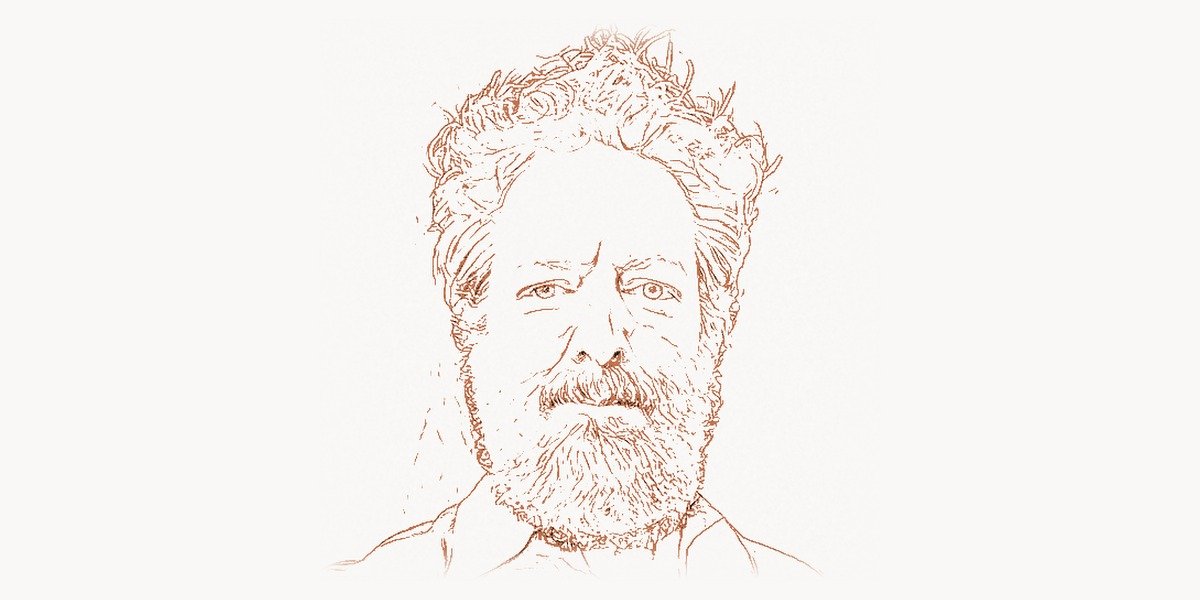
In the early 2000s, ESPN.com was one of the most heavily trafficked websites on the internet — and one of the most bloated. Built on a labyrinth of nested tables, spacer GIFs, and inline styles, it groaned under the weight of legacy markup that made every redesign a Herculean effort. Then Mike Davidson stepped in and did something nobody thought possible: he rebuilt the entire front end of ESPN.com using web standards, CSS-based layouts, and semantic HTML — live, in production, for millions of daily visitors. That single project became a landmark moment in web development history, proving that standards-based design was not just an idealistic dream but a practical, scalable reality for the biggest sites on the planet.
Davidson went on to shape digital design at some of the most influential companies in technology, including a pivotal stint as VP of Design at Twitter during one of its most transformative periods. His career sits at the rare intersection of hands-on technical expertise and executive design leadership, making him one of the most consequential figures in the evolution of the modern web.
Early Career and the Path to ESPN
Mike Davidson studied at the University of Wisconsin–Madison, where he developed a deep appreciation for both visual design and the technical mechanics of building for the web. Unlike many designers of his generation who treated HTML and CSS as someone else’s problem, Davidson embraced the full stack of front-end development. He understood that great design was inseparable from great implementation — a principle that would define his entire career.
Before ESPN, Davidson worked on several web projects that sharpened his skills in balancing aesthetics with performance. The late 1990s web was a chaotic frontier: browser wars between Netscape and Internet Explorer created a fragmented landscape where developers routinely built two separate versions of every page. Accessibility was an afterthought, semantic markup was a niche concern, and the idea of separating content from presentation felt radical.
It was precisely this environment that made the ESPN project so significant. When Davidson joined ESPN’s digital team, he inherited a codebase that exemplified everything wrong with turn-of-the-millennium web development. The site relied on table-based layouts nested sometimes eight or nine levels deep, with styling embedded directly in the HTML. Making even minor visual changes required touching dozens of templates, and page weights were enormous by the standards of the day.
The ESPN.com Redesign: A Standards-Based Revolution
The ESPN.com redesign that Davidson led between 2003 and 2004 was not merely a visual refresh — it was a philosophical transformation. The goal was to rebuild the entire front end using CSS for layout and presentation while keeping the HTML lean and semantic. This approach, championed by figures like Jeffrey Zeldman and the Web Standards Project, had been proven on smaller sites, but nobody had attempted it at ESPN’s scale.
The technical challenges were formidable. ESPN.com served millions of page views daily across dozens of sport-specific sections, each with unique layouts, scoreboards, video players, and advertising integrations. The redesign had to happen incrementally — there was no luxury of taking the site offline for a rebuild. Davidson and his team developed a migration strategy that allowed them to convert sections one at a time while maintaining backward compatibility with the existing infrastructure.
The results were dramatic. Page weights dropped significantly, load times improved across the board, and the development team found they could implement design changes in a fraction of the time previously required. The redesign demonstrated that CSS-based layouts could handle complex, high-traffic, advertising-heavy pages — a proof point that influenced countless organizations to adopt web standards.
CSS Architecture for Large-Scale Sites
One of the key innovations Davidson’s team introduced was a modular CSS architecture that anticipated many of the patterns later formalized in methodologies like BEM, OOCSS, and SMACSS. By organizing styles into reusable components rather than page-specific overrides, they created a system that could scale across ESPN’s dozens of sport sections without ballooning in complexity.
Here is an example of the kind of modular, standards-based CSS architecture that defined the ESPN approach — separating structure from skin and creating reusable component patterns:
/* Component-based CSS architecture (ESPN-era approach) */
/* Base structural module */
.mod {
  margin: 0 0 1.5em;
  padding: 0;
  border: 1px solid #d4cfc7;
  background: #ffffff;
}

.mod-header {
  padding: 0.625em 0.75em;
  background: #1c1917;
  color: #f9f8f6;
  font-family: 'Helvetica Neue', Arial, sans-serif;
  font-weight: 700;
  font-size: 0.875rem;
  text-transform: uppercase;
  letter-spacing: 0.04em;
}

.mod-body {
  padding: 0.75em;
  line-height: 1.55;
}

/* Skin variations — separate from structure */
.mod--scoreboard .mod-header {
  background: #c2724e;
  border-bottom: 3px solid #a35d3d;
}

.mod--standings .mod-body {
  padding: 0;
}

.mod--standings table {
  width: 100%;
  border-collapse: collapse;
}

.mod--standings td,
.mod--standings th {
  padding: 0.5em 0.75em;
  text-align: left;
  border-bottom: 1px solid #e7e5e4;
  font-size: 0.8125rem;
}

/* Layout grid using floats (pre-flexbox era) */
.layout-primary {
  float: left;
  width: 65%;
  padding-right: 1.25em;
}

.layout-sidebar {
  float: right;
  width: 33%;
}

.layout-full::after {
  content: "";
  display: table;
  clear: both;
}
This separation of structural patterns from visual skins was revolutionary for its time. It meant that a developer could create a new sport section by combining existing modules with new skin classes rather than writing hundreds of lines of new CSS. The approach directly influenced the component-based thinking that now dominates front-end architecture.
From ESPN to NBC and the Rise of Video on the Web
After ESPN, Davidson took on the role of Director of Engineering at NBC Universal, where he focused on the emerging challenge of delivering video content on the web. This was the pre-YouTube era when most online video was delivered through clunky browser plugins, proprietary formats, and unreliable streaming protocols. Davidson worked on building infrastructure and interfaces that made video consumption smoother and more integrated with the overall web experience.
His time at NBC reinforced a lesson he had learned at ESPN: the best technical solutions emerge when engineers and designers work together from the very beginning of a project, not when design is handed over the wall to engineering as a finished spec. This collaborative philosophy would become a cornerstone of his leadership approach at Twitter and beyond.
VP of Design at Twitter: Scaling Design Culture
Mike Davidson joined Twitter in 2012 as VP of Design, arriving at a critical moment in the company’s evolution. Twitter was transitioning from a scrappy startup into a global platform with hundreds of millions of users, and its design organization needed to mature accordingly. Davidson was tasked with building a world-class design team and establishing the processes, tools, and culture that would allow design to operate effectively at Twitter’s scale.
One of Davidson’s most significant contributions at Twitter was championing the development of a comprehensive design system. In an era before design systems became an industry standard practice, Davidson recognized that Twitter’s rapid growth was creating inconsistency across its products. Different teams were solving the same design problems in different ways, leading to a fragmented user experience and wasted engineering effort.
The design system Davidson’s team built at Twitter established shared components, interaction patterns, and visual guidelines that could be used across the web client, mobile apps, and internal tools. This work predated and influenced the broader industry movement toward design systems that organizations like Airbnb, Google, and Shopify would later popularize. Teams using tools like those offered by Toimi for design-to-development workflow can trace the lineage of their component-based approach back to pioneers like Davidson who proved the concept at scale.
Design System Architecture at Scale
The architecture of a design system for a platform like Twitter requires careful thinking about token management, component APIs, and versioning. Here is a simplified example of how a design system token architecture might be structured — reflecting the principles Davidson championed:
/* Design System Token Architecture */
/* === Primitive Tokens (platform-agnostic) === */
:root {
  /* Color primitives */
  --color-blue-500: #1d9bf0;
  --color-blue-600: #1a8cd8;
  --color-gray-100: #eff3f4;
  --color-gray-200: #cfd9de;
  --color-gray-700: #536471;
  --color-gray-900: #0f1419;
  --color-white: #ffffff;
  --color-red-500: #f4212e;

  /* Spacing scale */
  --space-1: 0.25rem;
  --space-2: 0.5rem;
  --space-3: 0.75rem;
  --space-4: 1rem;
  --space-6: 1.5rem;
  --space-8: 2rem;

  /* Typography scale */
  --font-size-sm: 0.8125rem;
  --font-size-base: 0.9375rem;
  --font-size-lg: 1.25rem;
  --font-size-xl: 1.5rem;
  --line-height-tight: 1.25;
  --line-height-normal: 1.45;
  --border-radius-sm: 4px;
  --border-radius-full: 9999px;
}

/* === Semantic Tokens (intent-based) === */
:root {
  --color-text-primary: var(--color-gray-900);
  --color-text-secondary: var(--color-gray-700);
  --color-action-primary: var(--color-blue-500);
  --color-action-primary-hover: var(--color-blue-600);
  --color-surface-default: var(--color-white);
  --color-surface-secondary: var(--color-gray-100);
  --color-border-default: var(--color-gray-200);
  --color-danger: var(--color-red-500);
}

/* === Component Tokens === */
.btn {
  display: inline-flex;
  align-items: center;
  justify-content: center;
  gap: var(--space-2);
  padding: var(--space-2) var(--space-4);
  border-radius: var(--border-radius-full);
  font-size: var(--font-size-base);
  font-weight: 700;
  line-height: var(--line-height-tight);
  cursor: pointer;
  transition: background-color 0.15s ease;
  border: none;
}

.btn--primary {
  background: var(--color-action-primary);
  color: var(--color-white);
}

.btn--primary:hover {
  background: var(--color-action-primary-hover);
}

.btn--outline {
  background: transparent;
  border: 1px solid var(--color-border-default);
  color: var(--color-text-primary);
}

/* Dark mode via semantic token overrides */
@media (prefers-color-scheme: dark) {
  :root {
    --color-text-primary: var(--color-gray-100);
    --color-text-secondary: var(--color-gray-200);
    --color-surface-default: var(--color-gray-900);
    --color-surface-secondary: #16181c;
    --color-border-default: #2f3336;
  }
}
This three-tier token architecture — primitives, semantics, and components — allows a design system to support theming, dark mode, and brand evolution without rewriting component styles. It is exactly the kind of systematic thinking that Davidson brought to Twitter’s design infrastructure.
Web Standards Advocacy and Industry Influence
Throughout his career, Davidson has been one of the most articulate voices for web standards adoption. His blog, which he maintained actively during the ESPN and post-ESPN years, became an essential resource for web developers navigating the transition from table-based layouts to CSS-driven design. His writing combined practical code examples with persuasive arguments for why standards mattered — not just philosophically, but in terms of performance, maintainability, and business outcomes.
Davidson was a regular speaker at conferences like An Event Apart and SXSW, where he shared case studies from ESPN and Twitter that demonstrated the real-world benefits of standards-based development. His talks were notable for their lack of dogmatism — unlike some standards advocates who treated non-standard code as a moral failing, Davidson focused on pragmatic benefits and acknowledged the genuine constraints that led teams to cut corners.
This pragmatic approach to web standards connects Davidson to a broader lineage of influential figures who shaped how we build for the web. His work on semantic HTML and accessible markup aligns with the principles advanced by Jakob Nielsen in usability, while his design system work at Twitter parallels the systematic design thinking of Don Norman. The visual craft Davidson brought to large-scale web projects also echoes the pixel-level precision pioneered by Susan Kare in a different medium.
Design Leadership Philosophy
Davidson is known for a design leadership philosophy built on three pillars: craft quality, team empowerment, and cross-functional collaboration. He has written and spoken extensively about the importance of hiring designers who can think in systems rather than individual screens, and who understand enough about engineering constraints to design solutions that are buildable without compromise.
At Twitter, Davidson restructured the design team to embed designers within product engineering squads rather than maintaining a separate design department. This embedded model ensured that designers were involved in technical decisions from day one and that engineers understood the intent behind design specifications. The approach reduced handoff friction and resulted in higher-fidelity implementations.
Davidson has also been a vocal advocate for design managers maintaining their own craft skills. He argues that design leaders who stop designing lose the ability to evaluate work effectively and earn the respect of their teams. This philosophy influenced a generation of design managers at Twitter and the many companies where Twitter alumni went on to lead design teams. For organizations looking to build effective digital product teams, the collaborative principles Davidson championed — bringing design and development together early in the process — remain foundational, as reflected in modern approaches to project-based collaboration with Taskee.
The ESPN Legacy: Why It Still Matters
More than two decades after the ESPN.com redesign, the project remains a touchstone in web development education and discourse. It is cited in books, conference talks, and university curricula as a case study in large-scale CSS migration. The reason it endures is not merely technical — it is because Davidson’s project answered a question that the entire industry was asking: can standards-based development work at the highest levels of traffic, complexity, and commercial pressure?
The answer was an unequivocal yes, and that answer opened the floodgates. After ESPN, major media companies, e-commerce platforms, and enterprise applications began adopting CSS-based layouts with far less internal resistance. The argument that standards were only suitable for personal blogs and small business sites was permanently retired.
The technical lessons from ESPN also anticipated many modern front-end concerns. The modular CSS architecture Davidson’s team developed was an early expression of component-based thinking. The performance gains from separating structure and presentation foreshadowed today’s focus on Core Web Vitals and page speed optimization. The emphasis on semantic markup and accessibility predicted the regulatory and ethical imperatives that now drive accessible design.
Impact on Modern Web Development
Davidson’s influence can be traced through multiple threads of modern web development. The design system work he led at Twitter helped establish the template that companies now follow when building their own component libraries. His advocacy for web standards contributed to the environment in which browsers converged on consistent CSS support, making cross-browser development the manageable task it is today rather than the nightmare it was in the early 2000s.
His leadership model — designers embedded in engineering teams, design leaders who maintain craft skills, systematic approaches to visual consistency — has become the default organizational pattern at leading technology companies. Engineers working with modern front-end frameworks build on foundations that Davidson and his contemporaries established through practical demonstration rather than theoretical argument.
The generation of developers and designers who learned from Davidson’s ESPN case study went on to build the modern web. His influence extends beyond any single project or company to encompass a fundamental shift in how the industry thinks about the relationship between design quality, technical implementation, and organizational structure. His work stands alongside other pioneers who bridged the gap between engineering rigor and creative vision, much like Ed Catmull did in the world of computer graphics and animation.
Davidson’s career demonstrates that the most lasting contributions in technology often come not from inventing entirely new things but from proving that better approaches can work at scale. The ESPN redesign did not invent CSS or web standards — it proved they were ready for prime time. The Twitter design system did not invent component-based design — it showed how to implement it across a platform serving hundreds of millions of users. In both cases, the impact was measured not in patents or products but in the permanent elevation of industry practice.
Frequently Asked Questions
What made the ESPN.com redesign so historically significant?
The ESPN.com redesign led by Mike Davidson was the first major demonstration that CSS-based, standards-compliant web development could work at massive scale. At the time, ESPN.com was one of the highest-traffic websites in the world, and converting it from table-based layouts to semantic HTML with CSS proved that web standards were viable for complex, commercial applications — not just small personal sites. The project became a reference point that convinced thousands of organizations to adopt standards-based development.
What was Mike Davidson’s role as VP of Design at Twitter?
As VP of Design at Twitter, Davidson was responsible for building and leading the design organization during a period of rapid growth. His key contributions included developing one of the early large-scale design systems, restructuring the design team to embed designers within engineering squads, and establishing processes that allowed design to scale alongside Twitter’s expanding product surface. His work set patterns that influenced design operations across the technology industry.
How did Davidson’s approach to design systems influence the industry?
Davidson championed design systems at Twitter before the concept became an industry standard. His team built shared component libraries, established design tokens for consistent styling, and created documentation that allowed multiple teams to build cohesive user experiences independently. This work predated and influenced the design system movement that companies like Airbnb, Google, and Shopify later popularized, establishing the template that modern organizations follow.
What is Davidson’s philosophy on design leadership?
Davidson advocates for a leadership model built on three principles: maintaining personal craft skills as a manager, embedding designers within cross-functional engineering teams rather than siloing them in a separate department, and hiring designers who think in systems rather than individual screens. He believes design leaders who stop practicing design lose their ability to evaluate work and earn their team’s trust effectively.
How does the ESPN redesign connect to modern front-end practices?
The modular CSS architecture developed for ESPN anticipated many concepts that are central to modern front-end development. The separation of structural patterns from visual skins prefigured methodologies like BEM and CSS Modules. The focus on performance through clean markup anticipated today’s emphasis on Core Web Vitals. The component-based thinking behind ESPN’s module system directly influenced the architecture of modern frameworks and the toolchains that power them. Davidson’s work helped establish the foundational patterns that evolved into today’s component-driven development paradigm.