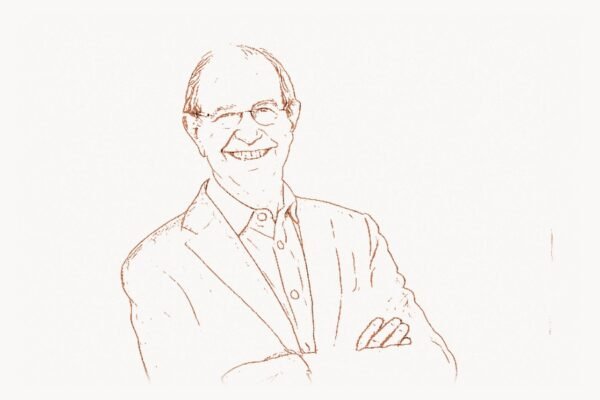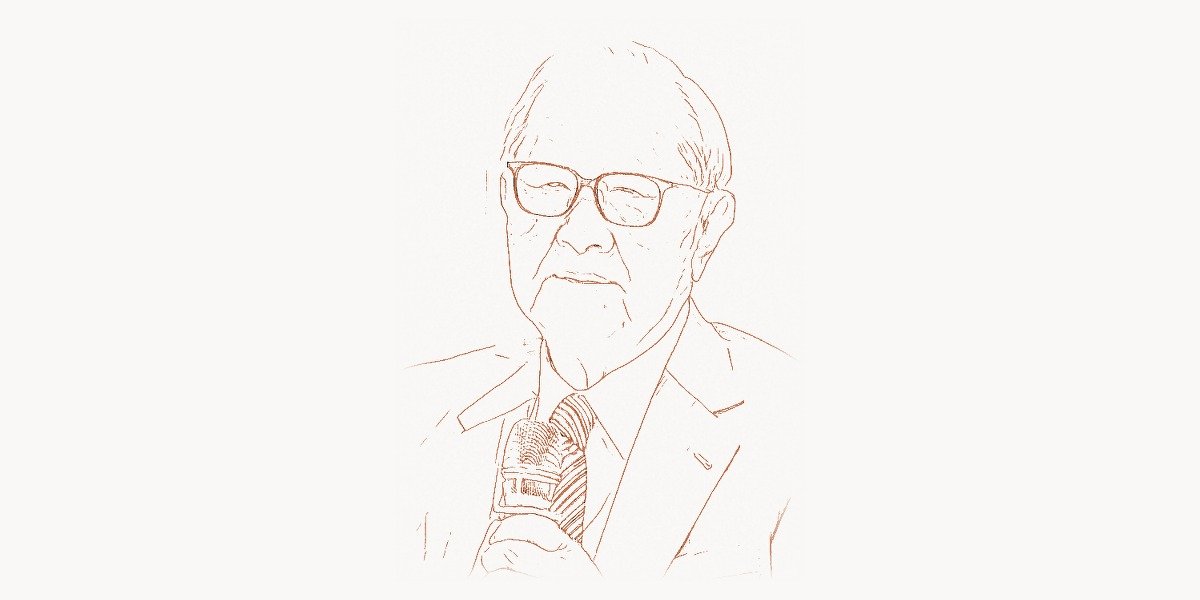
In 1987, at the age of 55, when most executives would be coasting toward retirement, Morris Chang did something the semiconductor industry considered impossible: he founded a company that would make chips for other companies and nothing else. No proprietary products, no competing designs — just pure manufacturing excellence. That company, Taiwan Semiconductor Manufacturing Company (TSMC), would grow to become the most critical single point in the global technology supply chain, fabricating the processors that power everything from iPhones to artificial intelligence supercomputers. Today, TSMC manufactures over 90% of the world’s most advanced semiconductors, and Morris Chang’s foundry model has become the backbone of the entire digital economy.
Early Life and Education: From Shanghai to Silicon Valley
Morris Chang was born on July 10, 1931, in Ningbo, Zhejiang province, China, during one of the most turbulent periods in Chinese history. His family moved frequently through his childhood — from Ningbo to Hong Kong, then to Chongqing during the Japanese occupation, and eventually back to Shanghai after World War II. This peripatetic childhood gave young Morris an adaptability that would serve him throughout his career.
In 1949, as the Chinese Civil War reached its climax, Chang’s family moved to Hong Kong. That same year, at age 18, he left for the United States to pursue higher education. He initially enrolled at Harvard University, where he spent his freshman year. However, Chang soon transferred to the Massachusetts Institute of Technology (MIT), where he earned both his bachelor’s and master’s degrees in mechanical engineering. His academic path took another turn when he later enrolled at Stanford University, eventually completing his PhD in electrical engineering in 1964.
Between his MIT and Stanford years, Chang joined Texas Instruments (TI) in 1958 — a decision that would define his understanding of the semiconductor industry from the ground up. At TI, he worked alongside some of the most brilliant minds in the nascent semiconductor field, including Jack Kilby, who would go on to co-invent the integrated circuit at that very company. Chang quickly rose through the ranks, becoming a vice president and eventually the head of TI’s worldwide semiconductor business. Over 25 years at Texas Instruments, he developed an encyclopedic understanding of chip manufacturing, process technology, and the economics of semiconductor production.
During his time at TI, Chang observed a fundamental tension in the industry that would later inspire his greatest innovation: companies that designed chips were forced to also manufacture them, requiring billions of dollars in capital investment. This vertically integrated model locked out smaller innovators and created enormous inefficiencies. The seeds of the foundry concept were planted during these decades of hands-on experience.
The Foundry Breakthrough: Reinventing Semiconductor Manufacturing
Technical Innovation: The Pure-Play Foundry Model
When Morris Chang left Texas Instruments in 1983 and subsequently became president of the Industrial Technology Research Institute (ITRI) in Taiwan, he had a vision that contradicted the prevailing logic of the semiconductor industry. The established model required companies like Intel, TI, and Motorola to design their own chips and manufacture them in their own fabrication plants (fabs). This vertical integration demanded enormous capital expenditure — a single fab could cost hundreds of millions of dollars even in the 1980s — creating insurmountable barriers for new entrants.
Chang’s insight was deceptively simple: separate chip design from chip manufacturing. Create a company that would invest solely in manufacturing excellence, offering its fabrication services to any company that needed chips produced. This “pure-play foundry” model meant that TSMC would never compete with its own customers by designing proprietary chips.
Founded in 1987 with backing from the Taiwan government and Philips Electronics, TSMC began operations with technology licensed from Philips. The early years were challenging. The company’s first fab used 3-micron process technology, already a generation behind the leading edge. But Chang understood that the value proposition was not about having the most advanced technology immediately — it was about providing reliable, high-quality manufacturing at scale for companies that could not afford their own fabs.
The technical challenges were immense. Semiconductor fabrication is one of the most complex manufacturing processes ever devised. A modern chip requires hundreds of individual processing steps, including photolithography, ion implantation, chemical vapor deposition, and etching. Each step must be executed with nanometer precision in ultraclean environments. The following simplified Verilog module illustrates the kind of digital logic that foundries translate from abstract design to physical silicon:
// Simple CMOS inverter behavioral model
// This is the fundamental building block of all digital logic
// that TSMC and other foundries fabricate billions of times per chip

module cmos_inverter (
    input  wire VDD,    // Power supply
    input  wire GND,    // Ground
    input  wire A,      // Input signal
    output wire Y       // Output signal (inverted)
);

    // PMOS transistor: conducts when input is LOW
    // NMOS transistor: conducts when input is HIGH
    // Together they form a complementary pair

    assign Y = ~A;

    // In physical fabrication, this single gate requires:
    // - Silicon substrate preparation
    // - Well implantation (N-well for PMOS)
    // - Gate oxide growth (SiO2 layer, ~1-2nm at advanced nodes)
    // - Polysilicon or metal gate deposition
    // - Source/drain implantation
    // - Multiple metal interconnect layers
    // - Each step must be aligned to sub-nanometer precision

    // TSMC's achievement: manufacturing billions of these
    // gates per chip with >99.99% yield reliability

endmodule

// Foundry process parameters example (simplified)
// These define the "recipe" that designers must follow
//
// Technology Node:    5nm (N5)
// Min Gate Length:    ~12nm (FinFET)
// Metal Layers:      12-15
// Transistor Density: ~170M transistors/mm²
// Operating Voltage:  0.75V typical
TSMC’s breakthrough was not any single technical innovation but rather the relentless optimization of yield — the percentage of functional chips produced from each silicon wafer. In semiconductor manufacturing, even tiny variations in process parameters can render entire wafers worthless. Chang built an organizational culture obsessed with yield improvement, continuous process optimization, and absolute reliability. This manufacturing discipline became TSMC’s deepest competitive moat.
Why It Mattered: Enabling the Fabless Revolution
The impact of Chang’s foundry model cannot be overstated. Before TSMC, any company that wanted to bring a new chip design to market needed to either build its own multi-billion-dollar fabrication facility or negotiate manufacturing agreements with competitors who had little incentive to help. This created an industry dominated by a handful of vertically integrated giants.
TSMC’s existence enabled an entirely new category of semiconductor companies: fabless design firms. Companies like Qualcomm, Broadcom, NVIDIA, and AMD could now focus exclusively on chip design, outsourcing manufacturing to TSMC. Jensen Huang’s NVIDIA could pour all of its resources into GPU architecture innovation without spending billions on fabrication plants. Lisa Su’s AMD would later leverage TSMC’s advanced manufacturing to achieve competitive parity with Intel for the first time in over a decade.
The fabless model unleashed a wave of innovation. Startups could now design specialized chips for specific applications — wireless communications, networking, graphics — without the crushing capital requirements of owning a fab. The democratization of semiconductor manufacturing fueled the mobile revolution, the rise of the internet, and eventually the AI computing boom that defines our current era.
Consider the economics: in the 1980s, building a competitive fabrication facility required roughly $100 million. By 2024, TSMC’s most advanced fabs cost upward of $20 billion each. Without the foundry model, only a few companies in the world could afford to compete in chip manufacturing, severely limiting innovation in chip design. The following conceptual representation shows how the foundry model restructured the semiconductor industry’s value chain:
/* Semiconductor Industry Architecture: Before and After TSMC */

/* BEFORE: Vertically Integrated Model (pre-1987)
 * ┌─────────────────────────────────────┐
 * │         Single Company (e.g. Intel) │
 * │  ┌──────────┐  ┌─────────────────┐  │
 * │  │  Design   │→│  Manufacturing  │  │
 * │  │  (in-house│  │  (own fabs,    │  │
 * │  │  architects│ │  $$$$ capex)   │  │
 * │  └──────────┘  └─────────────────┘  │
 * │         ↓                           │
 * │  ┌──────────────────────────────┐   │
 * │  │   Sell branded products      │   │
 * │  │   (e.g. Intel Pentium)       │   │
 * │  └──────────────────────────────┘   │
 * └─────────────────────────────────────┘
 * Barrier to entry: ~$100M-$1B+ for fab
 * Result: ~20 companies could compete
 */

/* AFTER: Foundry Model (post-1987, TSMC)
 * ┌────────────────┐   ┌────────────────┐
 * │ Fabless Company │   │ Fabless Company │
 * │ (e.g. NVIDIA)  │   │ (e.g. Qualcomm)│
 * │ Design Only     │   │ Design Only     │
 * │ Entry: ~$10M    │   │ Entry: ~$10M    │
 * └───────┬────────┘   └───────┬────────┘
 *         │                     │
 *         ▼                     ▼
 * ┌──────────────────────────────────────┐
 * │              TSMC Foundry            │
 * │   Pure manufacturing, no products    │
 * │   World-class process technology     │
 * │   Serves 500+ design companies       │
 * │   $40B+ annual capex investment      │
 * └──────────────────────────────────────┘
 * Result: 1000+ fabless companies innovating
 * Global semiconductor revenue: $600B+
 */
By the time smartphones arrived in the late 2000s, the foundry model had matured to the point where Apple — a company with no semiconductor manufacturing heritage — could design its own custom A-series processors and have TSMC fabricate them at the most advanced process nodes available. This would have been inconceivable in the pre-foundry era. Project management at this scale requires extraordinary coordination between design teams and foundry engineers, the kind of systematic discipline that platforms like Taskee bring to modern development workflows.
Other Contributions and Industry Impact
Beyond founding TSMC, Morris Chang’s influence on the global semiconductor ecosystem extends across multiple dimensions.
Taiwan’s Semiconductor Cluster. Chang was instrumental in transforming Taiwan from an agrarian economy into a semiconductor powerhouse. His leadership at ITRI before founding TSMC helped establish the Hsinchu Science Park as a world-class technology hub. Today, Taiwan produces the majority of the world’s advanced semiconductors, a strategic position that has profound geopolitical implications. The semiconductor cluster that grew around TSMC employs hundreds of thousands of engineers and generates a significant portion of Taiwan’s GDP.
Advanced Process Leadership. Under Chang’s leadership, TSMC evolved from a company using licensed, trailing-edge technology to the undisputed leader in semiconductor process technology. TSMC was the first foundry to offer 7-nanometer, 5-nanometer, and 3-nanometer process nodes in high-volume production. This manufacturing leadership is arguably the single most valuable industrial capability on Earth, as virtually every advanced electronic device depends on TSMC’s ability to push the boundaries of physics. The precision required rivals what Gordon Moore predicted with his famous law about transistor density doubling.
The EDA Ecosystem. TSMC’s foundry model also catalyzed the growth of the electronic design automation (EDA) industry. Companies like Synopsys, Cadence, and Mentor Graphics developed sophisticated software tools that allowed fabless companies to design chips compatible with TSMC’s manufacturing processes. This three-part ecosystem — fabless designers, EDA tool providers, and foundries — became the standard architecture of the modern semiconductor industry.
Geopolitical Significance. Chang’s creation has made Taiwan indispensable to the global technology supply chain. When the COVID-19 pandemic disrupted semiconductor supply in 2020-2021, the world suddenly realized how dependent it was on a single island’s manufacturing capability. This has driven massive government investments in semiconductor manufacturing in the United States, Europe, and Japan, with TSMC itself building new fabs in Arizona, Japan, and Germany. The strategic importance of semiconductor manufacturing has made Chang’s foundry model a matter of national security for multiple nations.
Talent Development. Chang built TSMC’s reputation as a demanding but rewarding employer, attracting Taiwan’s best engineering talent. His management philosophy combined American corporate practices with an understanding of Taiwanese work culture. Many TSMC alumni have gone on to lead other semiconductor companies and technology firms, spreading Chang’s manufacturing-first mindset throughout the industry. This emphasis on cultivating talent mirrors the approach taken by leaders like Andy Grove at Intel, who similarly built a culture of operational excellence.
Philosophy and Principles: The Chang Approach
Key Principles That Defined TSMC’s Success
Integrity and Trust as Business Strategy. Chang built TSMC on a foundation of absolute trust. Because TSMC’s customers were sharing their most valuable intellectual property — their chip designs — with the company, trust was not merely a corporate value but a business necessity. Chang established strict information barriers between customer accounts, ensuring that one customer’s design secrets could never leak to another. This commitment to integrity became TSMC’s most powerful competitive advantage, as customers knew their innovations were safe.
Manufacturing Excellence Over Product Innovation. While the semiconductor industry celebrated design breakthroughs, Chang’s philosophy centered on manufacturing precision. He believed that the ability to reliably produce billions of transistors on a single chip — with yields that made the economics work — was the true differentiator. This manufacturing-first mindset drove TSMC to invest heavily in process control, defect reduction, and continuous improvement, disciplines borrowed from the quality management revolution that transformed Japanese manufacturing.
Long-Term Investment Horizon. Chang consistently invested ahead of demand, building new fabs and developing next-generation process technology before customers explicitly needed them. This required enormous capital discipline and a willingness to accept short-term financial pressure for long-term strategic advantage. When competitors hesitated to invest during downturns, TSMC accelerated its spending, widening its technology lead during every industry cycle.
Customer Success Equals Company Success. Chang framed TSMC’s mission around customer success rather than competitive dominance. By never competing with customers through proprietary chip products, TSMC aligned its interests perfectly with the fabless ecosystem. This strategic restraint — the discipline not to exploit its manufacturing monopoly by entering the design business — required unusual corporate self-control and proved crucial to TSMC’s enduring dominance.
Precision in Execution. Chang often emphasized that strategy without execution is meaningless. At TSMC, execution meant achieving manufacturing yields that consistently exceeded industry benchmarks, delivering on technology roadmap commitments, and maintaining the capital investment necessary to stay at the leading edge. This philosophy of disciplined execution applies broadly — professional services firms managing complex deliverables, like those coordinated through agencies such as Toimi, understand that consistent execution is what separates good strategy from great results.
Legacy: The Man Who Made Modern Computing Possible
Morris Chang retired as TSMC chairman in 2018, at the age of 86, after more than three decades of building the company he founded. By that time, TSMC had become the world’s most valuable semiconductor company, with a market capitalization exceeding that of most nations’ entire stock markets. But Chang’s legacy extends far beyond TSMC’s financial success.
The foundry model Chang created is now so deeply embedded in the technology industry’s structure that it is essentially invisible — like plumbing, it is noticed only when it fails. Every smartphone, every cloud server, every AI accelerator, every autonomous vehicle controller depends on foundry manufacturing. The companies that design these chips — from Apple to NVIDIA to AMD to hundreds of smaller innovators — exist because Morris Chang proved that manufacturing could be separated from design without sacrificing quality or performance.
Chang’s model also fundamentally altered the geography of technology. Before TSMC, semiconductor manufacturing was concentrated in the United States and Japan. Today, Taiwan’s dominance in advanced chip fabrication has reshaped global supply chains and geopolitical calculations. The “silicon shield” — the theory that Taiwan’s semiconductor manufacturing prowess provides a deterrent against military conflict — is a direct consequence of Chang’s vision.
The ripple effects continue to multiply. The chip architectures designed by Sophie Wilson at ARM reach billions of devices precisely because the foundry model allows ARM’s licensees to fabricate chips without owning fabs. The breakthroughs in microprocessor design pioneered by Federico Faggin and the integrated circuit innovations of Robert Noyce all ultimately depend on manufacturing — the domain Morris Chang mastered and industrialized.
Perhaps most remarkably, Chang achieved all of this starting at an age when most people have long since retired. He founded TSMC at 55 and ran it actively into his mid-80s, demonstrating that transformative innovation is not exclusively the province of youth. His career arc — from immigrant student to corporate executive to industry founder — represents one of the most consequential business biographies in the history of technology.
Today, as the world grapples with semiconductor supply chain resilience, AI computing demands, and the geopolitics of chip manufacturing, Morris Chang’s foundry model stands as the most important structural innovation in the history of the semiconductor industry. He did not invent the transistor, design a revolutionary chip, or write elegant code. He did something arguably more important: he built the factory that makes all of it possible.
Key Facts About Morris Chang
- Full Name: Morris Chang (張忠謀, Zhāng Zhōngmóu)
- Born: July 10, 1931, in Ningbo, Zhejiang, China
- Education: BS and MS in Mechanical Engineering from MIT; PhD in Electrical Engineering from Stanford University
- Career at Texas Instruments: 25 years (1958–1983), rose to Senior Vice President overseeing the worldwide semiconductor business
- Founded TSMC: 1987, in Hsinchu, Taiwan, at the age of 55
- TSMC’s Market Position: Produces over 90% of the world’s most advanced semiconductors (sub-7nm)
- Major Awards: IEEE Robert N. Noyce Award (2011), Bloomberg Businessperson of the Year (2018), inducted into US National Inventors Hall of Fame (2023)
- Retirement: Stepped down as TSMC chairman in June 2018 at age 86
- TSMC Revenue (2023): Approximately $69.3 billion USD
- Known As: The “Godfather of Semiconductors” and the father of the foundry model
Frequently Asked Questions
Why did Morris Chang found TSMC instead of continuing at Texas Instruments?
Chang left Texas Instruments in 1983 after being passed over for the CEO position. He spent a brief period at General Instrument before accepting an invitation from the Taiwan government to lead the Industrial Technology Research Institute (ITRI). It was during his time at ITRI that he developed the foundry concept and secured government backing to establish TSMC in 1987. Chang recognized that Taiwan had the engineering talent and government support to build a world-class semiconductor manufacturer, and that the foundry model — which no existing company was pursuing — could unlock enormous value by democratizing access to chip manufacturing.
How does TSMC maintain its technology leadership over competitors like Samsung and Intel?
TSMC’s technology leadership rests on three pillars. First, massive and consistent capital investment — TSMC typically spends $30-40 billion annually on capital expenditure, building and equipping new fabs with cutting-edge lithography tools including ASML’s extreme ultraviolet (EUV) machines. Second, relentless focus on manufacturing yield and process optimization, developed over decades of pure-play foundry operations. Third, deep collaborative relationships with equipment suppliers and EDA tool providers that create tight feedback loops for continuous improvement. Unlike competitors that split attention between chip design and manufacturing, TSMC’s singular focus on fabrication allows it to push process technology boundaries more aggressively.
What is the “silicon shield” and how does TSMC relate to it?
The “silicon shield” is a geopolitical concept suggesting that Taiwan’s dominance in semiconductor manufacturing — primarily through TSMC — provides a form of strategic protection for the island. Because the global economy depends critically on TSMC’s ability to produce advanced chips, any military conflict that disrupted these operations would have catastrophic economic consequences worldwide. This mutual dependence theoretically incentivizes major powers to maintain stability in the Taiwan Strait. Morris Chang himself has discussed this concept publicly, acknowledging both its strategic implications and its limitations. The term has gained prominence as US-China technology competition has intensified and as nations have recognized the fragility of concentrated semiconductor supply chains.
What impact has TSMC’s foundry model had on the AI revolution?
The AI revolution is fundamentally a computing revolution, and TSMC’s foundry model has been essential to its acceleration. Companies like NVIDIA, Google (with its TPU chips), Amazon (with Graviton and Trainium), and dozens of AI startups all rely on TSMC to manufacture their AI accelerators at the most advanced process nodes. Without the foundry model, these companies would need their own fabrication facilities — an impossibility for most. TSMC’s ability to produce chips with billions of transistors at 3nm and below enables the massive parallel processing that modern AI workloads demand. In essence, every major large language model, every autonomous driving system, and every AI-powered service runs on silicon manufactured by the company Morris Chang built.