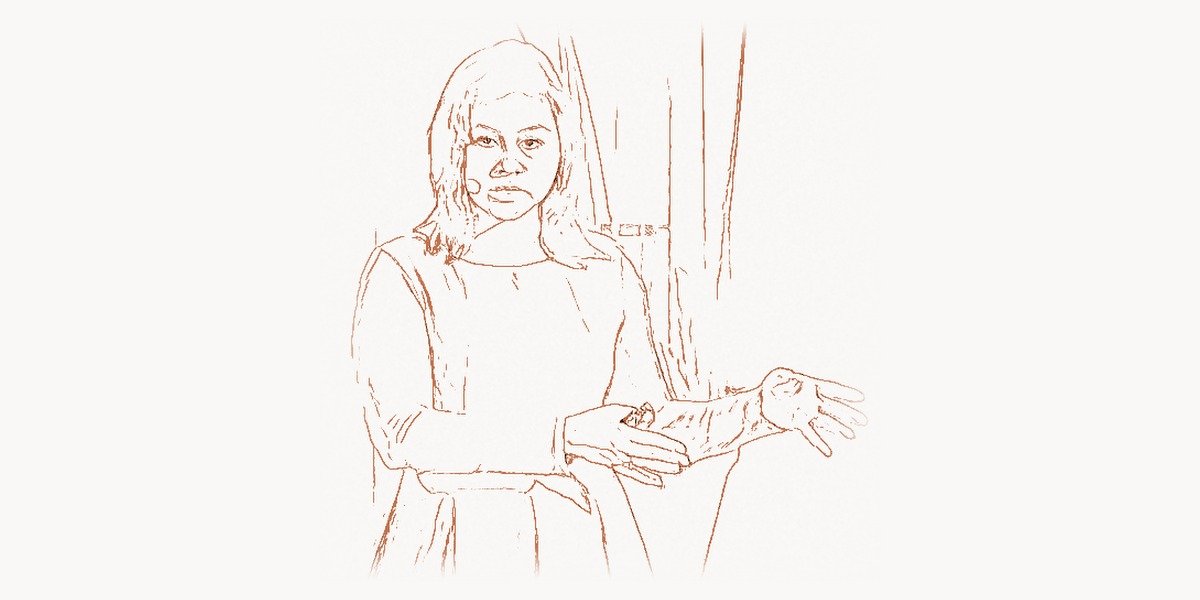
Every second, trillions of data events ripple across the digital world — stock trades, sensor readings, user clicks, social media posts — and most of them need to arrive at their destination in milliseconds, not minutes. Before 2011, handling this firehose of real-time data was a nightmare of brittle pipelines and polling hacks. Then a small team at LinkedIn, led by a young engineer from Pune, India, built something that would fundamentally change how modern companies think about data. Her name was Neha Narkhede, and the system was Apache Kafka — the distributed streaming platform that now processes trillions of messages per day at companies like Netflix, Uber, and Airbnb.
Early Life and Education
Neha Narkhede grew up in Pune, one of India’s most important educational and technology hubs. From an early age, she was drawn to mathematics and problem-solving, qualities that would eventually steer her toward computer science. She pursued her undergraduate education at the University of Pune, where she earned a degree in computer engineering. Her strong academic performance and curiosity about distributed systems led her to the United States for graduate studies.
Narkhede enrolled at the Georgia Institute of Technology, one of the top computer science programs in the country, where she earned her Master’s degree. At Georgia Tech, she immersed herself in the study of large-scale distributed systems, databases, and data infrastructure. The experience sharpened her ability to think about complex systems at scale — a skill that would prove essential in her career.
After graduating, Narkhede joined Oracle, where she worked on database technology. While the role provided solid engineering fundamentals, she quickly realized she wanted to tackle problems at a larger scale. In 2009, she joined LinkedIn as a software engineer, entering a company that was experiencing explosive growth and struggling to manage the flood of data that came with it.
Career and the Creation of Apache Kafka
The Technical Innovation
When Narkhede arrived at LinkedIn, the company was battling a familiar but painful problem. Data generated by hundreds of millions of users needed to flow between dozens of internal systems — analytics engines, search indexes, recommendation algorithms, monitoring dashboards. The existing approach relied on point-to-point integrations, a tangled web of custom pipelines that were fragile, slow, and almost impossible to scale.
Narkhede, along with Jay Kreps and Jun Rao, identified a fundamental architectural gap: there was no general-purpose, high-throughput, distributed system for handling real-time data feeds. Traditional message queues like RabbitMQ could handle messaging patterns, but they were not designed for the volume or the log-based semantics LinkedIn needed. Databases could store data, but not stream it continuously in real time.
The team designed Kafka around a deceptively simple abstraction: the distributed commit log. Instead of treating messages as transient things to be consumed and forgotten, Kafka treated every event as an immutable record appended to a partitioned, replicated log. Consumers could read from any point in the log, replay history, or subscribe to new events in real time. The architecture allowed Kafka to serve as both a messaging system and a durable storage layer.
Here is a simplified example of how a Kafka producer publishes events in Java — the pattern Narkhede and team established as the core API:
Properties props = new Properties();
props.put("bootstrap.servers", "broker1:9092,broker2:9092");
props.put("key.serializer", "org.apache.kafka.common.serialization.StringSerializer");
props.put("value.serializer", "org.apache.kafka.common.serialization.StringSerializer");
props.put("acks", "all");

KafkaProducer<String, String> producer = new KafkaProducer<>(props);

for (int i = 0; i < 1000; i++) {
    ProducerRecord<String, String> record =
        new ProducerRecord<>("user-events", "key-" + i, "login-event-" + i);
    producer.send(record, (metadata, exception) -> {
        if (exception == null) {
            System.out.printf("Sent to partition %d, offset %d%n",
                metadata.partition(), metadata.offset());
        }
    });
}
producer.close();
Narkhede was instrumental in the engineering of Kafka’s consumer model, the wire protocol, and the replication framework. She made critical design decisions around partitioning strategies and exactly-once semantics that allowed Kafka to maintain data correctness even during broker failures — a notoriously hard problem in distributed systems.
Why It Mattered
Before Kafka, real-time data pipelines at scale were essentially a solved problem only for the largest tech companies, and even they suffered from custom, fragile solutions. Kafka democratized real-time streaming. It introduced the concept of the “event streaming platform” as a new category of infrastructure — not just a queue, not just a database, but a persistent, scalable, fault-tolerant backbone for all data in motion.
The impact was enormous. LinkedIn open-sourced Kafka in 2011, and it became an Apache top-level project by 2012. Within a few years, Kafka was running in production at companies of every size and industry. Today, more than 80% of Fortune 100 companies use Kafka. Netflix processes over a trillion messages per day through it. Uber uses it to match riders and drivers in real time. Banks rely on it for fraud detection pipelines that must respond in milliseconds.
Kafka also spawned an entire ecosystem. Kafka Streams, Kafka Connect, and ksqlDB emerged to provide stream processing, connector frameworks, and SQL-like querying on streaming data. The concept of event-driven architecture — where every system interaction is modeled as an immutable event — became a dominant paradigm in modern software engineering, largely thanks to the foundational work Narkhede and her colleagues pioneered. Matei Zaharia, creator of Apache Spark, built complementary streaming capabilities that often run alongside Kafka in production environments.
Other Contributions
In 2014, Narkhede co-founded Confluent alongside Jay Kreps and Jun Rao to commercialize Kafka and build the streaming platform ecosystem around it. As CTO, she led the engineering of Confluent Cloud — the fully managed Kafka-as-a-service platform that allowed companies to adopt streaming without the operational burden of running their own clusters.
Under Narkhede’s technical leadership, Confluent developed critical additions to the Kafka ecosystem. Schema Registry enforced data contracts across producers and consumers, preventing the chaos of unstructured data evolution. ksqlDB allowed developers to write SQL queries against streaming data, lowering the barrier for teams that did not have deep experience with distributed systems.
A simple ksqlDB query demonstrates how Narkhede’s team made stream processing accessible to a broader range of developers:
CREATE STREAM user_logins (
    user_id VARCHAR KEY,
    login_time BIGINT,
    device_type VARCHAR,
    ip_address VARCHAR
) WITH (
    KAFKA_TOPIC = 'user-events',
    VALUE_FORMAT = 'JSON'
);

SELECT device_type,
       COUNT(*) AS login_count,
       WINDOWSTART AS window_start
FROM user_logins
    WINDOW TUMBLING (SIZE 5 MINUTES)
GROUP BY device_type
EMIT CHANGES;
Confluent raised significant venture capital and achieved a valuation exceeding $4.5 billion before going public in June 2021. Narkhede served as CTO through the company’s most critical growth phase, building out the engineering organization and the product suite.
Beyond Confluent, Narkhede has become one of the most recognized voices in data infrastructure. She co-authored the foundational paper on Kafka and contributed to “Kafka: The Definitive Guide,” which became a standard reference for engineers working with streaming platforms. Her conference talks at events like QCon, Strange Loop, and the Kafka Summit have educated thousands of engineers on event-driven architecture.
Narkhede has also been a visible advocate for women in technology, particularly in the infrastructure and systems engineering domains where women remain severely underrepresented. Her success story — from a graduate student in Pune to the CTO of a multi-billion-dollar Silicon Valley company — has inspired a generation of engineers. Her work in building effective engineering teams resonates with the principles championed by modern project management approaches that emphasize technical leadership and cross-functional collaboration.
In 2024, Narkhede launched Oscilar, a new venture focused on applying AI to real-time risk intelligence. Drawing on her deep expertise in streaming data, the company applies machine learning models to streaming event data for fraud detection, compliance, and security — effectively combining the two most powerful trends in modern infrastructure: real-time data and artificial intelligence. Her work at Oscilar demonstrates how the event streaming paradigm she helped create continues to find new applications in task automation and intelligent workflow management.
Philosophy and Engineering Approach
Narkhede’s engineering philosophy reflects a rare combination of theoretical rigor and pragmatic product thinking. She has consistently argued that the best infrastructure is invisible — it should be so reliable and simple to use that engineers can focus on their application logic rather than fighting their tools.
Key Principles
- Immutability as foundation: Narkhede championed the idea that treating data as an immutable log of events is fundamentally more robust than treating it as mutable state. This principle, borrowed from database theory and functional programming, became the philosophical core of Kafka.
- Simplicity at the API level, complexity in the internals: Kafka’s producer and consumer APIs are deliberately straightforward. The complexity of replication, partitioning, and exactly-once delivery is hidden behind clean abstractions — a design principle Narkhede has advocated consistently.
- Infrastructure should be a platform, not a tool: Rather than solving one narrow problem, Narkhede pushed for Kafka to be extensible enough to serve as the central nervous system for an entire organization’s data flows. This platform thinking drove the development of Kafka Connect, Kafka Streams, and ksqlDB.
- Operational simplicity matters as much as features: Narkhede has emphasized that the hardest part of distributed systems is not building them but operating them at scale. Confluent Cloud was born from this conviction — the best way to run Kafka is to not run it yourself.
- Data contracts prevent chaos: Her advocacy for schema enforcement through tools like Schema Registry reflects a belief that data quality must be enforced at the infrastructure level, not delegated to individual application teams.
This philosophy connects her to a lineage of infrastructure thinkers like Jeff Dean, who similarly built foundational distributed systems at Google, and Sanjay Ghemawat, whose work on GFS and BigTable laid groundwork for the distributed storage concepts Kafka extended.
Legacy and Impact
Neha Narkhede’s legacy is inseparable from the transformation of how the tech industry handles data. Before Kafka, real-time data processing was a niche concern. After Kafka, it became table stakes. The shift from batch processing to streaming that she helped initiate has fundamentally altered the architecture of modern software systems.
Her impact extends across multiple dimensions. Technically, Kafka introduced the distributed commit log as a core infrastructure primitive, influencing the design of systems like Apache Pulsar, Amazon Kinesis, and Azure Event Hubs. Architecturally, the event-driven patterns Kafka enabled changed how companies design their systems — from monolithic, request-response architectures to loosely coupled, event-sourced systems. The microservices revolution, championed by engineers like Solomon Hykes through Docker, would have been far less practical without a reliable way to stream events between services.
As a founder, Narkhede demonstrated that deep technical innovation can be the foundation of a successful commercial company. Confluent’s journey from open-source project to public company is a model that has inspired other infrastructure startups. Her path echoes that of Salvatore Sanfilippo, whose Redis project followed a similar trajectory from open-source innovation to commercial success.
In the broader engineering community, Narkhede’s visibility as a woman leading one of the most important infrastructure projects in the industry has been significant. She has spoken openly about the challenges of being underrepresented in systems engineering and has used her platform to encourage diversity in technical leadership. Her trajectory mirrors the kind of impact made by pioneers like Fei-Fei Li, who similarly broke barriers in a male-dominated field while producing work of lasting technical significance.
The streaming-first paradigm Narkhede helped establish continues to accelerate. As companies invest more in real-time AI, IoT, and event-driven microservices, Kafka’s relevance only grows. The foundational design decisions she made — durable logs, partitioned topics, consumer groups — remain remarkably resilient more than a decade later.
Key Facts
- Full name: Neha Narkhede
- Born: Pune, India
- Education: B.E. from University of Pune; M.S. in Computer Science from Georgia Institute of Technology
- Known for: Co-creating Apache Kafka, co-founding Confluent
- Key roles: Software Engineer at LinkedIn (2009-2014), Co-founder and CTO of Confluent (2014-2020), Founder of Oscilar (2024-present)
- Apache Kafka: Open-sourced in 2011, Apache top-level project since 2012, processes trillions of messages daily
- Confluent IPO: June 2021 (NASDAQ: CFLT), valued at over $9 billion at listing
- Recognition: Forbes Cloud 100, Fortune 40 Under 40, MIT Technology Review 35 Innovators Under 35
- Publications: Co-author of “Kafka: The Definitive Guide” (O’Reilly Media)
- Latest venture: Oscilar — AI-powered real-time risk intelligence platform
Frequently Asked Questions
What is Apache Kafka and why did Neha Narkhede create it?
Apache Kafka is a distributed event streaming platform designed to handle real-time data feeds at massive scale. Narkhede co-created Kafka at LinkedIn in 2011 to solve the problem of moving data reliably and quickly between hundreds of internal systems. Traditional messaging systems and databases could not handle the volume, speed, and durability requirements LinkedIn faced. Kafka introduced the distributed commit log abstraction — treating every event as an immutable record in a partitioned, replicated log — which allowed it to serve as both a high-throughput messaging system and a durable storage layer. Today, Kafka is the backbone of real-time data infrastructure at the majority of large technology companies worldwide.
How did Narkhede contribute to Kafka differently from Jay Kreps and Jun Rao?
While Jay Kreps is often credited with the initial architectural vision and Jun Rao brought deep expertise from his time working on database systems at IBM, Narkhede was central to the engineering execution. She led critical work on Kafka’s consumer model, the wire protocol, and the replication framework. Her contributions to the partitioning strategies and exactly-once semantics were essential to making Kafka production-ready. At Confluent, as CTO she directed the engineering of the commercial platform, including Schema Registry and Confluent Cloud, which transformed Kafka from an open-source project into an enterprise-grade product.
What is Confluent and how does it relate to Kafka?
Confluent is the company Narkhede co-founded in 2014 to commercialize Apache Kafka. While Kafka itself remains an open-source Apache project, Confluent provides a fully managed cloud service (Confluent Cloud), enterprise support, and additional tools built around Kafka — including Schema Registry for data governance, ksqlDB for stream processing with SQL, and Kafka Connect for integrating with external systems. Confluent went public on NASDAQ in June 2021 and has become the primary commercial vendor for organizations adopting event streaming architecture.
What is Narkhede working on after leaving Confluent?
After stepping back from her CTO role at Confluent in 2020, Narkhede spent time investing in and advising early-stage startups, particularly in the data infrastructure and AI spaces. In 2024, she founded Oscilar, a company focused on applying artificial intelligence to real-time risk decisions. Oscilar uses streaming data and machine learning to detect fraud, manage compliance, and assess security risks in real time — combining the event streaming expertise Narkhede developed with Kafka with the latest advances in AI. The venture reflects her belief that the next frontier for real-time data is intelligent, automated decision-making at the speed of events.