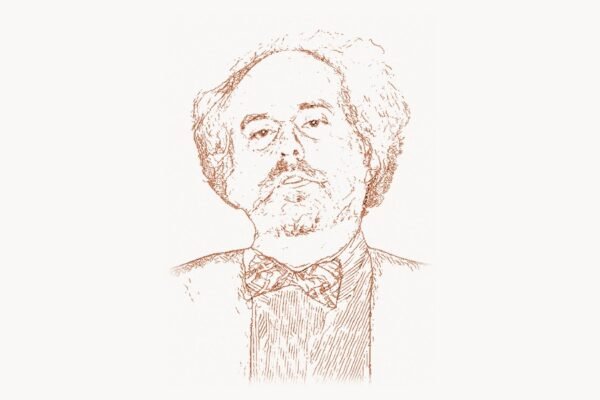
When we think about the founding of Microsoft, one name tends to dominate the narrative. But without Paul Allen — the quiet, deeply technical visionary who first spotted the Altair 8800 on the cover of Popular Electronics in December 1974 and rushed to show it to his friend Bill Gates — the personal computing revolution might have taken a very different path. Allen was not just a co-founder; he was the architectural mind behind Microsoft’s earliest technical decisions, the strategist who saw the potential of software as an industry before almost anyone else, and later, one of the most ambitious technology investors in history. From writing the bootstrap loader that made Microsoft’s first product possible to funding the first privately financed spacecraft to reach space, Allen’s career is a testament to what happens when deep technical knowledge meets boundless curiosity.
Early Life and the Roots of a Technologist
Paul Gardner Allen was born on January 21, 1953, in Seattle, Washington, to Kenneth and Edna Allen. His father was an associate director at the University of Washington libraries, and his mother was a schoolteacher. Growing up in a household that valued reading and intellectual exploration, Allen developed an early fascination with science and electronics. By his own account, he was disassembling and reassembling radios and other gadgets from a young age, driven by an insatiable desire to understand how things worked.
Allen’s life changed when he enrolled at Lakeside School, the same prestigious Seattle preparatory school where he would meet Bill Gates. Lakeside had recently acquired access to a time-shared computer terminal — a remarkable luxury for a school in the late 1960s — and Allen was immediately captivated. Two years older than Gates, Allen became a mentor figure in their early friendship, sharing his deeper knowledge of hardware and computing theory. Together, they spent countless hours at the terminal, learning to program in BASIC on a PDP-10 mainframe, debugging code, and eventually exploiting system vulnerabilities at the Computer Center Corporation in exchange for free computer time.
While still in high school, Allen and Gates founded Traf-O-Data, a small venture that used an Intel 8008 microprocessor to analyze municipal traffic data. Though the company was modest in scope, it gave Allen hands-on experience with microprocessor architecture — knowledge that would prove critical just a few years later. After graduating from Lakeside in 1971, Allen enrolled at Washington State University but dropped out after two years to work as a programmer at Honeywell in Boston, deliberately choosing to be near Gates, who was then attending Harvard. It was during this period that Allen made the observation that would launch an industry.
The Founding of Microsoft
The Altair Moment
In December 1974, Allen walked past a newsstand in Harvard Square and noticed the January 1975 issue of Popular Electronics, featuring the MITS Altair 8800 on its cover. The Altair was the first commercially available microcomputer kit, built around Intel’s 8080 processor. Allen immediately recognized what it meant: the era of personal computing was beginning, and whoever provided the software for these machines would define the industry. He brought the magazine to Gates, and the two made a fateful decision — they would write a BASIC interpreter for the Altair before anyone else could.
What followed was one of the most remarkable feats of software engineering in computing history. Allen and Gates had no access to an actual Altair. Instead, Allen wrote an Intel 8080 emulator that ran on Harvard’s PDP-10 mainframe, allowing them to develop and test their BASIC interpreter on a machine that simulated the Altair’s processor. Allen’s deep understanding of processor architecture made this possible — he had to accurately replicate the behavior of every 8080 instruction, including timing characteristics and memory addressing modes, on completely different hardware.
The emulator Allen built was a technical tour de force. Consider the challenge: he needed to translate between two entirely different instruction sets while maintaining cycle-accurate behavior. Here is a conceptual representation of how Allen’s 8080 emulator mapped processor operations on the PDP-10:
; Paul Allen's 8080 Emulator — Conceptual Structure (PDP-10)
; Mapping Intel 8080 instructions to PDP-10 simulation
;
; Register simulation using PDP-10 memory locations
; 8080 registers: A, B, C, D, E, H, L, SP, PC, Flags

DEFINE REG_A,   0x4000    ; Accumulator
DEFINE REG_B,   0x4001    ; B register
DEFINE REG_C,   0x4002    ; C register
DEFINE REG_SP,  0x4006    ; Stack pointer
DEFINE REG_PC,  0x4007    ; Program counter
DEFINE FLAGS,   0x4008    ; Status flags (Z, S, P, CY, AC)

; Fetch-Decode-Execute cycle
FETCH:
    LOAD  OPCODE, [REG_PC]     ; Read next instruction byte
    INCR  REG_PC               ; Advance program counter
    JUMP  DECODE_TABLE[OPCODE] ; Dispatch to handler

; Example: MVI A, byte  (opcode 0x3E — Move Immediate to A)
HANDLE_3E:
    LOAD  REG_A, [REG_PC]      ; Load immediate byte into A
    INCR  REG_PC               ; Skip past the data byte
    JUMP  FETCH                 ; Next instruction

; Example: ADD B  (opcode 0x80 — Add B to Accumulator)
HANDLE_80:
    ADD   REG_A, REG_B         ; A = A + B
    CALL  UPDATE_FLAGS         ; Set Zero, Sign, Carry, Parity
    JUMP  FETCH
Allen completed the emulator in approximately eight weeks. Gates then used it as the platform for writing the BASIC interpreter itself, while Allen contributed critical routines including the floating-point math library — an essential component that had to fit within the Altair’s 4 kilobytes of available memory. When Allen flew to Albuquerque to demonstrate the interpreter to MITS founder Ed Roberts in March 1975, he wrote the bootstrap loader during the flight — the small program that would load their BASIC interpreter into the Altair’s memory from a paper tape reader. The demonstration worked on the first try, and Micro-Soft (as it was initially hyphenated) had its first product.
Building the Technical Foundation
On April 4, 1975, Allen and Gates officially founded Microsoft. Allen served as Executive Vice President and head of research and new product development, overseeing the technical direction of the company during its formative years. His contributions during this period were profound. Allen drove the development of Microsoft’s language products beyond BASIC — including FORTRAN, COBOL, and Pascal compilers — establishing Microsoft as the premier supplier of programming tools for microcomputers. He understood that controlling the development tools meant controlling the ecosystem, a strategy that modern developer tool companies continue to follow today.
Allen also played a pivotal role in the deal that would define Microsoft’s future. When IBM approached Microsoft in 1980 seeking an operating system for its upcoming personal computer, it was Allen who identified QDOS (Quick and Dirty Operating System), written by Tim Paterson at Seattle Computer Products. Allen negotiated the purchase of QDOS for approximately $50,000, and Microsoft adapted it into MS-DOS. Critically, Allen and Gates insisted on a non-exclusive license with IBM, meaning Microsoft could license MS-DOS to any PC clone manufacturer. This single decision created the business model that would make Microsoft the most valuable company in the world.
Allen’s technical instincts extended to hardware integration as well. He championed Microsoft’s early work on the SoftCard, an add-on card that allowed Apple II computers to run CP/M software, demonstrating his talent for bridging incompatible platforms — a challenge that remains central to web development and cross-platform engineering today.
Departure from Microsoft and the Cancer Battle
In 1982, Allen was diagnosed with Hodgkin’s lymphoma, a form of cancer that required aggressive treatment including radiation therapy. The illness forced him to step back from the daily operations at Microsoft, and tensions with Gates over equity and direction contributed to his decision to leave the company in 1983. Allen retained his ownership stake — approximately 25% of Microsoft shares at that time — which would eventually make him one of the wealthiest people on the planet. He successfully battled the cancer into remission, though it would return as non-Hodgkin lymphoma decades later.
Allen remained on Microsoft’s board of directors until 2000, providing strategic counsel during key transitions including the launch of Windows 95 and the company’s pivot toward the internet. But his departure from daily operations freed him to pursue an astonishingly diverse range of technology investments and passion projects that would define the second act of his career.
Vulcan Ventures and the Technology Investment Empire
Through Vulcan Inc., his private investment and project management company, Allen became one of the most prolific technology investors in history. His investment portfolio read like a map of the technologies that would define the next several decades. Allen invested early and aggressively in cable television infrastructure, acquiring significant stakes in Charter Communications and other cable operators. He recognized that cable networks would become the primary conduit for broadband internet access — an insight that proved remarkably prescient.
Allen’s investments spanned an extraordinary range. He poured hundreds of millions into DreamWorks, the entertainment company co-founded by Steven Spielberg. He funded Interval Research Corporation, a Palo Alto-based lab that explored experimental interfaces and new media. He backed companies working on satellite internet, wireless networking, and biotechnology. While not every investment succeeded — his bet on the Wired World concept and the Portland-based cable empire had mixed results — his portfolio demonstrated a consistent thesis: technology would converge across entertainment, communications, and computing, and the infrastructure enabling that convergence would be enormously valuable.
His approach to technology investing anticipated the strategies now employed by modern venture capital and project management methodologies. Allen didn’t just write checks; he built an organization — Vulcan — that could provide operational support, strategic guidance, and cross-portfolio synergies to his investments. This model of an investment platform (rather than a passive fund) influenced how many subsequent technology investors structured their operations.
SpaceShipOne and the Privatization of Space
Perhaps Allen’s most dramatic investment was in SpaceShipOne, the privately funded spacecraft designed by aerospace engineer Burt Rutan and built by Scaled Composites. Allen provided the entire $25 million in funding for the project, driven by his childhood fascination with space exploration and his conviction that private enterprise could accomplish what had previously been the exclusive domain of government agencies.
On June 21, 2004, SpaceShipOne became the first privately funded human spacecraft to reach space, with test pilot Mike Melvill at the controls. The craft reached an altitude of over 100 kilometers, crossing the internationally recognized boundary of space. On October 4, 2004, SpaceShipOne completed the second of two flights within a two-week period required to win the $10 million Ansari X Prize, beating twenty-five other competing teams from around the world. Allen’s bet had paid off spectacularly — not just in prize money, but in proving that private space travel was achievable.
The impact of SpaceShipOne extended far beyond its flights. The technology and the precedent it established directly inspired the creation of Virgin Galactic by Richard Branson, who licensed the SpaceShipOne technology for commercial space tourism. More broadly, Allen’s willingness to fund an audacious, high-risk technological venture helped legitimize the emerging private space industry that would later include SpaceX, Blue Origin, and dozens of other companies. The parallels to the founding of Microsoft are striking: in both cases, Allen saw an opportunity that others dismissed as impractical and committed resources before the market existed.
The Allen Institutes: Science at Scale
Allen’s most enduring legacy may be the scientific research institutes he founded and funded. The Allen Institute for Brain Science, established in 2003 with an initial $100 million commitment, set out to create comprehensive maps of gene expression in the mouse and human brains. The Allen Brain Atlas, the institute’s flagship project, became one of the most widely used resources in neuroscience, providing free, publicly accessible data to researchers worldwide. Allen ultimately committed over $500 million to the brain science institute alone.
He followed with the Allen Institute for Artificial Intelligence (AI2) in 2014, led by renowned computer scientist Oren Etzioni. AI2 focused on high-impact AI research with an emphasis on what Allen called “AI for the common good.” The institute produced significant work in natural language understanding, computer vision, and knowledge representation, and its commitment to open research aligned with Allen’s belief that science advances fastest when information is freely shared. AI2’s work anticipated many of the capabilities now being explored through modern AI and machine learning frameworks that power today’s technology landscape.
The Allen Institute for Cell Science, founded in 2014, applied large-scale computational methods to understanding cell biology. Across all three institutes, Allen’s approach was consistent: identify a fundamental scientific challenge, hire world-class researchers, provide generous long-term funding, and make the results freely available. This open-science philosophy — producing freely accessible datasets, tools, and research — echoed the open-source principles that drive much of modern software development and digital innovation.
Other Passions: Sports, Music, and Civic Investment
Allen’s interests extended well beyond technology and science. He purchased the Portland Trail Blazers NBA franchise in 1988 and the Seattle Seahawks NFL team in 1997, saving the Seahawks from a potential relocation to Southern California. Under his ownership, the Seahawks won Super Bowl XLVIII in 2014. He was a passionate musician who played guitar and jammed with rock legends, and he founded the Experience Music Project (now MoPOP — Museum of Pop Culture) in Seattle, designed by architect Frank Gehry.
Allen also invested significantly in his hometown of Seattle. The redevelopment of the South Lake Union neighborhood — now home to Amazon’s headquarters campus — was driven largely by Allen’s Vulcan Real Estate division, which acquired and developed much of the area. His philanthropic giving exceeded $2 billion during his lifetime, supporting causes ranging from ocean conservation to Ebola response to the arts.
Technical Philosophy and Code
Allen was fundamentally a systems thinker. He saw technology not as isolated products but as interconnected layers — hardware, operating systems, programming languages, applications, networks — where changes at one level rippled through all others. This holistic perspective informed everything from his early work on the 8080 emulator to his later investments in broadband infrastructure and AI research.
His approach to the original Microsoft BASIC interpreter illustrates this perfectly. Allen’s floating-point arithmetic routines, written for a machine with only 4KB of RAM, had to balance precision, speed, and memory footprint simultaneously. Here is a conceptual example showing the compact floating-point representation Allen devised for the constrained Altair environment:
; Altair BASIC Floating-Point Format (Allen's design)
; 32-bit compact representation for 4KB environment
;
; Byte 0: Exponent (biased by 128)
; Bytes 1-3: Mantissa (24 bits, normalized, sign in MSB)
;
; Example: Representing the value 3.14159
; Exponent: 128 + 2 = 130 (0x82)
; Mantissa: Sign=0, then 1.10010010000111... (binary)
;
; Storage layout in memory:
;   Address+0: 0x82        ; Exponent byte
;   Address+1: 0x49        ; High mantissa + sign (0_1001001)
;   Address+2: 0x0F        ; Mid mantissa   (00001111)
;   Address+3: 0xDB        ; Low mantissa   (11011011)
;
; Multiply routine (simplified):
; FMUL: Add exponents, multiply mantissas, normalize
;   LOAD  EXP_A           ; Get exponent of operand A
;   ADD   EXP_B           ; Add exponent of operand B
;   SUB   #128            ; Remove double bias
;   STORE EXP_RESULT
;   CALL  MUL24           ; 24-bit mantissa multiply
;   CALL  NORMALIZE       ; Shift result, adjust exponent
;   RET
;
; This fit in ~800 bytes — critical for 4KB total memory
Allen’s ability to work at this level of hardware-software interaction set him apart from many of his contemporaries. While Gates excelled at business strategy and high-level software architecture, Allen was the one who understood the processor at the instruction level, who could write an emulator for a chip he had never physically seen, and who intuitively grasped how hardware constraints should shape software design. This hardware-software fluency is increasingly rare today but remains essential for fields like embedded systems, IoT, and performance-critical applications in modern software engineering.
Legacy and Final Years
Paul Allen passed away on October 15, 2018, at the age of 65, from complications of non-Hodgkin lymphoma. His death marked the loss of one of technology’s most versatile and visionary minds. While Gates became the public face of Microsoft and personal computing, Allen’s contributions — both to Microsoft and to the broader technology landscape — were irreplaceable.
Allen’s legacy is multidimensional. As a Microsoft co-founder, he helped create the software platform that brought computing to billions of people. As a technology investor, he funded innovations ranging from private spaceflight to broadband infrastructure to brain science. As a philanthropist, he committed billions to scientific research, conservation, and the arts. And as a technologist, he demonstrated that deep technical knowledge combined with broad curiosity could produce breakthroughs across seemingly unrelated fields.
His influence can be seen in the modern technology ecosystem in countless ways. The private space industry he helped launch is now a multi-billion-dollar sector. The brain atlases his institutes created are advancing our understanding of neurological diseases. The AI research lab he founded continues to push the boundaries of machine intelligence. And the model he established — of the technologist-investor who funds audacious, long-term bets on science and technology — has been adopted by a generation of technology leaders who followed.
Paul Allen once said that his goal was to advance humanity through technology and science. By any measure, he succeeded. From a teenage programmer at Lakeside School to a co-founder of the world’s most important software company to a patron of science on a scale rarely seen in history, Allen’s life embodied the transformative power of combining technical mastery with a relentless desire to understand and improve the world. For anyone working in modern technology and project execution, Allen’s career offers a powerful reminder that the most impactful innovations often come from those who refuse to be defined by a single discipline.
Key Facts
- Full name: Paul Gardner Allen
- Born: January 21, 1953, in Seattle, Washington
- Died: October 15, 2018, in Seattle, Washington (age 65)
- Education: Attended Washington State University (dropped out after two years)
- Co-founded Microsoft: April 4, 1975, with Bill Gates
- Key innovation: Built the Intel 8080 emulator that enabled Altair BASIC development
- Major achievement: Funded SpaceShipOne, the first privately financed crewed spacecraft to reach space (2004)
- Philanthropic giving: Over $2 billion during his lifetime
- Institutions founded: Allen Institute for Brain Science (2003), Allen Institute for AI (2014), Allen Institute for Cell Science (2014)
- Sports ownership: Portland Trail Blazers (1988), Seattle Seahawks (1997)
- Net worth at time of death: Approximately $20.3 billion
Frequently Asked Questions
What was Paul Allen’s role in founding Microsoft?
Paul Allen was the technical architect behind Microsoft’s earliest products. He spotted the Altair 8800 in Popular Electronics and convinced Bill Gates to write a BASIC interpreter for it. Allen personally built the Intel 8080 emulator on a PDP-10 mainframe that made development possible, wrote the floating-point math library for Altair BASIC, and coded the bootstrap loader during his flight to demonstrate the software to MITS. He served as Executive Vice President, overseeing research and new product development, and played a key role in the acquisition of QDOS, which became MS-DOS.
Why did Paul Allen leave Microsoft?
Allen left Microsoft in 1983 primarily due to a diagnosis of Hodgkin’s lymphoma, which required intensive radiation treatment. Additionally, there were growing tensions with Bill Gates over equity distribution and the company’s direction. Allen has described in his memoir Idea Man how he overheard Gates and Steve Ballmer discussing ways to reduce his equity stake while he was undergoing cancer treatment. Despite leaving day-to-day operations, Allen retained his Microsoft shares and remained on the board of directors until 2000.
What was SpaceShipOne and why did Allen fund it?
SpaceShipOne was a privately funded suborbital spacecraft designed by Burt Rutan and funded entirely by Paul Allen at a cost of approximately $25 million. Allen was motivated by a lifelong passion for space exploration and a belief that private enterprise could dramatically reduce the cost of space access. The craft won the $10 million Ansari X Prize in 2004 by completing two flights to the edge of space within two weeks. It was the first privately financed crewed vehicle to reach space, directly inspiring the commercial space industry that followed.
What are the Allen Institutes and what have they accomplished?
Paul Allen founded three major research institutes: the Allen Institute for Brain Science (2003), which created the Allen Brain Atlas — one of neuroscience’s most important open-access resources; the Allen Institute for Artificial Intelligence, or AI2 (2014), which conducts leading-edge AI research with a focus on open science and social benefit; and the Allen Institute for Cell Science (2014), which applies computational methods to understanding cell biology. Allen committed well over $1 billion to these institutions, and all three emphasize making research data freely available to the global scientific community.
How did Paul Allen’s technical contributions differ from Bill Gates’?
While both were talented programmers, Allen’s expertise leaned more toward hardware architecture and low-level systems programming. He was the one who built the 8080 processor emulator — a task requiring intimate knowledge of chip-level operations. Gates focused more on the higher-level BASIC interpreter and business strategy. Allen had a broader technical curiosity that encompassed hardware, networking, and scientific computing, while Gates channeled his talents more narrowly into software platforms and business development. Their complementary skills were essential to Microsoft’s early success.