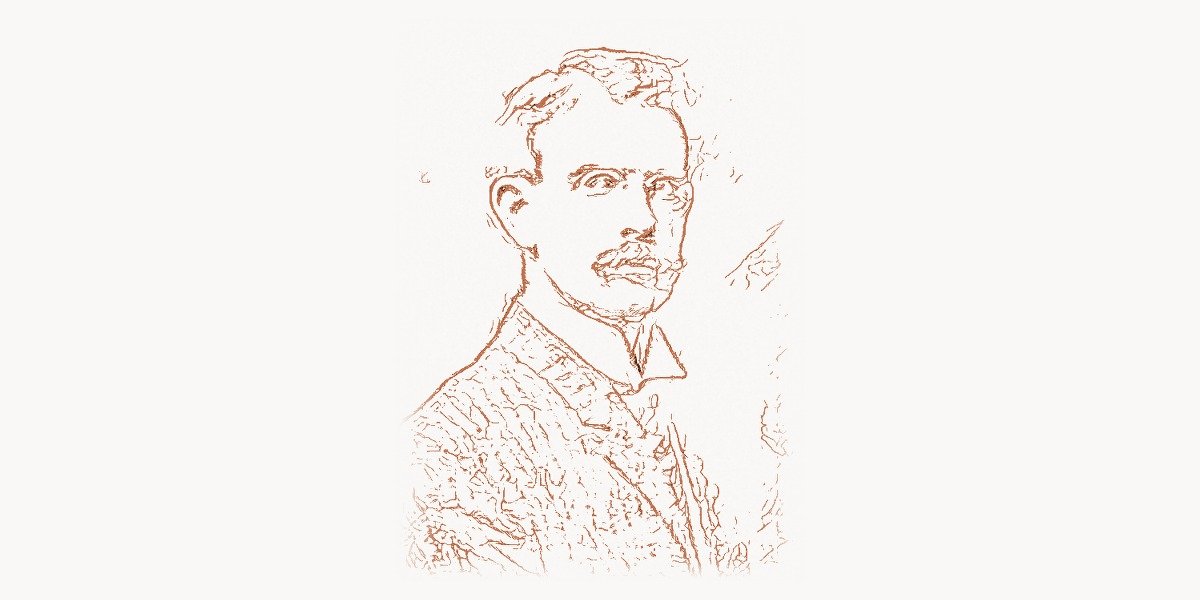
In the early 1960s, while most computer scientists focused on making programs run faster on existing hardware, a quiet British mathematician named Peter Landin was asking a different question entirely: what if programming languages could be understood as a branch of mathematics? His answers to that question — the SECD machine, the concept of closures, the off-side rule, and the language ISWIM — did not produce commercial products or corporate empires. Instead, they rewired the theoretical foundations of programming itself. Every time you write a lambda expression in JavaScript, define a closure in Python, or rely on indentation-based syntax in Haskell, you are working with ideas that Landin formalized decades before they entered mainstream practice. He was not building tools for the programmers of his era. He was building the intellectual infrastructure for the programmers of ours.
Early Life and Education
Peter John Landin was born on June 5, 1930, in Sheffield, England. He grew up in a working-class family during the Depression era, a background that shaped his unpretentious approach to intellectual work throughout his life. Sheffield in the 1930s and 1940s was an industrial city defined by steel production, not a place that naturally produced theoretical computer scientists. But Landin showed exceptional mathematical ability from an early age, and his talent earned him opportunities that his background might otherwise have denied him.
Landin attended King Edward VII School in Sheffield, one of the city’s grammar schools, where his mathematical gifts became apparent to his teachers. After completing his secondary education, he went on to study mathematics at Clare College, Cambridge, graduating in the early 1950s. Cambridge exposed Landin to the rich tradition of British mathematical logic — the intellectual lineage running from Bertrand Russell and Alfred North Whitehead through Alan Turing and on to the emerging field of computation theory. This grounding in pure mathematics and logic, rather than in engineering or electronics, profoundly shaped Landin’s approach to computing. Where most of his contemporaries saw computers as machines to be programmed, Landin saw them as systems to be understood mathematically.
After Cambridge, Landin worked briefly in industry before joining the staff at Queen Mary College (now Queen Mary University of London) in the late 1950s. It was there, and later at the Imperial College London and University College London, that he would produce the work that secured his place in the history of computer science. His academic career was unorthodox by modern standards — he published relatively few papers, but each one was dense with ideas that took the field years or even decades to fully absorb.
The SECD Machine Breakthrough
In 1964, Landin published a paper titled “The Mechanical Evaluation of Expressions” in The Computer Journal. This paper introduced the SECD machine, an abstract computing device designed to evaluate expressions in the lambda calculus. The significance of this work is difficult to overstate: it provided the first practical bridge between Alonzo Church’s lambda calculus — a purely mathematical formalism — and actual computation on real machines.
Technical Innovation
The SECD machine is a stack-based abstract machine consisting of four registers, each holding a list structure. The name itself is an acronym for these four components:
- S (Stack): The main working stack where intermediate results of computation are stored during evaluation. When the machine evaluates an expression, partial results accumulate here.
- E (Environment): A structure that maps variable names to their values. This is where the machine looks up the meaning of a variable when it encounters one during evaluation. The environment is the key innovation — it allows the machine to handle variable binding correctly, including nested scopes and function arguments.
- C (Control): A list of instructions or expressions still to be evaluated. This serves as the program counter in a conventional machine, but instead of pointing to a single instruction, it contains the entire remaining computation.
- D (Dump): A stack of saved states. When the machine begins evaluating a function application, it saves the current S, E, and C registers onto the dump before starting the function body. When the function returns, the machine restores the saved state from the dump and places the result on the restored stack.
The elegance of the SECD machine lies in how these four components interact to evaluate lambda calculus expressions mechanically. Consider how the machine handles a function application. When it encounters an expression like (f x), it evaluates f to obtain a closure (a function paired with its defining environment), evaluates x to obtain an argument value, then saves its current state on the dump, extends the closure’s environment with the new binding, and begins evaluating the function body. When evaluation completes, the result sits on the stack, and the machine restores the previous state from the dump.
-- Conceptual SECD machine state transitions
-- Evaluating: (lambda x. x + 1) 5

-- Initial state:
-- S: []
-- E: [global bindings]
-- C: [apply (lambda x. x+1) 5]
-- D: []

-- Step 1: Evaluate the argument 5
-- S: [5]
-- E: [global bindings]
-- C: [apply (lambda x. x+1)]
-- D: []

-- Step 2: Save state, enter function body
-- S: []
-- E: [x=5, global bindings]
-- C: [x + 1]
-- D: [([], [global bindings], [])]

-- Step 3: Look up x in environment, compute x+1
-- S: [6]
-- E: [x=5, global bindings]
-- C: []
-- D: [([], [global bindings], [])]

-- Step 4: Restore from dump, place result
-- S: [6]
-- E: [global bindings]
-- C: []
-- D: []
-- Result: 6
This may appear straightforward in retrospect, but in 1964, no one had provided a clean, mechanical procedure for evaluating lambda calculus expressions with proper variable scoping. The SECD machine solved a problem that had been open since Church published the lambda calculus in the 1930s: how do you actually compute with these expressions in a systematic, implementable way?
Why It Mattered
The SECD machine mattered for several interconnected reasons. First, it demonstrated that the lambda calculus was not merely a mathematical curiosity but a viable basis for practical computation. John McCarthy’s Lisp (1958) had already shown that lambda-like constructs could appear in a programming language, but McCarthy’s original implementation had a well-known scoping bug (dynamic scoping instead of lexical scoping). Landin’s SECD machine showed how to evaluate lambda expressions with correct lexical scoping — the behavior that mathematicians expected and that programmers eventually demanded.
Second, the SECD machine became the template for implementing functional programming languages. When researchers at the University of Edinburgh developed ML in the 1970s under Robin Milner, the SECD machine was a key reference point for their implementation strategy. When Simon Peyton Jones and his colleagues designed the STG machine for compiling Haskell in the late 1980s, they were building on the conceptual framework that Landin had established. The G-machine, the TIM (Three Instruction Machine), and the ABC machine — all abstract machines developed for lazy functional language implementation — are intellectual descendants of the SECD machine.
Third, and perhaps most fundamentally, the SECD machine introduced the concept of the environment as an explicit data structure in computation. Before Landin, the idea that a computation carried with it a record of the bindings in effect at its point of definition was not clearly articulated in implementation terms. The environment register of the SECD machine made this idea concrete and mechanizable, directly leading to the concept of closures.
Other Major Contributions
While the SECD machine alone would have secured Landin’s reputation, his contributions extended well beyond it. Three additional innovations — closures, the off-side rule, and the language ISWIM — each independently influenced the trajectory of programming language design.
The term “closure” as used in programming originates with Landin. In his 1964 paper, he described a closure as a lambda expression paired with the environment in which it was defined. This pairing is necessary to ensure that when a function is applied, the free variables in its body are resolved using the bindings that were in scope when the function was created, not the bindings in scope at the point of application. This distinction — between lexical (static) scoping and dynamic scoping — is one of the most important concepts in programming language theory.
Today, closures are ubiquitous. JavaScript relies on them so heavily that understanding closures is considered a prerequisite for competent JavaScript programming. Python’s nested functions, Ruby’s blocks and procs, Swift’s closure expressions, and Rust’s closures all implement the concept that Landin named and formalized in 1964. When a React developer writes a callback that captures variables from its enclosing scope, they are using closures exactly as Landin defined them. Modern development environments take closures for granted, but the concept required someone to first see that functions and their environments needed to travel together as a unit.
In 1966, Landin published “The Next 700 Programming Languages” in the Communications of the ACM. This paper introduced ISWIM (If You See What I Mean), a hypothetical programming language that Landin used to illustrate how programming languages could be understood as syntactic variations on a common semantic core — the lambda calculus with a few extensions. ISWIM was never implemented as a complete language, but its influence on language design was enormous. It introduced the where clause for local definitions, pattern matching in function definitions, and an operator-based syntax that balanced mathematical notation with readability.
-- ISWIM-style notation (Landin, 1966)
-- This syntax influenced ML, Haskell, and many other languages

-- Function definition with where clause
quadratic(a, b, c, x) = a * x^2 + b * x + c

-- Local definitions using 'where'
roots(a, b, c) = ((-b + d) / e, (-b - d) / e)
  where d = sqrt(b^2 - 4*a*c)
        e = 2 * a

-- The off-side rule: indentation determines block structure
-- Any line indented further than the 'where' keyword
-- is considered part of the where clause

factorial(n) =
  1,                if n = 0
  n * factorial(n-1), otherwise
The paper’s title was deliberately provocative. Landin argued that the proliferation of programming languages — FORTRAN, COBOL, ALGOL, Lisp, and dozens of others — obscured the fact that most of them were variations on a small set of underlying ideas. Rather than designing the next 700 languages from scratch, he suggested, the field should understand the common semantic core and treat individual languages as syntactic sugar over that core. This perspective — that programming languages are surface syntax over a shared foundation — became a guiding principle for the denotational semantics movement and continues to influence how programming language researchers think about their field.
The off-side rule, also introduced in “The Next 700 Programming Languages,” is Landin’s rule for using indentation to denote block structure. The name comes from football (soccer): a player is offside if they are beyond a certain line on the field. Similarly, in Landin’s rule, a token is “off-side” if it is indented less than the token that started the current block. Any line indented further than the start of the current construct is considered part of that construct; a line at the same indentation level or less terminates it.
The off-side rule eliminated the need for explicit block delimiters like braces or begin/end keywords in many contexts. Python is the most famous language to adopt this rule — its entire block structure is determined by indentation, following Landin’s principle directly. Haskell uses the off-side rule for its where, let, do, and of constructs. F# applies it throughout the language. YAML, though not a programming language, uses indentation-based structure that follows the same principle. Every time a Python programmer relies on indentation to define a block, they are using a syntactic convention that Landin formalized in 1966.
Philosophy and Approach
Landin’s intellectual approach was distinguished by a conviction that programming could and should be grounded in mathematics. This was not a novel position — McCarthy had drawn on lambda calculus for Lisp, and Backus would later advocate for mathematical foundations in his 1977 Turing Award lecture. But Landin pursued this conviction with unusual rigor and consistency, treating programming language design as a problem in applied mathematics rather than as an engineering challenge to be solved by intuition and pragmatism.
Key Principles
Landin believed that the lambda calculus, extended with a few carefully chosen primitives, provided a sufficient foundation for all of programming. This was a radical claim in the 1960s, when programming languages were designed primarily to match the architecture of the hardware they ran on. Fortran’s design reflected the IBM 704’s instruction set. COBOL reflected the data processing needs of business computing. Assembly language was, by definition, a direct encoding of the machine. Landin argued that this hardware-centric approach was a mistake — that programming languages should be designed to express computation clearly for humans, and that the lambda calculus provided the right level of abstraction for doing so.
A second key principle was Landin’s insistence on semantic clarity. He distinguished sharply between the syntax of a language (how programs look) and its semantics (what programs mean). Many of the confusions in programming language design, he argued, arose from conflating these two levels. A language might have clear, readable syntax but ambiguous or poorly understood semantics, leading to programs that looked correct but behaved unexpectedly. By grounding semantics in lambda calculus, Landin provided a framework where the meaning of every construct could be precisely defined through translation into a well-understood mathematical formalism.
Landin also valued economy of concepts. He preferred a small number of powerful, composable primitives over a large collection of specialized features. ISWIM exemplified this: it had very few built-in constructs, but those constructs combined flexibly to express a wide range of computational patterns. This preference for minimalism and composability influenced the design of ML, Haskell, and Scheme — languages that similarly aim for a small, orthogonal core. Guy Steele’s work on Scheme, in particular, explicitly pursued the goal of a minimal language built on lambda calculus, an approach that directly echoes Landin’s philosophy.
Unlike many theoreticians, Landin was also deeply engaged with the political and social dimensions of computing. He was active in leftist politics in Britain and was concerned about the societal implications of computing technology — issues of surveillance, automation, and the concentration of power through information systems. This engagement gave his work a humanistic dimension that pure formalists often lacked. He did not see mathematics as an escape from human concerns but as a tool for clarifying them. Managing the complexity of modern software projects, whether using task management platforms or formal methods, requires the kind of disciplined thinking that Landin championed throughout his career.
Legacy and Impact
Peter Landin died on June 3, 2009, just two days before what would have been his 79th birthday. His legacy is unusual in computer science: he is cited more often than he is recognized by name. Millions of programmers use closures, indentation-based syntax, and where clauses without knowing that these features trace back to a single person working in London in the 1960s.
The direct line from Landin to modern functional programming is clear and well-documented. His SECD machine and the concept of closures provided the theoretical machinery that Robin Milner and his colleagues used when designing ML at the University of Edinburgh in the 1970s. ML’s type inference, pattern matching, and first-class functions all rest on the foundation that Landin built. From ML came Standard ML and OCaml, and from the ML tradition came Haskell, whose design committee explicitly acknowledged the influence of Landin’s work. Philip Wadler, one of Haskell’s principal designers, has written extensively about how Landin’s ideas permeate the language.
The influence extends beyond the functional programming community. JavaScript, the most widely deployed programming language in history, adopted closures as a core mechanism — they are fundamental to its module patterns, event handling, and asynchronous programming model. Python’s indentation-based block structure is Landin’s off-side rule in mainstream production use. Swift, Kotlin, Rust, and TypeScript all include closures as first-class language features. When organizations build software using modern web development frameworks, they rely on language features that Landin conceived half a century ago.
Landin’s “The Next 700 Programming Languages” remains one of the most cited papers in programming language research. Its central argument — that the diversity of programming languages conceals a shared semantic foundation — continues to shape how researchers and language designers think about their work. The denotational semantics movement led by Christopher Strachey and Dana Scott, which became the dominant approach to programming language semantics in the 1970s and 1980s, built directly on Landin’s insight that lambda calculus could serve as a universal semantic framework.
The SECD machine influenced not only functional language implementation but also the broader field of abstract machine design. The Java Virtual Machine (JVM), the Common Language Runtime (CLR), and WebAssembly are all descendants of the tradition of abstract machines that Landin helped establish — the idea that you can define a language’s execution model independently of any particular hardware architecture and then implement that abstract machine on whatever physical hardware is available.
Perhaps Landin’s most enduring contribution is a way of thinking. He demonstrated that programming language design is not merely an engineering activity but a mathematical one, that the features we build into our languages have formal properties that can be studied, and that clarity about semantics leads to better languages, better programs, and ultimately better software. In a field that often prioritizes novelty and speed of delivery, Landin’s work stands as a reminder that deep, careful thinking about foundations produces ideas that last for decades.
Key Facts
- Full name: Peter John Landin
- Born: June 5, 1930, Sheffield, England
- Died: June 3, 2009, England
- Education: Mathematics, Clare College, Cambridge
- Known for: SECD machine, closures, the off-side rule, ISWIM language
- Key paper: “The Mechanical Evaluation of Expressions” (1964) — introduced the SECD machine and closures
- Key paper: “The Next 700 Programming Languages” (1966) — introduced ISWIM and the off-side rule
- Affiliations: Queen Mary University of London, Imperial College London, University College London
- Awards: BCS Distinguished Fellow, honorary doctorates from multiple institutions
- Legacy: Closures used in every major modern programming language; off-side rule adopted by Python, Haskell, and F#; SECD machine influenced all functional language implementations
Frequently Asked Questions
What is the SECD machine and why was it important?
The SECD machine is an abstract computing device that Peter Landin designed in 1964 to evaluate lambda calculus expressions mechanically. Its name stands for its four registers: Stack, Environment, Control, and Dump. The machine was important because it provided the first clean, implementable method for evaluating lambda calculus expressions with correct lexical scoping. Before the SECD machine, the lambda calculus was a mathematical formalism without a standard evaluation procedure suitable for implementation. Landin’s machine bridged the gap between theory and practice, showing that lambda calculus could be the basis for real programming language implementations. It became the template for implementing functional programming languages including ML and Haskell, and its conceptual framework influenced the design of virtual machines like the JVM and CLR.
How did Peter Landin invent closures?
Landin introduced the concept of closures in his 1964 paper “The Mechanical Evaluation of Expressions” as part of the SECD machine’s evaluation mechanism. He observed that when a function is defined inside another function, the inner function may reference variables from the outer function’s scope. To evaluate such a function correctly when it is called later — possibly in a completely different context — the machine needs to remember the variable bindings that were in effect when the function was defined. Landin’s solution was to package the function’s code together with a snapshot of its defining environment into a single data structure, which he called a closure. This seemingly simple idea solved the problem of lexical scoping in a clean, general way and became one of the most widely used concepts in programming. Today, closures are fundamental to JavaScript, Python, Ruby, Swift, Rust, and virtually every modern programming language.
What is the off-side rule in programming?
The off-side rule is a syntactic convention introduced by Peter Landin in his 1966 paper “The Next 700 Programming Languages.” The rule states that the block structure of a program can be determined by indentation rather than by explicit delimiters like braces or begin/end keywords. A line that is indented further than the start of the current construct is considered part of that construct; a line at the same level or less indentation terminates it. The name is a reference to football’s offside rule. Python is the most prominent language to adopt the off-side rule — its entire block structure depends on indentation. Haskell uses it for where clauses, let expressions, do notation, and case alternatives. F#, Nim, and several other languages also use indentation-based scoping. The off-side rule remains one of the most debated design choices in programming, with advocates praising its visual clarity and critics noting that invisible whitespace characters can cause subtle bugs.