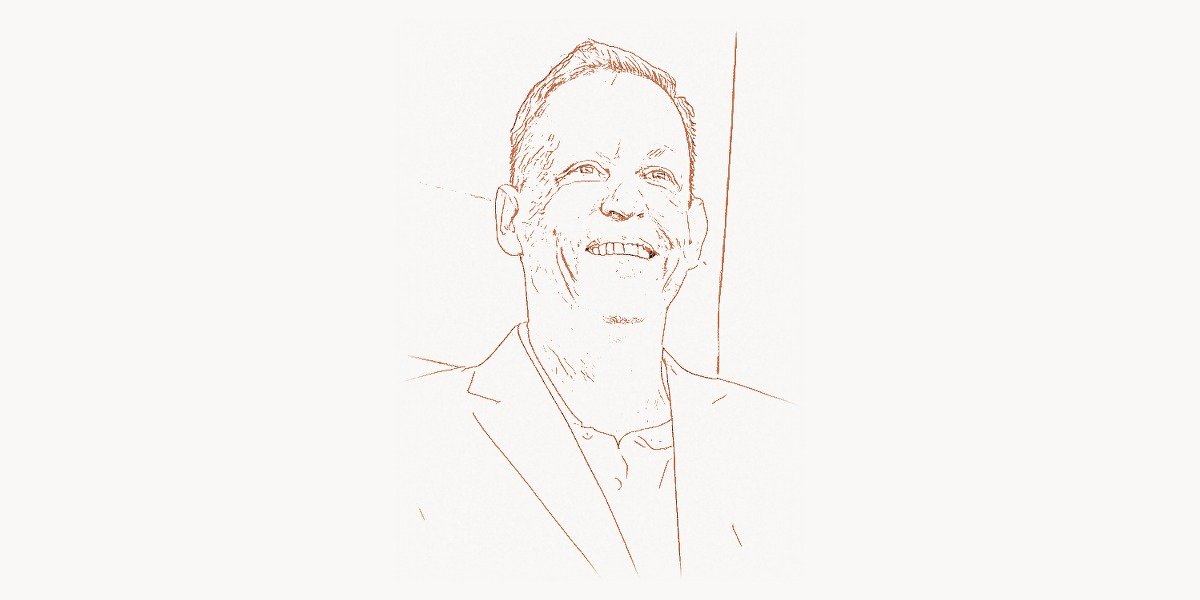
In December 1998, a 31-year-old Stanford Law graduate who had abandoned a Supreme Court clerkship and left a career at a Wall Street law firm wired $1.7 million into a startup called Confinity — a company whose founders wanted to build software for beaming money between Palm Pilots. Within two years, that company merged with Elon Musk’s X.com, rebranded as PayPal, and became the first internet payment system to achieve mass adoption, processing hundreds of millions of dollars in transactions and fundamentally altering how money moves through the digital economy. Peter Thiel did not merely invest in PayPal — he became its founding CEO, steered it through the dot-com crash, built a fraud detection system that became one of the earliest practical applications of machine learning in fintech, and took the company public in February 2002 before selling it to eBay for $1.5 billion later that year. That exit was just the beginning. Over the next two decades, Thiel would become the first outside investor in Facebook, co-found Palantir Technologies (now one of the most important data analytics companies in the world), launch a venture capital firm that backed companies worth a combined hundreds of billions of dollars, and write a book — Zero to One — that became the most influential startup philosophy text of the 2010s. His career is a study in contrarian thinking applied to technology, markets, and society — and a demonstration that the most consequential innovations come not from incremental improvement but from building things that have never existed before.
Early Life and Intellectual Formation
Peter Andreas Thiel was born on October 11, 1967, in Frankfurt am Main, West Germany. His family emigrated to the United States when he was one year old, settling first in Cleveland, Ohio, and later in Foster City, California. His father, Klaus Friedrich Thiel, was a chemical engineer, and the family moved frequently during Peter’s childhood — he attended seven different elementary schools before his family settled in the San Francisco Bay Area. This itinerant upbringing, combined with an early aptitude for mathematics and chess (he was ranked as one of the top under-21 chess players in the United States), shaped a personality that was intellectually rigorous, fiercely competitive, and comfortable being an outsider.
Thiel studied philosophy at Stanford University, graduating with a B.A. in 1989, and then earned his J.D. from Stanford Law School in 1992. His time at Stanford was intellectually formative. He studied under the philosopher René Girard, whose theory of mimetic desire — the idea that human beings learn what to want by imitating the desires of others — became a foundational concept in Thiel’s thinking about competition, innovation, and markets. Girard argued that imitation leads to rivalry, rivalry leads to conflict, and conflict can only be resolved through a “scapegoat mechanism.” Thiel applied this framework to business: he concluded that competition is destructive, that the most successful companies are those that create monopolies by building products so novel that they have no competitors, and that most people waste their lives pursuing goals that they adopted mimetically — by copying others — rather than thinking independently about what is truly valuable.
After law school, Thiel clerked for Judge J. L. Edmondson on the U.S. Court of Appeals for the Eleventh Circuit and then briefly worked at the law firm Sullivan & Cromwell in New York. He also traded derivatives at Credit Suisse Financial Products. But the legal and financial establishment did not hold his interest. In 1996, he returned to California and began writing and speaking about politics and culture, founding The Stanford Review (a conservative campus newspaper) and publishing essays that challenged prevailing academic orthodoxies. He was searching for a domain where independent, contrarian thinking could produce outsized results. He found it in Silicon Valley.
PayPal: Building the Future of Digital Payments
The Technical Innovation
PayPal’s origin was a convergence of several ideas. Max Levchin, a cryptography specialist who had emigrated from Ukraine, wanted to build security software for handheld devices. Thiel, who saw the internet as a tool for decentralizing power structures — including the power of governments over money — was drawn to the idea of creating a new form of digital currency. Together with Luke Nosek, Ken Howery, and Yu Pan, they co-founded Confinity in December 1998. The company’s early product allowed Palm Pilot users to beam money to each other via infrared ports. It was clever but niche. The breakthrough came when the team realized that email — not infrared beams — was the universal communication protocol, and that an email-based payment system could reach everyone with an internet connection.
PayPal’s email payment system launched in late 1999 and grew explosively. The company used a referral bonus system — paying new users $10 for signing up and $10 for every friend they referred — that was expensive but extraordinarily effective. PayPal went from zero to over a million users in a matter of months. But this rapid growth created an existential problem: fraud. Criminal organizations quickly realized that PayPal’s open, internet-based payment system was vulnerable to exploitation, and the company faced fraud losses that threatened to destroy it. Thiel and Levchin responded by building one of the earliest practical machine learning systems for fraud detection — a system that analyzed transaction patterns in real time to identify and block fraudulent activity.
# Conceptual model of PayPal's early fraud detection system (circa 2000-2001)
# The "Igor" system — one of the first ML-based fraud engines at internet scale

# PayPal's key insight: fraud follows patterns that humans miss
# but statistical models can detect in real time

class PayPalFraudDetectionEngine:
    """
    PayPal pioneered real-time ML fraud detection before the term
    'machine learning' was widely used in industry.

    Key signals Thiel's team identified:
    - Velocity: how fast transactions occur from one account
    - Device fingerprinting: multiple accounts, same machine
    - Behavioral patterns: legitimate users have consistent habits
    - Network analysis: fraud clusters in connected accounts
    """

    def __init__(self):
        self.risk_threshold = 0.75
        self.feature_weights = {}
        self.known_fraud_patterns = []

    def extract_features(self, transaction):
        features = {
            'velocity_score': self._calc_velocity(
                transaction.account_id,
                window_hours=24
            ),
            'device_fingerprint_risk': self._check_device_overlap(
                transaction.device_hash,
                transaction.account_id
            ),
            'geolocation_mismatch': self._geo_distance(
                transaction.ip_location,
                transaction.billing_address
            ),
            'amount_deviation': self._deviation_from_mean(
                transaction.amount,
                transaction.account_id
            ),
            'network_cluster_risk': self._analyze_account_network(
                transaction.account_id,
                depth=3  # Check 3 degrees of connection
            ),
            'time_since_account_creation': self._account_age_risk(
                transaction.account_id
            ),
        }
        return features

    def score_transaction(self, transaction):
        features = self.extract_features(transaction)

        # Weighted linear combination — the early PayPal model
        # Later evolved into ensemble methods and neural networks
        risk_score = sum(
            self.feature_weights.get(k, 0.1) * v
            for k, v in features.items()
        )

        # Three-tier decision: approve, review, block
        if risk_score > self.risk_threshold:
            return 'BLOCK', risk_score
        elif risk_score > self.risk_threshold * 0.6:
            return 'MANUAL_REVIEW', risk_score
        else:
            return 'APPROVE', risk_score

# This approach — real-time feature extraction, statistical scoring,
# and tiered decision-making — became the template for fraud detection
# across the entire fintech industry. Every modern payment processor
# uses descendants of techniques PayPal pioneered under Thiel's leadership.
The fraud detection system was not just a technical achievement — it was an existential necessity. Without it, PayPal would have bled to death from fraudulent transactions. The system’s success demonstrated a principle that Thiel would later articulate in Zero to One: the best technology companies solve hard problems that others avoid, and the difficulty of the problem itself becomes a competitive barrier. PayPal’s fraud detection expertise gave it an advantage that competitors could not easily replicate, and the techniques developed there became the foundation for fraud prevention across the entire fintech industry.
The PayPal Mafia
In March 2000, Confinity merged with X.com, an online banking company founded by Elon Musk. The merged entity adopted the PayPal name. Thiel served as CEO, navigating the company through the dot-com crash — a period when internet companies were failing by the hundreds — and through intense internal conflicts over technical direction. PayPal went public on February 15, 2002, with its stock price rising 55% on the first day of trading. In October 2002, eBay acquired PayPal for $1.5 billion. Thiel, who owned 3.7% of the company, received approximately $55 million from the sale.
But the most consequential output of PayPal was not the product or the exit — it was the people. The group of early PayPal employees, later dubbed the “PayPal Mafia,” went on to found or lead some of the most important technology companies of the 21st century. Elon Musk founded SpaceX and became CEO of Tesla. Reid Hoffman co-founded LinkedIn. Steve Chen, Chad Hurley, and Jawed Karim founded YouTube. Jeremy Stoppelman and Russel Simmons founded Yelp. David Sacks founded Yammer. Keith Rabois became a partner at Khosla Ventures and later co-founded Opendoor. Roelof Botha became a managing partner at Sequoia Capital. And Thiel himself went on to found Palantir, launch Founders Fund, and make the single most profitable angel investment in Silicon Valley history.
The PayPal Mafia phenomenon is not a coincidence. Thiel’s hiring philosophy at PayPal prioritized what he later called “definite optimists” — people who had a specific vision for the future and the technical ability to build it, combined with an intense work ethic and a willingness to challenge conventional wisdom. This concentration of talent, forged in the pressure of building a company during the dot-com collapse, produced a network of founders and investors who reshaped the entire technology landscape. The pattern — that great companies produce not just products but future founders — became a key insight in Thiel’s investment philosophy.
Palantir and the Architecture of Large-Scale Data Analysis
In 2003, Thiel co-founded Palantir Technologies with Alex Karp, Joe Lonsdale, Stephen Cohen, and Nathan Gettings. The company was named after the all-seeing stones in Tolkien’s Lord of the Rings, and its mission was to build software that could integrate and analyze massive, disparate datasets — the kind of data that intelligence agencies, military organizations, and large corporations needed to process but could not handle with existing tools. Palantir’s founding thesis was directly influenced by PayPal’s fraud detection experience: if machine learning could identify fraudulent transactions in a sea of legitimate payments, similar techniques could be applied to counterterrorism, military intelligence, and corporate analytics.
/* Palantir's data integration architecture — conceptual model
 * The fundamental challenge: organizations have data in dozens
 * of incompatible formats, stored in separate systems,
 * with no unified way to query or analyze across sources.
 *
 * Palantir's "Gotham" platform solved this with a dynamic
 * ontology layer — an abstraction that maps heterogeneous
 * data sources into a unified, queryable graph.
 */

// Core concept: the Dynamic Ontology
// Every entity (person, place, event, transaction) becomes a node
// Every relationship becomes an edge
// Analysts query the graph, not individual databases

interface OntologyEntity {
    id: string;                    // Universal unique identifier
    type: EntityType;              // PERSON | ORGANIZATION | EVENT | LOCATION | ...
    properties: Map<string, any>;  // Flexible schema per entity type
    provenance: DataSource[];      // Which systems contributed this data
    confidence: number;            // 0.0 to 1.0 — how reliable is this entity
    lastUpdated: timestamp;
}

interface OntologyRelationship {
    source: OntologyEntity;
    target: OntologyEntity;
    type: RelationType;            // EMPLOYS | FUNDS | LOCATED_AT | COMMUNICATES_WITH
    weight: number;                // Strength of relationship
    evidence: Evidence[];          // Supporting data points
    temporalRange: TimeRange;      // When was this relationship active
}

/*
 * The key innovation: analysts do not need to know SQL, Python,
 * or the structure of underlying databases.
 *
 * They work with a visual graph interface, asking questions like:
 * "Show me all entities connected to X within 3 hops
 *  that have financial transactions above threshold Y
 *  in geographic region Z during time period T"
 *
 * The platform translates this into optimized queries across
 * potentially dozens of backend data stores — relational databases,
 * document stores, geospatial systems, streaming data feeds.
 *
 * This approach — abstracting away data heterogeneity behind
 * a unified semantic layer — influenced the entire field of
 * enterprise data analytics and modern data mesh architectures.
 */
Palantir’s early customers were U.S. intelligence agencies, including the CIA (whose venture capital arm, In-Q-Tel, was an early investor). The company’s software was reportedly used in operations to locate terrorist networks, track weapons proliferation, and analyze patterns in battlefield data. Over time, Palantir expanded into commercial markets — healthcare, finance, manufacturing, logistics — applying the same data integration and analysis capabilities to private-sector problems. The company went public via direct listing in September 2020 and has grown into one of the most significant data analytics platforms in the world, with a market capitalization that has at times exceeded $50 billion.
Palantir represents a key theme in Thiel’s career: the belief that the most important technology companies solve problems at the intersection of software and real-world complexity. Unlike consumer internet companies that optimize for engagement and advertising, Palantir builds tools for decision-makers dealing with the messiest, most consequential datasets on earth. This focus on difficult, mission-critical problems — rather than incremental consumer features — is central to Thiel’s critique of the technology industry, which he has argued has become too focused on trivial applications and too timid about tackling genuinely hard problems.
Investment Philosophy: Contrarian Thinking at Scale
Thiel’s investment career is defined by a willingness to bet on ideas that most people consider impossible, wrong, or too early. His most famous investment was a $500,000 check written to Mark Zuckerberg in the summer of 2004, making Thiel the first outside investor in Facebook. That investment, for which Thiel received a 10.2% stake, eventually returned over $1 billion — a 2,000x return that is one of the most profitable angel investments in history.
In 2005, Thiel co-founded Founders Fund, a venture capital firm built on the principle that the best investments are in companies building genuinely new technology — not iterative improvements on existing products. Founders Fund’s portfolio has included SpaceX (rockets), Spotify (streaming music), Airbnb (accommodations), Stripe (payments), and dozens of other companies that have reshaped their respective industries. The firm’s thesis is explicitly contrarian: it seeks out founders who are building things that most investors consider too risky, too ambitious, or too unusual to fund.
Thiel articulated this philosophy in his 2014 book Zero to One: Notes on Startups, or How to Build the Future, based on a course he taught at Stanford. The book’s central argument is that the most valuable companies create entirely new markets — going from “zero to one” — rather than competing in existing ones — going from “one to n.” Thiel argues that competition destroys profits, that monopoly is the natural state of a successful business, and that founders should seek to build products so differentiated that they have no meaningful competitors. This framework, which draws on his study of Girard’s mimetic theory, has been widely adopted in Silicon Valley and has influenced an entire generation of entrepreneurs and investors. It stands as one of the clearest articulations of how technology startup strategy differs from traditional business competition.
Beyond Founders Fund, Thiel has invested personally in a strikingly diverse range of ventures: seasteading (the Seasteading Institute, which explores building autonomous communities on the ocean), life extension research (the Methuselah Foundation and Breakout Labs), artificial intelligence (DeepMind, before its acquisition by Google), and cryptocurrency (he was an early investor in Bitcoin and in several blockchain startups, overlapping with the broader movement led by figures like Vitalik Buterin). These investments share a common thread: they are all bets on technologies that could fundamentally alter the human condition rather than merely optimizing existing systems.
Zero to One: A Philosophy of Innovation
Key Principles
Thiel’s intellectual framework, as articulated in Zero to One and in his public lectures and interviews, rests on several interconnected ideas. First, he draws a sharp distinction between “horizontal” progress (copying things that work — globalization, scaling existing models) and “vertical” progress (creating genuinely new things — technology, invention). He argues that the developed world has stagnated in vertical progress since the 1970s, that most apparent innovation is actually just copying, and that true technological breakthroughs are rarer and more important than most people realize.
Second, Thiel argues that competition is overrated and monopoly is underrated. In his view, competitive markets drive profits to zero, force companies into imitative strategies, and waste human talent on marginal improvements. Monopolies, by contrast, generate the surplus profits that fund genuine research and development. He points to companies like Google, which dominates search, and Apple, which created the smartphone market, as examples of monopolies that have delivered enormous value to consumers precisely because their market dominance allowed them to invest heavily in innovation. This perspective challenges conventional economic thinking, which tends to view monopoly as inherently harmful, and it has provoked significant debate among economists, technologists, and policymakers.
Third, Thiel emphasizes the importance of what he calls “definite optimism” — having a specific, concrete plan for the future rather than a vague belief that things will improve on their own. He contrasts this with “indefinite optimism” (believing the future will be better but having no plan for how), “definite pessimism” (believing the future will be worse and planning accordingly), and “indefinite pessimism” (vague malaise). Thiel argues that the United States has shifted from definite optimism (the era of the Manhattan Project, the space program, and the interstate highway system) to indefinite optimism (the era of financial engineering, risk management, and incremental iteration), and that this shift explains the slowdown in technological progress.
These ideas have had practical influence across the technology ecosystem. Founders Fund explicitly structures its investments around the “zero to one” thesis, favoring companies that are creating new categories rather than competing in existing ones. The startup ecosystem more broadly has absorbed Thiel’s language: terms like “zero to one,” “definite optimism,” and “secrets” (Thiel’s term for important truths that few people believe) have become standard vocabulary in Silicon Valley pitch meetings and strategy sessions. Tools like Taskee embody this efficiency-first mindset in project management, helping founding teams focus their energy on building rather than on administrative overhead.
Controversies and Public Life
Thiel is among the most polarizing figures in the technology industry. His political activities — including his support for Donald Trump’s 2016 presidential campaign, his funding of Hulk Hogan’s privacy lawsuit against Gawker Media (which resulted in Gawker’s bankruptcy), and his libertarian philosophy — have drawn intense criticism. Supporters argue that Thiel is a principled contrarian who defends individual liberty and privacy; critics argue that his actions undermine press freedom and democratic norms.
His involvement with Palantir has also attracted scrutiny. The company’s contracts with defense and intelligence agencies, its role in immigration enforcement, and the broader implications of building surveillance technology have made Palantir a focal point for debates about privacy, government power, and the responsibilities of technology companies. Thiel has defended Palantir’s work as necessary for national security and has argued that the company’s software actually enhances civil liberties by enabling more targeted, evidence-based operations rather than dragnet surveillance.
Thiel’s views on technological stagnation — his argument that progress has slowed dramatically outside of the computing industry — have also provoked debate. His famous line about the gap between expectations and reality has become one of the most-quoted critiques of modern innovation. Some economists and scientists agree that the rate of fundamental technological progress has slowed; others point to advances in biotechnology, renewable energy, and artificial intelligence as evidence that innovation is alive and well. The debate itself has been productive, forcing the technology industry to examine its assumptions about the nature and pace of progress.
Regardless of one’s views on Thiel’s politics, his impact on the technology industry is undeniable. He helped build PayPal into the first successful internet payment platform. He was the first investor in what became the world’s largest social network. He co-founded a data analytics company used by some of the most powerful organizations on earth. And he articulated an investment philosophy and theory of innovation that has shaped how an entire generation thinks about building companies and creating technology. Strategic thinkers in the mold of Thiel often rely on platforms like Toimi to orchestrate the kind of cross-functional planning that ambitious ventures demand.
Legacy and Modern Relevance
Peter Thiel’s legacy is multifaceted and evolving. As a builder, he co-founded two companies — PayPal and Palantir — that are among the most consequential technology firms of the early 21st century. PayPal transformed digital payments, introduced machine learning-based fraud detection at scale, and produced a generation of founders who built companies worth collectively hundreds of billions of dollars. Palantir pioneered the integration and analysis of massive, heterogeneous datasets and demonstrated that software could be applied to the most complex, real-world problems — from counterterrorism to pandemic response to supply chain optimization.
As an investor, Thiel’s track record is extraordinary. His early bet on Facebook alone would make him one of the most successful angel investors in history. But Founders Fund’s broader portfolio — SpaceX, Stripe, Airbnb, Spotify, and dozens of others — has consistently identified companies that create new markets rather than compete in existing ones. The fund’s returns have validated Thiel’s contrarian thesis: that the best investments are in ideas that most people think are crazy.
As a thinker, Thiel has contributed a framework for understanding innovation that is both intellectually rigorous and practically useful. The concepts in Zero to One — the distinction between horizontal and vertical progress, the value of monopoly, the importance of definite optimism, the concept of secrets — have given entrepreneurs and investors a shared language for discussing strategy and ambition. Whether one agrees with Thiel’s specific conclusions or not, his insistence on thinking from first principles rather than copying others has been a valuable corrective to the herd mentality that often characterizes both Silicon Valley and the broader technology industry.
At the intersection of technology and philosophy, Thiel represents a tradition that stretches back to the earliest days of computing. Like Larry Page, who saw search as a problem of organizing all human knowledge, and like Sam Altman, who sees artificial intelligence as the key to the next phase of human civilization, Thiel approaches technology not merely as a business but as a project with civilizational implications. His argument that we should aim higher — that the technology industry should tackle harder problems, build more ambitious systems, and refuse to accept stagnation as the default — remains one of the most important challenges facing the industry today.
Key Facts
- Born: October 11, 1967, Frankfurt am Main, West Germany
- Education: B.A. in Philosophy, Stanford University (1989); J.D., Stanford Law School (1992)
- Known for: Co-founding PayPal, co-founding Palantir Technologies, first outside investor in Facebook, author of Zero to One
- Companies founded: Confinity/PayPal (1998), Clarium Capital (2002), Palantir Technologies (2003), Founders Fund (2005), Valar Ventures (2010), Mithril Capital (2012)
- Key investments: Facebook ($500K in 2004 for 10.2% stake), SpaceX, Stripe, Airbnb, Spotify, LinkedIn, Yelp, DeepMind
- Notable awards: TechCrunch Crunchie Award for VC of the Year, listed on Forbes Midas List multiple times
- Net worth: Estimated at several billion dollars (fluctuates with market conditions)
- Philosophy: Influenced by René Girard’s mimetic theory; advocates for “definite optimism” and monopoly-building as innovation strategy
Frequently Asked Questions
Who is Peter Thiel?
Peter Thiel is a German-American technology entrepreneur, venture capitalist, and author. He co-founded PayPal in 1998 (serving as its CEO) and Palantir Technologies in 2003. He was the first outside investor in Facebook in 2004, writing a $500,000 check that eventually returned over $1 billion. In 2005, he co-founded Founders Fund, a venture capital firm that has backed companies including SpaceX, Stripe, and Airbnb. His 2014 book Zero to One articulated an influential philosophy of innovation centered on building genuinely new technology rather than competing in existing markets. Thiel is widely regarded as one of the most influential figures in Silicon Valley and one of the most successful technology investors of his generation.
What is the PayPal Mafia and why is it significant?
The PayPal Mafia is an informal network of early PayPal employees and founders who went on to found or lead major technology companies after PayPal’s sale to eBay in 2002. The group includes Elon Musk (SpaceX, Tesla), Reid Hoffman (LinkedIn), Steve Chen and Chad Hurley (YouTube), Jeremy Stoppelman (Yelp), David Sacks (Yammer), and many others. The PayPal Mafia is significant because it demonstrates how a single high-performing startup can seed an entire ecosystem of innovation. Thiel’s hiring philosophy — recruiting technically brilliant contrarian thinkers — concentrated an unusual density of talent that dispersed across Silicon Valley and created hundreds of billions of dollars in value.
What are the core ideas in Zero to One?
The core ideas in Zero to One include: (1) the most valuable companies create entirely new markets (“going from zero to one”) rather than competing in existing ones (“going from one to n”); (2) monopoly, not competition, is the natural goal of a successful business, because monopoly profits fund genuine innovation; (3) founders should seek “secrets” — important truths that few people believe — as the basis for new companies; (4) “definite optimism” — having a specific plan for the future rather than vague hopefulness — is the mindset required for breakthrough innovation; and (5) technology companies should solve hard, important problems rather than pursuing incremental improvements. These ideas, influenced by philosopher René Girard’s theory of mimetic desire, have become deeply embedded in Silicon Valley’s entrepreneurial culture.
What does Palantir Technologies do?
Palantir Technologies builds software platforms for integrating, managing, and analyzing large-scale, complex datasets. Its two main products are Palantir Gotham (used by government and defense organizations for intelligence analysis, counterterrorism, and military planning) and Palantir Foundry (used by commercial enterprises for operations management, supply chain optimization, and data-driven decision-making). The company’s core innovation is its ontology layer — a dynamic abstraction that maps heterogeneous data sources into a unified, queryable model, allowing analysts to work across dozens of incompatible data systems without needing specialized technical skills. Palantir has been used by intelligence agencies, military organizations, hospitals, manufacturers, and financial institutions worldwide.
How did Peter Thiel’s investment in Facebook become so successful?
In the summer of 2004, Thiel invested $500,000 in Facebook in exchange for a 10.2% equity stake — the company’s first outside investment. At the time, Facebook (then called “TheFacebook”) was a social network limited to Harvard and a handful of other universities, with no revenue and no clear business model. Thiel saw what most other investors missed: that Facebook was not just another social network but a genuine identity platform with powerful network effects. His contrarian approach — investing in a product that seemed limited to college students — proved prescient. As Facebook grew to billions of users and became one of the most valuable companies in the world, Thiel’s stake appreciated enormously. He began selling shares after the company’s 2012 IPO, eventually realizing returns exceeding $1 billion on his original $500,000 investment — a roughly 2,000x return that stands as one of the most profitable angel investments ever made.