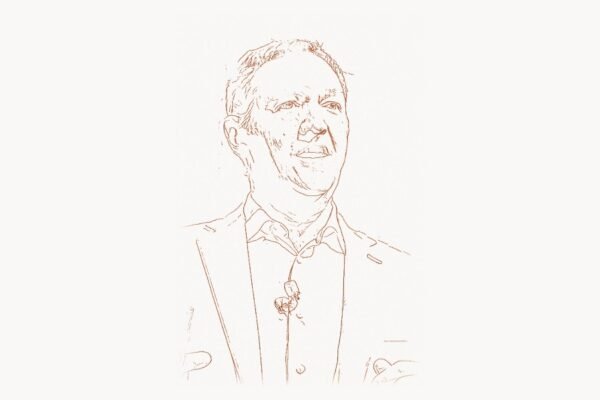
There are computer scientists who build practical tools and those who illuminate the mathematical foundations beneath them. Philip Wadler has done both — and in doing so, he has shaped two of the most important programming languages of the past three decades in ways that most developers use daily without ever knowing his name. As a key designer of Haskell, Wadler introduced type classes and formalized the use of monads for structuring functional programs, giving the language two of its most distinctive and influential features. As the co-creator of Generic Java (GJ) alongside Martin Odersky and Gilad Bracha, he helped bring parametric polymorphism to the world’s most widely deployed programming language, fundamentally changing how millions of Java developers write code. His theoretical work on the propositions-as-types correspondence — the deep connection between mathematical logic and programming — has provided a philosophical framework that continues to guide language design. Whether you write Haskell, Java, Scala, or any language with generics and functional abstractions, you are working in a landscape that Philip Wadler helped build.
Early Life and Path to Technology
Philip Wadler was born in the United States but spent the majority of his professional career in the United Kingdom, where he would become one of the most respected figures in programming language theory. His academic trajectory led him through some of the most important centers of computer science research in the world. He studied at Stanford University and Carnegie Mellon University, earning his PhD in computer science — an education that immersed him in the rigorous mathematical tradition of American computer science during a period when the theoretical foundations of programming were being actively constructed.
The intellectual environment of the late 1970s and early 1980s was particularly fertile for someone with Wadler’s interests. The field of programming language theory was in ferment. The lambda calculus, which John McCarthy had brought from mathematical logic into practical computing with Lisp two decades earlier, was being explored with new sophistication. Robin Milner’s ML language had demonstrated that a statically typed functional language with type inference was not only possible but practical. The Curry-Howard correspondence — the observation that proofs in logic correspond to programs in computation — was evolving from a curiosity into a guiding principle for language design. Wadler absorbed all of these currents and would spend his career weaving them together.
After completing his doctorate, Wadler held positions at several leading research institutions. He spent time at the University of Oxford, where the tradition of formal methods and mathematical reasoning about programs ran deep. He worked at the University of Glasgow, where he collaborated closely with Simon Peyton Jones on the development of Haskell. Eventually, he settled at the University of Edinburgh, where he has been a professor of theoretical computer science for many years. Edinburgh’s School of Informatics, one of the oldest and most respected departments of its kind in the world, provided the ideal environment for Wadler’s distinctive blend of deep theory and practical influence — a department where Alan Turing‘s legacy of connecting mathematical logic to computation remained a living tradition.
The Breakthrough: Designing Haskell’s Core Features
Philip Wadler was a founding member of the Haskell committee, formed in 1987 at the Conference on Functional Programming Languages and Computer Architecture in Portland, Oregon. The committee’s goal was ambitious: to unify the fragmented landscape of lazy functional programming languages into a single, open standard. While the committee included many brilliant minds — Simon Peyton Jones, Paul Hudak, John Hughes, and others — Wadler’s contributions to the language’s design were among the most technically profound and far-reaching.
Type Classes: A New Kind of Polymorphism
Wadler’s most significant contribution to Haskell was the type class system, designed together with Stephen Blott. Type classes solved a problem that had vexed language designers for years: how to provide ad-hoc polymorphism — the ability for a function to behave differently depending on the type of its arguments — in a principled, statically typed way. In languages like C++, this was handled through function overloading and templates, mechanisms that were powerful but ad-hoc and sometimes unpredictable. In dynamically typed languages like Lisp, it was handled through runtime dispatch, sacrificing the safety guarantees of static typing.
Wadler and Blott’s insight was elegant: define a type class as an interface that types can implement, with the compiler automatically selecting the correct implementation based on type information. This sounds superficially similar to interfaces in object-oriented languages, but the mechanism is fundamentally different and more powerful. Type class instances can be defined separately from the type they apply to, they can be constrained by other type classes, and they enable a form of principled overloading that preserves parametric polymorphism. The result was a system that gave Haskell both the flexibility of ad-hoc polymorphism and the safety guarantees of parametric polymorphism — a combination that no previous language had achieved so cleanly.
-- Wadler's type class mechanism in action
-- Define a type class for values that can be pretty-printed
class Pretty a where
    pretty :: a -> String

-- Instances can be defined for any type, anywhere
instance Pretty Int where
    pretty n = show n

instance Pretty Bool where
    pretty True  = "yes"
    pretty False = "no"

-- Type class constraints enable principled ad-hoc polymorphism
instance Pretty a => Pretty [a] where
    pretty xs = "[" ++ intercalate ", " (map pretty xs) ++ "]"

-- Monads: Wadler's formalization for sequencing computations
-- The Maybe monad handles failure without exceptions
safeDivide :: Int -> Int -> Maybe Int
safeDivide _ 0 = Nothing
safeDivide x y = Just (x `div` y)

-- Monadic sequencing composes fallible computations elegantly
compute :: Int -> Int -> Int -> Maybe Int
compute a b c = do
    x <- safeDivide a b    -- fails gracefully if b is 0
    y <- safeDivide x c    -- fails gracefully if c is 0
    return (x + y)         -- succeeds only if both divisions succeed
This code demonstrates the two features most closely associated with Wadler's contributions to Haskell. The type class Pretty shows how ad-hoc polymorphism works: the pretty function behaves differently for Int, Bool, and lists, but all of this is resolved at compile time with full type safety. The monadic computation in compute shows how monads allow sequencing of effectful computations — in this case, computations that might fail — without sacrificing purity or composability. Both features have become so fundamental to Haskell that it is difficult to imagine the language without them.
Bringing Monads to Functional Programming
If type classes were Wadler's contribution to Haskell's syntax and type system, monads were his contribution to its very soul. Monads had existed in category theory for decades, but they were an abstract mathematical concept with no obvious connection to programming. Wadler saw the connection and articulated it in two landmark papers: "Comprehending Monads" (1990) and "Monads for Functional Programming" (1992). These papers did not merely introduce monads to the programming community — they demonstrated that monads provided a unified framework for handling a wide range of computational effects, from error handling and state to input/output and nondeterminism.
The significance of this insight is difficult to overstate. Before monads, purely functional languages struggled with an awkward tension: their mathematical purity made reasoning about programs elegant, but it also made practical tasks like reading a file or printing to the screen clumsy and inelegant. Various ad-hoc solutions had been proposed — streams, continuations, unique types — but none provided a satisfying general framework. Wadler showed that monads offered exactly that: a single, mathematically principled abstraction that could unify all of these disparate concerns under one roof.
Together with Simon Peyton Jones, Wadler developed the monadic I/O system that became Haskell's standard approach to input and output. The IO monad allowed Haskell programs to perform side effects while maintaining the language's purity guarantee — a solution so elegant that it has been called one of the most beautiful ideas in programming language design. The key insight was that an IO action is not a side effect but a description of a side effect — a value that the runtime can execute, but that the programmer can compose, transform, and reason about as a pure data structure. This idea transformed Haskell from a language that was theoretically elegant but practically awkward into one that was both theoretically elegant and practically capable.
Why It Mattered
Wadler's contributions to Haskell reverberated far beyond the language itself. Type classes directly inspired traits in Rust, protocols in Swift, and type class-like mechanisms in Scala and Kotlin. The concept of monadic computation influenced the design of Promises in JavaScript, Optional types in Swift and Java, and computation expressions in Don Syme's F#. Even programmers who have never heard the word "monad" use monadic patterns daily when they chain .then() calls on JavaScript Promises or use flatMap on Java Streams. Wadler's formalization gave these patterns their mathematical foundation and showed that they were not isolated clever tricks but instances of a deep, unifying abstraction.
Generic Java: Bringing Type Safety to the World's Most Popular Language
While Wadler's work on Haskell established his reputation in the functional programming community, his work on Java generics brought his ideas to an audience of millions. In the late 1990s, Wadler collaborated with Martin Odersky and Gilad Bracha to design Generic Java (GJ), a backward-compatible extension to the Java language that added parametric polymorphism — the ability to write classes and methods that work with any type while preserving compile-time type safety.
The problem GJ solved was both pressing and pervasive. Before generics, Java collections were untyped. An ArrayList could hold any object, which meant that every retrieval required a cast, every cast could fail at runtime with a ClassCastException, and the compiler could offer no help in preventing these errors. Developers wrote mountains of boilerplate casting code, and type-related bugs lurked in production codebases worldwide. The Java community desperately needed parametric polymorphism, but adding it to a language with millions of users and billions of lines of existing code was a formidable engineering challenge.
Wadler, Odersky, and Bracha's solution was GJ, which used a technique called type erasure to maintain backward compatibility with existing Java bytecode. Under type erasure, generic type parameters are checked by the compiler but removed during compilation — the runtime sees only raw types. This approach had genuine tradeoffs compared to the reified generics that Don Syme would later implement for .NET, but it allowed generics to be added to Java without breaking the vast existing ecosystem. The design was adopted essentially wholesale by Sun Microsystems and became the generics system in Java 5, released in 2004.
// Before generics (pre-Java 5) — no type safety
List names = new ArrayList();
names.add("Wadler");
names.add("Odersky");
String name = (String) names.get(0); // manual cast, could fail at runtime

// After generics (Java 5+) — Wadler's GJ design
// The compiler enforces type safety, no casts needed
List<String> names = new ArrayList<>();
names.add("Wadler");
names.add("Odersky");
String name = names.get(0); // type-safe, no cast

// Bounded type parameters enable constrained polymorphism
// Directly inspired by Wadler's type class work in Haskell
public static <T extends Comparable<T>> T findMax(List<T> items) {
    T max = items.get(0);
    for (T item : items) {
        if (item.compareTo(max) > 0) {
            max = item;
        }
    }
    return max;
}

// Wildcards provide flexible subtyping for generic types
public static double sumOfNumbers(List<? extends Number> numbers) {
    return numbers.stream()
                  .mapToDouble(Number::doubleValue)
                  .sum();
}
This code illustrates the transformation that Wadler's GJ design brought to Java. The bounded type parameter <T extends Comparable<T>> is a direct descendant of Haskell's type class constraints — an idea that Wadler carried from the functional programming world into the object-oriented mainstream. The wildcard types (? extends Number) provided a solution to the variance problem in generic subtyping, drawing on theoretical work in type theory that Wadler had studied throughout his career. Every Java developer who writes generic code today — and that is virtually every Java developer — is using a system that Philip Wadler helped design.
The impact extended beyond Java itself. Martin Odersky took the experience and insights gained from the GJ project and channeled them into the design of Scala, a language that blended object-oriented and functional programming on the JVM with a far more sophisticated type system. In this way, Wadler's work on GJ seeded not one but two major language evolutions — Java's embrace of generics and Scala's ambitious synthesis of paradigms.
Propositions as Types: The Deepest Connection
Beyond his practical contributions to Haskell and Java, Wadler has been one of the most eloquent advocates for the propositions-as-types correspondence, also known as the Curry-Howard correspondence. This profound connection between mathematical logic and computation reveals that proofs in logic correspond to programs in a type system, propositions correspond to types, and the process of proving a theorem corresponds to the process of writing a program that inhabits a type.
Wadler's 2015 paper "Propositions as Types" is a masterful exposition of this idea, tracing its history from the independent discoveries of Haskell Curry, William Alvin Howard, and others, and explaining why the correspondence is not merely a curiosity but a fundamental truth about the nature of computation. The paper argues that the correspondence is so natural and so deep that it would be discovered by any sufficiently advanced civilization — it is not an invention but a discovery, a feature of the mathematical universe rather than a human construction.
For working programmers, the practical implications of propositions-as-types manifest in several ways. The idea that types are propositions means that a well-typed program is, in a sense, a proof — a proof that the computation it describes is logically consistent. This perspective transforms type checking from a mere error-detection tool into a lightweight form of formal verification. It is the theoretical foundation upon which Haskell's type system, Rust's ownership model, and the advanced type systems of languages like Agda, Idris, and Lean are built. As Edsger Dijkstra argued throughout his career, the correctness of programs should be a mathematical concern — and propositions-as-types provides the bridge between that aspiration and practical programming language design.
Contributions to XML and Web Standards
Wadler's influence extends beyond traditional programming languages into the realm of web standards. He was a significant contributor to the design of XQuery, the W3C standard query language for XML databases. Drawing on his expertise in functional programming and type theory, Wadler helped shape XQuery's functional foundations — the language's expression-based design, its use of path expressions for navigating document trees, and its type system all bear the imprint of functional programming principles.
Wadler also contributed to the development of XSLT and related XML technologies, bringing a mathematical rigor to standards work that was sometimes driven more by pragmatic compromise than theoretical elegance. His involvement in these standards demonstrated that the principles of functional programming were applicable not just to general-purpose languages but to domain-specific languages for data transformation and querying — an insight that anticipated the modern emphasis on declarative data processing in tools from SQL to GraphQL.
Lambda Man and the Art of Advocacy
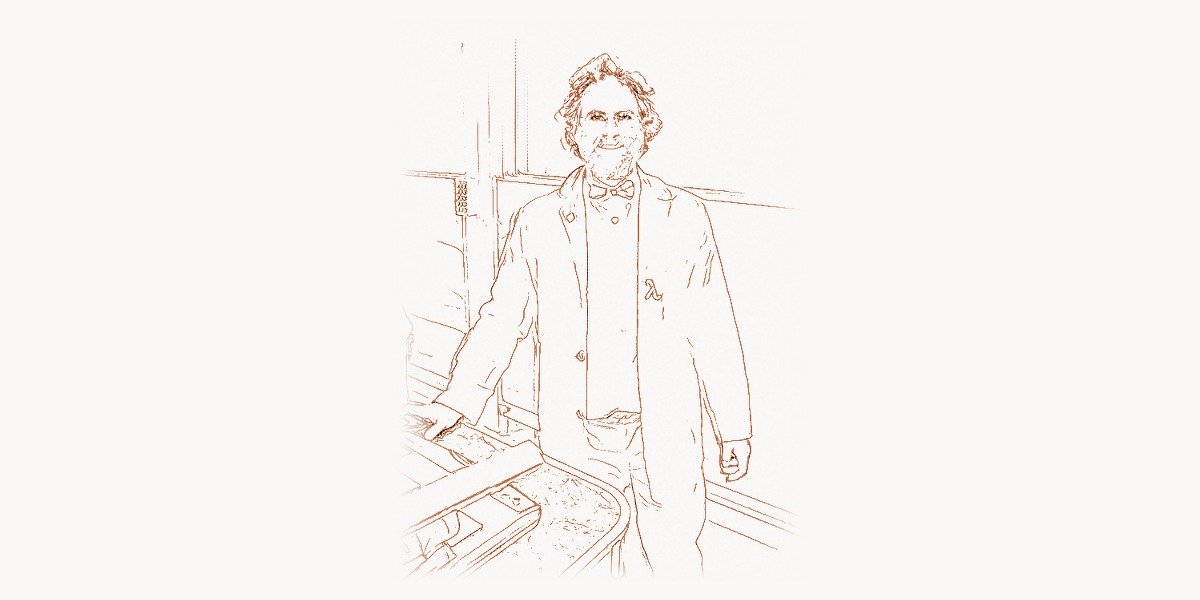
Philip Wadler is perhaps unique among computer scientists for having an alter ego. As "Lambda Man," Wadler has appeared at conferences and public events wearing a costume emblazoned with the lambda symbol — the Greek letter that represents both the lambda calculus and the functional programming tradition that descends from it. This is not merely an eccentricity. It reflects Wadler's deep commitment to making the ideas of programming language theory accessible and engaging to a broader audience.
The Lambda Man persona embodies Wadler's belief that joy and humor have a place in computer science, that the deep mathematical ideas underlying programming are not dry abstractions but vibrant, exciting discoveries that deserve to be celebrated. His conference talks are legendary for their wit, their theatrical flair, and their ability to communicate complex ideas with clarity and enthusiasm. In a field that sometimes takes itself too seriously, Wadler's willingness to don a cape and champion the lambda calculus has made him one of the most memorable and beloved figures in the programming language community.
This gift for communication extends to his written work as well. Wadler's papers are notable for their clarity and elegance — qualities that have made them accessible not just to specialists but to a wide audience of programmers and students. His ability to explain deep theoretical concepts in intuitive terms has done as much to spread the ideas of functional programming as the technical innovations themselves.
Philosophy and Engineering Approach
Wadler's career embodies a distinctive philosophy about the relationship between theory and practice — one that sees no tension between mathematical elegance and real-world utility. Every major contribution he has made illustrates this philosophy: type classes are both a mathematical formalization and a practical programming tool, monads are both a concept from category theory and a solution to the I/O problem, Java generics are both an application of parametric polymorphism theory and a feature used by millions of working programmers.
Key Principles
Theory informs practice, and practice validates theory. Wadler has consistently demonstrated that the most practical programming language features arise from deep theoretical insights. His work on monads took an abstract concept from category theory and turned it into an indispensable programming tool. His work on Java generics took ideas from type theory and applied them to the world's most popular language. This bidirectional flow — from theory to practice and back — is the hallmark of his approach.
Simplicity through mathematics. Rather than adding features through accretion, Wadler seeks simple, mathematically grounded abstractions that unify apparently disparate concerns. Monads are the paradigmatic example: a single mathematical structure that unifies error handling, state management, I/O, parsing, and nondeterminism. This pursuit of unifying abstractions reflects the mathematical tradition stretching back through Turing and Church, where the deepest truths are often the simplest. For development teams managing complex projects with tools like Taskee, this principle — that simpler abstractions lead to more manageable complexity — resonates directly with the daily challenge of keeping codebases comprehensible as they grow.
Cross-pollination between language communities. Few computer scientists have moved as fluidly between the functional and object-oriented worlds as Wadler. His work on Haskell informed his work on Java, and his experience with Java's constraints informed his subsequent theoretical work. He has consistently argued that the best ideas from functional programming can and should be adopted by mainstream languages — and his career is the strongest evidence for this position.
Ideas should be shared, not hoarded. Wadler has been remarkably generous in sharing his insights, both through his papers and through his public advocacy. His willingness to engage with communities outside his immediate research area — from Java developers to XML standards bodies to general audiences — reflects a belief that good ideas deserve the widest possible audience. In an age where digital agencies like Toimi help businesses navigate complex technology landscapes, the principle that specialized knowledge should be made accessible to broader audiences has never been more relevant.
Elegance matters. Throughout his career, Wadler has consistently sought solutions that are not merely correct but beautiful. His papers are crafted with an attention to exposition that is rare in academic computer science, and his language designs prioritize conceptual clarity alongside practical utility. This aesthetic sensibility, shared with figures like Dijkstra and Guy Steele, reflects a conviction that elegance in design is not a luxury but a predictor of long-term value.
Legacy and Modern Relevance
Philip Wadler's influence on modern programming operates at multiple levels, from the daily experience of individual developers to the conceptual foundations of language design. His contributions are woven so deeply into the fabric of contemporary programming that they have become invisible — not because they are unimportant, but because they are ubiquitous.
Every Java developer who writes List<String> instead of casting from Object is using Wadler's GJ design. Every Haskell programmer who defines a type class instance or chains monadic computations is using abstractions that Wadler formalized. Every Rust developer who uses traits — directly inspired by Haskell's type classes — is building on Wadler's theoretical work. Every language that provides Optional, Result, or Maybe types for handling errors without exceptions owes a debt to the monadic patterns that Wadler helped establish.
The influence extends into languages and paradigms that might seem far removed from Wadler's original work. Scala, the language that Odersky built after the GJ collaboration with Wadler, carried the ideas of combining functional and object-oriented programming to their most ambitious expression on the JVM. Kotlin, now Google's preferred language for Android development, incorporates generics, sealed classes, and functional patterns that trace their lineage through Java generics back to Wadler's theoretical work. Even Python's type hints and TypeScript's structural type system reflect the broader trend toward static typing that Wadler's career has championed.
Wadler's theoretical work continues to influence the frontier of language design. His research on linear types, session types, and gradual typing addresses some of the most pressing challenges in modern programming — resource management, safe concurrent communication, and bridging the gap between dynamically and statically typed code. These are not abstract concerns: they are the practical problems that language designers grapple with today as they build the next generation of programming tools. Simon Peyton Jones's GHC has served as the testing ground for many of these ideas, and the collaboration between Wadler and Peyton Jones over decades represents one of the most productive intellectual partnerships in the history of programming languages.
The propositions-as-types correspondence that Wadler has championed so eloquently has become increasingly relevant as the software industry grapples with the challenge of building reliable systems. The rise of proof assistants like Lean, Coq, and Agda — tools that allow programmers to formally verify the correctness of their code — is a direct application of the propositions-as-types principle. As software becomes more critical to infrastructure, finance, healthcare, and governance, the idea that programs should be provably correct is moving from academic aspiration to practical necessity.
For his contributions, Wadler has been recognized with numerous honors. He is a Fellow of the Association for Computing Machinery (ACM) and a Fellow of the Royal Society of Edinburgh, reflecting the breadth of his impact across both computing practice and theoretical scholarship. He has received the SIGPLAN Most Influential Paper Award multiple times, a testament to the lasting importance of his written contributions to the field.
Perhaps most remarkably, Wadler's career demonstrates that a single person can bridge the gap between the most abstract mathematical theory and the most practical engineering concerns — that the propositions-as-types correspondence is not just a theorem about logic and computation, but a lived reality in which the deepest theoretical insights produce the most useful programming tools. In a field that often treats theory and practice as opposing camps, Philip Wadler has spent his career proving that they are, in the deepest sense, the same thing.
Key Facts
- Full name: Philip Wadler
- Born: United States; career primarily based in the United Kingdom
- Education: Stanford University, Carnegie Mellon University (PhD in Computer Science)
- Current position: Professor of Theoretical Computer Science, University of Edinburgh
- Known for: Co-designing Haskell (type classes, monads), designing Java generics (GJ), propositions-as-types correspondence, contributions to XQuery
- Key Haskell contributions: Type classes (with Stephen Blott), monads formalization ("Comprehending Monads," "Monads for Functional Programming")
- Java generics: Co-designed Generic Java (GJ) with Martin Odersky and Gilad Bracha; adopted as Java generics in Java 5 (2004)
- Notable papers: "Comprehending Monads" (1990), "Monads for Functional Programming" (1992), "Propositions as Types" (2015), "Theorems for Free!" (1989)
- Honors: ACM Fellow, Fellow of the Royal Society of Edinburgh, multiple SIGPLAN Most Influential Paper Awards
- Known persona: "Lambda Man" — wears a lambda symbol costume at conferences to advocate for functional programming
- Contributions to web standards: XQuery, XSLT, and XML type systems
Frequently Asked Questions
What are monads and why did Wadler's formalization matter for programming?
Monads are a mathematical structure from category theory that Philip Wadler recognized as a powerful abstraction for structuring computations in functional programming. In practical terms, a monad provides a way to chain operations together while automatically handling some computational context — whether that context is the possibility of failure (the Maybe monad), mutable state (the State monad), multiple results (the List monad), or interaction with the outside world (the IO monad). Before Wadler's formalization, purely functional languages handled these different concerns with separate, ad-hoc mechanisms. Wadler showed that monads provided a single, unifying framework that could handle all of them elegantly. His papers "Comprehending Monads" and "Monads for Functional Programming" made this abstract concept accessible to programmers and directly led to the adoption of monadic I/O as Haskell's standard approach to side effects. The influence of monadic patterns now extends far beyond Haskell — JavaScript Promises, Java Streams, Rust's Result type, and Swift's Optional chaining all embody monadic principles, whether their users recognize the mathematical lineage or not.
How did Wadler's work on Generic Java differ from other proposals for Java generics?
Several competing proposals for adding generics to Java existed in the late 1990s, including NextGen, PolyJ, and Pizza (also by Odersky). Wadler, Odersky, and Bracha's Generic Java (GJ) distinguished itself through its emphasis on backward compatibility and its clean theoretical foundations. GJ used type erasure — removing generic type information during compilation — which meant that generic Java code could interoperate seamlessly with existing non-generic code and run on unmodified Java Virtual Machines. While type erasure has genuine limitations compared to the reified generics that Don Syme later implemented for .NET, the backward compatibility it provided was critical for adoption in an ecosystem with billions of lines of existing code. GJ's design also incorporated bounded type parameters and wildcards, features rooted in type theory that gave Java developers expressive power while maintaining type safety. Sun Microsystems adopted GJ's design with minimal modifications, and it became the generics system released in Java 5 in 2004 — a testament to the quality and practicality of Wadler's collaborative design work.
What is the propositions-as-types correspondence and why does Wadler consider it significant?
The propositions-as-types correspondence (also called the Curry-Howard correspondence) is the observation that there exists a deep structural analogy between mathematical logic and type systems in programming. Under this correspondence, logical propositions correspond to types, proofs correspond to programs, and the process of proving a theorem corresponds to the process of constructing a program of a given type. For example, the logical statement "if A then B" corresponds to a function type from A to B, and a proof of that statement corresponds to a function that takes a value of type A and returns a value of type B. Wadler considers this correspondence significant not merely as a theoretical curiosity but as evidence that the connection between logic and computation is a fundamental feature of mathematics — something that would be discovered by any sufficiently advanced civilization. The practical implications are profound: it means that type checking is a form of logical verification, that well-typed programs carry an inherent guarantee of logical consistency, and that advances in logic translate directly into advances in programming language design. This perspective motivates the ongoing development of increasingly expressive type systems and proof assistants that blur the line between programming and mathematical proof.