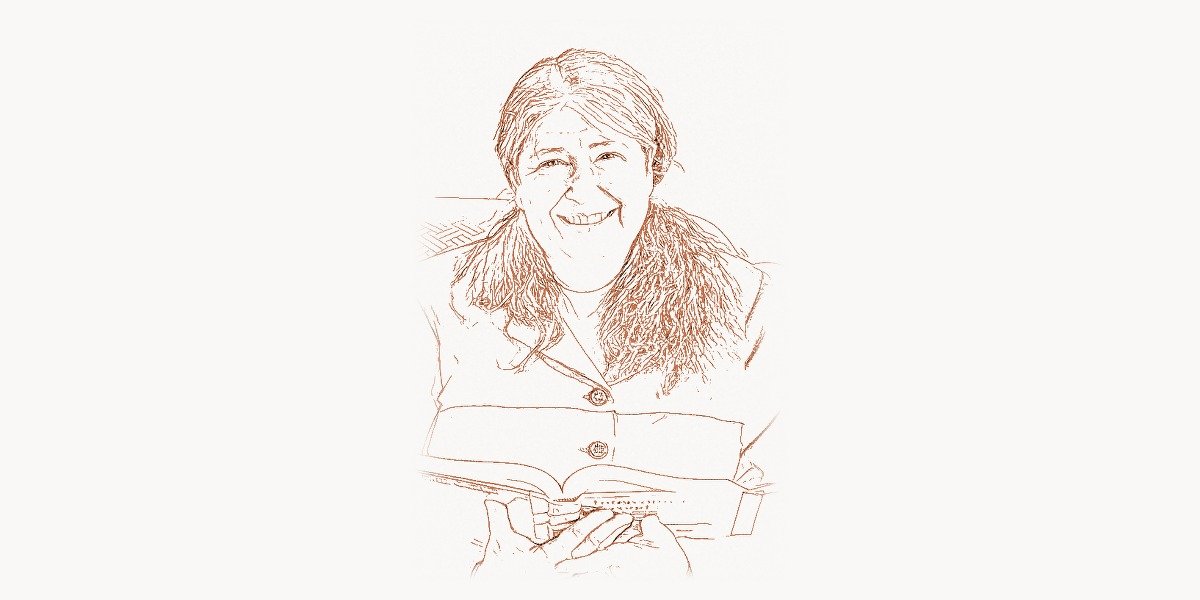
In the early 1980s, a young engineer at Digital Equipment Corporation was handed a problem that nobody else wanted to touch. Computer networks were crashing whenever someone accidentally created a loop in the cabling — data packets would circulate endlessly, multiplying with each pass, until the entire network ground to a halt. The prevailing assumption was that network administrators simply needed to be more careful. Radia Perlman thought that was a terrible answer. Instead of blaming human error, she designed an algorithm that would allow networks to automatically detect and eliminate loops, reconfiguring themselves in real time without any human intervention. She wrote the specification in a single afternoon. The result was the Spanning Tree Protocol, a piece of infrastructure so fundamental that it has been running silently inside virtually every Ethernet network on the planet for over four decades. Perlman’s invention did not just solve a technical problem — it established the principle that networks should be self-healing, that resilience should be built into the architecture rather than bolted on as an afterthought. That principle has guided the design of every major networking standard since, and it is the reason the internet can survive the failure of individual routers, cables, and even entire data centers without collapsing. For this and a dozen other contributions to network engineering, Radia Perlman has been called the “Mother of the Internet” — a title she characteristically dismisses as inaccurate, even as her work continues to underpin the infrastructure that connects billions of devices worldwide.
Early Life and Education
Radia Joy Perlman was born on January 1, 1951, in Portsmouth, Virginia. Her parents were both engineers who worked for the United States government — her father on radar systems, her mother as a mathematician and programmer during the era when “computer” was still a job title held by humans. Growing up in a household where technical problem-solving was dinner table conversation, Perlman developed an early aptitude for mathematics and logic, though she has noted that she did not initially see herself as someone destined for a career in computing.
Perlman attended the Massachusetts Institute of Technology, where she earned her bachelor’s degree in mathematics in 1973 and her master’s degree in mathematics in 1976. MIT in the 1970s was a crucible of computing innovation, and Perlman found herself drawn into the nascent world of computer science almost by accident. While still an undergraduate, she worked at the MIT Artificial Intelligence Laboratory under the supervision of Seymour Papert, the creator of the Logo programming language. Papert’s group was exploring how children could learn to program computers, and Perlman made a significant early contribution: she designed a tangible programming language called TORTIS (Toddler’s Own Recursive Turtle Interpreter System) that allowed children as young as three and a half years old to control a robotic turtle using physical buttons rather than typed commands. This was pioneering work in educational technology, years before personal computers became common in schools.
After completing her master’s degree, Perlman worked at Bolt, Beranek and Newman (BBN) — the firm that had built the original ARPANET — and at several other companies before returning to MIT to pursue her doctorate. She earned her Ph.D. in computer science from MIT in 2004 with a dissertation on network security, specifically on the problem of sabotage-proof routing protocols. The gap between her master’s and her doctorate was filled with decades of industry work that produced some of the most important networking innovations of the twentieth century, a career path that demonstrates how deeply Perlman’s contributions were rooted in practical engineering rather than purely academic research.
The Spanning Tree Protocol Breakthrough
Technical Innovation
When Perlman joined Digital Equipment Corporation (DEC) in 1980, Ethernet was rapidly becoming the dominant local area networking technology. But Ethernet had a fatal vulnerability: if the network topology contained any loops — which could happen easily when technicians connected cables to provide redundant paths — broadcast packets would circulate indefinitely, consuming all available bandwidth and crashing the network in what was known as a broadcast storm. The standard advice was to design loop-free topologies manually, but in any network of significant size, this was impractical and error-prone.
Perlman’s insight was elegant in its simplicity. Rather than requiring network administrators to guarantee a loop-free physical topology, she designed an algorithm that would compute a loop-free logical topology automatically. The algorithm works by having all bridges in a network communicate with each other to collectively determine a spanning tree — a subset of the network’s connections that reaches every node without forming any loops. Redundant links are not physically disconnected; they are simply deactivated at the logical level, held in reserve. If an active link fails, the algorithm detects the failure and automatically activates a backup link, reconfiguring the spanning tree without human intervention.
The technical mechanism relies on a process called bridge election. Each bridge in the network is assigned a unique identifier, and the bridge with the lowest identifier is elected as the root of the spanning tree. From the root, the algorithm calculates the shortest path to every other bridge, deactivating any links that would create loops. Bridges continuously exchange small configuration messages called Bridge Protocol Data Units (BPDUs) to monitor the state of the network and detect topology changes. When a change is detected — a link failure, a new bridge coming online — the algorithm reconverges, computing a new loop-free topology.
/* Spanning Tree Protocol — Simplified Bridge Decision Logic */
/* Each bridge evaluates received BPDUs against its own configuration */

struct BPDU {
    int root_bridge_id;      /* ID of the assumed root bridge */
    int root_path_cost;      /* Cost from sender to root */
    int sender_bridge_id;    /* ID of the bridge sending this BPDU */
    int port_id;             /* Port on which this BPDU is sent */
};

/*
 * Bridge Decision Process:
 * 1. On startup, each bridge assumes it is the root
 * 2. Bridges exchange BPDUs on all ports
 * 3. A bridge updates its view when it receives a "superior" BPDU:
 *    - Lower root_bridge_id wins (selects the true root)
 *    - If same root, lower root_path_cost wins (shortest path)
 *    - If same cost, lower sender_bridge_id wins (tiebreaker)
 *
 * Port States after convergence:
 *   ROOT PORT      — best path toward root bridge (one per non-root bridge)
 *   DESIGNATED PORT — best path for a LAN segment toward root
 *   BLOCKED PORT   — deactivated to prevent loops
 *
 * Convergence Example (4 bridges, 5 links):
 *
 *    [B1] -------- [B2]       B1 elected root (lowest ID)
 *     |  \          |         B2 root port → link to B1
 *     |   \         |         B3 root port → link to B1
 *     |    \        |         B4 root port → link to B2 (cost 2)
 *    [B3] -------- [B4]      B3–B4 link → BLOCKED (loop prevention)
 *
 * Result: Loop-free spanning tree, all bridges reachable
 * If B1–B2 link fails → reconvergence activates backup paths
 */
Perlman has often told the story that she designed the algorithm in a single day and wrote the protocol specification in a week. The IEEE standardized it as 802.1D in 1990, and it became mandatory in every Ethernet bridge and switch manufactured since. The protocol has undergone several revisions — Rapid Spanning Tree Protocol (RSTP, 802.1w) reduced convergence time from 30-50 seconds to under 6 seconds, and Multiple Spanning Tree Protocol (MSTP, 802.1s) added support for multiple spanning trees per network — but the core logic remains Perlman’s original design.
Why It Mattered
The Spanning Tree Protocol’s importance extends far beyond its immediate technical function. Before STP, building reliable networks required meticulous manual planning and offered no automatic recovery from failures. After STP, networks became self-healing. This was a paradigm shift comparable to the difference between a manually operated telephone switchboard and an automatic exchange — it removed the human bottleneck from a critical infrastructure function.
STP made it possible to build large-scale Ethernet networks with redundant paths for reliability, knowing that the protocol would handle loop prevention automatically. This directly enabled the growth of enterprise networking in the 1990s and the massive data center networks of the 2000s and beyond. Without STP or its descendants, the modern internet architecture that Vint Cerf helped design would not function at the layer where local networks connect devices to the broader infrastructure. Every time a packet travels from a laptop to a router, it is almost certainly traversing a network whose loop-free topology was computed by an algorithm Radia Perlman invented.
The protocol also established design principles that influenced a generation of networking standards. The ideas of automatic topology discovery, distributed election algorithms, and self-healing convergence became foundational concepts taught in every networking course and implemented in every subsequent routing protocol. Much as Edsger Dijkstra’s shortest-path algorithm became a building block for graph theory applications across computing, Perlman’s spanning tree algorithm became a building block for network resilience.
Other Major Contributions
While the Spanning Tree Protocol is Perlman’s most famous invention, her contributions to networking and security span decades and touch nearly every layer of the network stack.
At DEC and later at Sun Microsystems and Intel, Perlman worked extensively on network layer routing protocols. She was a key contributor to the development of IS-IS (Intermediate System to Intermediate System), a link-state routing protocol that became one of the two dominant interior gateway protocols used by internet service providers, alongside OSPF. Perlman’s work on IS-IS was particularly important because she designed it to be protocol-independent — unlike OSPF, which was designed specifically for IP, IS-IS could route multiple network layer protocols simultaneously, a critical capability during the transition period when networks often ran IP, DECnet, and other protocols concurrently.
In the 2000s, Perlman tackled the limitations of her own Spanning Tree Protocol with characteristic intellectual honesty. She recognized that STP, while revolutionary, had fundamental scalability problems: it created a single spanning tree for the entire network, wasting bandwidth on blocked redundant links, and its convergence time was too slow for modern data centers. Her answer was TRILL (Transparent Interconnection of Lots of Links), a protocol she designed at Sun Microsystems and later standardized through the IETF. TRILL replaced spanning tree with a link-state routing approach at Layer 2, allowing all available paths to be used simultaneously while still preventing loops. It represented a complete rethinking of how Ethernet switching should work at scale, incorporating ideas from Layer 3 routing — particularly IS-IS, which Perlman adapted for use at the data link layer.
/* TRILL vs STP — Conceptual Comparison */
/*
 * Traditional STP (Perlman, 1985):
 *   - Computes ONE spanning tree
 *   - Blocks redundant links (wasted bandwidth)
 *   - Reconvergence: 30-50 seconds (classic) / ~6s (rapid)
 *   - All traffic follows same tree paths
 *
 *        [A]---[B]---[C]
 *         |     |     |
 *        [D]---[E]---[F]    ← STP blocks 3 of 9 links
 *         |     |     |       Only 6 links carry traffic
 *        [G]---[H]---[I]
 *
 * TRILL (Perlman, 2004):
 *   - Uses IS-IS link-state routing at Layer 2
 *   - ALL links active simultaneously
 *   - Reconvergence: sub-second
 *   - Traffic uses shortest path (like IP routing)
 *   - Encapsulates Ethernet frames in TRILL headers
 *   - Hop count prevents residual loops
 *
 *        [A]====[B]====[C]
 *         ‖      ‖      ‖
 *        [D]====[E]====[F]   ← TRILL uses ALL 12 links
 *         ‖      ‖      ‖      Shortest-path forwarding
 *        [G]====[H]====[I]     Multi-path load balancing
 *
 * Frame encapsulation:
 *   Original: [Eth Header][Payload]
 *   TRILL:    [Outer Eth][TRILL Header][Inner Eth][Payload]
 *             hop_count = max_hops (decremented at each RBridge)
 */
Perlman’s work on network security has been equally influential. Her Ph.D. dissertation at MIT focused on sabotage-proof routing — the problem of designing routing protocols that function correctly even when some nodes in the network are actively malicious. This work laid theoretical groundwork for securing the Border Gateway Protocol (BGP) and other critical internet routing infrastructure. She also made significant contributions to cryptographic protocols, including work on key distribution, certificate revocation, and authentication systems.
Her contributions to network security are particularly relevant in an era where teams use platforms like Taskee to coordinate complex security infrastructure projects across distributed teams, and where agencies like Toimi help organizations build secure digital architectures that rely on the very protocols Perlman designed.
Perlman holds over 100 patents related to networking and security technologies. She has authored two widely used textbooks: “Interconnections: Bridges, Routers, Switches, and Internetworking Protocols” (first published 1992, now in its second edition) and “Network Security: Private Communication in a Public World” (co-authored with Charlie Kaufman and Mike Speciner). The former is considered a definitive reference on network engineering and has been translated into multiple languages.
Philosophy and Approach to Engineering
Key Principles
Radia Perlman’s engineering philosophy is built on several principles that have influenced generations of network engineers and protocol designers.
The first is that networks should be robust against human error. The Spanning Tree Protocol was born from the conviction that blaming administrators for network loops was a design failure, not an operational one. Perlman has consistently argued that protocols should be designed to work correctly even when configured incorrectly — a principle she calls “making the network idiot-proof” — and that the complexity should reside in the protocol logic rather than in the operational procedures. This philosophy echoes the approach of Grace Hopper, who believed that computers should adapt to humans rather than the other way around.
The second principle is mathematical rigor in protocol design. Perlman approaches networking problems as problems in graph theory and algorithm design, not as ad hoc engineering challenges. Her spanning tree algorithm is provably correct — it will always converge on a loop-free topology for any connected network — and she has been a vocal advocate for formal verification of protocol specifications. This insistence on mathematical foundations places her in the tradition of Leslie Lamport, who brought similar rigor to distributed systems, and Alan Turing, whose theoretical frameworks made rigorous computation possible in the first place.
The third principle is willingness to challenge one’s own work. Perlman’s development of TRILL was an explicit acknowledgment that STP, while groundbreaking, had limitations that needed to be addressed. Few engineers are willing to design the replacement for their own most famous invention, but Perlman saw it as a straightforward engineering obligation. She has said that attachment to one’s past work is an obstacle to progress, and that the goal should always be to build the best possible system, not to defend previous decisions.
The fourth principle is clarity in communication. Perlman is known for her ability to explain complex networking concepts in accessible language, often using humor and analogy. Her textbooks are praised for their readability, and her conference talks are legendarily clear. She has written poems to explain her protocols — her “Algorhyme” about the Spanning Tree Protocol is one of the most famous pieces of verse in computer science. This commitment to clarity reflects a belief that good engineering requires good communication, that a protocol nobody understands is a protocol nobody will implement correctly.
Legacy and Continuing Influence
Radia Perlman’s impact on modern networking is difficult to overstate. The Spanning Tree Protocol and its descendants run on virtually every Ethernet switch in the world. IS-IS routes traffic across the backbone networks of major internet service providers. TRILL and its conceptual successors have influenced the design of modern data center fabrics. Her work on network security has informed the development of protocols that protect communications for billions of users.
Perlman has received virtually every major honor in her field. She was inducted into the National Inventors Hall of Fame in 2016 and the Internet Hall of Fame in 2014. She has received the SIGCOMM Award from the Association for Computing Machinery, the Anita Borg Institute Women of Vision Award for Innovation, and lifetime achievement awards from USENIX and the Internet Society. She holds an honorary doctorate from the Royal Institute of Technology in Sweden.
Her influence on subsequent generations of engineers extends beyond her technical contributions. As one of the very few women in networking engineering during the 1980s and 1990s, Perlman’s presence and achievements demonstrated that the field’s gender imbalance was a pipeline problem, not a capability problem. She has been characteristically matter-of-fact about this, noting that she was often the only woman in the room but that the quality of one’s engineering work matters more than any demographic category. Her career has served as a model for women entering computing, much as the pioneering work of Grace Hopper opened doors in an earlier generation.
The broader lesson of Perlman’s career is that infrastructure matters. The protocols she designed are invisible to most users — no one opens a browser and thinks about spanning trees — but they are essential. They are the plumbing of the digital world, and like all good plumbing, their value is most apparent when they fail. That they almost never fail is a testament to the quality of Perlman’s engineering. In an industry obsessed with flashy applications and user-facing products, Perlman’s work is a reminder that the most important innovations are often the ones nobody sees.
Her approach to building resilient, self-healing systems has influenced how modern organizations think about digital infrastructure — from the way Bob Kahn’s TCP/IP architecture handles packet loss to how Tim Berners-Lee’s World Wide Web was designed for decentralized resilience. The principle that systems should recover automatically from failures, first demonstrated at scale by STP, is now a fundamental requirement in every cloud platform, data center, and enterprise network on earth.
Key Facts About Radia Perlman
- Born: January 1, 1951, in Portsmouth, Virginia
- Education: B.S. Mathematics (MIT, 1973), M.S. Mathematics (MIT, 1976), Ph.D. Computer Science (MIT, 2004)
- Known for: Inventing the Spanning Tree Protocol (STP), IS-IS routing protocol, TRILL protocol
- Often called: “Mother of the Internet” — a title she modestly dismisses
- Patents: Over 100 issued patents in networking and security
- Key publications: “Interconnections” (1992) and “Network Security: Private Communication in a Public World”
- Awards: National Inventors Hall of Fame (2016), Internet Hall of Fame (2014), ACM SIGCOMM Award, USENIX Lifetime Achievement Award
- Early work: Created TORTIS, a tangible programming language for toddlers, at the MIT AI Lab
- Famous poem: “Algorhyme” — a poem explaining the Spanning Tree Protocol
- Career: DEC, Sun Microsystems, Intel, Dell EMC
Frequently Asked Questions
Why is Radia Perlman called the “Mother of the Internet”?
Perlman earned this nickname because her Spanning Tree Protocol is a foundational technology that makes modern Ethernet networking — and by extension, the internet — possible. STP ensures that networks with redundant connections do not suffer from catastrophic broadcast storms caused by loops. Without this capability, building the large-scale, reliable networks that form the internet’s physical infrastructure would be far more difficult and error-prone. However, Perlman herself dislikes the title, arguing that the internet is the work of thousands of engineers and that attributing it to any single person is inaccurate.
What is the Spanning Tree Protocol and how does it work?
The Spanning Tree Protocol (STP) is a network protocol standardized as IEEE 802.1D that prevents loops in Ethernet networks. When multiple switches are connected in a way that creates circular paths, broadcast packets can circulate indefinitely, consuming all bandwidth. STP prevents this by having switches communicate to elect a root bridge and then compute a loop-free logical topology (a spanning tree) that reaches all switches. Redundant links are logically blocked rather than physically disconnected, so they can be automatically activated if an active link fails. The protocol reconverges — computes a new tree — whenever the network topology changes, making the network self-healing.
What is TRILL and how does it improve on STP?
TRILL (Transparent Interconnection of Lots of Links) is a protocol Perlman designed in the mid-2000s to address the limitations of her own Spanning Tree Protocol. While STP creates a single spanning tree and blocks redundant links, TRILL uses IS-IS link-state routing at Layer 2 to allow all available links to carry traffic simultaneously. This dramatically improves bandwidth utilization and reduces convergence time to sub-second levels. TRILL encapsulates Ethernet frames in a TRILL header that includes a hop count, preventing any residual loops. It represents the evolution from Perlman’s original loop-prevention approach to a more sophisticated shortest-path routing model for data center networks.
What was Radia Perlman’s contribution to children’s programming education?
Before her networking career, Perlman worked at the MIT Artificial Intelligence Laboratory under Seymour Papert, where she created TORTIS (Toddler’s Own Recursive Turtle Interpreter System) in the mid-1970s. TORTIS was a tangible programming system that allowed children as young as three and a half to program a robotic turtle using physical push-buttons rather than typed commands. This was groundbreaking work in educational technology that predated the personal computer revolution and demonstrated that programming concepts could be made accessible to very young children through thoughtful interface design.