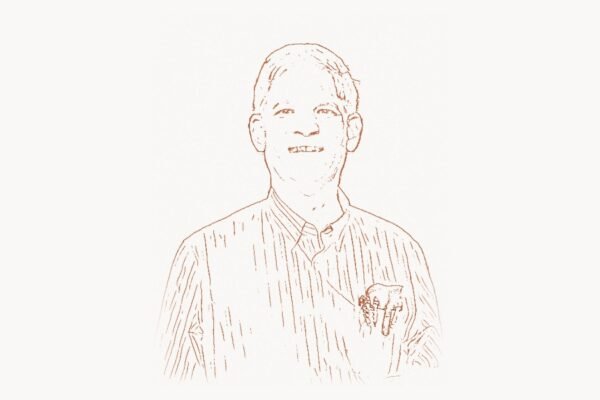
In the summer of 1994, a 26-year-old Danish-Canadian programmer named Rasmus Lerdorf wrote a set of Common Gateway Interface (CGI) binaries in C to track visits to his personal homepage. He called them “Personal Home Page Tools,” or PHP Tools. The code was rough, practical, and never intended for anyone but Lerdorf himself. He released the source code publicly on June 8, 1995, not because he envisioned a platform but because early web developers kept asking him for it. What happened next was one of the most improbable success stories in software history. That small collection of CGI scripts evolved — through community collaboration, two complete rewrites, and over two decades of continuous development — into the server-side language that powers approximately 76.5% of all websites with a known server-side language in 2026, according to W3Techs. WordPress, which runs 43% of all websites on the internet, is written in PHP. Facebook (now Meta) was built on PHP and developed its own PHP runtime (HHVM) to scale it. Wikipedia, Slack’s backend, Etsy, Mailchimp, and millions of other websites and applications run on PHP. No other programming language comes close to PHP’s dominance in web server-side processing, a dominance built not on theoretical elegance but on relentless pragmatism and a low barrier to entry that let millions of non-programmers build for the web.
Early Life and Path to Technology
Rasmus Lerdorf was born on November 22, 1968, in Qeqertarsuaq (formerly Godhavn), Greenland — a town of about 800 people on Disko Island in the Arctic. His family moved to Denmark when he was a child, and later to Canada. He attended the University of Waterloo in Ontario, where he studied systems design engineering, graduating in 1993. Waterloo’s engineering program emphasized practical problem-solving over theoretical computer science, which shaped Lerdorf’s approach to programming — he has consistently described himself as a “pragmatic programmer” rather than a language designer.
After university, Lerdorf worked at various companies in the Toronto area, including a stint at a company called I/Ogroup. In the early 1990s, the World Wide Web was just beginning to emerge as a public platform. Lerdorf became one of the early web developers, building websites and exploring the capabilities of CGI — the mechanism by which web servers could execute programs in response to HTTP requests. Web servers at the time could serve static HTML files, but generating dynamic content required writing CGI programs, typically in C or Perl. Lerdorf found Perl too slow for his needs and C too cumbersome for simple web tasks. He wanted something in between.
The Breakthrough: Creating PHP
The Technical Innovation
Lerdorf’s original PHP Tools (released June 1995) were a set of C programs that could be called from HTML pages via CGI. They handled common tasks like displaying a resume, counting page visits, and processing form submissions. In early 1995, Lerdorf combined these tools with a form interpreter he called FI (Form Interpreter), creating PHP/FI — a small templating language embedded directly in HTML that could process form data and generate dynamic web pages.
The key insight was embedding server-side code directly inside HTML files. Instead of writing a separate CGI program that output HTML (which was how Perl-based web development worked), PHP allowed developers to write HTML with small snippets of dynamic code inserted where needed. This approach — which felt natural to anyone who understood HTML — is what made PHP accessible to web designers who had no formal programming training:
<!DOCTYPE html>
<html>
<head><title>Welcome</title></head>
<body>
    <h1>Hello, <?php echo htmlspecialchars($_GET['name'] ?? 'World'); ?>!</h1>
    <p>The current time is: <?php echo date('Y-m-d H:i:s'); ?></p>
    <p>This page has been accessed
       <?php
       $counter_file = '/tmp/counter.txt';
       $count = (int)file_get_contents($counter_file) + 1;
       file_put_contents($counter_file, $count);
       echo $count;
       ?>
       times.</p>
</body>
</html>
PHP/FI 2.0, released in November 1997, was still essentially Lerdorf’s personal project — a single-developer codebase written in C that handled web templating, form processing, and database access. It supported MySQL and PostgreSQL connections, had basic string and math functions, and could handle file uploads. It was rough, inconsistent (function names followed no naming convention, parameter order varied randomly between similar functions), and had no formal grammar or parser. But it worked, it was free, and it was easy enough that anyone who could write HTML could start using it in minutes.
The transformation from personal tool to industrial-strength language happened with PHP 3.0, released on June 6, 1998. Two Israeli developers, Andi Gutmans and Zeev Suraski (then students at the Technion — Israel Institute of Technology), had found PHP/FI too limited for an e-commerce application they were building and rewrote the language’s core from scratch. Their new parser, renamed the Zend Engine (a portmanteau of their first names: Zeev + Andi), gave PHP a proper grammar, consistent parsing, and an extensible architecture. Lerdorf agreed to merge their work, and PHP 3.0 became the first version with a real language implementation underneath the familiar templating syntax.
PHP 4.0 (May 2000) introduced the Zend Engine 1.0 with improved performance and session handling. PHP 5.0 (July 2004) brought a complete object model with classes, interfaces, abstract classes, access modifiers, and exceptions — finally making PHP a credible language for large-scale application development. PHP 7.0 (December 2015) delivered a massive performance improvement — roughly 2x faster than PHP 5.6 — through the new Zend Engine 3.0 (phpng), along with scalar type declarations and return type hints.
Why It Mattered
PHP democratized web development more than any other technology. In the late 1990s and early 2000s, the primary alternatives for building dynamic websites were Perl (powerful but cryptic), Java Servlets (corporate and complex), and ASP (Microsoft-only). PHP was free, ran on cheap Linux shared hosting, required no compilation step, had built-in MySQL support, and could be learned in a weekend by anyone who knew HTML. Shared hosting providers offered PHP support by default, and affordable web hosting plans proliferated — for $5 a month, anyone could run a PHP website.
This accessibility created an explosion of web applications. WordPress (launched May 2003 by Matt Mullenweg) was written in PHP and became the most popular content management system in history. MediaWiki (powering Wikipedia), phpBB (forums), osCommerce and later Magento (e-commerce), Drupal, Joomla, and thousands of other open-source applications were built on PHP. Facebook, launched from a Harvard dorm room in February 2004, was built in PHP because Mark Zuckerberg knew the language — and it scaled to serve billions of users, eventually leading Facebook to create its own PHP runtime (HipHop, later HHVM) and dialect (Hack).
PHP’s influence extended into the modern web framework ecosystem. Laravel, released in 2011 by Taylor Otwell, brought elegant MVC architecture, an expressive ORM (Eloquent), and a sophisticated ecosystem to PHP development. Symfony provided enterprise-grade components used by thousands of projects. These frameworks proved that PHP could support the same architectural patterns that Ruby on Rails and Node.js frameworks offered.
The Modern PHP Renaissance
PHP’s evolution from a rough CGI tool to a modern, type-safe language is one of the most remarkable transformations in programming language history. The PHP Framework Interop Group (PHP-FIG) established coding standards (PSR-1, PSR-2, PSR-12) and shared interfaces (PSR-7 for HTTP messages, PSR-11 for dependency injection containers, PSR-15 for HTTP middleware) that brought consistency to the PHP ecosystem. These standards allowed frameworks and libraries to interoperate — a Symfony component could work inside a Laravel application, and a PSR-7 middleware could be used with any compliant framework.
Composer, PHP’s dependency manager (released 2012, created by Nils Adermann and Jordi Boggiano), transformed PHP development by providing a reliable way to manage third-party libraries. Before Composer, PHP developers manually downloaded libraries and managed include paths — a process as primitive as it sounds. Packagist, Composer’s default package repository, hosts over 350,000 packages and processes billions of installs per month. The combination of Composer, PSR standards, and modern frameworks turned PHP from a language ridiculed for its inconsistencies into a professional development platform with tooling comparable to any other language ecosystem.
Static analysis tools like PHPStan and Psalm brought type checking to PHP codebases, catching errors before runtime even in legacy code without type declarations. These tools, combined with PHP 8’s native type system improvements (union types, intersection types, enums, readonly properties), meant that modern PHP code could be nearly as type-safe as TypeScript or Java. The PHP community’s adoption of these tools reflected a broader maturation — the language that was once written carelessly in shared hosting environments was now deployed with CI/CD pipelines, automated testing, static analysis, and containerized infrastructure.
Beyond PHP: Other Contributions
Lerdorf has consistently emphasized that he does not consider himself a programming language designer. After the initial PHP releases, he stepped back from language design and let the community — particularly Gutmans, Suraski, and later Nikita Popov — drive PHP’s evolution. His contributions shifted to advocacy, performance optimization, and developer education.
Lerdorf spent years at Yahoo! (2002–2009), where he worked on scaling PHP for one of the world’s largest websites. He then joined Etsy (2012–2015), where he focused on performance monitoring and optimization of their PHP-based marketplace platform. At Etsy, he championed a data-driven approach to performance — instrumenting everything, measuring real-world impact, and optimizing based on actual user metrics rather than synthetic benchmarks.
He has been a prolific conference speaker, known for his blunt, honest talks about PHP’s history, warts, and practical strengths. His talks often include frank admissions about PHP’s design inconsistencies, followed by the pragmatic argument that those inconsistencies have not prevented PHP from powering a third of the web. Lerdorf has also been involved in security advocacy, regularly presenting on common PHP security pitfalls and best practices for writing secure web applications.
PHP’s Deployment and Hosting Dominance
A key factor in PHP’s dominance is the simplicity of its deployment model. A PHP application is, at its simplest, a collection of .php files placed in a web server’s document root. Apache’s mod_php module (and later PHP-FPM with Nginx) processes these files on request, executing the PHP code and returning HTML to the browser. No compilation step, no application server, no build process — just upload files and they work. This deployment model made PHP uniquely accessible on shared hosting, where a single server hosts thousands of websites from different customers. Hosting providers like Bluehost, GoDaddy, SiteGround, and HostGator offered PHP hosting for a few dollars per month, creating an enormous addressable market for PHP-based applications.
Philosophy and Engineering Approach
Key Principles
Lerdorf’s approach to software is radically pragmatic. He has said repeatedly that he never intended to create a programming language — he just wanted to solve a specific problem (tracking visits to his homepage), and the solution kept growing because other people found it useful. This accidental-creation narrative is unusual among language designers, most of whom set out deliberately to build something new (as Stroustrup did with C++ or Pike did with Go).
His pragmatism manifests in several ways. He values “good enough” over “perfect,” arguing that shipping imperfect software that solves real problems is better than designing perfect software that never ships. He prioritizes backward compatibility — PHP has maintained remarkable backward compatibility across major versions, which is why decades-old WordPress plugins still run on PHP 8.x. And he focuses on the 80% case — PHP was designed for the common tasks of web development (form processing, database queries, HTML output), not for theoretical completeness.
Lerdorf has been blunt about PHP’s inconsistencies — the famously inconsistent function naming (str_replace vs. strpos), the variable parameter order (array_map takes the callback first, array_filter takes the array first), and the many deprecated features that remain for backward compatibility. But he argues that these blemishes are irrelevant compared to PHP’s actual impact: enabling millions of people to build websites and web applications who otherwise could not have participated in the web economy.
This approach connects to a broader tradition of tools that succeed through accessibility rather than purity — similar to how JavaScript conquered the browser despite its well-known design flaws, or how Python prioritized readability and ease of learning over execution speed.
Legacy and Modern Relevance
Modern PHP barely resembles the rough CGI wrapper Lerdorf released in 1995. PHP 8.0 (November 2020) introduced JIT (Just-In-Time) compilation, union types, named arguments, attributes (annotations), and match expressions. PHP 8.1 added enums, fibers (for asynchronous programming), readonly properties, and intersection types. PHP 8.2 brought readonly classes and disjunctive normal form types. PHP 8.3 (November 2023) added typed class constants, the json_validate function, and improved readonly properties. PHP 8.4 continued the modernization trajectory.
The language’s performance has improved dramatically. PHP 8.x with JIT compilation runs certain workloads 3-4x faster than PHP 5.6. The Laravel framework, combined with tools like Octane (which keeps the application in memory between requests, like Node.js), delivers performance competitive with frameworks in other languages.
WordPress, the single largest consumer of PHP, continues to drive adoption. With 43% of all websites running WordPress, PHP’s installed base is enormous and shows no signs of shrinking. The Composer package manager (analogous to npm for JavaScript) hosts over 350,000 packages. Laravel has over 78,000 GitHub stars, making it one of the most popular web frameworks across all languages.
Rasmus Lerdorf set out to solve a personal problem and accidentally created the most widely deployed server-side language on the web. PHP’s success was not designed — it emerged from the intersection of radical accessibility, relentless backward compatibility, and the explosive growth of a web that needed dynamic content more than it needed theoretical purity. The language’s imperfections are real, but they are vastly outweighed by the hundreds of millions of websites it powers and the millions of developers it enabled to participate in building the web.
Key Facts
- Born: November 22, 1968, Qeqertarsuaq (Godhavn), Greenland
- Known for: Creating PHP, the most widely used server-side web language
- Key projects: PHP (1994–present), PHP/FI, contributions to Apache HTTP Server
- Awards: No major computing awards — Lerdorf’s recognition is the 76.5% web server-side market share of his creation
- Career: Yahoo! (2002–2009), WePay, Etsy (2012–2015), various consulting and advisory roles
Frequently Asked Questions
Who is Rasmus Lerdorf?
Rasmus Lerdorf is a Danish-Canadian programmer who created PHP (Personal Home Page Tools, later PHP: Hypertext Preprocessor) in 1994-1995. Originally a set of CGI scripts for tracking visits to his personal website, PHP evolved into the most widely used server-side programming language on the web, powering approximately 76.5% of all websites with a known server-side language.
What did Rasmus Lerdorf create?
Lerdorf created the original PHP language and its first two implementations (PHP Tools and PHP/FI). While the language was later rewritten by Andi Gutmans and Zeev Suraski (who created the Zend Engine), Lerdorf’s original design — embedding server-side code directly in HTML, with built-in web-focused functions — established the template that PHP follows to this day. He continued contributing to PHP’s development and performance optimization throughout his career.
Why is Rasmus Lerdorf important?
Lerdorf created the language that powers more of the web than any other server-side technology. PHP’s accessibility — free, easy to learn, runs on cheap hosting, embedded directly in HTML — democratized web development and enabled millions of non-traditional programmers to build dynamic websites. WordPress, Wikipedia, Facebook’s original codebase, and countless other web applications exist because PHP made server-side web development approachable for ordinary people, not just trained software engineers.