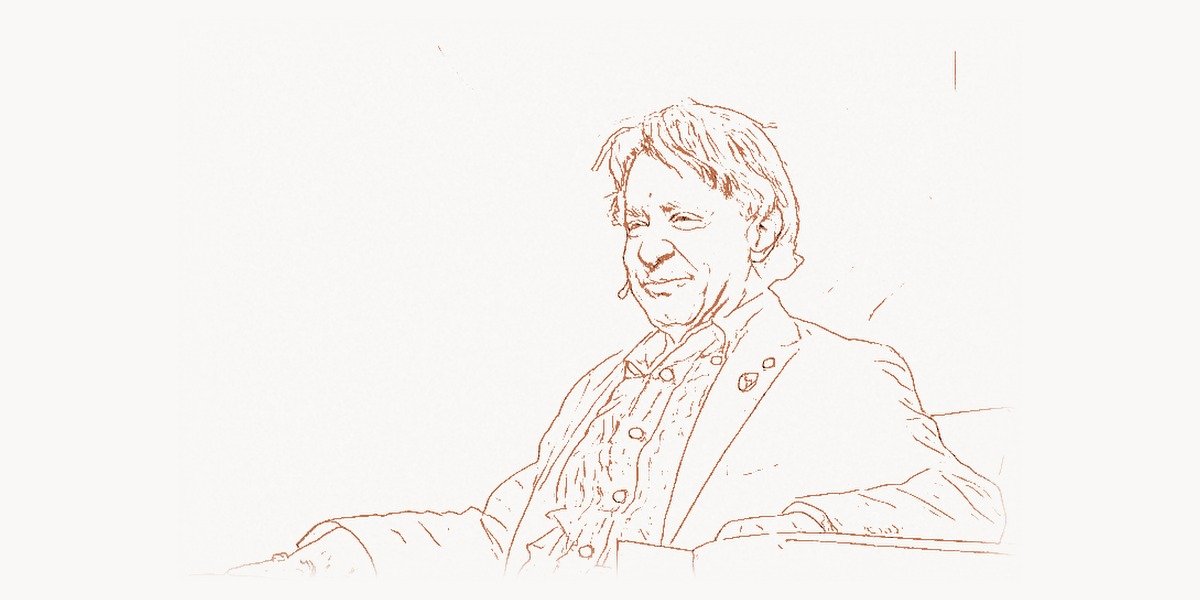
In 1990, a 42-year-old inventor named Ray Kurzweil published a book called The Age of Intelligent Machines. In it, he made a series of predictions that most technologists of the time considered wildly optimistic or outright delusional. He predicted that a computer would defeat a world chess champion by 1998. He predicted that the internet would become a ubiquitous communication network linking millions of people worldwide. He predicted that handheld devices would provide instant access to vast libraries of information. He predicted that computers would begin to understand and translate human speech. Every single one of these predictions came true, most of them within the timeframes he specified. The chess prediction was fulfilled when IBM’s Deep Blue defeated Garry Kasparov in 1997 — one year ahead of schedule. Kurzweil did not make these predictions through guesswork or intuition. He made them through a rigorous analysis of technological trends, applying a framework he would later call the Law of Accelerating Returns — the observation that the rate of technological progress is itself accelerating exponentially. This framework, refined over decades of research, has made Kurzweil arguably the most accurate technology forecaster in history. It also led him to a conclusion so radical that it has shaped the entire discourse around artificial intelligence: the technological singularity, a point in the near future when machine intelligence surpasses human intelligence and transforms civilization in ways we cannot currently predict. Today, as a principal researcher at Google working on natural language understanding and AI, Kurzweil continues to push the boundaries of what machines can do — and to refine his predictions about what they will do next.
Early Life and Path to Technology
Raymond Kurzweil was born on February 12, 1948, in Queens, New York City, to Fredric and Hannah Kurzweil. Both parents were Jewish refugees who had fled Austria just before the outbreak of World War II. His father was a concert pianist and music conductor who taught at the Mannes School of Music. His mother worked at a hospital. The family lived modestly, but the intellectual environment was rich — music, science, and technology were constant subjects of discussion.
Kurzweil showed extraordinary aptitude for engineering from an early age. By the time he was five, he was building his own mechanical devices from household materials. At eight, he was constructing robotic puppets. At twelve, he built a rudimentary computer from spare parts and programmed it to compose music — a project that foreshadowed his later work in both AI and music synthesis. His uncle, an engineer at Bell Labs (the same institution where Claude Shannon developed information theory), introduced him to computer science and encouraged his experimental inclinations.
At age fifteen, Kurzweil wrote a sophisticated computer program that analyzed the works of classical composers and generated original compositions in their style. The program was good enough that it won first prize at the International Science Fair in 1965 and attracted the attention of President Lyndon B. Johnson, who invited the teenage inventor to the White House. This early work on pattern recognition in music — teaching a machine to understand the statistical structure of compositions and generate new ones — anticipated by decades the generative AI models that would transform the technology industry in the 2020s.
Kurzweil enrolled at the Massachusetts Institute of Technology (MIT) in 1965, where he studied computer science and literature. At MIT, he created a computer program that matched high school students with colleges based on their interests and qualifications — essentially an early recommendation system. He sold this program to Harcourt, Brace & World for $100,000 while still an undergraduate. He graduated in 1970 with a Bachelor of Science in Computer Science and Literature, and immediately began a career as an inventor and entrepreneur that would span more than five decades.
The Breakthrough Inventions
Optical Character Recognition and the Reading Machine
Kurzweil’s first major invention addressed a problem that had stumped computer scientists for years: teaching machines to read printed text in any font. Previous optical character recognition (OCR) systems could only read text printed in specific, standardized fonts — a severe limitation that made them impractical for real-world applications. In 1974, Kurzweil founded Kurzweil Computer Products and developed the first omni-font OCR system — software that could recognize text printed in virtually any typeface. This was a genuine breakthrough in pattern recognition, requiring the software to identify the abstract structure of each letter regardless of its visual presentation.
But Kurzweil did not stop at reading text. He immediately asked a deeper question: who would benefit most from a machine that could read? The answer was obvious — blind people. So he combined his OCR technology with a text-to-speech synthesizer (which he also developed) and a flatbed scanner to create the Kurzweil Reading Machine, the first commercial device that could read printed text aloud to the blind. The machine was introduced in January 1976. One of its first users was Stevie Wonder, the musician, who became a close friend of Kurzweil and inspired his subsequent work in music technology.
The Reading Machine was a landmark in assistive technology. For the first time, blind individuals could independently read printed books, letters, and documents without relying on Braille transcriptions or human readers. The technology eventually evolved into the scanners and OCR systems used universally today — every time a document is scanned and converted to searchable text, the underlying technology traces back to Kurzweil’s 1974 invention.
Music Synthesis
Inspired by his friendship with Stevie Wonder and his own family background in music, Kurzweil turned his attention to music synthesis in the early 1980s. The challenge he set himself was ambitious: create an electronic instrument that could accurately reproduce the sounds of acoustic instruments — a grand piano, a violin, a trumpet — with sufficient fidelity that expert musicians could not distinguish the electronic reproduction from the real thing.
In 1984, Kurzweil founded Kurzweil Music Systems and released the Kurzweil K250 synthesizer. The K250 used a technique called sample-based synthesis, combined with sophisticated signal processing algorithms, to reproduce acoustic instrument sounds with unprecedented realism. When the K250 was demonstrated to musicians in blind listening tests, many could not reliably distinguish its piano sound from that of a concert grand. The K250 and its successors became industry-standard instruments, used by musicians ranging from Stevie Wonder to Prince to the production teams behind countless film scores. Kurzweil Music Systems (later acquired by Hyundai) continues to manufacture professional-grade synthesizers today.
Speech Recognition
In 1997, Kurzweil released the first commercially successful large-vocabulary continuous speech recognition software — a system that could transcribe natural human speech in real time. Previous speech recognition systems required users to speak slowly, with pauses between each word. Kurzweil’s system, built on pattern recognition algorithms similar to those he had developed for OCR, could handle continuous speech at normal conversational speed. This technology laid the groundwork for the voice assistants — Siri, Alexa, Google Assistant — that billions of people use today.
The Law of Accelerating Returns
The Technical Innovation
While Kurzweil’s inventions in OCR, speech synthesis, music technology, and speech recognition would be sufficient to establish him as one of the most prolific inventors of the 20th century, his most influential contribution is theoretical: the Law of Accelerating Returns. This concept, developed over several decades and articulated most fully in his 2001 essay of the same name, provides a framework for understanding and predicting the pace of technological change.
The core observation is simple but profound: technological progress is exponential, not linear. Moreover, the rate of exponential growth is itself increasing. Gordon Moore observed in 1965 that the number of transistors on a chip doubles approximately every two years. Kurzweil extended this observation far beyond semiconductor manufacturing. He showed that exponential improvement is visible across virtually every information technology: processing speed, memory capacity, network bandwidth, DNA sequencing, brain scanning resolution, and many others. More importantly, he demonstrated that this exponential pattern predates Moore’s Law by decades — it applies to vacuum tube computers, relay-based computers, and even electromechanical calculators stretching back to the early 1900s.
# Modeling Kurzweil's Law of Accelerating Returns
# Exponential growth in computing power per constant dollar
# Data points from "The Singularity Is Near" (2005)

import math

def calculations_per_second_per_dollar(year):
    """
    Approximate computing power available per $1,000
    based on Kurzweil's historical data.

    The doubling time has itself been decreasing:
    - Electromechanical era (1900-1940): ~3 year doubling
    - Vacuum tube era (1940-1960): ~2 year doubling
    - Transistor era (1960-1980): ~2 year doubling
    - Integrated circuit era (1980-present): ~1.5 year doubling
    - GPU/AI accelerator era (2015-present): ~1 year doubling
    """
    # Base: 1965, approximately 10^10 calculations/sec/$1000
    base_year = 1965
    base_cps = 1e10

    # Effective doubling time (years) varies by era
    if year < 1940:
        doubling_time = 3.0
    elif year < 1960:
        doubling_time = 2.0
    elif year < 1980:
        doubling_time = 2.0
    elif year < 2015:
        doubling_time = 1.5
    else:
        doubling_time = 1.0

    years_elapsed = year - base_year
    doublings = years_elapsed / doubling_time
    return base_cps * (2 ** doublings)

# Key milestones in Kurzweil's framework
milestones = {
    "Insect brain (~10^7 cps)": 1e7,
    "Mouse brain (~10^12 cps)": 1e12,
    "Human brain (~10^16 cps)": 1e16,
    "All human brains (~10^26 cps)": 1e26,
}

print("Computing power per $1,000 over time:")
print("-" * 50)
for year in range(1960, 2051, 10):
    cps = calculations_per_second_per_dollar(year)
    print(f"  {year}: {cps:.1e} calculations/second")

print("\nMilestone comparison:")
print("-" * 50)
for name, threshold in milestones.items():
    for y in range(1950, 2060):
        if calculations_per_second_per_dollar(y) >= threshold:
            print(f"  {name}: reached ~{y}")
            break
The implications of this exponential framework are staggering. Human intuition is fundamentally linear — when we imagine the future, we tend to project forward at the current rate of change. But if the rate of change is itself accelerating, then the next twenty years of progress will contain far more change than the previous twenty. Kurzweil demonstrated this quantitatively: the 20th century did not experience 100 years of progress at the year-2000 rate — it experienced approximately 20 years of progress at that rate. The 21st century, he argued, would experience the equivalent of 20,000 years of progress at the year-2000 rate.
Why It Mattered
The Law of Accelerating Returns provided a rigorous intellectual framework for predicting technological change. Before Kurzweil, technology forecasting was largely ad hoc — experts would extrapolate linearly from current trends and consistently underestimate the pace of change. Kurzweil showed that the correct model was exponential, and that this exponential pattern was remarkably robust across different technologies, different time periods, and different underlying physical substrates. When vacuum tubes reached their limits, transistors continued the exponential curve. When individual transistor scaling began to slow, parallel processing and specialized architectures (GPUs, TPUs) maintained the trajectory.
This framework directly informed Kurzweil’s most famous and controversial prediction: the technological singularity. In his 2005 book The Singularity Is Near, Kurzweil argued that if computing power continues to grow exponentially while the power of the human brain remains constant, there will come a point — which he originally estimated around 2045 — when artificial intelligence surpasses human intelligence. Beyond this point, progress becomes so rapid and so profound that it fundamentally transforms what it means to be human. This concept, building on earlier ideas from John von Neumann and mathematician Vernor Vinge, became the central organizing idea of the AI discourse in the early 21st century.
The singularity concept has drawn both passionate supporters and fierce critics. Skeptics argue that computing power alone does not produce intelligence, that the brain’s complexity may not be reducible to raw calculations per second, and that extrapolating exponential curves indefinitely is unreliable. Supporters point to the consistent accuracy of Kurzweil’s previous predictions and to the dramatic acceleration in AI capabilities in the 2020s — particularly the emergence of large language models and multimodal AI systems that exhibit reasoning capabilities far beyond what most experts expected this soon. Geoffrey Hinton, the pioneer of deep learning, has expressed increasing concern that superhuman AI may arrive sooner than previously expected — a position that aligns with Kurzweil’s accelerating-returns framework.
The Singularity and Google
In 2012, Kurzweil joined Google as a principal researcher and director of engineering, tasked with bringing natural language understanding to Google’s products. His hiring was a signal that Google took his vision of AI seriously. At Google, Kurzweil has worked on machine learning systems for natural language processing, contributing to the technologies that underpin Google’s search algorithms, translation services, and AI assistant.
The timing of his move to Google coincided with the deep learning revolution. In the same year Kurzweil joined, Geoffrey Hinton’s research group at the University of Toronto demonstrated that deep neural networks could dramatically outperform traditional approaches on image recognition tasks, triggering an explosion of investment and research in deep learning. Kurzweil had predicted this inflection point — the moment when AI would begin to accelerate rapidly — years before it occurred.
His work at Google has focused on what he considers the key unsolved problem in AI: genuine natural language understanding. While modern language models can generate remarkably fluent text and perform sophisticated reasoning tasks, Kurzweil has argued that true understanding — the ability to comprehend meaning, context, and implication at the level a human does — requires architectures and training approaches that go beyond current transformer-based models. His research aims to bridge this gap, developing systems that can read and understand documents with the depth and nuance of a human reader.
Kurzweil’s predictions continue to be tested against reality. His 2005 prediction that AI would pass a valid Turing test by 2029 seemed wildly optimistic at the time. With the emergence of systems like GPT-4, Claude, and Gemini in the 2020s — systems that can engage in extended, contextual conversations on virtually any topic — the 2029 timeline no longer seems unreasonable. Sam Altman and other leaders in the AI industry have acknowledged that Kurzweil’s predictions about the pace of AI development have been remarkably prescient. Whether the full singularity prediction — a fundamental transformation of human civilization through superintelligent AI — will materialize on Kurzweil’s timeline remains an open question, but the direction of the trend is increasingly difficult to dispute.
Philosophy and Engineering Approach
Key Principles
Kurzweil’s intellectual approach is distinctive in several respects. First, he is fundamentally an empiricist — his predictions are based on data, not speculation. He maintains extensive databases tracking the exponential improvement of dozens of technologies, and he updates and refines his models continuously as new data becomes available. This data-driven approach separates him from the many futurists who rely on narrative and analogy rather than quantitative analysis.
Second, Kurzweil is a systems thinker who sees connections across domains that specialists often miss. His insight that exponential improvement in computing was not specific to transistors or Moore’s Law but was a deeper pattern spanning multiple physical substrates required the ability to look across the histories of electromechanical, vacuum tube, transistor, and integrated circuit computing and recognize the common thread. This cross-domain perspective is similar to the approach that made Alan Turing so productive — the willingness to look beyond the boundaries of a single field.
Third, Kurzweil has always been an inventor first and a theorist second. His predictions emerge from hands-on experience building practical systems. When he predicts that machines will understand natural language by a certain date, his prediction is informed by decades of actually building OCR, speech recognition, and language processing systems. He knows intimately what the technical barriers are and how rapidly they are being overcome.
His engineering philosophy emphasizes pattern recognition as the fundamental operation of intelligence — both biological and artificial. In his 2012 book How to Create a Mind, he proposed the Pattern Recognition Theory of Mind (PRTM), arguing that the neocortex is essentially a hierarchy of pattern recognizers and that replicating this hierarchical structure in software is the key to creating genuine artificial intelligence. This perspective directly influenced the development of hierarchical deep learning architectures.
# Simplified model of Kurzweil's Pattern Recognition
# Theory of Mind (PRTM) — hierarchical pattern recognizers
# Each level recognizes increasingly abstract patterns

class PatternRecognizer:
    """
    A single pattern recognition module, inspired by
    Kurzweil's model of neocortical columns.

    Each recognizer:
    - Receives input from lower-level recognizers
    - Detects a specific pattern in that input
    - Sends its output to higher-level recognizers
    - Can predict expected input (top-down feedback)
    """
    def __init__(self, name, level):
        self.name = name
        self.level = level
        self.pattern = None
        self.confidence = 0.0
        self.children = []
        self.predictions = []

    def recognize(self, inputs):
        """Bottom-up recognition: detect pattern in inputs"""
        if self._matches_pattern(inputs):
            self.confidence = self._calculate_confidence(inputs)
            return {
                "pattern": self.name,
                "level": self.level,
                "confidence": self.confidence
            }
        return None

    def predict(self):
        """Top-down prediction: what input do we expect next?"""
        return self.predictions

    def _matches_pattern(self, inputs):
        return len(inputs) > 0 and self.pattern is not None

    def _calculate_confidence(self, inputs):
        return min(1.0, len(inputs) / 10.0)


class HierarchicalRecognizer:
    """
    Kurzweil's PRTM: ~300 million pattern recognizers
    organized in a hierarchy.

    Level 0: Raw sensory input (edges, phonemes)
    Level 1: Simple features (letters, syllables)
    Level 2: Objects, words
    Level 3: Concepts, phrases
    Level 4: Abstract ideas, narratives

    This maps to modern deep learning architectures:
    - Level 0-1: Convolutional layers
    - Level 2-3: Attention/transformer layers
    - Level 4: High-level reasoning layers
    """
    def __init__(self):
        self.levels = {i: [] for i in range(5)}

    def add_recognizer(self, recognizer):
        self.levels[recognizer.level].append(recognizer)

    def process(self, raw_input):
        """
        Process input through the hierarchy.
        Each level builds on patterns found at the level below.
        This is analogous to forward propagation in a
        deep neural network.
        """
        current_input = raw_input
        results = []

        for level in range(5):
            level_results = []
            for recognizer in self.levels[level]:
                result = recognizer.recognize(current_input)
                if result:
                    level_results.append(result)

            if level_results:
                results.extend(level_results)
                current_input = level_results

        return results


# The key insight: intelligence emerges from
# the hierarchical composition of simple pattern
# recognizers — the same principle that makes
# deep learning so effective.
Legacy and Modern Relevance
Kurzweil’s impact spans multiple domains. As an inventor, he holds 21 patents and has founded nine technology companies. His inventions in OCR, text-to-speech, speech recognition, and music synthesis have directly improved the lives of millions of people — particularly people with disabilities, who gained unprecedented access to printed information through his Reading Machine and its descendants.
As a futurist, he has fundamentally shaped how the technology industry thinks about the future. His books — The Age of Intelligent Machines (1990), The Age of Spiritual Machines (1999), The Singularity Is Near (2005), and The Singularity Is Nearer (2024) — have collectively sold millions of copies and influenced a generation of researchers, entrepreneurs, and policymakers. The concept of the technological singularity, while not originated by Kurzweil, was popularized and given quantitative rigor by his work. It has become a central reference point in discussions about AI safety, the future of work, and the long-term trajectory of human civilization.
His track record of predictions is remarkable. An analysis of his 147 predictions made in the 1990s found that approximately 86% were correct by the time of their target dates. This includes predictions about the rise of the internet, the defeat of human chess champions by computers, the proliferation of portable computing devices, the development of speech-to-text transcription, and the emergence of autonomous vehicles. His prediction accuracy is not perfect — he has been criticized for overly optimistic timelines on some technologies, particularly self-driving cars and certain medical advances — but the overall pattern of directional accuracy is unmatched among technology forecasters.
Kurzweil has received numerous honors for his work, including the National Medal of Technology (awarded by President Clinton in 1999), the Lemelson-MIT Prize (the world’s largest prize for invention), induction into the National Inventors Hall of Fame, and 21 honorary doctorates. He has been called “the restless genius” by The Wall Street Journal and “the ultimate thinking machine” by Forbes. PBS selected him as one of 16 “revolutionaries who made America.” Bill Gates has described him as “the best person I know at predicting the future of artificial intelligence.”
Beyond technology, Kurzweil has been influential in the field of life extension and longevity research. He has argued that exponential advances in biotechnology, nanotechnology, and AI will eventually enable humans to radically extend their lifespans — a position that has attracted both serious scientific interest and considerable skepticism. His personal health regimen, which involves consuming dozens of dietary supplements daily, has been widely discussed and debated.
For modern developers and engineers, Kurzweil’s work offers several practical insights. His emphasis on exponential thinking is essential for anyone building software tools or planning technology strategy — linear projections consistently underestimate the pace of change. His pattern recognition framework provides a useful conceptual model for understanding how deep learning works and why it has been so successful. And his career demonstrates the value of working across domains: his most important inventions came from combining expertise in pattern recognition, signal processing, linguistics, and neuroscience — fields that were traditionally separate but whose intersection proved extraordinarily productive. Teams using modern project management platforms to coordinate cross-functional AI research are following the same interdisciplinary approach that Kurzweil pioneered decades ago.
Perhaps most importantly, Kurzweil’s work forces us to confront the most consequential question facing humanity in the 21st century: what happens when we create intelligence greater than our own? Whether the singularity arrives in 2045 or 2075, whether it takes the specific form Kurzweil envisions or something entirely different, the exponential trends he has documented are real and accelerating. The decisions made today by AI researchers, technology consultancies, policymakers, and society at large about how to develop, deploy, and govern artificial intelligence will shape the trajectory of this transformation. Kurzweil’s contribution has been to make the scale and urgency of these decisions impossible to ignore.
Key Facts
- Born: February 12, 1948, Queens, New York City, USA
- Known for: Law of Accelerating Returns, technological singularity theory, OCR, text-to-speech synthesis, speech recognition, music synthesizers
- Key projects: Kurzweil Reading Machine (1976), Kurzweil K250 synthesizer (1984), large-vocabulary speech recognition (1997), principal researcher at Google (2012–present)
- Key publications: The Age of Intelligent Machines (1990), The Age of Spiritual Machines (1999), The Singularity Is Near (2005), How to Create a Mind (2012), The Singularity Is Nearer (2024)
- Recognition: National Medal of Technology (1999), Lemelson-MIT Prize, National Inventors Hall of Fame, 21 honorary doctorates
- Education: B.S. in Computer Science and Literature, Massachusetts Institute of Technology (1970)
- Patents: 21 patents across OCR, speech synthesis, music technology, and pattern recognition
Frequently Asked Questions
Who is Ray Kurzweil?
Ray Kurzweil (born 1948) is an American inventor, futurist, and computer scientist who is widely regarded as one of the most important figures in the history of artificial intelligence. He invented the first omni-font optical character recognition (OCR) system, the first text-to-speech reading machine for the blind, the first commercially successful large-vocabulary speech recognition system, and the Kurzweil K250 music synthesizer. He is the author of several influential books on AI and the future of technology, including The Singularity Is Near. Since 2012, he has served as a principal researcher at Google, working on natural language understanding and machine intelligence.
What is the technological singularity?
The technological singularity, as described by Kurzweil, is a hypothesized future point (originally estimated around 2045) at which artificial intelligence surpasses human intelligence, triggering a rapid and irreversible transformation of civilization. Kurzweil’s argument is based on his Law of Accelerating Returns — the empirical observation that computing power grows exponentially while the human brain’s processing capacity remains constant. When the exponential curve of machine intelligence crosses the threshold of human-level intelligence, Kurzweil argues, progress will accelerate so dramatically that it becomes impossible to predict what comes next. The concept has become central to discussions about AI safety, existential risk, and the long-term future of humanity.
What did Ray Kurzweil invent?
Kurzweil’s major inventions include the first omni-font OCR system (1974), which could read text printed in any typeface; the Kurzweil Reading Machine (1976), the first device that could read printed text aloud to blind users; the Kurzweil K250 synthesizer (1984), which reproduced acoustic instrument sounds with unprecedented realism; and the first commercially successful large-vocabulary continuous speech recognition software (1997). He holds 21 patents and has founded nine technology companies. His inventions span pattern recognition, signal processing, artificial intelligence, and assistive technology, and they have collectively influenced billions of devices and software systems used worldwide today.
How accurate are Kurzweil’s predictions?
Analysis of Kurzweil’s 147 technology predictions from the 1990s indicates that approximately 86% were correct by their target dates. His successful predictions include the defeat of a human chess champion by a computer (predicted for 1998, achieved in 1997), the rise of ubiquitous wireless internet, the proliferation of portable computing devices, the development of real-time speech recognition, and the emergence of AI systems capable of sophisticated conversation. His timeline for some predictions has been overly optimistic — particularly regarding self-driving cars and certain medical advances — but his directional accuracy across a wide range of technologies is generally considered unmatched among technology forecasters.