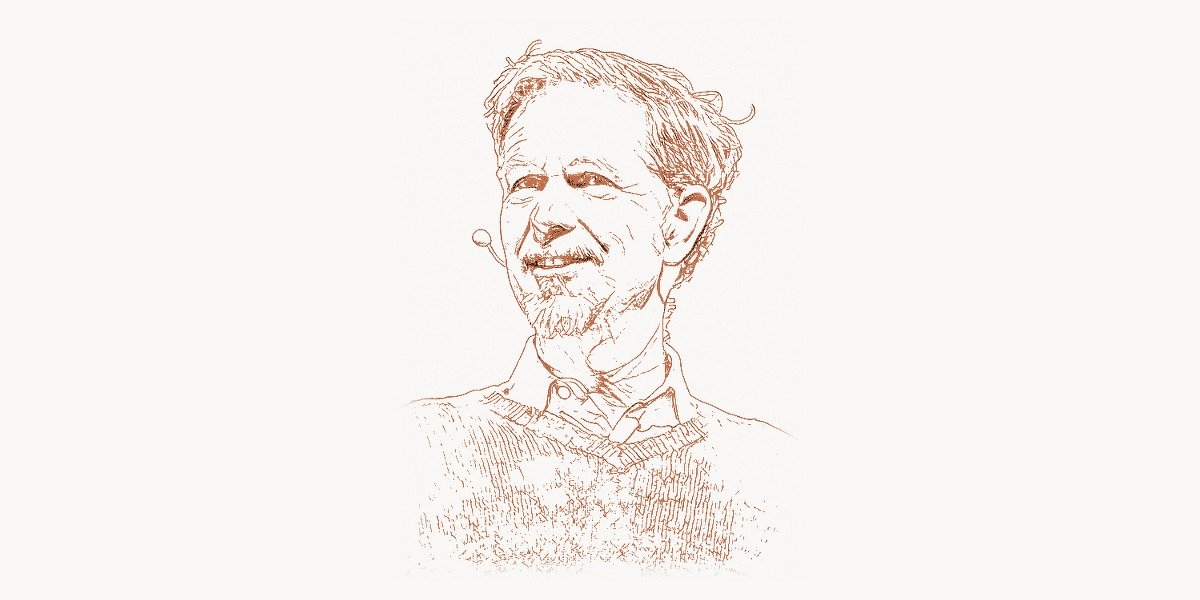
In the spring of 1997, a software entrepreneur named Reed Hastings returned a rented VHS copy of Apollo 13 to his local Blockbuster store and was charged a $40 late fee. The experience irritated him — not because of the amount, but because the entire business model felt fundamentally broken. Why should customers be penalized for keeping a product longer than expected? Why should access to entertainment be governed by arbitrary return windows and punitive fees? Hastings, who had already founded and sold a successful software company, began thinking about a different model. Within a year, he and Marc Randolph had launched Netflix — a DVD-by-mail rental service with no late fees, no due dates, and a flat monthly subscription. That simple idea — that consumers should pay for access to content rather than for individual transactions — would grow into a company that fundamentally restructured the global entertainment industry, pioneered the technology of internet video streaming at scale, and demonstrated that data-driven decision-making could produce not just efficient distribution but genuinely compelling original content. Netflix today serves over 260 million subscribers in more than 190 countries, and its influence extends far beyond its own platform: the streaming model it pioneered has been adopted by Disney, Apple, Amazon, Warner Bros., and virtually every major media company on earth. Reed Hastings did not just build a company; he dismantled the twentieth-century entertainment distribution model and replaced it with something entirely new.
Early Life and Path to Technology
Wilmot Reed Hastings Jr. was born on October 8, 1960, in Boston, Massachusetts. His father was a lawyer who served in the Nixon administration. Hastings grew up in the Boston suburbs and attended Buckingham Browne & Nichols School, an elite private school in Cambridge.
After high school, Hastings spent two years in the Peace Corps teaching mathematics in Swaziland (now Eswatini). The experience was formative — teaching with limited resources taught him to think about efficiency and delivering maximum impact with minimal infrastructure. He later credited the Peace Corps with shaping his management philosophy: the belief that talented people produce excellent results when given clear goals and freedom from micromanagement.
Hastings earned a bachelor’s degree in mathematics from Bowdoin College (1983) and a master’s in computer science from Stanford University (1988). At Stanford, he was immersed in the emerging culture of Silicon Valley entrepreneurship, and his thesis work on artificial intelligence and software tools foreshadowed Netflix’s data-driven approach to content recommendation.
In 1991, Hastings founded Pure Software, which developed debugging tools for C and C++ programs. Pure Software went public in 1995, merged with Atria Software in 1997, and was subsequently acquired by Rational Software (later IBM) for approximately $750 million. Hastings described his management style at Pure Software as too controlling — a lesson that profoundly influenced the agile, trust-based culture he later built at Netflix.
The DVD-by-Mail Revolution
Building the Initial Platform
Netflix was incorporated on August 29, 1997, by Hastings and Marc Randolph. The company launched its website on April 14, 1998, offering DVD rentals by mail with no late fees — a direct response to Hastings’ Blockbuster experience. In September 1999, Netflix introduced the subscription model that would define its business: for a flat monthly fee ($15.95), customers could rent unlimited DVDs. This was a radical departure from the per-title, per-day model that had governed video rental since the industry’s inception.
The logistics infrastructure Netflix built was a remarkable engineering achievement. At its peak, the company operated over 50 distribution centers across the United States, strategically placed so that 95% of subscribers received DVDs within one business day. Proprietary sorting machines handled millions of DVDs daily with extraordinary efficiency — operational excellence that foreshadowed the engineering culture behind one of the world’s most sophisticated streaming platforms.
The Recommendation Engine
From its earliest days, Netflix invested heavily in recommendation technology. The company recognized that a vast catalog of titles was only valuable if customers could find content they would enjoy. In 2000, Netflix introduced its recommendation system, which used collaborative filtering to suggest DVDs based on a subscriber’s viewing history and ratings. This was among the earliest large-scale applications of machine learning to consumer product recommendations.
In 2006, Netflix launched the Netflix Prize — a public competition offering $1 million to any team that could improve the accuracy of its recommendation algorithm by 10% over Netflix’s own Cinematch system. The competition ran for three years and attracted over 40,000 teams from 186 countries. It became one of the most famous machine learning competitions in history, driving significant advances in collaborative filtering, matrix factorization, and ensemble methods. The winning solution, submitted in 2009 by a team called BellKor’s Pragmatic Chaos, combined over 100 different algorithmic models.
# Simplified collaborative filtering recommendation engine
# Inspired by Netflix's matrix factorization approach
# The Netflix Prize drove massive advances in this field

import numpy as np

class StreamingRecommender:
    """
    Matrix factorization-based recommendation system.
    Netflix pioneered this approach at scale, decomposing
    the massive user-item ratings matrix into latent factors
    that capture hidden preferences and content attributes.
    """

    def __init__(self, n_factors=50, learning_rate=0.005,
                 regularization=0.02, epochs=20):
        self.n_factors = n_factors      # Latent dimensions
        self.lr = learning_rate
        self.reg = regularization
        self.epochs = epochs

    def fit(self, ratings):
        """
        Train on a sparse ratings matrix using SGD.
        ratings: list of (user_id, item_id, rating) tuples

        Netflix's actual system processed billions of events:
        - Explicit ratings (1-5 stars, later thumbs up/down)
        - Implicit signals (watch time, pauses, rewatches)
        - Contextual data (time of day, device type)
        """
        users = set(r[0] for r in ratings)
        items = set(r[1] for r in ratings)

        self.user_map = {u: i for i, u in enumerate(users)}
        self.item_map = {m: i for i, m in enumerate(items)}

        n_users = len(users)
        n_items = len(items)

        # Initialize latent factor matrices
        # P = user preferences, Q = item attributes
        self.P = np.random.normal(0, 0.1, (n_users, self.n_factors))
        self.Q = np.random.normal(0, 0.1, (n_items, self.n_factors))
        self.user_bias = np.zeros(n_users)
        self.item_bias = np.zeros(n_items)
        self.global_mean = np.mean([r[2] for r in ratings])

        for epoch in range(self.epochs):
            np.random.shuffle(ratings)
            total_error = 0

            for user, item, rating in ratings:
                u = self.user_map[user]
                i = self.item_map[item]

                # Predicted rating = global mean + biases + dot product
                prediction = (self.global_mean
                            + self.user_bias[u]
                            + self.item_bias[i]
                            + np.dot(self.P[u], self.Q[i]))

                error = rating - prediction
                total_error += error ** 2

                # SGD update with L2 regularization
                self.user_bias[u] += self.lr * (error - self.reg * self.user_bias[u])
                self.item_bias[i] += self.lr * (error - self.reg * self.item_bias[i])

                P_old = self.P[u].copy()
                self.P[u] += self.lr * (error * self.Q[i] - self.reg * self.P[u])
                self.Q[i] += self.lr * (error * P_old - self.reg * self.Q[i])

            rmse = np.sqrt(total_error / len(ratings))
            print(f"Epoch {epoch+1}/{self.epochs} - RMSE: {rmse:.4f}")

    def recommend(self, user_id, n=10):
        """Generate top-N recommendations for a user."""
        u = self.user_map[user_id]
        scores = (self.global_mean
                 + self.user_bias[u]
                 + self.item_bias
                 + self.Q.dot(self.P[u]))
        top_items = np.argsort(scores)[::-1][:n]
        return [(list(self.item_map.keys())[i], scores[i])
                for i in top_items]

# Netflix processes ~1 billion+ events daily through systems
# far more complex than this, incorporating deep learning,
# temporal dynamics, and real-time session modeling
The recommendation system became a core competitive advantage. Netflix estimates that over 80% of the content watched on its platform is discovered through its recommendation algorithms rather than through direct search. This has profound implications: it means that the algorithmic curation of content is more important than traditional marketing or browsing in determining what hundreds of millions of people watch. The recommendation engine effectively acts as a personalized programming director for each subscriber — a concept that would have been inconceivable in the era of broadcast television or physical video stores.
The Streaming Pivot
In February 2007, Netflix launched its streaming service as a complement to DVD-by-mail. Subscribers could watch titles on their computers through a web browser — primitive by today’s standards (the early player used Microsoft Silverlight) — but the strategic vision was clear. Hastings understood that content delivery’s future was digital, and Netflix needed to lead the transition.
The technical challenges were enormous. Delivering consistent, high-quality video to millions of simultaneous viewers across varying network conditions required innovations in encoding, content delivery, and adaptive bitrate streaming. Netflix developed its own ABR algorithm that dynamically adjusts quality based on bandwidth, switching seamlessly between levels to minimize buffering.
// Simplified adaptive bitrate (ABR) streaming controller
// Netflix pioneered many ABR techniques at massive scale
// Their approach balances quality, buffer health, and bandwidth

class AdaptiveBitrateController {
    constructor() {
        // Available quality tiers (bitrate in kbps)
        this.qualityLevels = [
            { level: 0, bitrate: 235,   resolution: '320x240',   label: 'Low' },
            { level: 1, bitrate: 560,   resolution: '384x288',   label: 'Medium' },
            { level: 2, bitrate: 1050,  resolution: '640x480',   label: 'SD' },
            { level: 3, bitrate: 3000,  resolution: '1280x720',  label: 'HD' },
            { level: 4, bitrate: 5800,  resolution: '1920x1080', label: 'Full HD' },
            { level: 5, bitrate: 16000, resolution: '3840x2160', label: '4K UHD' }
        ];

        this.bufferHealth = 0;           // Seconds of buffered content
        this.currentLevel = 0;           // Start conservative
        this.bandwidthEstimates = [];    // Rolling bandwidth samples
        this.maxBufferSeconds = 240;     // 4-minute buffer ceiling
        this.minBufferSeconds = 10;      // Minimum before downgrade
        this.switchCooldownMs = 5000;    // Prevent rapid oscillation
        this.lastSwitchTime = 0;
    }

    estimateBandwidth(chunkSizeBytes, downloadTimeMs) {
        const bandwidthKbps = (chunkSizeBytes * 8) / downloadTimeMs;
        this.bandwidthEstimates.push(bandwidthKbps);

        // Keep rolling window of last 20 measurements
        if (this.bandwidthEstimates.length > 20) {
            this.bandwidthEstimates.shift();
        }

        // Use harmonic mean — more conservative than arithmetic mean,
        // better reflects worst-case throughput for streaming
        const harmonicMean = this.bandwidthEstimates.length /
            this.bandwidthEstimates.reduce((sum, bw) => sum + (1 / bw), 0);

        return harmonicMean;
    }

    selectQuality(currentBufferSeconds, measuredBandwidthKbps) {
        this.bufferHealth = currentBufferSeconds;
        const now = Date.now();

        // Prevent oscillation between quality levels
        if (now - this.lastSwitchTime < this.switchCooldownMs) {
            return this.qualityLevels[this.currentLevel];
        }

        // Netflix's approach: buffer-based + bandwidth-based hybrid
        // Buffer-Based Algorithm (BBA) pioneered by Netflix Research

        let targetLevel = this.currentLevel;

        // Emergency: buffer critically low — drop to lowest
        if (currentBufferSeconds < 5) {
            targetLevel = 0;
        }
        // Buffer is healthy — consider upgrading based on bandwidth
        else if (currentBufferSeconds > this.minBufferSeconds) {
            // Find highest quality that fits within 80% of bandwidth
            // The 80% safety margin prevents buffer depletion
            const safeBandwidth = measuredBandwidthKbps * 0.80;

            for (let i = this.qualityLevels.length - 1; i >= 0; i--) {
                if (this.qualityLevels[i].bitrate <= safeBandwidth) {
                    targetLevel = i;
                    break;
                }
            }

            // Only allow one-step upgrades to prevent jarring jumps
            if (targetLevel > this.currentLevel + 1) {
                targetLevel = this.currentLevel + 1;
            }
        }
        // Buffer declining — consider downgrade
        else if (currentBufferSeconds < this.minBufferSeconds) {
            targetLevel = Math.max(0, this.currentLevel - 1);
        }

        if (targetLevel !== this.currentLevel) {
            this.currentLevel = targetLevel;
            this.lastSwitchTime = now;
            console.log(
                `ABR switch: ${this.qualityLevels[targetLevel].label} ` +
                `(${this.qualityLevels[targetLevel].bitrate} kbps) | ` +
                `Buffer: ${currentBufferSeconds.toFixed(1)}s | ` +
                `Bandwidth: ${measuredBandwidthKbps.toFixed(0)} kbps`
            );
        }

        return this.qualityLevels[this.currentLevel];
    }
}

// Netflix streams to 260M+ subscribers across every network
// condition imaginable — from fiber in Seoul to mobile in Lagos.
// Their real ABR system incorporates device capabilities,
// per-title encoding optimization, and predictive models.
In 2008, Netflix began partnering with device manufacturers — Roku (originally developed internally at Netflix), Xbox 360, and later Apple, Samsung, and LG — to bring streaming to television screens, positioning it as a direct replacement for cable television. By 2010, Netflix launched internationally in Canada, and by January 2016, it had expanded to over 190 countries simultaneously. This global expansion required building massive content delivery infrastructure capable of handling traffic spikes across multiple time zones — a technical achievement comparable to what Amazon achieved with AWS for cloud computing.
Open Connect and the Engineering of Scale
To deliver video at the scale required by its growing subscriber base, Netflix built Open Connect — its own content delivery network (CDN). Rather than relying entirely on third-party CDNs like Akamai or Cloudflare, Netflix developed custom hardware appliances (Open Connect Appliances, or OCAs) that are placed directly inside internet service providers' networks. These appliances cache Netflix content close to end users, reducing latency, improving video quality, and minimizing the bandwidth burden on ISPs' backbone networks.
At peak hours, Netflix accounts for over 15% of all downstream internet traffic worldwide. Managing this volume required innovations in video encoding (Netflix developed per-title encoding optimization, which analyzes each title individually to determine the optimal bitrate ladder rather than using a one-size-fits-all encoding profile), in continuous deployment (Netflix pioneered many of the practices now standard in DevOps, including chaos engineering through its famous Chaos Monkey tool), and in microservices architecture (Netflix's move from a monolithic application to hundreds of microservices became a widely studied case in software engineering).
Netflix's engineering team open-sourced many of the tools they built for managing this infrastructure, including Eureka (service discovery), Zuul (API gateway), Hystrix (latency and fault tolerance), and Conductor (workflow orchestration). These tools became foundational components of the cloud-native ecosystem and were widely adopted by other companies building distributed systems. Netflix's engineering blog became one of the most influential technical publications in the industry, documenting the challenges and solutions of operating at massive scale.
The Content Revolution
On February 1, 2013, Netflix released all thirteen episodes of House of Cards simultaneously — its first major original series. The show was commissioned based on data analysis: Netflix's algorithms indicated that subscribers who enjoyed the original British House of Cards also liked Kevin Spacey's films and David Fincher's work. Releasing the entire season at once created the phenomenon of "binge-watching" and fundamentally changed how audiences consume serialized content.
The success of House of Cards, followed by Orange Is the New Black, Stranger Things, The Crown, and hundreds of other originals, transformed Netflix from a distribution company into one of the largest content producers worldwide. By 2023, Netflix was spending over $17 billion annually on content. Hastings' key insight was that technology and content were two sides of the same coin — the recommendation algorithm did not just help users find content, it helped Netflix decide what to produce. Viewing patterns, completion rates, and demographic data became creative tools for identifying underserved audiences and predicting demand.
Culture and Management Philosophy
The Netflix Culture Deck
In 2009, Netflix published a 125-slide presentation titled "Netflix Culture: Freedom & Responsibility" that became one of the most influential documents in Silicon Valley history. Sheryl Sandberg reportedly called it one of the most important documents ever to come out of the Valley. The deck articulated a management philosophy built on several core principles: hire exceptional people, give them maximum freedom, pay top-of-market compensation, and hold them to high performance standards.
Hastings' management philosophy was shaped by his experience at Pure Software, where he felt he had been too controlling. At Netflix, he pushed decision-making authority as far down the organization as possible. Individual engineers could deploy code to production without manager approval. Content executives could greenlight shows worth tens of millions of dollars. The philosophy was that talented people make better decisions when they have context and freedom than when they are constrained by approval hierarchies.
The culture also embraced radical transparency. Hastings shared financial information, strategic plans, and even board presentations with all employees. The logic was that informed employees make better decisions, and that secrecy breeds politics and dysfunction. This approach to organizational management has influenced how many technology companies think about project management and team autonomy, emphasizing trust and context over control and process.
Keeper Test and High-Performance Teams
Netflix's culture was also notably demanding. The company explicitly described itself as a "pro sports team, not a family." Managers were encouraged to apply the "keeper test": if an employee told you they were leaving, would you fight hard to keep them? If not, the company should proactively offer a generous severance package and find someone better. This approach was controversial — critics called it ruthless and anxiety-inducing — but it produced teams with extraordinarily high talent density. Every SaaS company and tech startup in Silicon Valley has since had to reckon with the Netflix culture model, whether they adopted it or rejected it.
Legacy and Modern Relevance
Reed Hastings stepped down as co-CEO of Netflix in January 2023, transitioning to the role of Executive Chairman. He handed the CEO role to Ted Sarandos and Greg Peters, both longtime Netflix executives. By that point, Netflix had fundamentally reshaped the global entertainment industry in ways that extend far beyond its own platform.
The "streaming wars" of 2019-2022 — Disney+, HBO Max, Paramount+, Peacock, Apple TV+ — were a direct response to Netflix's success. Every major media company dismantled its traditional distribution model because Netflix proved that subscription streaming was the future. "Binge-watching" became the default mode of content consumption, and "appointment television" became a relic of the pre-Netflix era.
On the technology side, Netflix's contributions to distributed systems, microservices, chaos engineering, and adaptive streaming are embedded in the modern internet's infrastructure. Netflix proved that machine learning could be applied to every aspect of a content business — from thumbnail A/B testing (showing each subscriber the artwork most likely to appeal to them) to encoding optimization and demand prediction. The engineering practices it pioneered are now standard across the software industry.
Hastings has since shifted focus toward education and philanthropy. His book, No Rules Rules: Netflix and the Culture of Reinvention (co-authored with Erin Meyer, 2020), documented the management philosophy that guided Netflix through three decades of transformation.
The trajectory of Netflix under Hastings' leadership illustrates a pattern that recurs throughout the history of technology: an outsider, unburdened by industry assumptions, sees a structural inefficiency and applies technology to eliminate it. Just as Gordon Moore's prediction about semiconductor scaling enabled the hardware revolution, Hastings' insight about subscription-based digital distribution enabled the content revolution. The video rental store is gone. The broadcast schedule is fading. Linear television is in structural decline. In their place stands a model built on algorithms, data, and the engineering principle that content should be available to anyone, anywhere, at any time — exactly as Reed Hastings envisioned when he paid that $40 late fee in 1997.
Key Facts
- Born: October 8, 1960, Boston, Massachusetts, United States
- Known for: Co-founding Netflix, pioneering the subscription streaming model, transforming global entertainment distribution
- Key companies: Pure Software (founded 1991), Netflix (co-founded 1997)
- Education: B.A. in Mathematics from Bowdoin College (1983), M.S. in Computer Science from Stanford University (1988)
- Major achievements: Built Netflix from DVD-by-mail startup to 260M+ subscriber global streaming platform, launched Netflix original content strategy, pioneered chaos engineering and microservices at scale
- Recognition: Time 100 Most Influential People (multiple years), Fortune Businessperson of the Year (2010), Emmy Award-winning company
- Other roles: Peace Corps volunteer (Swaziland), education philanthropist, Executive Chairman of Netflix (2023–present)
Frequently Asked Questions
Who is Reed Hastings?
Reed Hastings is an American technology entrepreneur who co-founded Netflix in 1997 with Marc Randolph. He served as CEO from 1998 to 2023, guiding the company from a DVD-by-mail service to the world's largest streaming platform with over 260 million subscribers in 190+ countries. Before Netflix, he founded Pure Software (developer tools). He holds a master's in computer science from Stanford and spent two years teaching math in the Peace Corps.
How did Reed Hastings transform the entertainment industry?
Hastings proved that subscription streaming could replace physical media and broadcast television. Under his leadership, Netflix pioneered the all-at-once season release (enabling "binge-watching"), invested in data-driven original content, expanded to 190+ countries, and forced every major media company to launch competing streaming services. Netflix effectively ended the video rental era and accelerated linear television's decline. For teams managing digital-first content workflows, tools like Taskee help coordinate the complex production pipelines that streaming-era content demands.
What is Netflix's recommendation algorithm?
Netflix's recommendation algorithm is a sophisticated machine learning system that analyzes viewing history, ratings, browsing behavior, time-of-day patterns, device usage, and other signals to predict what each subscriber will want to watch next. The system uses collaborative filtering, deep learning, and contextual models to personalize not just content suggestions but also the artwork displayed for each title. Netflix estimates that over 80% of content watched on the platform is discovered through recommendations rather than direct search. The Netflix Prize competition (2006–2009) advanced the field of recommendation systems globally.
What engineering innovations did Netflix pioneer?
Netflix pioneered Open Connect (a global CDN with custom hardware inside ISP networks), adaptive bitrate streaming, chaos engineering (via Chaos Monkey), per-title encoding optimization, and a microservices architecture that became an industry reference. The company open-sourced tools like Eureka, Zuul, and Hystrix, now widely used across the industry. For organizations building similar distributed systems, agencies like Toimi specialize in architecting scalable web platforms informed by these modern engineering practices.
What is the Netflix culture and why is it influential?
The Netflix culture, articulated in the 2009 "Freedom & Responsibility" deck, is built on high talent density, radical transparency, maximum freedom, top-of-market compensation, and rigorous performance standards. Key concepts include the "keeper test" (would you fight to keep this employee?), context over control, and treating the company as a sports team rather than a family. The deck has been viewed millions of times and influenced management practices at technology companies worldwide.