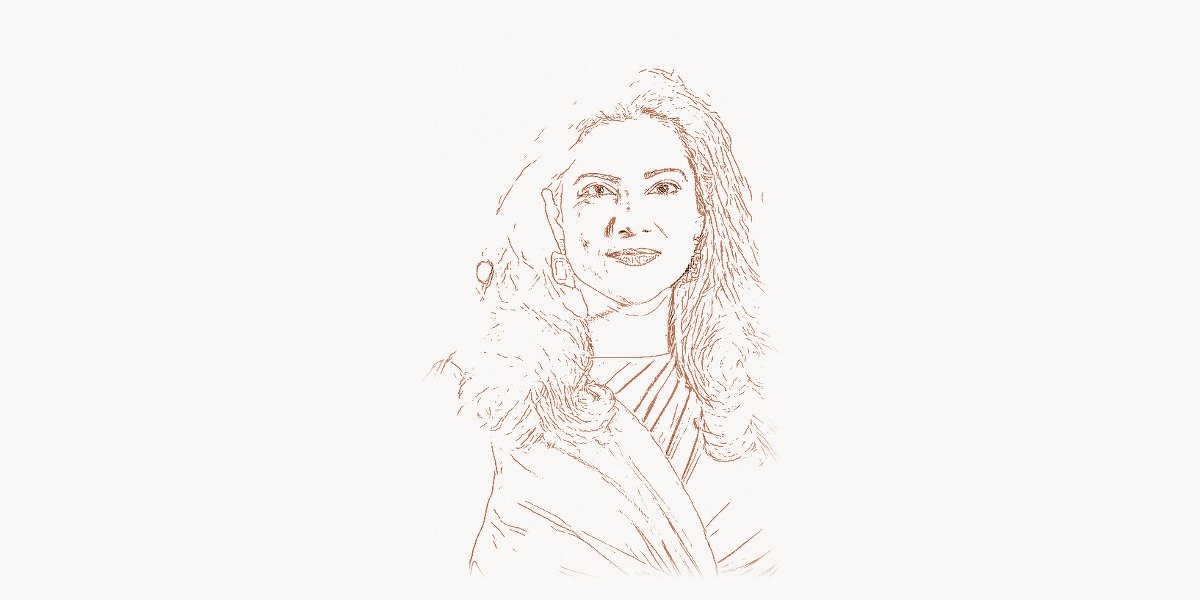
In 2010, a 34-year-old lawyer with no engineering background did something that shook the foundations of American politics: Reshma Saujani became the first Indian-American woman to run for U.S. Congress. She lost badly — by a margin of 81 to 19 percent against a 14-term incumbent. But the campaign trail gave her something far more valuable than a congressional seat. Visiting classrooms across New York City to rally support, she noticed a pattern that would change her life and the trajectory of an entire generation of young women. In computer science classrooms, the seats were overwhelmingly filled by boys. The handful of girls present were timid, afraid to show their screens, afraid to ask questions, afraid to be imperfect. The gender gap in technology was not an abstract statistic for Saujani — it was rows and rows of empty chairs. Two years later, she founded Girls Who Code, an organization that has since reached over 500,000 girls across all 50 U.S. states and become the largest pipeline of future female engineers in the United States. Reshma Saujani did not invent a new programming language or a revolutionary algorithm. She engineered something arguably harder: a cultural shift in who gets to call themselves a coder.
Early Life and the Immigrant Drive
Reshma Saujani was born on November 18, 1975, in Illinois, to Gujarati Indian parents who had fled Idi Amin’s regime in Uganda in 1973. Her parents, Mukund and Manju Saujani, arrived in the United States as refugees with almost nothing, rebuilding their lives from scratch in the suburbs of Chicago. Her father worked as a machinist and later became an engineer, while her mother held various jobs to keep the family afloat. The experience of watching her parents navigate a new country — the paperwork, the prejudice, the relentless pragmatism required to survive — instilled in Saujani a deep understanding of systemic barriers and the grit needed to overcome them.
Growing up in Schaumburg, Illinois, Saujani was acutely aware of being different. She was one of the few South Asian kids in her school, and she channeled that outsider energy into academic ambition. She graduated from the University of Illinois with a degree in political science and speech communication, then earned a Master of Public Policy from Harvard’s Kennedy School of Government and a law degree from Yale Law School. Her career before Girls Who Code was rooted in law, policy, and finance — she worked at Davis Polk & Wardwell, served as a fellow at the Truman National Security Project, and spent time in the hedge fund world. Technology was not her domain. But that, paradoxically, was exactly what made her the right person to see the problem that insiders had been blind to for decades.
The Problem: A Pipeline Running Dry
By 2012, the gender gap in computing had been well-documented but poorly addressed. In 1984, approximately 37% of computer science graduates in the United States were women. By 2012, that number had plummeted to 18%. The industry was not just failing to include women — it was actively losing them. The pipeline that produced software engineers, systems architects, and technology leaders had a leak so massive that it was hemorrhaging half the talent pool before the pipeline even started.
The reasons were structural and cultural. Standardized testing, classroom dynamics, media representation, and parental expectations all conspired to push girls away from computing at precisely the age when interest in STEM subjects is most malleable — between 13 and 17 years old. Grace Hopper had proven decades earlier that women could not only participate in computing but fundamentally shape it. Margaret Hamilton had written the flight software that landed humans on the moon. Ada Lovelace had conceived of general-purpose computing before the first computer was ever built. Yet by the time Saujani was visiting those New York City classrooms, the mythology of the programmer had been thoroughly rewritten as exclusively male — a hoodie-wearing loner in a garage, not a woman in a lab coat at MIT.
Saujani grasped that the problem was not aptitude. Girls were not worse at coding than boys. The problem was exposure, encouragement, and culture. Girls were being told — through a thousand subtle signals — that coding was not for them. And by the time they reached college, the message had been so thoroughly internalized that the gender gap appeared to be a natural phenomenon rather than a manufactured one.
Founding Girls Who Code
The First Summer and the MVP Approach
In 2012, Saujani launched Girls Who Code with a single summer immersion program: 20 girls, seven weeks, one classroom in New York City. The curriculum blended computer science instruction with exposure to the technology industry — field trips to companies like Twitter and Google, guest lectures from women engineers, and project-based learning that culminated in each girl building and presenting her own application. This first cohort was, in startup terminology, a minimum viable product. Saujani wanted to test a hypothesis: if you gave teenage girls a supportive environment, real mentors, and hands-on coding experience, could you change their trajectory?
The results were immediate. Every single girl in the first cohort expressed interest in continuing to study computer science. Many went on to major in CS or related fields in college. The model worked — not because the curriculum was revolutionary (the technical content was standard CS education), but because the environment was deliberately designed to counteract the cultural forces pushing girls away from technology.
The pedagogical approach drew on research about how girls learn differently from boys in mixed-gender STEM classrooms. Girls Who Code programs were single-gender by design, eliminating the social dynamics that often cause girls to defer to boys in coding exercises. The curriculum emphasized collaboration over competition, process over perfection, and creativity over rote memorization. Instructors were trained to recognize and counteract “confidence gap” behaviors — the tendency for girls to delete their code rather than debug it, to attribute success to luck rather than skill, and to give up after initial failure rather than iterate.
Curriculum Design and the Bravery Framework
Central to the Girls Who Code philosophy was Saujani’s concept of “bravery over perfection” — the idea that girls are socialized to be perfect while boys are socialized to be brave, and that this socialization is particularly toxic in programming, where failure and iteration are the fundamental mechanism of progress. A typical Girls Who Code curriculum unit was structured to normalize failure:
# Girls Who Code — Curriculum Framework: Iterative Problem Solving
# This pedagogical structure is designed to normalize failure and
# build debugging resilience in beginner programmers

"""
UNIT STRUCTURE: The Bravery Cycle
Each project follows a 5-phase cycle that deliberately introduces
failure points to teach iteration as a skill, not a setback.

Phase 1: EXPLORE — Students encounter a problem domain
Phase 2: BUILD  — First attempt at a solution (expected to be incomplete)
Phase 3: BREAK  — Instructor-guided debugging and failure analysis
Phase 4: REMIX  — Iteration with peer collaboration
Phase 5: SHARE  — Public presentation of both process and product
"""

class CurriculumUnit:
    """
    A single project unit in the Girls Who Code summer program.
    Designed for 6-12th grade students with 0-2 years of experience.
    """
    def __init__(self, title, domain, weeks=2):
        self.title = title
        self.domain = domain  # e.g., 'art', 'storytelling', 'activism'
        self.weeks = weeks
        self.phases = []
        self.reflection_prompts = []

    def build_phase_explore(self, real_world_problem):
        """
        Phase 1: Connect coding to something the student cares about.
        Research shows girls engage more deeply with CS when
        it connects to social impact, creative expression,
        or community problem-solving.
        """
        return {
            "activity": "problem_investigation",
            "prompt": real_world_problem,
            "output": "problem_statement_and_user_stories",
            "tools": ["interviews", "data_gathering", "empathy_maps"],
            "duration_hours": 4,
            "key_message": "Your perspective matters. The problems "
                          "you see are real problems worth solving."
        }

    def build_phase_build(self, language="python", framework=None):
        """
        Phase 2: First implementation. Students are explicitly told
        that their first version WILL NOT WORK perfectly — and that
        this is exactly how professional engineers work.
        """
        return {
            "activity": "initial_implementation",
            "language": language,
            "framework": framework,
            "pair_programming": True,  # always paired, never solo
            "instructor_intervention": "minimal",
            "expected_completion": "40-60%",  # intentionally incomplete
            "duration_hours": 8,
            "key_message": "Ship it broken. We will fix it together."
        }

    def build_phase_break(self):
        """
        Phase 3: Structured debugging. This is the most critical
        phase for building confidence. Students learn that finding
        bugs is a SKILL, not evidence of failure.

        Research basis: Carol Dweck's growth mindset applied
        specifically to debugging — reframing errors from
        'I did something wrong' to 'I found something to fix.'
        """
        return {
            "activity": "guided_debugging",
            "techniques": [
                "rubber_duck_debugging",
                "print_statement_tracing",
                "reading_error_messages_aloud",
                "bisecting_the_problem",
                "asking_for_help_without_apologizing"
            ],
            "reflection": "Each student documents 3 bugs they found "
                         "and how they fixed them — a 'debugging diary' "
                         "that becomes a personal reference.",
            "duration_hours": 4,
            "key_message": "Debugging is not fixing your mistakes. "
                          "Debugging is detective work, and you are "
                          "the detective."
        }

    def build_phase_remix(self):
        """
        Phase 4: Peer collaboration and feature expansion.
        Students swap projects with a partner, review each
        other's code, suggest improvements, and add features.
        Builds code review skills and normalizes reading
        other people's code — a critical professional skill.
        """
        return {
            "activity": "peer_review_and_iteration",
            "code_review_checklist": [
                "Does the code do what the comments say?",
                "Can I understand the variable names?",
                "What is one thing I would add?",
                "What is one thing I learned from this code?"
            ],
            "duration_hours": 6,
            "key_message": "Great code is written by teams, not heroes."
        }

    def build_phase_share(self):
        """
        Phase 5: Public presentation. Every student presents
        their project — not just the finished product, but the
        process, including the bugs, the failures, and the
        iterations. This phase directly combats the 'perfection
        trap' by making imperfection visible and celebrated.
        """
        return {
            "activity": "demo_day_presentation",
            "format": "5_min_talk_plus_live_demo",
            "required_sections": [
                "the_problem_I_chose_and_why",
                "my_first_attempt_and_what_broke",
                "how_I_debugged_and_iterated",
                "what_my_project_does_now",
                "what_I_would_build_next"
            ],
            "audience": ["peers", "mentors", "industry_guests", "families"],
            "duration_hours": 4,
            "key_message": "You are not just learning to code. "
                          "You are becoming someone who builds things."
        }
This curriculum philosophy extended beyond the classroom. Saujani consistently argued that the obsession with raising “perfect girls” was producing women who were afraid to try things they might fail at — and that coding, which requires constant trial and error, was the perfect antidote. Her 2016 TED Talk on teaching girls bravery instead of perfection has been viewed over five million times and crystallized the organization’s mission into a single, compelling narrative.
Scaling the Movement: From 20 Girls to Half a Million
The Club Model
The summer immersion program was effective but expensive and geographically limited. To scale, Girls Who Code launched a second program format: after-school clubs. These clubs met for two hours per week during the school year, led by volunteer facilitators using a standardized curriculum. The club model was designed for horizontal scaling — any teacher, librarian, or community volunteer could apply to start a club, and Girls Who Code would provide the curriculum, training, and materials free of charge.
By 2019, Girls Who Code had over 6,000 clubs in all 50 states. The club model reached girls in communities that the summer programs could never touch — rural towns, tribal reservations, immigrant neighborhoods, and low-income urban areas. The organization also partnered with companies including AT&T, Microsoft, Accenture, and Goldman Sachs to host clubs and provide industry mentors, similar to how Andrew Ng’s Coursera had leveraged corporate partnerships to scale online education globally.
The College Loops Program
Saujani recognized early that getting girls interested in coding was only half the battle. The other half was keeping them in computer science once they reached college, where dropout rates for women in CS programs were significantly higher than for men. Girls Who Code launched College Loops — peer communities at universities that provided the same supportive environment as the high school programs. These loops connected Girls Who Code alumni with each other and with industry mentors, creating a network effect that reduced isolation — the single biggest predictor of women dropping out of CS programs.
The data showed the approach was working. Girls Who Code alumni were majoring in computer science and related fields at 15 times the national average. In a field where women represent roughly 20% of graduates, Girls Who Code was producing cohorts where over 50% pursued computing-related degrees — a direct inversion of the national trend.
The Diversity Metrics Pipeline: Measuring What Matters
One of Girls Who Code’s less visible but equally important contributions was its insistence on rigorous measurement. Saujani built a data-driven organization that tracked outcomes at every stage of the pipeline — from initial enrollment demographics to college major selection to career placement. This data infrastructure became a model for how nonprofits could demonstrate impact with the same rigor that modern project management platforms bring to tracking team productivity and sprint velocity.
-- Girls Who Code Pipeline Analytics — Conceptual Schema
-- Tracking the full journey from first exposure to career placement
-- Demonstrates how data-driven nonprofit management mirrors
-- modern product analytics and team performance tracking

-- ============================================================
-- ENROLLMENT & DEMOGRAPHICS: Who is entering the pipeline?
-- ============================================================

CREATE TABLE program_participants (
    participant_id    BIGINT PRIMARY KEY AUTO_INCREMENT,
    enrollment_year   YEAR NOT NULL,
    program_type      ENUM('summer_immersion', 'club', 'college_loop',
                           'self_paced', 'international') NOT NULL,
    state             CHAR(2),
    zip_code          VARCHAR(10),  -- for geographic reach analysis
    grade_at_entry    TINYINT,      -- 6th through 12th
    race_ethnicity    SET('black', 'latina', 'asian', 'white',
                         'native', 'pacific_islander', 'multiracial',
                         'other'),
    free_lunch_eligible BOOLEAN,    -- socioeconomic proxy
    prior_cs_exposure   ENUM('none', 'limited', 'moderate', 'significant'),
    parent_stem_career  BOOLEAN,    -- first-generation STEM indicator
    created_at        DATETIME DEFAULT NOW()
);

-- ============================================================
-- CONFIDENCE & SKILL TRACKING: How are attitudes shifting?
-- ============================================================

CREATE TABLE pre_post_surveys (
    survey_id         BIGINT PRIMARY KEY AUTO_INCREMENT,
    participant_id    BIGINT NOT NULL,
    survey_timing     ENUM('pre_program', 'post_program',
                           '6_month_followup', '1_year_followup'),
    -- Likert scale 1-5 for each dimension
    confidence_coding       TINYINT CHECK (confidence_coding BETWEEN 1 AND 5),
    interest_cs_career      TINYINT CHECK (interest_cs_career BETWEEN 1 AND 5),
    sense_of_belonging      TINYINT CHECK (sense_of_belonging BETWEEN 1 AND 5),
    persistence_after_fail  TINYINT CHECK (persistence_after_fail BETWEEN 1 AND 5),
    comfort_asking_help     TINYINT CHECK (comfort_asking_help BETWEEN 1 AND 5),
    -- Open-ended qualitative data
    biggest_achievement     TEXT,
    biggest_challenge       TEXT,
    would_recommend         BOOLEAN,
    FOREIGN KEY (participant_id) REFERENCES program_participants(participant_id)
);

-- ============================================================
-- PIPELINE OUTCOMES: Where do alumni end up?
-- ============================================================

CREATE TABLE alumni_outcomes (
    outcome_id        BIGINT PRIMARY KEY AUTO_INCREMENT,
    participant_id    BIGINT NOT NULL,
    college_major     VARCHAR(100),
    major_category    ENUM('computer_science', 'engineering', 'math_stats',
                           'information_systems', 'other_stem', 'non_stem'),
    graduated_college BOOLEAN,
    first_job_sector  ENUM('big_tech', 'startup', 'finance', 'nonprofit',
                           'government', 'education', 'healthcare',
                           'consulting', 'other'),
    first_job_is_technical BOOLEAN,
    continued_to_grad_school BOOLEAN,
    years_tracked     TINYINT,  -- how long since program completion
    FOREIGN KEY (participant_id) REFERENCES program_participants(participant_id)
);

-- ============================================================
-- AGGREGATE PIPELINE METRICS: The numbers that matter
-- ============================================================

CREATE VIEW pipeline_conversion_rates AS
SELECT
    p.enrollment_year,
    p.program_type,
    COUNT(DISTINCT p.participant_id) AS total_enrolled,

    -- Demographic reach
    ROUND(100.0 * SUM(p.race_ethnicity LIKE '%black%'
        OR p.race_ethnicity LIKE '%latina%')
        / COUNT(*), 1) AS pct_underrepresented_minorities,
    ROUND(100.0 * SUM(p.free_lunch_eligible)
        / COUNT(*), 1) AS pct_low_income,

    -- Confidence shift (pre vs post)
    ROUND(AVG(CASE WHEN s.survey_timing = 'post_program'
        THEN s.confidence_coding END) -
          AVG(CASE WHEN s.survey_timing = 'pre_program'
        THEN s.confidence_coding END), 2) AS avg_confidence_gain,

    -- Pipeline conversion
    ROUND(100.0 * SUM(CASE WHEN ao.major_category
        IN ('computer_science', 'engineering', 'math_stats',
            'information_systems') THEN 1 ELSE 0 END)
        / NULLIF(COUNT(DISTINCT ao.participant_id), 0), 1)
        AS pct_stem_majors,

    ROUND(100.0 * SUM(CASE WHEN ao.first_job_is_technical = TRUE
        THEN 1 ELSE 0 END)
        / NULLIF(COUNT(DISTINCT ao.participant_id), 0), 1)
        AS pct_technical_careers

FROM program_participants p
LEFT JOIN pre_post_surveys s ON p.participant_id = s.participant_id
LEFT JOIN alumni_outcomes ao ON p.participant_id = ao.participant_id
GROUP BY p.enrollment_year, p.program_type;
This metrics-driven approach was unusual for a nonprofit in the education space. Most coding education programs measured inputs (how many students enrolled) rather than outcomes (how many changed their career trajectory). Girls Who Code tracked the full funnel, from initial interest through college persistence to career placement, producing longitudinal data that could demonstrate actual impact rather than feel-good anecdotes. The methodology paralleled how effective digital agencies track project outcomes from initial strategy through delivery — measuring what matters at each stage of the pipeline, not just counting hours logged.
Beyond the Classroom: Books, Policy, and Cultural Change
The Publishing Campaign
Saujani extended her impact beyond programming education through a series of books that amplified the organization’s message to a mainstream audience. Her 2019 book Brave, Not Perfect translated the Girls Who Code philosophy into a broader framework for women and girls in any domain — arguing that the socialization of perfectionism was holding women back not just in technology but in business, politics, relationships, and self-expression. The book became a bestseller and generated significant media coverage, bringing the Girls Who Code message to audiences who would never attend a coding camp.
She also co-authored a series of chapter books for middle-grade readers — the Girls Who Code book series published by Penguin Random House — that featured diverse girl characters solving problems through coding. These books served a strategic purpose beyond entertainment: they provided representation at the exact age when girls begin to lose interest in STEM, counteracting the media ecosystem that overwhelmingly depicted coders as male.
The Policy Dimension
Saujani’s legal and policy background distinguished her from most technology education advocates. She did not just build programs — she lobbied for structural changes in how computer science was taught and funded in American public schools. She advocated for making computer science a core requirement in every K-12 school, testified before Congress on the importance of diversity in technology, and pushed corporate America to publish diversity reports and set measurable hiring targets.
Her policy work recognized something that many technologists missed: the gender gap in computing was not going to be closed by nonprofits alone. It required systemic changes in education policy, corporate hiring practices, and cultural norms. This multi-pronged approach — direct education, cultural messaging, corporate partnerships, and policy advocacy — made Girls Who Code more resilient than single-vector solutions. Just as web accessibility standards require both technical implementation and policy frameworks to be effective, closing the gender gap in tech demanded both grassroots coding education and top-down institutional change.
The Marshall Plan for Moms and Advocacy Expansion
In 2021, Saujani expanded her advocacy beyond coding education with the Marshall Plan for Moms — a campaign calling for systemic support for mothers in the workforce, particularly in the wake of the COVID-19 pandemic, which had pushed 2.3 million American women out of the labor force. The initiative called for paid family leave, affordable childcare, and pay equity, arguing that the United States could not close the gender gap in any industry — including technology — without addressing the structural barriers that disproportionately burden working mothers.
The Marshall Plan for Moms was a logical extension of the Girls Who Code mission. Saujani had observed that even women who entered the technology pipeline often left it in their thirties and forties due to the impossible calculus of childcare, career advancement, and the persistent expectation that women would shoulder the majority of domestic responsibilities. The pipeline did not just leak at the entry point — it leaked throughout, and fixing the entry problem without addressing retention was building on quicksand.
Saujani founded Moms First (originally the Marshall Plan for Moms organization) as a separate advocacy entity, demonstrating her evolution from a coding education advocate to a broader voice for structural gender equity. This expansion did not diminish her commitment to Girls Who Code — rather, it reflected a mature understanding that the pipeline problem was embedded in a larger ecosystem of inequality that no single program could solve. Effective project coordination across multiple initiatives requires the kind of systematic approach that agile methodologies bring to complex, multi-stakeholder technical projects.
Legacy and Impact on the Technology Industry
Girls Who Code’s impact can be measured in numbers, but its most profound legacy is cultural. The organization helped shift the narrative around who belongs in technology from a question of innate ability to a question of access and environment. When Saujani started in 2012, the conversation about women in tech was dominated by deficit-framing — asking what was wrong with women that they did not pursue coding. Girls Who Code reframed the question: what is wrong with the environment that pushes women away?
This reframing has had ripple effects across the industry. Companies that partnered with Girls Who Code were forced to examine their own cultures, hiring practices, and retention strategies. The organization’s annual data reports provided ammunition for diversity advocates inside corporations, giving them concrete numbers to bring to leadership meetings. The alumni network created a generation of young women who entered the tech workforce not as isolated individuals navigating hostile environments but as members of a community with shared experiences and mutual support, not unlike the collaborative learning frameworks used by Sebastian Thrun’s Udacity to build peer networks among online learners worldwide.
Saujani’s approach also influenced how other technology education organizations designed their programs. The emphasis on belonging, identity, and culture — rather than purely technical content — became a model for organizations addressing underrepresentation of other groups in technology. Her work demonstrated that the gender gap was not a technical problem with a technical solution. It was a human problem that required human interventions: mentorship, community, representation, and the deliberate engineering of environments where previously excluded groups could thrive.
The broader tech ecosystem has also drawn lessons from Saujani’s bravery framework. Python’s design philosophy — emphasizing readability and accessibility for beginners — shares a philosophical kinship with the Girls Who Code approach: lower the barriers, make the first steps welcoming, and trust that talent will emerge from unexpected places. Programming languages, educational curricula, and design systems all benefit from the same insight that Saujani applied to gender equity: the best technology is technology that includes everyone from the start, not technology that bolts on accessibility as an afterthought.
Frequently Asked Questions
What is Girls Who Code and when was it founded?
Girls Who Code is a nonprofit organization founded by Reshma Saujani in 2012 with the mission of closing the gender gap in technology. It provides free coding education to girls through summer immersion programs, after-school clubs, and college support communities. Since its founding, Girls Who Code has reached over 500,000 girls in all 50 U.S. states and several countries internationally, making it one of the largest pipelines for future female engineers in the world.
What is Reshma Saujani’s background?
Reshma Saujani was born in 1975 to Gujarati Indian parents who came to the United States as refugees from Uganda. She earned degrees from the University of Illinois, Harvard Kennedy School, and Yale Law School. Her career began in law and public policy, not technology — she worked at a major law firm and in the financial sector before entering politics. She ran for U.S. Congress in 2010, and although she lost, the experience of visiting schools during the campaign inspired her to found Girls Who Code in 2012.
How does the Girls Who Code curriculum differ from other coding programs?
The Girls Who Code curriculum is distinguished by its emphasis on “bravery over perfection,” a pedagogical framework that deliberately normalizes failure as a core part of the learning process. Programs are single-gender by design, use collaborative rather than competitive structures, and connect coding projects to real-world social impact. The curriculum also includes exposure to the tech industry through company visits, mentorship from women engineers, and a structured reflection process that builds debugging resilience and confidence alongside technical skills.
What impact has Girls Who Code had on the gender gap in technology?
Girls Who Code alumni major in computer science and related fields at 15 times the national average for women. Over half of Girls Who Code alumni pursue computing-related college degrees, compared to roughly 20% nationally. The organization has operated over 6,000 clubs and reached communities across all socioeconomic and geographic spectrums, including rural areas, tribal reservations, and low-income urban neighborhoods. Beyond direct education, the organization has influenced corporate diversity practices and helped shift the cultural narrative around women in technology.
What other initiatives has Reshma Saujani launched beyond Girls Who Code?
In 2021, Saujani launched the Marshall Plan for Moms (now Moms First), a policy advocacy organization calling for paid family leave, affordable childcare, and pay equity for working mothers. This initiative was prompted by the COVID-19 pandemic, which disproportionately pushed women out of the workforce. Saujani has also authored several books, including the bestseller Brave, Not Perfect and a children’s book series, and she continues to advocate for systemic policy changes to support women in both technology and the broader workforce.