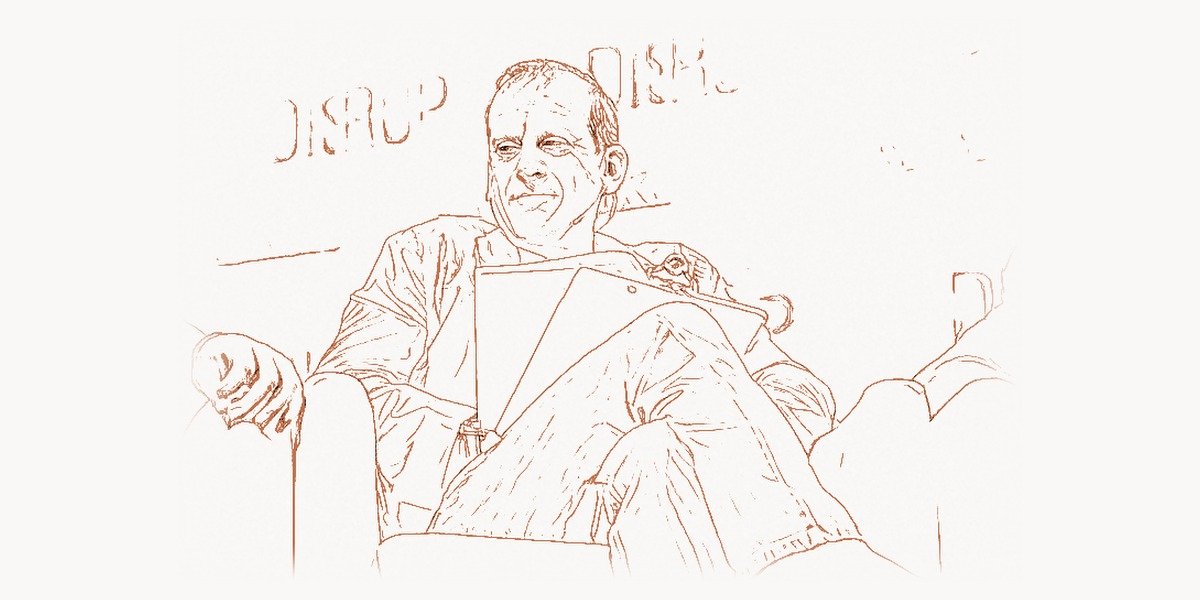
When people talk about the creation of Android, the conversation usually starts and ends with Andy Rubin. But the full story of how the world’s most widely used operating system came into existence cannot be told without Rich Miner — a computer scientist, serial entrepreneur, and venture capitalist whose deep expertise in mobile technology, distributed systems, and wireless networking proved essential to Android’s founding and early development. Miner was not the public face of Android, but he was one of its intellectual architects — a technologist who had spent over a decade building mobile platforms before most of the industry had even begun to think seriously about smartphones. His journey from MIT research labs to Android Inc. to Google Ventures represents a career defined by the ability to see where mobile computing was headed years before the rest of the world caught up.
Early Life and Academic Foundation
Richard Miner grew up in an era when computing meant mainframes and terminals, but he was drawn to the field from an early age. He pursued his education at the Massachusetts Institute of Technology, one of the world’s premier institutions for computer science and engineering. At MIT, Miner immersed himself in systems programming, networking, and the foundational principles of distributed computing — subjects that would directly inform his later work on mobile platforms.
MIT in the 1980s was a crucible of innovation. The university’s computer science and artificial intelligence laboratory was pushing the boundaries of what computing could accomplish, and its graduates were founding companies that would reshape the technology landscape. Miner absorbed the MIT ethos that combined rigorous theoretical foundations with an insistence on building real, working systems. This blend of theory and practice would distinguish his career: unlike pure researchers who published papers, or pure entrepreneurs who chased markets, Miner consistently brought deep technical understanding to commercial ventures.
His graduate work focused on areas that intersected networking, software architecture, and mobile communication — a combination that was unusual at the time but would prove prescient. The mobile computing landscape of the late 1980s and early 1990s was primitive by modern standards: wireless networks were slow and unreliable, handheld devices had minimal processing power, and the software to manage these constraints simply did not exist. Miner recognized early that bridging the gap between powerful networked systems and the constrained world of mobile devices would become one of the most important challenges in computing, a vision shared by pioneers of internet protocol design who understood that connectivity would eventually become ubiquitous.
Building the Foundations: Wildcatter and Early Mobile Ventures
After completing his studies at MIT, Miner did not follow the well-worn path into established technology corporations. Instead, he gravitated toward startups where he could work on cutting-edge mobile and wireless technologies. In the 1990s, he co-founded and led several ventures focused on mobile software — at a time when the term “mobile software” was barely understood outside a small circle of specialists.
One of Miner’s most significant pre-Android ventures was his role at Wildcatter Technologies, a company focused on mobile data solutions. At Wildcatter, Miner tackled the fundamental problems of delivering software and services over the nascent mobile internet. The wireless networks of the late 1990s were painfully slow, plagued by dropped connections, and wildly inconsistent in coverage. Building reliable software for this environment required a fundamentally different approach than desktop or server development. Applications had to be resilient to network interruptions, efficient with bandwidth, and capable of providing useful functionality even when connectivity was intermittent.
This experience gave Miner a practical education that no amount of academic study could replace. He learned that mobile software had to be designed around the assumption of failure — that connections would drop, that latency would spike, that devices would run out of battery at the worst possible moment. These lessons would directly influence Android’s architecture years later, particularly its approach to background processing, state management, and the activity lifecycle that allowed applications to gracefully handle interruptions.
Miner also worked at Orange, the European telecommunications giant, where he gained firsthand experience with the carrier side of the mobile industry. Understanding how carriers thought about devices, data plans, and user experiences gave him insights that most Silicon Valley technologists lacked. He saw how carriers controlled the mobile ecosystem through exclusive handset deals and restrictive software policies, and he understood that any truly revolutionary mobile platform would need to navigate — or disrupt — these carrier relationships. This carrier-side perspective was something Miner brought to the Android founding team that complemented Andy Rubin’s device-side experience and Rubin’s vision for an open mobile OS.
Co-Founding Android Inc.
In October 2003, Rich Miner joined Andy Rubin, Nick Sears, and Chris White to co-found Android Inc. in Palo Alto, California. Each co-founder brought a distinct set of skills and experiences to the venture: Rubin contributed his track record of building mobile devices and operating systems at Danger; Sears brought his business development expertise from his time at T-Mobile; White had deep experience in mobile interface design; and Miner contributed his expertise in mobile software, distributed systems, and the telecommunications industry.
The company’s original concept was to create an advanced operating system for digital cameras — a device category that, in 2003, was at the height of its relevance. But the founders quickly recognized that the mobile phone market represented a far larger and more transformative opportunity. Smartphones were poised to become the primary computing platform for billions of people, yet the existing mobile operating systems — Symbian, BlackBerry OS, Windows Mobile, and Palm OS — were all proprietary, fragmented, and ill-suited for the internet-centric future that was rapidly approaching.
Miner’s role in the early Android team was multifaceted. His understanding of mobile networking and distributed systems helped shape Android’s architecture at the most fundamental level. One of the key technical decisions that Miner influenced was Android’s approach to connectivity management — how the operating system would handle the transition between different network types (WiFi, cellular, Bluetooth) and maintain application state across these transitions. This was a problem that Miner had been working on, in one form or another, for over a decade, and his expertise ensured that Android handled it with a sophistication that its competitors initially lacked.
The Android team’s early work established a layered architecture built on the Linux kernel that has proven remarkably durable. The connectivity management layer that Miner helped design can be understood through its configuration approach:
<!-- AndroidManifest.xml — Connectivity and permissions model -->
<!-- Rich Miner's carrier-side expertise influenced how Android -->
<!-- managed network access and application permissions -->
<manifest xmlns:android="http://schemas.android.com/apk/res/android"
    package="com.example.networkaware">

    <!-- Granular permission model for network access -->
    <uses-permission android:name="android.permission.INTERNET" />
    <uses-permission android:name="android.permission.ACCESS_NETWORK_STATE" />
    <uses-permission android:name="android.permission.ACCESS_WIFI_STATE" />

    <application
        android:networkSecurityConfig="@xml/network_security_config">

        <activity android:name=".MainActivity">
            <intent-filter>
                <action android:name="android.intent.action.MAIN" />
                <category android:name="android.intent.category.LAUNCHER" />
            </intent-filter>
        </activity>

        <!-- BroadcastReceiver for connectivity changes -->
        <!-- Android's ability to notify apps of network transitions -->
        <!-- was critical for the unreliable networks of the mid-2000s -->
        <receiver android:name=".NetworkChangeReceiver"
            android:exported="false">
            <intent-filter>
                <action android:name="android.net.conn.CONNECTIVITY_CHANGE" />
            </intent-filter>
        </receiver>

        <!-- Service for background data sync -->
        <!-- Miner's distributed systems background shaped -->
        <!-- Android's approach to background processing -->
        <service android:name=".DataSyncService"
            android:permission="android.permission.BIND_JOB_SERVICE" />
    </application>
</manifest>
This manifest structure illustrates several design principles that Miner helped establish. The granular permission model for network access ensured that users and carriers could understand and control how applications used connectivity — a concern that came directly from Miner’s experience working with telecommunications companies. The broadcast receiver pattern for connectivity changes enabled applications to respond intelligently to network state transitions, rather than simply failing when connectivity was lost. And the background service architecture allowed apps to synchronize data efficiently without draining battery life — a balance that required the kind of deep systems understanding that Miner had developed over years of mobile software development.
The Google Acquisition and Scaling Android
In July 2005, Google acquired Android Inc. for an estimated $50 million. The acquisition was driven by Google’s strategic need for a mobile platform — the company recognized that search and services would increasingly be accessed through mobile devices, and it needed to ensure that its products would have a home on whatever platform dominated the mobile future. Larry Page personally championed the acquisition, seeing in Android the potential to bring Google’s vision of ubiquitous information access to billions of mobile users.
For Miner and the other Android co-founders, the Google acquisition was transformative. Suddenly, a scrappy startup with a handful of employees had the backing of one of the world’s most powerful technology companies. Google’s resources — its engineering talent, its server infrastructure, its business relationships — accelerated Android’s development dramatically. But the transition also required navigating the politics and processes of a large corporation, a challenge that tested the founding team’s ability to maintain their startup mentality within a corporate structure.
Miner played a critical role during this transition period. His experience bridging the worlds of research and commerce, and his understanding of both the technical and business sides of mobile technology, made him invaluable as Android evolved from a startup project into a Google division. He helped shape the Open Handset Alliance — the consortium of hardware manufacturers, software companies, and telecommunications carriers that Google assembled to support Android’s launch. Miner’s relationships with carriers and his understanding of their concerns were particularly important in convincing these traditionally conservative companies to embrace an open-source mobile platform.
The Open Handset Alliance, announced in November 2007, included heavyweights like HTC, Samsung, Motorola, T-Mobile, and Qualcomm. Assembling this coalition required not just technical vision but also the kind of diplomatic skill that comes from understanding every stakeholder’s perspective — manufacturers worried about differentiation, carriers worried about control, chip makers worried about compatibility. The coordination challenge was immense, requiring the kind of structured project management that modern teams achieve with tools like Taskee for complex cross-organizational projects.
The ConnectivityManager: Miner’s Legacy in Code
One of the most enduring technical contributions that reflects Miner’s influence on Android is the ConnectivityManager framework. This component manages all aspects of network connectivity on Android devices, handling the complex dance between WiFi, cellular data, Bluetooth, and other network interfaces. For developers building mobile applications, understanding the ConnectivityManager is essential:
import android.content.Context;
import android.net.ConnectivityManager;
import android.net.Network;
import android.net.NetworkCapabilities;
import android.net.NetworkRequest;

public class NetworkMonitor {

    private final ConnectivityManager connectivityManager;

    public NetworkMonitor(Context context) {
        this.connectivityManager = (ConnectivityManager)
            context.getSystemService(Context.CONNECTIVITY_SERVICE);
    }

    /**
     * Register for real-time network state callbacks.
     * Android's network callback architecture reflects the
     * founding team's deep understanding of mobile networking:
     * networks are unreliable, and apps must adapt dynamically.
     */
    public void startMonitoring() {
        NetworkRequest request = new NetworkRequest.Builder()
            .addCapability(NetworkCapabilities.NET_CAPABILITY_INTERNET)
            .addTransportType(NetworkCapabilities.TRANSPORT_WIFI)
            .addTransportType(NetworkCapabilities.TRANSPORT_CELLULAR)
            .build();

        connectivityManager.registerNetworkCallback(request,
            new ConnectivityManager.NetworkCallback() {
                @Override
                public void onAvailable(Network network) {
                    // Network is available — resume data sync
                    // This callback-driven model was designed for
                    // the unreliable networks of the mid-2000s
                }

                @Override
                public void onLost(Network network) {
                    // Network lost — pause operations, cache data
                    // Graceful degradation was a core design principle
                }

                @Override
                public void onCapabilitiesChanged(Network network,
                        NetworkCapabilities capabilities) {
                    // Network type or speed changed
                    // Adapt behavior based on current conditions
                    boolean isWifi = capabilities.hasTransport(
                        NetworkCapabilities.TRANSPORT_WIFI);
                    boolean isCellular = capabilities.hasTransport(
                        NetworkCapabilities.TRANSPORT_CELLULAR);
                }
            });
    }
}
This code demonstrates the design philosophy that Miner helped establish: applications should not assume connectivity, but instead register for network state changes and adapt their behavior dynamically. The callback-driven model reflects years of hard-won experience with mobile networks that Miner accumulated long before Android existed. It is a design pattern that has influenced mobile development across all platforms, and one that remains central to Android development today.
Transition to Google Ventures
After Android’s successful launch and rapid growth, Rich Miner transitioned to a new role within Google. In 2009, he became a General Partner at Google Ventures (now GV), Google’s venture capital arm. This move was not a departure from his core interests but rather an evolution — Miner shifted from building one specific mobile platform to investing in and advising the entire ecosystem of companies building on top of mobile technology.
At Google Ventures, Miner focused on early-stage investments in mobile, enterprise software, and data infrastructure companies. His technical background gave him an unusual advantage as a venture capitalist. While many VCs evaluate startups primarily on market size and team dynamics, Miner could assess the technical viability of a company’s approach at a level that most investors simply could not. He could read code, evaluate architecture decisions, and identify technical risks that would be invisible to a non-technical investor.
Miner’s investment philosophy reflected the same principles that had guided his career as an entrepreneur. He favored companies building platform-level technologies rather than individual applications — companies whose success would enable entire ecosystems of innovation, just as Android had done. He was particularly drawn to startups working on the infrastructure layers of mobile computing: networking, data management, security, and developer tools.
This transition from operator to investor is a path that several prominent technologists have followed. Paul Graham’s journey from Viaweb to Y Combinator represents a similar evolution, where deep technical experience becomes the foundation for identifying and nurturing the next generation of technology companies. Miner’s ability to evaluate both the technical and business dimensions of startups made him one of the most effective technical investors in Silicon Valley.
Technical Philosophy and Design Principles
Rich Miner’s technical philosophy can be distilled into several principles that guided his work across multiple decades and ventures. Understanding these principles provides insight not only into Android’s design but also into the broader evolution of mobile computing.
Design for Failure
The most fundamental principle in Miner’s approach to mobile systems was designing for failure. Mobile devices operate in inherently unreliable environments — connections drop, batteries die, users switch between networks, and applications compete for limited resources. A mobile operating system that assumes everything will work correctly is a mobile operating system that will fail constantly. Android’s architecture reflects this principle at every level, from the activity lifecycle that handles interruptions gracefully, to the intent system that allows applications to delegate tasks to whatever app is best equipped to handle them.
This design-for-failure philosophy aligned with the broader movement toward resilient distributed systems that engineers like those behind Google’s MapReduce and GFS infrastructure were championing at the same time. The mobile world and the cloud world were converging on the same insight: systems must be designed to handle failure as a normal operating condition, not an exceptional one.
Open Platforms Win
Miner’s career consistently demonstrated a commitment to open platforms. From his early work in mobile networking through the founding of Android, he believed that open systems ultimately prevail over closed ones because they harness the collective innovation of an entire ecosystem. Android’s open-source model was not merely a business strategy — it was a deeply held conviction that the best mobile platform would be the one that gave the most freedom to manufacturers, carriers, developers, and users.
This conviction was validated spectacularly. While Apple’s iPhone captured the premium end of the market, Android’s openness allowed it to reach billions of users across every price point, from flagship devices to sub-$100 smartphones that brought computing to emerging markets. The decision to build Android on the Linux kernel — an open-source foundation with decades of community investment — was both technically sound and philosophically consistent with this approach.
Bridge Technical and Business Worlds
One of Miner’s distinctive strengths was his ability to operate effectively in both technical and business contexts. Many brilliant engineers struggle to communicate their vision to business stakeholders, and many skilled businesspeople lack the technical depth to evaluate engineering decisions. Miner bridged this gap consistently, whether he was convincing carriers to support Android, advising Google’s leadership on mobile strategy, or evaluating startup investments at Google Ventures. This bridging ability is a competency that modern digital project management methodologies increasingly emphasize as essential for technology leadership.
Legacy and Lasting Impact
Rich Miner’s impact on the technology industry extends far beyond his name recognition. While he has always been more private than some of his Android co-founders, his contributions are woven into the fabric of modern mobile computing in ways that affect billions of people daily.
Android, the platform Miner co-founded, now powers over 3 billion active devices worldwide. It runs on smartphones, tablets, televisions, cars, watches, and an expanding universe of connected devices. The open-source model that the founding team championed has created an ecosystem that supports millions of developers and thousands of device manufacturers. The Google Play Store offers over 3.5 million applications, and Android-based devices are the primary means of internet access for most of the world’s population.
But Miner’s influence goes beyond Android itself. His work at Google Ventures helped shape the next generation of mobile and enterprise technology companies. By bringing deep technical expertise to the venture capital process, he helped ensure that Google’s investments were directed toward companies with genuine technical innovation, not just compelling pitch decks. His portfolio companies have contributed to advances in mobile infrastructure, developer tools, and enterprise software that continue to ripple through the industry.
Miner’s career also serves as a powerful example of how diverse experiences compound into outsized impact. His academic foundation at MIT, his carrier-side experience at Orange, his mobile software work at Wildcatter, and his entrepreneurial ventures all contributed essential elements to Android’s creation. No single one of these experiences would have been sufficient — it was their combination that gave Miner the unique perspective needed to help build a platform that would reshape computing.
The story of Android’s founding is sometimes reduced to a simple narrative about one visionary leader, but the reality is far more nuanced. Like all great technology achievements, Android was the product of a team — and Rich Miner was an indispensable member of that team. His expertise in mobile networking, his understanding of the telecommunications industry, his systems-level thinking, and his ability to bridge technical and business domains all contributed to making Android what it became. In the same way that Rob Pike’s systems expertise complemented Ken Thompson’s vision at Bell Labs, Miner’s deep mobile knowledge complemented Rubin’s product vision to create something neither could have built alone.
Today, as mobile computing evolves toward new frontiers — augmented reality, edge computing, AI-powered assistants, foldable displays — the architectural foundations that Miner helped lay continue to support the platform. Android’s ability to adapt to new hardware form factors, new network technologies, and new user interaction paradigms is a testament to the robustness of the design decisions made in those early years. The connectivity management frameworks, the permission model, the intent system, and the lifecycle architecture all bear the fingerprints of a team that understood mobile computing at a fundamental level — a team that included Rich Miner.
For aspiring technologists and entrepreneurs, Miner’s career offers several enduring lessons. First, deep technical expertise creates compounding advantages — each new venture built on the knowledge accumulated in previous ones. Second, the most impactful innovations often come from people who understand multiple dimensions of a problem, from the technical to the commercial to the regulatory. Third, being a co-founder rather than the sole founder does not diminish one’s contribution — some of the most important work in technology happens behind the scenes, in the architecture decisions and strategic insights that never make headlines but determine whether a product succeeds or fails. And finally, the transition from building products to investing in builders is a natural evolution that allows experienced technologists to multiply their impact across an entire industry, much like Marc Andreessen’s move from Netscape to venture capital extended his influence far beyond any single product.
Frequently Asked Questions
Who is Rich Miner and what is he best known for?
Rich Miner is a computer scientist, entrepreneur, and venture capitalist best known as one of the four co-founders of Android Inc. in 2003, alongside Andy Rubin, Nick Sears, and Chris White. He brought deep expertise in mobile networking, distributed systems, and telecommunications to the Android founding team. After Android’s acquisition by Google and successful launch, Miner became a General Partner at Google Ventures (now GV), where he invested in early-stage technology companies.
What was Rich Miner’s specific role in creating Android?
While Andy Rubin is often credited as Android’s primary creator, Miner played a critical complementary role. His expertise in mobile networking and distributed systems helped shape Android’s connectivity management architecture, its approach to handling network transitions, and its background processing model. His experience working with telecommunications carriers also proved invaluable in building the industry relationships that supported Android’s launch through the Open Handset Alliance.
What did Rich Miner do before co-founding Android?
Before Android, Miner studied at MIT and built a career focused on mobile technology. He worked at Wildcatter Technologies on mobile data solutions, gained carrier-side experience at Orange (the European telecom company), and was involved in several mobile software ventures during the 1990s and early 2000s. These experiences gave him a comprehensive understanding of mobile computing from both the technology and telecommunications perspectives.
What is Rich Miner doing now?
After Android’s successful launch and growth, Miner transitioned to Google Ventures (now GV) in 2009 as a General Partner. At GV, he focused on early-stage investments in mobile technology, enterprise software, and data infrastructure companies, leveraging his deep technical background to evaluate startup technologies at a level that most venture capitalists cannot.
How did Rich Miner influence Android’s technical architecture?
Miner’s influence is most evident in Android’s network connectivity management, its resilient approach to handling unreliable mobile networks, and its permission model for network access. His years of experience building mobile software taught him that mobile applications must be designed around the assumption of failure — dropped connections, network transitions, and resource constraints. These principles became embedded in Android’s core architecture and continue to guide Android development today.
Why is Rich Miner less well-known than Andy Rubin?
Rich Miner has maintained a lower public profile than Andy Rubin throughout his career. While Rubin served as the public face and CEO of Android Inc. and later led Android as a division within Google, Miner focused on the technical and strategic aspects of the platform. His subsequent move to venture capital further shifted his work away from the public spotlight. However, his contributions to Android’s founding and early development were essential to the platform’s success.
What lessons can entrepreneurs learn from Rich Miner’s career?
Miner’s career illustrates several key lessons: deep technical expertise creates compounding advantages across multiple ventures; understanding both the technical and business dimensions of an industry creates unique strategic insights; the most impactful innovations often require diverse teams with complementary skills rather than a single visionary; and transitioning from building products to investing in builders can multiply a technologist’s impact across an entire industry.